Box Insert OEM Communication Workflow Review for United States Buyers
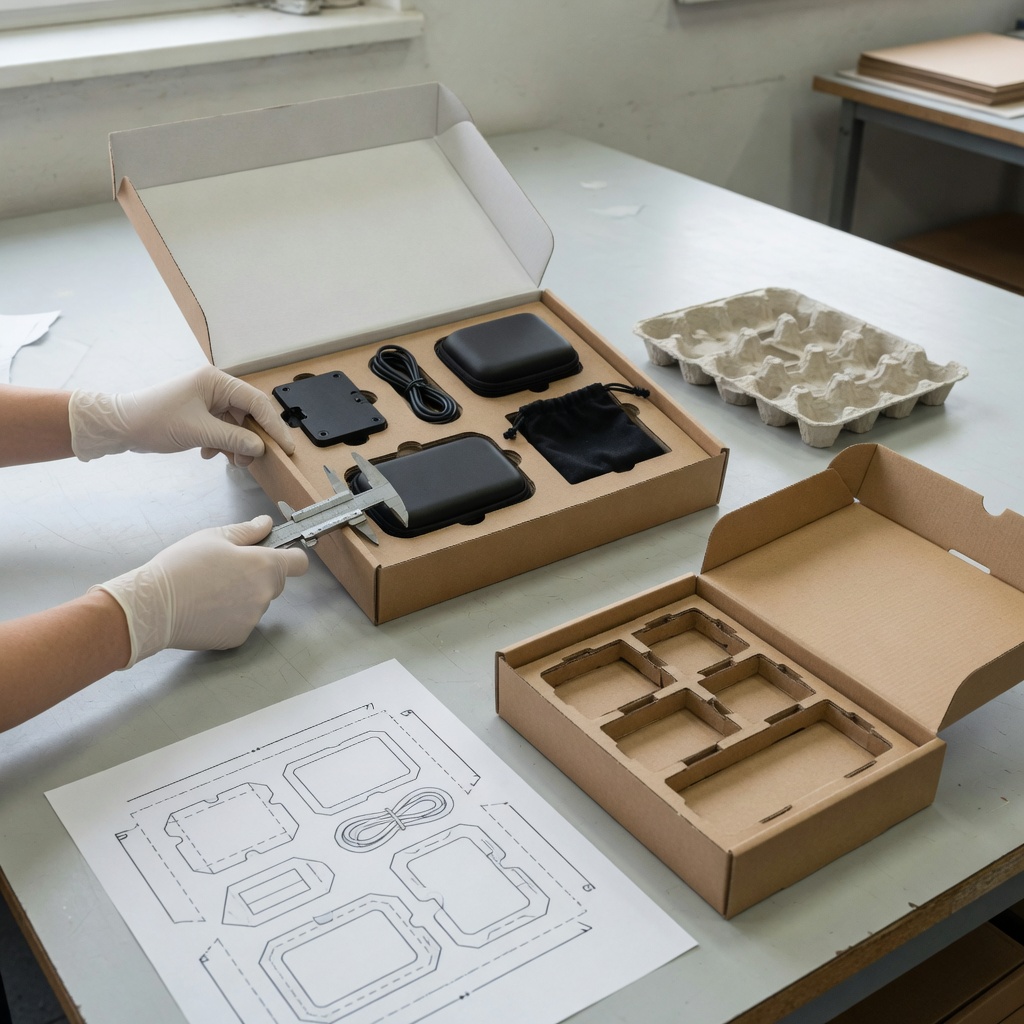
United States OEM buyers should treat a box insert OEM communication workflow review as a gated manufacturing control, not as an informal design chat. Do not release a mass-production purchase order until four written artifacts are locked: product geometry and photos with critical dimensions in millimeters; outer-box inner dimensions and board construction; an approved cavity layout and dieline revision identifier; and a sample-fit plus packing-method confirmation that shows how the product, insert, retail box, and export carton travel together. Those four artifacts are buyer-side RFQ gates in this brief, not a published industry standard. Hold the RFQ if any artifact is missing. Reject a structure inferred from a lifestyle photo.
By Vincent Xi, Editorial Author at Custom Logo Things. This specification brief is for United States B2B teams sourcing structural box inserts. It is not a factory audit, case study, or first-person production record, and it does not assign certifications or unpublished customer outcomes.
Approve, hold, or reject the OEM file set
The commercial question is narrow: is the insert ready to quote and tool, or is the file set still a guess?
- Approve structure review only when product millimeters, outer-box inner millimeters, material family, and quantity band share one dated revision.
- Hold sampling until a single dieline filename exists and cut versus crease is marked.
- Hold production until a physical sample-fit and a packing-method sheet exist, including export carton outer millimeters and packed kilograms.
- Reject parallel “final” PDFs, dummy-product-only fits offered as production proof, and lead times that do not name the confirmation event that starts the clock.
Extra measurement hours now are cheaper than a rejected sample later. A complete brief also lets the buyer compare two suppliers on the same geometry instead of two interpretations of a marketing photo.
What United States buyers must send to start structure review
The workflow fails when a supplier is asked to design an insert from a marketing photo. Start with a measurable product pack.
Send one folder with a revision date:
- SKU list and which SKUs share one insert versus unique cavities.
- Product dimensions in millimeters on three axes, weight in grams, and the fragile or load-bearing faces.
- Photos: top, bottom, all sides, and one shot with a scale or ruler. A 3D file is a reference, not a substitute for photos of the actual production part.
- Outer-box inner length × width × height in millimeters, board grade or flute, and whether the box is a retail carton, a mailer, or a master pack.
- Insert material preference (paperboard, corrugated pad, molded pulp, thermoformed tray, or foam) and whether the insert must be recyclable in common United States curbside streams, only in industrial recovery, or has no stated end-of-life constraint.
- Pack-out intent: one product per cavity, nested kits, accessories in the same tray, or a two-piece lid-and-base insert.
- Annual volume band, first-order quantity, and whether the first shipment is a pilot for United States fulfillment or a full retail rollout.
- Ship-to region in the United States, requested Incoterms and named place, sample path versus bulk path, and who prints country-of-origin, SKU, and carton marks.
If any item is missing, the first “structure” is a guess. Guessing is cheaper than a second tool, but it is more expensive than a complete brief when a cavity is short of the drawing—for example, a 2 mm shortfall (example miss to verify on the live product and dieline, not a published industry tolerance)—and the product scuffs the lid.
Communication workflow review gates for box insert manufacturing
A packaging workflow is not a single email thread. One packaging-process overview describes six core stages from brief to production and notes that most delays happen during review and refinement because of versioning errors and email-based feedback; it also argues that centralized proofing reduces version confusion, allows parallel reviews, and can support electronic-record audit trails such as FDA 21 CFR Part 11 where those rules apply (Ziflow). Those six stages are a process count from that article, not a factory schedule and not the same list as the four RFQ artifacts above. 21 CFR Part 11 is a United States electronic-records rule for regulated environments—not a general box-insert manufacturing certification and not evidence that any named supplier is Part 11 compliant.
Map the stages onto insert manufacturing with explicit gates:
- Brief lock. Product pack, outer box, material family, and quantity band are dated and named as Rev 00.
- Structure review. Cavity count, wall thickness, hold-down features, and how the insert loads (drop-in, fold-up, or wrap).
- Dieline approval. A single file name and revision. Mark crease versus cut. Reject “latest dieline” in an email subject as the approval record.
- Sample fit. Physical product in the actual insert, inside the actual or dimensionally matched outer box. Photos are not a substitute for a fit sample when the product has draft, fabric, or cable memory.
- Packing-method confirmation. Units per inner, inners per export carton, orientation, void fill, carton outer millimeters, packed kilograms, and whether the insert is part of the retail pack or a transit-only pad.
- Production release. Material lot, print plate or unprinted spec, AQL or inspection photos if the buyer requires them, and a freeze on geometry unless a paid engineering change is opened.
Centralized proofing is a communication control: one proof, named reviewers, and a recorded approve/reject. Email chains create parallel PDFs that both look “final.” For unregulated consumer goods, a dated PDF plus a photo of the signed sample may be enough. For United States FDA-regulated kits, the buyer—not the insert plant—must say whether electronic signatures and audit trails are in scope. Do not treat a software vendor’s mention of Part 11 as the supplier’s certification.
Sequential sign-off is slower but keeps structure, print, and pack-out from contradicting each other. Parallel review is faster only if structural engineering, brand, and logistics review the same revision. Parallel review of different files is how a lid cavity is approved against Rev B while print runs Rev A.
Sampling and mass-production time after OEM insert communication
One custom box inserts manufacturer states that sampling usually takes 3–7 days after structure, material, and artwork confirmation, and that mass production is 15–20 days after approval (HS Packfactory). Unit: calendar days. Scope: that company’s stated typicals for custom box inserts. As-of: the wording on that public page; the page does not publish a verified timestamp in the excerpt used here. These are not United States inland transit times, not ocean schedules, and not a multi-supplier average.
Use the numbers as planning fences, then add buyer-side time:
- Structure and dieline iteration before the “after confirmation” clock starts.
- Sample shipping to a United States engineering lab (air) versus waiting for a traveling buyer.
- Fit test, including accessories omitted from the first sample.
- Artwork if the insert is printed; unprinted pulp or kraft often moves faster than a registered print.
- Production, then export carton packing, origin handling, and main-leg freight to the United States.
Example calculation only—verify on the supplier quote and the freight forwarder, do not treat as a quoted lead time: if confirmation is complete on day 0, a 5-day sample (inside the 3–7 day statement) plus 3 days of United States fit review plus 18 days of production (inside the 15–20 day statement) is 26 calendar days before ex-works readiness. That 26-day figure is an arithmetic illustration from the two supplier ranges above, not a promise and not a landed United States door date. Ocean transit, destuffing, and a receiving QC hold are additional and buyer-specific.
United States buyers typically choose among these controls:
- Approve structure before artwork when geometry is the risk. Printed samples that do not fit waste plate time and cavity time.
- Pay for a second sample when the first sample used dummy product. Cable coils, fabric, and injection-molded draft change cavity pressure.
- Air a sample, ocean the bulk. Mixing those modes without a packing-method photo set is how a foam insert that survived air freight’s small carton fails in a dense ocean pallet.
- Pilot quantity versus full tool. A hand sample can clear fit and still not prove nested die yield or pulp-tool draft.
If the supplier cannot state what “confirmation” includes—2D dieline, 3D structure, material board, and print-ready art—the 3–7 day clock is not defined enough to plan a United States launch.
United States landed-cost, labeling, and delivery controls after insert approval
Keep the product decision primary: the insert must protect and present the SKU. United States commercial terms still belong in the same communication workflow review because they change packing method and carton marks.
Specify, in the RFQ and again on the PO:
- Incoterms and named place. FOB origin and DDP United States destination allocate duty, Importer Security Filing (ISF) on ocean moves, and last-mile risk differently. The insert factory’s production days do not include DDP delivery.
- Carton marks: SKU, quantity, purchase-order number, country of origin, and any retailer routing guide the buyer is obligated to meet. Origin marking is a United States import control the buyer should specify; do not assume the plant’s default export carton is retailer-ready.
- Whether the insert itself needs a mark (fiber content, recycling, or “made in” if it is sold as a spare or seen by the end customer). State the mark as a buyer requirement; do not treat an unmarked sample as approved retail labeling.
- Pallet pattern, clamp/no-clamp, and whether mixed SKUs share a pallet. Inserts that look identical except for a small cavity change—for example, a 3 mm cavity difference (example, verify on the drawing)—are a receiving error waiting to happen.
- Who classifies HTS for the finished packed good versus a shipment of inserts alone. This article does not assign tariff numbers.
Landed cost is not a catalog price. Board caliper, pulp tooling, foam density, print passes, and carton cube all move freight. Without a packing method, cube is unknown, so freight is unknown.
Example assumption to verify in the quote, not a market rate: if two insert structures have the same piece price but one adds 15 mm of carton height, ocean cube and United States warehouse locations-per-pallet change. Ask the supplier for export carton outer millimeters and packed kilograms per carton after the packing-method gate, then run freight on that carton—not on the sample mailer.
Delivery control for United States buyers:
- Sample path: air parcel to the engineer who owns fit, with the same dieline revision in the paperwork.
- Bulk path: production photos of first articles in the approved insert, then carton photos that match the packing method sheet.
- Receiving path: inbound check of cavity dimensions on a sample of cartons, not only a count of boxes.
A supplier or manufacturing-origin page is a source for stated process typicals. It is not a change in the sales market for this brief, which is United States B2B buyers of structural box inserts.
How OEMs audit supplier communication and quality during production
Auditing communication is cheaper than auditing a full container after the fact. Ask for artifacts that a third party could reconstruct:
- A revision table: date, file name, what changed (cavity, board, print, pack), who requested it, who approved it.
- The approved dieline and a photo of the sample that matches that revision.
- Cavity measurements (millimeters) against the drawing, including the tightest hold-down point.
- Material identification: paperboard caliper or grade, pulp recipe family, foam density if used—stated as the spec, not as a brand slogan.
- Packing-method photos: one complete retail pack, one inner, one open export carton with count visible as a photo of units, not as a caption overlay.
- Inspection plan the buyer actually bought: skip-lot photos, in-process cavity checks, or a stated AQL. If the RFQ did not buy an AQL, do not imply one occurred.
A fulfillment article on personalized customer inserts (marketing literature, not structural trays) still makes a packing-control point that transfers: treat inserts as inventory with rules for SKU, channel, or customer type, and do not rely on manual “remember to add it” decisions in pick and pack (G10 Fulfillment). For OEM structural inserts, the analog is: the insert SKU is paired to the product SKU in the packing SOP and in any United States WMS after import. Wrong-insert risk is a communication failure, not only a converting failure.
Distinguish those insert types in the RFQ. A structural box insert is a manufactured nest. A personalized paper insert is a pick-pack collateral piece. Mixing the two in one workflow review produces the wrong dieline and the wrong warehouse rule.
For regulated United States programs, if the buyer requires Part 11-style audit trails on artwork, state that as the buyer’s quality-system requirement and ask what the supplier can actually provide (named PDF, e-sign platform, or paper wet-ink). A blog mention of Part 11 is not a certificate, and this article does not assign any certification to any company.
Buyer decision table: communication artifacts versus production risk
| Decision / artifact | Specify in the RFQ | Verify before approval | Trade-off if you skip or delay | Typical manufacturing failure |
|---|---|---|---|---|
| Product geometry pack | mm on 3 axes, g weight, photos with scale, fragile faces | Incoming product vs. the same pack used for the sample | Faster brief vs. wrong cavity | Product rocks, lid bulge, scuff |
| Outer-box inner size | Inner L×W×H mm, board/flute, retail vs. shipper | Tape-measure of the production carton, not the mockup | One box SKU vs. insert redesign | Insert too tall; lid will not close |
| Cavity / structure drawing | Cavity count, hold-downs, fold vs. drop-in, material family | Engineering review against live product | Simple tray vs. extra folds and cost | Parts migrate in transit |
| Dieline revision control | Single filename, cut vs. crease, bleed if printed | Diff two PDFs; ban “final_final” | Speed of email vs. version mix-up | Print on obsolete nest |
| Sample fit test | Real product, real insert, real or matched box | Photo plus physical keep-sample at buyer site | Dummy 3D print vs. production part | Cable memory or draft ignored |
| Packing method | Units/inner, inners/export carton, orientation, void fill | Open-carton photo from production, not from sampling | Sample mailer vs. ocean density | Crush or mix-up of similar inserts |
| Export carton cube and mass | Carton outer mm and packed kg after packing-method gate | Freight run on production carton, not sample mailer | Unknown cube vs. unknown landed cost | Ocean rate and US pallet yield miss |
| Insert-as-inventory rule | Insert SKU paired to product SKU for US receiving/WMS | First inbound carton audit | Manual pack vs. system rule | Wrong nest packed after a running change |
| US marks and Incoterms | COO, PO, SKU, named place, who pays duty / files ISF | Carton photo vs. routing guide | Generic export carton vs. retailer refusal | Relabel in a United States DC |
Every row is a specify–compare–verify–approve–order control. If a supplier cannot produce the verify column, do not treat the decision as closed.
RFQ checklist for OEM box insert manufacturing
Use this list on the request for quote and again on the purchase order. Each item is something a United States buyer can specify, compare across suppliers, verify on a sample, approve in writing, or require as a shipment document.
- List SKUs, shared versus unique inserts, and first-order plus annual quantity bands.
- Attach product dimensions (mm), weight (g), and dated photos with a scale; state if the production part differs from the photo.
- State outer-box inner dimensions (mm) and board construction; attach a dieline of the box if it already exists.
- Name the insert material family and any United States end-of-life constraint (curbside vs. industrial vs. none stated).
- Require a structure drawing and a single dieline revision ID before sampling starts.
- State whether the sample must use production-intent material or may use a hand-cut mock for fit only.
- Require sample-fit with the live product inside the intended box; define pass/fail (rock, lid gap, visible crush) and name the United States receiving contact for the keep-sample.
- Require a packing-method sheet: orientation, count per inner, count per export carton, carton outer mm, packed kg, void fill, and retail pack versus transit-only pad.
- Ask the supplier to restate sampling days and production days after named confirmation events (structure, material, artwork, written approval), and treat any 3–7 day or 15–20 day figure as a quote line to confirm, not as this article’s promise (HS Packfactory).
- Name Incoterms, United States ship-to, sample freight versus bulk freight, required carton marks including country of origin, and who files ISF on ocean shipments.
- Require a revision log and a named approver for dieline, sample, and packing method; if regulated electronic records are in scope, state 21 CFR Part 11 as the buyer’s requirement and ask what evidence exists—do not assume compliance from a generic packaging-workflow article (Ziflow).
- Pair each insert SKU to a product SKU for receiving; if United States fulfillment will kit inserts, say whether the insert is inventory-controlled rather than a tribal-knowledge pack step (G10 Fulfillment).
- State inspection evidence you are buying (first-article photos, cavity measurements in millimeters, or a numeric AQL). If you do not buy it, do not expect it.
- Freeze geometry after approval; require a paid engineering-change path for cavity or board changes.
- Ask for export carton photos from the production lot that will ship, not only from the sample room, matching the approved packing-method sheet.
Sources, methodology, and what to verify
Source contexts. HS Packfactory’s box-inserts page is a manufacturer description of custom box insert development (structure, cavity layout, dieline, sample fit, packing method, export carton) and of supplier-stated sampling and production day ranges. Ziflow’s packaging design process article is a workflow-software discussion of brief-to-production stages, review delay, centralized proofing, and a mention of FDA 21 CFR Part 11 audit trails for packaging workflows including inserts. G10 Fulfillment’s personalized-insert article is about marketing/collateral inserts in a warehouse management system, used here only for the inventory-control analog, not as a structural-tray specification.
Measured claims used in this brief. (1) Sampling usually 3–7 calendar days after structure, material, and artwork confirmation; scope: HS Packfactory stated typicals for custom box inserts; as-of: wording on the cited public page, with no verified timestamp in the excerpt used here; source: HS Packfactory box-inserts page. (2) Mass production 15–20 calendar days after approval; same unit, scope, as-of, and source. (3) Six core stages from brief to production; unit: stage count; scope: Ziflow’s packaging-design-process article, not a converting-plant SOP; as-of: wording on that cited public page; source: Ziflow. The 2 mm cavity shortfall, 3 mm cavity difference, 15 mm carton-height change, 5-day sample, 3-day United States fit review, 18-day production, and 26-day ex-works illustration are example calculations or assumptions to verify on the live product, dieline, quote, and freight forwarder—not published industry tolerances or quoted lead times.
Methodology. Exact numbers above are taken from the supplied page excerpts and labeled with unit, scope, as-of context, and source. Buyer gates (four RFQ artifacts; approve/hold/reject rules; packing-method and carton-mark fields) are specification controls in this brief, not measurements copied from those pages. No factory was audited for this page. Author attribution is limited to Vincent Xi, Editorial Author; no years of experience, awards, or client outcomes are claimed.
Limitations / what to verify. Supplier day ranges are not a multi-plant United States market study and may be outdated relative to the live quote. They exclude buyer review time and United States inland or ocean transit. Ziflow’s six stages and Part 11 reference describe a general packaging review problem and a regulated-records framework; they are not insert-converting standards and they are not a certification of any plant. G10 describes a different insert type (personalized customer literature) and a fulfillment WMS; transferring the inventory rule to structural nests is an operational analogy the buyer must validate in their own SOP. Board grades, foam densities, duties, HTS, ISTA drop tests, and piece prices are omitted because they are not in the supplied sources—obtain them on the quote. Confirm every dimension, revision, lead time, Incoterm, carton mark, and inspection clause against current supplier documents before ordering.
Discuss Your Requirements
Review our manufacturing capabilities, then share your specifications for a supplier-fit review.