Box Insert OEM Product Development Capability for Europe Manufacturing Buyers
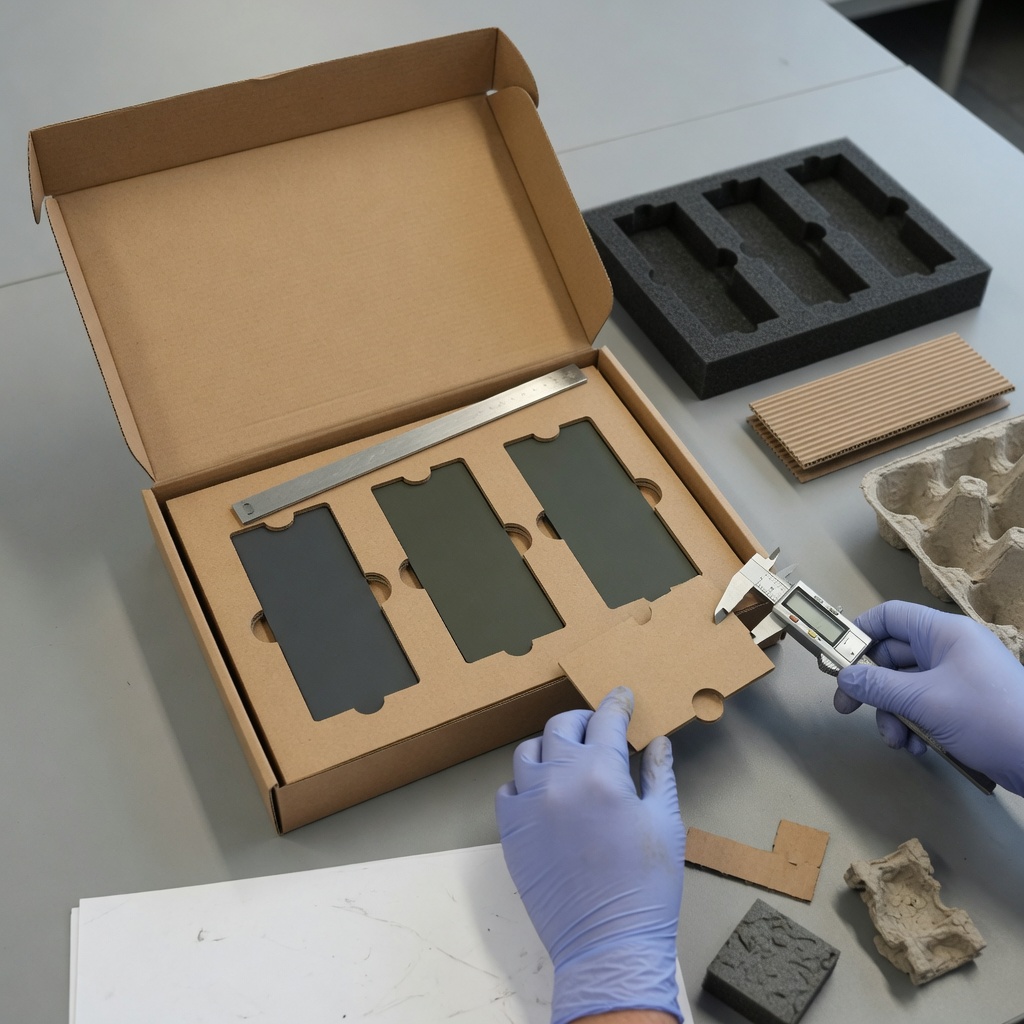
European B2B manufacturing buyers should treat box insert OEM product development capability as a documented engineering handoff, not as a reprint. Shortlist an OEM only if it can convert a named CAD file, drawing, or physical sample into a revision-controlled insert (cavity layout, dieline or toolpath, material stack, packing method), prove packed fit with the live product in the production-intent box, then manufacture that locked design. A quote that lists only unit price, colour, and MOQ is a production offer, not an OEM development package.
For box insert programs packed for Europe, those development files are also the evidence pack for later packaging documentation. EU, EEA, and UK rules are not interchangeable. Name pack-for and ship-to markets on the RFQ so material declarations and producer-responsibility data are prepared for the correct jurisdiction, not copied from a generic Europe line.
This briefing is written for Custom Logo Things by Vincent Xi, Editorial Author (author profile). It does not claim factory visits, laboratory tests, named customers, certifications, unpublished results, or first-person production experience. It is a manufacturing RFQ briefing on box insert product development capability, not a country legal guide and not a factory ranking.
Product development capability for OEM box insert manufacturing in Europe
For this briefing, product development capability means a named OEM can take box insert geometry through to a locked manufacturing file set for a named European destination.
Treat that capability as a sequence of controlled outputs:
- Capture of product geometry (native CAD, drawings, or measured sample).
- Insert structure and cavity layout that locates each SKU without abrasion, crush, or uncontrolled movement.
- Dieline and/or toolpath for the chosen process (die-cut paperboard or corrugated, CNC or molded foam, molded pulp, or mixed materials).
- Material selection with protection, cost, and documentation in view.
- Structural prototype and fit test with the real product and the real outer box.
- Packing-method definition (orientation, count, closure, unitizing).
- Locked revision, bill of materials, and manufacturing handoff.
Published OEM workflows (comparison templates, not Custom Logo Things claims):
- OEM Materials describes custom packaging design for manufacturers and OEM teams that develops foam inserts and boxes from CAD, drawings, or samples, including reverse engineering, CAD drawings, free prototypes, and material optimization for protection and cost control in electronics, medical, and automotive work.
- Rock Valley Packaging describes custom box inserts manufactured in-house at its Loves Park, Illinois facility, with inserts designed around the product’s actual dimensions and box, using foam, cardboard, molded pulp, or fabric-wrapped constructions, plus structural prototypes and die-cutting from sketches, samples, or existing boxes.
- HS Packfactory describes a factory-direct custom box inserts manufacturer in Shenzhen, China (stated as operating since 1999) covering paperboard, corrugated, molded pulp, foam, and mixed-material projects, with the packaging team reviewing insert structure, cavity layout, dieline, sample fit, and packing method.
Use those pages as RFQ comparison templates only. They are not audited cycle times, not Custom Logo Things performance claims, and not a promise that any factory’s terms apply to a given SKU. Loves Park, Illinois, and Shenzhen, China, are manufacturing-origin statements on those pages; they are not sales-market targets in this briefing.
Decision gates: what capable looks like on a Europe RFQ
Score the OEM before price:
| Gate | Pass signal | Fail signal |
|---|---|---|
| Geometry intake | Named CAD formats, drawing revision, or measured-sample protocol in writing | Photos as the only path |
| Development outputs | Cavity-layout drawing, dieline or toolpath, BOM, packing-method sheet | Verbal will-fit with no files |
| Fit proof | Packed sample in the production-intent outer box with live product | Insert blank or on-screen cavity only |
| Sample fidelity | Sample labelled production-matched or explicitly surrogate | Unlabelled hand-cut stand-in treated as production |
| Quantity split | Billable prototype lot separate from production MOQ | One MOQ that forces a Europe pilot into bulk |
| Destination file | EU member state, EEA, and/or UK named separately | Single Europe-compliant line |
| Lock and ECO | Frozen revision, ownership of die/mold/files, priced change orders | No file delivery and no second-source path |
If an OEM cannot pass the development-output, fit-proof, and destination-file gates, product development capability is incomplete for that Europe manufacturing program. Low unit price does not close the gap.
CAD, reverse engineering, and dieline control
Ask the OEM to state in writing which inputs it can run without re-quoting engineering:
- Native 3D CAD, with formats named on the RFQ (examples to specify, not claimed capabilities of Custom Logo Things and not assumed acceptances: STEP or IGES).
- 2D drawings with tolerances, millimetre units, and a revision letter (millimetre dimensioning is a Europe manufacturing RFQ preference to specify, not a legal requirement taken from the cited OEM pages).
- Physical product samples, including items that cannot be cut, opened, or photographed.
- An existing box or insert for reverse engineering.
Reverse engineering is measured geometry, draft, undercut, and pack-out, not a photograph. OEM Materials lists reverse engineering among its custom packaging design services (OEM Materials custom packaging design). Rock Valley Packaging states that it works from sketches, samples, or existing boxes (Rock Valley Packaging box inserts). A Europe manufacturing buyer should still require a measurement protocol: who measures, with what instrument, how nested tolerances of product + insert + carton inside dimension are allocated, and who signs first-article.
Dieline and tool ownership belong in the contract. If the OEM creates the dieline, specify whether the buyer receives native files, a PDF only, or no file; whether the steel rule die or pulp/foam mold is buyer-owned; and how engineering change orders are priced. Without that, a second source later cannot dual-source the same insert.
Fit testing must use the production-intent outer box. A cavity that looks correct on screen can fail when flute direction, wrap caliper, or lid-wrap thickness changes inside dimension. Require a packed sample, not only an insert blank.
Sampling time, MOQ, and production-calendar trade-offs
Split the calendar into engineering, sampling, buyer approval, tooling, and mass production. Do not buy a single lead-time number. Ask whether each day count is calendar days or working days, and do not treat a factory ship date in Shenzhen or Illinois as the date the lot is available in a named EU member state, an EEA destination, or the UK.
Supplier-stated figures from HS Packfactory’s public box-inserts page (reconfirm on the SKU quote):
- Sampling: 3–7 days (unit: days as published; calendar versus working days not stated on that page; scope: that factory’s stated custom box insert process covering paperboard, corrugated, molded pulp, foam, and mixed materials; as-of: the public page used for this briefing; source: HS Packfactory box-inserts).
- Mass production: 15–20 days after approval (unit: days after approval as published; same factory and process scope; as-of: the same public page; source: same URL).
- MOQ: from 500 pcs (unit: pieces; same factory and process scope; as-of: the same public page; source: same URL).
- Operation stated since 1999 (unit: calendar year; scope: that company’s public history claim for its Shenzhen, China factory-direct operation; as-of: the same public page; source: same URL).
Those figures are supplier-stated. They were not independently timed or audited for this article.
Worked example (assumption to verify in the supplier quote, not a market average and not a Custom Logo Things result): if a buyer treats the midpoint of that published sampling window as 5 days and the midpoint of the published mass-production window as 17.5 days, the implied factory calendar from sample kickoff to bulk shipment still omits engineering time, courier time into the named EU member state, EEA destination, or UK, buyer approval dwell, and any tooling that is not already cut. Do not use 5 + 17.5 days as a contractual inbound plan.
Measurable trade-offs to score on the RFQ:
- Short sample window versus production fidelity. A 3–7 day sample (unit: days; scope: that factory’s published sampling window; as-of: its public page used for this briefing; source: HS Packfactory box-inserts page cited above; verify on quote) may be hand-cut or CNC-cut as a surrogate. Molded-pulp tools and some foam molds do not appear on that clock. Ask whether the sample uses the production board grade, foam density, or pulp recipe.
- Production MOQ versus development lots. A 500-piece manufacturing minimum (unit: pieces; scope: that one factory’s published MOQ; as-of: its public page used for this briefing; source: HS Packfactory box-inserts page cited above; verify) can be too large for a Europe pilot. Ask for a billable prototype lot separate from production MOQ, and label any example quantity as a quote item to verify.
- In-house versus brokered development. Rock Valley Packaging states in-house manufacture at Loves Park, Illinois (Rock Valley Packaging box inserts). HS Packfactory states factory-direct production in Shenzhen, China (history claim, unit, scope, and as-of as in the figures block above; source: HS Packfactory box-inserts). Neither origin is a sales-market target. For a Europe program, score whether design, die-making, and mass production sit in one quality system, and whether a second plant can run the locked dieline.
- Free prototype versus paid engineering. OEM Materials lists free prototypes among its design services (OEM Materials custom packaging design). Free is not a specification. Ask how many revision cycles are included, who pays extra CAD hours, and whether a failed fit test restarts the clock.
Pay for a fit-tested sample against the live product before releasing mass production. A wrong cavity that ships into an EU, EEA, or UK warehouse creates rework and scrap.
Materials, cavity layout, and packing method
Material choice changes the development method, so name it on the RFQ rather than leaving the insert unspecified:
- Paperboard and corrugated inserts: die-cut development, grain or flute direction, caliper, and any recycled-content claim. Structural prototypes and die-cutting are part of the in-house workflow described by Rock Valley Packaging (source).
- Foam inserts: density, skin, chemical inventory, and CNC versus molded routes. OEM Materials highlights foam inserts developed from CAD or samples (source).
- Molded pulp: tool investment, drying, and dimensional recovery. Both Rock Valley Packaging and HS Packfactory list molded pulp among insert materials (Rock Valley; HS Packfactory).
- Fabric-wrapped inserts: wrap adhesion, lint, and cosmetic scuff (listed by Rock Valley Packaging).
- Mixed-material inserts: HS Packfactory lists mixed-material projects; these need a combined bill of materials and a packing method that stops dissimilar parts from marking each other.
Cavity layout is a product-development deliverable, not artwork. Specify SKU count per tray, nesting, undercut, finger access, maximum movement, and whether the insert is a tray, platform, wrap, or partition. Example RFQ clearance (assumption to verify in the supplier quote, not a laboratory result and not a Custom Logo Things measurement): maximum free movement 1 mm (unit: millimetre; scope: product-to-cavity gap in the packed production-intent box after closure; as-of: buyer-defined on the RFQ; source: buyer specification, not the cited OEM pages). Require the OEM to record packing method: product orientation, films, desiccant if used, closure, and pallet recipe.
Protection versus cost is an optimization loop. OEM Materials describes material optimization for protection and cost control. Demand a written rationale: why this caliper or density, what failure mode it addresses, and what was rejected.
How Europe manufacturing procurement should split EU, EEA, and UK checks
Do not write Europe-compliant on a purchase order. State the pack-for and ship-to market:
- EU: confirm with the buyer’s compliance function which packaging, labelling, and producer-responsibility filings apply in the member state of placement, and what material information the OEM must supply. Do not assume one member state’s file covers another.
- EEA: do not assume an EU file is automatically sufficient; name the EEA destination and verify that market’s current obligations.
- UK: treat UK placement as a separate documentation set from EU placement after the UK’s departure from the EU; do not assume one chemical or packaging file covers both.
This briefing does not attach a regulation number, recycled-content percentage, or test standard as a universal Europe rule, because the cited OEM pages do not publish those legal requirements and no current certificate is on file here. If the SKU needs a named test method, put that method on the RFQ and require a report on the actual construction. Distinguish a standard’s requirement from any factory’s own practice. Do not imply certification.
Manufacturing origin (China, the United States, or elsewhere) is a supply-chain fact. It is not a Europe sales-market invitation and not a substitute for destination-market documents.
Buyer decision table for OEM box insert development
The table is the scoring matrix. The checklist that follows is the RFQ writer’s punch list. Use both for the manufacturing award; do not expand either into a generic packaging brief.
| Decision item | Specify on the RFQ | Compare across OEMs | Verify before approval | Lock on the order |
|---|---|---|---|---|
| Geometry input | CAD format, drawing revision, or sample count; millimetre units; return/destroy rules | Native CAD versus sample-only capability | Measurement method and tolerance stack (product + insert + box ID) | Freeze file revision on the PO |
| Reverse engineering | Permission to measure; no-cut / no-photo limits | Stated reverse-engineering service versus visual copy | Dimension report against the sample | Buyer owns the measurement file |
| Cavity layout | SKU list, orientation, finger access, max movement | Engineering review versus a verbal will-fit | Fit test with live products in the production-intent box | Layout drawing at named revision |
| Dieline / toolpath | Process: die-cut, CNC foam, pulp mold, or mixed | Native file delivery and dual-source rights | Dieline matches sample and box inside dimension | Buyer licence or ownership of die/mold |
| Material stack | Board caliper/grade, foam density, pulp recipe, adhesives | Protection-versus-cost rationale and document pack | Incoming declarations; evidence for any recycled-content claim | BOM locked; no silent substitution |
| Prototype type | Production-matched structural sample, or labelled surrogate | Included revisions; scope of any free prototype | Packed-box fit and abrasion check | Written sample-approval form |
| Sampling calendar | Clock start, calendar versus working days, sample process, courier terms into the named EU/EEA/UK destination | Published windows versus SKU-specific quote | Who holds approval dwell | Sample days as a dated commitment |
| Production calendar | Mass-production start after written approval | One factory publishes 15–20 days after approval (unit: days after approval; treat as that HS Packfactory claim only; see figures block) | Capacity and holiday calendar; factory ship date versus inbound date | Production days on the PO |
| Quantity | Prototype lot versus production MOQ (one factory publishes MOQ from 500 pcs — unit: pieces; verify that HS Packfactory claim) | Pilot lots versus 500-piece floors | First-article quantity and AQL | MOQ, spares, overrun % |
| Packing method | Count, orientation, closure, pallet recipe | Insert-only quote versus full pack-out | Filled-box photos and any buyer-mandated transport test | Packing-method sheet on the PO |
| Destination market | EU member state(s), EEA, and/or UK listed separately | Market-specific documents versus a generic Europe line | Declarations aligned to the named market | Destination and marking language |
| Change control | ECO price, requalification, obsolete stock | How many free CAD/sample loops | Bulk lot matches the approved sample | ECO clause and scrap responsibility |
If an OEM cannot complete a cell, product development capability is incomplete for that manufacturing program.
RFQ checklist for Europe manufacturing buyers
Specify, compare, verify, approve, or order each item. Keep the task as OEM development of a box insert, not a country tour and not a reprint unless a named dieline revision is attached.
Scope and geometry
- State the task as OEM development of a box insert, not reprint of an existing dieline unless that dieline is attached at a named revision.
- Name pack-for and ship-to markets separately: EU member state(s), EEA, and/or UK. Do not use Europe as one legal file.
- Attach CAD (format named), drawings (revision named, millimetre units stated), or declare sample count and courier terms.
- State whether reverse engineering is authorised and whether samples must be returned or destroyed.
- List every SKU in the insert, with mass, fragility, finish, and keep-out zones.
- Give outer-box inside dimensions, board grade, and any lid-wrap or tray that changes inside dimension.
Development deliverables
- Require a cavity-layout drawing and a packing-method sheet as deliverables.
- Require a dieline or toolpath deliverable and state file and tool ownership.
- Name candidate materials (paperboard, corrugated, molded pulp, foam, fabric-wrapped, mixed) and forbid silent substitution.
- Split the quote into engineering, prototype lot, tooling, and unit production so product development capability is priced, not buried in a piece price.
- Ask whether a second plant can run the locked dieline without reverse-engineering a shipped insert.
Sample, time, and quantity
- Ask which sample process matches production; label any surrogate sample as non-production.
- Ask how many design/sample iterations are in the price and the unit price of extra loops.
- Request a prototype quantity separate from production MOQ.
- Request sampling time in days, state calendar or working days, with clock start defined (complete files/samples versus deposit).
- Request mass-production time in days after written sample approval, and MOQ in pieces; do not treat origin ship date as inbound availability in the named Europe destination.
- Treat published examples such as 3–7 day sampling, 15–20 day mass production after approval, or MOQ from 500 pcs as that publisher’s stated figures only; require SKU-specific numbers.
- Specify Incoterms, palletisation, and whether inserts ship nested, assembled, or packed with product.
- Name the buyer approver and maximum approval dwell; late buyer comments are not supplier delay.
Materials and destination-market file
- Require a materials declaration template defined by the buyer’s compliance team for the named EU, EEA, or UK file.
- If recycled content, recyclability, or compostability is claimed, require the evidence document.
- If foam, inks, coatings, or adhesives are used, require a substance disclosure the buyer can screen against its own list; do not assume one chemical file covers both the EU and the UK.
- State food-contact, skin-contact, or medical packaging status; if none, say so.
- Require manufacturing origin to be declared, and state that origin does not replace destination-market documents.
Lock, quality, and order acknowledgement
- Require first-article criteria: critical cavity dimensions, caliper or density, colour if relevant, and fit.
- Define AQL, over/under-run, and lot marking on cartons.
- Define ECO rules after approval: new dies, obsolete inventory, and re-sampling.
- Require packed-sample photos (top, side, lid-closed) plus a dimensioned inspection sheet.
- Attach the buyer’s transport or handling spec if one exists; if not, state that the OEM must not invent a test and call it certified.
- Ask for quote validity date and currency.
- Require the first-article pack to include the development file set (BOM, declarations, dieline revision, packing-method sheet) that will support the named destination file.
- Require the order acknowledgement to restate locked BOM, dieline revision, and packing method.
Source context, method, and limits
Source context 1. OEM Materials’ custom packaging design page describes OEM development of foam inserts and boxes from CAD, drawings, or samples, including reverse engineering, CAD drawings, free prototypes, and material optimization, with electronics, medical, and automotive among named sectors. Source
Source context 2. Rock Valley Packaging’s custom box inserts page describes in-house manufacture in Loves Park, Illinois, design around actual product and box dimensions, materials including foam, cardboard, molded pulp, or fabric-wrapped inserts, and structural prototypes and die-cutting from sketches, samples, or existing boxes. Source
Source context 3. HS Packfactory’s custom box inserts page describes a Shenzhen, China factory-direct manufacturer (stated since 1999) for paperboard, corrugated, molded pulp, foam, and mixed-material inserts, with review of structure, cavity layout, dieline, sample fit, and packing method, and published figures of sampling 3–7 days, mass production 15–20 days after approval, and MOQ from 500 pcs. Source
How the data were derived. This briefing compares publicly described OEM workflows and supplier-stated time, quantity, and history figures from those pages. No stopwatch study, factory audit, or laboratory test was performed for this article. Where an arithmetic midpoint is shown (5 days; 17.5 days), it is an example calculation from published ranges and is labelled as an assumption to verify in a quote. Where a 1 mm clearance is shown, it is a buyer RFQ example, not a measured result.
What to verify before you order. Supplier web copy goes stale. Sampling days, production days, MOQ, free-prototype policies, and in-house claims can change and may not apply to tooled pulp or mixed-material programs. Published day counts may be calendar days or working days; the cited page used here does not settle that distinction for a contractual plan. Europe is not a single market: confirm EU, EEA, and UK packaging, chemical, and producer-responsibility obligations with the buyer’s compliance function and the scheme operator in the destination country. Custom Logo Things does not present the cited factories’ figures as its own manufacturing results. If a test method matters to the SKU, name it on the RFQ and require a current report on the actual construction.
For Europe manufacturing programs, the buying decision is whether the OEM can close the loop from geometry to approved sample to locked mass production, with files that can be defended in the destination jurisdiction. Issue the RFQ with the gates, table, and checklist completed; do not award on unit price alone.
Discuss Your Requirements
Review our manufacturing capabilities, then share your specifications for a supplier-fit review.