Box Insert OEM Sustainability Sourcing Criteria for United States RFQs
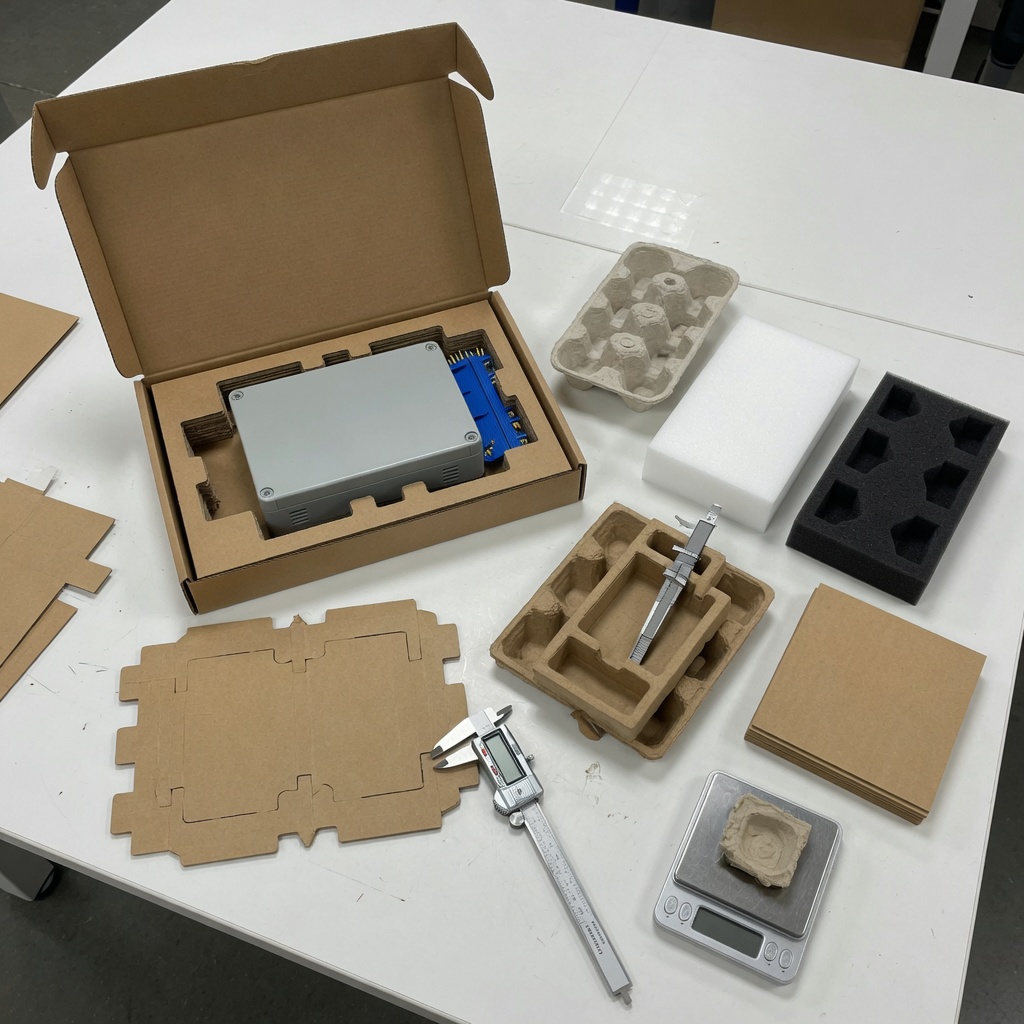
By Vincent Xi, Editorial Author
Author basis: The author profile identifies Vincent Xi as Editorial Author. It provides no basis for a first-hand factory, testing, client, or manufacturing-experience claim, so this article makes none.
For United States B2B buyers, box insert OEM sustainability sourcing criteria should operate as manufacturing award gates, not as broad environmental preferences. A quote should advance only when the supplier ties the exact box insert SKU and revision to a controlled specification, complete material declaration, applicable sourcing evidence, proposed label wording, landed-cost scope, and delivery commitment.
The material choice remains subordinate to product protection. Paperboard, molded pulp, or foam should not receive automatic preference based on a material-family name or environmental adjective. The candidate must first satisfy the buyer-defined fit, handling, cosmetic-contact, pack-out, and distribution requirements. Sustainability claims can then be compared using evidence with matching definitions and boundaries.
The supplied sources frame useful RFQ questions but do not validate a bidder. The OEM Materials page discusses right-sizing, asks which FSC or SFI credential covers virgin fiber, and frames molded PE versus PU as a recovery-route question. The Amnet commercial catalog represents that vendor's offerings as including paperboard, molded pulp, EVA and EPE foam, FSC chain of custody, soy-based inks, and eco-glues. Neither page proves another supplier's capability, certification, product performance, destination recovery, or compliance.
United States Box Insert OEM Sustainability Sourcing Criteria
Apply every gate to the quoted box insert revision, manufacturing site, and named United States destination. A general policy, catalog statement, or sample without traceable records is not enough for award.
| Decision gate | RFQ requirement | Evidence before award | Buyer release rule |
|---|---|---|---|
| Protection baseline | Identify the buyer product revision, product mass and dimensions, fragile areas, contact restrictions, loading orientation, pack-out, and buyer-selected protection protocol | Controlled product and insert drawings, representative sample, fit record, and required protection-test record | Reject any construction that misses a buyer-defined acceptance criterion |
| Complete construction | Declare every substrate, polymer, fiber furnish, coating, laminate, ink, adhesive, label, additive, colorant, and fastener | Bill of materials, current technical records, component declarations, and a matching physical sample | Resolve undeclared layers and document-to-sample mismatches before approval |
| Dimensional control | State overall and cavity dimensions, datums, critical interfaces, tolerances, measurement method, instrument resolution, and inspection plan | Controlled drawing and measurement record linked to identified samples | Release only the measured revision approved by the buyer |
| Sourcing and content claims | Define the exact claim, covered component, calculation basis, evidence period, legal entity, site, and evidence owner | Calculation worksheet, supplier records, current scheme documents where relevant, and matching commercial documents | Compare percentages only when definitions, boundaries, and evidence periods match |
| Destination recovery | Identify the finished material form, intended United States disposal location, collection or return route, receiver restrictions, separation steps, and evidence period | Written program or receiver evidence applicable to the finished construction and destination | Do not approve end-of-life wording from material identity alone |
| Manufacturing control | State the process route, tooling revision, subcontracted operations, defect definitions, lot traceability, retained records, and change procedure | Preproduction approval package, inspection plan, example lot record, and change-control procedure | Prohibit shipment of an unapproved material, process, tooling, site, or artwork revision |
| Environmental labeling | Submit exact wording, covered component, supporting evidence, artwork location, evidence owner, and approval route | Claim file, applicable current scheme records, and approved artwork | Keep claim approval separate from fit and protection approval |
| Landed cost | Itemize tooling, sampling, manufacturing, decoration, packing, freight, insurance, customs-related charges, brokerage, inspection, rejection, replacement, and recovery exposure | Quote worksheet with currency, named destination, assumptions, and validity date | Compare cost per delivered and accepted insert under matched scope |
| Delivery | Define the lead-time trigger, calendar-day lead time, production completion point, transit basis, promised delivery date, pack-out, capacity basis, and escalation route | Written production and logistics plan tied to the approved revision | Award against a documented schedule rather than an unqualified lead-time estimate |
Build a Comparable Manufacturing Specification
Give every bidder the same specification schedule and retain the original values, units, evidence identifiers, and revision dates. This prevents a converted value or generic material description from hiding a scope mismatch.
| Specification area | Required bidder entry | Verification record |
|---|---|---|
| Commercial identity | Buyer SKU, forecast period, release quantity, legal supplier, manufacturing site, named United States destination, quote currency, and validity date | Signed quote and scope acknowledgment |
| Product interface | Product revision, product mass, overall dimensions, fragile areas, contact restrictions, loading orientation, and removal method | Buyer product drawing and fit checklist |
| Insert geometry | External dimensions, cavity dimensions, wall or web dimensions, datum scheme, critical interfaces, and tolerances, all with declared units | Controlled insert drawing and measurement report |
| Finished mass | Mass per insert, conditioning statement, instrument resolution, sample identifiers, and proposed variation limit | Mass record linked to the approval samples |
| Complete material build | Substrates, furnish or polymer, coatings, laminates, inks, adhesives, labels, additives, colorants, fasteners, and bonded components | Bill of materials, component records, and complete sample |
| Production route | Printing, cutting, molding, laminating, adhesive application, assembly, subcontracted work, tooling identity, and responsible site | Process flow and tooling record |
| Converting yield | Gross input mass, accepted output, trim mass, trim destination, nesting layout, and calculation method | Bidder worksheet and production-record format |
| Pack-out | Inserts per carton, carton dimensions, gross and net mass, nesting direction, pallet arrangement, and requested moisture or compression controls | Pack-out drawing and logistics worksheet |
| Inspection | Critical characteristics, defect definitions, instruments, resolution, sampling plan, acceptance rule, traceability, and corrective-action route | Inspection plan and example report |
Material-Specific Evidence
| Candidate construction | Specification fields to request | Claim boundary to control |
|---|---|---|
| Paperboard or corrugated | Grade, flute where applicable, caliper, basis weight, furnish declaration, recycled-content basis, virgin-fiber claim, coatings, inks, laminates, adhesives, and converting site | Do not extend a component claim to the finished insert unless the evidence and approved wording cover the complete construction |
| Molded pulp | Furnish declaration, recycled and virgin fiber split, additives, colorants, surface treatment, wall dimensions, tooling identity, molding site, and drying or finishing route | Match content and sourcing evidence to the quoted furnish, site, and revision |
| PE, EPE, EVA, or PU foam | Polymer identity, density, cell structure, crosslinking status, additives, color, recycled-content declaration, adhesive construction, cutting or molding process, and site | Treat recovery as a destination-specific evidence question rather than an inference from the polymer name |
| Inks, coatings, and adhesives | Component identity, application area, technical record, claim definition, evidence owner, and finished-sample coverage | Do not infer a sourcing or end-of-life outcome from terms such as soy-based ink or eco-glue alone |
The Amnet page supplies vendor-attributed examples of material and process descriptions. For an actual purchase, the bidder still needs to document the complete quoted construction. A catalog listing is not a substitute for a bill of materials, current evidence, or a sample tied to the production revision.
United States Labeling and Recovery Evidence
Environmental wording needs its own RFQ hold point. Before approving claim-bearing artwork, collect:
- The exact proposed wording and box insert SKU.
- The component or finished construction covered by the statement.
- The legal entity, manufacturing site, and subcontracted operation covered by the evidence.
- The evidence owner, document identifier, issue date, current status, scope, and applicable conditions.
- The calculation basis, evidence period, numerator, and denominator for any content percentage.
- The intended United States disposal location and receiver conditions for an end-of-life statement.
- The proposed mark, artwork placement, authorization evidence, and buyer approval owner where a certification mark is requested.
FSC and SFI are relevant here only because the OEM Materials source asks which credential covers virgin fiber. That source does not establish a bidder's status, and this article does not restate either scheme's requirements. Treat the controls above as buyer-defined purchasing practice. Do not describe a supplier, production site, or quoted insert as certified without current documents covering the relevant legal entity, site, scope, product group, and supply path.
Amnet's FSC chain-of-custody reference remains an attributed representation about its own offering. It does not establish another bidder's status or authorize mark use on buyer artwork. Final wording and artwork should be reviewed against the evidence for the actual SKU and destination.
For destination recovery, the bidder's worksheet should identify the complete finished material form, including attached films, coatings, adhesives, labels, and mixed components. It should also name the intended United States location, collection program or return receiver, separation and cleanliness conditions, restrictions, evidence source, effective period, and responsible contact.
If applicable receiver evidence is unavailable, the RFQ should require removal of the proposed statement, an alternative construction, or a documented return proposal. A return proposal should identify the responsible party, receiving location, transport arrangement, contamination limits, and written receiver acceptance.
Landed Cost and Delivery Controls
Normalize every bid with the same denominator and commercial scope:
```text Landed cost per accepted insert = (tooling + sampling + manufacturing + decoration + packing + freight + insurance + customs-related charges + brokerage + inspection + sorting + replacement + approved recovery costs) / accepted inserts ```
The quote should separate recurring and nonrecurring charges and state:
- Tooling ownership, revision, maintenance charges, and replacement terms.
- Manufacturing, printing, coating, laminating, adhesive application, and assembly charges.
- Export or transit packing, carton configuration, and pallet arrangement.
- Freight, insurance, transfer points, and delivery responsibility for the named United States destination.
- Customs-related and brokerage assumptions for buyer and broker review.
- Incoming inspection, sorting, rejection, replacement, and expedited-recovery terms.
- Quote currency, validity date, release quantity, and price-adjustment conditions.
- Production lead time in calendar days, its trigger event, completion point, transit basis, promised delivery date, and capacity commitment.
Classification, manufacturing origin, and duty treatment should be verified with the buyer's customs broker for the actual material construction and shipment. Do not compare a factory unit price with a delivered price or use received quantity as the denominator when rejected inserts remain the supplier's responsibility.
A lower-mass insert should advance only if it meets the same product revision, controlled drawing, protection threshold, pack-out scope, delivery responsibility, and destination criteria as the alternative.
Illustrative RFQ Comparison
Every numeric value in this section is an illustrative assumption created for a hypothetical calendar-year 2026 United States RFQ. Its source is this article's example model, not the cited pages. Each value must be verified in the supplier quote, controlled drawing, sample record, freight offer, and customs-broker review before purchasing use.
| Example-model field | Hypothetical calendar-year 2026 United States assumption | RFQ use and verification |
|---|---|---|
| Insert geometry | The example insert measures 300 mm x 200 mm x 40 mm, with a proposed tolerance of +/- 1 mm only at buyer-marked critical interfaces | Verify every dimension, datum, interface, and tolerance in the supplier drawing and measured sample record |
| Purchase scope | The example demand is 50,000 inserts, released in five lots of 10,000 inserts per lot during calendar-year 2026 | Verify forecast, released quantity, lot definition, and manufacturing capacity in the quote |
| Candidate mass | Example candidate A is 88 g per insert and example candidate B is 76 g per insert for the same buyer SKU and pack-out | Verify mass on identified samples under approved measurement conditions |
| Mass arithmetic | The example difference is 12 g per insert. Across 50,000 inserts, 12 g per insert x 50,000 inserts equals 600,000 g, or 600 kg, less purchased insert mass | Use only after protection approval; the arithmetic does not establish emissions, recyclability, recovery, or product protection |
| Tooling allocation | Example tooling is USD 2,500 for the buyer-SKU tool. USD 2,500 divided by 50,000 inserts equals USD 0.05 per insert | Verify tool scope, ownership, revision allowance, maintenance, replacement terms, and actual released quantity |
| Landed-cost inputs | The example assigns USD 0.62 per insert to manufacturing, USD 0.05 per insert to tooling, USD 0.08 per insert to packing and freight, USD 0.03 per insert to customs-related and brokerage charges, and USD 0.02 per insert to incoming inspection | Verify every charge in the supplier quote, logistics offer, inspection plan, and broker review |
| Landed-cost result | Assuming all 50,000 received inserts pass acceptance, the example sum is USD 0.80 per delivered and accepted insert | Replace the full-acceptance assumption with actual accepted quantity, rejection, sorting, replacement, and recovery terms |
These figures demonstrate specification and cost normalization only. They are not market prices, environmental benchmarks, supplier-performance data, delivery commitments, or product-test results.
RFQ Approval and Change Control
The preproduction approval package should connect the commercial offer to the physical insert. It should contain the buyer SKU, product and insert revisions, complete construction, manufacturing site, subcontracted operations, tooling identity, cavity geometry, critical dimensions, contact surfaces, appearance criteria, sample mass, pack-out, and buyer-selected protection protocol.
| Approval record | Required submission | Buyer hold point |
|---|---|---|
| Structural approval | Representative sample, controlled drawing, measurement report, and recorded fit result | Approve geometry and product interface before production release |
| Material approval | Bill of materials and component records matching the sample | Resolve undeclared materials and evidence gaps |
| Protection approval | Test record produced under the RFQ-defined protocol and acceptance criteria | Reject any construction that fails the required threshold |
| Claim and artwork approval | Exact wording, substantiation file, applicable mark authorization, and final artwork | Lock approved wording to the insert revision |
| Quality approval | Defect definitions, inspection method, sampling plan, traceability format, and remedy terms | Incorporate acceptance and corrective-action controls into purchase documents |
| Commercial approval | Normalized landed-cost worksheet and delivery plan | Confirm matched assumptions before award |
Purchase terms should require prior written approval for changes to material grade, mill or resin source, fiber furnish, foam density, recycled content, coating, laminate, ink, adhesive, additive, colorant, label, tooling, cavity geometry, tolerance, process, subcontractor, manufacturing site, pack-out, evidence basis, certification status, environmental wording, or artwork.
A proposed change should identify affected inventory and purchase orders, the proposed effective date, revised documents, validation work, and the buyer approval required before shipment. Use a pass-or-fail award matrix for protection, construction disclosure, sourcing evidence, destination recovery, labeling, manufacturing control, landed cost, and delivery. An unsupported claim or unmatched unit price should not offset a failed mandatory gate.
Methodology, Source Context, and Limitations
The editorial method was to classify each supplied page by source type, retain only explicitly attributed context, and convert that context into box insert specification fields, evidence requests, and RFQ hold points. Supplier statements remain attributed to the supplier making them; they are not generalized to other bidders.
| Source | Retained context | Permitted use | Limitation |
|---|---|---|---|
| OEM Materials | The page frames its discussion around calendar-year 2026, discusses right-sizing, asks which FSC or SFI credential covers virgin fiber, and presents molded PE versus PU as a recovery question | Frame RFQ questions about dimensions, mass, fiber-claim evidence, foam construction, and destination recovery | Does not prove a bidder's certification, finished-insert recovery, test result, production capability, or environmental superiority |
| Amnet Packaging | The commercial catalog represents Amnet's offerings as including paperboard, molded pulp, EVA and EPE foam, FSC chain of custody, soy-based inks, and eco-glues | Identify material and claim fields to request from that vendor or another bidder | Does not prove another supplier's practice, a current certificate, a specific SKU construction, destination acceptance, or measured performance |
| Vincent Xi author profile | The profile identifies Vincent Xi as Editorial Author | Support the visible byline and structured-data author identity | Does not support a first-hand manufacturing, testing, factory-visit, customer-outcome, or certification claim |
The calendar-year 2026 reference is source framing on the OEM Materials page, not a separately verified publication date. Publication and access dates were not established from the supplied Amnet context.
No bidder bill of materials, current FSC or SFI certificate, certificate-status record, transaction document, recycled-content calculation, receiver acceptance letter, laboratory report, production sample, inspection record, supplier quote, freight offer, customs classification, artwork authorization, or delivery commitment was reviewed for a specific purchase.
Before award, verify each specification, sourcing claim, label statement, cost input, delivery commitment, and recovery route against current records tied to the legal supplier, quoted box insert SKU, manufacturing site, approved revision, shipment period, named United States destination, and final artwork. The illustrative figures must not be used as market benchmarks.
Discuss Your Requirements
Review our manufacturing capabilities, then share your specifications for a supplier-fit review.