Box Insert Sourcing Customization Options for Procurement in Canada
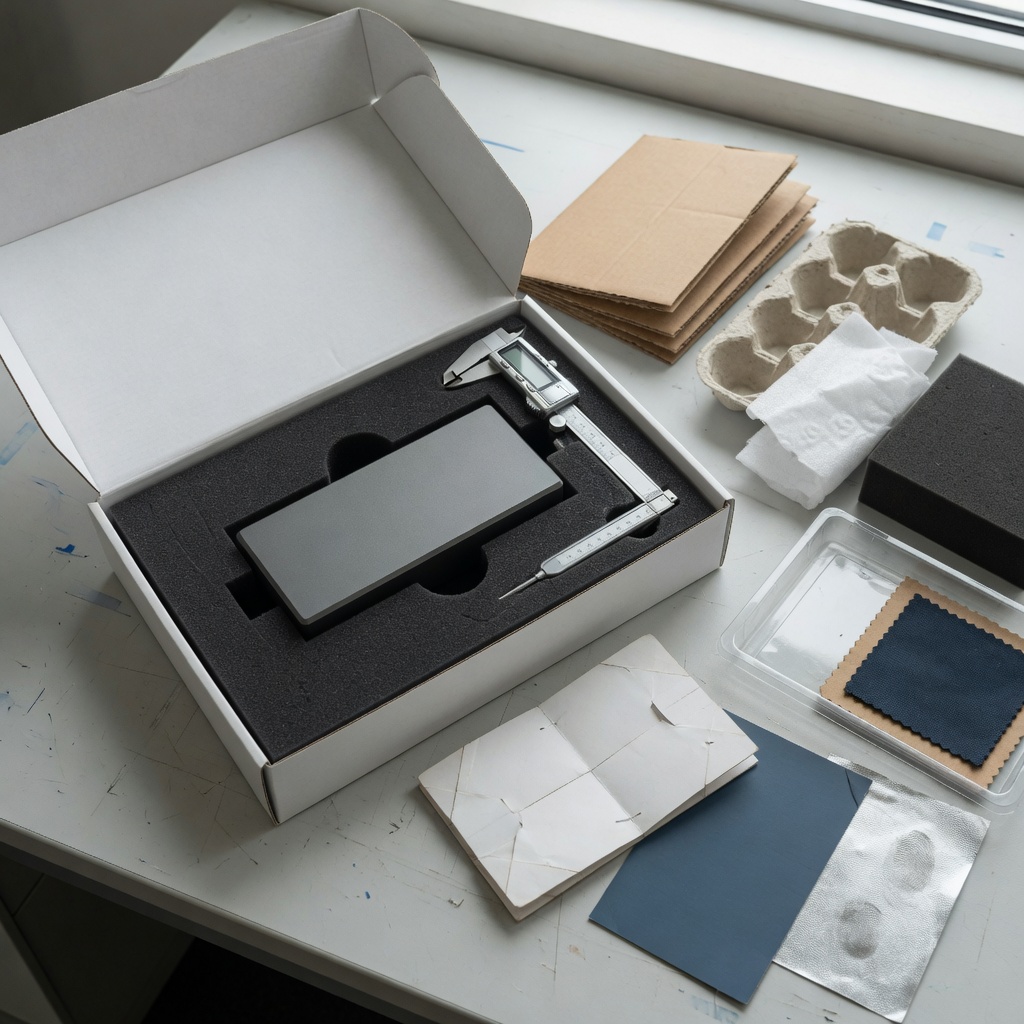
By Vincent Xi, Editorial Author
For a box insert order delivered in Canada, customization options become comparable procurement decisions only after the buyer defines fit, function, construction, decoration, approval evidence, and the commercial basis for the named delivery location. Every bidder should receive the same revision-controlled RFQ, and every proposed substitution or assumption should be returned in writing.
The supplied evidence provides a limited baseline for building that RFQ. Ecoicolor identifies product dimensions, weight, material preference, and documentation as quotation inputs. PakFactory lists several insert materials and decoration processes. Gentlever provides educational context for selected material categories. These pages support RFQ fields, but they do not prove universal availability, project suitability, certification, or Custom Logo Things capabilities (Ecoicolor; PakFactory; Gentlever).
An award-ready response should identify the quoted construction, return a dimensioned design with proposed tolerances, define the sample path, disclose differences between samples and production, state measurable acceptance criteria, and itemize the price basis for the specified Canadian destination.
Author evidence note: The author profile establishes Vincent Xi's name, role, and profile URL only. It does not support a first-hand sourcing, manufacturing, factory-visit, testing, supplier-audit, or customer-project claim; none is asserted here.
Box Insert Customization Options for Procurement in Canada
Use the following release gates to keep customization and price comparisons tied to the same insert configuration.
| Decision gate | Buyer-controlled input | Supplier return | Release blocker |
|---|---|---|---|
| Fit and function | Product and box data, cavity layout, contact restrictions, positioning, retention, separation, presentation, and removal requirements | Dimensioned drawing, units, proposed tolerances, measurement method, fit-sample plan, and disclosed assumptions | Cavity geometry, tolerance stack, or production-box fit remains undefined |
| Material and structure | Preferred construction, relevant technical attributes, visible-surface expectations, assembly state, and substitution limits | Exact quoted material and grade, structural details, technical evidence, and separately priced alternates | The quote identifies only a broad category such as foam, cardboard, or plastic |
| Decoration | Controlled artwork, colour reference, location, finish target, and prohibited areas | Proposed process, substrate response, setup or tooling charges, and decorated-sample plan | Appearance is quoted without a process, reference, or approval method |
| Samples and QC | Critical characteristics, acceptance boundaries, inspection records, and remedy expectations | Drawing and sample stages, production-equivalence statement, QC plan, report format, and nonconformance response | The supplier offers only an undefined quality assurance statement |
| Commercial basis | Approved revision, quantity scope, named Canadian destination, requested currency, packing needs, and schedule | Itemized quote, exclusions, tooling terms, packing data, price basis, and validity | Material, samples, tooling, packing, or delivery assumptions are hidden |
Apply the gates in sequence. Decoration should not be approved while fit or material remains provisional, and unit prices should not be compared until bidders have priced the same controlled configuration.
Fit Customization: Product, Cavity, and Box Inputs
Ecoicolor's supplier page asks for product dimensions, weight, material preference, and documentation when preparing a quotation (Ecoicolor). Those categories are useful starting inputs, but a procurement RFQ needs enough detail for the supplier to return measurable geometry rather than infer fit from photographs or an unverified box size.
| Buyer supplies | Supplier returns |
|---|---|
| Product drawing or CAD file with units, revision, nominal envelope, known variation, weight, orientation, removable parts, and restricted contact surfaces | Product assumptions, cavity dimensions, pocket depths, access features, and the product reference used for sample approval |
| Production box's usable internal dimensions, construction, closure features, liners, and known variation | Insert outer dimensions, datum locations, proposed tolerances, measurement method, and production-box fit plan |
| Required cavity layout, accessory positions, exposed-product areas, bridges, walls, recesses, and finger access | Dimensioned layout showing how each required feature is formed or assembled |
| Required positioning, retention, separation, presentation, lid-support, and removal functions | Proposed construction and a sample or test condition for each applicable function |
| Representative products or a controlled method for representing product variation | Written confirmation of which product conditions the sample and tolerance stack cover |
Hypothetical Fit Calculation for an RFQ
All dimensions below are example assumptions created solely to show how a buyer can frame a cavity question. They are not source-page data, tested results, recommended tolerances, or production specifications. Replace and verify every value in the project's dated supplier quote, returned drawing, and physical approval sample.
| Example input | Hypothetical assumption to verify |
|---|---|
| Product envelope | 150 mm long by 80 mm wide by 30 mm high |
| Product variation | Plus or minus 0.5 mm in length and plus or minus 0.5 mm in width around the assumed nominal envelope |
| Insert cavity | 152 mm long by 82 mm wide, with a 20 mm pocket depth |
Using those hypothetical assumptions:
- Example nominal length clearance:
(152 mm - 150 mm) / 2 = 1 mmat each end. - Example nominal width clearance:
(82 mm - 80 mm) / 2 = 1 mmat each side. - Example maximum-product length clearance:
(152 mm - 150.5 mm) / 2 = 0.75 mmat each end before insert-process variation is considered. - Example maximum-product width clearance:
(82 mm - 80.5 mm) / 2 = 0.75 mmat each side before insert-process variation is considered. - Example exposed height:
30 mm - 20 mm = 10 mmabove the pocket.
The example does not model insert-process variation, box variation, material response, coatings, liners, or assembly conditions. The supplier should return a project-specific tolerance stack and identify the drawing, measurement, or sample that verifies each input.
Record fit approval against observable evidence:
| Characteristic | Supplier defines | Approval record |
|---|---|---|
| Insert-to-box fit | Outer dimensions, tolerances, datums, and measurement method | Dimension report and fit check against the approved production-box reference |
| Product-to-cavity fit | Cavity dimensions, pocket depth, tolerances, and any compression assumption | Dimension report and structural sample using representative products |
| Retention | Orientation, handling condition, permitted movement, and pass boundary | Recorded result against the buyer-approved condition |
| Removal | Access method, buyer-defined force boundary if applicable, and prohibited deformation | Recorded result using the approved sample configuration |
| Surface contact | Permitted and prohibited contact areas plus relevant cosmetic boundaries | Documented contact review and visual or measurement result |
Descriptions such as fits well or holds securely are not acceptance criteria. Replace them with controlled drawings, stated conditions, measurable boundaries, and recorded results appropriate to the project.
Material and Structural Customization Options
PakFactory lists cardboard, molded pulp, plastic trays, and PU, EPE, and EVA foam among its insert-material categories. Gentlever discusses corrugated cardboard, EVA foam, and molded pulp in its educational overview (PakFactory; Gentlever). These sources identify categories for evaluation; they do not establish a bidder's exact grade, thickness, density, colour, finish, performance, or project suitability.
| Proposed construction | RFQ fields | Evidence to request from the bidder |
|---|---|---|
| Paperboard or corrugated | Board identification, thickness or flute construction, fold direction, exposed-edge expectation, assembly state, print areas, and substitution limits | Material specification, dieline, assembled sample, proposed tolerances, assembly requirements, and packing configuration |
| Molded pulp | Fibre or content claim to be verified, colour and texture target, contact areas, wall structure, nesting, moisture restrictions, tooling, and acceptable cosmetic variation | Material declaration, tooling drawing, physical sample, dimensional report, and support for any environmental claim |
| EVA, EPE, or PU foam | Exact foam type, grade, thickness, density or hardness data where relevant, colour, lamination, adhesive, odour criteria, and cut-edge limits | Technical data, cut sample, fit sample, cavity tolerances, and any application-specific evidence requested by the buyer |
| Plastic tray | Resin identity, sheet gauge, colour or transparency, edge treatment, nesting, forming tolerances, and any requested content claim | Resin declaration, formed sample, dimensional report, nesting data, and support for any content claim |
| Fabric-lined construction | Fabric composition, backing, adhesive, colour, wrapped-edge method, exposed-edge criteria, and product-contact restrictions | Construction sample and buyer-defined evidence for relevant lint, abrasion, odour, or colour-transfer criteria |
Ecoicolor includes fabric-lined materials on its supplier page, but that listing does not establish another bidder's availability or the material's suitability for a particular application (Ecoicolor). Each bidder should name the exact quoted construction and price any buyer-approved alternate separately.
Treat environmental, recycled-content, product-contact, cushioning, temperature, humidity, odour, static-control, and shelf-life statements as unverified until the supplier identifies the exact material, claim scope, relevant conditions, and supporting evidence. When certification is a purchase requirement, request a current document whose named product, facility, validity, and scope match the quoted supply. A capability page is not certification evidence, and no cited source establishes certification for Custom Logo Things.
Printing and Finish Customization Options
PakFactory lists offset printing, silk-screen printing, hot foil stamping, aqueous coating, and UV coating as customization categories on its supplier page (PakFactory). Use that list to request a project-specific proposal, not to assume that every process is available from every bidder or compatible with every material, cavity geometry, or product-contact condition.
For each decorated surface, the RFQ should define:
- The controlled artwork file and approved dieline revision.
- The colour reference, substrate colour, print location, orientation, coverage, and registration boundary.
- The required visual finish and every area that must remain undecorated or uncoated.
- Any buyer-defined contact, odour, abrasion, adhesion, transfer, or rub acceptance condition.
- The lighting, viewing, measurement, and physical-reference conditions used for approval.
Ask bidders to price undecorated and decorated configurations separately. Decoration lines should identify applicable artwork preparation, screens, plates, dies, foil tooling, setup, and samples. The supplier should also disclose every material, tool, forming, cutting, printing, coating, adhesive, or assembly condition that will differ between the approved sample and production.
MOQ, Sample, and QC Controls
The version of the Ecoicolor page supplied for this article is undated; no publication, update, or access date accompanies it. In that undated, supplier-specific context, Ecoicolor states a minimum order quantity of 1,000 finished custom box inserts per order (Ecoicolor). That exact quantity is not a current market benchmark, another supplier's minimum, or a Custom Logo Things offer. Reconfirm its current scope and conditions in a dated written quote.
Ask each bidder whether its quoted minimum applies per material, insert design, cavity layout, colour, artwork version, shipment, or purchase order. Tooling, setup, forecast, storage, revision, and reorder terms should remain visible in the award comparison rather than being absorbed into an unexplained unit price.
| Approval stage | Procurement purpose | Required record |
|---|---|---|
| Drawing or dieline review | Confirm dimensions, layout, revisions, tolerances, materials, and supplier assumptions before physical sampling | Buyer-approved controlled file and recorded concessions |
| Undecorated structural sample | Review cavity geometry, removal, retention, assembly, and production-box fit | Sample revision, fit record, dimension report, and unresolved differences |
| Decorated preproduction sample | Review colour, print, coating, foil, fabric, and visible surface quality where applicable | Approved physical reference and stated viewing or measurement conditions |
| Production-equivalence review | Identify conditions not represented by the sample | Written list of different materials, tools, processes, sites, or assembly conditions |
| Production release | Confirm that deviations and acceptance boundaries are closed | Signed release record linked to the controlled drawing and approved sample |
Ecoicolor mentions sample-fit review and QC checkpoints, but the cited page does not define a sampling basis, acceptance rule, measurement method, report format, or nonconformance remedy (Ecoicolor). Request a project-specific QC plan instead of treating a general supplier statement as evidence of a defined inspection system.
The QC response should identify critical characteristics, nominal values or visual references, tolerances or acceptance boundaries, measurement methods, inspection stages, sample-selection methods, record formats, traceability, packing checks, and remedies for nonconforming production. Written buyer approval should be required before changes to the quoted material, grade, dimensions, tooling, subcontracted process, artwork, decoration, adhesive, assembly, or packing.
Comparable Box Insert Quotes for Canada
The supplied sources contain no Canada-specific freight rates, tariff rates, tax treatment, customs classifications, labelling requirements, import-document rules, or regulatory determinations. No such rate or requirement is asserted here. Obtain current, project-specific advice using the actual insert material, packed product, shipment origin, transaction, and Canadian destination before relying on a classification, compliance, or landed-cost conclusion.
For supplier comparison, require every response to use the same approved insert revision and disclose:
| Quote element | Required detail |
|---|---|
| Price scope | Currency, issue date, validity, quoted quantity, artwork or design versions, payment schedule, and exclusions |
| Insert price | Finished-insert unit price with material alternates, decoration, setup, tooling, sampling, packing, and inspection itemized separately |
| Tooling | Ownership, storage, maintenance, revision, replacement, and transfer terms |
| Packing | Units per carton, carton dimensions and weights, protection method, and pallet assumptions where applicable |
| Delivery basis | Named Canadian destination, the quoted price basis at that location, and every delivery-related inclusion or exclusion |
| Timing | Event that starts production timing, stated timing basis, and treatment of buyer or supplier changes |
| Reorders and changes | Approved revision, reorder price basis, substitution controls, and required notice for process or material changes |
Compare bids only after the quantity, revision, currency, destination, and inclusion set have been normalized. Keep unsupported taxes, import charges, domestic delivery, storage, inspection, rework, or replacement costs marked as unresolved rather than assigning them a zero value. Use a landed-cost label only after the buyer has verified all project-relevant components through qualified, current sources and written commercial terms.
Practical RFQ Checklist for Box Insert Procurement in Canada
Use this practical RFQ checklist before issuing the request and again before award. A checked item should point to a controlled file, supplier response, approval record, or commercial term in the procurement file; do not treat an unanswered assumption as complete.
- [ ] Attach controlled product, box, insert, and artwork revisions with units and ownership clearly identified.
- [ ] State the product envelope, known variation, weight, orientation, removable parts, and restricted contact surfaces.
- [ ] Provide usable production-box dimensions, construction, closure features, liners, and known variation.
- [ ] Define required insert functions, cavity layout, accessory positions, exposed areas, retention condition, and removal action.
- [ ] Specify the preferred material and construction, or require complete technical identification for separately priced alternates.
- [ ] Attach controlled artwork and identify colour references, decoration locations, finish targets, and prohibited areas.
- [ ] Require a returned dimensioned drawing with proposed tolerances, measurement methods, named material, and every supplier assumption.
- [ ] Define drawing, structural-sample, decorated-sample, retained-reference, and production-equivalence approvals where applicable.
- [ ] Set measurable acceptance conditions for fit, retention, removal, material, colour, registration, finish, workmanship, and packing.
- [ ] Request the project QC plan, report format, relevant declarations, traceability method, change control, and nonconformance remedy.
- [ ] Require an itemized quote covering inserts, alternates, setup, tooling, samples, decoration, packing, inspection, and the named Canadian destination.
- [ ] Record the quote's currency, issue date, validity, quantity basis, payment schedule, packing data, timing basis, and exclusions.
- [ ] Verify current, scope-matched evidence for any certification, content, compliance, classification, tax, labelling, or import claim on which the award depends.
- [ ] Block award until substitutions, sample-to-production differences, unresolved cost elements, and supplier assumptions are accepted or closed in writing.
Source Traceability, Methodology, and Limitations
| Source | Source context | Retained claim | Use boundary |
|---|---|---|---|
| Vincent Xi author profile | First-party author profile | Vincent Xi is identified as Editorial Author at the cited profile URL | Used only for author name, role, and URL; no first-hand experience claim is derived from it |
| PakFactory | Supplier capability page | Listed insert-material, printing, and coating categories | Does not establish universal availability, project compatibility, certification, or Custom Logo Things capabilities |
| Gentlever | Educational article | Context for corrugated cardboard, EVA foam, and molded pulp categories | Does not establish a project specification, supplier capability, test result, or Canadian requirement |
| Ecoicolor | Supplier-specific page | Quotation-input categories, listed materials, sample-fit and QC statements, and the stated supplier-specific MOQ | Does not establish another supplier's terms, a current market benchmark, a defined QC system, certification, or Custom Logo Things capabilities |
Methodology: Source statements were retained only within the boundaries shown above, then translated into buyer-controlled RFQ inputs, supplier-return fields, approval records, release blockers, and a practical RFQ checklist. The dimensional figures are explicitly hypothetical assumptions; the arithmetic is shown so a procurement team can replace each value with controlled product data, a supplier drawing, and physical sample results. Procurement controls are presented as recommendations, not as source-proven supplier practices.
Limitations and what to verify: No publication, update, or access dates were supplied for the cited pages. The evidence package does not contain complete technical data sheets, independent test reports, factory assessments, current certification documents, sample-inspection records, or Canada-specific import and regulatory determinations. Before award, verify the selected configuration through a dated written quote, controlled drawing, exact material specification, physical approval sample, production-equivalence statement, project QC plan, itemized commercial basis, and any current scope-relevant documents required by the buyer. None of the cited supplier statements establishes Custom Logo Things capabilities, practices, certifications, or customer outcomes.
Discuss Your Requirements
Review our manufacturing capabilities, then share your specifications for a supplier-fit review.