Box Insert Wholesale Supplier Customization Options for Australia
By Vincent Xi, Editorial Author
For Australian procurement teams and business buyers, comparing box insert wholesale supplier customization options is mainly an RFQ and quote-normalisation task. The word custom is not a usable production specification. A comparable bid should identify the quoted material and construction, controlled product, insert and outer-box revisions, cavity geometry, print and finish stack, sample status, inspection method, MOQ and tooling basis, packing configuration, and delivery scope to the nominated Australian postcode.
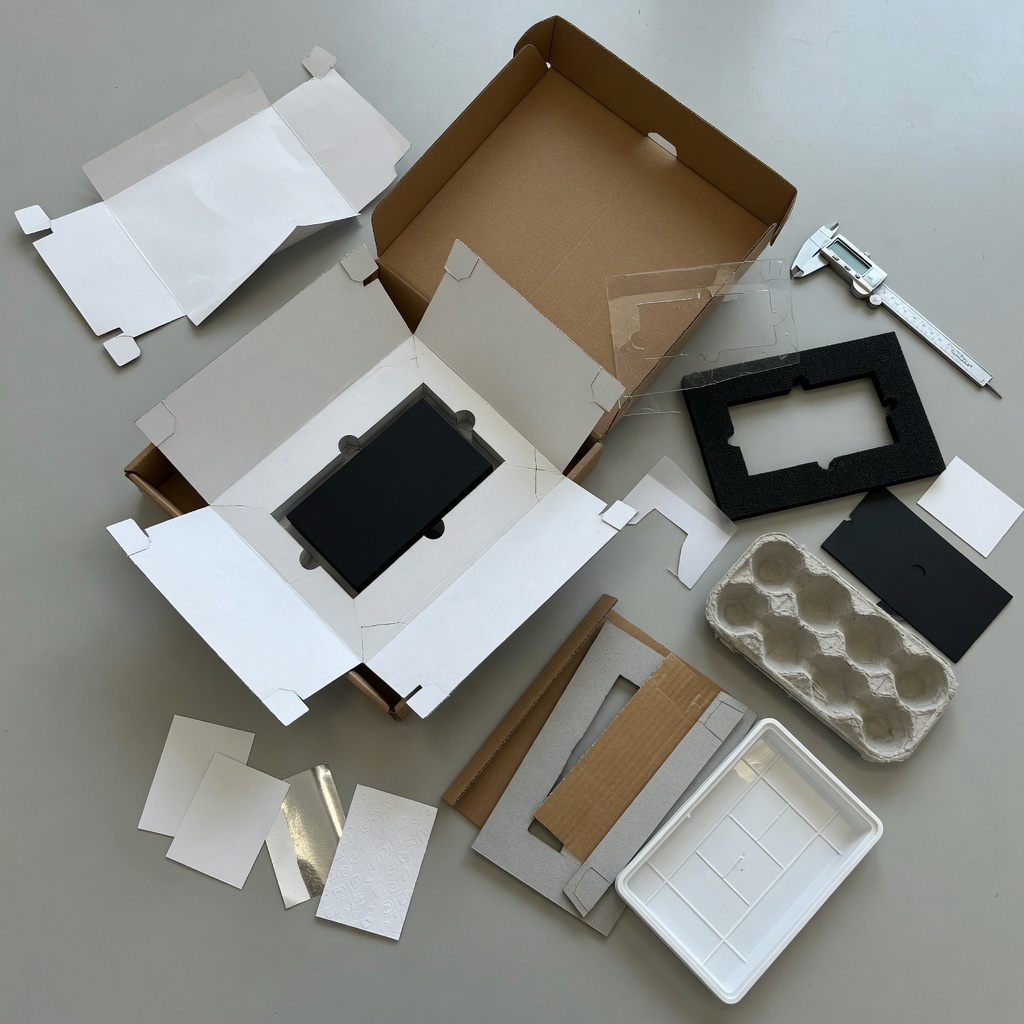
Collectively, the supplied pages name paper-based structures, foam, molded pulp or pulp-based materials, plastic trays, precision cutting, printing, coatings, foil stamping, embossing, prototyping and testing (Custom Boxes Lab, PakFactory, and Refine Packaging). The exact attribution is mapped below. These citations establish option categories only; they do not prove current bidder capability, compatible combinations, performance, MOQ, price, production timing, Australian compliance or certification.
> Direct procurement answer: shortlist a source-described category, issue a revision-controlled RFQ, and require a dated supplier return. Award only when the quote, drawing, production-intent sample, inspection plan, tooling terms, packing and Australian delivery scope refer to the same approved revisions.
Box Insert Customization Options for Wholesale Supply in Australia
The following supplier returns are buyer-side procurement controls, not promises by the cited pages.
| Customization area | Source-supported option | What the supplier should state | Evidence to approve |
|---|---|---|---|
| Paper-based insert | Paperboard or cardboard — named by Custom Boxes Lab, PakFactory, and Refine Packaging | Exact grade or material code; basis weight and finished thickness with units; colour; cut, crease, fold, lock and adhesive construction; laminations and coatings; supplied flat, assembled or installed | Material declaration; controlled dieline; assembled sample; inspection return for agreed critical dimensions |
| Structural board insert | Corrugated board or rigid chipboard — named by Refine Packaging | Full board construction; finished thickness with unit; support arrangement; joining method; assembly sequence; outer-box interface; supplied state | Assembly drawing; assembled sample; packing instructions; measured interface features |
| Foam insert | Foam, including PU, EPE and EVA families — exact families named by PakFactory; foam also named by Custom Boxes Lab and Refine Packaging | Foam family and exact grade; density and thickness with units; colour; surface; layer construction; cut method; adhesive or lamination; cavity tolerances | Material specification; controlled cavity drawing; production-intent sample; documented fit and removal result |
| Pulp insert | Molded pulp or pulp-based material — named by Custom Boxes Lab, PakFactory, and Refine Packaging | Composition declaration; colour; surface expectation; cavity and support geometry; wall or thickness controls with units where specified; tool basis; nesting and packing method | Material declaration; tool terms; controlled drawing; production-intent sample; inspection report for agreed features |
| Plastic insert | Plastic trays — named by PakFactory | Resin; manufacturing process; sheet gauge or finished-wall control with units where applicable; colour; cavity geometry; tool basis; nesting and packing method | Material declaration; tool terms; controlled cavity drawing; dimensional return; production-intent sample |
| Cut-cavity features | Precision cutting — named by Custom Boxes Lab | Inspection datums; cavity opening and depth; support, retention, access and relief features; prohibited contact areas; feature-specific tolerances and measurement methods | Marked drawing; dimensional return; inspection method; approved sample tied to the same revision |
Do not accept a material-family name as the final production specification. Require disclosure of every adhesive, laminate, coating or mixed-material element included in the quoted construction. Do not infer that every material can be combined with every print process or finish; require the bidder to confirm the proposed stack in the quote and production-intent sample.
Build a Comparable Supplier Customization RFQ
Issue the same controlled RFQ pack to every bidder. Require each response to identify its assumptions and deviations rather than silently filling specification gaps.
| RFQ section | Buyer issues | Required supplier return | Hold or return the quote when |
|---|---|---|---|
| Product and outer-box control | SKU and revision; controlled CAD or drawing; product dimensions and mass with units; sensitive or prohibited contact areas; outer-box revision, internal dimensions, construction and packing orientation | Revisions used; assumptions; proposed product orientation; clearances; insert-to-box interface; explicit deviations | The product or box basis is unstated or differs from the RFQ without disclosure |
| Material and construction | Selected option category; prohibited materials; required declarations; supplied state | Exact grade and construction; thickness, density, basis weight or gauge with units as applicable; colour; adhesives; laminations; coatings; substitutions | The response uses only a broad label such as foam, cardboard, pulp or plastic |
| Protection and access | Permitted movement; prohibited contact; required support and retention; finger access; removal path; presentation objective; buyer-defined handling conditions | Proposed support, contact, retention and removal features; unsupported geometry; priced validation plan | Fit is asserted without a controlled cavity return or stated validation basis |
| Artwork and finish | Artwork and dieline revisions; decorated surfaces; coverage; colour reference; coating, foil or embossing areas; approval route | Proposed process; proof type; setup charges; production-variation controls; decorated sample stage | Decoration is described only as printed, branded or custom |
| Sample, test and QC | Required evidence for fit, retention, removal, appearance, assembly, box interface and buyer-defined performance conditions | Sample type; differences from production; method; conditions; sample count; measured result; acceptance criteria; approval party; pre-shipment record | The response says tested or approved without a traceable record |
| Commercial basis | Demand by SKU and artwork revision; required delivery window; any split-delivery request | MOQ basis; unit-price basis; quantity variation; tooling; setup; samples; testing; packing; delivery; exclusions; quote validity; production-timing trigger | The headline unit price cannot be reconciled with the quoted scope |
| Australian delivery | Nominated Australian postcode and required delivery scope | Delivery term and transfer point; included transport stages; packing configuration; carton dimensions and mass with units; timing; exclusions | The destination, transfer point or included delivery stages are undefined |
Require every response to carry a quote revision and an explicit deviation schedule. Require written buyer approval before any change to the material, cavity, artwork, outer box, quantity basis, packing method or delivery scope.
Practical RFQ Checklist for Box Insert Customization in Australia
Copy this practical RFQ checklist into the sourcing file. Mark an item complete only when the bidder's written return identifies the applicable quote, drawing, sample, artwork and outer-box revisions.
Buyer issue pack
- [ ] Identify the product SKU and revision, attach the controlled CAD file or drawing, and state product dimensions and mass with units.
- [ ] Mark sensitive surfaces, prohibited contact areas, connectors, controls, protrusions and required removal access.
- [ ] Identify the outer-box revision, internal dimensions, construction, packing orientation and insert-to-box interfaces.
- [ ] State the selected insert material category, prohibited materials, supplied state and required material declarations.
- [ ] Attach the controlled artwork and dieline revisions and identify decorated surfaces, colour references, finishes and the approval route.
- [ ] State the required sample stages, fit checks, appearance checks, inspection records and buyer-defined performance conditions.
- [ ] Provide demand by SKU and artwork revision, the required delivery window, the nominated Australian postcode and any split-delivery requirement.
Required supplier return
- [ ] Provide a dated quote reference and revision, quote validity, currency, assumptions, exclusions and explicit deviation schedule.
- [ ] State the exact material grade and construction, including applicable thickness, density, basis weight or gauge with units, plus every adhesive, laminate and coating.
- [ ] Return a controlled cavity drawing showing datums, orientation, critical dimensions, feature-specific tolerances, support points, retention features, finger access and reliefs.
- [ ] Identify each sample type, every difference from production, the approval party and the revision that the approved sample will control.
- [ ] Define the inspection method, conditions, acceptance criteria, sample record and response to nonconformance for each critical characteristic.
- [ ] State the MOQ basis, unit-price denominator, quantity-variation rule and treatment of unapproved excess production.
- [ ] Itemise tooling, dies, molds, setup, samples, testing, batch production, packing, delivery and other charges rather than combining them into an unexplained unit price.
- [ ] State tool ownership, storage, maintenance, engineering-change, replacement and transfer terms.
- [ ] Return the packing configuration, units per carton, carton dimensions, gross and net mass with units, delivery term, transfer point and included transport stages.
- [ ] Identify the written approval that starts production timing and provide the proposed dispatch and delivery windows.
- [ ] Supply a current document identifying the quoted material and applicable scope for any composition, recycled-content, recyclability or certification statement.
Pre-award hold points
- [ ] Confirm that the quote, drawing, artwork, outer box, sample and inspection plan use the same approved revisions.
- [ ] Confirm that all production-intent sample differences and proposed substitutions are disclosed in writing.
- [ ] Reconcile the quoted unit price with tooling, setup, samples, testing, packing, delivery, exclusions and the expected accepted quantity.
- [ ] Confirm that fit, removal, appearance and box-interface approvals use the quoted material and construction.
- [ ] Confirm the Australian destination, delivery scope, transfer point and remedy for shortage, damage or nonconformance.
- [ ] Require written buyer approval before any post-award change to material, cavity, artwork, process, quantity basis, packing or delivery scope.
Treat every unchecked item as an open qualification rather than an implied inclusion. Return the quote for clarification when an open item could affect fit, appearance, protection, cost, production release or Australian delivery.
Control Cavity Fit, Prototypes and QC
Do not compare cavity fit from a rendering alone. Tie the quoted construction to a controlled drawing, defined sample stage and measurable release record.
Drawing return
Require the insert drawing to identify:
- Product, insert, cavity and outer-box revisions.
- Inspection datums and measurement orientation.
- Overall insert dimensions and critical cavity dimensions with units.
- Cavity opening and depth, support platforms, bridges, reliefs, retention features, finger access and removal path.
- Prohibited contact at buyer-identified sensitive surfaces, controls, connectors, protrusions or corners.
- Insert-to-box interfaces and controls for lifting, rotation or incorrect orientation.
- Material-specific controls such as board thickness, foam grade and density, molded-wall features or plastic gauge where applicable.
- Feature-specific tolerances, measurement methods, sample revision and approval authority.
Return a quote for clarification when a blanket tolerance is applied without explaining how it covers the critical cut, crease, formed, cavity and assembled-interface features.
Prototype and test return
PakFactory names prototyping and testing as insert-development options (source). That category evidence does not define a universal method, condition, sample count, result or acceptance threshold. Price and define the required evidence, which may include:
- A structural prototype for cavity geometry, fit, assembly, retention, removal and outer-box interface review.
- A decorated sample for artwork placement, colour, coating, foil, embossing or another quoted finish.
- A production-intent sample with every difference from the quoted production material, tool and process disclosed in writing.
- Pre-shipment inspection evidence tied to the approved drawing and sample revision.
For any tested claim, require the method, conditions, product and packaging revisions, sample count, measured result, acceptance criteria and responsible approval party.
Release record
Release production or shipment only against:
- A uniquely identified approved drawing and sample revision.
- Written acceptance criteria for every critical characteristic.
- The instrument or comparison method used for each characteristic.
- Confirmation that no unapproved material, process, artwork or tooling substitution has occurred.
- A defined response to dimensional failure, decoration failure, shortage, damage or other nonconformance.
Printing and Finish Customization Options
The source pages support category-level statements only. Custom Boxes Lab names colour matching and branded printing (source). PakFactory names coatings, offset and silkscreen printing, foil stamping and embossing (source). Refine Packaging names flexographic, digital and lithographic printing and coatings (source). The evidence does not establish that every process suits every insert material or is available from every bidder.
Ask the supplier to return:
- Controlled artwork and dieline revisions.
- Decorated surfaces, print coverage and permitted unprinted areas.
- The quoted process or a documented alternative requiring buyer approval.
- The colour reference and whether approval uses a proof, substrate sample, prototype or production sample.
- The location and geometry of coatings, laminations, foil or embossing.
- Appearance criteria and any buyer-required rub, adhesion, scuff or transfer inspection method.
- Setup charges and stated production-variation controls.
- Disclosure of adhesives, coatings, laminates, foil and mixed-material elements.
Approve decoration on the quoted insert substrate and finish rather than on a generic proof alone. Before relying on recycled-content, recyclability, composition or certification statements, obtain a current document identifying the quoted material and applicable scope. The linked pages do not establish an Australian recovery or compliance outcome for a finished decorated insert.
MOQ, Tooling and Comparable Wholesale Quotes
The supplied evidence provides no universal MOQ, tool charge, setup charge, production lead time or current price. Require each bidder to answer:
- What drives MOQ: insert size, cavity design, material, colour, artwork revision, SKU or total purchase order?
- Can related SKUs share a tool base, material run or setup, and which charges remain separate?
- Is unit pricing based on ordered, produced, shipped or accepted quantity?
- What quantity-variation rule applies, and how is unapproved excess production handled?
- Are tools, cutting dies, molds, print setup, prototypes, production-intent samples, testing, packing and delivery separately itemised?
- Who owns each tool, where is it stored, and who pays for maintenance, engineering changes, replacement or transfer?
- Which written approval starts production timing?
- How long is the quote valid, and which stated assumptions permit repricing?
Use this comparison formula with written quote inputs only:
Comparable quoted cost per expected accepted insert = total included tooling, setup, sample, testing, batch, packing, delivery and other charges ÷ expected accepted quantity.
Mark an omitted charge as not stated or excluded. Do not treat an omitted charge as no cost without written confirmation.
Illustrative RFQ Assumptions to Verify in a Supplier Quote
Every figure in this section is an undated hypothetical example assumption created only to demonstrate quote normalisation. It is not source data, a market value, a recommended tolerance, a current price or a supplier capability. Replace and verify every figure in the bidder's dated quote, controlled drawing and approved sample.
| Illustrative data point | Hypothetical scope | Required verification |
|---|---|---|
| Undated hypothetical RFQ assumption to verify: 120 mm × 80 mm × 35 mm. | Overall product envelope for a generic rectangular product SKU | Replace with buyer-controlled CAD, a current product drawing and verified product measurements |
| Undated hypothetical RFQ assumption to verify: 1.5 mm per side. | Selected side clearance in a paperboard cavity for the same hypothetical product | Verify against material behaviour, product variation, outer-box variation, prototype fit and the supplier's stated process capability |
| Undated hypothetical RFQ assumption to verify: 5,000 finished inserts. | Quote batch covering the same material, cavity design, artwork revision and nominated Australian destination | Verify MOQ, price basis, quantity variation, packing quantity and whether the quoted denominator is ordered, shipped or accepted units |
| Undated hypothetical example calculation to verify: AUD 600 for the example tool + AUD 0.90 per finished insert × 5,000 finished inserts = AUD 5,100 hypothetical subtotal; AUD 5,100 ÷ 5,000 expected accepted inserts = AUD 1.02 per expected accepted insert. | Example tool allocation and batch calculation before any excluded samples, testing, packing, delivery or other charges | Replace every input with the bidder's current written figures and reconcile the calculation with all inclusions and exclusions |
Australian Delivery Scope for the Final Supplier Quote
The supplied pages do not establish Australia-specific freight terms, climate requirements, labelling rules or compliance outcomes. Do not infer those details from the material or customization categories. For comparable bids, require the quotation to state:
- The nominated Australian destination postcode.
- The delivery term, transfer point and included transport stages.
- Packing configuration, units per carton, carton dimensions, and gross and net mass with stated units.
- Planned dispatch and delivery windows and the approval event from which timing is calculated.
- Any split-delivery arrangement.
- Quoted currency, quote-validity period and written conditions that permit repricing.
- All delivery exclusions and the proposed remedy for shortage, damage or nonconforming inserts.
Do not award until the quote revision matches the final RFQ; the material, cavity, artwork, finish and packing match the controlled documents; sample differences are disclosed; critical characteristics and inspection methods are agreed; MOQ and tooling terms are explicit; any environmental or certification statement has current supporting documentation; and the Australian delivery basis is complete.
Evidence Methodology, Source Contexts and Limitations
Methodology: Explicit customization categories were extracted from the supplied pages and attributed to the URL that names each category. Category overlap was not treated as independent verification of capability, suitability or performance. Material, drawing, prototype, QC, commercial and delivery fields were written as buyer-side RFQ controls. All dimensions, clearance, quantity and cost figures were separately labelled as hypothetical assumptions to verify.
Source contexts:
- The Custom Boxes Lab packaging-inserts product or service page was used only for the material, precision-cutting and branding categories attributed to it (source).
- The PakFactory custom-packaging-inserts product or service page was used only for the material, tray, finish, prototyping and testing categories attributed to it (source).
- The Refine Packaging educational blog page was used only for the board, foam, pulp, printing and coating categories attributed to it (source).
Limitations and what to verify: No publication or access date was supplied for the linked evidence. The pages do not provide independent laboratory results, current capacity records, exact material datasheets, bidder-specific tolerances, universal MOQ values, production timing, Australian delivered costs, local climate or labelling findings, compliance conclusions, recovery-pathway acceptance or current certificates for a quoted insert. Verify the selected construction through a dated written quote, revision-controlled drawing, exact material declaration, production-intent sample, agreed inspection method, applicable test record and current supporting document for any environmental or certification statement.
Editorial author note: The Vincent Xi author profile identifies Vincent Xi as Editorial Author. The profile does not document a first-hand factory visit, product test, audit, certification review, client result or customer outcome for this article, so none is claimed.
Discuss Your Requirements
Review our manufacturing capabilities, then share your specifications for a supplier-fit review.