Care Label OEM Packing Requirements for Europe: RFQ Controls
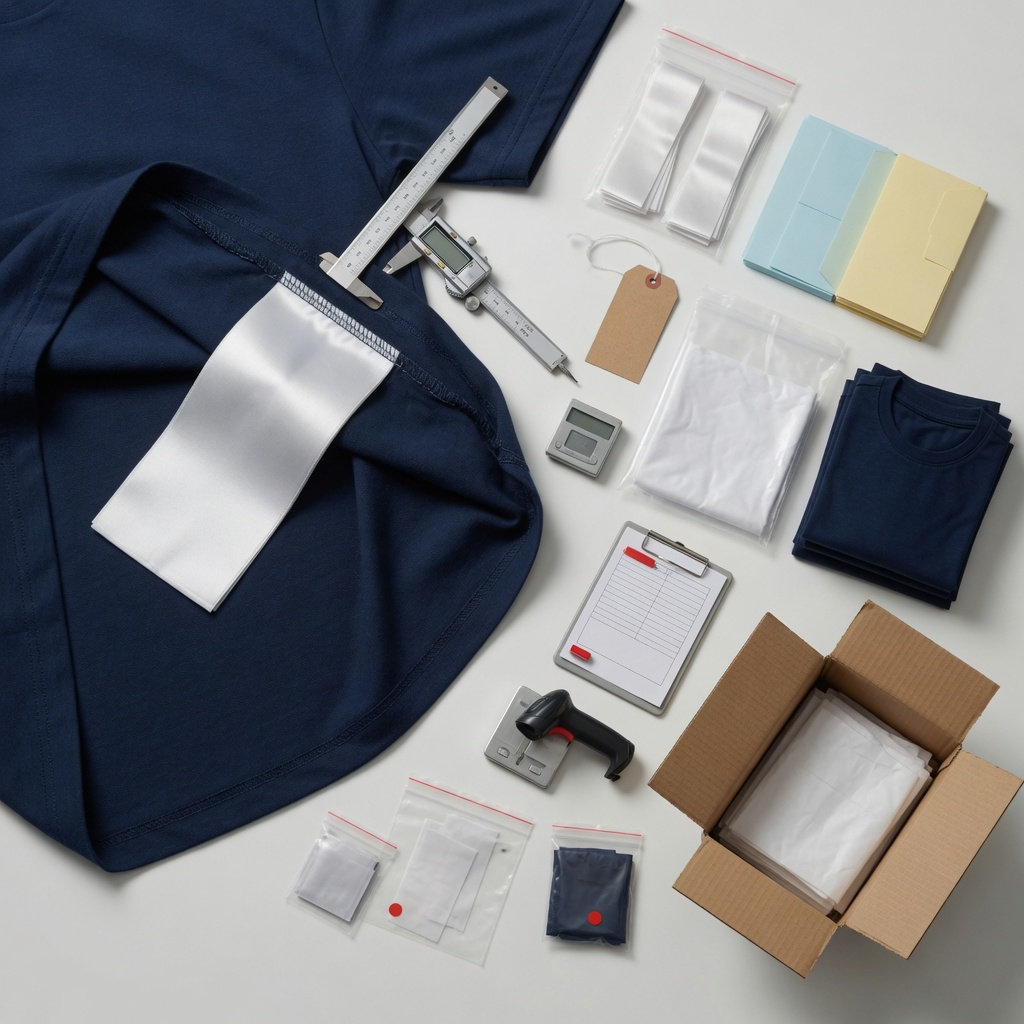
By Vincent Xi, Editorial Author
For a Europe-bound clothing label manufacturing RFQ, define care label OEM packing requirements as controlled quotation and release fields. Each quoted line should identify the care-label version, garment SKU, intended destination, physical construction, supply route, pack count, application status, unit-pack interface, and carton record. A request for standard packing does not provide enough information for comparable quotations or controlled production release.
State whether the supplier is quoting loose care labels, care labels applied during garment manufacturing, or both. Treat Europe as a sales destination, not as a single artwork or compliance version. Maintain separate buyer-controlled release entries for EU destinations, non-EU EEA destinations, the UK, and any country-specific or customer-specific overlay relevant to the order. This separation is a procurement control; it does not determine the law for any destination.
The supplied source pages identify recurring workflow inputs. Runze Apparel separates care-label content, packing method, quantity, destination country, and carton marks (source). Runtang Textile connects care-label preparation with hangtag barcode data, retail packing, and carton labelling (source). Siukid discusses finished-garment care selection alongside trims and pack components such as polybags, tags, barcodes, tissue or boxes, and carton assortments (source). Those pages support the RFQ field structure used here. They are not treated as legal authority or proof of a supplier's current capability.
Europe RFQ Controls for Care Label Packing Requirements
Use the same control structure when requesting and comparing quotations:
| RFQ control | Buyer-issued input | Required supplier response | Release hold |
|---|---|---|---|
| Supply scope | Loose labels, applied labels, or both | Separate price, packing method, sample route, and lead-time assumptions for each included route | The quotation does not state whether garment application is included |
| Release identity | Garment SKU, intended destination, controlled filename, revision, language version, and approval owner | Quoted version mapped to each affected SKU and destination | Europe is the only destination or artwork reference |
| Label construction | Material, print or weave method, cut and finished dimensions, fold, insertion allowance, edge treatment, colour reference, and tolerances | Itemised construction response plus the proposed physical-sample route | Price is based on undefined construction or supplier defaults |
| Loose-label packing | Units per bundle, bundles per primary pack, version segregation, protection, partial-pack treatment, and count evidence | Proposed pack hierarchy, count method, reconciliation method, and substitutions | Revisions, languages, SKUs, or destinations could be mixed without approval |
| Applied-label interface | Placement reference, orientation, insertion depth, attachment method, and adjacent-component clearances | Attached-sample route and production check method | Approval covers only a loose label when application is included |
| Packed-unit interface | Folding or hanger method, care-label position after packing, removable components, bag or box, and permitted substitutions | Complete packed-unit sample proposal | Packing could conceal, crease, detach, or mismatch the approved label |
| Carton release | Carton construction, fill, assortment, external dimensions, gross-weight control, protection, sealing, and approved mark data | Packed-carton trial with measured results and a partial-carton method | Dimensions, weight, fill, or marks rely on undisclosed assumptions |
| Quantity reconciliation | Ordered, accepted, rejected, applied, spare, shipped, returned, and authorised-destruction quantities | Reconciliation record and proposed evidence for unused branded labels | Surplus labels or count differences remain uncontrolled |
| Change control | Approval authority, deviation record, re-sampling triggers, cost responsibility, and affected order references | Written change request identifying the effect on price, schedule, samples, and packing | Material, artwork, dimensions, application, or packing can change without buyer approval |
Keep missing values visibly open in the RFQ. A supplier may propose an alternative, but the response should identify it as a deviation rather than silently completing the specification.
Practical RFQ Checklist for Europe Care Label Packing Requirements
Attach this checklist to the destination-SKU matrix and require the supplier to answer every line with quoted as specified, proposed deviation, or not included. Do not release the RFQ for final comparison while a buyer-owned field is blank or assigned only to a regional shorthand such as Europe.
- [ ] Destination release: Name the destination country and identify the procurement route as EU, non-EU EEA, UK, or a documented country-specific or customer-specific overlay.
- [ ] Line identity: Enter the purchase-order reference, garment SKU, care-label filename, artwork revision, language version, pack version, and buyer approval owner.
- [ ] Supply scope: Select loose-label supply, garment application, or both, and require separate pricing where both routes are requested.
- [ ] Label construction: State material, production method, cut dimensions, finished dimensions, fold, insertion allowance, edge treatment, colour reference, and permitted tolerances.
- [ ] Artwork input: Attach the controlled source file and readable proof; identify which party owns content and destination-compliance approval.
- [ ] Loose-label pack: Define units per bundle, bundles per primary pack, segregation rules, protection, partial-bundle treatment, count evidence, and permitted quantity tolerance.
- [ ] Garment application: Define the named seam or construction reference, orientation, insertion depth, attachment method, exposed-edge direction, and placement tolerances.
- [ ] Packed-unit interface: Define the folding or hanger method and any bag, box, tissue, hangtag, fastener, or barcode component that could affect label identity, condition, or inspection.
- [ ] Carton instruction: Request carton construction, assortment, fill count, protection, sealing, external dimensions, net weight, gross weight, partial-carton method, and approved mark-data source.
- [ ] Sample route: Require an artwork proof, physical label sample, loose-label pack sample where relevant, attached garment sample where relevant, complete packed-unit sample, and packed-carton trial.
- [ ] Measurement record: Require the supplier to distinguish specification values, proposed values, and measured sample or carton results.
- [ ] Commercial response: Request itemised prices, minimum quantities, setup charges, sampling charges, application charges, packing charges, assumed waste, lead times, quote validity, exclusions, and deviation effects.
- [ ] Reconciliation: Define records for ordered, accepted, rejected, applied, spare, shipped, returned, and authorised-destruction quantities.
- [ ] Change control: Prohibit unapproved changes to artwork, material, dimensions, construction, application, packing, assortment, or carton fill and identify the written deviation route.
- [ ] Release evidence: Name the approval owner and the records required before artwork, component, application, packed-unit, carton, and bulk-production release.
The RFQ attachment set should contain the destination-SKU matrix, controlled artwork files, construction drawing, placement reference, pack schedule, carton instruction, sample route, and approval matrix. The returned quotation should repeat the same identifiers so that price, samples, production, packing, and final reconciliation remain traceable to the released line.
Build the Pack Schedule Around the Care Label
Create a separate release line whenever the artwork revision, language, garment SKU, destination, physical construction, application route, bundle method, or carton assortment changes. A useful line key includes purchase order / SKU / destination / artwork revision / pack version so the quotation, sample approval, packing list, and reconciliation record can refer to the same item.
Loose care-label supply
For loose labels, state the required label quantity per bundle, bundles per primary pack, outer-carton count, and permitted count tolerance. Define how the supplier must segregate artwork revisions, languages, SKUs, sizes, and destinations. The RFQ should also cover partial bundles, setup waste, rejected labels, authorised spares, and the return or authorised destruction of unused branded stock.
Specify the primary-pack material and closure only to the level needed for the product and route. If moisture or abrasion protection is required, make it a buyer-defined field and request the supplier's proposed material. Any pack identifier or physical marking should come from a buyer-approved data file linked to the purchase order and care-label revision.
Applied labels and the garment pack
When the supplier applies the label, approve the attached result as well as the loose component. Define placement from a named garment seam or construction point, label orientation, insertion depth, attachment method, exposed-edge direction, and measurable placement tolerances.
The complete packed-unit sample should show the approved garment-folding or hanger method and the label's condition after packing. Include hangtags, fasteners, barcode data, tissue, bags, or boxes only where they affect care-label identity, placement, accessibility, protection, or final pack verification. This keeps the RFQ focused on the care label rather than turning it into a general packaging specification.
Carton response
Request external carton length, width, and height in centimetres; measured gross and net weight in kilograms; garment or loose-label fill count; SKU assortment; internal protection; sealing method; partial-carton handling; and buyer-approved carton-mark data. Require the supplier to distinguish nominal design values from measurements obtained through a packed-carton trial.
Carton records should reconcile with the approved pack schedule. Where different care-label versions are present in an order, the packing list should show how each version maps to the relevant SKU, destination, pack quantity, and carton reference.
Separate EU, EEA, UK, and Country-Specific Releases
Regional shorthand should not become artwork approval. Use named destination countries and retain distinct procurement records for the applicable route.
| Destination route | Procurement record | Control instruction |
|---|---|---|
| EU destination | Intended country, affected SKU, approved content, language version, artwork revision, pack version, and approval owner | Do not assume a release for one EU destination releases every other EU destination |
| Non-EU EEA destination | Separate destination line with its own buyer approval record | Do not place the order under an EU-only artwork or packing release without confirmation |
| United Kingdom | UK-specific destination, artwork, pack, and approval line | Do not use an EU-only release as the UK production instruction |
| Country-specific overlay | Approved local-language, retailer, barcode, routing, or packing instruction linked to the relevant SKU and destination | Do not allow the overlay to replace the controlled underlying care-label revision |
| Customer-specific overlay | Contractual file, revision, approval owner, and affected purchase order | Record it as a customer requirement unless an authoritative source establishes a separate legal status |
Runze's page supports collecting destination country as an RFQ input (source). It does not establish current legal requirements for EU, non-EU EEA, UK, or national destinations. The buyer's responsible compliance party should determine the applicable content, language, symbol, documentation, and packaging-information requirements before artwork or bulk release.
Example Packing Requirements for Quote Comparison
The figures below are illustrative buyer assumptions for a hypothetical Europe-bound RFQ in which the supplier applies the production labels and packs the spare labels separately. They were created for this article, are not sourced benchmarks, and do not represent a legal threshold or supplier capability. Their as-of point is the issue date shown on the supplier's quotation. Every value must be confirmed or replaced in that dated quotation, the approved samples, the packed-carton trial, and the final purchase order.
| Example data point | Illustrative assumption or calculation | Evidence required before release |
|---|---|---|
| Garment order quantity | 12,000 garment units across the hypothetical purchase order | Verify against the dated supplier quote, purchase order, and destination-SKU matrix |
| Applied-label quantity | 1 care-label unit per garment unit, producing 12,000 applied care-label units for the hypothetical order | Verify against the bill of materials, SKU matrix, and dated supplier quote |
| Loose spare-label allowance | 2 percent of the hypothetical applied quantity, equal to 240 spare label units and 12,240 total label units | Verify the allowance, separate spare-label pack, price, reconciliation method, and unused-label disposition in the dated supplier quote |
| Illustrative label construction | Soft white satin printed label with a 30 mm cut width by 80 mm cut length, including a 10 mm insertion allowance and leaving a 70 mm visible length in the hypothetical attached configuration | Verify through the construction drawing, dated supplier quote, physical label sample, and attached garment sample |
| Illustrative carton fill | 60 garment units per carton, producing 200 cartons before any partial-carton adjustment for the hypothetical order | Verify with the approved SKU assortment and packed-carton trial |
| Illustrative carton dimensions and volume | 60 cm by 40 cm by 30 cm per carton, equal to 0.072 cubic metres per carton and 14.4 cubic metres for 200 cartons before palletisation or loading adjustments | Verify using measured external dimensions, approved fill, the packed-carton trial, and the dated supplier quote |
The supplier should price the effect of every proposed deviation. Final production values should come from the approved care-label specification, attached garment sample, complete packed-unit sample, and packed-carton trial rather than from these example calculations.
Evidence Needed Before Bulk Packing Release
Do not collapse component approval, application approval, and packing approval into a single sign-off. Retain connected evidence for each release gate.
| Release gate | Evidence to retain | Hold condition |
|---|---|---|
| Quote lock | Supplier response linked to the buyer's RFQ revision and destination-SKU matrix | Scope, units, assumptions, exclusions, or deviations are missing |
| Artwork proof | Readable proof linked to the filename, revision, language, SKU, destination, and approval owner | The proof cannot be traced to the quoted file |
| Physical label sample | Construction observations, measured dimensions, orientation, edge treatment, and sample identifier | Material, dimensions, construction, or tolerances remain unapproved |
| Loose-label pack sample | Bundle method, count record, version segregation, protection, pack identifier, and partial-bundle treatment | Different revisions or destinations cannot be distinguished and reconciled |
| Attached garment sample | Placement measurements, orientation, attachment, insertion depth, and adjacent-component check | Application is included but only the loose label has been approved |
| Complete packed-unit sample | Care-label identity, garment SKU, folding or hanger method, pack components, and final condition | The packed configuration differs from the approved sample |
| Packed-carton trial | Assortment, physical count, measured dimensions, measured gross weight, protection, sealing, marks, and packing-list match | Estimated values are presented as measured results |
| Final reconciliation | Ordered, accepted, rejected, applied, spare, shipped, returned, and authorised-destruction quantities | Branded-label surplus or count differences remain unresolved |
Photographs can support the approval record, but the RFQ should state when measurements, source-file checks, retained samples, signed approvals, scan records, or physical count records are also required.
Price and Control the Defined Pack
Request itemised commercial responses for care-label production, setup, sampling, garment application, loose-label packing, unit-pack operations, carton materials, requested verification, and approved changes. The quotation should also identify minimum quantities, quantity tolerances, assumed waste, sample lead time, production lead time, quote validity, exclusions, and the cost or schedule effect of deviations.
A concise RFQ clause can tie those fields together:
> Quote only against the attached destination-SKU matrix, controlled care-label files, construction specification, pack schedule, and approval route. Identify every assumption and deviation. Do not substitute label material, dimensions, artwork, fold, attachment, bundle method, pack material, carton construction, assortment, or fill without written buyer approval linked to the affected order.
These are requested quote controls, not claims about the cited publishers or any supplier.
Evidence Method, Scope, and Verification Limits
The method used for this article was limited to extracting packing-related workflow fields from the supplied pages, comparing recurring inputs, and translating that overlap into RFQ fields, release holds, and evidence records. No supplier specification, material performance, tolerance, capacity, certification, or European legal outcome was inferred.
| Source context | Evidence used | Evidence not inferred |
|---|---|---|
| Runze Apparel | Separate buyer inputs for care-label content, packing method, quantity, destination country, and carton marks | European legal sufficiency, current supplier capability, certification, or a mandatory packing method |
| Runtang Textile | Coordination of care-label preparation with hangtag barcode data, retail packing, and carton labelling | A legal threshold, required European carton format, guaranteed result, or current production capacity |
| Siukid | Coordination of finished-garment care selection with trims, polybags, tags, barcodes, tissue or boxes, and carton assortment | Current law for an EU, non-EU EEA, UK, or country-specific destination |
The supplied pages are workflow sources, not official EU, EEA, UK, or national legal texts. Before artwork, quotation, purchase-order, or bulk release, verify current destination obligations with the buyer's responsible compliance party. Verify supplier-specific materials, dimensions, tolerances, pack counts, carton measurements, barcode data, samples, lead times, prices, and production controls in dated contractual records.
No technical standard is named because the supplied evidence does not establish a relevant standard, edition, jurisdictional role, or contractual requirement. If a regulator, buyer, retailer, or supplier introduces a standard, the RFQ should identify its title, edition, scope, test method, acceptance rule, and required evidence. A buyer specification or supplier process remains a contractual or company practice unless a current authoritative source establishes otherwise. Do not infer certification without a current document covering the relevant entity, product, process, and scope.
Discuss Your Requirements
Review our manufacturing capabilities, then share your specifications for a supplier-fit review.