Printed Tape OEM Quality Control Inspection for Europe
_By Vincent Xi, Editorial Author_
Editorial basis: Vincent Xi's approved role is Editorial Author. No first-person factory, manufacturing, laboratory, or customer-experience claim is attributed to him.
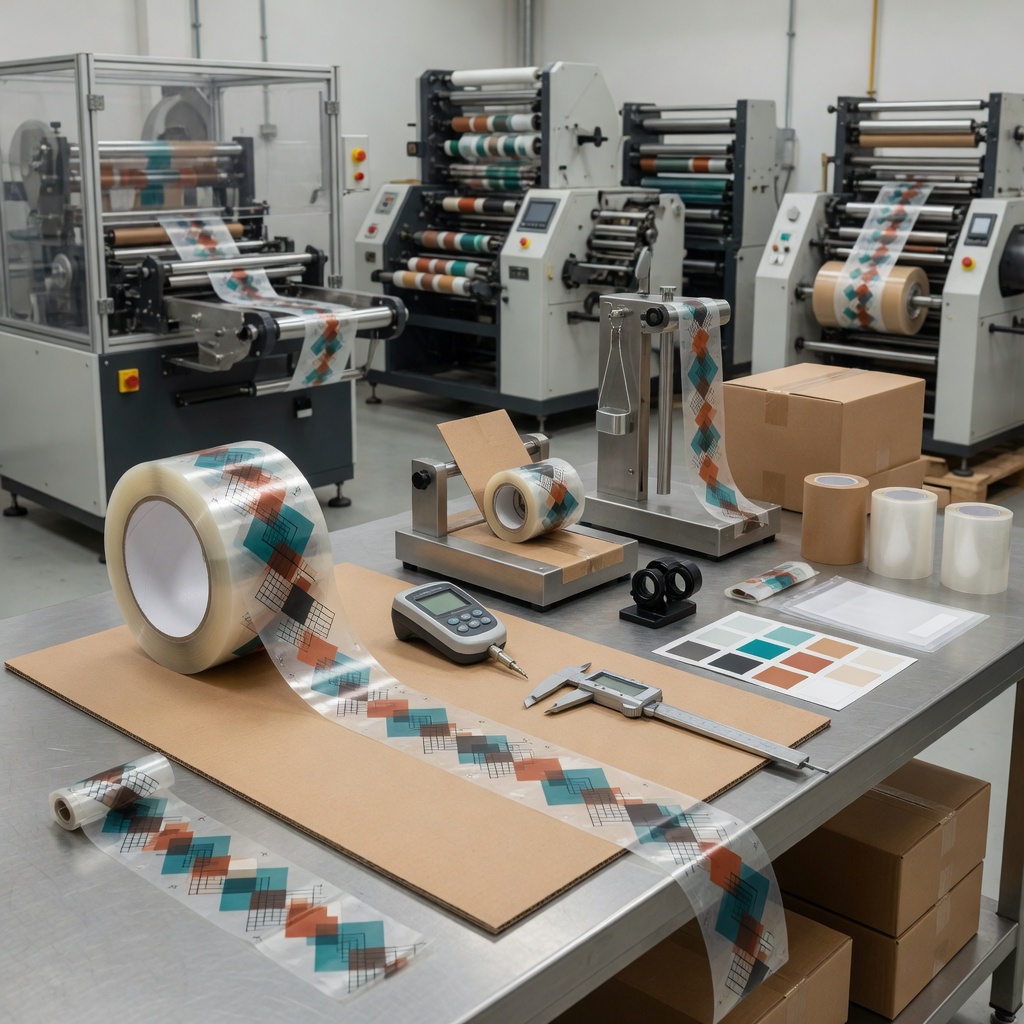
For a Europe-bound printed packaging tape order, the printed tape OEM quality control inspection should answer a specific release question: does the evidence identify and support acceptance of the production lot named on the purchase order?
Build the RFQ around that decision. The approved construction, artwork revision, production record, sampled rolls, raw test results, packing records, and destination-document review should all carry identifiers that can be reconciled with the buyer product code, purchase order, and supplier lot.
A supplier pass statement is not a substitute for buyer-defined limits and lot-linked results. The purchase terms should state when the lot is held, who may approve a deviation, and whether the permitted disposition is rework, replacement, expanded inspection, rejection, or release under a written concession.
The controls below are proposed RFQ requirements. They are not claims about Custom Logo Things or proof of any supplier's current manufacturing practice.
Europe RFQ Gates for Printed Tape OEM Quality Control Inspection
Use a release matrix to turn each purchase requirement into required evidence and a defined buyer decision.
| Release gate | Buyer-defined requirement | OEM evidence required | Hold trigger |
|---|---|---|---|
| Product identity | Buyer product code, purchase order, intended carton application, approved construction, manufacturing site, and named European destination | Matching identifiers on the quotation, construction sheet, production record, inspection report, and packing list | Identity, site, or product scope cannot be reconciled |
| Construction | Backing material and grade, adhesive system, ink system, print side, core material, and substitution restrictions | Signed construction revision and linkage to relevant material and production lots | Undeclared or unapproved substitution |
| Dimensions | Finished width, usable roll length, defined thickness basis, core dimensions, target, unit, tolerance, method, and sampling rule | Individual measurements from identified rolls, equipment identity, calibration status, and disposition | Missing raw data, method mismatch, or result outside the contractual limit |
| Artwork and print | Controlled artwork revision, color reference, orientation, winding direction, repeat layout, registration tolerance, and defect definitions | Setup approval, production sample identity, registration results, and visual-defect record | Obsolete artwork, wrong orientation, unidentified sample, or out-of-limit print |
| Functional performance | Separately specified adhesion, tack, holding power, tensile, or carton-application checks, including method and conditions | Individual results, units, specimen identities, conditions, limits, and observed failure mode | Pass-only statement, incompatible conditions, or contractual failure |
| Lot and sampling | Lot boundaries, sample selection, sample quantities, defect classes, and acceptance and rejection rules | Completed sampling record linked to production and packed-carton identities | Lot definition or sampling basis differs from the signed specification |
| Packing and traceability | Roll count, carton configuration, lot labels, pallet rules, mixed-lot policy, and shipping marks | Packing inspection, quantity reconciliation, carton-to-lot map, pallet record, and loading record | Damage, quantity mismatch, unidentified goods, or unauthorized lot mixing |
| Destination documents | Named destination, responsible buyer reviewer, required document list, product scope, site scope, and validity criteria | Current documents matching the offered product, construction, site, activity, and destination | Generic, expired, incomplete, or mismatched documentation |
Release should remain conditional when an agreed result is missing, sample identity is unclear, the inspected construction differs from the quotation, or a report omits an original failure or rework history.
Source-Backed Data for Quotation Comparison
The supplied sources are supplier-published pages. Their values and workflow descriptions can support RFQ questions, but they do not establish European legal requirements, universal tape grades, or proof that an offered lot passed inspection.
| Source context | Source-supported point | Appropriate RFQ use | Inference to avoid |
|---|---|---|---|
| Phoenix Tape page dated 8 November 2021; scope: that supplier's starting polypropylene custom-printed packing-tape grade. (Phoenix Tape) | 1.9 mil total grade thickness for the supplier-specific grade. | Ask the OEM to define the offered thickness and identify which layers are included. | Do not treat the value as a European minimum, tolerance, or application-suitability result. |
| Phoenix Tape page dated 8 November 2021; scope: a heavier polypropylene custom-printed packing-tape grade listed by that supplier. (Phoenix Tape) | 2.5 mil total grade thickness for the supplier-specific grade. | Use it as a source-specific prompt for a like-for-like construction comparison. | Do not infer backing thickness, adhesive coat weight, tolerance, or carton performance. |
| Phoenix Tape page dated 8 November 2021; scope: another heavier polypropylene custom-printed packing-tape grade listed by that supplier. (Phoenix Tape) | 2.9 mil total grade thickness for the supplier-specific grade. | Ask the quoted OEM to state its construction and measurement basis in the contract units. | Do not present the value as a universal heavy-duty grade or evidence of suitability for the buyer's distribution conditions. |
| Strong Tape supplier page with no publication date displayed; scope: that supplier's description of its own finished-product inspection. (Strong Tape) | The page describes checks involving peel adhesion, initial tack, tensile strength, holding power, width, length, thickness, core printing, slit appearance, shipping marks, carton sealing, and loading. | Select the properties relevant to the application and specify each method, condition, unit, limit, and reporting requirement separately. | Do not treat the page as a test report or evidence that the offered production lot passed. |
| UltraPlus supplier page with no publication date displayed; scope: that supplier's description of its own OEM BOPP tape workflow. (UltraPlus) | The page describes incoming-film inspection, coating-weight monitoring, finished-roll adhesion checks, final visual inspection, edge-quality checks, core-alignment checks, and print-registration checks. | Request corresponding lot-linked process and finished-roll records where relevant to the quoted construction. | Do not assume another OEM follows the same workflow, frequency, limits, or reporting format. |
The Phoenix values remain in the source-reported mil unit. No metric conversion, tolerance, or harmonized measurement basis is inferred. A European buyer should require the supplier to restate the offered dimensions in the agreed contract units and define whether thickness means total finished tape, backing only, or another specified layer.
The undated UltraPlus page also uses the standard designation ASTM D3330 in its supplier-specific adhesion-test description. (UltraPlus) This is a test-method reference, not a measured value, European legal requirement, product certification, laboratory-accreditation claim, or passing result. If selected by the buyer, the signed specification should identify the applicable edition, procedure, conditioning, substrate, geometry, speed, reporting unit, and acceptance range.
Packaging Tape Manufacturing Quality Control Inspection Plan
The inspection schedule should follow the contracted lot from incoming material through shipment. Each row must distinguish supplier-published practice from controls added by the buyer.
| Manufacturing point | Source basis | RFQ evidence request | Hold trigger |
|---|---|---|---|
| Incoming material | UltraPlus describes incoming-film inspection for its own workflow. Adhesive, ink, and core controls are buyer-added unless the OEM documents them separately. (UltraPlus) | Material identity, received-lot reference, inspection status, approved construction revision, and production-lot linkage | Missing identity, failed incoming status, or unapproved material change |
| Coating | UltraPlus describes coating-weight monitoring within its stated workflow. (UltraPlus) | Buyer-agreed process measure, unit, target, tolerance, monitoring frequency, sample identity, and lot-linked record | Missing record, unexplained excursion, or unapproved rework |
| Print setup and production | UltraPlus describes visual and print-registration checks; Strong Tape describes core-printing checks within its own workflow. (UltraPlus) (Strong Tape) | Artwork revision, setup approval, print orientation, winding direction, color reference, registration results, visual-defect counts, and core inspection where applicable | Wrong revision, missing approval, unidentified sample, or result outside the buyer limit |
| Slitting and winding | Strong Tape describes slit-appearance checks; UltraPlus describes edge-quality and core-alignment checks within their respective workflows. (Strong Tape) (UltraPlus) | Width results, edge and winding inspection, core alignment, telescoping assessment, splice record, and defect disposition | Prohibited splice, dimensional failure, or visual nonconformance under the signed rule |
| Finished-roll testing | Strong Tape describes dimensional and functional checks; UltraPlus describes finished-roll adhesion checks within their respective workflows. (Strong Tape) (UltraPlus) | Separate raw results for each contracted property, including method, conditions, specimen identity, unit, acceptance limit, and failure mode | Missing raw result, unidentified specimen, incompatible method, or contractual failure |
| Packing and loading | Strong Tape describes shipping-mark, carton-sealing, and loading checks for its own workflow. (Strong Tape) | Roll and carton counts, packing condition, carton-to-lot mapping, pallet identity, shipping marks, and released-lot loading reconciliation | Quantity mismatch, damaged packing, unauthorized lot mixing, or unreleased goods presented for shipment |
The quotation should identify which inspections occur during manufacturing, which occur on finished rolls, and which are subcontracted. For subcontracted work, request the test-facility identity, report reference, applicable method scope, specimen chain of custody, and linkage between the submitted specimens and the offered production lot.
Define the Inspection Specification
Expressions such as standard thickness, normal tolerance, exact color, strong adhesion, and export quality are not measurable acceptance criteria. Complete the applicable fields before comparing quotations.
| RFQ field | Buyer must define | OEM must return |
|---|---|---|
| Application | Carton substrate, manual or machine application, closure pattern, storage conditions, transport conditions, and destination | Written suitability assumptions and stated restrictions |
| Backing and adhesive | Material, grade, finish, color or transparency, adhesive chemistry where required, and substitution rules | Offered construction, relevant material identities, and change-control commitment |
| Finished dimensions | Defined thickness basis, width, usable length, core dimensions, targets, units, tolerances, methods, and measurement locations | Individual measurements from identified rolls, equipment identity, and calibration status |
| Print construction | Surface or reverse print, ink requirements, protective layer where specified, and approved process | Offered print construction and written notification requirements for changes |
| Artwork control | Approved file, revision code, orientation, repeat layout, edge position, winding direction, and approval authority | Production record carrying the matching artwork revision and setup approval |
| Color | Physical or instrumental reference, comparison conditions, measurement locations, tolerance, and dispute reference | Recorded comparison results and a retained production sample where contracted |
| Registration and appearance | Measurement locations, tolerances, edge clearance, and buyer definitions for missing print, voids, streaking, smearing, contamination, density variation, and ink transfer | Individual registration results, defect counts by agreed class, and identified samples |
| Peel adhesion | Selected method and edition, substrate, conditioning, dwell, peel geometry, speed, specimen width, reporting unit, and acceptance range | Individual raw results, test conditions, specimen identities, limits, and failure modes |
| Tack and holding power | Separate procedure, contact area, load, duration, temperature, reporting unit, and limit for each selected property | Separate raw results and specimen identities for each property |
| Tensile or carton application | Procedure, specimen direction, reporting unit, limit, and application-trial protocol where specified | Lot-linked raw results or documented trial outcome against the buyer's criterion |
| Packing | Rolls per carton, protective materials, lot-label fields, pallet configuration, mixed-lot policy, and shipping marks | Quantity reconciliation, packing inspection, carton-to-lot map, and loading evidence |
Lot, Sampling, and Batch-Report Controls
Define the production lot before manufacturing and before samples are selected. The RFQ should state whether a change in backing lot, adhesive lot, ink setup, artwork revision, coating run, print run, slitting run, manufacturing site, or agreed process condition requires segregation or creation of a new inspection lot.
The signed sampling schedule should identify:
- the production-lot definition and packed-carton population;
- the sample-selection method and distribution across the run and packed goods;
- the checks applied to each selected roll and the specimens required for destructive tests;
- buyer-defined defect classes for identity, construction, artwork, dimensions, performance, traceability, and appearance;
- sample quantities for each inspection or test;
- acceptance and rejection values;
- authority for expanded inspection or retesting;
- treatment and segregation of reworked goods; and
- sample identification, retention, custody, storage, and buyer access.
The supplied pages do not provide a buyer-ready lot definition, sample quantity, attribute-sampling plan, or acceptance value. None should be inferred. If an attribute-sampling standard is selected, the signed purchase specification should identify the governing document and edition, lot size, inspection level, defect classes, sample size, and acceptance and rejection values.
Require the batch report to include the buyer product code, purchase order, production lot, linked material lots, manufacturing and inspection dates, sample identities, controlled-document revisions, applicable methods and conditions, every individual result in the agreed unit, contractual limits, failure modes, equipment identity, calibration status, deviations, rework, retests, concessions, final disposition, and report revision status.
A retest should not erase or replace an original result. The contract should define who may authorize retesting, how replacement specimens are selected, and how the original and retest results remain visible in the final report.
Europe Destination and Document Review
The cited supplier pages do not contain destination-specific legal analysis for the EU, EEA, UK, or individual European countries. This section is a procurement-routing control, not a statement of applicable law.
| Destination scope | RFQ action | Assumption to avoid |
|---|---|---|
| EU Member State | Name the destination country, intended use, buyer or importer role, and document list approved by the buyer's responsible compliance function | Do not treat a general Europe statement as proof for the named EU destination |
| EEA country outside the EU | Name the country separately and obtain a destination-specific document decision | Do not assume an EU document statement is sufficient without review for that EEA destination |
| United Kingdom: Great Britain | Record Great Britain as the destination scope and obtain the buyer-approved document schedule | Do not merge the review with an EU, EEA, or Northern Ireland decision |
| United Kingdom: Northern Ireland | Record Northern Ireland separately and obtain a specific buyer compliance decision | Do not assume the Great Britain document schedule applies unchanged |
| Other European country | Name the country and require a country-specific document schedule from the responsible buyer function | Do not extrapolate from documents prepared for another European destination |
For every requested declaration, report, or certificate, require its title, issuer, covered product and construction, relevant manufacturing site or activity, destination scope, issue date, validity or expiry, restrictions, and supporting report reference.
A document title alone does not establish relevance. Certification should remain unverified unless the supplier provides a current document whose issuer, product scope, site, activity, and validity satisfy the buyer's review.
Practical RFQ Checklist for European Buyers
Complete this checklist before issuing the RFQ:
- [ ] Name the buyer product code, purchase order reference, carton application, and specific European destination.
- [ ] Attach the controlled artwork and record its revision, print orientation, winding direction, color reference, and approval authority.
- [ ] Define the backing, adhesive, ink, core, print construction, and prohibited substitutions.
- [ ] Enter a target, unit, tolerance, method, and measurement location for every controlled dimension.
- [ ] Specify separate methods, conditions, units, and acceptance limits for each required functional test.
- [ ] Define the production-lot boundary, sample-selection method, sample quantity, defect classes, and acceptance and rejection rules.
- [ ] Require lot-linked raw results rather than pass-only statements or unidentified sample reports.
- [ ] List the required packing configuration, traceability fields, mixed-lot restrictions, and loading evidence.
- [ ] Identify the required documents for the named EU, non-EU EEA, Great Britain, Northern Ireland, or other European destination without treating them as interchangeable.
- [ ] State which changes require prior written approval and which nonconformities place the lot on hold.
- [ ] Name the buyer role authorized to approve deviations, concessions, retesting, and shipment release.
Before award, reconcile the supplier's quotation against every checklist item. Mark blank fields, supplier-standard wording, unsupported certificate claims, undisclosed subcontracting, and method exceptions as unresolved. Transfer accepted answers and signed deviations into the purchase specification so the release decision does not depend on sales correspondence alone.
Copy-Ready RFQ Release Clause
> The supplier shall manufacture and inspect the printed packaging tape against the signed construction sheet, controlled artwork, inspection schedule, sampling plan, packing specification, and destination-document schedule. Each report shall identify the buyer product code, purchase order, production lot, sampled units, method and conditions, individual results, units, acceptance limits, equipment identity, calibration status, deviations, rework, retests, and final supplier disposition. The supplier shall not substitute materials, change artwork, change the manufacturing site, alter an agreed process, redefine the lot, or change the sampling basis without prior written buyer approval. Shipment remains on hold until the buyer receives the required lot-linked evidence and issues the release specified by the purchase terms. Supplier release, testing, or packing does not constitute buyer acceptance.
Before purchase-order issue, replace every generic placeholder with a measurable target, unit, tolerance, method, sampling rule, report field, and authorized disposition route. Record supplier exceptions in a signed deviation linked to the purchase specification.
Methodology and Limitations
Methodology: The factual review was limited to the supplied supplier pages. Claims were retained only where the pages explicitly described a supplier-specific product value, test reference, inspection activity, or manufacturing-stage control. The Phoenix Tape page dated 8 November 2021 supplied the source-specific polypropylene grade-thickness values. (Phoenix Tape) The supplied Strong Tape page, which displays no publication date, supplied its description of dimensional, functional, print, packing, and loading checks. (Strong Tape) The supplied UltraPlus page, which also displays no publication date, supplied its description of incoming-film, coating, finished-roll, visual, edge, core-alignment, and print-registration controls. (UltraPlus)
Source-reported values remain in their stated units. Supplier-specific statements were converted into RFQ questions, evidence fields, and release controls without treating them as universal specifications or verified practices of another company.
Limitations: The cited pages are supplier-published content, not independent audits, accredited laboratory reports, production batch records, destination-specific legal opinions, or evidence of Custom Logo Things' manufacturing practices. The supplied Strong Tape and UltraPlus pages show no publication date. The date displayed by Phoenix Tape does not establish that the listed grades remain commercially current. The sources do not provide complete raw datasets, tolerance schedules, sampling parameters, test conditions, certificate scope, or proof that a particular production lot conforms.
Before award and shipment release, verify the offered construction, dimensions, units, tolerances, test methods, method editions, conditions, lot definition, sampling rules, report format, retained-sample commitment, manufacturing site, subcontracted testing, document validity, and release terms in the signed quotation and purchase specification. The buyer's responsible compliance function should determine the requirements for the named EU, non-EU EEA, Great Britain, Northern Ireland, or other European destination.
Discuss Your Requirements
Review our manufacturing capabilities, then share your specifications for a supplier-fit review.