Paper Bag OEM Minimum Order Quantity for Europe
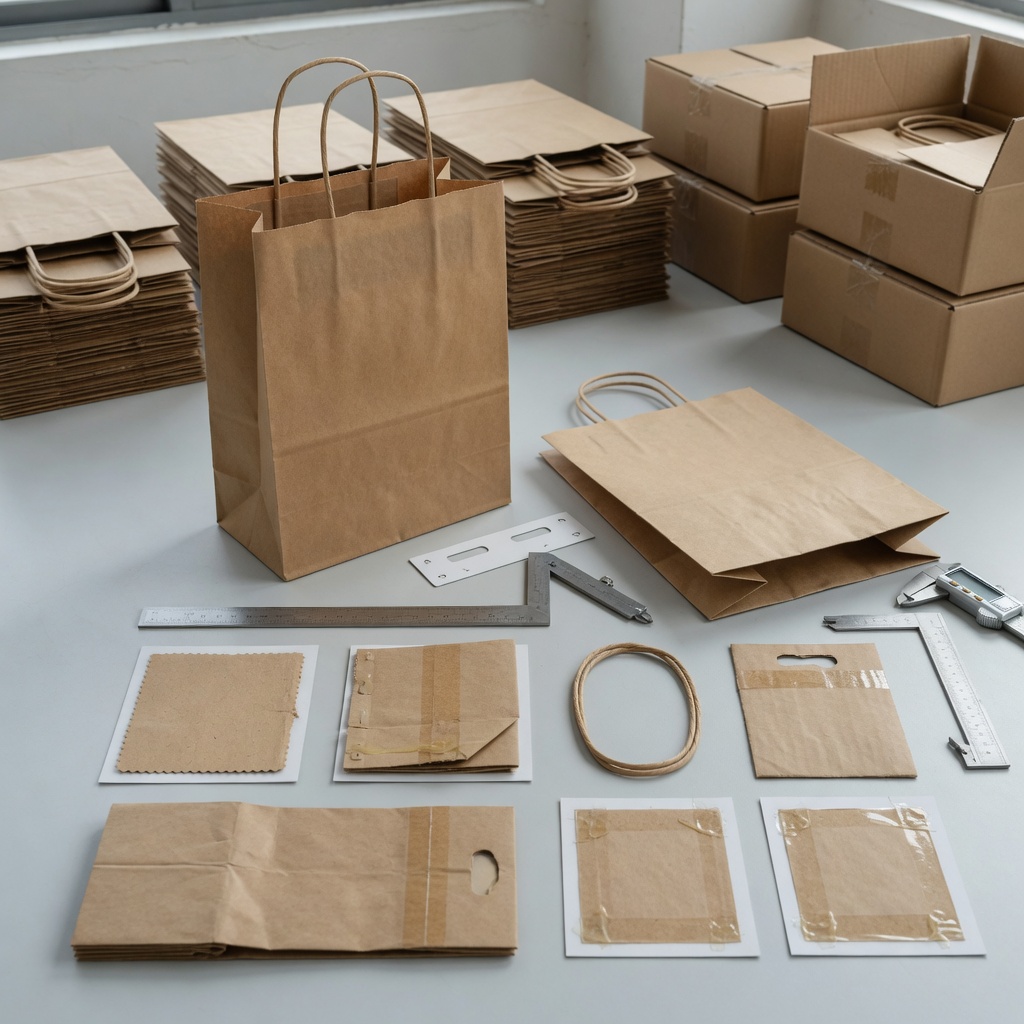
By Vincent Xi, Editorial Author
Author note: Vincent Xi is the Editorial Author. This source-based review makes no claim of first-hand factory visits, production testing, or purchasing outcomes.
Direct answer: The cited pages do not establish a universal or Europe-wide paper bag OEM minimum order quantity. For a European B2B RFQ, treat the nearest source-stated bag category as an opening question rather than a purchasing benchmark. Freeze one shopping bag specification, then ask each supplier for its standard MOQ, its lowest feasible same-specification MOQ with fixed charges itemised, and its next price break.
Require the quotation to state whether the MOQ applies per size, dieline, artwork, language, colourway, paper specification, handle, finish, production lot, or complete order. Quotes should not be compared until they share the same specification, count basis, variant allocation, commercial basis, and named European destination country.
> Evidence boundary: Every quantity below belongs only to the named source and source-stated category. None is a Europe-wide market figure, current quotation, destination-compliance statement, or claim about Custom Logo Things.
Europe paper bag OEM minimum order quantity evidence
The supplied excerpts showed no publication dates. Every figure therefore requires confirmation through a current, dated supplier quotation before it is used for budgeting or purchase approval.
| Source | Source-stated quantity and scope | Appropriate RFQ use |
|---|---|---|
| Lipack | 500 pieces for Lipack luxury and wine bags and 1,000 pieces for Lipack custom kraft paper bags. For both figures, no publication date was shown in the supplied excerpt. Lipack Packaging | Select the closest construction only as a quote anchor. Ask the quoting supplier to define dimensions, paper, handles, reinforcement, print, finish, setup charges, and MOQ allocation by variant. |
| NextGen | 500–1,000 pieces for NextGen luxury bags and 1,000 pieces for each of its twisted-handle retail, die-cut-handle, and SOS bag categories. For all figures, no publication date was shown in the supplied excerpt. NextGen PaperBags | Identify the required bag construction before requesting prices. Confirm whether every size, artwork, and finish must independently meet the quoted MOQ. |
| Junfeng | 500–1,000 finished units per specification for standard-size, single-colour paper gift bags, 1,000–1,500 finished units per specification for larger paper gift bags, and 2,000 finished units or more per specification for multi-colour or special-shaped paper gift bags. For all figures, no publication date was shown in the supplied excerpt. Junfeng Packaging | Submit a dimensioned specification and ask the supplier to define standard size, larger, special-shaped, and per specification. Require written identification of the feature associated with the proposed MOQ. |
Do not average these figures or present them as a European market range. The source categories are not technically equivalent, and the excerpts do not establish common dimensions, paper basis weight, handle construction, print coverage, count basis, tooling price, production capacity, lead time, freight terms, or quality criteria.
Shopping bag manufacturing variables supported by the cited sources
The sources support a limited set of high-level connections between product specification and MOQ:
- Tooling and setup: Lipack attributes custom-packaging MOQ to tooling and factory setup costs. The RFQ should ask the supplier to identify the applicable setup or tooling and itemise each fixed charge separately. Lipack Packaging
- Product and specification: NextGen states that its starting MOQ is negotiable based on the product and specifications. Any lower-quantity quote should therefore identify whether the original specification remains unchanged. NextGen PaperBags
- Size, colour complexity, and shape: Junfeng separates its quantity guidance by standard versus larger bags and by single-colour versus multi-colour or special-shaped bags. The supplier should identify which submitted feature is associated with its proposed MOQ. Junfeng Packaging
These statements do not establish a particular press type, bag-making machine, production speed, tooling price, factory capacity, lead time, or sample-to-production equivalence. Those details must come from the quoting supplier and be tied to the controlled specification.
Practical RFQ checklist for minimum order quantity in Europe
Use this checklist as a procurement release sequence. Require the supplier to answer every applicable item in writing with a value, a stated exception, or “not applicable”; do not treat blank fields or general brochure wording as confirmation. The checklist converts the cited statements about setup, product specification, size, colour complexity, and shape into quote questions without treating supplier-published quantities as European benchmarks.
Before issuing the RFQ
- [ ] Assign a buyer SKU and record the drawing, bill-of-materials, and artwork revisions that control the request.
- [ ] Name the European destination country and identify whether the delivery is to an EU Member State, an EEA country outside the EU, the UK, or another European jurisdiction.
- [ ] Define the bag style, intended retail-carrying use, finished width × gusset × height in millimetres, proposed tolerances, side seam, bottom construction, and top fold.
- [ ] Specify the paper grade, colour, basis weight in grams per square metre, surface treatment, handle material, handle construction, attachment method, and reinforcement.
- [ ] Attach the controlled artwork and define the required colours, print coverage, registration criteria, finish, and any special shape or dieline.
- [ ] List every size, artwork, language, colourway, paper, handle, and finish variant. Mark the attributes that may be pooled and those that must remain separate.
- [ ] Define the sample type required, the approval criteria, the production differences that must be disclosed, and the quality records expected with the order.
- [ ] State the inner packing, carton, labelling, pallet, and shipping-document requirements without requesting unsupported environmental or certification claims.
When reviewing the supplier quotation
- [ ] Confirm that the quote identifies the same SKU and specification revisions sent with the RFQ.
- [ ] Record the quote issue date, validity period, currency, payment terms, delivery term, named place, and destination country.
- [ ] Obtain the supplier's standard MOQ, lowest feasible same-specification MOQ with fixed charges itemised, and next price break.
- [ ] Require a written statement of whether the MOQ applies per size, dieline, artwork, language, colourway, paper specification, handle, finish, production lot, or complete order.
- [ ] Ask which variants can share a run and what attributes must remain identical before their quantities may be combined.
- [ ] Separate tooling, setup, artwork preparation, sampling, packing, and other non-recurring charges from the unit price.
- [ ] Require the supplier to disclose every material, dimension, construction, print, tooling, finish, packing, or process change proposed to reduce the MOQ.
- [ ] Distinguish ordered quantity, planned gross production, shipped finished quantity, and accepted conforming quantity.
- [ ] Record the permitted overrun or underrun, whether it applies per variant or across the order, how it will be invoiced, and the remedy for a shortage.
- [ ] Confirm the sample route, inspection basis, acceptance criteria, production schedule assumptions, nonconformity remedy, and required destination documents.
Before releasing the purchase order
- [ ] Compare suppliers only where the product specification, variant allocation, count basis, commercial basis, and destination assumptions match.
- [ ] Recalculate purchasing commitment using the dated quote rather than comparing unit prices alone.
- [ ] Verify that any requested material, recycled-content, fibre, ink, adhesive, disposal, or certification claim is supported by a current document linked to the quoted product or material.
- [ ] Obtain destination-specific review for the named country instead of accepting an undefined statement that the bags are suitable for Europe.
- [ ] Incorporate approved samples, specification revisions, MOQ allocation, fixed charges, quantity tolerance, quality criteria, schedule, documentation, and remedies into the purchase order or its controlled attachments.
- [ ] Do not release production while any MOQ allocation, specification change, count definition, destination requirement, or commercial exception remains unresolved.
Compare minimum order quantity quotes against one specification
Send the same revision-controlled RFQ pack to every supplier. Treat a response based on changed dimensions, materials, artwork, construction, finish, packing, or destination assumptions as a separate option rather than a same-specification comparison.
| RFQ field | Required supplier response |
|---|---|
| Product reference | Buyer SKU, product description, drawing revision, bill-of-materials revision, and artwork revision used for the quote. |
| Construction and dimensions | Bag style, side seam, bottom construction, top fold, handle type, reinforcement, and finished width × gusset × height in millimetres, with proposed tolerances. |
| Paper and handles | Paper grade, colour, basis weight in grams per square metre, surface treatment, handle material, handle dimensions, attachment method, and reinforcement specification. |
| Artwork and finishing | Artwork reference, colour requirements, proposed print process, coverage, registration criteria, lamination, varnish, embossing, foil, inserts, or other required operations. |
| MOQ application | State whether the MOQ applies per size, dieline, artwork, language, colourway, paper, handle, finish, production lot, or complete purchase order. |
| Variant pooling | Identify which variants can share a production run and which attributes must remain identical for quantities to be combined. |
| Quote positions | Return the standard MOQ, the lowest feasible same-specification MOQ with fixed charges itemised, and the next price break. |
| Count basis | Distinguish ordered quantity, planned gross production, shipped finished quantity, and accepted conforming quantity. |
| Fixed charges | Itemise tooling, setup, artwork preparation, sampling, and other non-recurring charges separately from the unit price. |
| Lower-MOQ change control | Disclose every material, construction, print, tooling, finish, packing, or process change proposed to reduce the MOQ. |
| Quantity tolerance | State permitted overrun or underrun, whether it applies by variant or total order, its invoicing treatment, and the remedy for shortages. |
| Sampling and quality | Define the sample type, differences from production, approval criteria, dimensional and visual requirements, inspection basis, and remedy for nonconforming output. |
| Commercial and destination basis | State currency, quote validity, payment terms, delivery term and named place, packing and freight inclusions, schedule assumptions, and named European destination country. |
For commercial comparison, use the supplier's dated quote data in these calculations:
- Merchandise subtotal = quoted quantity × unit price.
- Total purchasing commitment = merchandise subtotal + fixed charges + quoted packing, logistics, and destination charges.
- Comparable cost per accepted bag = total purchasing commitment ÷ accepted conforming quantity.
A lower unit rate is not necessarily the lower purchasing commitment. The decision should account for fixed charges, quantity tolerance, variant allocation, specification changes, and the definition of accepted output.
Europe destination controls before MOQ and production approval
The cited MOQ pages do not establish legal or regulatory suitability for any European destination. Name the destination country in the RFQ instead of relying on an undefined Europe-wide compliance statement.
| Destination scope | Procurement control |
|---|---|
| EU destination | Name the EU Member State, intended use, delivery point, buyer-assigned compliance responsibilities, and required destination documents. |
| EEA destination outside the EU | Name the destination country and obtain a separate jurisdiction and import review. Do not reuse EU assumptions without confirmation for that destination. |
| UK destination | Identify the UK destination explicitly and complete the buyer's UK-specific document and import review before production release. |
| Other European destination | Name the country and obtain country-specific requirements from the buyer's compliance owner or another qualified adviser. |
The RFQ should also state the intended retail-carrying use and identify any special contact conditions. List each paper-fibre, recycled-content, ink, adhesive, or disposal claim the buyer intends to make and the evidence required to support it.
None of the cited MOQ pages establishes a named standard or product certification. If a standard is relevant, state its requirement separately from the supplier's own manufacturing practice. If certification is requested, require a current document showing the issuing body, validity, scope, and linkage to the quoted material or product; do not infer certification from a general supplier statement.
Release rule: Do not authorise production solely because the quantity and unit price are acceptable. The dated quotation should reference the correct specification revisions, define MOQ allocation and count basis, itemise fixed charges, disclose lower-MOQ changes, record quantity tolerance, and identify the destination-country requirements.
Methodology, source contexts, and limitations
Source context — supplier commercial pages: Lipack Packaging and NextGen PaperBags were treated only as supplier-specific commercial statements. Their quantities were not transferred to other suppliers, bag constructions, or European destinations.
Source context — supplier category guidance: Junfeng Packaging was treated as supplier-published category guidance, not as a current quotation or European market benchmark.
How the data was derived: Explicit quantity statements were extracted from the supplied excerpts and retained with their stated units and product scopes. They were marked as having no visible publication date because none appeared in the supplied excerpts. No average, blended range, or unsupported technical specification was calculated.
Limitations and what to verify: The excerpts did not establish complete product specifications, quote-validity periods, count definitions, fixed charges, freight terms, capacity, quality criteria, sample equivalence, or destination-compliance evidence. The quantities have not been validated through a current RFQ, factory audit, or production test and do not establish Custom Logo Things' MOQ, manufacturing capability, certification, or commercial terms. Before issuing a purchase order, verify the MOQ, variant allocation, materials, dimensions, prices, fixed charges, quantity tolerance, sample method, acceptance criteria, schedule, remedies, documentation, and destination-country requirements in a dated supplier quotation and controlled purchase specification.
Discuss Your Requirements
Review our manufacturing capabilities, then share your specifications for a supplier-fit review.