Tissue Paper Sourcing Customization Options for Canadian Procurement
By Vincent Xi — Editorial Author
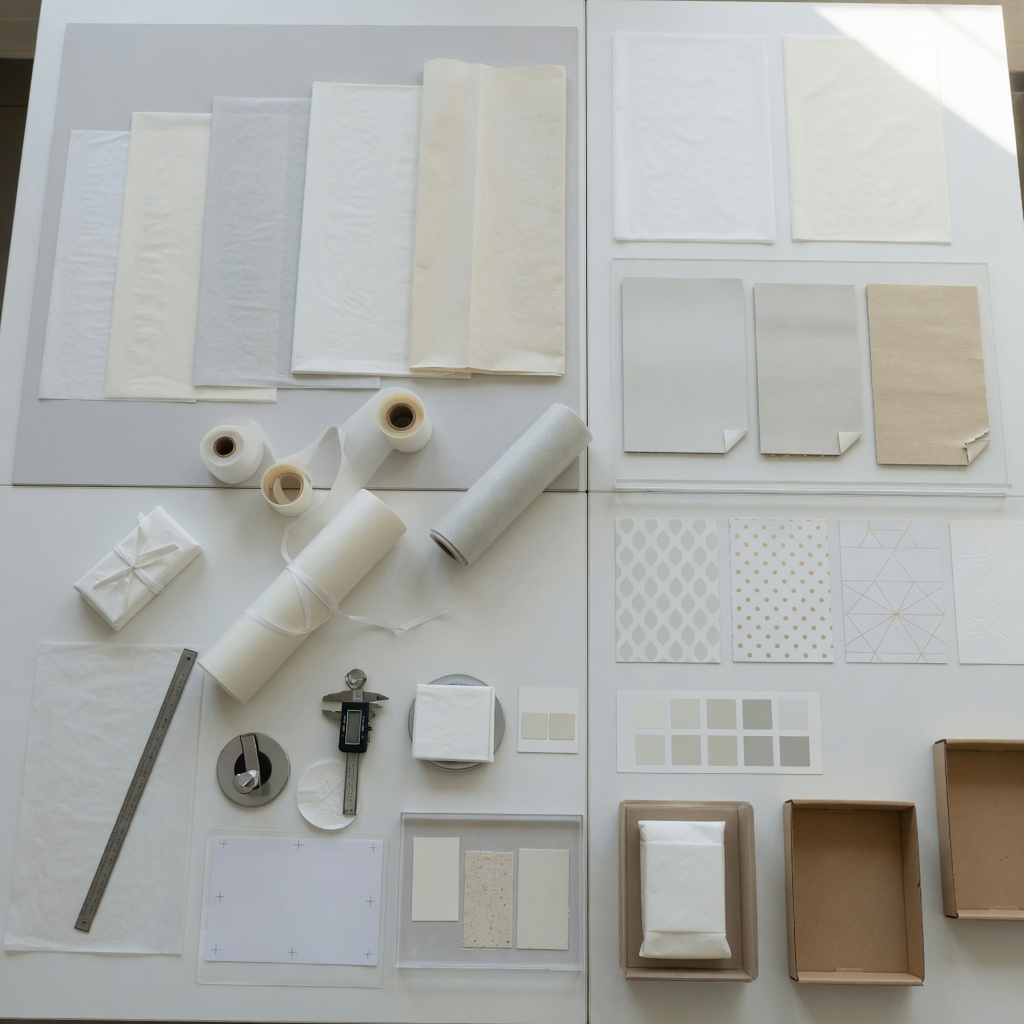
For Canadian procurement teams, tissue paper sourcing customization options become quote-comparable only when every bidder receives the same specification and response format. Define the intended use, sheet or roll form, finished dimensions and buyer-set tolerances, basis weight, ply, fibre furnish, artwork, colour target, decoration, packout, quantity, sample sequence, change control, and delivery point in Canada. Ask bidders to price that baseline and disclose alternatives rather than silently substituting a different construction.
This page is limited to customization decisions for a tissue paper procurement RFQ. The cited sources provide supplier-published examples and educational sourcing context; they do not prove market-wide availability, interchangeable tissue categories, or Canada-specific regulatory treatment. Approve a physical reference and align the technical scope before comparing delivered cost.
Tissue paper customization options for a Canada RFQ
Use a bidder response schedule so each customization choice has a buyer specification, a supplier response, and defined approval evidence.
| RFQ field | Buyer specification | Bidder response | Procurement control |
|---|---|---|---|
| Intended use | Application, packaged item, contact surface, presentation purpose, and expected handling conditions. | Exact material proposed, intended-use limitations, and any relevant functional claim. | Keep decorative preferences separate from required functional properties. |
| Product form and geometry | Sheet or roll. For sheets, enter width and length in mm. For rolls, enter width in mm, length in m, and maximum diameter in mm where relevant. Define tolerances and the purchase unit. | Finished geometry, measurement basis, packing quantity, and every deviation. | Treat different dimensions or purchase units as separately priced alternatives. |
| Construction | Required basis weight in gsm or an approved range, required ply, and any construction conditions. | Actual basis weight, ply construction, measurement method, and proposed substitute. | Compare pricing only after construction is aligned. |
| Fibre and material claims | Accepted furnish, prohibited substitutes, any recycled-content requirement, and any acid-free or pH-neutral requirement relevant to the application. State the evidence expected. | Actual furnish, claim wording, declaration basis, document date, and current supporting material. | Treat an unsupported claim as unverified rather than compliant. |
| Artwork and colour | Artwork version, print side, orientation, repeat in mm, placement tolerance in mm, coverage percentage, unprinted areas, and colour reference. | Production method, colour-control approach, design restrictions, setup charges, and artwork deviations. | Approve a decorated physical sample instead of relying only on a process name or digital proof. |
| Decoration | Required print, embossing, or foil result, including pattern, placement, coverage, and whether alternatives are permitted. | Method offered, tooling requirements, initial and repeat-order charges, and production limitations. | Keep setup and tooling separate from the base tissue price. |
| Private-label packout | Folding or rolling configuration, units per inner pack, protective wrap, inner packs per carton, and artwork responsibility. | Production packout, carton configuration, packing-unit definition, and deviations. | Approve the actual packout because it defines the received purchase unit. |
| Quantity and timing | Purchase quantity, requested sample timing, required delivery window, and forecast information where applicable. | Minimum order quantity, price breakpoints, quotation validity, and separate sample, production, and delivery timing. | Evaluate price against inventory commitment and schedule risk. |
| Samples and change control | Required sample sequence, measurable acceptance fields, approval authority, and the post-approval change process. | Sample types, charges, production-matching method, inspection basis, and proposed nonconformance remedy. | Do not release production without an approved reference and written change control. |
| Delivery in Canada | Destination postal code, quotation currency, requested delivery term and named place, and required cost separation. | Production origin, transport scope, inclusions, exclusions, assumptions, and unresolved transaction charges. | Normalize offers to the same Canadian destination and commercial scope. |
Practical RFQ checklist for tissue paper customization options in Canada
Copy this checklist into the RFQ cover sheet. For every item, leave fields for the buyer requirement, supplier response, evidence reference, deviation, price effect, and timing effect. A checked buyer box means the requirement is included in the RFQ; it is not evidence of supplier compliance.
Product and construction
- [ ] Describe the intended use, packaged item, contact surface, presentation purpose, and handling conditions.
- [ ] Select sheet or roll form and define the purchase unit used for pricing and acceptance.
- [ ] Enter finished dimensions, applicable units, measurement points, and buyer-set tolerances.
- [ ] State the required basis weight, ply, fibre furnish, and permitted construction range.
- [ ] List prohibited substitutions and require every proposed alternative to be identified separately.
- [ ] Define each material or functional claim and the current, product-specific evidence required to support it.
Artwork, decoration, and packout
- [ ] Attach the controlling artwork version and state print side, orientation, repeat, placement, coverage, and unprinted areas.
- [ ] Provide the colour reference and define how the decorated physical sample will be approved.
- [ ] Specify print, embossing, or foil requirements as separate customization lines.
- [ ] Request design restrictions, setup charges, tooling charges, and repeat-order treatment.
- [ ] Define folding or rolling configuration, inner-pack quantity, protective wrap, carton configuration, and artwork responsibility.
- [ ] Require the bidder to identify any sample or production limitation affecting the requested customization.
Samples, acceptance, and change control
- [ ] State which material swatch, artwork proof, decorated sample, and packaging mock-up are required.
- [ ] Define measurable acceptance fields for geometry, construction, artwork, decoration, and packout.
- [ ] Identify the physical sample and documents that will become the approved production reference.
- [ ] Name the buyer approval authority and require written approval before any post-approval change.
- [ ] Request the bidder’s sample-to-production matching method and proposed nonconformance remedy.
Commercial response and Canadian delivery
- [ ] State the purchase quantity and request minimum order quantity, price breakpoints, and quotation validity.
- [ ] Separate sample, production, and delivery timing rather than accepting one combined lead-time figure.
- [ ] Require separate prices for material, converting, decoration, setup, tooling, samples, packout, and confirmed transport.
- [ ] Record quotation currency, payment assumptions, production origin, Canadian destination postal code, and delivery scope.
- [ ] Require a deviation schedule showing the affected requirement, alternative, reason, evidence, price effect, and timing effect.
- [ ] Compare the baseline separately from optional constructions, decoration methods, and packout alternatives.
- [ ] Mark unsupported claims as unverified until current evidence for the quoted product is supplied.
- [ ] Confirm quotation validity, approved references, resolved deviations, and delivery responsibility before production release.
Source boundaries for customization ranges and claims
The source pages describe different tissue contexts. Their published figures should remain separate unless a bidder confirms that a specific quoted construction combines them.
| Published data point | Unit, source, and product scope | Date or as-of context | Appropriate RFQ use |
|---|---|---|---|
| 1–3 plies | Unit: plies per tissue construction. Scope: OEM tissue configurations described in Hewbonn’s OEM tissue paper overview. | No publication date was included in the supplied evidence package. Treat the range as undated and reconfirm it for the quoted product. | Use the range as evidence that ply can be an RFQ field in this OEM context, not as a default for custom wrapping tissue. |
| 18–30 grams per square metre (gsm) | Unit: grams per square metre of tissue. Scope: the custom wrapping tissue range described on F.lli Magro’s custom tissue paper page. | No publication date was included in the supplied evidence package. Treat the range as undated and confirm current availability in the quotation. | Use only within the cited wrapping-tissue context unless another bidder confirms the same construction. |
| 100% recycled cellulose | Unit: percentage as stated by the supplier. Scope: a recycled-cellulose option described on F.lli Magro’s custom tissue paper page; the cited page does not establish the percentage calculation basis. | No publication date was included in the supplied evidence package. Obtain a current declaration for the exact material quoted. | Request the declaration basis and quoted-product scope rather than treating the statement as a market-wide attribute. |
Do not combine the cited ply range, wrapping-tissue basis-weight range, and recycled-cellulose option as though they define a standard product. Any proposed combination belongs in the bidder’s construction statement and supporting documentation.
Additional source-supported customization examples have these boundaries:
- Hewbonn lists roll length, roll diameter, sheet size, virgin, recycled, and bamboo pulp, decorative or custom embossing, private-label artwork, and carton design as potential OEM variables. These are possible RFQ fields within that source context, not proof that every combination is currently available from any bidder source.
- F.lli Magro lists flexographic printing, UV printing, hot foil stamping, patterns, graphics, logos, and custom Pantone colours. These are supplier-published examples rather than industry-wide requirements source.
- F.lli Magro describes acid-free, pH-neutral tissue for jewellery applications and mentions samples and logistics support. The page does not establish suitability for another application or delivery service to Canada source.
- The F.lli Magro page states that its tissue paper is FSC-certified. Treat this as an undated supplier claim. If FSC status affects award, request a current certificate and written confirmation that the quoted material and claim are within its scope. Do not infer certification for another supplier or configuration source.
- The CUNY Pressbooks sourcing article identifies minimum order quantity, lead time, quality samples, and supplier reputation as comparison considerations. It presents bulk ordering and simpler designs as possible cost levers, not guaranteed savings. Test them through matched quotation scenarios source.
Compare customized tissue paper quotes for delivery in Canada
Require each bidder to price the same baseline and return alternatives on separate commercial lines. The response should show:
- The base price using the buyer-defined purchase unit.
- Separate charges for tissue, converting, printing, embossing, foil, setup, tooling, samples, courier, inner packaging, cartons, and confirmed transport.
- Minimum order quantity and price breakpoints against the same construction and packout.
- Separate sample, production, and delivery timing definitions.
- Quotation currency, validity, payment assumptions, production origin, Canadian destination, and delivery inclusions and exclusions.
- Initial-order and repeat-order treatment for setup and tooling, including retention, reuse, transfer, or repricing terms.
- A deviation schedule identifying the affected RFQ field, specified requirement, proposed alternative, reason, price effect, timing effect, and evidence offered.
A blank field or silent substitution should not be interpreted as compliance.
Use the following as an example buyer calculation structure. It is not a sourced cost model, and every component is an assumption to verify in the supplier quotation:
Comparable delivered cost per accepted purchase unit = (base tissue and converting + decoration + non-recurring setup and tooling + samples and courier + specified packout + confirmed transport + other transaction charges independently confirmed as applicable) ÷ accepted usable purchase units
Normalize each offer to the same:
- Finished sheet or roll geometry and purchase unit.
- Basis weight, ply, furnish, and required material claims.
- Artwork version, coverage, colour target, embossing, and foil scope.
- Packout and accepted usable-unit definition.
- Purchase quantity, Canadian destination, and delivery responsibility.
- Treatment of setup, reusable tooling, samples, and repeat orders.
- Currency basis, with the conversion source and date recorded when conversion is required.
The supplied sources do not establish Canada-specific customs classification, duty, tax, or regulatory treatment. Confirm transaction-specific requirements independently before award. F.lli Magro mentions logistics support, but its cited page does not establish service to Canada or define a delivered-cost scope. Obtain destination coverage, responsibility boundaries, inclusions, and exclusions in writing source.
Use samples to approve customization options
Each sample request should answer a defined procurement question and produce an approval record.
| Sample gate | Decision question | Release control |
|---|---|---|
| Material swatch | Do appearance, feel, opacity, and stated construction fit the intended use? | Use product-specific documents rather than touch alone to assess furnish, recycled content, or functional claims. |
| Artwork proof | Are orientation, repeat, placement, coverage, colour references, and unprinted areas correct? | Treat the proof as artwork approval, not evidence of the final physical result. |
| Decorated physical sample | Does the quoted tissue interact acceptably with the proposed print, embossing, or foil process during intended folding and handling? | Record the material, artwork version, production method, and any disclosed sample substitution. |
| Packaging mock-up | Are the folding or rolling configuration, protection, inner-pack quantity, carton arrangement, and presentation acceptable? | Approve the physical packout rather than a verbal description. |
| Production reference | Which sample and documents control production acceptance? | Record the approved reference, artwork version, packout, approver, and approval date. Require written approval for later changes. |
F.lli Magro lists custom Pantone colours, but the cited page supplies no production tolerance or viewing procedure. If a Pantone target is used, the buyer and supplier should define comparison conditions, permitted variation, and the controlling physical reference source.
The supplied evidence identifies no mandatory inspection standard. If an external standard is contractually required, state its title and applicable edition in the RFQ and request current evidence of conformity. A supplier’s internal inspection procedure should be described as company practice, not as certification.
Award controls for Canadian tissue paper procurement
| Award status | Evidence position | Procurement treatment |
|---|---|---|
| Compliant | The construction, documentation, approved sample, packout, and Canadian delivery scope match the RFQ baseline. | Include the offer in the normalized commercial comparison. |
| Documented alternative | A deviation is identified, separately priced, and supported by a relevant sample or document. | Evaluate it outside the baseline and record explicit approval or rejection. |
| Unverified | A material, functional, recycled-content, or certification claim lacks current product-specific support. | Exclude the claim from scoring until it is verified. |
| Noncompliant | A required field is omitted or the proposed product does not meet the baseline. | Reject the offer or obtain formal buyer approval of the deviation before award. |
Before production release, confirm that the quotation remains valid, documents correspond to the quoted material, the controlling physical reference is approved, deviations are resolved, tooling terms are recorded, and the delivery scope matches the Canadian destination. Require written approval before any later change to material, artwork, decoration, or packout.
Evidence method, source contexts, and limitations
Source contexts
- The Hewbonn OEM manufacturing overview was used for its published ply range and potential form, fibre, embossing, artwork, and carton variables. It was not treated as a custom wrapping-tissue specification or a market-wide capability benchmark.
- The F.lli Magro product page was used for its published wrapping-tissue basis-weight range, recycled-cellulose option, decoration examples, colour customization, functional claims, FSC claim, samples, and general logistics-support statement. These remain supplier-specific statements.
- The CUNY Pressbooks sourcing article was used for supplier-comparison fields and possible cost levers. It is educational context rather than a supplier quotation.
- The Custom Logo Things author profile supports the author name and Editorial Author role used in the byline and structured data.
Methodology
Only explicit statements attributed to the cited sources were retained as factual product or supplier claims. Numeric statements were reported with their original unit, source scope, undated status, and verification requirement. Figures from different tissue contexts were not combined into a proposed construction. The RFQ schedule, practical checklist, commercial response structure, calculation formula, sample gates, and award controls are buyer-defined procurement tools; they are not claims that a cited supplier offers or follows those practices.
Limitations and what to verify
The supplied evidence does not include current quotations, complete technical data sheets, physical samples, production test records, or current certification documents. Before award, verify the exact quoted construction, current material availability, minimum order quantity, print and finish compatibility, recycled-content declaration basis, functional claims, certification scope, sample-to-production matching method, tooling treatment, packout, timing, Canadian destination coverage, and every delivery inclusion or exclusion.
Author basis: The Custom Logo Things author profile identifies Vincent Xi as Editorial Author. No factory-visit, product-testing, audit, client-outcome, or purchasing-experience claim is asserted.
Discuss Your Requirements
Review our manufacturing capabilities, then share your specifications for a supplier-fit review.
Sources
- OEM Tissue Paper Manufacturing: Everything Buyers Need to Know About Private Label Tissue Production
- Custom printed tissue paper with logo for packaging - Custom tissue wrapping paper - Magro Luxury Paper
- How to Source Cheap Custom Printed Tissue Paper for Small Businesses A Guide to Low-Cost Small-Run Orders