Tissue Paper Wholesale Supplier Quality Control Inspection for Europe
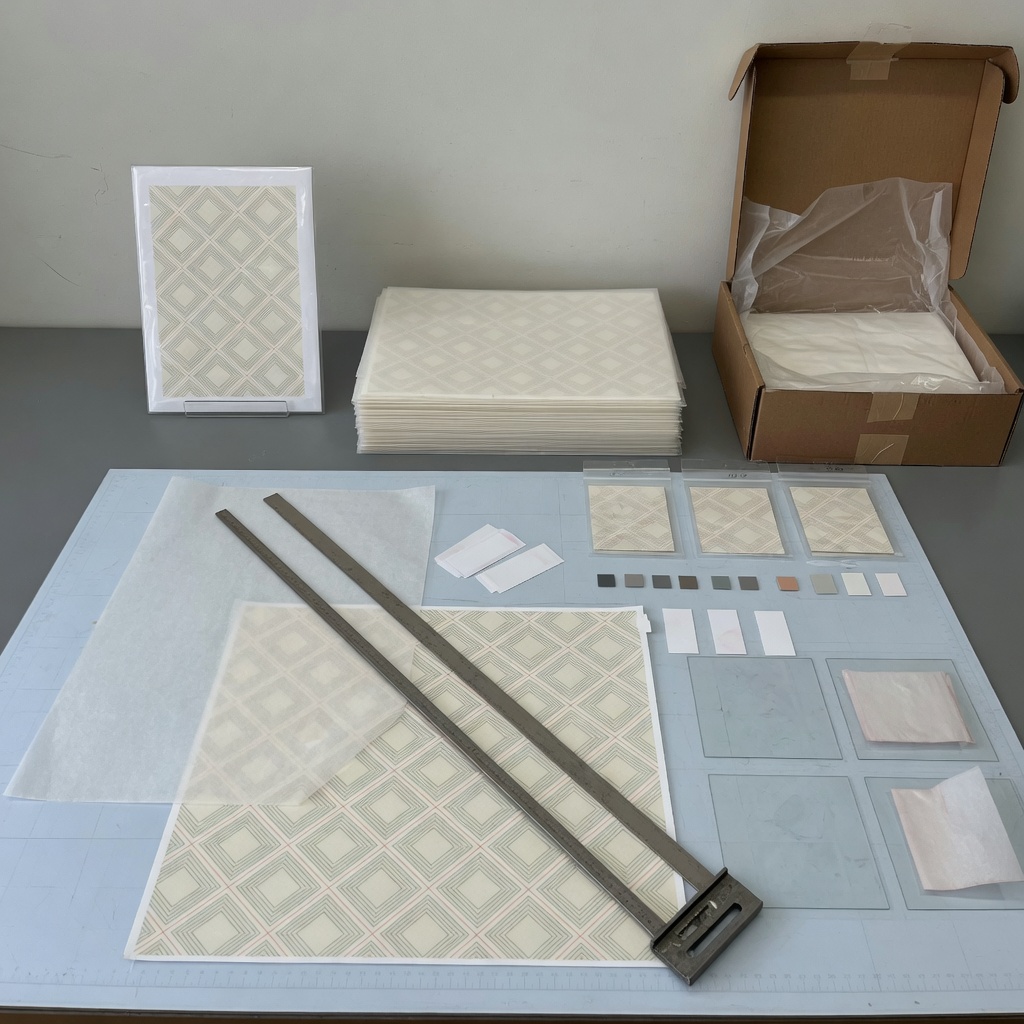
By Vincent Xi, Editorial Author
For tissue paper wholesale supply in Europe, a quality control inspection should resolve a shipment-release decision: does the identified production lot meet the buyer-approved specification, packout, and evidence requirements? Put the RFQ, signed specification, approved artwork or physical reference, inspection instruction, result record, and release authority under the same order control.
This article is limited to B2B procurement of flat wrapping tissue paper. The cited commercial pages cover broader tissue categories or describe individual suppliers' stated practices. They are used here only to identify inspection questions. They do not prove a quoted supplier's capability, an inspected-lot result, certification, a legal requirement, or a rule applying across Europe.
Europe Tissue Paper Quality Control Inspection Release Gates
| Release gate | Lock into the RFQ before production | Evidence required for release | Hold shipment when |
|---|---|---|---|
| Destination and intended use | Name the European destination country, importer, wrapping use, and any direct or foreseeable product-contact scenario. Record whether the destination is an EU member state, non-EU EEA state, Great Britain, Northern Ireland, or another European country. | Buyer-approved destination-evidence schedule and a named party responsible for confirming applicability | The destination is recorded only as Europe, the intended use is unclear, or required evidence remains unresolved. |
| Controlled product baseline | Define substrate, requested material claims, artwork revision, print reference, finish, flat dimensions, tolerances, orientation, folds, and packout. | Signed specification, controlled artwork, approved physical reference where used, and approved packout reference | Material, artwork, dimensions, finish, or packout differs from the controlled baseline without written approval. |
| Inspection lot and sampling | Define the production lot, treatment of mixed batches, inspection stage, carton and sheet selection, sample quantity, defect classes, and decision rules. | Lot identity, selection record, sample identity, observations, defect counts, and a reproducible release decision | The report omits the lot, selection method, sample quantity, observations, or acceptance rule. |
| Material, print, and workmanship | Select checks relevant to the wrapping-tissue SKU and state the method, unit, sample state, visual conditions, and contractual limit. | Lot-linked raw results, photographs, applicable reports, and comparison with the approved reference | A pass statement lacks results, units, limits, method, or sample identity. |
| Quantity and packaging | Define sheets per pack and carton, permitted quantity variance, inner protection, carton construction, sealing, moisture protection, and loading configuration. | Count reconciliation, packout photographs, carton-condition record, shipping marks, and loading evidence | Quantity is unresolved, configurations are mixed, protection is damaged, or packout changed without approval. |
| Traceability and change control | Define identifiers for material, production, inspection samples, retain samples, cartons, and shipment records. List changes that require buyer approval. | A lot map connecting source records, production batches, samples, cartons, reports, deviations, and shipment documents | Evidence concerns another material or lot, falls outside its stated scope, or cannot be connected to the goods offered for shipment. |
| Rework and deviation | Name the buyer representative permitted to approve deviations and define containment, rework, replacement, and re-inspection requirements. | Written deviation approval and new evidence for the corrected or substituted goods | Reworked or substituted goods are offered under the original approval without the agreed reassessment. |
The purchase order should identify who may authorize shipment and which inspection or document failures block release. A promise to correct a defect after dispatch is not pre-shipment evidence.
What the Supplied Sources Can Support
| Supplied source context | Supported use in this article | Boundary on use |
|---|---|---|
| QC Advisor tissue inspection checklist | The page lists possible inspection categories including packaging, quantity, labeling, paper quality, size, odor, moisture, strength, lint, absorbency, tensile and wet strength, tear, pH, and thickness. | Its broader tissue scope does not make every category relevant to flat wrapping tissue or establish an order-specific limit or Europe-wide requirement. |
| OEM tissue supplier quality-verification outline | The supplier-authored page describes video, photographs, sample confirmation, quality records, packaging checks, and pre-shipment inspection as parts of that supplier's stated approach. It also identifies basis weight, size, private-label layout, pack count, carton strength, and loading as possible check categories. | It does not prove that another supplier follows those practices or that they occurred for a quoted or inspected lot. |
| Hewbonn tissue quality-control overview | The supplier-authored page describes material documentation, hygiene, testing, and traceability as elements of that supplier's stated approach. | It is not independent verification, an official standard, a current certificate record, or proof that an ordered SKU or lot passed a test. |
| Vincent Xi author profile | The profile supports the author name, Editorial Author role, and profile URL used in the byline and structured data. | It provides no basis for factory-visit, product-test, customer-outcome, or first-person inspection claims. |
Supplier-authored statements remain descriptions of the named source's stated practice. Do not convert them into claims about a different supplier, a current production lot, or a universal industry requirement.
Build Measurable RFQ Acceptance Criteria
| Requirement block | Buyer must define | Supplier must return | Inspection record must show |
|---|---|---|---|
| Order identity | SKU, intended wrapping use, destination country, importer, ordered quantity, permitted variance, and delivery configuration | Quoted SKU, proposed lot structure, sheets per pack and carton, and any proposed substitution | Purchase-order, lot, carton, and quantity reconciliation |
| Substrate | Material description, requested fibre or recycled-content claim, basis weight, thickness where relevant, finish, color, coating, treatment, and prohibited substitutions | Proposed manufacturing tolerance, measurement method, conditioning method, result format, and requested claim evidence | Material record, identified sample locations, raw measurements, units, and lot connection |
| Finished sheet | Flat measurement state, width, length, tolerance, squareness, folds, orientation, pattern direction, and cut-edge expectations | Capability confirmation and proposed measuring method | Results from identified sheets and cartons, plus instrument identity and status when contractually requested |
| Artwork and print | Controlled artwork revision, color reference, evaluation conditions, registration limit, print direction, coverage, rub or transfer rule, and prohibited changes | Proof, printed approval sample, ink or coating description, and proposed tolerances | Comparison with the approved reference, observations, sample identity, and agreed rub or transfer result |
| Workmanship | Definitions or approved visual references for contamination, unintended odor, lint, wrinkles, tears, pinholes, creases, rough cuts, set-off, and mixed sheets | Marked boundary samples where practical and confirmation of defect definitions | Defect counts by contractual class, photographs, sample identity, and disposition |
| Functional performance | Only tests tied to a defined failure mode for the ordered wrapping use, with method, unit, sample state, limit, and report format | Test location, issuing party, instruments, and proposed reporting format | Lot-linked raw results and limits; a pass-only statement is insufficient |
| Packaging | Inner protection, bundle configuration, carton quantity, carton construction, sealing, moisture protection, loading arrangement, and shipping marks | Packout drawing or sample, carton specification, and loading plan | Packout condition, count reconciliation, carton condition, and loading evidence |
| Nonconformity | Containment, segregation, deviation authority, rework approval, replacement, corrective action, and re-inspection | Responsible contact and corrective-action workflow | New evidence linked only to the corrected quantity or approved deviation |
Words such as premium, strong, sustainable, compliant, and inspected are not measurable acceptance criteria by themselves. Each selected check needs a method, sample identity, result format, and contractual decision limit.
Example RFQ Data Points to Verify in the Supplier Quote
The values below are non-source-derived editorial assumptions. They illustrate how measurable fields could appear in one hypothetical flat printed wrapping-tissue RFQ. They are not legal limits, industry benchmarks, sampling settings, or supplier-capability claims.
| Parameter | Example value, scope, and as-of context | Source and required verification |
|---|---|---|
| Substrate basis weight | 17 g/m2 target for the unprinted substrate in a hypothetical flat printed wrapping-tissue RFQ dated 6 March 2025 | Editorial example assumption. Verify the value, method, conditioning, manufacturing tolerance, sample locations, instrument, unit, and result format in the supplier quote. |
| Finished sheet size | 500 mm width x 750 mm length per flat finished sheet in the hypothetical RFQ dated 6 March 2025 | Editorial example assumption. Verify the dimensions, measurement state, orientation, cutting method, folds, and achievable tolerances in the supplier quote. |
| Dimensional tolerance | +/- 3 mm for each finished-sheet dimension in the hypothetical RFQ dated 6 March 2025 | Editorial example assumption. Verify whether the limits are inclusive and whether they apply to each sheet, an average, or both in the supplier quote and inspection instruction. |
| Export-carton quantity | 480 finished sheets per export carton in the hypothetical RFQ dated 6 March 2025 | Editorial example assumption. Verify the counting method, inner-bundle configuration, permitted variance, and handling of shortages or overages in the supplier quote. |
Do not transfer these example values to a live order without confirming the substrate, print coverage, converting process, wrapping use, packout, and quoted production capability.
Define the Inspection Lot and Decision Rule
A reproducible inspection clause should define:
- The finished inspection lot and the treatment of different material, printing, converting, or packing batches.
- The method for selecting cartons before opening and preserving the selection record.
- The method for selecting and identifying sheets within each chosen carton.
- Which checks apply per sheet, bundle, carton, lot, or shipment.
- SKU-specific definitions or approved visual references for every contractual defect class.
- The sample quantity and acceptance and rejection values for each defect class.
- The treatment of dimensional failures, test failures, mixed batches, missing documents, and quantity discrepancies.
- The evidence required after containment, rework, replacement, or substitution.
Do not allow phrases such as normal sampling, random check, acceptable quality, or inspection passed to replace an agreed method and decision rule. If a supplier proposes a sampling standard, require its exact identifier, title, edition, lot basis, inspection level, and selected acceptance settings. Naming a standard does not establish that it is legally required, appropriate for the order, or actually followed. No sampling standard is presented here as a European requirement because the supplied sources do not support that conclusion.
The final report should let the buyer reproduce the decision from the disclosed lot, selected samples, raw observations, contractual limits, and agreed rule.
Remote Quality Control Inspection Evidence
The supplier-authored OEM source describes video, photographs, sample confirmation, quality records, packaging checks, and pre-shipment inspection as parts of that supplier's stated approach. A buyer may adapt those categories into an RFQ, but the quoted supplier must confirm what it will provide.
For remote inspection, request a dated, lot-linked sequence showing:
- The production or inspection-lot identifier and the unopened selected cartons.
- Carton opening, sheet selection, and sample identification.
- The measurement setup, instrument identity, method, and visible result where practicable.
- Comparison with the controlled product and packout references.
- Carton condition, count evidence, sealing, shipping marks, and shipment identifiers.
- File names or report references connecting each image or recording to the inspection record.
Treat remote visual evidence as support for identity, visible workmanship, observable measurement steps, count, and packaging decisions. Do not accept it as the sole evidence for chemical composition, migration, fibre content, or another characteristic requiring separate documentary or laboratory evidence. The RFQ should state whether remote review is the final contractual gate, a preliminary review, or supporting evidence for another inspection.
Europe Destination Scope Is a Separate Release Gate
The supplied commercial sources are not official legal authorities. They cannot support a statement that the same test, declaration, document language, or certificate applies across Europe.
| Recorded destination | Procurement control | Assumption to reject |
|---|---|---|
| EU member state | Name the member state, importer, intended use, requested document language, and the party responsible for determining applicable official requirements. | A generic Europe-compliant statement completes the review. |
| EEA state that is not an EU member state | Name the state separately and require the importer or qualified adviser to confirm the applicable evidence scope. | The destination can be recorded as EU. |
| Great Britain | Record Great Britain as the destination and confirm the applicable evidence package with the responsible importer or qualified adviser. | An EU-oriented document package automatically resolves the destination review. |
| Northern Ireland | Record Northern Ireland separately from Great Britain and confirm the applicable evidence package for the intended use. | A document decision for Great Britain can be reused without checking applicability. |
| Other European country | Name the country, importer, intended use, document language, and country-specific evidence required before release. | Requirements can be inferred from an unrelated European destination. |
The QC Advisor page includes a European food-contact paper test context among its possible categories. Treat that reference only as a prompt to ask whether direct or foreseeable food contact is relevant. It does not identify a requirement for every European destination or wrapping-tissue use. When food contact is intended or foreseeable, hold the order until the responsible importer or qualified adviser identifies the current official, jurisdiction-specific basis and the evidence needed for the ordered composition and use.
Keep legal applicability, voluntary sourcing claims, management-system documents, and inspected-lot conformity as separate decisions. Do not describe a supplier or product as certified without checking a current document's holder, issuer, scope, validity, and connection to the ordered material.
Copy-Ready Tissue Paper Inspection RFQ Checklist
- [ ] Name the SKU, wrapping use, European destination country, importer, and any direct or foreseeable product-contact scenario.
- [ ] Record EU member state, non-EU EEA state, Great Britain, Northern Ireland, or other named European-country scope as applicable.
- [ ] Attach the controlled specification, artwork revision, product reference, and packout reference.
- [ ] Define substrate, requested material claims, basis weight, thickness where relevant, finish, color, coating, treatments, and prohibited substitutions.
- [ ] Define flat dimensions, measurement state, tolerances, squareness, folds, orientation, pattern direction, and cut-edge requirements.
- [ ] Define color evaluation, registration, print direction, coverage, rub or transfer behavior, and visible print defects.
- [ ] Define contractual rules for odor, lint, contamination, wrinkles, tears, pinholes, creases, set-off, mixed sheets, and cut quality.
- [ ] State the method, unit, sample identity, limit, and result format for each selected measurement or test.
- [ ] Define the inspection lot, mixed-batch treatment, sample selection, sample quantity, defect classes, and decision values.
- [ ] Define inner protection, bundle configuration, carton quantity, carton construction, sealing, moisture protection, loading, and shipping marks.
- [ ] Require material, production, inspection, retain-sample, carton, and shipment identifiers to form one traceable record.
- [ ] List each report, declaration, sourcing-claim document, or certificate requested for the named destination and intended use.
- [ ] Prohibit unapproved changes to substrate, source, ink, coating, artwork, dimensions, printer, converter, lot structure, and packout.
- [ ] Define containment, deviation approval, rework, replacement, corrective action, re-inspection, and shipment-release authority.
Methodology, Data Derivation, and Limitations
Methodology: Each supplied page was classified by provenance before use. The QC Advisor commercial checklist contributed possible inspection and test categories. The OEM supplier page contributed examples of that supplier's stated remote-verification, packaging, and pre-shipment categories. The Hewbonn supplier page contributed examples of that supplier's stated material-documentation, testing, hygiene, and traceability categories. Supplier-authored statements were not treated as independent verification or transferred to another supplier. The author profile was used only for author identity, role, and URL.
Data derivation: The basis weight, finished-sheet dimensions, dimensional tolerance, and carton quantity are editorial example assumptions for the hypothetical RFQ dated 6 March 2025. They were not derived from the cited commercial pages. Each value must be verified in the supplier quote, approved reference, inspection instruction, and purchase order before it can become a contractual release limit.
Limitations and points to verify: The supplied commercial pages are not official legal texts, official standards, laboratory reports for the ordered SKU, current certification-registry records, supplier quotes, or evidence of present production capability. Their broader tissue scope does not establish that every listed check is relevant to flat wrapping tissue. This article cannot determine which rules, languages, declarations, tests, or certificates apply to a particular EU member state, non-EU EEA state, Great Britain, Northern Ireland, or other European destination. The importer or qualified adviser should verify current destination and intended-use requirements through applicable official sources. Inspection conclusions remain limited to the defined lot, selected samples, disclosed methods, reviewed records, and contractual decision rules.
Author basis: The Vincent Xi author profile identifies Vincent Xi as an Editorial Author. It supports the byline identity and role used here. No first-person factory, testing, supplier-audit, inspection, customer-outcome, or product-use experience is claimed.
Authorize shipment only when the identified lot meets the signed specification and every required measurement, image, quantity record, traceability record, report, and destination document is complete, current, relevant, and connected to the goods being shipped.
Discuss Your Requirements
Review our manufacturing capabilities, then share your specifications for a supplier-fit review.