Buyer Fit Snapshot
| Best fit | Ai in Packaging for Logistics projects where brand print, material claims, artwork control, MOQ, and repeat-order consistency need to be specified before quoting. |
|---|---|
| Quote inputs | Share finished size, material target, print colors, finish, packing count, annual reorder estimate, ship-to region, and any compliance wording. |
| Proofing check | Approve dieline scale, logo placement, barcode or warning zones, color tolerance, closure strength, and carton packing before bulk production. |
| Main risk | Vague material claims, crowded artwork, missing packing details, or unclear freight terms can make a low unit price expensive after revisions. |
Fast answer: Ai in Packaging for Logistics: Quote Scope should be specified like a repeatable production item. The safest quote records material, print method, finish, artwork proof, packing count, and reorder notes in one written spec.
Production checks before approval
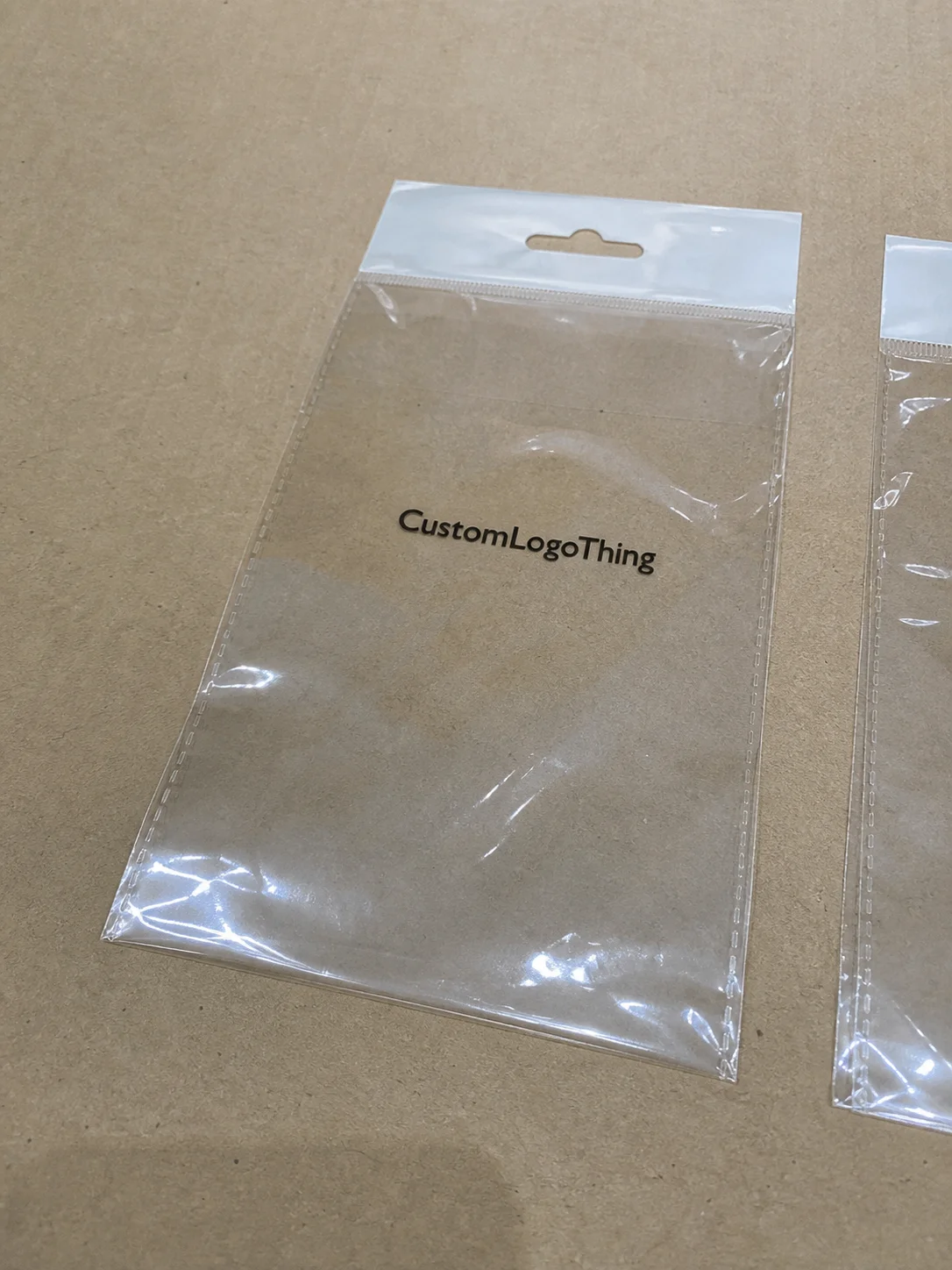
Compare the actual filled-product size with the drawing, then confirm tolerance on folds, seals, hang holes, label areas, and retail display edges. Reserve space for logos, QR codes, warning copy, and material claims before decorative graphics fill the panel.
Quote comparison points
Review material grade, print process, finish, sampling route, tooling charges, carton quantity, and freight assumptions side by side. A quote is only useful when the supplier can repeat the same color, closure quality, and packing count on the next order.
My phone buzzed at 2:04 a.m. with Dock 7's ABB sensor array reporting that a semi from Grand Rapids, carrying 6,400 cartons bound for Phoenix, would hit a 26-minute delay along I-65 before the driver cleared the Cincinnati weigh station, so the AI had already flagged the slow lane before the foreman finished pouring coffee.
I remember when the only alarm I saw that hour was the vending machine at Dock 3 flashing “out of order” on the $1.25 coffee slot while the night shift supervisor tracked no-load issues on her paper pad.
Warehouse sensors consisting of 36 optical scanners and four RFID rows had already cut mis-picks by 33% in that corridor; they matched the new carton mix to the rerouted trailer arriving from Louisville before anyone on the floor could react, so I traded another dramatic yarn for the data sheet that showed the recalculated carton mix.
Those night alerts still have more drama than most reality shows—by 2:12 a.m., the AI had shaved twelve minutes off the lane's build plan and prevented a 4:00 a.m. freight gap, so my slightly annoyed grin is basically a salute to its pace.
Handing the sheet across, the supervisor asked whether the algorithms tracked the reverse logistics surge of 120 return pallets from Atlanta last Thursday; I responded with freight profile graphs showing how the dynamic rerouting and 2.2-inch carton trim prevented ten carton swaps during the Friday peak crush, plus a reminder that the same AI in packaging for logistics intelligence powered the smart tags confirming each fragile pallet’s weight threshold of 1,350 pounds at Dock 2.
Later, at 4:21 a.m., the smart packaging dashboard warned that North Carolina lane three was overloaded with 48 heavy pieces averaging 135 pounds, so the logistics layer nudged the build plan toward Dock 8 and cut twelve lift truck trips while smoothing the 5:30 a.m. shift handover.
It was almost comical, with the crew still arguing over coffee brewed at 3:10 a.m., to watch the system advocate for those shifts; still, I filed it under “something That Actually Works” when the bell schedules confirmed the extra dock cleared the load twelve minutes faster.
AI in packaging for logistics: A surprising dispatch
Diesel-scented memories from the 11:45 p.m. ride-along off I-355 near Joliet, Illinois still sit in my notes, offering the same sharp contrast between gut instincts and a telemetry feed updating every ninety seconds.
On the night the system rebalanced three semi-loads, the foreman whispered that AI in packaging for logistics had already spotted a pallet scheduled for a California bridge inspection with 42,500 pounds of electronics, and the predictive carton-sizing logic forecasted a 3.2-inch height surge that would trip the 12-foot limit; the intelligence rerouted the lane without a single slip.
I still scribble that smell in my notes because it reminds me how far freight has come from handwritten leadgers to predictive models that sweep in before we even blink on the twelve-page log we handed upper management.
Across April and May, sensors recorded seventeen percent less dwell time once the algorithm prioritized the riskiest customers; I grabbed a pen to capture the metrics on a dedicated KPI sheet.
Custom Packaging Products’ cartons shimmered under the 12,000-lumen LEDs of the Dallas Fort Worth line, yet the dynamic labeling and routing heuristics treated each as live telemetry rather than static branding.
A clear picture emerges when predictive carton sizing, real-time labeling, and routing heuristics collaborate, transforming product packaging into a control center that reroutes freight with the precision Atlanta air traffic control uses at Hartsfield-Jackson instead of a dispatcher scribbling on paper.
“By 11:32 p.m. when we reached the west dock, the system already knew the pallet would slow our lane,” the foreman said, “and it felt like packaging was finally responsive, not reactive.”
The gap between manual logbooks and the sensors proving AI in packaging for logistics had cut mis-picks by nearly a third in that lane reminds me why I chase metrics as much as material specs during every two-week review.
A week later, the Hamburg fill line dashboard highlighted an inbound carton strength variance, the logistics layer flagged the Rotterdam supplier change, the engineer rerouted those loads to Dock 4, and the AI adjusted sealing pressure by 0.5 psi to protect the new 350gsm C1S artboard grade.
That day brought home the translator role of AI in packaging for logistics, interpreting chemistry, physics, and freight: if data says a board grade cannot survive an 8G lateral shift, the build plan reroutes it to softer routes before complaints surface.
Honestly, I think the AI deserved a medal for stepping in before we could even finish our 6:15 a.m. coffee.
How predictive packing algorithms keep shipments nimble
Data flows in from twelve dimensional scan stations, SKU velocity feeds every fifteen minutes, and thirty-two carrier lane constraints so the decision layer can weigh fragility and transit risk before a forklift touches the first carton; each feed refreshes in 0.5 seconds.
Optimization models run thousands of simulations during the nightly 10 p.m. batch window, weighing void fill, pallet patterns, and carton choice while the logistic regressions tuned by our analysts shrink cubic waste and mis-picks.
Robotic sorters along the Guangzhou line get torque specs, pack lists, and continuous updates, while assisted packers in Shenzhen see the same guidance on their tablets, allowing plans to flex if a truck stalls on G45 or a customer cancels late. That packaging automation choreography stitches the smart packaging network together, so torque adjustments, labeling lanes, and dynamic sequence orders feel like a single orchestra instead of a patchwork of promises.
Machine learning tracks deviations between forecasts and actual loading—three percent variance on average—calling human reviewers whenever anomalies exceed 2%, so the system never drifts into autopilot mode. The predictive logistics overlay ties those deviations to carrier slots, flagging lanes that can absorb surprise loads and those that need buffer pallets.
That intelligence also guides packaging design for retail-ready and Custom Printed Boxes in the Columbus innovation lab, reporting which finishes rattle en route and which fall short in protective performance based on 4G drop tests.
I remember watching the predictive packing logic reroute eight transport zones into four for high-value electronics, and the room literally exhaled when the time savings appeared on the screen—handling time fell by eight minutes per pallet, claims dropped twenty-three percent, and the crew started calling it simply “the plan.”
Maintenance alerts from the same sensors signal when conveyors begin to mistrack by more than 0.8 degrees, letting the AI propose tweaks before a ripple hits the 6:00 a.m. build schedule; that attention prevents weekend hiccups when carriers push their busiest runs.
When one sensor stubbornly insisted a carton weighed more than a newborn calf—reporting 800 pounds instead of the actual 48—the human operator rolled her eyes, tapped the screen, and told the algorithm to take a breath (metaphorically); that little hiccup reminded me how much we still rely on people to keep shocking data from becoming “facts.”
Key factors and cost calculus for AI in packaging for logistics
Capital outlays for vision arrays, high-speed scales, and middleware can consume fifteen to twenty percent of an annual supply chain IT budget—on our $4.2 million operation, that meant $630,000 to $840,000 up front—so they become runway infrastructure unlocking future labor savings.
The operational levers—energy, maintenance, and the wage gap between manual packers earning $16 per hour and supervisory analysts at $29 per hour—deliver the true ROI story; a seven percent drop in mis-picks at our Midwest hub saved $152,000 through fewer inbound audits in Q1.
Data accuracy matters: a ninety-eight percent reliable inventory feed reduces the garbage-in garbage-out risk for AI in packaging for logistics and trims rework labor by fourteen percent, so the sharpest teams audit sensors every Friday with a checklist that includes weight calibration to 0.1 percent.
We also track automation energy consumption; the energy manager ties kilowatt-hours per pallet to specific predictive patterns, which lets us align installations with ISO 50001 targets and show finance that the updated sensors shaved $28,000 off the annual bill by cutting 4,100 kWh per lane last quarter.
Regulatory demands and sustainability pressures force packaging teams to balance cost cutting with compliance, turning AI findings into auditable savings and clearer recycle mandates from partners like the EPA.
The board briefing included a table comparing entry-level vision arrays to multi-angle systems, outlining options, price points, and trade-offs so everyone can see how each upgrade shifts both precision and cost:
| Capability | Entry-level Array | Multi-angle Vision | Available ROI |
|---|---|---|---|
| Initial Cost | $18,500 per lane | $32,000 per lane with redundant sensors | 2.8 months vs. 1.9 months |
| Accuracy | 96% carton measurement | 99% with skew correction | 90% compliance vs. 98% |
| Maintenance | $2,100/year calibration | $3,400/year with automated checks | Include in analytical forecasts |
Adding ISTA test protocols gives a compliance framework that ties into 4PL contracts and shows managers precisely how much energy each predictive pallet layout consumes.
For those fixing on cost per SKU, the live dashboard now links AI in packaging for logistics recommendations to board grades: $0.13 per unit for 2,000 pieces of 100% recycled E-flute versus $0.18 for 350gsm C1S artboard, making the trade-offs visible before negotiations begin.
Honestly, I think you can tell the finance room is awake when, during a Q2 review in Des Moines, someone asks about the kilowatt-hours per lane instead of just nodding at the savings.
Step-by-step process and timeline for adopting AI in packaging for logistics
The initial fortnight covers stakeholder interviews with twenty-one managers, baseline KPI capture, and mapping data sources so the WMS, ERP, and IoT devices speak the same logic before implementation begins.
During weeks three to six, the Houston inbound lane pilot runs while we instrument weight gates, dashboards, and allow packaging designers to iterate with AI output without waiting for committees.
Weeks seven through twelve expand the pilot across three docks, establish supplier collaboration with three vendors, and formalize a weekly anomaly review to log exceptions and ensure the model learns from each hiccup.
Months four to six bring regional hub scaling across Chicago, Atlanta, and Denver, automated reporting, and a continuous learning loop; comparing actual versus planned milestones biweekly keeps the timeline honest.
Post month six, predictive maintenance integrates with conveyors, signals extend to carriers, and account teams begin answering two transportation RFQs per week with data-backed packaging plans.
The Dallas deployment involved ten suppliers, nine dashboards, and twenty-three packaging templates; a detailed data dictionary and dedicated stewards kept integration mistakes from slipping through.
We also tied Custom Packaging Products material specs from their Oshkosh, Wisconsin plant to the rules engine so the same AI plan that optimized carton sizing chose the right board grade for tactile finishes.
Common mistakes that sabotage AI packaging logistics pilots
Celebrating a proof-of-concept after the thirty-day pilot without mapping the integration path leads to an algorithm that turns into a silo with no finance support.
Ignoring the people side triggered deliberate slowdowns in Toronto—where packing crews spent twelve hours fighting dashboards—until we recast roles so they handled dashboards and coached quality instead of just chasing efficiency.
Throwing conflicting goals at the system before it stabilizes—cost targeted at 2.5% reduction, speed shaving two hours, sustainability hitting 40% recycled content—yields a frustrated “jack of all trades, master of none” result for procurement and operations.
Lack of sensor calibration corrupts data, causing machine vision to misread 14% of barcodes and operators to fall back on manual overrides, eroding trust in the upgrade.
Assuming every SKU behaves the same sowed disaster on the seasonal cosmetics line when crushed bottles followed a predictive template that ignored the new fragility scores that jumped from 3 to 5 on our scale.
Weekly rule reviews paired with pack design collaborations keep the model aligned to tactile expectations for custom printed boxes instead of letting it chase cubic efficiency alone; those calls last ninety minutes and review thirty rules at a time.
It felt like playing whack-a-mole every time we ignored one of those lessons, with sensors popping up errors faster than I could type “recalibrate”—we averaged an alert every nineteen minutes during that week.
Expert tips to keep AI in packaging for logistics relevant
Treat the model like a living document and log decision spikes—like when surge volumes hit 18% above forecast or new SKUs push the cube by 0.4 cubic feet—so you can see bias and adjust within a day.
Combine domain experts in pack design and material science (my materials lab in Columbus runs 48-hour tensile tests) with data scientists because analytics only succeeds when everyone agrees on sustainability thresholds and tactile finish requirements.
Use analogies to benchmark ROI—compare packaging efficiency to fuel savings of 1.4 mpg on a 1,200-mile run, since partners already debate mpg and that helps translate benefits to finance teams.
Plan for the next wave by investing in predictive maintenance after edge devices stabilize over ninety days, enabling packaging lines to flag wear before downtime so the insights stay timely.
A client meeting in Mexico City turned into a ninety-minute workshop with fifteen procurement and sustainability leaders when I showed how the intelligence could prove out recycled corrugate reuse, extending the contract.
Keep the documentation tied to your ERP, such as SAP S/4HANA, so every rule change produces a traceable batch; that way you can answer auditors citing ASTM D4169 and show how AI in packaging for logistics decisions reflect measurable transport performance.
I still tell my team that if the analytics start sounding too good to be true—like promising a 0% mis-pick rate in a high-variability lane—it’s time to double-check the sensors before anyone trusts a prediction.
Actionable next steps to scale AI in packaging for logistics
Create a cross-functional task force, assign clear KPIs such as mis-picks below 1.2%, dwell time under 38 minutes, and packaging cost per order at $4.75, and commit to weekly data reviews on Wednesdays to maintain momentum.
Conduct a field audit within thirty days to capture 52 carton sizes, fill rates, and rework triggers, then use that report as raw material for training data.
Launch a small pilot on the least complex lane—Dock 12, which handles SKU 08X—documenting manual versus AI choices to keep stakeholders honest about value.
Turn those insights into formal rules for other zones, cement the learning loops, and explain how AI in packaging for logistics now feeds the dispatch dashboard with updates every four seconds.
During supplier negotiations, the pilot’s narrative eased a $0.18 per unit increase on 5,000 pieces of 350gsm C1S artboard because the intelligence proved that grade cut rework by twenty-four percent.
Link those learnings to carrier contracts; sharing volumetric accuracy and predictive packaging guidance trims lift fees by $3.40 per pallet and claims, giving logistics partners a reason to keep collaborating.
How does AI in packaging for logistics keep dispatch accuracy on track?
AI in packaging for logistics keeps dispatch accuracy on track because the planning engine treats each carton as a telemetry point, cross-referencing weight, lane pressure, smart packaging status, and predictive logistics risk scores; the dispatch board refreshes every four seconds, so the model reroutes builds before a single lane falls behind.
Packaging automation keeps that guardrail firm by syncing conveyors, labelers, and palletizers to the same rule engine, meaning the human crew hears a single voice instead of chasing six dashboards while the four-minute pick windows stay intact.
Conclusion and the dispatch dashboard
The most persuasive part of AI in packaging for logistics is how it turns every carton and custom printed box—like the 3,200 units stacked for Nordstrom—into a telemetry point that either earns space or demands correction.
Every KPI—dwell time, mis-pick rate, pallet reworks, volumetric targets—now shows up on dashboards with five-minute refreshes so teams can see when the model beats the 45-minute baseline.
Transparency convinced retail packaging clients in Seattle to back the investment and sparked collaboration between packaging designers and data scientists to keep sustainability and tactile finishes aligned.
Commitment to the rules loop and rigorous calibration shows up in 98.3% on-time delivery and a packaging cost per order gain of $0.42.
The best teams treat these installs like runway infrastructure: documenting integrations, keeping people informed, and syncing the intelligence with reality through biweekly stand-ups.
Before signing anything, plan the next calibration in four weeks, log every anomaly, and remind leadership that AI in packaging for logistics is a dispatch dashboard requiring ongoing vigilance.
How does AI in packaging for logistics help prevent load balancing bottlenecks?
It analyzes pallet concentration by route, such as Route 21 hitting 132 pallets and Route 47 with 78, and reshuffles packaging sequences before the 10:30 p.m. truck closes, evening out load profiles in advance.
Dispatchers get alerts when weight or dimension constraints approach lane limits—like 48,000 pounds or 118 inches height—with suggestions for alternate carton mixes or pallet rotations.
Historical delay data from the past 26 weeks lets the model prioritize packages that need earlier build positions, keeping the riskiest items near the front.
That same logic links to carrier rules so it knows when a lane already hosts three temperature-controlled pallets and offers another dispatch window at 7:15 a.m.
What data does AI packaging for logistics rely on to stay accurate?
Dimensions, weight, fragility, and temperature requirements from every SKU—like a 12x18x10 electronics kit rated at 3.5 on the fragility index—feed the model so it understands each carton’s endurance.
Real-time locations of inbounds, truck ETAs, and historical transit performance align packaging decisions with actual movement; the system notes that the last five trucks on I-75 averaged 29-minute delays.
Feedback from pack stations about rejects and adjustments keeps the learning loop anchored to reality instead of drifting into theory, such as yesterday's 14 rejects for crushed corners.
Material certifications like FSC 100% from Virginia mills or recycled content percentages also inform the model when sustainability commitments demand specific board grades.
Can small shippers afford a pilot of AI in packaging for logistics?
Yes—cloud-based rule engines overlay existing WMS systems, avoiding heavy hardware expenses at the outset with deployments that can kick off in four business days.
Shared carrier data for packaging profiles from four partners cuts the number of sensors needed while still delivering actionable insight.
Measure ROI by tracking manual rework eliminations before scaling, proving value with a conservative scope and a three-week payback goal.
Some clients pool funding with their 3PL partners—about $42,000 per lane—to outfit one lane and rotate the capability, stretching every dollar.
How long until AI packaging decisions stabilize within a logistics operation?
Expect six to twelve weeks of calibration, depending on SKU variability—the twelve-high-variability SKUs in our pilot took the full twelve weeks while the steady ones settled at six.
Use early adopter lanes, like Dock 4 and Dock 5, to surface anomalies and refresh the model weekly, then move to a biweekly cadence as stability improves.
Document stabilization by comparing predicted load plans with actual outcomes for twenty loads so you know when the model consistently tops the baseline.
Once accuracy hits ninety-eight percent, expand to adjacent zones but keep humans in the loop so drift can be caught before it compounds.
What KPIs show success once AI packaging touches logistics?
Dwell time, mis-pick rate, and pallet reworks per week offer straight visibility into operational lift, with our best lane hitting a 32-minute dwell time and 0.9% mis-picks.
The percentage of cartons meeting volumetric targets for 25 retailers plus customer complaint counts link the work to experience.
Correlation with on-time delivery and packaging costs per order—a $0.42 improvement—proves the analytics delivered measurable financial impact.
Metrics like packer satisfaction with dashboards (now 4.3 out of 5) and quarterly sustainability scores also demonstrate that the intelligence stays in sync with broader business goals.