For apparel buyers, avery custom labels sit at the intersection of branding, operations, and customer experience. A label that looks right in a mockup can still fail on a real garment if the stock, adhesive, or finish is wrong. If your package includes other branded components, compare specs with Custom Labels & Tags and broader Custom Packaging Products so the system works together.
The key decisions are usually not design-first. They are material-first. A label that survives on a carton may peel, blur, or curl when it meets fabric, texture, friction, or humidity. That is why apparel labeling should be evaluated as a production choice, not just a visual one.
What Avery Custom Labels Mean for Apparel Buyers
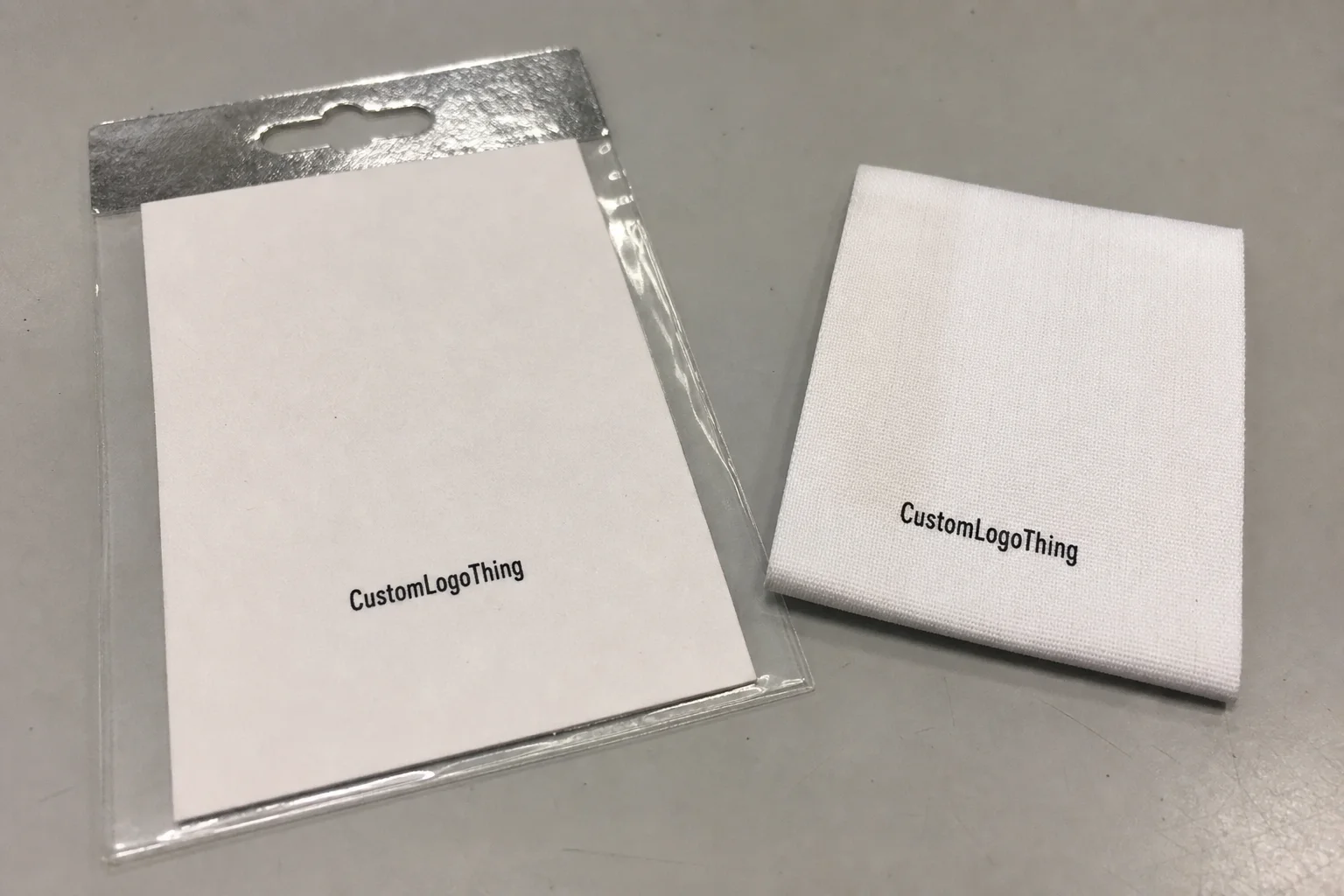
In apparel, avery custom labels usually means custom-printed labels in sheet, roll, or die-cut format for brand marks, size indicators, barcodes, care copy, or internal workflow. Some brands use them on hang tags, tissue, and mailers. Others apply them directly to packaging or for inventory control. The appeal is flexibility: a brand can test packaging systems without holding a large fixed inventory.
For a buyer, the value is practical. Labels reduce manual tagging, keep presentation consistent, and make a small team look more organized. In apparel, that matters. A missing size mark or mismatched insert can make a product line feel unfinished.
The hidden risk is wear. Garments stretch, fold, rub, and sit in transit or storage before they reach the customer. A label that performs on paper or cardboard may fail on soft goods, especially if the adhesive is too aggressive or the finish is too delicate. If the label touches fabric directly, testing on the actual textile is the only test that matters.
Practical rule: test the label on the same fabric, with the same fold, under the same storage conditions. A sample on generic stock will not tell you enough.
How the Process Works From File to Finished Labels
The process starts with decisions that shape everything downstream: dimensions, shape, quantity, finish, and how the label will be applied. Is it hand-applied or machine-applied? Does it go on a hang tag, poly bag, mailer, tissue wrap, or the garment itself? Those answers affect die cutting, bleed, adhesive choice, and pack format.
Artwork preparation is where many orders lose time. A printer will usually check resolution, small-type readability, barcode contrast, safe margins, and whether the design can be cut cleanly. If the label includes a SKU, barcode, or care icon, line weight matters. Thin text can disappear after print or become hard to read on textured surfaces.
Typical production is straightforward: prepress, print, cutting or roll conversion, inspection, and packaging. On a clean order with approved artwork, digital production often lands in the 5-10 business day range after proof approval. Custom shapes, specialty stocks, variable data, or multiple revision rounds can push that to 12-15 business days or longer. In most cases, the bottleneck is file readiness, not printing.
Proofing is where disciplined buyers save money. A useful proof should show barcode legibility, overprint risk, color shifts, and small copy that might collapse at size. If the supplier can provide a hard proof or material sample, use it. If not, ask exactly what was checked and what was not. The goal is not to approve a mockup. The goal is to confirm the label will print and perform correctly.
If labels are part of a larger packout with custom printed boxes or tissue, proof the full package rather than one component at a time. A label can be technically correct and still feel off if the color temperature, typography, or finish clashes with the rest of the system.
For brands that care about distribution performance, transit testing is worth considering. Packaging validation standards such as ISTA packaging testing standards help frame what the package should survive in shipping. If sustainability claims matter, paper stocks should be verified against FSC documentation instead of assumed. The relevant reference point is the FSC certification framework.
Material, Adhesive, and Finish Choices That Affect Wear
Material choice is where labels either hold up or create problems. Paper-based labels are usually fine for short-term use, especially on outer packaging or internal inserts. They are typically the lowest-cost option, but they are a weak fit if the label faces moisture, abrasion, or repeated handling.
Synthetic materials such as polypropylene and polyester films are usually better for durability. They resist scuffing and moisture more effectively than standard paper stocks, and they tend to hold color more consistently across a run. If apparel moves through humid storage, multiple packing touches, or a longer retail cycle, that added resistance matters.
Adhesive choice matters just as much. A strong permanent adhesive can work on smooth surfaces like cartons, mailers, and some inserts, but direct-to-fabric use is different. Many textiles are porous, textured, or stretch under tension, which can weaken the bond or leave residue. A removable or fabric-safe adhesive may be better depending on the garment and use case.
Finish changes both appearance and function. Matte stock improves readability and reduces glare. Gloss gives color more pop, but it also makes scuffs and fingerprints more obvious. Soft-touch and textured finishes create a premium feel, though they can raise cost and may not suit very small text or barcodes. A size or care label needs clarity; a brand-mark label may need tactile appeal.
Here is a useful comparison for apparel buyers evaluating avery custom labels against common label formats:
| Option | Best Use | Typical MOQ | Typical Unit Cost | Notes |
|---|---|---|---|---|
| Paper label sheets | Short-run inserts, inventory tags, internal organization | 250-1,000 pieces | $0.08-$0.18 | Lowest entry cost, but weaker against moisture and abrasion |
| Synthetic die-cut labels | Brand marks, size labels, retail packaging, higher-touch handling | 500-5,000 pieces | $0.12-$0.28 | Better durability and better appearance under repeated handling |
| Roll labels with variable data | SKU labels, barcode runs, fulfillment workflows | 1,000+ pieces | $0.06-$0.20 | Efficient for application speed, especially in larger packout operations |
| Specialty finish labels | Premium package branding and gift-ready apparel presentation | 500-3,000 pieces | $0.18-$0.35 | Higher visual impact, but costs rise with coating and setup choices |
These numbers are directional, not fixed. Print coverage, die complexity, and quantity usually move the price more than buyers expect. If the label has real work to do, the cheapest option often becomes the expensive one after failures and reprints.
Pricing, MOQ, and Unit Cost Drivers
Pricing for avery custom labels usually comes down to six variables: size, quantity, material, finish, color count, and whether the job needs custom cutting or variable data. A simple rectangular label with light coverage may sit near the bottom of the range. A die-cut shape with coating, multiple SKUs, or color matching will climb quickly.
MOQ, or minimum order quantity, is where brands often misread the market. Lower minimums help with new product tests, but they usually carry a higher unit cost because setup is spread across fewer pieces. Larger quantities lower the per-label cost, provided the spec stays consistent. If a brand expects to reorder, it is often smarter to lock in one size and one format early instead of requalifying the same label every few months.
Setup fees deserve attention too. A custom shape, barcode sequencing, proof revisions, and color matching can all add to the initial quote. The useful move is to separate one-time setup from recurring print cost so the real economics of the label program are visible.
For apparel teams buying packaging at the same time, total system cost matters more than isolated line items. A label that saves 10 seconds per unit during application may justify a slightly higher price if the labor savings are real, especially for small fulfillment teams where minutes become hours.
Ask each supplier to quote the same size, stock, finish, quantity, adhesive, and delivery format. Then compare total landed cost, not just unit price. If one quote is lower because it excludes proofing, slitting, or roll packaging, it is not actually cheaper.
Step-by-Step Ordering: Artwork, Proofing, and Approval
Start with the information that controls the label: logo files, exact dimensions, copy, SKU or barcode data, garment type, and application method. If any of those are missing, proofing slows down and correction risk goes up. Clean inputs save time.
- Gather the final logo file, dimensions, copy, and any variable data.
- Specify the garment type and where the label will be applied.
- Request a digital proof and review every word, alignment, and barcode line.
- Confirm the substrate, adhesive, finish, and quantity before approval.
- Check lead time, pack format, and shipping details before the run starts.
The proof should never be treated as a formality. It is the cheapest point at which errors can still be corrected. Check spelling, numbering, line breaks, expected color, and the visibility of small type. If the label includes care instructions, a barcode, or compliance copy, check it at the distance it will actually be read.
There is also a workflow issue that buyers ignore at their own expense. If the label is going into a fulfillment line, confirm whether it arrives in sheets, on rolls, or pre-cut. That detail affects labor more than design does. The best label is the one the team can use without friction.
Common Mistakes That Trigger Reprints or Waste
The first mistake is choosing the wrong adhesive or backing for the garment surface. That leads to peeling, curling, residue, or weak bond performance. On textured fabric, the problem may not show up until the product has been packed, folded, and stored for a few days.
The second mistake is approving a design that works on screen but falls apart at actual size. Thin lines, low-contrast text, and dense copy all become harder to read once the label is printed and cut. This is common with care copy and barcode labels, where the instinct is to fit too much into too little space.
The third mistake is skipping a real-world test. That means no sample on the actual fabric, no check for fold stress, no test for humidity, and no look at the finish under store lighting. A small test run often reveals issues that would otherwise appear after a full order.
The fourth mistake is ordering to a guess. Some buyers choose a quantity that feels safe, then pay too much per unit or sit on dead inventory. Others under-order, rush a reorder, and lose time. A better approach is to estimate demand from the actual launch plan and keep the first run small if the line is experimental.
One more point matters: compare labels in the context of the full package. A label can be perfect and still feel off if the hang tag, carton, tissue, or insert does not match. Package branding works best when the label, box, and wrap look like they belong to the same system.
Practical Next Steps Before You Place the Order
Start by defining the exact job. Is the label for care instructions, size marking, brand identification, inventory control, or all of the above? That answer drives the substrate, adhesive, and format. A label meant for internal workflow does not need the same finish as one that faces the customer at retail.
Request a sample or proof on the closest possible fabric or packaging surface. Then test application, read-through, and durability under the conditions the garment will actually see. That could mean folding, humid storage, abrasion, or a wash cycle if the label is expected to survive one. If the sample fails, adjust before the order scales.
Compare two or three quotes using identical specs. The point is not to chase the absolute lowest number. It is to understand how the supplier prices quantity, finish, setup, and production time. If one quote is much higher, ask why. If one is unusually low, ask what it excludes.
Finally, align the label with the rest of the package. Strong apparel brands do not treat the label as an afterthought. It sits beside the bag, box, insert, and hang tag as part of the same branded packaging system.
Are Avery custom labels durable enough for everyday clothing?
They can be, but durability depends on the construction, adhesive, and how the garment is handled and washed. For frequent laundering or direct contact with fabric, test the exact label on the actual textile before ordering at scale.
What affects the price of Avery custom labels most?
Quantity, material, finish, size, and any custom shape or variable data are the biggest cost drivers. The fastest way to lower unit cost is usually to standardize the spec and increase the order quantity.
How long does the proofing and production timeline usually take?
The timeline is shaped by proof approval speed, artwork readiness, and whether the order needs custom setup. Clean files and fast approvals usually shorten turnaround more than any other single factor.
What minimum order quantity should I expect for custom apparel labels?
MOQ varies by supplier, but custom work often starts higher than off-the-shelf labels because setup has to be absorbed somewhere. If you are testing a new line, ask for the smallest viable run and compare that unit cost against a larger order.
What should I prepare before ordering custom Avery-style labels?
Prepare final artwork, exact dimensions, quantity, application method, and any care or tracking copy that needs to appear on the label. Confirm the garment type too, because the fabric surface often determines the right adhesive or label format.


