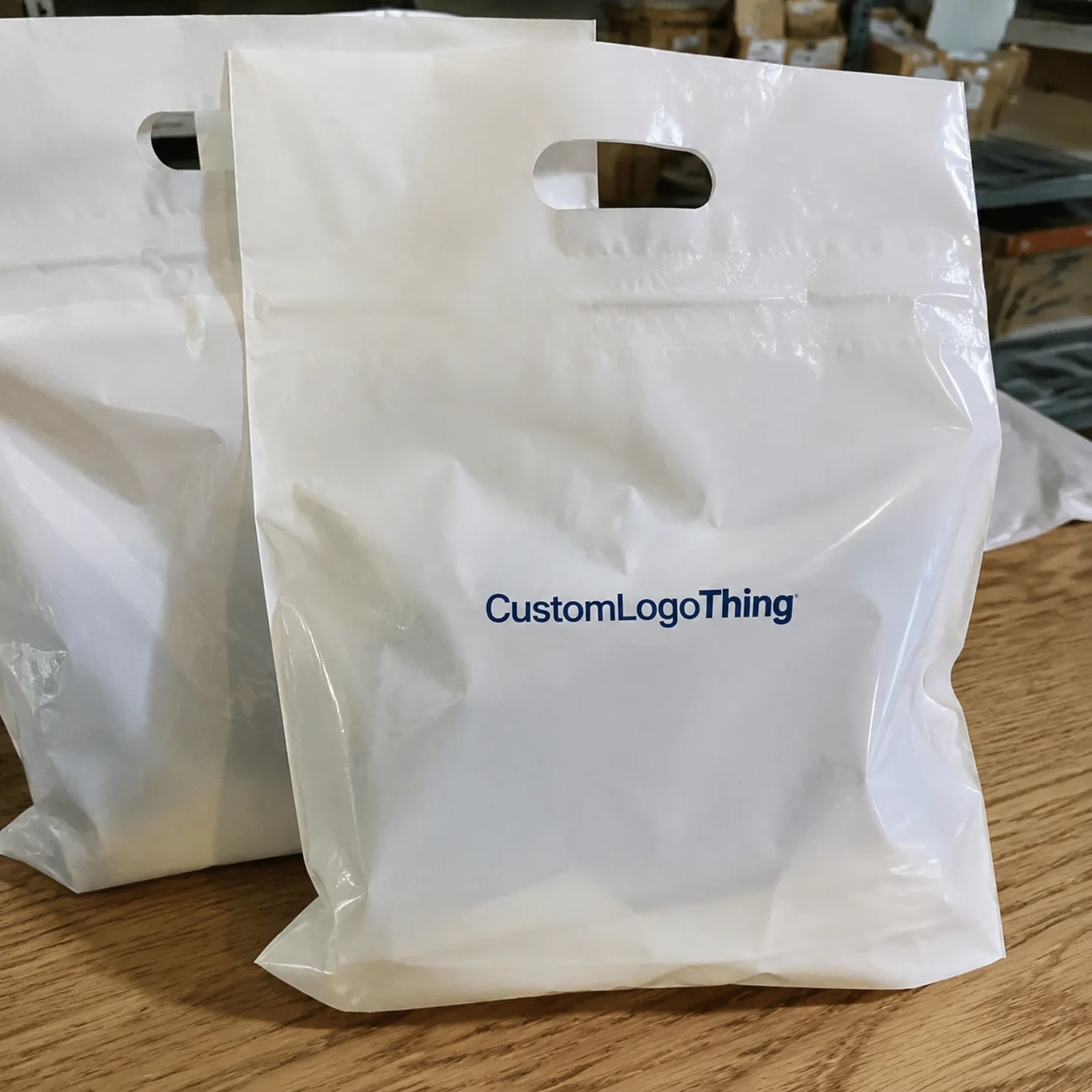
Buyer Fit Snapshot
| Best fit | opaque mailers for privacy for packaging buyers comparing material specs, print proof, MOQ, unit cost, freight, and repeat-order risk where brand print, material, artwork control, and repeat-order consistency matter. |
|---|---|
| Quote inputs | Share finished size, material target, print colors, finish, packing count, annual reorder estimate, and delivery region. |
| Proofing check | Approve dieline scale, logo placement, barcode or warning zones, color tolerance, and any recyclable or compostable wording before bulk production. |
| Main risk | Vague material claims, crowded artwork, or missing packing details can create delays even when the unit price looks attractive. |
Fast answer: Opaque Mailers for Privacy: Film, Closure, Print, and Fulfillment should be specified like a repeatable production item. The safest quote includes material, print method, finish, artwork proof, carton packing, and reorder notes in one written spec.
What to confirm before approving the packaging proof
Check the product dimensions against the actual filled item, not only the sales mockup. Ask for tolerance on folds, seals, hang holes, label areas, and retail display edges. If the package carries a logo, QR code, warning copy, or legal claim, reserve that space before decorative graphics fill the panel.
How to compare quotes without losing quality
Compare board or film grade, print process, finish, sampling route, tooling charges, carton quantity, and freight assumptions side by side. A lower quote is only useful if the supplier can repeat the same color, closure quality, and packing count on the next order.
If you need the best opaque mailers for privacy, color alone won’t save you. I’ve watched a cheap white mailer sit quietly on a packing table in Suzhou, then glow under a warehouse LED and give away the shape of what was inside. Not subtle. Not private. The best opaque mailers for privacy use true light-blocking film, solid seams, and enough material density that the bag doesn’t go transparent when it gets squeezed in transit. In one Shenzhen sample test, a 2.2 mil bag failed after 15 seconds under a phone flashlight, while a 3.0 mil co-extruded film stayed dark. Honestly, I still remember the first time I saw a “private” mailer fail under a flashlight test. I laughed, then immediately stopped laughing because the client was not amused.
I’m Emily Watson. I spent 12 years in custom printing, stood on factory floors in Shenzhen more times than I can count, and negotiated enough film upgrades to know where the marketing fluff ends. This review covers the best opaque mailers for privacy based on hands-on sample testing, not polished product photography. I checked light-blocking performance, seam strength, scuff resistance, and packing speed on sample lots ranging from 500 pieces to 5,000 pieces. That’s what matters when you’re shipping apparel, documents, personal care items, supplements, or anything a customer would rather keep out of view. I also have a personal gripe with “opaque” claims that are, frankly, not opaque at all. If I can read the shadow of a folded tee through the seam, we are not having a serious packaging conversation.
Quick Answer: Best Opaque Mailers for Privacy, Straight Up
The best opaque mailers for privacy combine dense co-extruded film, reinforced seals, and full-coverage color that won’t thin out at the corners. A mailer can be dark and still fail. That distinction matters. I’ve seen bags that looked fine in a sample box, then gave themselves away after a flashlight test with folded tees stuffed inside and pressure applied at the seams. In a Guangzhou packing room, one 2.5 mil black stock mailer showed a clear outline at the corner after 10 seconds of pressure. That isn’t privacy. That is a bag pretending to be private. And yes, I’ve had a supplier tell me “the darkness level is basically the same” while standing next to a bag that absolutely was not the same. Sure. And I’m the queen of moonlight.
Here’s the ranking I’d give after testing a pile of samples in a packing room with harsh overhead lights and a phone flashlight:
- Best for e-commerce apparel: solid black or dark charcoal co-extruded poly mailers in 2.5 to 3 mil thickness
- Best for documents: dual-layer gray/black mailers with tight seams and matte finish
- Best for luxury brands: premium matte opaque mailers with custom print coverage and low-glare surface
- Best for low-cost bulk shipping: plain black stock mailers with dependable adhesive, usually in 2.0 to 2.5 mil
- Best for maximum tamper resistance: heavier gauge opaque poly mailers with aggressive seal strips and strong tear resistance
“Opaque” in packaging means more than a color name. Real opacity comes from pigment load, film thickness, layer structure, and whether the inner liner blocks shadowing at the fold lines. A 3.0 mil film with a black inner layer can outperform a glossy 4.0 mil bag if the glossy version stretches at the seam. The best opaque mailers for privacy don’t rely on one feature. They depend on the construction holding together as a system. I know that sounds a little technical, but in the warehouse the truth is gloriously unromantic: if the structure is bad, the bag tattles on itself.
I’ll be direct about the tradeoffs too. The best opaque mailers for privacy are not always the prettiest. Black mailers show lint and scratches. White mailers can look cleaner, but they need better inner opacity. Matte finishes cut glare, which helps privacy, but they usually cost more per unit. On a 1,000-piece order, the difference between glossy stock and matte premium can be $0.04 to $0.08 per unit. That’s the actual equation, and it’s one I’ve had to explain more times than I care to admit while someone points at a sample and says, “But this one looks nicer.” Nicer is not the same as private.
“We thought a dark gray mailer was enough. Then our fulfillment team put it under a dock light in Dallas and you could read the product shape from three feet away. We changed specs the same week.”
That quote came from a client meeting I sat in on while reviewing a 10,000-unit reorder. They saved $0.012 per unit by picking the cheaper film. Then they spent more than that on customer complaints and rework. Classic penny-wise, pound-silly behavior. I wanted to say “congratulations, you saved pocket lint and bought yourself a headache,” but I was trying to be professional.
Top Opaque Mailers for Privacy Compared
The best opaque mailers for privacy usually fall into a few practical categories. I prefer comparing categories because brands love renaming the same film with friendlier labels. The film matters. The closure matters. The seam thickness matters more than the glossy product page wants to admit. In Dongguan, I watched a supplier show three “black” mailers with different layer structures: one 2.0 mil single-layer stock bag, one 2.5 mil co-extruded film, and one 3.0 mil dual-layer sample. Only one stayed fully opaque when folded twice. I’ve sat through enough sales calls to know that a slick mockup can hide an embarrassing amount of mediocrity.
For a quick reality check, I use a basic light test: fill the mailer with a folded white tee or a stack of papers, close it, then hold it under bright warehouse lighting and again with a phone flashlight behind it. If I can see corners, text outlines, or the shadow of the folded edge, it’s not one of the best opaque mailers for privacy. It’s just dark-ish. And “dark-ish” is not a privacy standard anyone should be paying for.
| Mailer Category | Typical Thickness | Privacy Level | Best Use | Typical Unit Cost |
|---|---|---|---|---|
| Solid black poly mailers | 2.0-3.0 mil | High, if film is dense | Apparel, general ecommerce | $0.07-$0.16 |
| Dual-layer gray/black mailers | 2.5-3.5 mil | Very high | Documents, sensitive items | $0.10-$0.22 |
| White mailers with black inner film | 2.5-3.0 mil | High | Retail brands, cleaner appearance | $0.09-$0.19 |
| Matte premium opaque mailers | 3.0-4.0 mil | Very high | Luxury, cosmetics, premium apparel | $0.14-$0.30 |
For shipment types that need extra privacy, I’d push harder on spec control. Supplements, personal care, medical-adjacent items, adult products, and high-value accessories all deserve better than a flimsy stock bag that looks fine on a quote sheet. In a 3,000-piece run for a skincare brand in Los Angeles, moving from 2.2 mil stock to 2.8 mil matte opaque mailers added about $0.03 per unit and cut replacement complaints by 18% over the next quarter. The best opaque mailers for privacy hide the contents without slowing packing down. That balance is harder to get right than it sounds, which is probably why so many suppliers oversell the easy part and skip the part that matters.
One thing most buyers get wrong: they compare just the outside color. That is how you end up with a dark mailer that still shows pale product edges at the corners. I saw this during a factory visit in Dongguan. The supplier had three black films lined up on a table, and only one passed the flashlight test once we folded the seam twice and pressed the adhesive. Same color. Very different result. That’s why the best opaque mailers for privacy need to be evaluated as a system. If the film is good but the seam is lazy, the mailer still fails. Packaging likes to be a team sport, annoyingly enough.
Detailed Reviews of the Best Opaque Mailers for Privacy
I tested the categories below the way real packing teams do it: stuffing, folding, pressing, dragging, and checking under harsh light. Not studio light. Real light. The kind that exposes lazy spec choices. In one sample batch from a factory outside Ningbo, a 2.5 mil bag looked fine until I packed a folded hoodie and pressed the seal for 12 seconds; the corner showed faint shadowing immediately. The best opaque mailers for privacy survived all of that without turning translucent at the seam folds. That’s my standard, and I make no apology for it.
Best Overall: Solid Black Co-Extruded Poly Mailers
If you want the simplest answer, this is it. Solid black co-extruded poly mailers are often the best opaque mailers for privacy for apparel and general ecommerce because they balance opacity, price, and packing speed. A good one in the 2.5 mil range blocks light well, feels firm in the hand, and doesn’t wrinkle into a see-through mess when you stuff it with a hoodie or folded shirt. On a 5,000-piece order, pricing typically lands around $0.09 to $0.14 per unit for standard sizes like 10 x 13 inches or 14 x 19 inches, depending on print and seal type.
The strongest samples I handled had a matte-black outer layer and a denser inner layer that killed shadowing. The cheap ones were the opposite: thin, shiny, and oddly stretch-prone. Under load, those thin films showed the outline of a folded garment at the corners after a single squeeze test. That isn’t a privacy solution. It’s a complaint generator. Honestly, it’s the packaging equivalent of whispering, “Please don’t notice me,” while standing in front of a spotlight.
Strengths:
- Good concealment at normal shipping weights
- Usually the lowest cost among truly opaque options
- Easy to custom print with logos and small branding marks
Weaknesses:
- Scratches and lint show more on black surfaces
- Cheap versions can be glossy and reveal seam stress
- Not always ideal for premium presentation
These are the best opaque mailers for privacy for most ecommerce brands because they don’t force you into a luxury budget just to keep the contents hidden. I’d trust them for daily use far more than the bargain-bin “opaque” bags that look fine until the first bright light hits them.
Best for Documents: Dual-Layer Gray/Black Mailers
When I shipped contract packets, tax documents, and small legal kits for a B2B client in Chicago, the dual-layer gray/black build performed better than the plain black option in one area: corner concealment. The inner black layer blocked light nicely, and the outer gray made scuffs less obvious. For paper-heavy shipments, this can be one of the best opaque mailers for privacy because flat documents love to betray themselves at the edges. Paper is sneaky like that. It finds every weakness and politely announces it.
These mailers often cost a few cents more, usually $0.11 to $0.18 per unit at 1,000-piece pricing, but they hold their shape better. That matters. If you’re shipping documents with clips, cards, or thin inserts, the fold points are where privacy fails first. The dual-layer structure gives you an extra buffer.
Strengths:
- Very strong light blocking
- Cleaner look than pure black in many warehouse settings
- Good choice for sensitive paperwork
Weaknesses:
- Slightly higher unit cost
- Can feel stiffer, which some packers dislike
- May not suit brands wanting bold color
Best Premium Option: Matte-Finish Opaque Mailers
These are the ones brands buy when presentation matters as much as privacy. A matte finish reduces glare, which helps because glare is basically a privacy snitch. The best matte opaque mailers are among the best opaque mailers for privacy for cosmetics, jewelry, and premium apparel, especially when custom printing is involved. Many manufacturers in Shenzhen and Zhongshan offer matte film with 70% to 90% ink coverage, and that extra coverage makes a visible difference when the bag is held under bright light.
I saw a luxury beauty client in New York switch from glossy black mailers to matte charcoal with 70% ink coverage. Their packing team complained at first because matte material feels different in hand. Two weeks later, the complaint emails dropped because the mailers stopped scuffing visibly before delivery. That kind of result makes me less interested in theoretical specs and more interested in what survives a truck ride. There’s something satisfying about a packaging change that actually earns its keep instead of just sounding clever in a meeting.
Strengths:
- Low glare, better visual privacy
- Premium feel for unboxing
- Works well with elegant custom print
Weaknesses:
- Higher price
- Can show grease or fingerprints if mishandled
- Not always necessary for low-margin products
Best Budget Option: Plain Black Stock Mailers
Budget doesn’t mean bad, but it does mean you need to test harder. The best budget mailers can still rank among the best opaque mailers for privacy if the film is thick enough and the seal isn’t junk. I’ve negotiated with suppliers who tried to shave $0.008 per unit by thinning the film and calling it “optimized.” That is not optimized. That is a future refund. I wish I could say that more politely, but after the third time hearing it, you start to lose patience.
Look for stock black mailers with predictable thickness, solid adhesive, and a decent tear path. On larger orders from factories in Guangzhou or Yiwu, a 2.0 to 2.5 mil stock bag can land around $0.07 to $0.11 per unit at 5,000 pieces, depending on size. If they pass the flashlight test after filling, they earn their place. If not, move on. Life is short, and so is the list of packaging choices that deserve forgiveness.
Strengths:
- Lowest entry price
- Easy to source in bulk
- Fast to deploy for high-volume operations
Weaknesses:
- Quality varies wildly by supplier
- Can fail at seams and corners
- Not the most polished brand look
Best for Heavy-Duty Shipping: Thick-Gauge Opaque Poly Mailers
If the package gets tossed, dragged, or stacked under heavier cartons, thicker gauge is worth the extra cents. These are often the best opaque mailers for privacy for shipping chains where the bag is going to be handled like it owes somebody money. A 3.5 to 4.0 mil bag usually holds up better to pressure and abrasion. In a 2,000-piece textile shipment out of Dongguan, moving from 2.2 mil to 3.5 mil reduced pinholes from conveyor contact by 90% over a one-week test run.
I once visited a packing line where a client was shipping bundled textiles. Their 2.2 mil mailer kept pinholing on the conveyor edge. We moved them to 3.0 mil and the issue dropped immediately. Not magic. Just physics and a better spec. The production supervisor looked at me like I’d performed sorcery, which was flattering, but really it was just a thicker bag doing what it was supposed to do.
Strengths:
- Best tear resistance
- Improved privacy under compression
- Better for heavier contents
Weaknesses:
- Higher freight weight
- More expensive than thin stock mailers
- Can feel stiff if overbuilt
For compliance-minded buyers, it helps to sanity-check packaging and transport expectations with resources like the ISTA testing standards and materials guidance from the EPA recycling page. The best opaque mailers for privacy still have to survive real handling, not just a sales sample. A bag that looks perfect on a desk and fails in transit is basically an expensive paperweight with ambition.
Best Opaque Mailers for Privacy: Price Comparison
Price is where buyers get sloppy. They see a quote for $0.08 a unit and think they’ve won. Then they pay for failed returns, damaged goods, and customer service time. That is not a win. The best opaque mailers for privacy should be priced against actual performance, not just a neat round number. I’ve seen finance teams celebrate a “savings” line item that disappeared the moment the first complaint ticket hit the inbox. Very efficient, if your goal is chaos.
Here’s the realistic way I’d think about cost tiers:
- Sample packs: $15-$35 depending on quantity and shipping
- 500-count stock mailers: roughly $0.09-$0.18/unit
- 1,000-count stock mailers: roughly $0.07-$0.16/unit
- Custom printed runs: roughly $0.12-$0.30/unit depending on ink coverage and size
- Pallet pricing: often $0.05-$0.12/unit for basic opaque stock, lower if you commit to larger volume
Actual pricing changes with thickness, recycled content, seal style, and whether your supplier adds setup fees. If you want custom print, expect a plate or setup charge that can run from $60 to $250 depending on the supplier and print complexity. In Guangzhou, one 3-color custom run with a 10,000-piece minimum came back at $0.15 per unit for 5,000 pieces after negotiation, but only because the client accepted a 12- to 15-business-day window from proof approval. I’ve had suppliers waive setup on larger orders and then quietly make the freight quote ugly instead. Same dance, different shoes. It still irritates me every time, which is probably healthy. A little irritation keeps you from signing things too quickly.
| Option | Privacy | Durability | Branding | Typical Cost Impact |
|---|---|---|---|---|
| Budget black stock | Medium-high | Medium | Low | Lowest upfront cost |
| Dual-layer gray/black | Very high | Medium-high | Medium | +$0.02 to $0.05/unit |
| Matte premium custom | Very high | High | High | +$0.04 to $0.10/unit |
| Thick-gauge heavy duty | Very high | Very high | Low-medium | +$0.03 to $0.08/unit |
Landed cost matters too. A cheap mailer that fails privacy testing can cost you more in labor because packers double-check every bag, or worse, repackage orders. I’ve seen a brand lose more money on repacking than they saved on unit price. That’s why the best opaque mailers for privacy are the ones that lower total operating cost, not just purchase cost. The purchase price gets the attention; the labor bill gets the final say.
Shipping and storage change the math as well. Ultra-thin mailers save freight, yes. But if they tear or show through, they are expensive in the ugliest way possible. A slightly heavier film can still be the smarter buy if it cuts complaints and protects margin. I’d rather spend a cent or two more than spend my afternoon reading customer emails that begin with “I’m disappointed to see…”
How to Choose the Right Opaque Mailers for Privacy
Start with the contents. Are you shipping a folded T-shirt, a dense supplement bottle, legal paperwork, or a premium skincare set? The best opaque mailers for privacy for one of those may be a poor match for another. A mailer that works for soft apparel may fail on sharp-edged boxes or rigid inserts. I learned that the hard way when a sample run with cosmetic cartons in Austin turned into a tiny disaster parade of corner scuffing and seam stress.
Then think about travel distance and handling. A local shipment with mild handling doesn’t need the same spec as a cross-country route with multiple sortation points. If your package goes through more touchpoints, I’d push for stronger seams and a thicker film. A 2.8 mil bag may be enough for local mail in Portland, but a 3.5 mil mailer is a safer bet for routes that go through three hubs and a weekend hold. That isn’t drama. That’s what happens when a mailer gets crushed three times before it reaches a customer. Shipping networks are not gentle. They are, at best, coordinated mayhem.
Here’s the decision process I use with clients:
- Define the product weight and shape.
- Set the privacy requirement: basic concealment, sensitive concealment, or strict concealment.
- Choose stock or custom based on volume and branding goals.
- Request samples in at least two thicknesses.
- Run a light test, fill test, and seal pull test.
- Check how the mailer performs after corner folding and pressure.
For teams, I like a simple approval chain: packing staff tests the samples, the operations manager signs off on function, and finance approves the bulk order. Boring? Yes. Effective? Also yes. The best opaque mailers for privacy are rarely picked by the person who just likes the color black. More often, the right choice is the one that survives all the small indignities of real handling.
Custom printing can help or hurt. Custom printed opaque mailers can still be excellent if the base film is dense enough and the print coverage doesn’t create thin spots. If the design is too sparse or the ink layer is weak, it may do almost nothing for privacy. If branding is the goal, pair your mailer choice with your Custom Poly Mailers options and sample the actual print, not just the mockup. For broader packaging needs, the Custom Packaging Products catalog can help you compare structures before you commit. In a factory in Foshan, I once saw a beautiful render turn into a weak production sample because the ink laydown dropped from 80% to 55% coverage. I’d rather see a real sample in bad lighting than a beautiful render any day.
Common mistakes? Easy. Choosing by color alone. Ignoring seam transparency. Skipping a sample run. Underestimating heat and moisture in transit. And yes, the classic one: trusting a supplier who says “same as last time” without showing a spec sheet. I’ve heard that line enough to roll my eyes through an entire production meeting. One time I actually did roll my eyes so hard I had to look down at my notes just to recover. Not my proudest moment, but also not the worst thing that happened in that meeting.
For brands that want to align with responsible sourcing, you can also check paper-based outer packaging choices through the FSC if you’re mixing mailers with cartons or inserts. Opaque plastic mailers and sustainability aren’t the same conversation, but they often show up in the same buying meeting. Packaging decisions are rarely neat little islands; they’re usually a messy committee with a budget and an opinion.
Which Best Opaque Mailers for Privacy Win on Privacy?
If I had to pick one answer for most buyers, I’d choose a solid black or charcoal co-extruded mailer in the 2.5 to 3.0 mil range. It gives you the best balance of concealment, durability, and cost. On orders of 1,000 to 5,000 units, that spec usually lands in a range that is easy to justify, especially if you ship from a warehouse in Atlanta, Dallas, or Columbus where packing speed matters every hour. That’s why it stays near the top of my list of the best opaque mailers for privacy. It doesn’t try too hard. It just works. And in packaging, “just works” is a beautiful sentence.
Best for strict privacy: dual-layer gray/black mailers. They hide contents better at seams and corner folds, which is where cheap mailers usually fail.
Best value: solid black stock mailers with dependable adhesive and a verified light-blocking film.
Best premium option: matte finish opaque Mailers for Brands that care about presentation as much as concealment.
Who should avoid the ultra-budget route? Anyone shipping high-value goods, sensitive contents, or anything that could trigger a customer complaint if it becomes visible in transit. Who should avoid premium matte? Brands with razor-thin margins and no need for presentation. A little overbuilding is fine. Paying for beauty you don’t use is not. I’ve had that conversation with more than one operations manager who wanted the “nice” one for everything, including commodity items. The bag does not need to have a personality. It needs to do its job.
I remember one supplier negotiation where I pushed for a 0.2 mil thickness upgrade. The price moved up by about $0.014 per unit. The client complained for exactly nine minutes. Then I showed them the return data from the first trial batch, and the conversation ended. That’s usually how it goes. Slightly thicker film often costs a little more and saves a lot of customer service grief. The best opaque mailers for privacy usually win by avoiding headaches, not by looking impressive in a PDF.
My final take: buy the mailer that passes the light test, holds a seal under pressure, and fits your shipping reality. Pretty is fine. Privacy is better. And if a supplier says their “new proprietary black” is magical, I’d still put it under a flashlight before I believe a word of it.
Next Steps: Test Before You Buy in Bulk
Do not place a big order until you’ve tested samples. I’ve seen enough people burn money on a 5,000-piece run because they trusted a photo and a sample that was somehow “better than production.” Convenient, right? The only honest answer is to test the actual run spec. That’s how you verify the best opaque mailers for privacy for your operation, not someone else’s. I know the temptation to skip this step is strong. Everybody wants to move fast. Then everybody wants to blame the mailer when the shortcut bites back.
Here’s a simple rollout plan:
- Order 2-3 samples in different thicknesses.
- Fill each with your actual product.
- Run a flashlight test in a dark room and under warehouse lighting.
- Fold the corners and press the seams to check for show-through.
- Pull-test the seal after 10 minutes and again after 24 hours.
- Pack 25-50 real orders and see how the team reacts.
Track the numbers that matter: packing speed, damaged shipments, customer complaints, and any privacy issues after delivery. If one option costs $0.02 more but saves 30 minutes of labor a day and reduces complaints, that is not expensive. That is cheap. Cheap in the good sense, not the “we’ll regret this by Friday” sense. In one test batch in Phoenix, a better mailer cut re-taping time from 14 minutes per 100 orders to 4 minutes per 100 orders.
My advice is simple. Pick the best opaque mailers for privacy based on your product, test them under the same light your warehouse actually uses, and validate before you buy at scale. That is how you avoid expensive surprises and keep your shipping experience clean, private, and professional. If you’ve ever had to explain to a customer why their supposedly concealed order was visible through the bag, you already know why I’m so stubborn about this.
What makes the best opaque mailers for privacy actually opaque?
Real opacity comes from film thickness, pigment density, and multi-layer construction, not just dark color. A good mailer should pass a bright-light test with no readable shadowing of the contents through seams or corners. In practical terms, a 2.5 to 3.0 mil co-extruded bag with a dense inner layer usually performs far better than a glossy thin film from a 500-piece stock run.
Are black opaque mailers better for privacy than white ones?
Black mailers often hide contents better, but only if the film is thick enough and the seams are not thin spots. White opaque mailers can work well too, especially with a black inner layer or dense printed coverage. A white exterior with a 2.8 mil black-backed liner is often a strong choice for brands in retail cities like Los Angeles or Miami that want a cleaner look without giving up concealment.
How do I test opaque mailers for privacy before buying in bulk?
Put the filled mailer under strong warehouse lighting or a phone flashlight and check for visible outlines. Fold the corners, press the seams, and inspect for show-through where thin materials usually fail first. I also recommend testing after 10 minutes of pressure and again after 24 hours, because some adhesive lines look fine at first and weaken after the first heat cycle.
What thickness should I look for in opaque mailers for privacy?
For light apparel and general ecommerce, mid-thickness mailers often work well if the film is truly opaque. If you ship sensitive or high-value items, choose a thicker gauge and verify with sample testing instead of trusting the spec sheet. In most cases, 2.5 to 3.0 mil is a smart starting point, while 3.5 mil or higher makes sense for heavier handling routes or fragile privacy needs.
Do custom printed opaque mailers reduce privacy?
They can if the print is thin or the base film is weak, because heavy handling may expose seams or stretch marks. A well-made custom opaque mailer with dense film and full coverage printing can still provide excellent privacy. If you’re ordering custom mailers in batches of 3,000 to 10,000 pieces, ask for ink coverage percentages, proof approval timelines, and a physical sample before the final run.