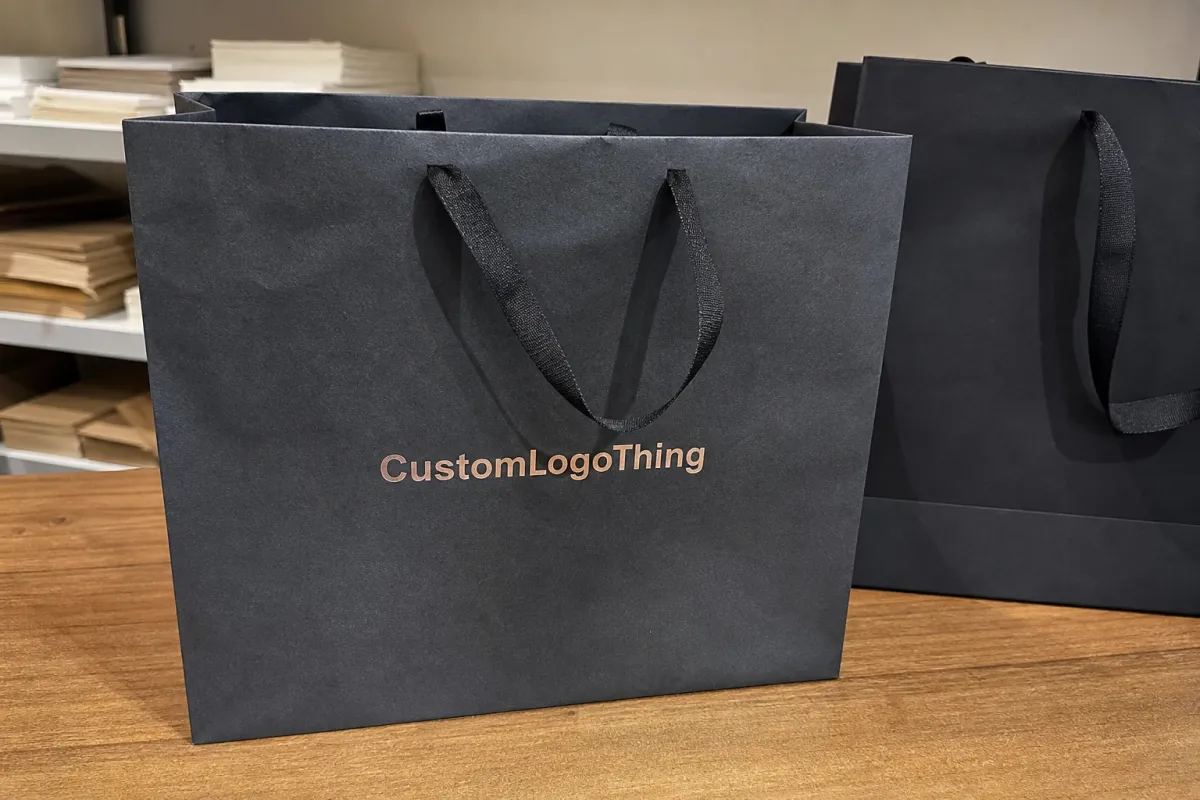
Buyer Fit Snapshot
| Best fit | Black Friday Recycled Parcel Kits projects where brand print, material claims, artwork control, MOQ, and repeat-order consistency need to be specified before quoting. |
|---|---|
| Quote inputs | Share finished size, material target, print colors, finish, packing count, annual reorder estimate, ship-to region, and any compliance wording. |
| Proofing check | Approve dieline scale, logo placement, barcode or warning zones, color tolerance, closure strength, and carton packing before bulk production. |
| Main risk | Vague material claims, crowded artwork, missing packing details, or unclear freight terms can make a low unit price expensive after revisions. |
Fast answer: Black Friday Recycled Parcel Kits: Artwork Proof, Packing Count, and Landed Cost should be specified like a repeatable production item. The safest quote records material, print method, finish, artwork proof, packing count, and reorder notes in one written spec.
Production checks before approval
Compare the actual filled-product size with the drawing, then confirm tolerance on folds, seals, hang holes, label areas, and retail display edges. Reserve space for logos, QR codes, warning copy, and material claims before decorative graphics fill the panel.
Quote comparison points
Review material grade, print process, finish, sampling route, tooling charges, carton quantity, and freight assumptions side by side. A quote is only useful when the supplier can repeat the same color, closure quality, and packing count on the next order.
I once stood on a mezzanine in a New Jersey 3PL watching order volume climb 68% week over week while packaging consumption jumped 92%, and I remember thinking, “Well, there goes everyone’s margin.” That gap explains why black friday recycled parcel kits deserve serious attention. During peak, waste and shipping inefficiency can outpace sales fast when teams pack reactively instead of running a defined system.
Across Custom Logo Things clients in beauty, supplements, and apparel, I keep seeing the same trouble spots: split shipments, fragmented inventory across bins, and seasonal labor sprinting through stations with too many packaging choices. Honestly, most teams don’t have a packaging problem as much as a decision-fatigue problem. The fix is practical and tested. Black friday recycled parcel kits are pre-configured shipping sets—mailer or box, cushioning, tape, insert card, and sometimes a return component—built from recycled-content materials and tuned for speed, protection, and cost control under pressure.
Why Black Friday Recycled Parcel Kits Matter More Than Most Brands Realize
Most brands miss an uncomfortable truth: holiday packaging is primarily an operations problem wearing a sustainability label. Customers care about waste, yes. Your CFO is focused on DIM-weight penalties, your warehouse lead is tracking pack-rate per labor hour, and your CX lead is watching damage tickets move from 1.1% to 2.4% across two promo cycles. Black friday recycled parcel kits sit right in the middle of those pressures.
Put simply, black friday recycled parcel kits are standardized bundles built from materials like 32 ECT recycled corrugated, PCR poly mailers, kraft paper void fill, water-activated tape, and recycled inserts. Instead of a packer choosing among 11 carton sizes and 3 filler types every order, they scan the profile and pull Kit S, M, or L. Fewer decisions on the line usually means fewer errors (and fewer “who moved my tape gun?” moments).
I’ve audited ad hoc stations where wrong-box selection hit 14% on peak Mondays. After rolling out black friday recycled parcel kits with barcode prompts, one DTC home goods brand dropped mis-pack errors to 3.8% in 10 business days. Pack time per order moved from 142 seconds to 104 seconds. Damage claims fell from 18 per 1,000 shipments to 11 per 1,000. That’s not noise; that’s margin recovery you can show in a finance review without anyone squinting at the spreadsheet.
Customer perception matters just as much during holiday rush. Patience runs thin. A crushed corner, overstuffed filler, or tape job that feels like a puzzle can burn trust faster than paid ads can rebuild it. Recycled materials alone don’t create a better unboxing experience. Structured kit design does—right-size geometry, disposal instructions people can actually follow, and inserts that feel useful instead of wasteful.
I remember a supplier negotiation in Shenzhen where a brand pushed for 100% recycled content in every component. That sounds ideal until fragile SKU mixes above a 3.5 lb average order weight enter the picture. Maxing recycled percentage without validating compression strength can push damage rates up 20–30%. The better call in that case was 85% post-consumer fiber in carton walls paired with upgraded edge-crush performance. Sustainable and shippable can coexist if specs are disciplined. I’m pro-ambition, but I’m even more pro “the mug arrives unbroken.”
What follows is a sequence that works on live lines: how black friday recycled parcel kits run, what drives true cost per shipped order, which specs are non-negotiable, how to roll out without chaos, and where brands usually undermine their own results. If peak prep is still living in scattered spreadsheets and rushed purchasing calls, this gives you a cleaner path.
How Black Friday Recycled Parcel Kits Work in Real Fulfillment Operations
A functional black friday recycled parcel kits program starts long before cartons arrive at the dock. First comes demand planning tied to SKU behavior, promo cadence, and channel mix (Shopify, Amazon, TikTok Shop, wholesale replenishment). For one cosmetics client, prior-peak data showed 62% single-SKU light orders, 28% mixed bundles, and 10% fragile gift sets needing reinforced corners. That distribution drove the whole kit architecture.
Workflow from forecast to outbound QA
- Forecast packaging demand: Convert order forecast to kit forecast using historical order profiles, not only units sold.
- Map SKU-to-kit rules: Build logic by weight band, dimensions, and fragility code.
- Procure components: Cartons/mailers, tape, dunnage, inserts, labels, return slips.
- Receive and slot: Assign pick-face locations by throughput, not alphabetic SKU order.
- Line setup: Post visual SOP boards at each station with 3-step pack logic.
- Outbound QA: Audit at fixed cadence (for example, 1 in 50 orders) plus exception scans.
Material selection for black friday recycled parcel kits usually falls into three families: recycled corrugated cartons (often 32 ECT or 44 ECT for heavier shipments), Recycled Poly Mailers (30–80% PCR), and paper-based void fill (30# kraft rolls or die-cut inserts). Add water-activated tape with 60–70 gsm reinforcement and you get tamper-evident closure with less tape waste than three-strip pressure-sensitive methods.
Standardization is where performance compounds. Seasonal hires can hit useful productivity in about 90 minutes with a 3-kit model, compared with 4–6 hours at free-choice stations carrying 10+ pack options. I timed this at a Midwest apparel facility: day-one training-to-target speed reached 78 orders/hour with kits versus 52 orders/hour ad hoc. By day three, the kit team crossed 91 orders/hour. I still have that stopwatch screenshot somewhere because nobody believed me at first.
Packaging hierarchy is critical. Strong black friday recycled parcel kits programs use small/medium/large logic based on common order shapes, not arbitrary aesthetics. Example: Kit S for under 0.8 lb soft goods in a 10x13 recycled mailer; Kit M for mixed SKUs in a 10x8x4 carton; Kit L for fragile bundles in a 12x10x6 carton with paper pad wrap and corner protection. Fewer sizes improve slotting and speed replenishment.
Process controls keep programs from drifting. Barcode-directed kit selection in your WMS reduces guesswork. Pack-out audits catch misses before carrier handoff. Exception codes (like KIT-M-STOCKOUT) tell supervisors whether to substitute, split, or hold. Without those controls, black friday recycled parcel kits start strong and deteriorate by week two. I’ve watched that drift happen, and it’s frustrating because it’s so preventable.
Sustainability mechanics here are concrete. Post-consumer content reduces demand for virgin fiber. Right-sizing cuts air shipped per parcel, often reducing DIM charges and truck cube usage. Clear disposal icons improve household compliance. For standards and definitions, align claims with FTC Green Guides language and reference frameworks like FSC chain-of-custody where appropriate.
Cost and Pricing Breakdown for Black Friday Recycled Parcel Kits
I like talking money with real numbers because it cuts through opinion quickly. Teams often compare carton unit price only, then conclude black friday recycled parcel kits cost more. That math is incomplete. The useful metric is total cost per shipped order (TCPO): materials + freight-in + labor + DIM impact + damage/returns + CX recovery costs.
Here’s a sample framework from a 50,000-order peak model:
| Cost Element | Ad Hoc Packaging | Black Friday Recycled Parcel Kits | Notes |
|---|---|---|---|
| Primary package unit cost | $0.41/order | $0.47/order | Recycled content and pre-kitted components add $0.06 |
| Freight-in packaging materials | $0.05/order | $0.04/order | Fewer SKUs, denser inbound loads |
| Packing labor | $0.62/order | $0.48/order | Pack time drops from 132 sec to 102 sec |
| DIM-weight penalties | $0.29/order | $0.18/order | Right-sizing reduces oversize incidence |
| Damage/returns impact | $0.21/order | $0.14/order | Fewer claims and reshipments |
| Total TCPO | $1.58/order | $1.31/order | $0.27 savings per order |
That $0.27 looks small until it’s multiplied by volume. At 50,000 orders, that’s $13,500 saved in one peak window. At 250,000 orders, it’s $67,500. Financial evaluation of black friday recycled parcel kits should be done as a system, not as a single component purchase.
A hidden cost example I see all the time is oversize-carton usage. If average parcel volume drifts from 0.42 to 0.55 cubic feet because packers “play safe,” carriers may bill at a higher dimensional tier. One beauty brand absorbed an extra $18,700 over four high-volume weeks because right-sizing discipline broke down. Recycled materials weren’t the issue. Box selection logic was. Yes, there was a painful meeting.
Budget scenarios vary by scale:
- Startup (5,000–20,000 peak orders): 2-kit model, stock print, digital insert cards. Target cost neutrality through labor and DIM improvements.
- Mid-market (20,000–150,000): 3–4 kits, one-color flexo branding, dual-source tape and void fill. Target 8–15% TCPO reduction.
- Enterprise (150,000+): Advanced SKU mapping, semi-automated erectors/tapers, lane-based kit allocation. Target 12–22% TCPO reduction.
Supplier quoting discipline matters more than most teams expect. Request recycled-content percentage by component (not blended claim language), board grade plus ECT/burst values, print method (flexo vs digital), lead time from art approval, MOQ, and backup capacity. I ask every vendor the same uncomfortable question: “What was your on-time in-full performance during peak for the last two cycles?” If there’s no data, risk goes up quickly. If they answer with vibes, I keep shopping.
For testing and packaging claims, validate transit durability against protocols from ISTA. Lab testing won’t predict every field condition, but it does reduce expensive guesswork.
Key Factors That Make or Break Kit Performance
Four variables usually decide whether black friday recycled parcel kits deliver results or create new headaches: forecast quality, material performance, operational fit, and claim credibility.
Forecast accuracy and safety stock logic
A ±10% forecast error is usually manageable with buffer inventory. A ±30% miss can trigger stockouts by week two. I recommend component-level safety stock tiers: 12 days for cartons, 18 days for tape, 10 days for inserts, plus at least one approved substitute for each critical item. One client avoided a two-day slowdown after a port delay by adding a secondary 60 gsm kraft tape supplier before launch.
Material performance under real transit stress
Heavier assortments require verified edge-crush and burst strength. Recycled board can perform very well, but only with tight spec control. In many cases, 32 ECT works for 2 lb apparel while 44 ECT protects 6 lb mixed hard goods more consistently. Seal integrity matters just as much, especially on long-haul lanes moving through 35°F to 95°F swings. Weak closure can turn good packaging into damage claims quickly.
Brand and customer experience details
Printing on recycled substrate needs calibration. Dark solids can mottle if ink laydown is too aggressive on uncoated kraft. Keep contrast high for disposal instructions. Easy-open tear strips and reseal elements reduce frustration and support return flow. One apparel brand I advised cut “hard to open package” complaints from 7.2% of packaging tickets to 2.1% after updating tape placement and pull-tab design in its black friday recycled parcel kits. That tweak saved the CX team from a lot of holiday grumbling.
Compliance and trust
Vague language such as “eco-friendly” can backfire. Specific, verifiable wording works better: “Box made with 85% post-consumer recycled fiber; curbside recyclable where facilities exist.” Keep supplier declarations and test records in one shared folder legal and CX can access quickly. Also, a candid disclaimer I give clients: recycling access varies by municipality, so disposal outcomes are never 100% controllable by packaging alone.
Operational compatibility
Facilities running erectors, tapers, or print-and-apply labelers need kit geometry aligned with machine tolerances. I’ve seen a 0.125-inch flap variance jam a taper twice per hour and burn 11 labor hours in one week. Small spec misses can create major throughput losses at scale, and they tend to show up exactly when volume is highest (of course).
Sustainability credibility also depends on end-of-life reality. Municipal recycling capabilities vary widely. Black friday recycled parcel kits perform best when disposal guidance follows a clear hierarchy: curbside fiber first, store drop-off for eligible mailers second, plain-language instructions throughout.
Step-by-Step Rollout Timeline for Black Friday Recycled Parcel Kits
Rollouts fail when teams compress a 10-week job into 3 weeks. I’ve watched that movie more than once, and the ending is always the same: expensive expedite freight and tired people. Phased execution with clear gates and fallback options is the safer route.
Step 1: Baseline current metrics
Pull at least 8 weeks of baseline data: damage rate per 1,000 shipments, pack time per order, cube utilization, packaging cost/order, and CX complaint categories. Weak baseline data turns post-launch review into opinion instead of evidence.
Step 2: Segment orders into packaging personas
Create 3–5 order personas such as single soft goods, mixed hard goods, fragile bundles, and gift-oriented orders. Assign volume share and risk level to each. One supplement brand discovered 71% of orders fit just two personas, which enabled a simpler black friday recycled parcel kits structure and faster training uptake.
Step 3: Prototype and test 2–4 kits
Build pilot configurations and run both transit tests and in-warehouse time studies. Measure pack time across at least 200 orders per kit, not 20. Include drop and vibration protocols that reflect actual carrier handling. Capture failure modes: corner crush, seam split, tape lift, insert migration.
Step 4: Lock specs and supplier commitments
Finalize drawings, board grade, adhesive type, print files, and tolerance ranges. Secure lead-time commitments (for example, 12–15 business days from proof approval), backup production capacity, and replenishment triggers tied to daily usage rates. Dual-source at least one high-risk component.
Step 5: Pilot in one node or one shift
Run a controlled launch in a single shift for 5–7 operating days. Track pick accuracy, throughput, exception codes, and stockouts. Adjust signage, slotting, and kit logic before multi-node deployment. This stage is usually where black friday recycled parcel kits either mature quickly or stall.
Step 6: Train seasonal labor with visual SOPs
Use photo-based SOP cards at each station: “If order profile = A, use Kit S.” Keep instructions to three actions max. During peak, text-heavy SOPs get ignored. Visual workflows typically reduce retraining time by roughly 35–45%.
Step 7: Launch with daily KPI cadence
During peak, run a 15-minute daily stand-up with operations, procurement, finance, and CX. Review pack speed, damages, DIM incidence, and inventory days-on-hand for kit components. Set escalation rules clearly; if tape inventory drops below 6 days, procurement should trigger substitute protocol within 2 hours.
Practical timeline model (weeks by phase):
- Weeks 1–2: Baseline data pull, persona segmentation, supplier shortlist.
- Weeks 3–4: Prototype development, transit testing, time studies.
- Weeks 5–6: Spec lock, artwork approval, PO placement, backup source validation.
- Weeks 7–8: Receiving, slotting, pilot launch in one node/shift.
- Weeks 9–10: Full deployment, daily KPI management, exception handling.
Add buffer time. Always. Artwork revisions can consume 3–5 extra business days. Freight delays can consume 4–8. Remove all slack and the black friday recycled parcel kits plan becomes fragile the first time a supplier misses a truck. I wish this were theoretical; it is not.
“We thought carton cost was our core risk. Component coordination turned out to be the real issue. Once tape, inserts, and box inventory lived on one dashboard, our pack line stabilized in 72 hours.” — Ops Director, multi-brand DTC portfolio
Common Mistakes Brands Make With Recycled Parcel Kit Programs
Mistake patterns repeat across early-stage brands and enterprise networks alike. The names change; the root causes usually don’t.
Mistake 1: Maximizing recycled percentage without protection validation
Diagnostic check: Did you run ISTA-style testing for the heaviest and most fragile order profiles? If not, risk is high.
Corrective action: Upgrade board spec (for example, 32 ECT to 44 ECT) for fragile lanes and re-test 20 sample shipments per lane.
Mistake 2: Too many kit sizes
Diagnostic check: More than 5 kit options on a high-turn line usually creates confusion and replenishment friction.
Corrective action: Collapse to 3 core kits that cover at least 80% of order volume, then manage edge cases with one exception kit.
Mistake 3: Packaging decisions isolated from shipping tariffs and labor
Diagnostic check: If your KPI dashboard excludes DIM penalties and seconds/order, your cost view is incomplete.
Corrective action: Shift to weekly TCPO reporting with finance sign-off and carrier invoice reconciliation.
Mistake 4: Underestimating lead-time risk
Diagnostic check: Single-source tape or inserts with no approved substitute?
Corrective action: Pre-approve alternates and define substitution triggers at 7, 5, and 3 days of inventory cover.
Mistake 5: Overstated sustainability messaging
Diagnostic check: Claims like “100% green” without documented support?
Corrective action: Replace with specific, auditable language and keep supplier declarations organized and accessible.
Mistake 6: No post-peak post-mortem
Diagnostic check: If lessons are buried in Slack threads, the same errors are likely next cycle.
Corrective action: Run a 90-minute retrospective with quantified wins/losses and locked actions for the next peak.
Black friday recycled parcel kits are operational programs, not one-time purchases. Treated as a cross-functional system, they usually produce measurable gains. Treated as a marketing checkbox, they often disappoint. I’ve seen both outcomes, and the difference is almost always operational discipline.
Expert Playbook: Actionable Next Steps to Launch Black Friday Recycled Parcel Kits
If you need a practical 30-day sprint, this structure works well.
30-day execution checklist
- Days 1–3: Pull baseline data (pack time, damages, DIM incidence, packaging cost/order).
- Days 4–7: Build a kit shortlist (2–4 options) based on top order personas.
- Days 8–12: Send RFQ with required fields: recycled %, ECT/burst, MOQ, lead time, backup capacity.
- Days 13–18: Run line trial (minimum 200 orders) and transit stress checks.
- Days 19–23: Draft SOP visuals, station signage, exception codes, and QA cadence.
- Days 24–30: Finalize supplier award, place POs, launch KPI dashboard, schedule daily stand-ups.
Decision matrix template
Score each kit from 1 to 5 across cost, speed, protection, sustainability credibility, and brand impact. Weight protection and speed at 30% each, cost at 20%, sustainability at 10%, brand at 10%. Teams that skip weighting often pick visually attractive packaging that underperforms in transit. Pretty is nice; intact delivery is nicer.
Weekly operating cadence
Set four fixed meetings: procurement sync (30 min), warehouse stand-up (15 min daily), carrier feedback review (weekly), and CX issue audit (weekly). That rhythm keeps black friday recycled parcel kits aligned across departments instead of fragmented by function.
Minimum viable measurement stack
- Pack time per order (seconds)
- Damages per 1,000 shipments
- DIM-weight incidence (% of shipments)
- Packaging cost per shipped order
- Unboxing/disposal complaint rate
- Repeat purchase rate for peak-acquired customers
Contingency rules that prevent panic
Document substitute-material logic before peak starts. Example: if Kit M carton stock drops below 3 days, move qualifying non-fragile orders to reinforced mailer + paper wrap; if water-activated tape supply tightens, shift to approved pressure-sensitive tape spec with a dual-strip rule. Draft a CX script for delays or packaging substitutions so customer messaging stays honest and consistent.
I’ve seen black friday recycled parcel kits work beautifully in facilities with no flashy automation—just disciplined specs, clear visuals, and daily data reviews. I’ve also watched expensive programs stumble because teams never aligned on one scoreboard. If you’re gonna do this, do it as one operating system: packaging, operations, finance, and CX reviewing the same dashboard, every day of peak.
Actionable takeaway: This week, choose your top three order personas, lock a 3-kit structure, and run a 200-order timed trial with damage tracking before you approve bulk POs. That single step will tell you, with real evidence, whether your black friday recycled parcel kits are ready for scale or still kinda theoretical.
What are black friday recycled parcel kits and why do they matter?
Black friday recycled parcel kits are pre-defined packaging bundles—typically a right-sized box or mailer, cushioning, tape, and inserts—built with recycled-content components and mapped to order profiles. They matter because they reduce pack-line decisions, improve packing speed, lower DIM-weight risk, and support more credible sustainable packaging performance during peak demand.
Frequently Asked Questions
Are black friday recycled parcel kits more expensive than standard packaging?
Not always. Unit material cost can run $0.03–$0.09 higher, but total shipped-order cost often falls through faster packing, fewer DIM penalties, and lower damage claims. Model full TCPO before deciding.
How early should I order black friday recycled parcel kits?
Start planning once your promo calendar and SKU forecast are stable, then lock specs after testing. Build buffers for print approvals (3–5 business days), production (typically 10–15 business days), and freight variability (4–8 business days depending on lane and mode).
What materials are best for black friday recycled parcel kits for fragile products?
Use higher-strength recycled corrugated (often 44 ECT for heavier mixed goods), paper cushioning tuned to drop-test outcomes, and closure systems with proven seal integrity across temperature and humidity swings. Validate by transit testing rather than assumption.
Can small ecommerce brands use black friday recycled parcel kits without large MOQs?
Yes. Keep to 2–3 core kit sizes, use stock-printed or digital-print formats, and negotiate staggered runs or pooled production. Focus first on top order profiles, then expand as demand becomes more predictable.
How do I measure whether black friday recycled parcel kits are actually working?
Track pack speed, damages per 1,000 shipments, DIM-weight incidence, Packaging Cost Per order, and customer feedback on unboxing/disposal clarity. Compare weekly against pre-launch baseline and adjust quickly when exception rates rise.