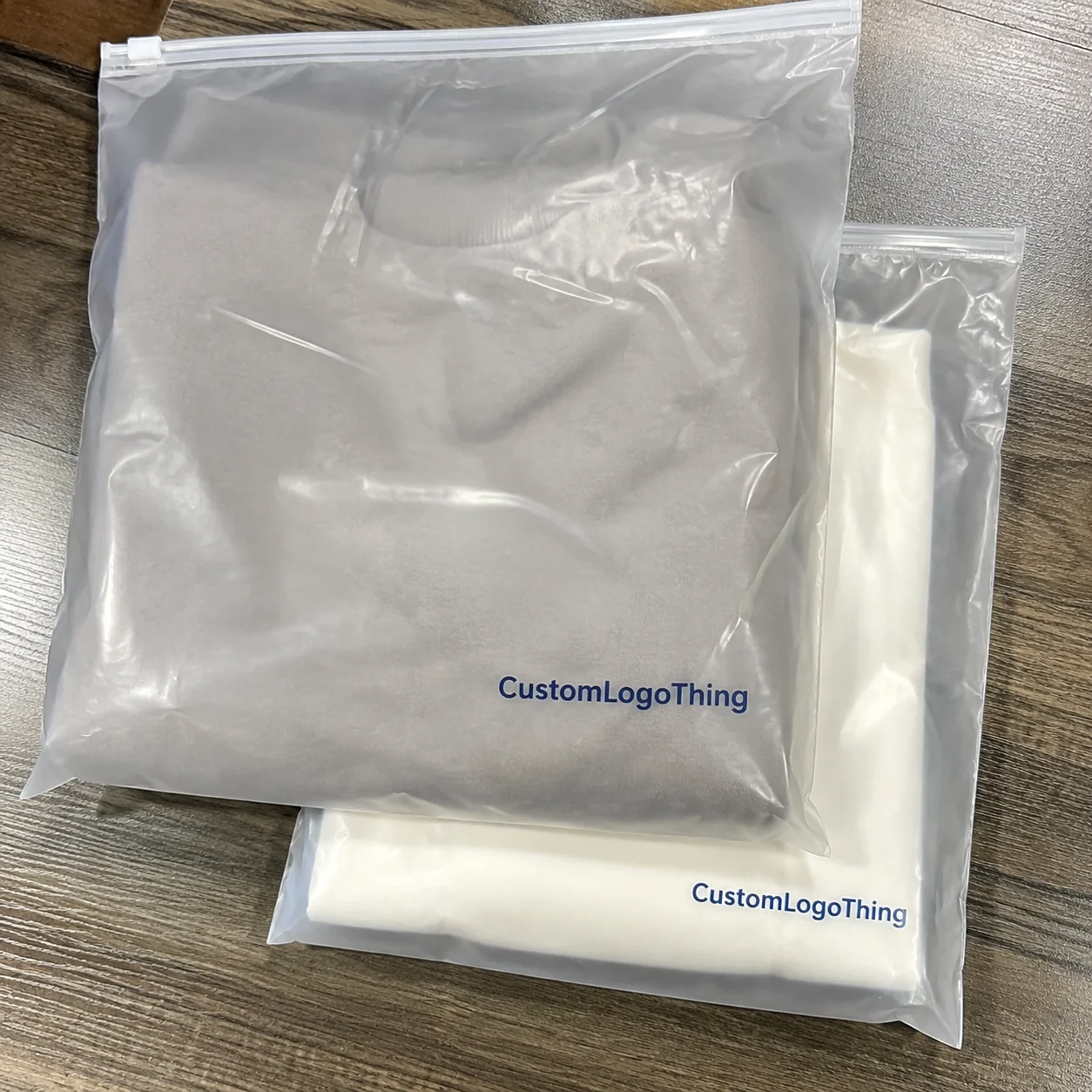
A customer usually sees the package before the product. For ecommerce orders, the mailer has to protect the item, survive handling, present the brand cleanly, and stay cost-efficient. A useful branded poly mailer price quote reflects the physical specification, not just the logo.
Price moves with size, film gauge, resin blend, print coverage, seal style, and quantity. It also changes based on practical details: hard corners inside the pack, whether fulfillment needs a wider opening for speed, whether dark artwork needs white backing or higher opacity, and whether the bag includes a second adhesive strip for returns.
That is why vague requests produce vague estimates. If the request includes packed dimensions, print layout, quantity breaks, and the shipping job the bag has to handle, the quote usually lands much closer to the final order.
A shipping bag is often your first physical brand touchpoint

The outer bag shapes expectations quickly. A clean print and a good fit suggest control. An oversized mailer with thin film, weak seals, or scuffed graphics does the opposite.
Buyers often focus first on color count or finish because those are easiest to review on a mockup. In practice, sizing errors usually cost more. An undersized bag slows packing and stresses seals. A bag that is too large uses extra resin, creates dead space in transit, and takes up more warehouse space.
The lowest price on paper is not always the lowest operating cost. A better-fitting mailer with simpler print can be the better buy if it packs faster, stores more efficiently, and avoids wasted material.
Practical takeaway: the best quote is not the cheapest one. It is the spec that fits the product, runs reliably, and avoids paying for film, print, or features that do not improve performance.
If multiple teams are involved, settle the shipping requirement before debating aesthetics. Once product size, protection level, and fulfillment method are clear, branding choices move faster and the quote gets more precise.
What defines the right branded poly mailer for your product mix
Poly mailers work best for lightweight, non-fragile goods such as apparel, soft accessories, textiles, and similar items that do not need rigid protection. They remain popular because they are light, compact, and usually cheaper to ship than corrugated boxes.
Material choice matters. A basic film may be enough for light garments with low puncture risk. Co-extruded structures are often chosen when opacity, tear resistance, or a stronger feel matters. They can also separate appearance from performance, pairing a printable outer layer with a tougher inner structure.
Closure design affects both function and cost. A standard permanent self-seal works for most outbound shipments. If returns are part of the program, a dual adhesive strip may justify the extra cost by making reuse easier for the customer. Tear strips can improve opening, but poor placement can weaken the bag.
Finish should support the brand without ignoring production reality. Gloss tends to make colors appear brighter. Matte reduces glare and may hide minor scuffing better. Heavy dark coverage can look strong in artwork review but show rub marks more easily in transit.
Not every product belongs in a poly mailer. Items with rigid parts, sharp hardware, fragile edges, or a premium unboxing requirement may need a padded format or a box. Using one mailer spec for every SKU often leads to preventable complaints.
For broader planning, compare mailers with other Custom Packaging Products so the final choice reflects the actual shipping mix.
Size, film gauge, print layout, and seal details that shape performance
Most quoting errors start with four missing inputs: finished size, packed product thickness, film requirement, and print treatment. If those are unclear, every downstream number gets less reliable.
Start with the packed item, not catalog dimensions. A folded hoodie in an inner polybag behaves very differently from a single T-shirt. Width, length, flap, and approximate pack thickness should reflect how the item will actually be inserted on the line.
Film gauge is usually specified in mil or micron. Thicker film generally improves puncture resistance, opacity, and hand feel, but it also raises resin use and cost. A lightweight tee may run well in a lighter gauge, while garments with zippers, drawcords, or folded hardware usually need more protection.
Print layout affects cost through color count, total print area, one-side or two-side print, registration tolerance, and whether the design is a logo hit or full flood. Fine reverse type on a dark background usually requires more control than a simple one-color mark on white film. If barcode readability, warning text, or a writable area matters, define those zones early.
- Dimensions: width, length, flap, and packed thickness
- Film structure: single-layer or co-extruded
- Gauge: target mil or micron range
- Print: one side or two sides, color count, flood or spot coverage
- Functional details: return strip, tear notch, vent hole, warning copy, label area
- Pack-out: carton count preferences and storage limits
Some small options change cost more than expected. Recycled content can affect resin cost, opacity, and finish consistency depending on the target percentage. A second adhesive strip adds both material and converting steps. Even warning placement or a white block behind dark artwork can change how the bag is printed and built.
For teams reviewing durability or sustainability requirements, the ISTA site is useful for transit-testing reference, and the EPA offers recycling and materials guidance.
Branded poly mailer price quote factors: pricing, MOQ, and unit cost
The main inputs behind a branded poly mailer price quote are size, film weight, material structure, print complexity, added features, and quantity. Freight, timeline pressure, and storage strategy then shape the real landed cost.
Size and gauge are the most direct material drivers. Every increase in width, length, or thickness adds resin. Full flood printing, multiple colors, return-strip construction, or specialty finishes add process cost. If the project requires a specific opaque color, tight registration, or large dark coverage with white reverse copy, production control usually has to be tighter than for a minimal logo print.
MOQ matters because custom mailers are not stock bags with a label added later. There is setup for printing and converting, material loading, registration checks, seal verification, and startup waste. Smaller orders can still be made, but the unit price rises because fixed costs are spread over fewer bags.
That is why buyers should ask for quantity breaks instead of a single headline price. The lowest total spend is not always the lowest unit cost, and the lowest unit cost is not always the right inventory decision. If a brand is still changing artwork, testing demand, or revising legal copy, a shorter run at a higher unit cost can be safer.
| Order tier | Typical use | Unit cost tendency | Buyer note |
|---|---|---|---|
| 1,000–2,500 pcs | Launches, seasonal tests, small campaigns | Highest | Useful for validation, but setup cost weighs heavily on each bag |
| 5,000–10,000 pcs | Regular replenishment | Moderate | Often the best balance between efficiency and manageable inventory |
| 20,000+ pcs | Ongoing programs and stable forecasts | Lowest | Works best when artwork, size, and annual usage are unlikely to change |
Price ranges vary by region, print method, material spec, and order size, so quick benchmarks should be treated carefully. The cost gap between a stock bag and a custom bag is usually driven less by “branding” itself than by the amount of material and process control the chosen spec requires.
Initial runs may also include artwork setup or plate charges depending on the print method. Reorders usually move more smoothly once size, art placement, and approval standards are set, although resin and freight can still change the final number.
How do you get an accurate branded poly mailer price quote?
The fastest route to a reliable branded poly mailer price quote is a complete specification sheet, not a mood board or a reference photo with “something like this.”
At minimum, include packed product dimensions, target bag size if known, quantity tiers, print sides, color count, preferred film structure, closure style, ship-to zip code, and target in-hands date. If recycled content, opacity, warning copy, barcode areas, or return functionality matter, include them at the start.
It also helps to describe the product honestly. A “soft good” may still have zip pulls, metal trim, or folded hang hardware that can stress a light film. If the item is bundled or packed with an insert card, mention that too.
Freight should be discussed early. Mailers are light, but cartons of mailers still consume space, and rush delivery can erase apparent unit-price savings. A quote that ignores delivery conditions may look good and still disappoint later.
Clean artwork saves time. Vector files, defined spot colors where needed, readable text sizing, and a layout matched to actual bag dimensions all reduce revision cycles. If an internal brand team needs to review proofs, account for that before committing to a launch date.
Production process and lead time from artwork approval to delivered bags
Custom mailer production usually follows the same sequence: quote, spec confirmation, artwork review, proof approval, scheduling, printing, converting, packing, and freight dispatch.
Artwork is a common delay point. RGB files, missing fonts, low-resolution logos, or artwork scaled without regard to final bag dimensions can all slow proofing. Changing bag size after art approval is another expensive detour because it can affect print placement, flap proportion, and seal geometry.
Proofs also need to be judged correctly. A digital proof can confirm layout, spelling, orientation, and general color intent. It cannot fully show film feel, opacity, rub resistance, or seal performance. If shipping performance is critical, a physical sample or pack trial with the real product is the better checkpoint.
Lead times vary by complexity and production load, but buyers should think in business days and approval steps rather than optimistic launch dates. A straightforward mailer with ready art may move quickly. A spec with multiple colors, return-strip construction, or legal review will usually take longer. Freight transit adds another layer.
Quality control should include checks for print registration, ink consistency, seal integrity, bag dimensions, adhesive performance, and carton pack counts before shipment. Those checks are what separate a clean receiving experience from a dock-side problem.
Common quote mistakes that increase cost or slow approval
The most common mistake is using flat product dimensions instead of packed dimensions. That one error can lead to the wrong bag size, extra material use, awkward fit, and a second round of pricing.
Another issue is incomplete artwork. Missing fonts, low-resolution files, vague color instructions, and comments such as “make it premium” do not save time. They force the supplier to guess.
Thin film chosen only to hit a target price is another avoidable problem. If the product has sharper edges, dense folds, or metal accessories, a very light gauge may puncture, split at the seal, or scuff badly in transit. Any savings disappear quickly if repacking or damage complaints follow.
Operational details are also easy to miss. A bag can be technically correct and still create problems if the opening is too narrow for fast insertion, if dark printing leaves no clear label zone, or if carton counts do not fit warehouse flow. Those points belong in the quote stage.
Before pricing a custom run, this is the checklist worth having in front of you:
- Packed product dimensions
- Product weight, shape, and any hard points
- Target bag size or acceptable size range
- Print colors, print sides, and coverage level
- Preferred film structure and approximate gauge
- Closure style and any return feature
- Quantity tier or annual forecast
- Ship-to location
- Required delivery date
- Special requirements such as recycled content, opacity, or warning copy
If your team needs examples of how specs influence packaging decisions, the Case Studies page can help frame the conversation internally.
Send these specs now to get an accurate quote and faster approval
To get a useful quote, send one concise package of information: packed dimensions, expected quantity breaks, artwork files, color expectations, preferred finish, special features, ship-to location, and required timing.
If the film gauge is still undecided, ask for alternates rather than skipping the question. A side-by-side comparison between a lighter and heavier construction can show whether the extra material cost is justified by better puncture resistance or handling. That is especially relevant for bundled apparel, heavier knits, or orders with hardware that can stress the film.
It also helps to note the fulfillment method. Manual packing, high-volume pick-and-pack, returns handling, and retail relabeling can all influence which bag performs best. The spec should reflect the actual workflow, not only the mockup.
A strong branded poly mailer price quote comes from clear requirements, realistic volume expectations, and production-ready artwork. That keeps revisions down, speeds approval, and makes the final bag more likely to perform as intended.
For related options, see our Custom Poly Mailers page.
FAQ
What information do I need for a branded poly mailer price quote?
Provide the packed product dimensions, target bag size if known, quantity breaks, print sides, color count, closure style, ship-to zip code, and target delivery date. Add any requirements for recycled content, opacity, warning copy, return strip, or barcode-safe areas. A quote becomes much more accurate once those details are fixed.
How does MOQ affect a custom poly mailer quote?
MOQ is tied to production efficiency. Custom mailers require setup for printing and converting, startup checks, and a practical material run length. Lower quantities can be produced, but the setup cost is spread across fewer units, so the per-bag price rises.
What changes the unit cost on branded shipping mailers the most?
Bag size, film thickness, material structure, print coverage, color count, added features, and total quantity are the main cost drivers. Freight and rush timing can also shift the real landed cost. Oversizing is a frequent hidden expense because it increases material use and reduces shipping efficiency.
How long does a branded poly mailer order usually take after quote approval?
That depends on artwork readiness, proof approval speed, production scheduling, order complexity, and freight transit. Straightforward jobs with complete files move faster than programs that require multiple revisions or special construction details. The safest schedules leave room for proofing and internal review.
Can I get a more accurate custom poly mailer quote without a physical sample?
Yes, if the packed dimensions, product characteristics, and print requirements are complete. A digital proof can confirm layout and copy, but it will not fully show film feel, opacity, or shipping durability. If fit or puncture resistance is a concern, a pre-production sample or alternate-spec comparison is the more reliable check.