Custom stickers for food packaging do more than sit on a carton and look branded. A label that feels fine on a dry bakery box can curl on a chilled cup, slip on an oily pouch, or start lifting at the corners after a few hours in the cooler. That gap between a proof and the real pack is where most label problems show up.
Buyers usually discover this the hard way. The artwork looks polished on screen, the print sample looks clean on paper, and then the first production run meets condensation, stacked cases, cold storage, and busy hands on a packing line. A label is judged less by the file and more by what it does under pressure. If it stays flat, reads clearly, and survives handling without leaving residue or peeling, the spec was probably right.
For food brands, that spec has to fit the container, the product environment, and the way the label will be applied. A sticker for a shelf-stable cookie bag is not the same purchase as one for a refrigerated deli tub or a frozen meal tray. The differences are subtle on a quote sheet and obvious in use. Material, adhesive, finish, size, and application format all affect whether the label becomes part of the package system or a source of rework.
Custom stickers for food packaging: what they actually do
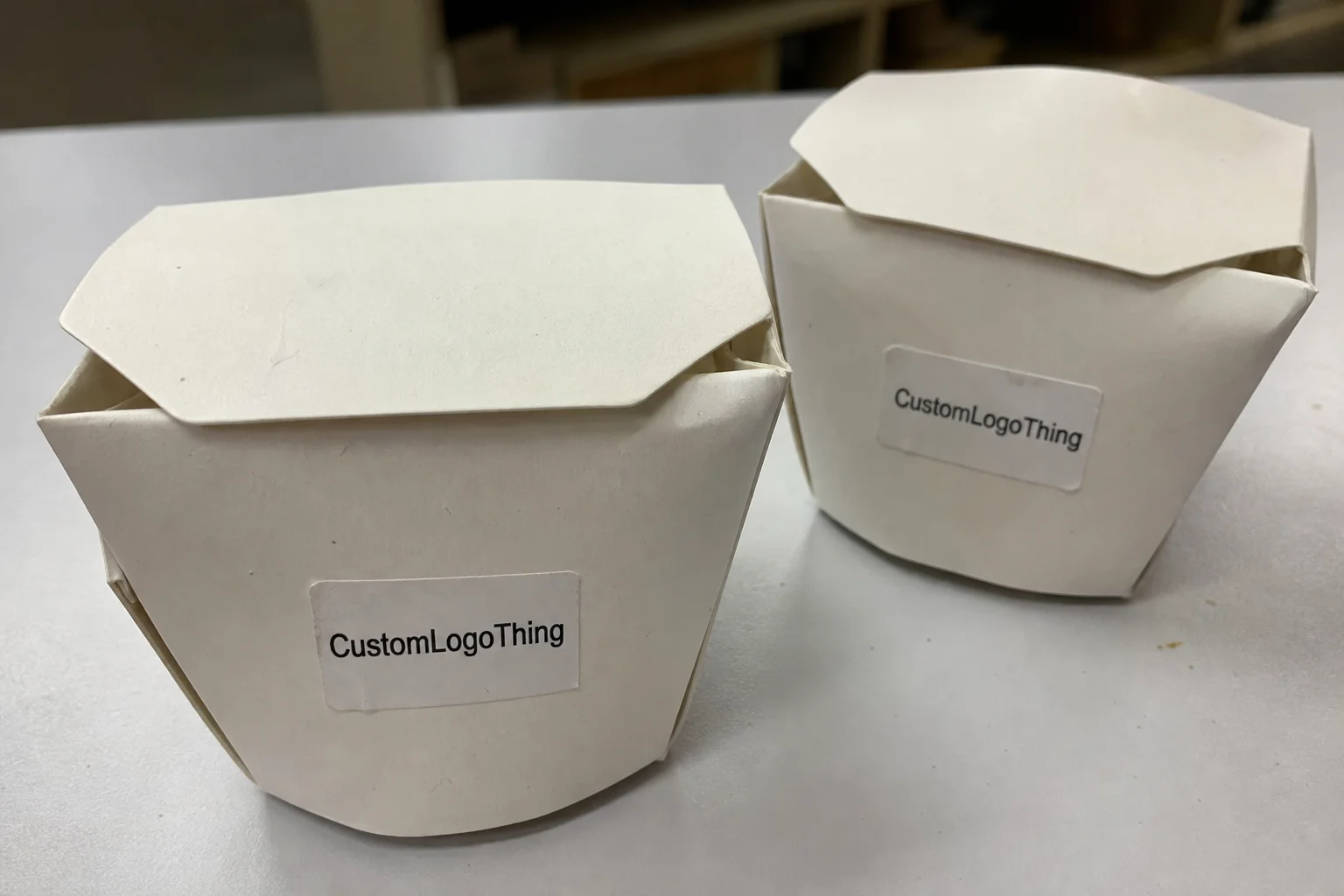
At the simplest level, these are pressure-sensitive labels used on pouches, jars, tubs, boxes, wraps, and bags. They identify the product, carry the brand, separate flavors or SKUs, and make the pack look finished. In a retail setting, that first visual impression matters more than many teams expect. A clean label can make a modest package feel deliberate. A bad one makes even good design look rushed.
They also serve an operational function. Labels can organize batches, menu variants, pricing tiers, and limited runs without handwritten notes or loose inserts. In food production, speed and consistency matter because errors cost money and time. When the label system is well planned, staff spend less time sorting and more time packing. That is one reason labels should be treated as part of the production workflow, not just the marketing layer.
There is another reason brands care about them: shelf behavior. A label that stays put, stays legible, and resists scuffing helps the product hold its value in the customer’s hands. If the finish rubs off, the edges lift, or the barcode scans poorly, the package starts losing credibility before the product is even opened. The sticker is small, but it influences how the entire pack is read.
For brands using custom printed boxes, pouches, or jars, the label should feel like one system with the container. If the colors match but the adhesive fails, the whole package feels cheap. If the face stock, finish, and print quality all align, the result looks intentional even at low volume. That is the practical value of custom stickers for food packaging: they tie branding to use, not just to a mockup.
"If the artwork is strong but the sticker lifts after refrigeration, the design was not the problem. The specification was."
How label materials and adhesives behave on food packs
The construction is simple on paper and complicated in practice. Every label has a face stock, an adhesive, and a liner. The face stock carries the print. The adhesive creates the bond. The liner protects the adhesive until the label is applied. If one of those components is wrong for the pack, the failure modes are predictable: edge lift, curling, slipping, poor tack, or a label that wrinkles during application.
Paper is still a practical choice for many food applications. It is affordable, easy to print, and visually warm. It fits dry cartons, bakery bags, pantry products, and other shelf-stable packaging where moisture is limited. Film labels, usually polypropylene or polyester, cost more but resist water, handling, and abrasion better. For chilled or high-touch packaging, that extra durability often pays for itself by reducing waste and keeping the branding readable longer.
Adhesive selection is just as important as the face stock. Permanent adhesives are the standard for most retail and takeaway products because the label is supposed to stay put. Removable or repositionable adhesives serve narrower use cases, such as temporary promotions or containers that must be peeled off cleanly. In food packaging, the adhesive has to be matched to both the surface and the temperature range. Cold storage changes bond behavior fast, and condensation can expose weak specs almost immediately.
Surface type matters more than many buyers expect. Smooth glass behaves differently from textured kraft paper. Low-surface-energy plastics like polypropylene and polyethylene can be difficult for standard adhesives, especially on curved tubs or flexible pouches. Oily coatings, dust, and slight residue from production all affect how well the label grabs. A stronger adhesive, a different face stock, or a change in application method can solve a problem before it becomes a production issue.
Finish should be chosen for use, not just for appearance. Gloss can make colors pop and give shelf presence. Matte can look more restrained and often suits artisanal product packaging. Soft-touch adds a tactile feel, but it should not be selected blindly for food use because scuff resistance and grease resistance still matter. A finish that looks premium in a proof can become a liability if the pack is chilled, stacked tightly, or handled many times before sale.
For a practical comparison, the main material families tend to behave like this:
| Material | Best use | Durability | Typical unit cost at 5,000 pcs |
|---|---|---|---|
| Paper | Dry cartons, bakery bags, shelf-stable packs | Moderate | $0.06-$0.14 |
| Polypropylene film | Cold packs, pouches, tubs, handling-heavy retail packaging | High | $0.08-$0.18 |
| Polyester film | Longer shelf life, abrasion-prone use, premium brand labeling | Very high | $0.12-$0.24 |
That table is a useful starting point, not a guarantee. Actual pricing moves with quantity, die shape, print complexity, finish, and the way the labels are packed for shipment. The same is true for performance. A label that works on a dry box may fail on a chilled cup even if the face stock looks similar on the spec sheet.
If you want a technical benchmark, adhesive peel and tack are often tested using ASTM methods, while shipping and transit resistance is commonly checked with ISTA test procedures. Those standards do not replace real-world trials on your own container, but they give printers and buyers a common frame of reference.
Key specs that affect performance and shelf appeal
The first spec to settle is the surface the label will touch. A label for a glass jar behaves differently from one on a flexible pouch or a paperboard sleeve. Flat cartons are forgiving. Curved containers are less forgiving. Texture, moisture, and residue all affect the bond. If the pack comes out of a cold room or carries a light oil film from production, that needs to be assumed during selection, not treated as an edge case.
Temperature is the next hard variable. Refrigerated products create condensation, which weakens poor adhesives and can affect print appearance if the finish is wrong. Frozen products are a different challenge: the label needs to bond at low temperature and remain attached after the pack returns to ambient conditions. Some brands test custom stickers for food packaging at fill temperature, then again after 24 hours in storage. That second check is where weak assumptions usually show up.
Size and shape matter as much as the graphic itself. A large wrap label gives room for branding, ingredients, barcodes, and legal information, but it can also fight the curvature of the container. A smaller front label may fit better on a narrow pouch or a deli cup with limited real estate. Good label design starts with the pack geometry, then fits the design around it. If the shape is wrong, no amount of visual polish will fix the application problem.
Print detail also deserves more attention than it usually gets. Small type needs contrast. Barcodes need quiet zones that remain clean after printing. Dark flood colors can show scuffs more clearly than lighter surfaces. If the design includes a nutrition panel, lot code, or fine linework, the print method and face stock should be chosen for legibility, not just appearance. A proof viewed on a monitor is not enough. The file needs to be checked at actual size, because scale changes readability fast.
Compliance should be part of the first round of layout decisions. Ingredient text, net weight, use-by fields, batch coding, handling directions, and barcode placement all need room in the design. Waiting until the end to add them usually creates awkward spacing or last-minute revisions. A label that supports operations is more valuable than one that only looks good in the mockup.
There is also a materials side to sustainability. If a paper-based label is part of the brief, FSC-certified stock may be relevant. Ask for documentation rather than assuming the paper is responsibly sourced. For buyers wanting broader packaging guidance, the Institute of Packaging Professionals is a useful technical reference.
For brands that also use custom printed boxes, the label should not feel like an afterthought. The color palette, finish, and typography should reinforce the same product story. That matters whether the pack is going to a shelf, a delivery bag, or a distribution case. The package reads as a system only when the individual parts are consistent.
Cost and pricing: what changes unit cost
Sticker pricing is not one number. It is a bundle of decisions. Quantity is usually the biggest driver, but size, material, adhesive, finish, and print complexity all change the quote. Sheet labels and roll labels also behave differently in production, which affects setup and application speed. A buyer comparing quotes only by headline price can miss the actual cost of using the labels on the line.
Smaller runs usually feel expensive because setup costs are spread across fewer pieces. Proofing, file prep, plate or tooling setup, and initial machine calibration all carry fixed cost. Once volume increases, the per-unit price tends to fall. That is why brands with stable SKUs often save money by locking the spec early and reordering on a predictable schedule. Constantly changing the artwork or format resets the economics.
Finishes add value, but they also add cost. A protective coating, specialty laminate, or unusual die cut can make sense for premium product packaging. The question is whether the upgrade solves a real use condition. If the pack stays dry and is rarely handled, high-resistance film may be more than the job needs. If it goes through refrigeration, retail handling, or shipping, the extra protection can be the cheaper decision in the long run because it reduces reprint risk.
MOQ is more practical than mysterious. Many printers can support small brands, but the economics still favor larger quantities. The real questions are how often the label will be reordered, how much inventory can be stored safely, and whether the artwork is likely to change. A seasonal line with frequent revisions is a different purchase from a core product that will sit unchanged for a year.
A quote is easier to compare if it clearly shows the following:
- Included proofing and number of revision rounds
- Setup charges or plate costs
- Material grade and adhesive type
- Finish such as gloss, matte, or laminate
- Shipping and packaging method
- Roll direction, core size, and rewind orientation if the labels will run through an applicator
A slightly higher quote can still be better value if it includes cleaner setup, fewer revisions, and a format that runs faster on the packing line. For custom stickers for food packaging, the real cost includes print quality, application speed, and the chance of a failed run. That is the price that matters.
Production steps and lead time: from proof to delivery
The timeline is usually more predictable once the job is broken into stages. Artwork review comes first, then the proof, then approval, then print setup, production, finishing, quality check, packing, and shipment. Each stage can move quickly, but none of them should be skipped in the planning. A clean file speeds the whole process. A messy file slows it down in ways that are easy to underestimate.
Lead time depends on more than press time. If the artwork needs bleed correction, dieline adjustment, barcode cleanup, or color clarification, that back-and-forth can add days. Specialty finishes create additional steps. Freight also matters, especially for orders that need to arrive before a launch window or a seasonal reset. The printer can only move as fast as the slowest necessary stage.
File hygiene makes a measurable difference. Vector artwork is usually better than low-resolution raster files. Text should be outlined or embedded correctly. Dielines need to be obvious. Barcodes and nutrition panels should be checked at actual production size, not only as design comps. That sounds basic because it is basic, but basic mistakes are what usually consume the schedule.
Rush orders can help if the job is simple. Standard materials, simple shapes, and stable artwork are the easiest candidates. A complex die cut, specialty laminate, or large quantity is much harder to compress without compromise. Buyers who plan reorders around sales forecasts and shelf life tend to avoid emergency jobs. The best timing is usually before inventory gets tight, not after.
Good operations keep a record of the approved spec: material, adhesive, finish, dimensions, artwork version, application notes, and any temperature requirements. That record turns a reorder from a guessing exercise into a repeatable purchase. For food packaging, repeatability matters because even a small change can affect how the label behaves under cold storage or handling.
Common ordering mistakes with food packaging labels
The most common mistake is choosing by appearance alone. A matte paper label can look elegant in a proof and still fail on a chilled cup or curved pouch. If the label cannot survive the actual route from filling to storage to sale, the order did not succeed. Packaging is judged in use, not in presentation mode.
Skipping a real-world test is the next expensive error. A sample on white paper tells you very little about condensation, stack pressure, low temperatures, or the way the container flexes in transit. Testing on the actual package is safer. Even a short trial can reveal whether the adhesive is too weak, too aggressive, or simply wrong for the surface.
Overloading a small label is another frequent problem. Buyers sometimes cram in too much text, too many icons, or a logo treatment that was designed for a much larger format. Readability should win. If the customer cannot quickly find the flavor, ingredients, or barcode, the label is working against the package.
Application method is often overlooked. A hand-applied label can tolerate one setup. A semi-automatic applicator may need another. A fully automated line can be picky about roll direction, core size, and unwind orientation. If the printer does not know how the labels will be applied, the buyer can end up with a spec that prints well but runs badly. That is a production problem, not a design problem.
Vague briefs also create avoidable revisions. A useful request should include the substrate, surface type, storage condition, target size, finish, and any required regulatory copy. That is especially true for branded packaging programs with multiple SKUs. The clearer the brief, the fewer corrections later.
One more issue is treating labels as if they were separate from the rest of the package. If the pack runs through chillers, if the container is wet at application, or if the film flexes in transit, the label spec should reflect that reality. Buyers who treat labels as a production component rather than a marketing accessory usually get better results.
Expert tips and next steps for a cleaner reorder
Ask for a sample or test roll before placing the full run, especially if the label will touch chilled containers, textured films, or flexible pouches. A small test tells you more than a long email thread. It also gives the packing team a chance to catch application issues before they affect thousands of units.
Once a spec works, record it. Save the final material, adhesive, finish, dimensions, artwork version, and any notes about temperature or application pressure. That record becomes the baseline for the next order. It reduces delays, eliminates guesswork, and helps keep future batches consistent.
A simple packaging checklist is usually enough to keep the brief grounded:
- Container material
- Surface finish and curvature
- Storage temperature
- Expected handling and shipping conditions
- How long the label must stay in place
- Whether the line uses hand application or a machine
That checklist is not busywork. It ties the label spec to how the product is actually made, stored, and sold. It also makes it easier to compare options across Custom Packaging Products and keep the label, carton, and outer packaging aligned visually.
If the design is still evolving, it helps to plan the label with the broader pack system early. Sticker, carton, and insert work better when color hierarchy, typography, and material choices are decided together. That is especially useful for product families with multiple flavors or seasonal variants, where the label has to stay consistent while still making each SKU easy to tell apart.
The simplest rule is still the best one: choose the spec that fits the actual use, not the prettiest proof. A slightly simpler graphic, a sturdier adhesive, or a more forgiving face stock often reduces waste and produces a better result on the shelf. Once the spec proves itself, reorder the same material and adhesive so the next batch matches the last one.
What makes custom stickers for food packaging different from standard labels?
They are selected for real packaging conditions rather than appearance alone, so adhesive strength, moisture resistance, and surface compatibility matter more. A label that works on a dry carton may fail on a cold cup or oily pouch. The right spec should match the container material, storage temperature, and the way the pack is handled after labeling.
Can custom stickers for food packaging hold up in the refrigerator or freezer?
Yes, if the material and adhesive are chosen for cold storage instead of general-purpose use. Condensation is the main issue in refrigerated environments, while frozen packs need a bond that performs at very low temperatures and still holds after temperature cycling. Testing on the actual packaging is the safest way to confirm performance.
How do I estimate MOQ and unit cost for food packaging stickers?
MOQ depends on the printer, the material, and the production method, but larger runs usually reduce unit cost. Smaller orders can carry a higher per-label price because setup and proofing are spread across fewer pieces. The most accurate quote comes from providing the exact size, quantity, finish, and packaging type up front.
What information should be printed on food packaging stickers?
Most buyers need a product name, brand mark, flavor or variant, and any required ingredient or net weight information. Some packs also need lot coding, barcode space, handling notes, or store-specific details. The layout should remain readable after the label is applied to the actual package shape.
What file format is best for custom stickers for food packaging?
Vector files are usually the best choice because they keep text and shapes crisp at the final size. The artwork should include bleed, clear cut lines, and any required color references before proofing begins. If the design uses small type or a barcode, it should be checked at production size rather than only on screen.


