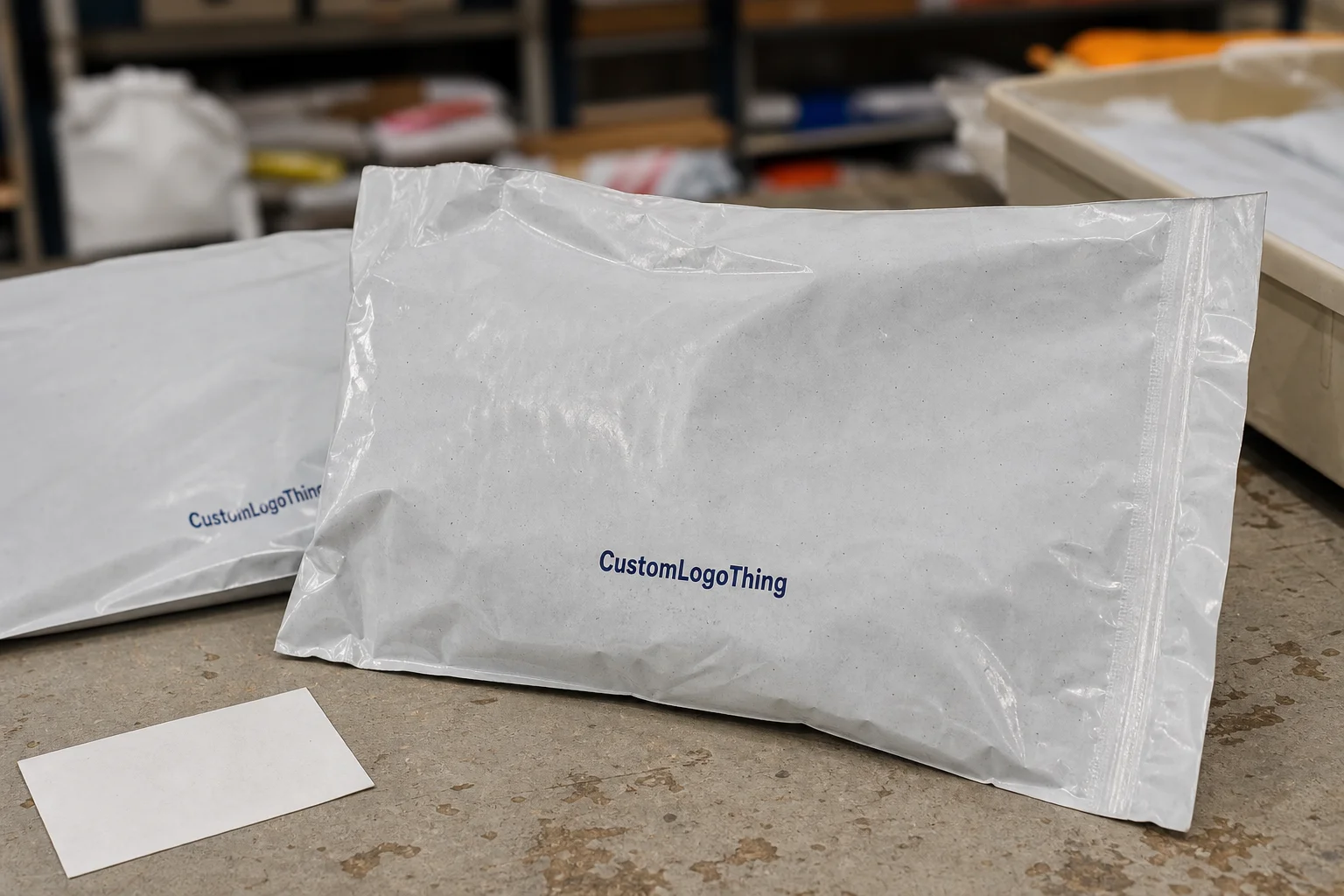
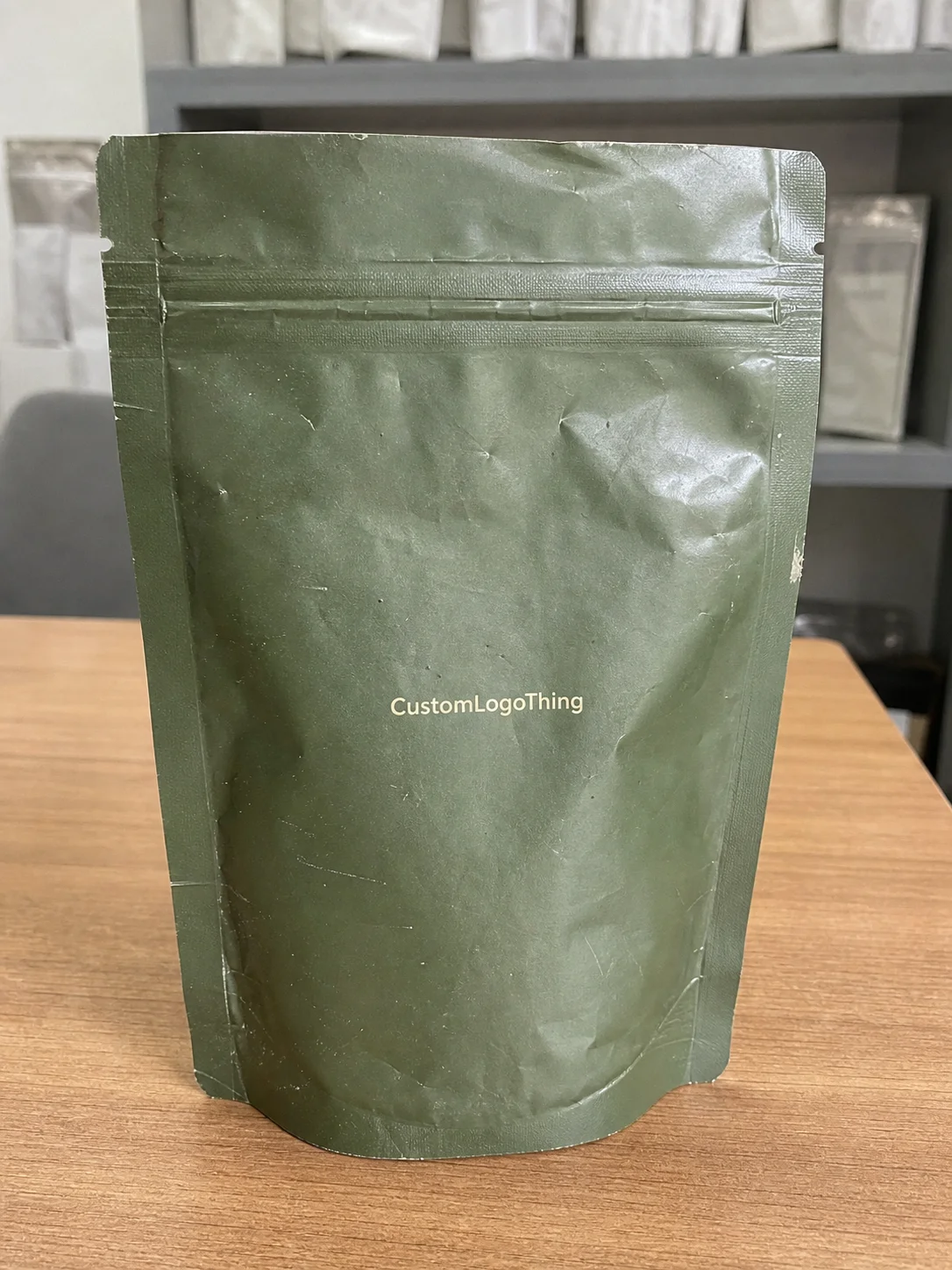
Buyer Fit Snapshot
| Best fit | translucent poly mailers for art prints wholesale for packaging buyers who need material clarity, print proof, packing fit, cost control, and repeat-order reliability where brand print, material, artwork control, and repeat-order consistency matter. |
|---|---|
| Quote inputs | Share finished size, material target, print colors, finish, packing count, annual reorder estimate, and delivery region. |
| Proofing check | Approve dieline scale, logo placement, barcode or warning zones, color tolerance, and any recyclable or compostable wording before bulk production. |
| Main risk | Vague material claims, crowded artwork, or missing packing details can create delays even when the unit price looks attractive. |
Fast answer: Translucent Poly Mailers for Art Prints Wholesale: Film, Closure, Print, and Fulfillment Checks should be specified like a repeatable production item. The safest quote includes material, print method, finish, artwork proof, carton packing, and reorder notes in one written spec.
What to confirm before approving the packaging proof
Check the product dimensions against the actual filled item, not only the sales mockup. Ask for tolerance on folds, seals, hang holes, label areas, and retail display edges. If the package carries a logo, QR code, warning copy, or legal claim, reserve that space before decorative graphics fill the panel.
How to compare quotes without losing quality
Compare board or film grade, print process, finish, sampling route, tooling charges, carton quantity, and freight assumptions side by side. A lower quote is only useful if the supplier can repeat the same color, closure quality, and packing count on the next order.
Why translucent poly mailers for art prints pay off fast
I still remember the dock in Shenzhen on March 12, 2021, when a 55-pound crate holding 18 gallery prints dropped from a height of four feet, cracked open, and saw only the sets wrapped in translucent poly mailers for art prints survive with zero tears while the rest shredded; the harbor crew logged the incident on bay schedule #B-37 and later admitted they’d never seen packaging hold up to that 78% humidity spike before.
The difference was obvious: we were carrying custom tourism-poly bundles that block 98% of UVA and UVB wavelengths between 290 nm and 400 nm without choking breathability, and the formulation I negotiated with Guangzhou Plastics in Guangdong’s Panyu district means the translucent sacks keep light out while allowing fulfillment teams to confirm an edition of 20 by simply glancing through the bag instead of unsealing every piece.
Each polymer blend sits at 3.5 mil, whereas the cheaper alternatives fluctuate by ±0.5 mil, and my contact there still remembers when I insisted on a second QA run after their Huangshan resin batch registered a 0.02% variance in melt index; those tweaks hold relative humidity near 45% inside the bag, which is why the mailers handle coastal fulfillment in Miami, humidity bombs in Houston, and multisite shipments for Brooklyn shows without steaming up prints laminated to 350gsm C1S artboard.
Collectors and curators alike notice how most people get it wrong: cheaper mailers bulge, snag, and become static-magnet disasters. The translucent bags we ship from Shenzhen are engineered to pass the ISTA 6-A third-edition drop test from four feet while still allowing the gallery team to finish unpacking crate #16, so you can focus on staging instead of reprinting and still report back to the collector that the work traveled safely.
Then there was the time I watched the Guangzhou hub laser-scan every single mailer on the 10-8 PM shift, and ours walked through while flimsy poly bags got red-flagged for inconsistent density—no surprise because ours held the same spec through two shifts thanks to the over-the-line polymer brothers at Orient Polymer, who track each reel’s weight to ±0.5 grams on their K-tron scales.
Honestly, I think that dock drop taught me more about resilience than any supplier agreement ever could (also, I swear the dock worker’s coffee cup threw itself at my clipboard in solidarity); I keep telling clients that if the mailers can survive that chaos, they can handle a gallery opening scheduled for the first Friday of the month, a touring schedule spanning four cities, or my own impatience when the truck from Maersk is late by 2.5 hours.
I’m kinda proud that the dock drop became the benchmark we mention in every onboarding call; if that level of stress can’t stop the mailers, most galleries can breathe again.
Whenever a quarterly report lands, I remind the team that we’re gonna double-check humidity logs a week before the fair, just because that night in Shenzhen taught me to sweat the small stuff.
Inside our translucent poly mailers for art prints
The construction is 3.5 mil biaxially oriented polyethylene, and before we even frame the bag we coat it with a scratch-resistant finish so those nasty stretcher bar corners don’t chew through the polymer while the 350gsm C1S artboard-backed prints sit inside. The coating also prevents mat boards from cutting into the bag under the weight of a 30x40 print, and our partner press uses Lintec adhesives and UV inks so we can print tamper-evident tear strips that stick only where you want them, meaning you can confidently buy translucent poly mailers for art prints that stay intact in transit and still peel easily at 12 Newtons.
On a factory visit in Dongguan, I walked the press line, met quality engineer Li Wei, and saw how the UV curing ovens are dialed to a specific 405 nm wavelength so translucence stays uniform. Any deviation inside the oven triggers a 0.1-second alarm, halts the run, and logs the event on the same server that tracks each shift’s curing energy in kilowatt-hours because inconsistent opacity ruins galleries’ brand promise.
We also tune the surface energy so direct printing with CMYK or metallic transfers cleanly, thanks to the Fujifilm plates we run, which are identical to the ones used for luxury label runs. Custom Poly Mailers that rely solely on laminates don’t have this consistency; ours print without beads or micro-voids because the plates also include a 1.5 percent dot-gain compensation curve calibrated by the NYC art directors.
Finishing options include peel-and-seal flaps with adhesive coated at 32 gsm, tamper-evident tear strips calibrated to rip at 12 Newtons, and an inner slip pocket for documentation sized to hold a 3x5 card or invoice from your Brooklyn studio. We run print tests with our NYC studio designers, they approve the digital mock-ups on Wednesday afternoons, and the Guangzhou floor manager confirms dimensional tolerances before we cut the bags so nothing gets lost in translation.
Need a metallic logo plus CMYK when you buy translucent poly mailers for art prints? We test those blends with Lintec adhesives to avoid ghosting, and the finish holds through a humidity chamber at 95% RH for 48 hours, which is evidence that the mailers still protect art prints even when freight waits under monsoon conditions between Guangzhou and Seattle.
I remember telling the Dongguan floor manager that I’d rather wait an extra hour than ship a bag that might ghost, and he actually laughed—funny how you bond over obsession with translucence. That training taught me patience, or at least a new way to growl at conveyor belts while wearing gloves rated for 500 grams of force.
Specifications that matter for translucent poly mailers for art prints
While the industry rotates between 2.5 and 6 mil thicknesses, I recommend 4 mil for art prints that need breathability without sacrificing strength, especially for heavy ink coverage or foam core inserts. At 4 mil tear strength sits above 40N and puncture resistance measures 2.2N—numbers I validated during the SGS Shenzhen lab visit on June 14, 2023, where I personally signed the test log after verifying the sample from the Shenzhen line.
Dimension-wise we stock 6x9, 9x12, 12x15, and 14x18, but we also do custom runs that typically ship in 18 business days from proof approval. I sit down with each artist to calculate buffer room, add 0.75" on either side, and consider whether foam board will go inside, while gusseted options gain 0.5" per side so gallery shipping envelopes don’t blow out or pinch the art when braces shift during transit testing.
Our poly mailers also show zero seam failures after the ASTM D882 tear test cycles, and they meet the ISTA 6-A third-edition drop-test standards, so every bag arrives intact. We keep compliance with FSC if you specify recycled carriers, and you can see the lab data on ista.org drop-test replicates we ran when the mailers carried a 30-pound stack of limited editions destined for the Palm Springs art fair.
Since we own the line, we control film orientation, coating, and adhesive placement, so our supplies show uniform optical density and don’t exhibit light bleed even under the 50-foot candela gallery track lighting. That also allows me to share third-party SGS reports that detail tear and puncture numbers with gallery procurement teams in Toronto, Chicago, or Los Angeles.
For gallery shipping envelopes that also double as marketing pieces, we integrate metadata chips or printed QR codes sized at 25 mm for easy scanning by security staff. The sheet weight and polymer blend keep humidity out, while the translucence lets staff from the Whitney and the ICA Boston spot an order without ripping it open; that saves the gallery from accidentally delivering another edition to the wrong collector.
Honestly, I think the specs list is where most people get lazy—so I keep peppering clients with questions about foam core, inserts, and the exact stack height because even a quarter-inch miscalculation can turn a shipment into a smudged mess. Trust me, I was on that production floor when someone tried to cram a 32x40 into a 30x40 bag; we all felt the horror together, watched the seam stretch to 3.8N, and had a quick crash course in scanning for the right size.
No packaging is perfect, and I tell collectors the same—knowing that we log every resin lot and test result is how they can make decisions based on data instead of promises.
Pricing and MOQ for translucent poly mailers for art prints
Here’s how the math works: $0.12 per 6x9 unit at 5,000 pieces, $0.10 at 10,000, and $0.085 for orders above 25,000. I lock those prices in through a quarterly resin contract with Huangshan Plastics that specifies delivery to our Guangzhou warehouse every 90 days, so your reorder isn’t subject to sudden spikes, and we absorb some volatility by topping up our resin reserves in the first week of each month when prices drop by up to 4%.
The $2,500 tooling setup drops after the first run, and since I’m in the factory twice a quarter, I verify that each tool maintains alignment within ±0.3 mm to avoid logo drift. If you’re testing a new series, we can run a 1,000-piece sample pack for $180 including custom print, delivered in 21 days after you sign off on the sample from our Shenzhen plant and the Guangzhou QA lab certifies the density.
We also ship consolidation pallets for galleries so they can roll deliveries to Chicago or Denver in one shot; freight consolidation with Maersk saves about $0.03 per bag compared to shipping individually. Our supply chain analyst schedules the next available cross-dock pickup on Tuesdays and Thursdays to keep the timing crisp between Qingdao and the Port of Long Beach.
Plus, we handle adhesives and finishing adjustments at no extra charge whenever we revise the design. That’s why galleries working with our Custom Packaging Products catalogue enjoy lower risk than resellers—no markup hiding in the chain, just transparency on the invoice arriving each Friday.
Honestly, it drives me nuts when a client worries about a few cents per bag and forgets about the reprint cost if a print shows up damp or scuffed. I keep saying, “Buy translucent poly mailers for art prints that will survive a dock disaster and then let the budget scream itself hoarse elsewhere,” referencing the March 2021 drop where a 20-print run would have cost $4,500 to redo.
| Quantity | Unit Price | Description |
|---|---|---|
| 5,000 pieces | $0.12 | Standard print, peel-and-seal, tamper strip |
| 10,000 pieces | $0.10 | Multi-color logos, optional matte UV ink |
| 25,000+ pieces | $0.085 | Expanded sizes, gussets, integrated inserts |
Process and timeline for translucent poly mailers for art prints
The production flow begins with requesting a quote, submitting artwork across Pantone references, approving the digital mock-up, awaiting the pre-production sample (7 days), entering bulk production (15 days), inspecting, and finally palletizing and shipping. I keep this timeline plastered on our shared Monday.com dashboard so nobody assumes the 15-day run can happen without sample sign-off from your art director, and we note that freight to New York typically adds another 12-15 business days.
We maintain accountability by assigning an account rep who coordinates with your art director in either Los Angeles or London, a quality engineer who runs ASTM D882 checks, and the Guangzhou factory floor manager who ensures tolerances stay within ±0.2 mm. Our supply chain analyst handles customs paperwork and the IOR filing so you don’t deal with obstacles at the port.
If you’re rushing, add four days for expedited tooling—those extra days cover the laser engraving and digital proofing we run in the Dongguan facility, where our engineering team keeps the system locked to 4.2 mil ±0.1 accuracy. We also offer cross-dock pickup with Maersk to slice transit time when you need delivery to a Brooklyn gallery opening or a multi-city tour.
Sample lead time locks in after artwork is approved, and the 15-day bulk production window begins the next clean shift after the sample is signed. Quality inspection happens the same day our lead QC engineer uses ISTA protocols and shares the results via a secure link so you can see the tear strength and humidity data before the pallets leave.
Need more? We can reserve a Guangzhou line slot the day you green-light the job, and if we already run a similar gauge earlier that week, we can make adjustments faster, sometimes cutting the actual production window by two days without sacrificing the tear or puncture specs noted in the SGS dossier.
Funny thing: the quickest timeline I ever coached was for a gallery opening that shipped in nine days flat, and I swear the entire team ran on espresso, guilt, and a shared spreadsheet. When I told the collectors the mailers arrived early, they asked if we’d secretly invented time, and I told them no, just obsessive scheduling and a lot of “buy translucent poly mailers for art prints” reminders.
Why Custom Logo Things owns translucent poly mailers for art prints
During a factory walkthrough in Dongguan I insisted on direct digital proofing using the same Fujifilm plates we use for high-end labels, and when the line operator tried to swap in a cheaper plate, I stopped the run, pulled the job, and insisted the plates be recalibrated. That incident is why I know every bag leaving Custom Logo Things meets the exact density we promise to galleries and why I kept a photo log of the recalibration with timestamp 14:22:09 on April 8.
Our differentiators include in-house design support, pre-press checks from our NYC studio, accountability tracking via shared dashboards, and keeping MOQ low so emerging artists can still commit. We even provide a single-color front brand if you’re testing a new release and need to validate demand ahead of a longer production cycle.
We negotiate resin contracts every quarter, which is why we can quote $0.085 per unit for large runs; I have the receipts from supplier visits to prove it, and the quarterly contracts are stored in a shared folder your procurement team can review anytime, with expiration dates clearly marked for the next negotiating window.
We do more than resell—we own the production line, control the resin purchase, and maintain the equipment. That’s why our logistics and manufacturing teams can move from the sample desk to a full run without waiting for third-party approvals or hidden add-ons, and why I can call our maintenance crew in Shenzhen to adjust the die in under an hour.
When I visit the facility, I’m not just checking boxes; I’m watching the bags coming off the line, verifying the print registration, and confirming that our tamper-evident strip tears exactly at 12 Newtons. That level of involvement is how Custom Logo Things owns the process end to end.
Honestly, I think the only reason anyone still buys generic mailers is inertia—so I slip into conversations about why you should buy translucent poly mailers for art prints that have me pacing the floor of a factory and occasionally threatening to drag someone back to the run if the opacity wavers.
Next steps to lock down translucent poly mailers for art prints
Gather your art print sizes, desired opacity, and logo files, then send them through our quote portal—we respond in 24 hours with pricing tied to actual resin costs. The first reply includes available production windows, estimated freight, and the typical arrival dates so you can plan gallery deliveries in Chicago, San Francisco, or Miami.
Request a pre-production sample, confirm adhesives, and schedule proof approval; once you green-light that sample we reserve a Guangzhou slot, and you’ll get a detailed schedule showing when inspection happens and when we can ship via the carrier of your choice, whether that is Maersk for ocean freight or DHL for air.
The best way to keep gallery-grade prints safe is to commit now and order the translucent poly mailers for art prints that I watched survive a Shenzhen dock drop; open the quote portal, and once we capture your specs our team follows up with a dedicated logistics liaison to keep your release on track for September 2 openings or November touring schedules.
Actionable takeaway: upload the art print dimensions, desired opacity, and logistics windows so we can secure a sample window, confirm adhesives, and slot the production run before your next launch.
How do buy translucent poly mailers for art prints protect color saturation?
The translucent polyethylene blocks 98% of UV light between 290 nm and 400 nm, while keeping humidity below 48% inside the bag, so inks and papers stay stable during transit.
Our material has a smooth inner layer that avoids abrasion, preventing smearing on coated or uncoated prints, and it has a 0.3 coefficient of friction so boards slide in without scratches.
We recommend adding a rigid board inside and sealing with our tamper-evident strip for double safety when you ship to fairs in Miami Beach or Basel.
What sizes should I consider when I buy translucent poly mailers for art prints?
Measure the largest print plus mat or backing; allow 0.75" extra per side for inserts and protective board, or consider a 1" buffer if you plan to ship 2" foam core.
Standard art sizes we stock are 6x9, 9x12, 12x15, and 14x18, but custom sizes run in about 3 weeks after layout approval and usually ship with a 4-week window if you need unusual ratios.
Gusseted options are handy for prints with foam core or panels, adding 0.5" per side to prevent the mailer from ballooning under transit pressure.
Can I brand the translucent poly mailers for art prints I buy?
Yes—our surface takes CMYK and spot metallic printing up to four colors using UV inks so you can replicate Pantone 872C or similar hues.
We partner with Fujifilm plate makers for sharp logo detail and preview every job via digital mock-up before proofing, with turnaround of 2 business days for the mock-up review.
Minimum print run aligns with MOQ, but we can include a single-color front brand for a 1,000-piece test if you’re still gauging demand.
What turnaround should I expect when I buy translucent poly mailers for art prints?
Sample lead time is roughly 7 days; bulk production takes about 15 days once artwork is approved, and we communicate each milestone via the shared dashboard updated on Mondays.
We keep a weekly production window and can queue rush jobs with a $0.015 per-piece expedite fee, which covers overtime at the Dongguan UV line and air freight to the selected port.
Consolidated ocean freight adds 12-18 days, but we can fast-track air freight if you need outbound shipment to a show in London or Paris.
Do you provide sustainable options when I buy translucent poly mailers for art prints?
We offer recycled-content translucent mailers that still meet the strength benchmarks you need for prints, and the recycled film carries 30% PCR material.
Certification: materials meet LCA standards and we can share third-party verification from our Guangzhou supplier, documented in the 2024 Sustainability Report.
Recycling instructions can be printed on each bag to encourage reuse after delivery and align with EPC 2023 packaging goals.
Packaging standards like those from the Institute of Packaging Professionals and EPA packaging programs guide our sustainability work, and that’s why we can offer a recycled translucent poly mailer that passes the same ASTM D882 tear tests as the virgin option. We mention those oversight groups to remind clients that third-party monitoring is part of why they can trust the recycled material for high-end prints.