If you are comparing cheap printed bags for a bulk order, the biggest savings usually come from the specification, not from squeezing the last cent out of a factory quote. Size, film thickness, print complexity, and order quantity all affect the real cost. Buyers often spend more than they need to because the bag is oversized, the artwork is overworked, or the construction is heavier than the job requires.
A low-price bag still has a job to do. It carries product, protects the contents, and acts as a moving brand impression between the counter and the customer’s hands. If the bag wrinkles badly, prints unevenly, or tears before the order gets home, the invoice price stops being the important number.
The better target is the lowest practical spend for the actual use case. That usually means a standard structure, a sensible material choice, and artwork that prints cleanly without forcing unnecessary setup. A good budget bag should look intentional, not improvised.
Why low-cost printed bags can still look premium on shelf
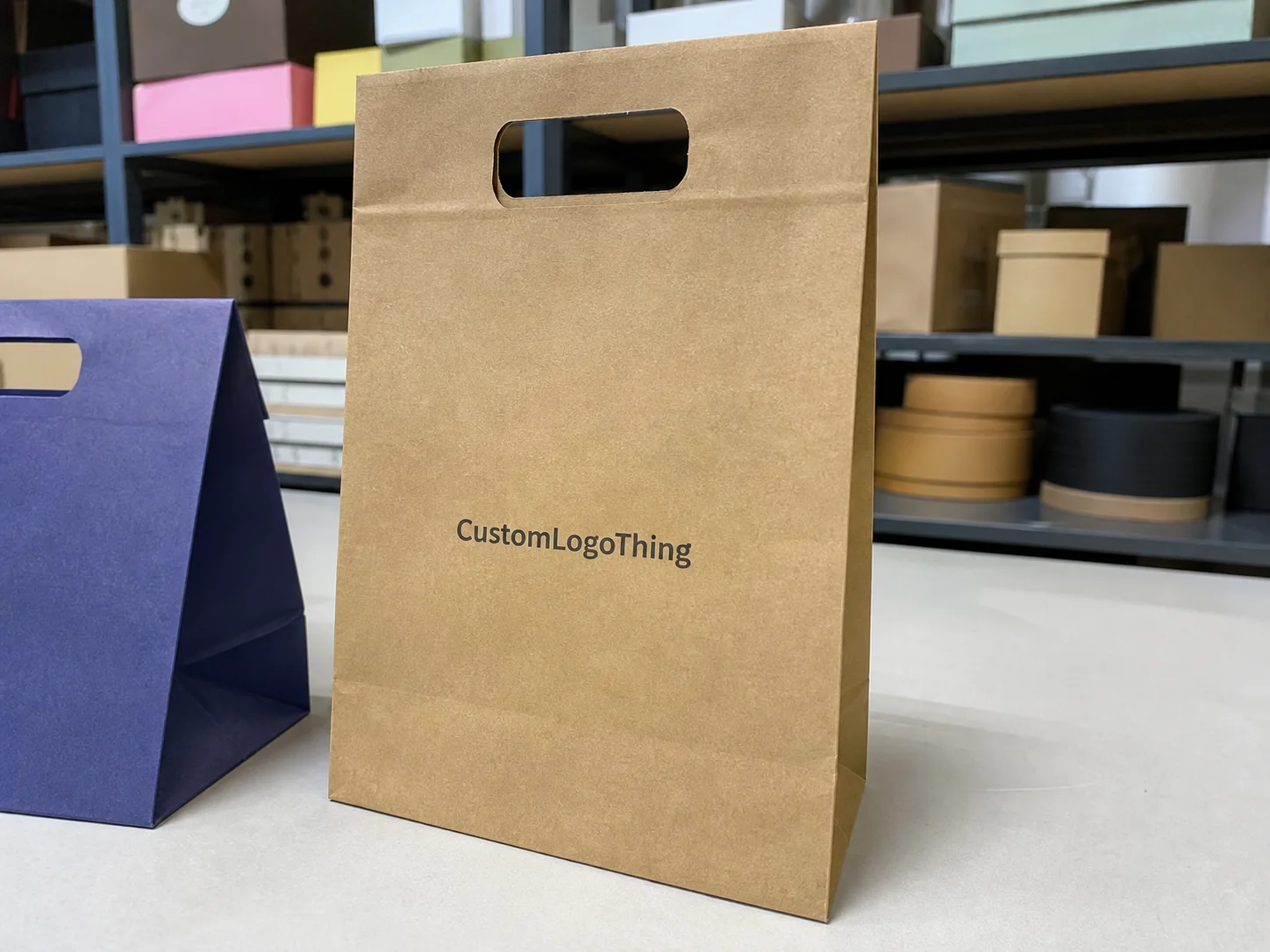
Cheap does not have to mean flimsy. A counter bag, takeaway bag, or event handout can look sharp if the print is crisp, the bag dimensions fit the contents, and the handles or seals hold up under normal use. Most of the perceived quality comes from consistency rather than expensive extras.
The parts that quietly drive cost are usually the ones buyers overlook. Extra width increases film usage. An oversized gusset adds material without adding much value if the contents are light. A three- or four-color design often costs more than the brand really needs, especially when the logo could work better as a strong one-color graphic with good placement.
Clean alignment matters more than decorative complexity. If the logo sits where the eye expects it, the print contrast is strong, and the bag surface is even, the result reads as deliberate. A simple design on a standard format often looks more polished than a crowded layout on a custom bag with too many moving parts.
For budget work, the bag should feel dependable in the hand and predictable on the line. Staff need to pack quickly, customers need a handle or seal that behaves properly, and the contents need to arrive intact. That is the standard. Cheap printed bags should reduce cost, not introduce uncertainty.
Selecting bag style, material, and print method for your budget
Bag style is the first major cost decision, because it sets the production method and the handling experience. The cheapest format on paper is not always the best fit for the product. A bag that loads poorly or feels awkward in use can create more waste and customer friction than it saves.
| Bag style | Best for | Typical cost profile | Practical notes |
|---|---|---|---|
| T-shirt bag | Retail, groceries, general carryout | Usually lowest | Fast to run, familiar format, good for simple one- or two-color print |
| Die-cut handle bag | Merchandise, promotions, apparel | Low to moderate | Cleaner presentation, often chosen for a more finished look |
| Patch-handle merch bag | Higher-end retail, events | Moderate | Comfortable carry, stronger perceived value, usually higher material and assembly cost |
| Wicketed bag | Food service, fast loading, high-volume packing | Depends on size and film | Efficient for speed, especially where operators need quick access |
Material choice matters just as much. Most Printed Poly Bags are made from polyethylene, usually LDPE, LLDPE, or blends chosen to balance softness, strength, and seal performance. LDPE tends to feel softer and drapier. LLDPE brings more toughness and stretch resistance. A blend can split the difference when a buyer needs low cost and acceptable durability without going to a thicker gauge.
Print method is the next cost lever. Flexographic printing is common for bulk orders because it runs efficiently once the setup is locked in. The tradeoff is simple: the artwork needs to be prepared correctly, and every extra color adds setup, ink, or registration complexity. Solid spot colors are usually easier to control than fine gradients, small reverse type, or heavy full-bleed coverage.
If the goal is cheap printed bags that still look clean, reduce the design to what prints well at scale. A strong logo, one or two colors, and a clear placement on the front panel often gives a better result than a more ambitious file that drives up setup time. The press does not reward unnecessary detail. It rewards clarity.
Bag style should also match the packing environment. A food counter may value speed and consistent opening. Apparel packaging may care more about presentation. Event bags may need to look neat under bright lights while carrying a light but bulky item. That functional context should guide the spec before anything else is priced.
Size, gauge, and finish details that affect performance
Finished size is one of the easiest places to overspend. A bag that is wider or taller than the contents requires more material and can make the product look undersized inside the package. Too much empty space also weakens the presentation, especially for lighter retail items.
Gauge, or film thickness, is where durability starts to show up. A heavier gauge improves resistance to stretch and puncture, but it also raises material cost and can make the bag feel stiffer than necessary. A lightweight giveaway bag may work well at a moderate gauge, while a food order with containers needs enough thickness to avoid stress at the seams and handles.
Handle construction is another practical detail. Die-cut handles need clean reinforcement so the opening does not tear under load. T-shirt style handles depend on dependable seals and the right gusset shape. Patch handles improve comfort and perceived value, but they add assembly time and cost. If the bag is going to be reused, the handle area should be the first thing you scrutinize.
Finish changes how the bag reads in the hand and under light. Gloss tends to make colors appear brighter and more contrasty. Matte reduces glare and can make the piece feel calmer or more restrained. Clear or translucent films behave differently because the contents show through, which can help or hurt the design depending on what is being packed.
There is also a practical load question that should be asked before quoting anything: what goes inside the bag, how much does it weigh, and how far does it have to travel? A bag that survives a short carry from counter to car is not the same as one that has to handle delivery routing or longer distribution. If the project involves transit or rougher handling, verification methods such as ISTA protocols can help frame the performance expectation.
For paper or fiber-based components, documentation matters too. If the bag program includes recycled paper or certified sourcing, make sure the claim is backed by the right paperwork and, where applicable, Forest Stewardship Council chain-of-custody records. Claims without support create risk later, even if the bag itself is well made.
Cheap printed bags: pricing, MOQ, and quote drivers
When buyers ask for cheap printed bags, the quote usually comes down to a short list of variables: size, material, thickness, number of print colors, artwork complexity, quantity, and shipment destination. Those are the levers that actually move the number.
MOQ, or minimum order quantity, is usually tied to setup economics rather than arbitrary policy. A print run has fixed costs for plates, cylinders, setup time, color matching, and waste during startup. If the order is too small, those fixed costs get spread over very few bags and the per-unit price rises quickly. For a standard flexographic job, that effect can be dramatic.
As a rough planning guide, common bulk pricing can vary widely. Standard printed poly bags at higher quantities may land in the low cents per bag, while smaller runs, thicker gauges, or more complex print work can move the figure much higher. Freight, packaging, and setup charges should be treated as separate line items when possible, because a low base unit price is not useful if the landed cost climbs after shipping.
A quote becomes easier to compare when it shows multiple quantity tiers. Asking for 5,000, 10,000, and 25,000 units, if those volumes match your usage, makes the pricing curve visible. Sometimes the jump from one tier to the next is modest. Sometimes it is the difference between an inefficient run and a proper production lot.
More colors usually means more cost, but not only because of ink. Multi-color artwork can increase registration sensitivity and setup waste, especially when type is small or the design uses fine lines. Large solid areas can also be tricky if the substrate is thin or slightly inconsistent, because heavy coverage can show variation more clearly.
Custom dimensions are another common cost driver. A custom width or gusset might be justified if the contents are awkward or fragile, but a lot of orders could use a standard size and avoid extra film consumption. Standard formats are often the easiest way to keep unit cost under control without sacrificing function.
Production steps and turnaround from proof to shipment
Most delays happen before production begins. The workflow is usually straightforward: confirm the spec, review artwork, approve a digital proof, prepare the print setup, run the order, inspect the output, pack the goods, and ship. If any one of those steps is incomplete, the schedule slips.
Lead time depends on four things more than anything else: how fast the artwork is approved, whether the material is in stock, whether the print setup is standard or custom, and whether the order is entering a busy production window. Clean final files matter because they cut out repeated proof revisions. If the design is still being adjusted after pricing is approved, the lead time is no longer really fixed.
For a typical bulk order, production might take 12 to 20 business days once the proof is approved, with transit adding several more days depending on distance and freight method. That is only a planning range, not a promise. Rush work is possible in some cases, but the tradeoff is usually higher cost, less scheduling flexibility, or both.
A simple sequence helps keep the order moving:
- Confirm the bag style, size, and gauge.
- Send final artwork in vector format if possible.
- Approve the proof promptly and check colors, spelling, and placement.
- Confirm quantity, packaging, and delivery address.
- Separate production time from transit time when comparing dates.
The proof stage deserves attention. Check the exact Pantone references if the project depends on color consistency, and inspect type size, overprint behavior, and logo placement. A bag proof that looks fine on screen can still hide a spacing issue or an awkward registration choice. Small errors become obvious once printed at scale.
Packaging and palletizing should be discussed early as well. Some orders need inner cartons, compressed packaging, or pallet wrap for warehouse handling. Others are fine in simpler bulk packs. Those decisions affect freight volume and, in some cases, the way the bags are received and stored after delivery.
How to keep unit cost low without losing print quality
The best savings usually come from simplification. Standard sizes tend to cost less because they fit established production setups and generate less waste. That does not mean custom sizes should never be used. It means they should solve a genuine packing problem, not just feel more tailored on paper.
Artwork is the other big lever. Fewer colors normally means lower setup cost and fewer chances for registration issues. A clean one-color logo on a well-chosen background often prints better than a design that uses several tones, soft gradients, or very fine reversed type. Good composition matters more than decoration.
There are a few practical ways to reduce cost without making the bag feel cheap:
- Choose the smallest size that still fits the product comfortably.
- Limit print coverage to the panel customers actually see.
- Use one or two colors unless the brand truly needs more.
- Plan repeat orders so setup cost is spread over larger volume.
- Approve artwork early to avoid rush charges and rework.
Material selection should stay tied to the actual load. A thicker gauge is not automatically better if the bag only carries a light item. Over-specifying the film adds cost without improving the customer experience much. Under-specifying it is worse, because tear failures and complaints erase the savings quickly.
There is also a shipping angle. If the order can be consolidated, scheduled before peak season, or shipped with enough lead time to avoid expedited freight, the landed cost is usually lower. Buyers often focus only on unit price and miss the freight, storage, and replacement cost that shows up later.
One useful habit is to compare quotes on identical terms. Same bag style, same finished size, same gauge, same print colors, same packaging, same destination, same delivery window. Otherwise, the lowest number can be misleading because the specs were never truly equivalent.
What to send for a fast, accurate order quote
If you want a quick, accurate quote for cheap printed bags, send a complete spec the first time. Missing details are the main reason a quote gets revised later. A good brief reduces back-and-forth and gives you a number you can actually use.
Use this checklist:
- Bag style - T-shirt, die-cut handle, patch-handle, or wicketed
- Finished size - width, gusset, and height
- Thickness - gauge or mil specification
- Print colors - number of colors and any special ink requirement
- Artwork file - vector file preferred
- Quantity - exact order volume and expected repeat volume
- Delivery location - where the goods need to ship
- Target date - when the bags are actually needed on hand
Ask what is included in the quote. Plates or cylinders, proof revisions, packaging, and freight can all change the final landed cost. A low base price is less useful if it leaves out setup or delivery. This is where many first-time buyers get surprised: the number looked right until the shipment was added.
If you are comparing several suppliers, keep the specs fixed and compare the details, not just the headline price. One quote may include heavier film, another may assume a different print method, and a third may omit packaging. The differences matter more than the marketing language around them.
A simple workflow usually works best: send the spec sheet, review the proof, confirm MOQ and lead time, then approve once the numbers match the budget and the use case. That process keeps the order moving without wasting time on unnecessary revisions.
For most buyers, the most economical route is straightforward: choose a standard structure, keep the print simple, and order enough quantity to reach an efficient production band. That is how cheap printed bags stay affordable without turning into a quality problem later.
FAQs
How do cheap printed bags stay durable at a low price?
Durability comes from matching the gauge, handle style, and bag size to the actual load instead of overbuying material. A standard structure with clean artwork is often enough for retail, takeaway, or event use. The bag only needs to be as heavy as the job requires.
What MOQ should I expect for cheap printed bags?
MOQ depends on bag style, print method, and whether the size is standard or custom. More colors and more specialized construction usually raise the minimum because setup costs need to be spread across more units. A tiered quote is the best way to see the real breakpoints.
Which bag style is usually cheapest to print?
Standard T-shirt bags are often the most economical because they are common, efficient to produce, and easy to pack. Simple die-cut bags can also price well when the artwork is straightforward. The lowest-cost style is not always the best one if the contents are heavy or awkward.
How long does it take to produce printed bags?
Turnaround depends on proof approval, material availability, order size, and artwork complexity. A common bulk timeline is 12 to 20 business days after proof approval, with transit added on top. Always ask for production time and shipping time separately.
What artwork do you need for a fast quote on cheap printed bags?
A vector logo file is the best starting point because it scales cleanly for print setup. Include the bag size, print colors, quantity, and delivery deadline. If you already know the gauge and bag style, the quote will be more accurate on the first pass.
Are low-cost printed bags suitable for retail presentation?
Yes, if the size is right, the print is clean, and the material feels appropriate for the product. A simple design on a standard bag can look sharp when the registration is accurate and the finish matches the brand tone. The bag should look intentional, not stripped down.

