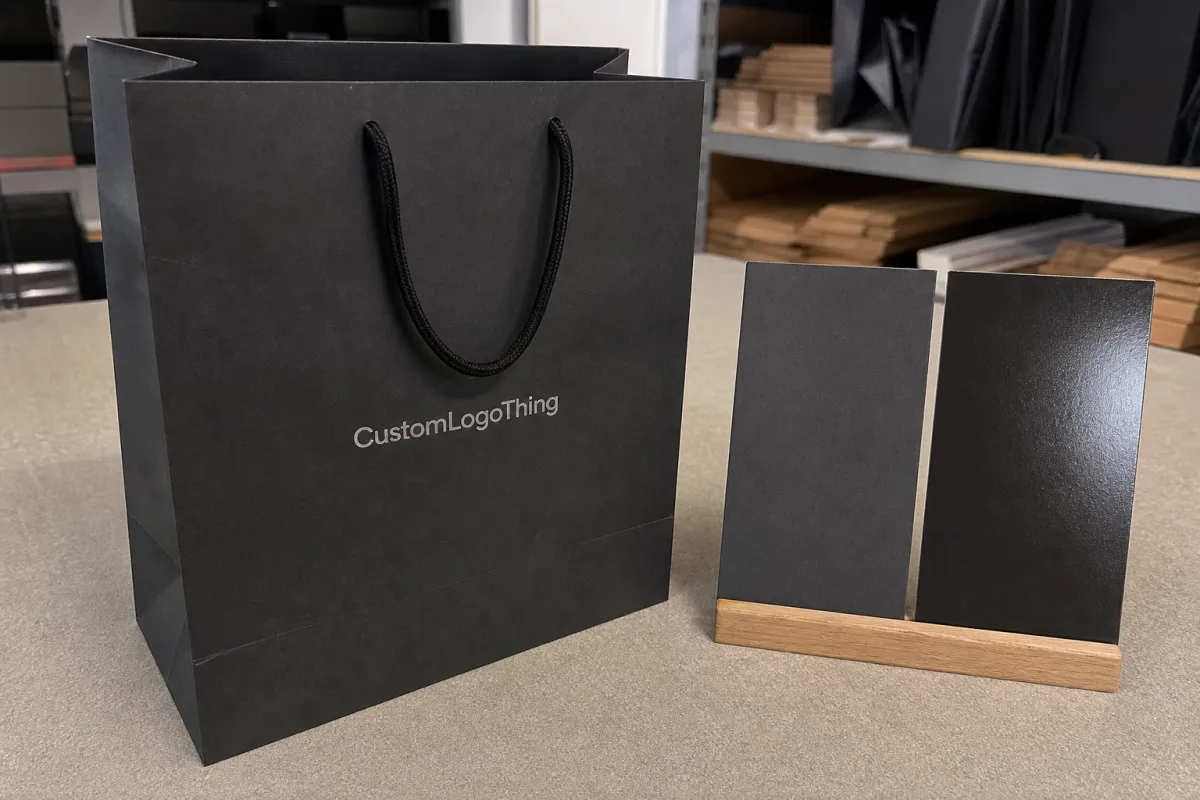
For a specialty roaster, coffee roasters rigid Boxes Small Batch order decisions usually appear right when the product is improving: a microlot release, a holiday gift set, a café retail bundle, or a subscription upgrade that needs a premium feel without locking up cash in inventory that may never reorder cleanly. Packaging has to hold product, support margin, and stay workable at low volumes. That combination is harder than it looks.
Rigid boxes continue to outperform basic folding cartons in premium coffee programs because structure changes perception. Weight changes perception. The opening sequence changes perception. Buyers rarely say that out loud, yet the market responds to it. Presentation packaging still carries more influence than many roasters expect, especially in gifting and shelf-ready retail.
From a buyer’s perspective, the brief is straightforward: durable premium packaging, practical minimums, predictable cost, and repeatable reorders. Everything else is decoration around those four points. Here’s how to evaluate the formats, specs, pricing logic, and lead-time realities before requesting a quote from Custom Logo Things or another supplier.
Coffee roasters rigid boxes small batch order: why short runs make sense

Coffee is not a static category. Roast dates move. Origins rotate. Seasonal blends change. Artwork often changes even faster. That makes Coffee Roasters Rigid Boxes small batch order programs unusually practical, because packaging can follow the product instead of forcing the product to sit inside obsolete cartons.
Rigid boxes are not the same as folding cartons or corrugated mailers. Folding cartons work well for high-volume shelf stock. Corrugated protects in transit. Rigid boxes are built for presentation, giftability, and perceived value. They are the box you choose when the unboxing moment matters almost as much as the coffee inside.
Boutique roasters, subscription brands, holiday gift sellers, wholesale café operators, and corporate gifting programs see the most value. If the product mix includes jars, accessories, cups, sample bags, or pairing items, a rigid structure often earns its place quickly. The same is true when a roaster needs the box to do more than display a bean bag—when it needs to organize a kit, protect fragile pieces, and look good on a retail shelf.
Premium packaging should earn its cost in margin, not in adjectives. If the box does not improve shelf presence, gift appeal, or protection, it is probably over-specified.
Short runs matter because coffee buying is seasonal and promotional. A roaster may need 500 units for a microlot launch, then 1,500 units for a holiday set, then a different configuration for a café counter display. Traditional packaging MOQs can be too rigid for that rhythm. A well-built custom rigid box program gives the brand room to move.
Before asking for pricing, compare the actual use case:
- Presentation: Will the box sit on a retail shelf or only ship inside another carton?
- Protection: Does it contain glass, fragile brewing tools, or loose accessories?
- Repeatability: Will this be reordered with different artwork or the same structure?
- Inventory risk: Does the product rotate fast enough to justify short-run packaging?
Rigid box formats that fit coffee gift sets, sample kits, and retail bundles
The box style should follow the product mix, not the other way around. That sounds obvious, yet it is where many briefs go wrong. A beautiful magnetic box can be the wrong answer if the contents are oddly shaped or if freight costs matter more than the opening experience.
Here are the rigid formats most often used for coffee packaging:
| Box style | Best for | Buyer upside | Watch-out |
|---|---|---|---|
| Two-piece setup box | Bean bags, sampler sets, holiday bundles | Simple, premium, easier to produce | Can feel plain without strong graphics |
| Lift-off lid | Gift boxes, café retail kits | Clean presentation, flexible sizing | Lid fit must be accurate |
| Magnetic closure | Corporate gifting, high-end launches | Strong perceived value | Higher unit cost and assembly time |
| Drawer box | Sampler kits, accessory bundles | Good reveal sequence, neat organization | Needs precise insert planning |
| Book-style box | Story-led gift sets, tasting experiences | Strong branding surface area | More structural complexity |
| Shoulder-neck box | Premium launches, limited editions | Strong luxury feel | Not ideal for very tight budgets |
For coffee kits, inserts often matter more than the outer shell. A custom insert keeps jars upright, prevents drippers from rattling, and reduces breakage for items like mugs or glass accessories. Paperboard dividers work well for lighter contents. EVA foam makes sense for fragile or high-value components. Molded pulp is worth considering if the brand wants less plastic and still needs acceptable protection.
Customization options are broad: wrapped paper, printed exteriors, foil stamping, embossing, debossing, spot UV, soft-touch lamination, ribbon pulls, and custom cavities. Small-batch buyers should not select from the top down. Pick the structure that fits the shipping path, product count, and display intent. Add finishes only where they improve sell-through.
The cleanest coffee packaging usually wins. Too many finishes can fight the food-adjacent aesthetic. A textured wrap, one strong logo hit, and a precise insert often look more credible than a box loaded with effects.
Key specifications buyers should confirm before approving a rigid box quote
When a rigid box quote looks cheap or expensive, the answer is usually in the specs. There are eight details that affect performance and price more than almost anything else:
- External dimensions
- Internal cavity dimensions
- Rigid board thickness
- Wrap stock
- Print method
- Finish
- Insert type
- Packing method
Board thickness is a good example. Thicker chipboard improves the premium feel and compression resistance, but it also adds weight and freight cost. That tradeoff matters more for multi-piece gift kits than for a single bag presentation box. Common rigid board ranges vary by box size and structure, but buyers should always ask what thickness is being quoted and why.
Wrap choice matters too. Coated art paper gives crisp graphics. Textured specialty paper raises tactile value. Kraft-look wraps can support an earthy, origin-led brand story. For lower-complexity runs, printed labels or simplified exterior coverage may keep the budget under control without making the box look cheap.
Finish choices should be evaluated by function, not habit:
- Matte: refined and understated
- Gloss: stronger color pop, more reflection
- Soft-touch: premium feel, but can show wear if handled heavily
- Foil: best for logo emphasis and limited areas
- Emboss/deboss: subtle distinction, good for premium branding
Food contact rules usually apply to the inner packaging or direct-contact components, not the rigid shell itself. Still, moisture sensitivity, scuffing risk, and storage conditions matter. Coffee packaging often moves through warm warehouses, retail shelves, and shipping lanes. If the box surface marks easily, the premium perception disappears fast.
For a quote to be accurate, send:
- Product sample dimensions
- Item weight
- Required fit tolerance
- Artwork files
- Target quantity
- Destination zip or country
- Launch date
For standards and material context, buyers can review industry references such as ISTA for transit testing and FSC for responsible sourcing claims.
Pricing, MOQ, and unit cost drivers for premium short-run packaging
Rigid boxes cost more than folding cartons for a simple reason: they are built differently. There is thicker board, wrapped construction, more labor, and often more finishing. The price is not just material. It is assembly, alignment, and quality control.
For coffee roasters rigid boxes small batch order projects, the main cost drivers are easy to list, but harder to control:
- Quantity
- Box size
- Board grade
- Insert complexity
- Number of print locations
- Specialty finishes
- Sampling rounds
- Shipping method
MOQ realities depend on the factory, the structure, and the finish stack. A simple two-piece rigid box can usually support lower entry quantities than a magnetic closure with custom inserts and foil. Setup costs do not disappear at small volumes. They get spread over fewer units. That is why the first tier usually looks expensive and the next tier looks more reasonable.
Very broadly, buyers may see simple short-run rigid boxes for coffee packaging land somewhere around $1.20-$3.50 per unit at lower quantities, while more premium formats with magnets, complex inserts, or multiple finishes can move higher. The final number depends on size, shipping lane, and decoration. If someone quotes a single price without quantity breaks, that is not enough information.
There are places to save without flattening the presentation:
- Standardize dimensions across blends
- Use one base box with variable labels or sleeves
- Reduce foil coverage to the logo only
- Simplify insert geometry
- Consolidate SKUs into one pack architecture
Premium upgrades are worth the spend when the channel supports it: gifting, high-margin microlots, holiday retail displays, influencer launch kits, and wholesale presentation packs. For ordinary shelf replenishment, the extra money may not return enough value.
If you want a useful pricing comparison, ask for side-by-side quotes at two or three quantities and finish levels. That tells you more than one “best price” ever will.
For broader packaging cost and compliance context, the Packaging Machinery Manufacturers Institute and EPA packaging and waste resources at epa.gov can help frame material and sustainability decisions.
Production steps, lead time, and reorder timeline buyers should plan for
A rigid box order is a sequence, not a single event. The steps usually move like this: requirements review, structural recommendation, dieline and artwork setup, digital or physical proof, sample approval, production, quality check, packing, and shipment. Each stage has a cost in time.
The most common delays are predictable: insert fit revisions, color corrections, specialty paper sourcing, and last-minute dimension changes after sample review. If the coffee kit changes after the structure is already approved, the schedule stretches immediately.
Lead time varies by complexity, but a standard short-run rigid box project often needs 12-20 business days after final approval, with more time if the sample must be adjusted. That does not include shipping. Reorders are faster once the structure, artwork, and insert specs are locked in, which is another reason to save approved files carefully.
Plan backward from the sales date, not forward from the PO date. Seasonal gift programs, subscription upgrades, trade show kits, and wholesale onboarding all need buffer time. Premium packaging is not a same-day commodity purchase. It is a production project with a schedule.
Once a box style is validated, repeat runs usually move with fewer variables. That saves time and money. It also reduces risk, because the dimensions and packing method have already been proven in transit.
For buyers who need repeatable programs, Wholesale Programs can be a useful route when the same rigid format will support multiple accounts or seasonal drops.
Where roasters lose margin on custom boxes—and how tighter specs prevent it
The fastest way to waste money is to specify too much box. Oversized cavities, too many insert pockets, unnecessary embellishments, duplicated SKUs, and shipping premium retail boxes inside poorly sized master cartons all eat margin. None of those errors improve the customer experience enough to justify the cost.
Vague briefs cause revisions. “Fits a coffee bag” is not a spec. Buyers need exact fill volume, gusset width, valve position, accessory dimensions, and whether the pack will hold a one-pound bag, a sampler, or a mixed kit. The more precise the inputs, the fewer expensive changes later.
There is also a freight issue that gets overlooked. Rigid boxes ship as assembled volume, so they can move a lot of air if the footprint is sloppy. That raises storage and transportation costs. In a small-batch program, air is not cheap.
Packaging strategy can reduce the risk. A single base box used across several roast offerings. An interchangeable sleeve or label system. Insert swaps for different bundle compositions. These choices keep the brand flexible without making inventory management a mess.
Good premium packaging is about precision, not excess. A cleaner fit, stronger board, and disciplined branding usually outperform a box full of extra decoration. The product feels better because the structure is right, not because the spec sheet is long.
The best packaging partners flag structural waste before the order is placed. That is the kind of practical review buyers should ask for from the start.
How do you request the right quote and move from sample to production?
If you want an accurate quote, give the supplier the same information you would want if you were manufacturing the box yourself. Include product dimensions, weight, item count per box, preferred style, target quantity tiers, branding finishes, insert needs, ship-to location, and in-hand date.
For fragile or irregular contents—drippers, mugs, jars, tasting tools, or mixed accessory kits—send photos or a physical sample. It saves time and avoids guesswork. A flat dimension table is not always enough when the item has handles, lids, valves, or asymmetry.
Ask for two or three structural options. That comparison often reveals where the real value sits. One structure may look cheaper on paper but cost more in freight. Another may improve presentation but add little to unit economics. You do not know until the options are lined up side by side.
If the assortment is new or fragile, request a plain prototype before printed production. This is especially useful for coffee roasters rigid boxes small batch order projects where one dimensional mistake can ruin the presentation or create product movement inside the box.
Before approving the PO, confirm:
- Approved dieline
- Finish callouts
- Pantone or CMYK expectations
- Insert fit
- Packing method per master carton
- Delivery terms
Save the approved specs. Save the version number. Save the reorder threshold. Seasonal artwork changes are manageable when the base structure stays constant. If you keep the structural file clean, the next launch gets easier.
For buyers comparing product formats or packaging categories, Custom Packaging Products is a useful place to review structure options, and the FAQ can help with common production questions before you send files.
FAQ
What is a realistic MOQ for coffee roasters rigid boxes small batch order projects?
MOQ depends on size, structure, and finish complexity. Simple two-piece rigid boxes with limited finishes are usually easier to run at lower quantities than magnetic boxes with custom inserts and foil. Ask for pricing at several quantity breaks so you can see the real unit economics.
How much do rigid boxes cost for small-batch coffee gift packaging?
Cost is driven by dimensions, board thickness, insert type, print coverage, embellishments, and freight destination. Rigid boxes carry more labor than folding cartons, so the box should match the margin of the product inside. Side-by-side quotes are more useful than one estimate.
What box style works best for a coffee sampler or subscription gift set?
Drawer boxes and lift-off lid rigid boxes are common because they balance presentation and organized product placement. If the set includes accessories like cups, spoons, or drippers, the insert matters as much as the exterior style. Choose the format based on product count and fragility.
How long is the lead time for custom rigid boxes for coffee roasters?
Lead time includes structural review, proofing, sampling, approval, production, and shipping. Projects with specialty papers, custom inserts, or several finish revisions usually take longer than standard wrapped boxes. Reorders move faster when the approved spec is already on file.
Can I order rigid boxes for coffee products with inserts for mugs, jars, or brewing tools?
Yes. Rigid boxes can be built with die-cut paperboard, foam, molded pulp, or tray-style inserts depending on protection and presentation needs. Exact component dimensions and weights are essential to avoid loose fit, breakage, or wasted space. A prototype sample is smart when the kit is mixed or fragile.
For coffee brands, the best packaging decision is rarely the flashiest one. It is the one that fits the product, the launch window, and the margin. If you are comparing coffee roasters rigid boxes small batch order options, start with dimensions, confirm the structure, narrow the finishes, and Request a Quote built around real launch timing rather than wishful volume.