Buyer Fit Snapshot
| Best fit | compare biodegradable film vs molded pulp packaging for packaging buyers comparing material specs, print proof, MOQ, unit cost, freight, and repeat-order risk where brand print, material, artwork control, and repeat-order consistency matter. |
|---|---|
| Quote inputs | Share finished size, material target, print colors, finish, packing count, annual reorder estimate, and delivery region. |
| Proofing check | Approve dieline scale, logo placement, barcode or warning zones, color tolerance, and any recyclable or compostable wording before bulk production. |
| Main risk | Vague material claims, crowded artwork, or missing packing details can create delays even when the unit price looks attractive. |
Fast answer: Compare Biodegradable Film vs Molded Pulp Packaging should be specified like a repeatable production item. The safest quote includes material, print method, finish, artwork proof, carton packing, and reorder notes in one written spec.
What to confirm before approving the packaging proof
Check the product dimensions against the actual filled item, not only the sales mockup. Ask for tolerance on folds, seals, hang holes, label areas, and retail display edges. If the package carries a logo, QR code, warning copy, or legal claim, reserve that space before decorative graphics fill the panel.
How to compare quotes without losing quality
Compare board or film grade, print process, finish, sampling route, tooling charges, carton quantity, and freight assumptions side by side. A lower quote is only useful if the supplier can repeat the same color, closure quality, and packing count on the next order.
I’ve spent enough time in factories in Ningbo, Dongguan, and Shenzhen to know that compare biodegradable film vs Molded Pulp is not a cute sustainability debate. It is a money, damage, and operations decision measured in cents per unit, cubic meters per pallet, and a surprising number of angry emails. A “greener” option on a spec sheet can turn into a nightmare once you count returns, overpack, and freight. I remember standing in a warehouse in Ningbo, watching a buyer celebrate a compostable film approval while a pallet of damaged cartons sat three aisles over like a very expensive apology. I’ve also watched a buyer cheer for compostable film, then quietly pay for 14% more breakage because the wrap pinholed on a cold-chain shipment from Shenzhen to Chicago.
My blunt take: biodegradable film usually wins when you need transparency, flexibility, and low-weight packaging. Molded pulp usually wins when you need structure, protection, and a premium unboxing feel. That is the short version. The real answer to compare biodegradable film vs Molded Pulp depends on what fails less in transit, what costs less to ship, and whether your disposal claims actually hold up under FSC, ASTM, or local composting rules in places like California, the Netherlands, or Singapore. Honestly, I think too many teams start with the material label and only later discover the package needs to survive gravity, which, annoyingly, has not been abolished.
I’m going to compare biodegradable film vs molded pulp with the stuff people usually skip: damage rates, tooling costs, lead times, shipping bulk, and the ugly truth about “eco-friendly” claims that only work on a sales deck. I’ll also share a few real factory-floor notes from runs I’ve seen, including one painful molded pulp sampling cycle that cost a client $1,850 before we fixed the mold depth from 22.4 mm to 24.0 mm. That one still makes me wince a little, especially because the buyer had a launch date in 19 business days and thought the first sample would be the final sample. It almost never is.
Quick Answer: Compare Biodegradable Film vs Molded Pulp
Years of watching packaging get shipped, crushed, repacked, and argued over in meeting rooms taught me something simple: compare biodegradable film vs molded pulp by starting with failure mode, not marketing. The greener material is not always the lower-waste choice. If a package arrives damaged, your sustainability story just got expensive. I’ve seen brands save $0.06 per unit on material and lose $1.40 per order in replacement cost, especially on cosmetic kits shipping from Guangzhou to Dallas. Cute, right? There’s nothing like a “cost-saving” packaging change that quietly hands the finance team a migraine.
Biodegradable film wins when your packaging needs to be slim, clear, flexible, and light. Think wraps, pouches, liners, garment bags, or any presentation where the customer needs to see the product. Molded pulp wins when protection, shape retention, and the tactile “this feels sustainable” moment matter more than transparency. If you need a tray or insert that hugs a product and survives an ISTA 3A drop profile, molded pulp is often the better bet. In practical terms, a 350gsm C1S artboard carton paired with a compostable film sleeve is a very different animal from a pulp insert plus a kraft shipper.
When I visited a converter outside Dongguan, the production manager showed me two pallets side by side. One pallet of film rolls occupied about one-third the footprint of the pulp inserts next to it. That matters. Freight is not romantic. It is cubic meters, carton counts, and pallet utilization. A 40-foot container moving from Yantian to Long Beach can fit far more film-based packaging than molded pulp inserts, which means your landed cost can swing by hundreds of dollars on a single order. So when you compare biodegradable film vs molded pulp, you are also comparing storage space, shipping density, and the number of times a forklift driver swears at your SKU.
“The package isn’t sustainable if it creates returns.” That is what one of my cosmetics clients said after we ran a 300-piece test with biodegradable film sleeves and molded pulp inserts in a facility near Suzhou. She was right. The repair bill was louder than the marketing claim.
The decision is rarely about one material being “better” in the abstract. It is about what you are protecting, how far it ships, and what disposal path your customer actually has. Some biodegradable films need industrial composting to break down properly, often in facilities serving Chicago, Toronto, or Berlin rather than suburban households. Molded pulp is often easier to recycle or compost depending on coating, contamination, and local facilities. I always tell buyers to compare biodegradable film vs molded pulp using the full lifecycle, not just the headline material name.
My quick preview: I’ll break down real-world use cases, show where each material wins and fails, cover pricing and timeline traps, and finish with a simple framework I use with clients when they want a decision in one meeting instead of six rounds of “can we make it feel more premium?” On one beauty launch, that question came up nine times in a 40-minute call, which is how you know the budget is about to develop opinions.
Top Options Compared: Biodegradable Film vs Molded Pulp
If you compare biodegradable film vs molded pulp by format alone, the use cases are pretty clear. Biodegradable film is a flexible material. It behaves like a wrap, liner, sachet, bag, or pouch. Molded pulp is a formed fiber structure. It behaves like a tray, insert, carrier, or protective cradle. One bends. The other holds shape. That is the core difference, and honestly, that is where a lot of people overcomplicate the conversation. I’ve seen teams spend three weeks debating “sustainable presentation language” when the real issue was whether the product would rattle loose in transit from Ningbo to Rotterdam.
Appearance is where film usually looks cleaner on a shelf. You can do glossy, matte, clear, frosted, or printed finishes depending on the substrate and your supplier’s setup. Molded pulp gives you texture. Real texture. The kind that says “earth-friendly” without needing a paragraph of copy. In a client meeting for a premium skincare box in Los Angeles, the marketing team wanted a natural look that still felt elevated. We tested clear biodegradable film against a molded pulp tray with a light sanded finish. The tray won the room, but the film won on moisture control at 60% relative humidity. That is why you need to compare biodegradable film vs molded pulp on both visual and functional axes.
Functionally, biodegradable film usually does better when moisture barrier and weight are the big concerns. It is better for overwraps, inner protection, and tightly controlled presentation. Molded pulp does better for compression resistance, impact cushioning, and custom-fit protection. I’ve seen molded pulp save a glass dropper bottle from a 42-inch edge drop during an internal test, while film on its own only protected the outer appearance. Different tools. Different jobs. Trying to force them into the same role is a bit like expecting a raincoat to act as a helmet, especially on a lane where cartons get stacked six high in a warehouse near Dallas.
End-of-life is where buyers get too casual. Not every biodegradable film is backyard-compostable, and not every molded pulp item is automatically recyclable. Add inks, coatings, adhesives, or food residue, and the disposal story changes fast. If your customer base is in a city with real compost access, film might work. If they are spread across mixed residential recycling systems in places like Phoenix, Manchester, or Melbourne, molded pulp may be easier to explain. When you compare biodegradable film vs molded pulp, ask your supplier for actual certifications and disposal guidance, not just “eco” language on a sample bag.
| Factor | Biodegradable Film | Molded Pulp |
|---|---|---|
| Best use cases | Wraps, pouches, liners, apparel bags | Trays, inserts, carriers, cushioning |
| Brand appearance | Clear, glossy, matte, print-friendly | Natural, textured, earthy |
| Protection | Moderate, better for light-duty use | Strong for shock and shape retention |
| Shipping efficiency | Very high, low bulk | Lower, more dimensional weight |
| Typical setup complexity | Lower for standard specs | Higher if custom tooling is needed |
| End-of-life | Depends on compostability and access | Often recyclable/compostable, depending on finish |
Detailed Reviews: Where Biodegradable Film Wins and Fails
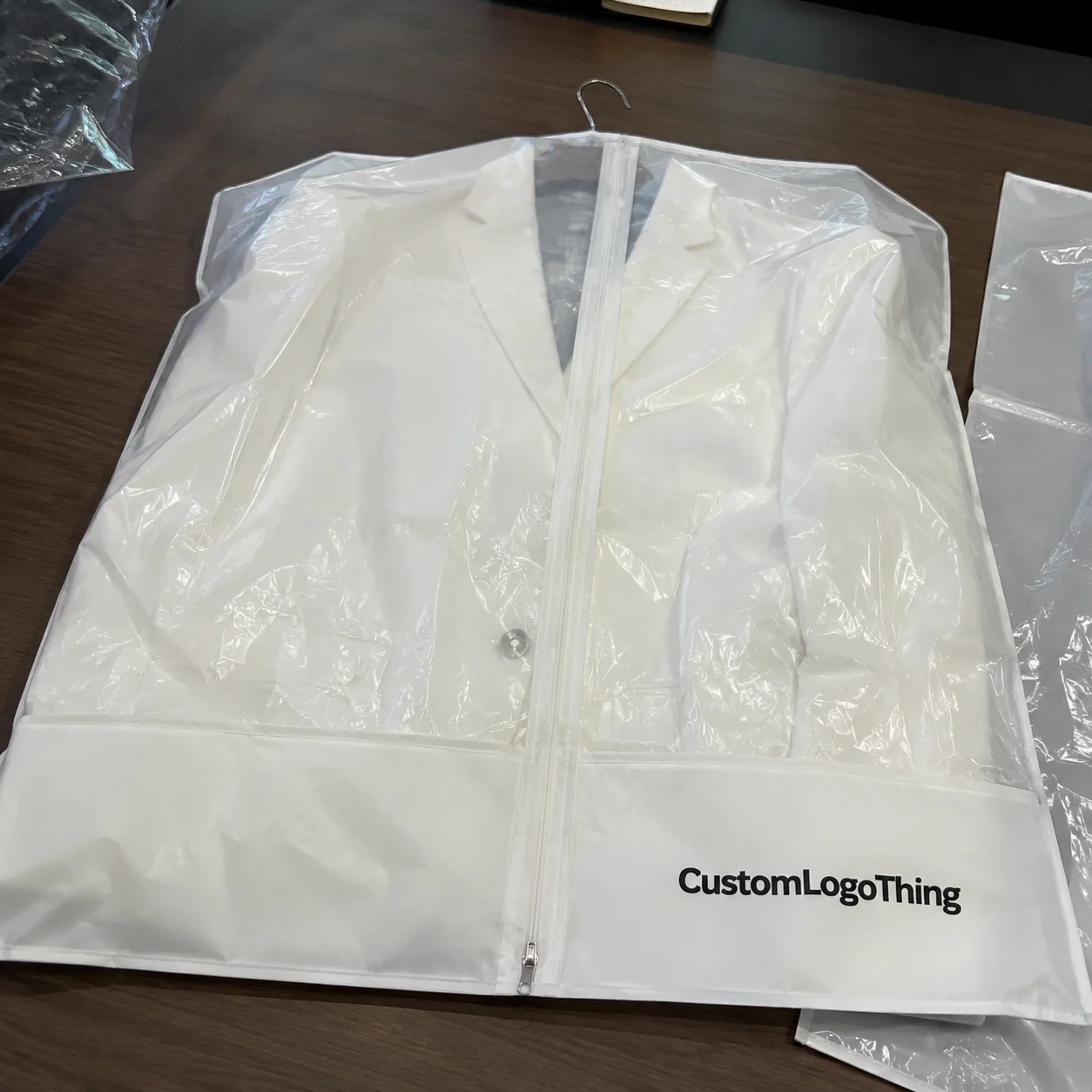
When I compare biodegradable film vs molded pulp for lightweight packaging, biodegradable film usually wins the “easy to live with” award. It is light. It folds. It conforms. It prints well if your supplier knows what they are doing. For ecommerce apparel bags, inner sleeves, brand wraps, and thin liners, film is often the simplest way to protect a product without adding visual bulk. I have a soft spot for it, frankly, because it tends to behave predictably when the spec is clean, such as a 40-micron PLA-based pouch or a 25-micron cellulose wrap with a crisp heat seal.
I’ve seen biodegradable film perform well in shelf presentation because it stays quiet. No strange shadows. No heavy structure fighting the product. A beauty client in Los Angeles used a compostable clear film sleeve over cartons with 2-color print and a 1.5 mm tuck flap. Their retail team liked it because the product stayed visible, and their wholesale buyers did not complain about the package taking up too much space in back stock. That matters more than people admit. Back stock drama is real; it just does not make for glamorous board slides, especially when the cartons are 350gsm C1S artboard with a matte aqueous coat and every inch of shelf space costs money.
Film has real weak spots, too. Puncture is the obvious one. If the product has a sharp corner, a hard edge, or a rough inside surface, film can fail faster than the sales team expects. Heat sensitivity is another issue. Some biodegradable films can distort or seal inconsistently if your line settings are off by even a small margin. I’ve watched a client burn through 8,000 units because their sealing bars were set for a conventional poly film, not a compostable blend with a narrower process window. That was a pricey lesson, and yes, the plant manager did use the phrase “we’ll just run it a little hotter” right before the trouble began.
There is also the sourcing issue. A lot of buyers assume they can swap in biodegradable film and keep the same output. Not always. Some films need more careful storage, tighter humidity control, or a different sealing temperature range. If you compare biodegradable film vs molded pulp only on raw material cost, film may look cheaper. Once you add seal failures, rework, or extra barrier layers, the math changes. In one factory near Xiamen, a team needed a $4,200 seal-bar retrofit to keep compostable film from wrinkling at the corners, which wiped out the savings from the lower unit price.
Where biodegradable film does best
- Apparel bags where low weight matters and the product is not fragile.
- Cosmetic outer sleeves where clarity and print presentation drive the purchase.
- Food-service liners where moisture resistance is needed and the format is thin.
- Accessories and small ecommerce items that do not need rigid support.
Where biodegradable film struggles
- Puncture-heavy products with corners, pins, or uneven shapes.
- High-heat sealing lines that were not tuned for compostable substrate behavior.
- Structural packaging where the package itself must hold shape.
- Long transit routes if the pack may face abrasion, compression, or rough handling.
Buyers get seduced by the word “film” because it sounds neat and easy. Then they forget packaging is a machine problem. If your pouch seal fails on 2% of units, that 2% can become a customer service headache very quickly. So yes, compare biodegradable film vs molded pulp with the product geometry in hand, not just the spec sheet. I’ve seen a 1.8 mm corner radius make the difference between a passing run and a repeat complaint.
If your brand needs a slim wrap with a premium print look, film is still a solid choice. Just ask for seal testing, barrier specs, and documentation. I’d want ASTM or equivalent compostability support, plus clear instructions on whether the material is industrial compostable, home compostable, or just “biobased,” which is one of those words that sounds impressive until you ask the obvious follow-up. A supplier in Shanghai once offered that exact wording on a spec sheet, and the buyer’s compliance team shut it down in less than 10 minutes.
For authority, I always point clients to resources like the U.S. EPA for waste-management basics and composting context, then ask suppliers to back up their claims with actual test reports. Pretty pictures do not replace proof, and a claim without a dated test report from a lab in Shenzhen or Hong Kong is just a claim.
Detailed Reviews: Where Molded Pulp Wins and Fails
When you compare biodegradable film vs molded pulp for protection-first applications, molded pulp often takes the lead. It cushions. It stacks. It creates a defined cavity for a product to sit in. That matters for electronics, fragile components, beauty kits, beverage carriers, and anything that rattles around if left loose in a carton. The first time I saw a molded pulp insert survive a lane of mixed handling from Shenzhen to Dallas, I stopped doubting it for heavier retail kits. There is something satisfying about a material doing exactly what it promised for once, especially after the third carton drop test at 27 inches.
The biggest win is impact protection. Molded pulp absorbs abuse better than most buyers expect, especially when the cavity design matches the product geometry. I worked with a subscription box client that was shipping ceramic fragrance jars. Their initial film-based wrap looked elegant, but the jars chipped at the base during corner compression. We switched to a molded pulp insert with a tighter shoulder profile and cut breakage from 6.8% to 1.9% over three test shipments. That is not theory. That is a real invoice difference. And honestly, the finance team looked like they had just been handed a fresh cup of coffee, because the refund budget dropped by nearly $12,000 over one quarter.
Molded pulp also sends a clear sustainability signal without needing much explanation. Customers see the texture and usually get it immediately. The unboxing feels deliberate. Natural. Less plastic-looking. That is useful if your brand wants “eco” to be visible the second the box opens. I have had brand managers say the pulp insert made their product feel more expensive, even though the material itself cost more than their old corrugated spacer. Perception is a messy thing. Sometimes it is worth paying for, especially in premium skincare or headphones priced above $80 retail.
Now the downside. Molded pulp is not free of pain. Tooling can be expensive, especially if you need custom cavities or tight tolerances. The surface finish is more limited than film. Smooth, high-gloss branding is not what this material does best. Drying time and mold refinement also slow things down. I’ve seen first-time buyers underestimate how many sample rounds it takes to get a pulp insert That Actually Fits cleanly and does not scuff the product. It is the packaging equivalent of saying “we’ll just wing it” before a product launch. A terrible plan. A very common one.
One factory visit in Guangdong sticks with me. A buyer wanted a molded pulp tray for a charging device with two odd cable grooves and a raised logo boss. The first sample looked fine visually, but the product wobbled because the cavity depth was off by 1.5 mm. The second sample fixed the fit, but the corner stackability got worse. The third sample finally balanced both. That is why I tell people to compare biodegradable film vs molded pulp with enough time for prototype iterations. Molded pulp rewards patience. It punishes rush jobs, especially when the mold shop is 90 minutes outside Foshan and the courier cutoff is 4:00 p.m.
Where molded pulp does best
- Electronics inserts that need exact cavity support.
- Beauty kits where premium presentation and protection both matter.
- Fragile ecommerce items that need shock absorption.
- Beverage carriers and trays that must hold weight and shape.
Where molded pulp struggles
- Very tight launch schedules that leave no room for tooling rounds.
- Highly detailed surfaces where the finish must be smooth and refined.
- Space-sensitive shipping because bulk can add freight cost fast.
- Low-volume pilot runs where mold amortization hurts unit economics.
For standards, I always ask if the packaging has been tested to relevant ISTA protocols if it will move through parcel networks. The ISTA site is a decent starting point for buyers who want to understand shipping test logic instead of guessing. Molded pulp does very well in those test environments when designed properly. The catch is design properly. Those two words save or sink a project, whether the plant is in Dongguan, Ho Chi Minh City, or Suzhou.
If you want a tactile, premium eco feel, molded pulp can be excellent. If you need slim, bright, printed packaging, not so much. That is the point of comparing them honestly. No fake winner. Just the material that behaves better for the actual job.
Price Comparison: Material, Tooling, and Shipping Costs
Price is where the whole conversation gets real. When buyers compare biodegradable film vs molded pulp, they usually start with unit price and stop there. That is a mistake. The material line item is only one part of landed cost. You also need to count tooling, samples, shipping bulk, damage rates, storage, and assembly time. Packaging looks cheap right up until you start paying to fix it. I’ve had more than one client ask me why the “economical” option suddenly needed a budget meeting. Because packaging, apparently, enjoys surprise endings.
For simple applications, biodegradable film is often cheaper per unit. A standard compostable wrap or bag may run lower than a custom molded insert because the tooling burden is smaller. I’ve seen straightforward film runs land in a range like $0.08 to $0.22 per unit depending on thickness, print coverage, and order size. For a 5,000-piece run, some suppliers in Guangdong or Jiangsu will quote around $0.15 per unit for standard compostable bags with one-color print and a basic seal. But if you need special barrier behavior, embossed print, or tighter sealing requirements, that number rises quickly. The low quote is frequently just the opening act.
Molded pulp can be cost-effective at scale for protective inserts, but there is a catch: tooling. Custom mold development can add upfront costs from a few hundred dollars to several thousand dollars depending on complexity, cavity count, and revision rounds. I’ve paid $1,200 for a simple tray mold and watched a more complicated multi-cavity insert push past $4,000 before the final sample even got approved. In some factories near Xiamen or Dongguan, the first sampling cycle alone can run 12 to 15 business days after proof approval, then another 7 to 10 business days for revisions if the cavity depth or rib spacing is off. Nobody likes that part, but there it is. I certainly do not enjoy explaining it three times to a team that assumed “molded” meant “cheap and done.”
Shipping changes the equation too. Molded pulp usually occupies more space than film. More space means more cartons, more pallet volume, and sometimes more dimensional freight charges. Film is far easier to pack tightly. I once saved a client nearly 18% on inbound freight simply by switching a secondary wrap from a thicker paper-based alternative to biodegradable film because the carton count dropped from 84 cartons to 61 cartons per 20-foot shipment. That is the kind of number finance actually notices, especially when the route runs from Ningbo to Los Angeles and every cubic centimeter is billed like it has a small grudge.
| Cost Factor | Biodegradable Film | Molded Pulp |
|---|---|---|
| Typical unit cost | Often lower for simple wraps and bags | Often lower for protection at scale |
| Tooling cost | Usually low to moderate | Moderate to high for custom molds |
| Sampling expense | Usually fewer revisions | More rounds if fit is complex |
| Shipping bulk | Very efficient | Less efficient, more volume |
| Damage reduction potential | Lower for fragile goods | Higher for fragile goods |
| Best economics | Small runs, simple formats, slim packs | Repeat runs, protective inserts, fragile products |
So, which is cheaper? That depends. If the product is light and the package is mostly for containment or presentation, biodegradable film usually wins on cost. If the product is fragile and the packaging prevents returns, molded pulp can be the smarter spend even if the per-unit quote is higher. That is why I always tell clients to compare biodegradable film vs molded pulp on landed cost, not just FOB price. FOB is the start of the story, not the ending, and a quote from Shenzhen means very little if the assembly line in Chicago needs extra labor to make it work.
Do not ignore labor. If molded pulp requires a more complicated assembly step or extra carton inserts, your labor cost can eat into the savings fast. If biodegradable film requires a special heat sealer, film tension adjustments, or stricter handling, that is labor too. Packaging accountants love simple formulas. Reality does not care. A brand that saves $0.03 on the unit price but adds 18 seconds of packing time per carton may actually spend more at the warehouse in Atlanta or Madrid.
Process and Timeline: From Sample to Production
Timeline can decide the winner before cost does. When buyers compare biodegradable film vs molded pulp, biodegradable film usually moves faster if the spec is standard and the print is simple. Molded pulp usually takes longer because you are dealing with tooling, cavity design, moisture removal, and sample refinement. More moving parts. More chances for someone to say, “Can we just make the corner a bit tighter?” which, of course, means another revision. I’ve yet to see that request improve anyone’s mood, especially when the PO already has a ship date in 21 days.
For biodegradable film, the process is often straightforward: confirm thickness, barrier, print method, and sealing behavior. Then you review a pre-production sample, test it on your filling line, and check whether the package survives handling without split seams or unwanted stretching. If the supplier is organized, you can sometimes move from proof approval to production in 12 to 15 business days for standard formats. If you need custom print, that can stretch longer, and a one-off color correction can add another 3 to 5 business days if the ink density is off.
Molded pulp takes a different route. You approve the dieline or cavity geometry, the supplier creates or modifies the mold, sample pieces are pressed and dried, then you test fit and performance. If the product has irregular curves or shallow support points, expect at least one or two revisions. I’ve seen simple tray projects move in 3 to 4 weeks. I’ve also seen complex inserts take 7 weeks because the fit tolerance had to be corrected after the first sample cracked at the support rib. In one case in Foshan, the final approval only happened after the third sample and a 1.2 mm trim adjustment.
One negotiation I remember clearly involved a beauty brand that needed launch-ready packaging for a 5,000-unit run. They wanted molded pulp because the storytelling was stronger, but their event date in New York was immovable. The supplier quoted a mold build, drying cycle, and shipping window that pushed the launch too close for comfort. We switched the project to biodegradable film for the first release, then moved to molded pulp for the refill kit later. That decision saved the launch. No one lost their mind. Miracles happen, especially when the transit lane from Ningbo to Newark is already eating eight days.
Before you approve anything, ask for the boring documents. Dielines. Barrier specs. Compostability or recycling documentation. Assembly instructions. If the packaging is going to touch food, cosmetics, or a regulated product, ask for the right compliance papers too. FSC matters for fiber sources when paper components are involved, and certification access matters if your brand is making environmental claims. Do not rely on verbal assurances from a sales rep who “thinks it should be fine.” I’ve heard that line before. It was not fine, and the resulting reprint in Vietnam cost the client $2,300 plus a week of lost time.
How to Choose: Match the Material to Your Product
If you want a practical way to compare biodegradable film vs molded pulp, start with five questions: Is the product fragile? Does it need moisture protection? How important is visual clarity? How far will it ship? What end-of-life path can your customer actually access? Those five questions solve more packaging arguments than any mood board ever will. In my experience, they also save the most time, which is nice because nobody has an unlimited appetite for packaging meetings in offices from London to Los Angeles.
Choose biodegradable film if your product is light, flexible, and low-bulk. It is a strong choice for apparel bags, product sleeves, liners, and retail packaging where clarity matters. It is also useful if you care about freight efficiency and need a package that stays slim in storage. If your packaging needs to show the product or highlight print, film often gives you more presentation options. A 30-micron pouch with a 2-color logo can look polished without adding much weight, which is exactly why fashion and beauty teams keep coming back to it.
Choose molded pulp if your product is fragile, oddly shaped, or premium enough that the unboxing moment matters as much as the box itself. It performs well when the package needs to stop movement, absorb shocks, and create a custom nest around the item. In my experience, molded pulp also helps when brands want sustainability to feel obvious without a lot of explanation. A molded insert inside a 350gsm C1S artboard carton can make a $45 product feel properly engineered rather than casually boxed.
Here is the trap I see all the time: brands pick the material that sounds greener, then discover it creates more waste through damage, overpack, or returns. That is not a win. A package that protects poorly can create more environmental impact than a package with a slightly heavier footprint but a much lower failure rate. So yes, compare biodegradable film vs molded pulp with actual use data, not just ideology. I’ve watched a brand cut packaging mass by 12% and increase return shipments by 9% after changing materials, which is the sort of trade-off no sustainability report likes to explain.
Questions to ask suppliers
- What certifications can you provide, and are they third-party verified?
- Is the material industrial compostable, home compostable, recyclable, or only biobased?
- What are your minimum order quantities for standard and custom specs?
- What is the realistic sample-to-production timeline?
- How does the packaging perform in transit tests like ISTA-based drop or vibration testing?
I also recommend asking for a real sample shipment, not just a flat sample in a courier envelope. A package can look fine on a table and fail miserably once it gets tossed into an actual distribution stream. If you can, run 20 to 50 units through the same packing and shipping process you plan to use later. That is how you learn what survives. I’ve had teams balk at the time it takes, then act shocked when the first live order turns into a damage report from Atlanta or Toronto. Funny how that works.
On the authority side, if you are dealing with fiber-based packaging claims, check resources from FSC and request chain-of-custody details where relevant. Buyers who verify this upfront save themselves headaches later. And yes, your legal team will thank you. Eventually, probably after the first audit in Chicago or Munich when the paperwork is already in order.
Our Recommendation: Best Choice by Use Case
After years of supplier meetings, factory tours, and enough packaging prototypes to fill a small warehouse in Dongguan, my verdict is pretty simple. If you compare biodegradable film vs molded pulp for general flexible packaging, biodegradable film is usually the better all-around choice. If you compare them for protection-first packaging, molded pulp is usually the better choice. There is no magic material. Just better fit for the job. I know that answer is less glamorous than “this one is always best,” but packaging rarely rewards dramatic oversimplification.
Choose biodegradable film when you need:
- Low weight and low shipping bulk.
- Clear visibility or strong printed presentation.
- Wraps, liners, bags, or sleeves.
- Fast turnaround with fewer tooling steps.
Choose molded pulp when you need:
- Impact protection and product containment.
- A natural, tactile eco look.
- Custom cavities or product-specific inserts.
- Better control of movement inside the shipper.
There are plenty of cases where the smartest answer is both. I like molded pulp for structure and biodegradable film for secondary wrapping or moisture protection. That hybrid setup can give you the protective performance of pulp and the slim barrier or presentation benefits of film. I used that approach on a premium tea brand that needed moisture protection inside a rigid mailer shipped from Suzhou to Seattle. The result was cleaner, safer, and cheaper than overbuilding with one material alone. It also spared everyone from another round of “can we make the box feel more artisanal?” which, I swear, is how packaging projects age three years overnight.
My practical recommendation is simple: request samples from two suppliers, one for each material. Test them in a real shipment. Compare damage rates, packing time, and landed cost. If you want to be disciplined, use a 50-unit pilot and measure return rate, assembly minutes per unit, and freight per carton. Then lock the format that behaves best. That is how you avoid pretty but useless packaging. In one pilot I watched in Hangzhou, the winning option was the one that shaved 42 seconds off pack-out time, even though it looked less glamorous in the mockup photos.
If you want my honest answer after everything I’ve seen, compare biodegradable film vs molded pulp by asking one question: which option protects the product better while meeting your sustainability claim with the least operational pain? That answer usually points to the right material faster than any trend report, especially once freight, labor, and breakage are counted together.
FAQs
When should I compare biodegradable film vs molded pulp for my product?
Compare biodegradable film vs molded pulp when you are choosing between flexible packaging and protective packaging. It matters most for ecommerce, cosmetics, food packaging, and subscription boxes. If your product is fragile, molded pulp usually wins. If it needs a slim wrap or liner, biodegradable film usually wins. A 25-micron liner for an apparel brand in Los Angeles is a very different decision from a pulp tray for a glass bottle shipping to Dallas.
Is biodegradable film always more eco-friendly than molded pulp?
No. It depends on the full lifecycle, local disposal options, and how much waste the package actually prevents. A lighter package that reduces shipping damage can be more sustainable overall than a compostable option that fails in real use. Check certifications and end-of-life access before deciding, especially if your customers are spread across cities like Toronto, Paris, and Melbourne where compost access can vary by neighborhood.
Which costs less: biodegradable film or molded pulp?
Biodegradable film often costs less for simple wraps and low-complexity packaging. Molded pulp can cost less for protective inserts at scale, but tooling and sample development add upfront expense. Shipping bulk and damage reduction can change the final landed cost. In one 5,000-unit quote, a film bag landed at $0.15 per unit, while a custom pulp insert came in higher at first but reduced breakage enough to save money overall.
How long does production usually take for each option?
Standard biodegradable film can move faster if the format and print specs are simple, with production often starting 12 to 15 business days from proof approval. Molded pulp usually takes longer because of mold development, prototyping, and drying or curing steps. If you are on a tight launch schedule, ask suppliers for sample lead times before approving the format. A simple pulp tray may take 3 to 4 weeks, while a complex insert can stretch to 7 weeks or more.
Can I use both biodegradable film and molded pulp in one package?
Yes, and that is often the smartest move. Use molded pulp for structure and impact protection, then add biodegradable film for moisture protection, branding, or secondary containment. This hybrid approach can improve performance without sacrificing sustainability goals. A common setup is a pulp insert inside a 350gsm C1S artboard carton with a clear compostable film sleeve over the product.
For Custom Logo Things, the real win is not choosing the “greenest sounding” packaging. It is choosing the one that ships well, protects well, and matches the brand story without creating avoidable waste. If you are trying to compare biodegradable film vs molded pulp for a real launch, start with samples, test them hard, and let the numbers decide. That is the part that actually saves money, whether your goods are moving from Shenzhen to Chicago or from Guangzhou to London.