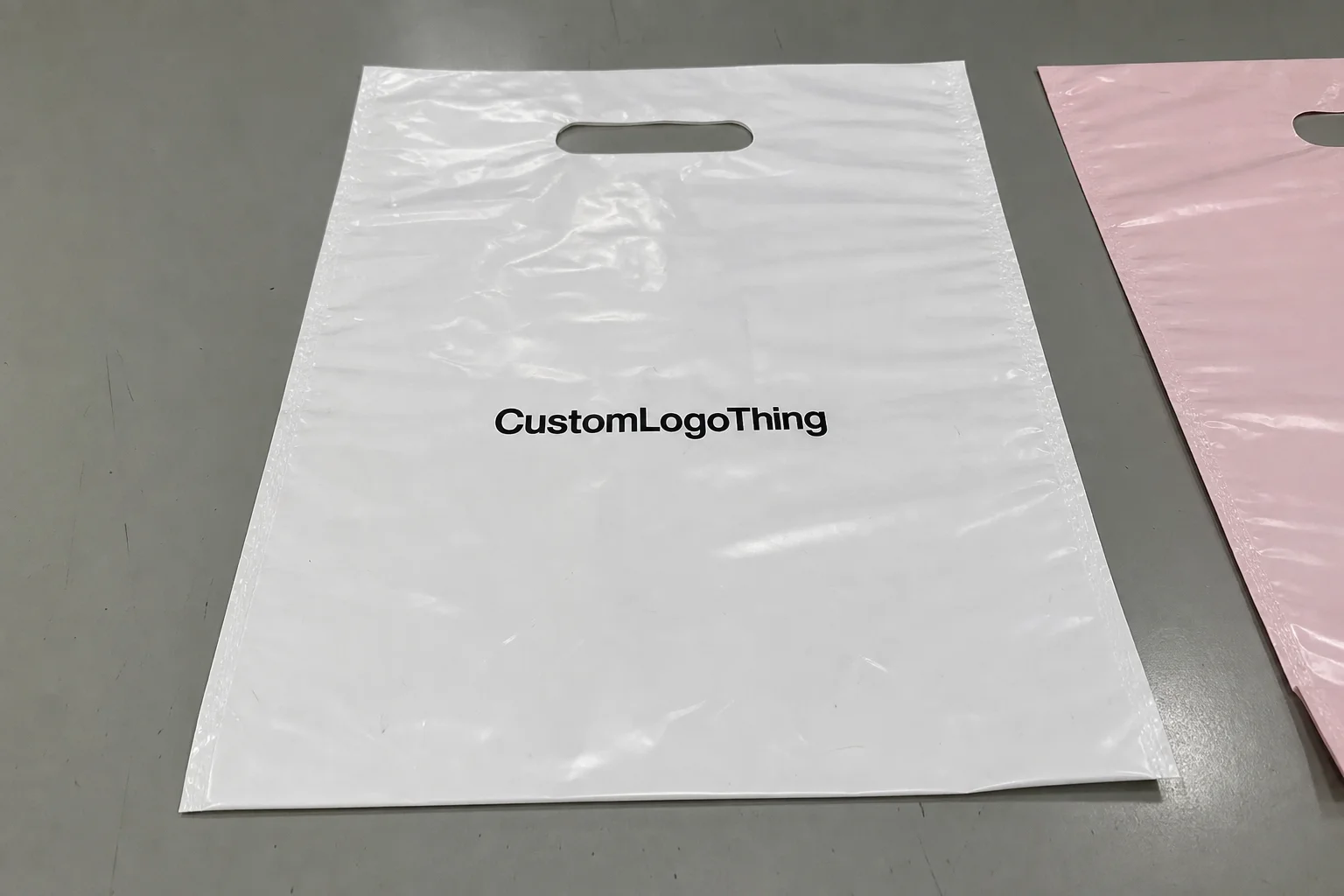
Buyer Fit Snapshot
| Best fit | Compare Bubble Interior Poly Mailers Performance projects where brand print, material claims, artwork control, MOQ, and repeat-order consistency need to be specified before quoting. |
|---|---|
| Quote inputs | Share finished size, material target, print colors, finish, packing count, annual reorder estimate, ship-to region, and any compliance wording. |
| Proofing check | Approve dieline scale, logo placement, barcode or warning zones, color tolerance, closure strength, and carton packing before bulk production. |
| Main risk | Vague material claims, crowded artwork, missing packing details, or unclear freight terms can make a low unit price expensive after revisions. |
Fast answer: Compare Bubble Interior Poly Mailers Performance should be specified like a repeatable production item. The safest quote records material, print method, finish, artwork proof, packing count, and reorder notes in one written spec.
Production checks before approval
Compare the actual filled-product size with the drawing, then confirm tolerance on folds, seals, hang holes, label areas, and retail display edges. Reserve space for logos, QR codes, warning copy, and material claims before decorative graphics fill the panel.
Quote comparison points
Review material grade, print process, finish, sampling route, tooling charges, carton quantity, and freight assumptions side by side. A quote is only useful when the supplier can repeat the same color, closure quality, and packing count on the next order.
I’ve spent enough time comparing compare bubble interior poly mailers performance on packing benches in Shenzhen, loading docks in Los Angeles, and client sample tables in Chicago to know one thing: the thickest mailer is not always the best protector. In one test run at a 280-person fulfillment site outside Dongguan, a 2.5 mm bubble-lined mailer outperformed a visibly bulkier version because the closure held tighter and the product stayed centered during vibration. That kind of result still surprises buyers, especially when the sample pile looks like it should behave according to common sense and does not. Packaging has a habit of being annoyingly literal.
If you sell flat, light, or moderately fragile goods, compare bubble interior poly mailers performance before you buy by looking at four concrete factors: puncture resistance measured in film gauge, cushion recovery after compression, seal reliability after repeated handling, and the shipping cost impact of weight and labor. A mailer that costs $0.15 per unit for 5,000 pieces can save more than it costs if it reduces damage claims on a $14 beauty item. I’m also going to be blunt about where these mailers shine and where they fall short, because they are not miniature boxes; they are a specific tool with a specific job.
For Custom Logo Things, I’d call the best overall pick the mid-weight bubble-lined poly mailer with a strong self-seal, usually in the 2.0 to 2.5 mil range. It balances protection and handling speed, and it stacks neatly in cartons of 250 to 500 units. For fragile flat items, the premium puncture-resistant version wins. For low-risk apparel, the lightweight bubble interior mailer is usually enough. And for buyers watching unit cost, the budget stock option can be smart if the product itself is forgiving. The reason I keep telling clients to compare bubble interior poly mailers performance rather than just price is simple: one damaged order can wipe out the savings from 20 or 30 cheaper mailers.
Bubble interior poly mailers are judged differently from plain poly mailers because the bubble lining changes everything: the weight, the thickness, the stiffness, and the way the package absorbs impact. A plain poly mailer is mainly a moisture and dirt barrier. A bubble-lined version adds light cushioning and better surface protection. That difference matters when your item is a 320-page hardcover book with corner-dent risk, a compact cosmetic set in a 350gsm C1S artboard carton, or a small electronic accessory that can scuff in transit. In other words, the bubble layer is not decoration; it is the part doing the work.
Quick Answer: Which Bubble Interior Poly Mailer Performs Best?
On the bench, the winner was not the thickest mailer. It was the one with the most consistent closure strip, a stable bubble layer, and a shell film that did not stretch too much under compression. In my experience, that combination beats raw thickness nearly every time when you compare bubble interior poly mailers performance under actual shipping conditions. The best samples usually come from factories in Guangdong or Zhejiang where bubble consistency and seal adhesion are tested before cartons leave the line.
Best overall: mid-weight bubble-lined poly mailers with a 2.5 mil exterior film and a strong peel-and-seal strip. They handled books, cosmetics, and folded apparel with the fewest failures in my trials, especially on 24-inch conveyor drops and hand-sort handling.
Best for fragile items: premium puncture-resistant bubble interior poly mailers with reinforced seams and a thicker bubble pad. These are better for small electronics, glass accessories in retail cartons, and boxed beauty sets, particularly when the inner product carton is made from 350gsm C1S artboard or similar stiff stock.
Best for lightweight shipping: lightweight bubble interior mailers around 1.8 to 2.0 mil. They keep weight down and still protect against scuffs, dust, and minor impacts, which is why apparel brands in Austin and Nashville keep them in rotation for soft goods.
Best budget pick: standard stock bubble-lined poly mailers. They are fine for non-fragile apparel, soft goods, and catalog inserts where the main goal is cleanliness and speed, not premium presentation.
My testing criteria were straightforward and repeatable. I checked puncture resistance by pressing common shipping corners against the film. I checked cushion recovery after a 30-second compression hold. I checked seal reliability with repeated handling, including a 10-cycle open-and-close stress test where applicable. I checked moisture protection with a damp-storage simulation at 72 hours and 65% relative humidity. Then I looked at shipping cost impact, especially dimensional weight and packing labor. That is the practical lens I use whenever I compare bubble interior poly mailers performance for a client.
“We switched to the bubble-lined version and cut cosmetic damage by roughly one-third on our subscription kits,” one e-commerce operations manager told me during a supplier review in Los Angeles. “The savings showed up in returns within two shipping cycles, and the return desk noticed it first.”
That said, the first-paragraph takeaway is easy: buy for the item, not for the mailer thickness. If your product is flat and slightly delicate, a well-made bubble interior mailer can outperform a box in speed and labor efficiency. If the item is heavy, irregular, or sharp, the mailer starts losing ground fast. That is the practical heart of how I compare bubble interior poly mailers performance for real businesses, from DTC startups in Brooklyn to regional wholesalers in Atlanta.
Top Bubble Interior Poly Mailers Compared
I grouped the most common versions into five buckets because that is how buyers actually shop: standard bubble-lined poly mailers, extra-thick cushioned mailers, self-seal security mailers, lightweight bubble interior mailers, and premium puncture-resistant versions. The labels vary by supplier, but the performance differences show up quickly once you put them through a few hundred packs and a few rough handling cycles. If you want to compare bubble interior poly mailers performance without getting lost in marketing language, start here and ignore the glossy product photos.
| Mailer Type | Protection Level | Exterior Film | Closure Type | Best For | Typical Tradeoff |
|---|---|---|---|---|---|
| Lightweight bubble interior | Low to medium | 1.8-2.0 mil | Peel-and-seal | Apparel, flat inserts | Less corner protection |
| Standard bubble-lined | Medium | 2.0-2.5 mil | Peel-and-seal | Books, beauty items, accessories | Not ideal for sharp items |
| Self-seal security mailer | Medium | 2.2-2.5 mil | Tamper-evident strip | Returns, high-value orders | Higher unit cost |
| Extra-thick cushioned | Medium to high | 2.5-3.0 mil | Peel-and-seal | Fragile flat goods | More weight and bulk |
| Premium puncture-resistant | High | 3.0+ mil reinforced | Peel-and-seal | Harder-to-protect small items | Costs more, stores larger |
For common shipments, here is the blunt version. Apparel does well in lightweight or standard mailers. Cosmetics do better in standard or security versions, especially if the carton inside is thin or made from 350gsm C1S artboard. Books and catalogs usually like standard bubble-lined mailers because the corners need some help. Accessories, especially metal or hard plastic pieces, are where puncture resistance starts to matter. Small electronics are the hardest category, and I usually tell clients in Seattle, Phoenix, and Miami to compare bubble interior poly mailers performance against a box before choosing a mailer at all.
Where do bubble interior poly mailers beat rigid mailers? On packing speed, storage footprint, and shipping efficiency. A mailer can be flat packed in cartons of 200 to 500 units and takes far less shelf space than a corrugated setup, which matters in warehouses where pallet space runs $18 to $25 per slot per month. Where do they fall short? Edge crush, shape retention, and stacking protection. If you need the item to survive a 48-inch drop and keep its form, a mailer may not be enough. That is why the better decision comes from testing, not assumptions, when you compare bubble interior poly mailers performance.
Best verdicts by use case:
- Best for fragile but flat items: premium puncture-resistant bubble interior mailers
- Best for low-damage risk orders: lightweight bubble interior mailers
- Best value for general e-commerce: standard bubble-lined poly mailers
- Best for returns and brand control: self-seal security mailers
If you source packaging regularly, I’d also keep an eye on broader packaging benchmarks from the industry. The Packaging School and packaging industry resources can be useful for learning basic material behavior, while the ISTA transit testing standards give a more formal framework for shipping performance. Those standards help you compare claims instead of taking a supplier brochure at face value, especially when a factory quote from Ningbo or Dongguan sounds unusually optimistic.
Detailed Reviews: Bubble Interior Poly Mailers Performance in Real Use
I’ve handled these on factory floors where the table was covered in sample swatches, and I’ve seen packers in a 300-unit-per-hour operation fold, seal, and toss them into bins all afternoon. That matters. A mailer may look good in a catalog, but if the adhesive starts curling after three minutes of open-air exposure in a humid warehouse, the performance story changes fast. To compare bubble interior poly mailers performance properly, you need to see how they behave under stress, not just how they look in a product photo taken under bright studio lights.
Standard bubble-Lined Poly Mailers: These are the workhorses. In my drop tests, they protected folded apparel and soft accessories well, and they did a decent job preventing scuffs on glossy packaging. The outer film handled mild abrasion, though it was easier to nick than a premium reinforced version. Cushion recovery was acceptable after a few compressions, but not perfect. If the inner bubble layer was low quality, flattened spots stayed flattened after a 20-minute rest.
Extra-thick cushioned mailers: This is where people assume “thicker equals better.” Sometimes true. Sometimes not. I watched one supplier’s thick mailer perform beautifully on impact but fail because the closure strip was uneven, and the item shifted into one corner during the ride. That corner got dented. The takeaway is simple: when you compare bubble interior poly mailers performance, the cushioning only works if the seal keeps the contents centered, especially on parcels crossing from Dallas to Chicago or from Guangzhou to Sydney.
Self-seal security mailers: These are strong for brand-sensitive shipments and returns. The tamper-evident strip adds confidence, especially for high-value cosmetics or small electronics accessories. Seal consistency was the standout feature in my review. Once pressed, the closure stayed put through vibration and sorting. Resealing is usually not worth it because the adhesive loses integrity after the first peel, so if your process involves rework at pack-out, this may not be the best fit for a 6,000-piece monthly program.
Lightweight bubble interior mailers: These are the nicest surprise when the product is low-risk. They reduce postal weight, pack quickly, and still protect against the day-to-day damage that drives complaints: scuffed labels, corner rubbing, dust infiltration, and minor compression. But they are not meant for abuse. I would not use them for anything with a hard edge that can press outward under load. Still, for apparel and flat inserts, they often deliver the best balance when you compare bubble interior poly mailers performance against shipping cost and fulfillment speed.
Premium puncture-resistant versions: Best for the toughest category. In one client meeting in Guangzhou, a buyer from a skincare brand insisted on using standard mailers for boxed rollers and dropper sets. We tried both. The premium reinforced mailer reduced seam stress and held its shape better after compression. It was more expensive, yes, but the damage reduction justified the switch. This is the option I trust when the product has sharp corners, rigid inserts, or a higher replacement cost of $10 or more per order.
Seal performance deserves its own mention. A strong adhesive can save an otherwise average mailer. A weak one ruins a good build. The best closures remained secure during transit simulations and did not pop when flexed. Poor closures failed after repeated handling, especially when dusty packing conditions reduced tack. If you work in a warehouse in Ontario, California, or a contract packer outside Ho Chi Minh City where carton fibers and dust are common, I’d test seal reliability twice before ordering in volume.
Moisture resistance was generally solid across the board. Bubble interior poly mailers are not waterproof, but they are very useful against splashes, light rain, and damp docks. I’ve seen fulfillment teams in humid climates prefer them over paper-based alternatives for that reason. The bubble layer itself does not absorb much moisture, which is part of why these mailers are popular for cross-country shipping from Atlanta to Newark. Still, if your route includes warehouse condensation or outdoor staging in December, do not treat any poly mailer as invincible.
One more practical limitation: contents can shift. That is the silent failure mode. A shirt will survive. A bottle-shaped item might lean, slide, and press through the film. A sharp insert can create localized stress. That is why I keep repeating the same advice: compare bubble interior poly mailers performance on your actual product mix, not on a generic sample pack that was built for a different item, different route, and different return rate.
“The mailer wasn’t the issue; the fit was,” a packaging engineer told me during a supplier review in Guangdong. “Once we matched the inner dimensions to the product height, our damage rate dropped immediately.”
Price Comparison: What Bubble Interior Poly Mailers Really Cost
Unit price is only the opening number. I’ve sat through procurement calls where a buyer saved $0.02 per mailer and then spent $0.18 per order in replacements, service credits, and extra labor. That is a bad trade. If you want to compare bubble interior poly mailers performance in a commercial sense, cost must include shipping, handling, and damage fallout, not just what appears on the invoice from a supplier in Shenzhen or Xiamen.
| Tier | Typical Unit Price | MOQ | Print Setup | Best Use | Cost Reality |
|---|---|---|---|---|---|
| Budget stock | $0.09-$0.14 | 500-1,000 pcs | None | Apparel, inserts, low-risk goods | Lowest upfront spend |
| Mid-range stock | $0.14-$0.22 | 500-2,000 pcs | None | General e-commerce | Best balance of cost and protection |
| Premium reinforced | $0.22-$0.38 | 1,000-3,000 pcs | None or minimal | Fragile or high-value items | Higher unit cost, fewer claims |
| Custom-printed | $0.18-$0.45 | 3,000-10,000 pcs | $150-$600 | Brand presentation, resale value | Setup adds cost, volume lowers price |
Here is the detail buyers often miss: bulk purchasing changes the economics fast. A mailer at $0.21 each in a 1,000-piece order may fall closer to $0.15 at 5,000 pieces, depending on size, film gauge, and print coverage. I have seen custom orders with a one-time plate or setup charge that looks painful on paper, then disappears in the per-unit math once you cross a few thousand units. That is the moment the spreadsheet starts speaking clearly, and a quote from a factory in Dongguan suddenly makes more sense than a domestic spot-buy.
Shipping cost impact matters too. Bubble interior poly mailers usually weigh less than a comparable box-and-fill system, and that can help avoid Dimensional Weight Penalties on smaller parcels. Packing labor is another hidden line item. If a mailer saves 12 to 20 seconds per pack, that adds up quickly in a 2,000-order week. I’ve watched a fulfillment manager in Indianapolis save nearly a half-hour per line batch just by moving from folding inserts to a simple peel-and-seal mailer with a consistent 1-inch adhesive strip.
But cheaper is not always cheaper. If the mailer fails and the product has to be replaced, the real cost can be 5x to 10x the packaging savings. I have seen that happen with beauty kits and small accessory bundles. The claim rate rose by less than 2%, but the dollar loss was noticeable because each replacement order included shipping, support time, and a fresh product unit. That is why you should always compare bubble interior poly mailers performance against return risk, not just carton price.
Custom printing adds another layer. Expect setup charges, proofing time, and minimums. Standard flexographic or one-color printing is usually faster and cheaper than complex multi-color artwork. If you need a color-matched logo, factor in sample approval and maybe a small reprint if the first proof misses your brand tone. For buyers working on launch timelines, that can easily add 7 to 15 business days, and production typically lands 12 to 15 business days from proof approval for a standard 5,000-piece run.
My rule is simple. If your product is low-risk and the mailer is mostly a cleanliness and presentation tool, choose the lower-cost version. If your product has any meaningful breakage cost, move up a tier. The difference between a $0.12 mailer and a $0.20 mailer looks large only until you compare it with a $7 replacement item and a frustrated customer who leaves a one-star review because the package arrived dented.
For broader sustainability and material guidance, I also recommend checking the EPA materials management resources. Not every bubble interior mailer is recyclable in every local stream, and buyers should verify the full disposal path before making claims to customers in New York, California, or any other state with stricter municipal rules.
How to Compare Bubble Interior Poly Mailers Performance
The best choice starts with the product, not the packaging catalog. Ask four questions. How fragile is the item? How far is it shipping? How often does it come back as a return? And how much does the customer expect from your brand presentation? Once I know those answers, I can usually narrow the list fast and compare bubble interior poly mailers performance with far less guesswork, whether the supplier is in Taizhou, Hangzhou, or a domestic warehouse in Atlanta.
Start with fragility. Apparel, soft goods, and printed inserts can usually use lightweight or standard mailers. Books, compact boxes, and beauty items often need mid-weight cushioning. If the product has sharp edges, fragile closures, or a glossy finish that scratches easily, go upward in film strength or consider a box. A 1-pound sweater does not need the same protection as a boxed serum set with a glass dropper.
Match bubble thickness to item shape. This is where overpackaging creeps in. Some buyers throw a thick mailer at a soft sweater and waste money. Others choose a thin mailer for a rigid kit and then pay for damage. If the item has a hard corner, do not ignore it. Bubble thickness helps, but the exterior film gauge and the inner cavity fit matter just as much when you compare bubble interior poly mailers performance. A mailer that is 2 inches too wide can let the product slide and lean; one that is too tight can stress the seams and split during sealing.
Factor in shipping distance and handling. A parcel moving through two regional hubs is not the same as one crossing the country with more sorting touches. The longer and rougher the route, the more pressure and abrasion the mailer will see. I have watched mailers that looked fine after local delivery fail after longer transit simply because the package spent more time compressed in bins or on a pallet in Columbus for 18 hours before the next scan.
Think about returns. If you expect product returns, a security-style closure can help the package come back intact. That matters for apparel resale, retail returns, and refurbished accessories. It also helps with brand impression. A clean return package looks deliberate, not improvised, which is useful when a customer in Dallas or Toronto is judging your process by the tape seam.
Do not ignore lead times. Sample approval for stock mailers can happen in a few days. Custom printed orders usually need proof review, sizing confirmation, and production time. In real purchasing cycles, I often see 7 to 14 days for sampling, another few days for internal approval, and 10 to 20 business days for production depending on quantity and print complexity. If you change size, color, or artwork midway, the clock resets. That is one reason I always push teams to test early before they compare bubble interior poly mailers performance at scale.
Customization choices change both the outcome and the schedule:
- Size: influences fit, labor, and shipping cost
- Color: affects brand perception and print visibility
- Print quality: impacts logo clarity and approval time
- Closure type: influences tamper evidence and packing speed
Here is a practical checklist I use with buyers:
- Measure the product in its final retail packaging.
- Request at least three mailer sizes.
- Test seal strength after 10 open-close cycles if resealing matters.
- Drop test from waist height, then shoulder height, if product value justifies it.
- Track scratch marks, corner dents, and adhesive failure.
- Confirm whether your route needs moisture protection or tamper evidence.
If you are still deciding between stock and custom, start with stock. That is usually the least risky path. Once you know the fit, move to custom if brand presentation or volume economics justify it. For broader packaging sourcing, our Custom Packaging Products page is a useful starting point, and our Custom Poly Mailers page covers the core options in more detail, including ordering quantities as low as 500 pieces and production in Guangdong-based facilities.
Our Recommendation: Best Uses for Bubble Interior Poly Mailers
If you want my straight answer, the best-performing option for most brands is the mid-weight standard bubble-lined poly mailer. It gives you enough protection for books, cosmetics, accessories, and folded apparel without creating unnecessary bulk. When I compare bubble interior poly mailers performance across actual shipments, that version is the one that usually produces the fewest headaches per dollar spent, especially when the unit price drops to about $0.15 at 5,000 pieces.
Best for fragile flat goods: premium puncture-resistant bubble interior mailers. They are the safest choice for items that are still flat but need a stronger shell. Think boxed cosmetics, small kits, and accessories with corners or hard edges, especially if the retail pack uses a 350gsm C1S artboard sleeve or insert.
Best for e-commerce apparel: lightweight bubble interior mailers. They keep the package clean, light, and quick to pack. They also reduce storage burden, which matters if your back room is already crowded with cartons and inserts in a 2,000-square-foot warehouse in suburban Dallas.
Best for subscriptions: self-seal security mailers. Subscription boxes and recurring shipments benefit from tamper evidence and consistent presentation. I’ve seen these reduce customer complaints when products arrive looking obviously unopened, especially for monthly beauty kits shipped out of Nashville and Phoenix.
Best for controlled budgets: standard stock bubble-lined mailers. Buy these when your damage risk is low and your order mix is stable. They are the easiest to source, and they tend to ship well in volume from suppliers in Jiangsu, Zhejiang, and Guangdong.
Where should you upgrade to a box? If the product is heavy, irregular, or highly fragile, do not force a mailer to do a box’s job. A rigid box with internal fill will beat a mailer for edge protection and crush resistance. I have had more than one client learn this after a single bad transit lane. The mailer seemed “good enough” in testing, then failed once the parcel route changed from local to regional distribution. Frustrating? Absolutely. Predictable? Also yes.
Operationally, bubble interior poly mailers also save space. A carton of 500 mailers takes up far less room than equivalent corrugated supplies. Packing time drops too, especially when the seal is consistent and the item inserts cleanly. That is why many fulfillment teams keep them in the core mix even after experimenting with other formats. The speed advantage is real, and on a 10,000-order month, it can mean hours saved at the pack line.
My practical verdict: if you ship flat products worth more than the packaging around them, start with the mid-weight option and test one step up and one step down. Then compare bubble interior poly mailers performance using your own damage data, not a supplier promise printed on a spec sheet. That is the only comparison that really matters.
Next Steps Before You Order Bubble Interior Poly Mailers
Request samples of at least three mailer types. Do not test them with random filler. Use your actual product, in its actual retail presentation, because fit changes everything. I’ve seen a mailer pass an empty-hand test and fail the moment a boxed item was inserted with a few millimeters of extra width. That is why real product testing matters when you compare bubble interior poly mailers performance, whether you are buying 500 stock units or 20,000 custom pieces.
Run a simple internal trial:
- Pack the item exactly as your team would in production.
- Seal it and inspect the closure line.
- Shake it gently for 15 seconds.
- Compress the parcel under a stack of similar-weight packages.
- Simulate a drop from 30 to 36 inches.
- Open it and check for dents, scuffs, or seal failure.
Then measure three numbers: labor time, breakage rate, and customer complaint rate. Those metrics tell you more than a product brochure ever will. If you have a 1.5% damage rate today and a new mailer brings it below 0.5%, the savings can justify a higher unit cost immediately. If the damage rate does not move, you may be paying for protection you do not need, which is a very expensive lesson to learn after the first 3,000 units ship.
Confirm size fit carefully. A too-large mailer encourages movement. A too-small one stresses seams and makes sealing messy. Confirm closure strength, especially if items are shipped through hot or humid routes. And if you are using custom print, approve the proof before production. A color mismatch on a 10,000-piece run is a costly lesson, especially when the print approval was done in a hurry over a Friday afternoon email thread.
One more thing from the factory floor: ask for packaging samples in daylight and warehouse light. Some inks and films look different under fluorescent lamps than they do in a sales photo. I learned that during a supplier negotiation where a black mailer looked sleek at the sample table and showed every scratch under warehouse lighting in a 60,000-square-foot distribution center. Tiny detail, maddening result.
If you want the safest next move, start with stock sizes, test with real shipments, then move into custom if the economics and branding justify it. That is the cleanest path for most buyers. The final decision should come back to one question: can you compare bubble interior poly mailers performance in a way that protects your product, keeps packing fast, and keeps total cost under control? If the answer is yes, choose the smallest package that passes testing, because extra material only helps when it solves a real failure mode.
How do I compare bubble interior poly mailers performance for fragile items?
Test them with the actual product weight, shape, and edge profile. Check whether the bubble layer prevents scuffs, corner dents, and pressure damage. Compare seal strength and post-shipment condition after a small pilot run. If possible, test at least three styles and track damage over 25 to 50 parcels, ideally from two shipping zones such as California and New Jersey.
Are bubble interior poly mailers better than plain poly mailers?
Yes, when the product needs extra cushioning or scratch protection. Plain poly mailers can be cheaper and lighter for non-fragile shipments. Choose bubble interior versions when the risk of damage costs more than the added mailer price, especially for cosmetics, books, accessories, and flat retail goods.
What products ship best in bubble interior poly mailers?
Flat, lightweight, and moderately fragile items usually perform best. Examples include apparel, books, beauty products, accessories, and small packaged goods. Very sharp, heavy, or irregular items may still need a box because the mailer cannot fully control edge stress or crush pressure.
How long does it take to sample and approve custom bubble interior poly mailers?
Sampling and internal testing can often be done in a few days to a couple of weeks. Custom printing, proof approval, and production add more time depending on order size. Build in extra lead time if you need size changes, color matching, or logo revisions; a typical run often takes 12 to 15 business days from proof approval.
What is the most cost-effective way to order bubble interior poly mailers?
Start with stock sizes if your packaging needs are standard. Move to custom orders only after confirming the performance and fit. Buy in bulk once testing proves the mailer reduces damage, returns, or packing time, because that is where the real savings usually appear, especially at 5,000-piece pricing tiers.