A cheap mailer quote can get expensive in a hurry. Buyers comparing custom poly mailer moq rates often start with the per-piece number, then find out later that margin slipped because the bags were oversized, the side seals were weak, the opacity was poor, setup charges were higher than expected, or the order volume outpaced what the business could use before the artwork changed.
Procurement teams, e-commerce brands, and operations managers run into the same problem. A real comparison has to include size, film thickness, print method, carton pack-out, freight, and reorder flexibility, because MOQ and price come from actual production limits, not just a line on a quote sheet. Two quotes can look almost identical at first, then end up far apart once plate charges, overrun policy, shipping method, or pieces per carton are added back in.
From a buyer’s perspective, MOQ rates shape more than the purchase order. They affect cash flow, warehouse space, campaign timing, packaging consistency, and reorder risk. If the goal is to keep branded packaging sharp without giving away margin, the lowest visible price is not enough. The better target is the right construction at the right quantity break with the fewest surprises after delivery.
This guide breaks down what to compare before issuing a PO, how Custom Poly Mailers perform in real shipping conditions, which specifications move cost the most, and how to read supplier quotes without getting boxed in by vague language. Teams that already source Custom Packaging Products across several categories will recognize the same rule here: buy against clear specifications, not assumptions.
A low unit price can raise total packaging cost fast

A familiar scenario plays out all the time. A brand chooses the lowest quote for printed mailers because the unit price looks attractive at 10,000 pieces. Once the order arrives, the fulfillment team notices the bags are slightly too large, so they need more dunnage, dimensional freight inches up over time, and pack speed drops because the product shifts inside the bag. Then a second problem appears: seal strength is inconsistent, so a small percentage opens in parcel handling. The paper savings disappear into refunds, reships, and customer service labor.
Many teams misread packaging cost at exactly that point. The quoted rate is only one layer of the expense. Total cost includes usable yield, storage burden, freight density, packing efficiency, and reorder timing. A lower piece price at 25,000 units can easily be worse than a slightly higher price at 5,000 or 10,000 if graphics change often or monthly usage is uneven.
Carton configuration creates another blind spot. One supplier may pack 500 bags per master carton while another packs 1,000, and that changes receiving labor, pallet count, and storage footprint. Setup fees matter too. A quote with a strong unit rate may carry $150 to $400 in print setup, or higher cylinder charges for more complex press work, depending on the print method and the number of colors.
Buyers should compare at least these variables side by side:
- Finished size and usable fill space
- Film gauge in mil or micron
- Print coverage, color count, and sides printed
- Carton quantity and pack-out method
- Freight terms and delivery assumptions
- MOQ flexibility for future reorders
Teams already buying Custom Poly Mailers have usually seen how quickly small specification changes affect total spend. New buyers are better off treating the quote as a technical document first and a price sheet second.
What custom poly mailers actually need to do in transit
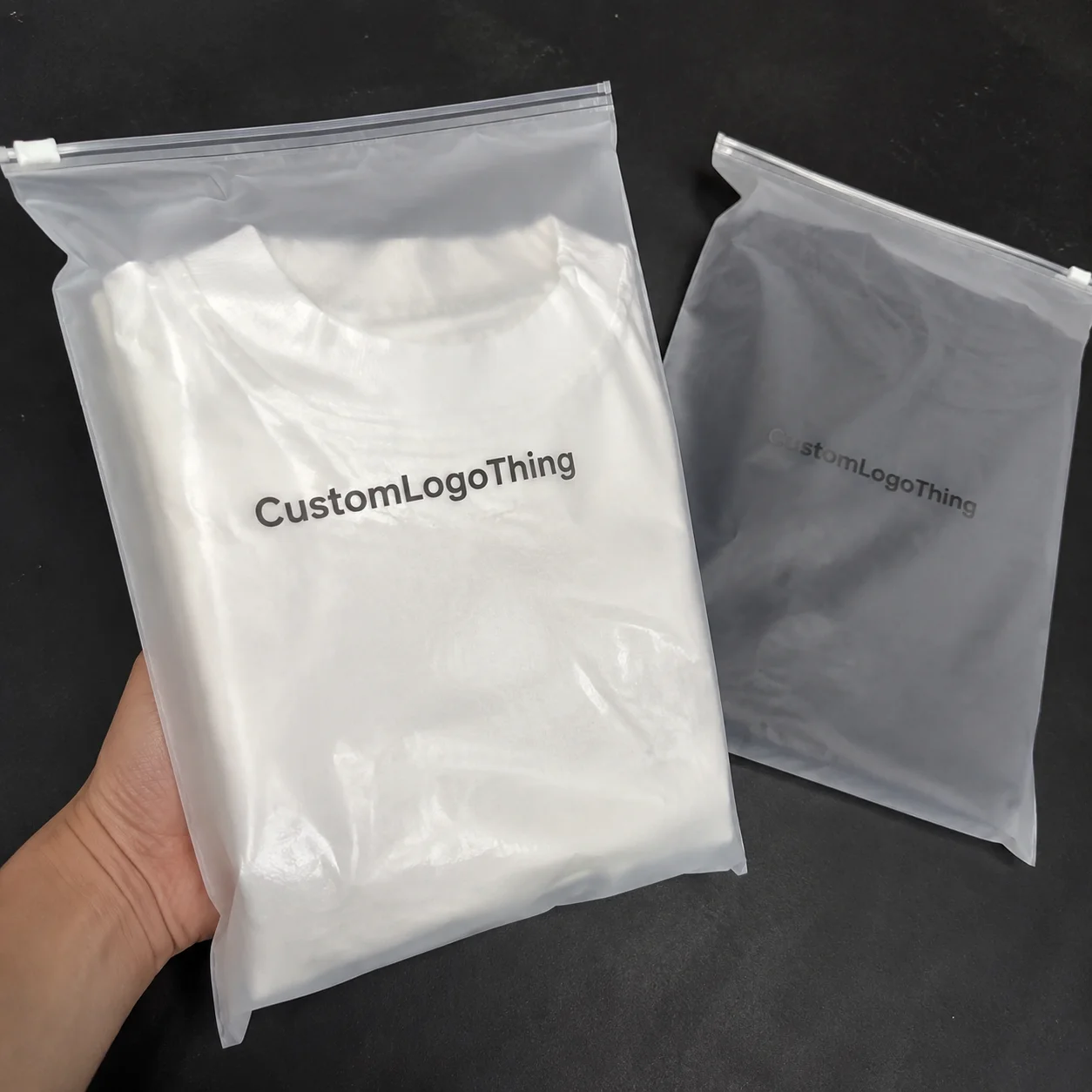
Custom Poly Mailers are polyethylene shipping bags used mainly for apparel, soft goods, subscription kits, promotional items, and other non-fragile products. They are lightweight, moisture resistant, and quick to pack. Used well, they can cut shipping weight compared with corrugated cartons and still support clean package branding without much added bulk.
The bag still has real work to do once it enters the parcel network. It needs enough puncture resistance, tear strength, opacity, seal strength, moisture protection, and print durability to survive conveyor transfers, sorting chutes, trailer loading, and doorstep exposure. Soft goods usually ship well in poly. Sharp-edged hardware, rigid boxed items with exposed corners, or fragile merchandise usually call for padded mailers or corrugated packaging instead.
The main performance checkpoints are straightforward:
- Puncture resistance: useful for folded garments with hang tags, boxed cosmetics, or items with corners
- Tear strength: keeps a small nick from turning into a full side split during handling
- Opacity: helps protect contents and improves presentation, especially with black interior layers
- Seal integrity: permanent adhesive needs to hold through vibration and routine handling
- Moisture resistance: polyethylene performs well in rain or damp last-mile conditions
- Print durability: branding should resist rub-off and scuffing
Construction matters. A simple single-layer film can work for basic applications, but many branded mailers use co-extruded film for a better balance of strength and opacity. Virgin resin often gives more consistent mechanical properties and print appearance, while recycled content can support sustainability goals if the structure is designed carefully. For environmental guidance on materials and waste reduction, the EPA’s sustainable materials resources offer a useful reference point.
Fulfillment method changes the right format as well. A tightly sized mailer can improve postage efficiency and reduce material use, but once the fit gets too tight, packers lose speed and side seams take on more stress. In practice, buyers should allow enough tolerance for quick insertion without leaving too much empty space. A bag that is roughly 0.5 to 1.5 inches larger than the packed product dimensions is often a reasonable starting point, though the exact allowance depends on product bulk and line speed.
Material, gauge, and print specifications that change performance
Thickness is usually discussed in mil or micron. One mil equals 0.001 inch, and 1 mil is about 25.4 microns. For many apparel and soft goods applications, Printed Poly Mailers commonly fall in the range of 2.0 to 3.15 mil. Lighter constructions may work for very small, low-risk items. Heavier gauges can help with bulkier packs or rougher parcel conditions. Still, heavier is not automatically better. If the product weighs 6 ounces and has no sharp edges, paying for extra resin that adds little protection is just wasted cost.
Surface finish affects both appearance and function. White exterior film is common because it carries graphics cleanly. Colored film can support stronger branding but may change ink behavior and opacity needs. Matte finishes often feel more premium for lifestyle brands, while gloss surfaces can make colors pop. Many buyers prefer a white outside and black inside construction for privacy, especially in direct-to-consumer product packaging.
Printing is another major cost driver. Suppliers may use flexographic or gravure processes depending on design complexity, run size, and production setup. Spot color jobs are usually more economical than full-coverage process printing. One-sided print costs less than two-sided print. Heavy ink coverage raises cost, and tight registration requirements can narrow the process options.
Before requesting a quote, gather these specification points:
- Finished width and height, plus flap length
- Film color and inside layer preference
- Gauge target, such as 2.5 mil or 3.0 mil
- Artwork file format, ideally vector AI or print-ready PDF
- Barcode or variable content needs
- Ship-to destination for freight estimating
- Required compliance text, such as suffocation warnings where applicable
Optional features can push cost and MOQ upward, though they can also improve the customer experience. Double adhesive strips support returns. Tear strips help with cleaner opening. Recycled-content requirements may matter for brand policy. Warning text and labeling may be compliance driven. If the broader packaging mix includes retail packaging or custom printed boxes, it helps to align the artwork system so colors and logos stay consistent across formats.
A good supplier should explain specification tolerances clearly. Film gauge, dimensions, color match expectations, and overrun or underrun allowances should be documented in writing rather than left implied.
Custom poly mailer MOQ rates, pricing, and quote variables
Custom poly mailer MOQ rates are usually driven by manufacturing efficiency rather than arbitrary policy. The minimum often reflects film width setup, print preparation, changeover time, and the normal waste allowance needed to reach stable production. If a bag size is unusual, if print coverage is heavy, or if the design needs multiple colors with tighter registration, the effective MOQ can rise.
Buyers should ask suppliers to separate the quote into clear cost buckets. That makes comparison easier and shows where the price is really coming from.
| Quote Variable | What It Affects | Typical Buyer Impact |
|---|---|---|
| Film weight and gauge | Raw material consumption | Raises or lowers base unit cost |
| Print setup or plates | Prepress and press preparation | Adds fixed cost, matters more on smaller runs |
| Quantity breaks | Run efficiency | Lower unit cost at higher volumes, but higher cash outlay |
| Carton pack-out | Handling and storage | Changes warehouse efficiency and pallet count |
| Freight method | Transit time and landed cost | Can erase a cheap ex-works price |
| Overrun/underrun policy | Final delivered quantity | Affects inventory planning and invoice accuracy |
A practical example helps. A plain white 10 x 13 inch mailer with one-color exterior print at 5,000 pieces might land somewhere around $0.18 to $0.28 per unit, depending on gauge, print coverage, and freight assumptions. At 25,000 pieces, that same structure might drop into a range such as $0.11 to $0.19 per unit. That looks better only if the inventory will actually turn before the art changes or storage costs start piling up.
That is why comparing custom poly mailer moq rates only by lowest unit price creates risk. A larger order can reduce the visible unit cost while increasing total exposure through warehousing, tied-up cash, and obsolete stock. Fast-moving evergreen SKUs gain the most from bigger quantity breaks. Seasonal launches, influencer campaigns, and evolving packaging design usually do not.
Use an apples-to-apples framework for every quote:
- Exact finished size and dimensional tolerance
- Gauge and material construction
- Seal style and adhesive specification
- Print sides, colors, and coverage area
- Pieces per carton and carton dimensions
- Lead time basis, starting from proof approval or PO date
- Freight inclusion, ship method, and destination
- Overrun policy and invoice treatment
Request at least three quantity tiers, such as 5,000, 10,000, and 25,000. That gives a clearer picture of where the MOQ starts to make sense. It also helps reveal whether a simpler specification, maybe fewer colors or a more standard size, could bring the minimum down without hurting performance.
Buyer rule: Ask for landed cost per usable unit, not just quoted cost per produced unit.
Production process and lead time from artwork to delivery
Custom mailers move through a sequence that looks simple on paper but is easy to delay in practice. The normal path is quote review, size confirmation, artwork approval, prepress, material allocation, printing, bag conversion, sealing, packing, and shipment scheduling. If any of those inputs are unclear, the schedule slips.
Most avoidable delays happen early. Artwork arrives in low-resolution raster format instead of vector. The customer provides flat dimensions but has not accounted for product bulk. Brand teams expect a color match on film that was never defined. Proofs sit for four days waiting on internal signoff. In many orders, approval lag adds more time than manufacturing itself.
Production lead time and total project timeline are not the same thing. A supplier may quote 12 to 15 business days after final proof approval for production, but the full in-hands timeline also includes freight transit, customs if relevant, unloading, receiving, and put-away. A mailer that leaves the plant on time can still arrive too late for a launch if shipping assumptions were never pinned down.
Rush requests need a realistic read. Sometimes a simpler print method, a standard film structure, or air freight can shorten the schedule. Sometimes an expedite is a bad bet that raises cost and error risk without protecting the delivery date enough to matter. A trustworthy supplier should say that plainly.
For transit testing and package performance planning, standards from ISTA can help teams think more clearly about distribution hazards, especially if the mailed product has unusual weight, shape, or presentation requirements.
A useful scheduling checklist looks like this:
- Finalize product dimensions before requesting final pricing.
- Submit print-ready artwork with fonts outlined and colors defined.
- Approve dielines and proofs quickly through one decision owner.
- Confirm freight method before production starts.
- Set reorder points based on sales velocity, not guesswork.
- Leave buffer time for receiving and internal distribution.
Businesses that depend on repeat launches should line up reorder timing with campaign calendars. That keeps MOQ from causing stockouts on one side and dead stock on the other.
How to compare suppliers without getting trapped by vague specs
A good supplier does more than send a low quote. They ask application questions. What is the packed product weight? How fast is the fulfillment line? Is the artwork likely to change each quarter? Is opacity critical to the customer experience? What quantity actually turns in 60 to 90 days? Those questions usually signal that the supplier is trying to match the construction to the job rather than push the most expensive option.
Buyers should look for proof points they can verify:
- Material consistency across repeat orders
- Print control with realistic color expectations on poly film
- Dimensional tolerance documented in writing
- Seal strength suited to the packed product
- Fast communication during proofing and revisions
- Clear reorder support with archived specs and artwork
Service details matter more than many buyers expect. Ask how proofs are handled, whether revisions are limited, how master cartons are labeled, and what overrun range may apply. Review how the supplier responds if delivered bags do not match the approved specification.
Red flags are usually easy to spot. Quotes with no gauge listed. No mention of print limitations. Loose wording around MOQ. Promises of unusually fast turnaround without any discussion of art approval or freight. Those are warning signs, not selling points.
From a practical manufacturing standpoint, the strongest partner is the one who quotes accurately, documents specifications clearly, and helps remove unnecessary cost. Sometimes that means recommending a standard size, reducing print coverage, or choosing a more balanced film construction. Buyers looking for broader ordering guidance can also review the company FAQ for common specification and purchasing questions.
Next steps to request the right quote and avoid reorder mistakes
A fast, accurate quote starts with complete information. That means finished size, intended product, packed weight if available, target quantity tiers, film color, gauge preference, print coverage, delivery ZIP code or country, and required in-hands date. If returns matter, mention double-strip closure needs. If compliance text, recycled content, or barcode placement matters, include that as well.
Ask for a sample, stock reference, or at least a detailed photo comparison if appearance, opacity, or seal performance matters to the brand experience. A one-color logo on white film can behave very differently from full-bleed graphics on a matte colored structure, and it is far better to settle those expectations before production starts.
Choosing between a smaller trial order and a larger run is mostly a planning decision. If the SKU mix is stable, artwork is unlikely to change, and the business can turn inventory quickly, a higher quantity break may reduce unit cost enough to justify the spend. If campaigns shift often or storage is tight, paying a little more per piece may be the smarter move.
Use a simple decision screen:
- Sales velocity: how many bags will actually move in 30, 60, and 90 days?
- Storage cost: do you have room for extra cartons and pallets?
- Artwork stability: will branding or legal text change soon?
- Cash flow: is the lower unit price worth the larger upfront spend?
- Operational fit: does the size work efficiently on the pack line?
The next move is practical. Gather the shipping specifications, narrow the quantity breaks, and request a side-by-side quotation that includes freight, setup, carton pack-out, and lead time assumptions. That is the right way to judge custom poly mailer moq rates: against the actual packaging requirement, the real reorder pattern, and the full landed cost rather than the headline price alone.
FAQ
What affects custom poly mailer minimum order quantities the most?
MOQ is usually driven by bag size, film setup efficiency, print process requirements, and acceptable production waste. Custom colors, full-coverage printing, or specialty features such as return strips can raise the practical minimum. If the starting quantity feels too high, ask for alternate tiers and simpler construction options that still meet the shipping need.
How can I compare custom poly mailer quote rates fairly?
Match the specifications first: size, thickness, print coverage, seal type, carton count, and freight terms. Then separate unit price from tooling, setup, and shipping charges. Review overrun policy and lead time assumptions before choosing the lowest quote, because similar piece pricing can hide very different total costs.
Does a higher MOQ always mean a better unit cost on custom poly mailers?
Unit pricing often improves at larger quantities, but that does not always create better economics. Storage, cash tied up in inventory, and artwork obsolescence can erase the savings. Larger runs make the most sense when branding is stable and reorder frequency is predictable.
What lead time should I expect for custom printed poly mailers?
Total timing depends on artwork approval, material availability, print method, production load, and shipping distance. A common production window may be around 12 to 15 business days after proof approval, but freight and receiving time must be added. Proof delays often create the biggest schedule slip.
Which specs should I send to get accurate custom poly mailer pricing fast?
Provide finished dimensions, product type, desired quantity tiers, film color, gauge target, artwork files, ship-to location, and in-hands date. Mention return-strip needs, recycled-content targets, warning text, or barcode requirements up front. Clear specifications reduce requoting and make MOQ and price guidance much more reliable.