Custom 2 inch stickers are a practical size for box seals, jar lids, pouches, bottle caps, mailers, and small retail packs. They give enough room for a logo, short product name, scent or flavor marker, QR code, or variant ID without taking over the package.
For buyers, the main advantage is flexibility. A single carton, pouch, or jar can serve multiple SKUs while the sticker changes the front-facing message. That can reduce printed packaging versions, lower inventory risk, and make short runs easier to manage across Custom Packaging Products.
Why Custom 2-Inch Stickers Punch Above Their Size
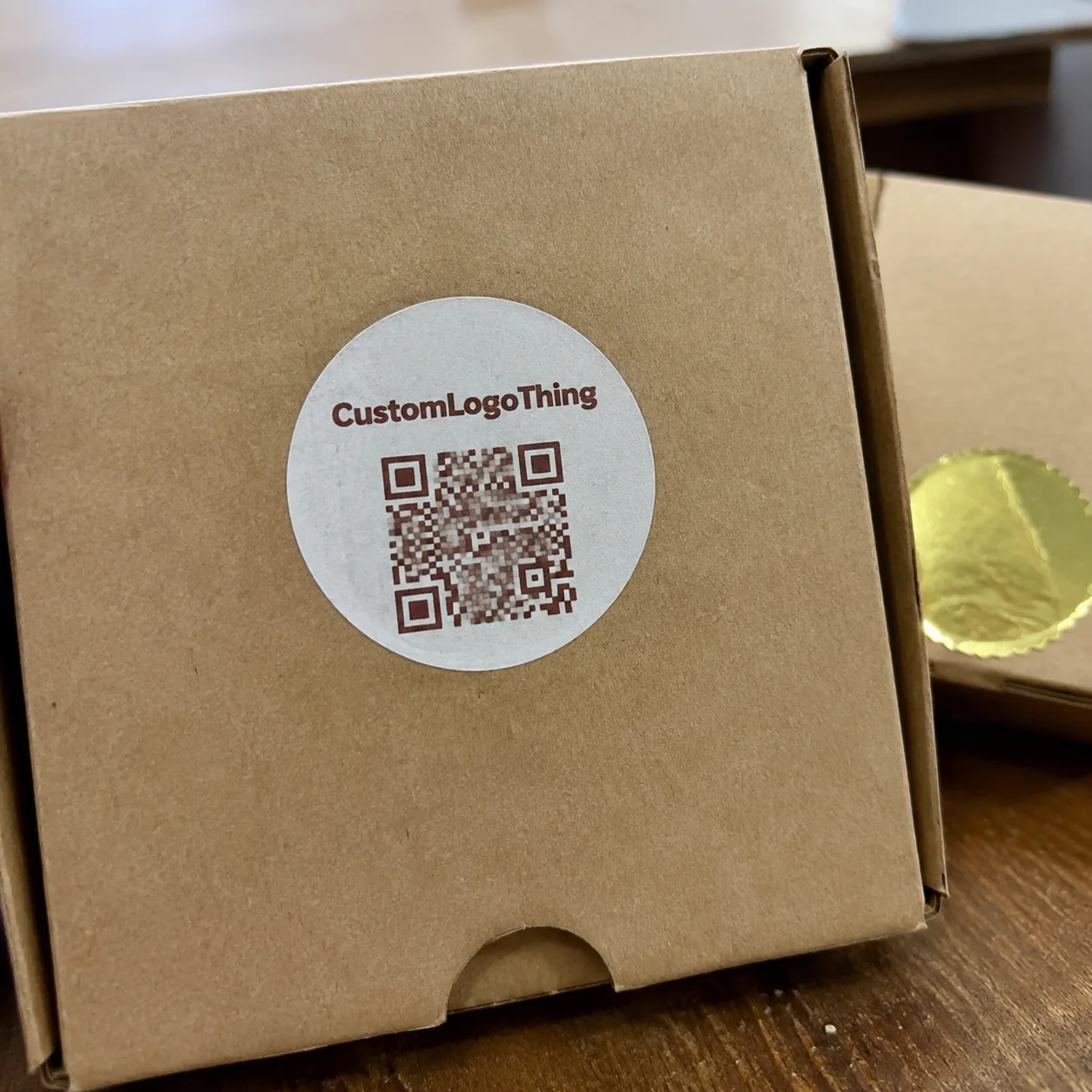
This size solves specific packaging problems well. A 2-inch round sticker can act as both logo and closure seal on a rigid box. On a pouch, it can mark a roast, shade, strain, or seasonal version while the base package stays unchanged. On a jar lid, it can help with branding and faster SKU identification.
In production, “2 inches” usually means the diameter for round stickers or the longest side for square, oval, or die-cut shapes. A square may be 2 by 2 inches, while a custom contour shape may be 2 inches at its widest point.
The main limitation is space. This format is not ideal for long instructions, legal copy, ingredient panels, or detailed artwork with thin lines. Text below about 6 pt becomes risky, especially on matte or uncoated stocks. QR codes can work, but only if the code stays large enough to scan easily and has proper quiet space around it.
Quick rule: if the design needs more than one focal point, 2 inches is usually too small.
The strongest small-sticker designs usually do one job well: seal, identify, brand, or call out a variant.
How Custom 2-Inch Stickers Are Produced
Most orders start with artwork review. Printers check final size, bleed, safe area, cutline, resolution, and color mode. For small stickers, vector artwork in AI, EPS, or print-ready PDF is usually preferred because sharp edges matter more at this scale.
Most jobs print in CMYK, but some suppliers also offer white ink, metallic effects, clear-film printing, or spot-color matching. If brand color is critical, ask whether the color will be digitally simulated or printed as a dedicated spot color.
Print method depends mainly on quantity and application:
- Digital printing: best for short runs, multiple versions, and lower setup cost.
- Roll-based production: more efficient for higher volumes and repetitive application.
Format affects how the stickers are used:
- Die-cut: cut through to final shape, often used for handouts or premium presentation.
- Kiss-cut: cut through the face stock only, leaving the liner intact for easier peeling.
- Sheeted: useful for office packing stations, events, and low-volume hand application.
- Roll format: best for dispensers, bench application, and larger runs.
Stock, laminate, and adhesive should be chosen before production begins, not treated as decoration later. A gloss-laminated BOPP sticker behaves very differently from an uncoated paper sticker with basic permanent adhesive.
If you are comparing options beyond stickers, review Custom Labels & Tags and match the format to the actual package use, not just the artwork style.
Material, Finish, and Adhesive Choices That Matter
Material choice has the biggest effect on durability.
Paper stocks cost less and work well for dry, indoor uses such as folded cartons, gift boxes, tissue seals, inserts, and short-life promotional packaging. They are less suitable for moisture, friction, oils, or heavy handling.
Film stocks such as BOPP, polypropylene, or vinyl handle tougher environments better. White and clear BOPP are common for jars, bottles, cosmetics, bath products, beverages, and chilled items where condensation or abrasion may be an issue.
Finish changes both appearance and function:
- Gloss laminate: brighter color, more shelf pop.
- Matte laminate: less glare, often better readability.
- Soft-touch: premium feel, but higher cost and not always ideal for rough handling.
Adhesive matters as much as the face stock. Permanent adhesive is standard for most packaging, but performance varies by surface. Glass is usually forgiving. Smooth PET and HDPE often work well too. Textured paperboard, corrugated stock, powder-coated metal, and low-surface-energy plastics are more likely to need testing. Removable adhesive is better for temporary use but can release too early on rough or curved surfaces.
Special cases buyers should flag early
- Food packaging: confirm suitability for indirect food-contact use and whether the sticker touches only the outer package.
- Refrigerated items: application temperature matters; cold, damp surfaces can reduce bond strength.
- Curved containers: stiff materials may wrinkle or lift on tight curves.
- Outdoor use: film is usually a safer choice than paper.
For sustainability goals, ask about FSC-certified paper and review the full construction, including laminate, adhesive, and liner waste. Certification details are available at fsc.org.
Cost, Pricing, and MOQ Basics
Sticker pricing usually comes down to six factors: quantity, material, size, shape, finish, and format. Shipping, proof changes, specialty adhesives, and rush handling can also affect the final quote.
Unit cost drops as quantity rises because setup, press time, and finishing are spread across more pieces. Short runs usually have the highest per-piece cost.
| Order Size | Material / Format | Typical Unit Range | Notes |
|---|---|---|---|
| 250-500 pieces | Paper, sheeted | $0.18-$0.40 each | Useful for tests, events, and short promotional runs |
| 1,000-2,500 pieces | Paper or BOPP, sheet or roll | $0.07-$0.18 each | A common range for small packaging programs |
| 5,000-10,000 pieces | BOPP or vinyl, roll format | $0.03-$0.09 each | Better suited to repeat SKUs and ongoing production use |
These are benchmark ranges, not fixed prices. White ink, specialty films, unusual die shapes, heavy laminate, and premium finishes can raise cost. Freight can also become a noticeable part of landed cost, especially on rush orders.
MOQ is mostly about production efficiency. Some digital suppliers can print very small runs, but many set minimums at 100, 250, or 500 pieces because prepress, cutting, counting, and packing still take labor.
When comparing quotes, make sure the specification list matches:
- Finished size and shape
- Face stock and laminate
- Sheet, roll, or singles format
- Core size and unwind direction if used with an applicator
- Proofing included or extra
- Shipping method and delivery estimate
- Reprint policy if the delivered job does not match the approved proof
Unwind direction is often overlooked. For machine or dispenser use, the wrong roll orientation can slow application or stop a line.
If the sticker is part of a broader update, compare it alongside Custom Packaging Products so the total packaging cost is measured as a system, not a single line item.
What Is the Best Material for Custom 2-Inch Stickers?
The best material depends on application.
For dry cartons, mailer seals, event handouts, and short-term promotional use, paper is often the most economical choice. It prints well and can suit brands that want a softer or more tactile finish.
For moisture, oils, refrigeration, and repeated handling, film is usually the better option. White BOPP and polypropylene are common for jars, bottles, bath products, and chilled containers. Clear film works when the package itself is part of the presentation, but artwork must be planned carefully so text remains readable.
If the sticker is mostly decorative, matte or gloss paper may be enough. If it functions more like a product label, film with laminate usually holds up better. For curved surfaces, a thinner and more flexible construction can reduce edge lift.
The safest way to choose is to test samples on the real package, then check performance after handling, transit, refrigeration, or shelf time.
Process and Timeline: From Artwork to Delivery
A standard order usually moves through five stages: artwork prep, proofing, printing, finishing, and shipping. Many jobs land in the 7 to 15 business day range after proof approval. Straightforward digital runs may be faster; specialty materials or extra finishing may take longer.
- Artwork prep: file review, cutline confirmation, bleed check, and prepress cleanup.
- Proof approval: PDF proof, and sometimes a hard-copy sample for color-sensitive work.
- Production: printing on the selected stock.
- Finishing: laminating, die-cutting, sheeting, slitting, or rewinding.
- Quality check and shipping: count verification, visual inspection, packing, and dispatch.
Most delays happen before printing starts. Low-resolution art, missing fonts, absent bleed, inconsistent cutlines, and last-minute text changes can add days.
What speeds up the process
- Set final dimensions before requesting a quote
- State quantity clearly
- Choose finish at the start
- Describe the application surface: glass, PET, corrugated, metal, chilled plastic, and so on
- Send vector artwork with bleed and a separate cutline layer
If transit protection matters, especially for sheeted jobs or finished rolls, broader guidance from ISTA can help frame shipping expectations.
Common Setup Mistakes That Shrink Quality
Small stickers are less forgiving than larger labels. A logo that looks fine on screen may lose clarity when reduced to a 2-inch circle. Thin serif fonts, script type, dense crests, and low-contrast color palettes are common problem areas.
Raster art should generally be at least 300 dpi at final size. Web graphics and social-media images often print poorly. Vector files are usually safer and align more cleanly to cutlines.
Bleed and safe zone also matter. Most sticker jobs need about 0.0625 inch to 0.125 inch bleed beyond the cutline, plus an inner safe area to keep text and key graphics away from the edge. These margins help the design stay balanced even with slight die-cut movement.
Color expectations should be based on print, not screen. RGB previews are backlit; printed stickers are reflective CMYK. Material also changes the result. Matte paper and kraft-toned stocks mute color more than glossy white film.
Adhesive mistakes often appear only after use. A poor match on cold jars, textured cartons, or high-touch surfaces can cause edge lift or early release. If the sticker has any sealing role, test it on the actual package before production.
Most common regret: trying to fit too much information into a small circle.
Expert Tips for Better Results With Small Stickers
Start with one priority: logo, flavor name, scent, closure seal, or a simple callout. Small stickers work best when they have one visual anchor and enough open space around it.
Test finish options before committing to a larger order. Matte often feels more refined and reduces glare. Gloss tends to create stronger shelf impact. Soft-touch only makes sense when budget and brand positioning support it.
Choose delivery format based on the packing environment:
- Sheets: good for office teams, events, and low-volume hand application.
- Rolls: faster for repetitive labeling and dispenser use.
- Singles: useful for inserts and giveaways.
It is also smart to order a small buffer. An extra 5% to 10% can cover setup waste, damaged pieces, and the gap before a reorder arrives.
A quick low-cost check is to print the design at actual size on a desktop printer, cut it out, and place it on the real package. That often reveals readability and proportion issues immediately.
Next Steps for Ordering the Right 2-Inch Sticker
Ordering gets easier once the job is narrowed to four decisions: surface, shape, quantity, and finish. First identify where the sticker will be used, how long it needs to last, and whether its role is decorative, informational, or functional.
Then prepare the artwork properly: final size, bleed, readable text, and a clean cutline. If the design includes a QR code, test it at printed size. If it needs to match a larger packaging system, review it alongside the carton, pouch, bottle, or other package components.
It is often worth quoting two quantities: a short run and a larger run based on realistic usage over the next few months. The unit-cost gap can be large enough to change the buying decision.
Before proof approval, confirm:
- Finished size and shape
- Material and laminate
- Adhesive type
- Color expectations
- Sheet or roll format
- Orientation and unwind if needed
- Ship date and delivery method
Handled well, custom 2-inch stickers are one of the simplest ways to add branding, variant control, and flexibility without redesigning the full package.
FAQ
What can custom 2 inch stickers be used for?
Custom 2 inch stickers work well for product labels, closure seals, event handouts, promotional inserts, brand giveaways, and small packaging accents. The size is especially useful when you need a visible brand element without covering too much of the package.
Are custom 2 inch stickers too small for logos and text?
Simple logos, short names, icons, and brief callouts usually fit well on custom 2 inch stickers. Dense text, thin typefaces, and detailed illustrations often need to be simplified to stay readable at 2 inches.
What affects the price of custom 2 inch stickers the most?
Quantity, material, finish, shape complexity, and delivery format have the biggest impact on the price of custom 2 inch stickers. Shipping, proof changes, specialty adhesives, and rush scheduling can raise the final cost as well.
How long does it take to produce custom 2 inch stickers?
Timing depends on proof approval, stock selection, quantity, and finishing method. Many standard orders for custom 2 inch stickers fall into a 7 to 15 business day range after proof signoff, though simpler digital jobs may move faster.
What file format is best for custom 2 inch stickers?
Vector files are usually the best choice for custom 2 inch stickers because they keep edges sharp at small sizes. AI and vector PDF files are commonly preferred. High-resolution PDF or PNG files may also work if they are built at final size and include bleed and a clear cutline.