Buying Custom Boat Number stickers sounds simple until you start dealing with the parts that actually matter: the hull shape, the surface prep, the registration rules, and whether the decal has any chance of surviving a season in sun and salt. The right set is not the prettiest mockup on screen. It is the one that stays readable, stays attached, and still looks clean after a few washdowns.
Boat numbers do a job that is partly regulatory and partly practical. They identify the vessel, help keep it compliant, and make the boat look finished instead of half-prepped. A decent decal system also avoids the crooked, uneven look that hand-painted numbers tend to leave behind, especially once a boat has been repainted or detailed a few times.
That said, not every boat needs the same product. A smooth fiberglass hull and a shaded inland lake are a very different use case from a saltwater boat that sits uncovered at the dock. Material choice, adhesive strength, and finish all change once the environment gets harsher. Those are the details that separate a short-lived sticker from one that holds up.
What Custom Boat Number Stickers Actually Do
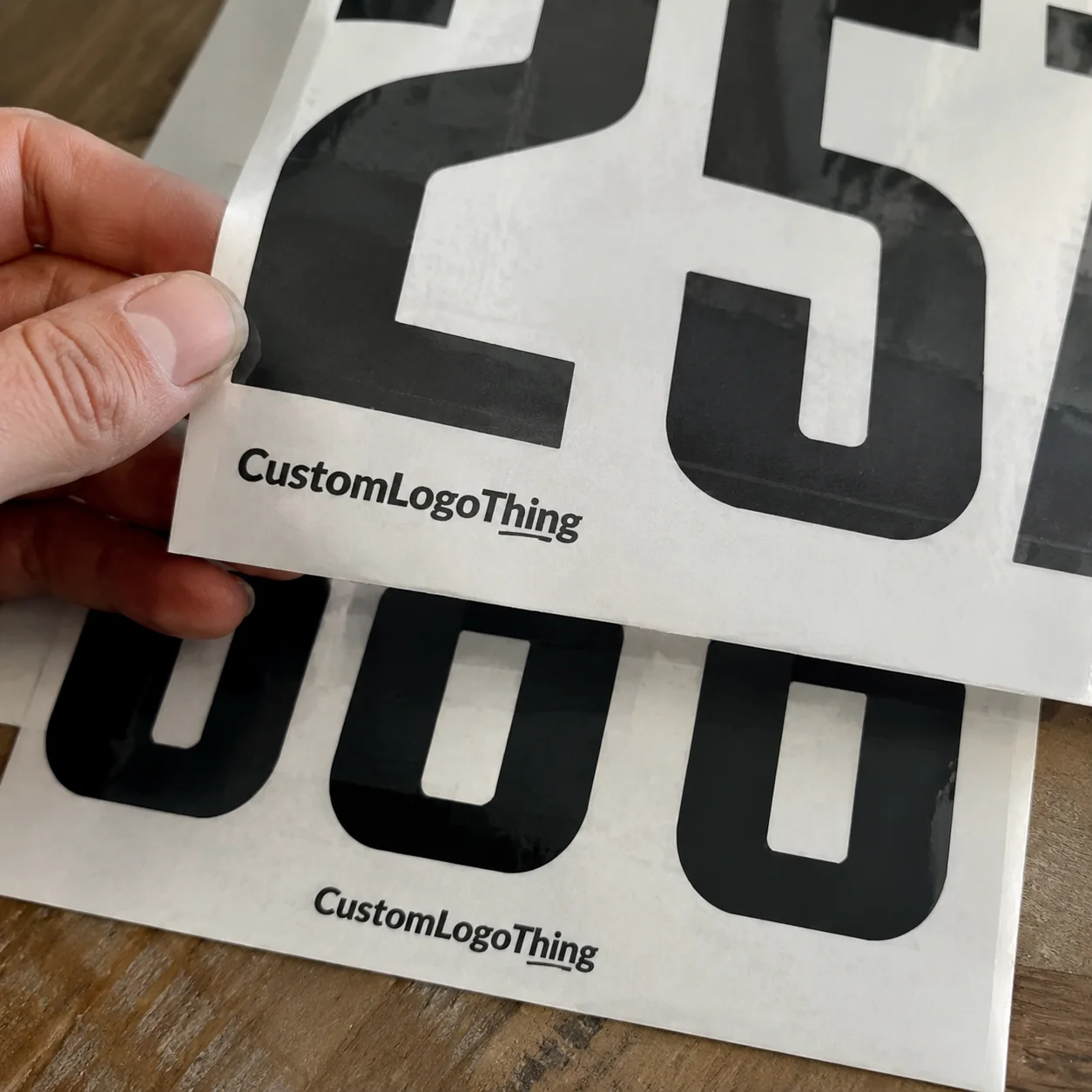
Custom boat number stickers are adhesive vinyl numbers or decals made to display registration information on a vessel. They replace paint, stencils, marker-written IDs, and other temporary fixes with a cleaner, more consistent result. Most jobs are done in cut vinyl, printed vinyl, or a combination of the two depending on the visual requirement and the durability target.
The value is not just cosmetic. Boat numbers need to be readable from a distance, and in many areas they also need to meet specific format rules. That means height, spacing, contrast, and placement matter just as much as the number itself. A beautiful decal that fails visibility requirements is still the wrong decal.
From a buyer’s perspective, the real decision is how much abuse the sticker needs to survive. Fiberglass, aluminum, painted surfaces, and textured transoms all behave differently. A decal that bonds well to smooth gelcoat can struggle on waxed surfaces or on panels with a lot of contour. On an easy surface, standard marine vinyl is often enough. On a curved, exposed surface, cast vinyl with UV protection or lamination is usually the safer choice.
There is also a practical difference between decals and paint. Paint can be more permanent, but decals are faster to install, cleaner to remove, and easier to replace after a registration update or minor damage. That is why most private owners, marinas, and small fleets lean toward decals unless they have a specific requirement for a painted marking.
The best-looking boat number is usually not the most elaborate one. It is the one that stays legible after sunlight, spray, and cleaning chemicals have done their work.
If you are managing branding across a marine business, it helps to keep the decal style aligned with the rest of the visual system. The same attention to contrast and durability that applies to boat numbers also applies to Custom Labels & Tags for parts and inventory, and to broader Custom Packaging Products if you are preparing service kits, retail bundles, or resale packaging that needs a professional finish.
How the Sticker Process and Turnaround Work
The production flow for custom boat number stickers is straightforward, but the order moves faster when the buyer provides complete information up front. A typical job starts with the registration number, dimensions, color, quantity, and surface type. Then the shop prepares a proof, checks layout and spacing, and moves into cutting or printing after approval.
Most delays happen before production starts. A clear photo, the exact number format, the target size, and a note about whether the surface is flat or curved solve more problems than a long email chain ever will. If the decal needs to match a hull graphic or a specific boat color, include a straight-on photo with decent lighting. That is usually enough to judge contrast and spacing without guessing.
A normal production sequence looks like this:
- Submit the registration number and size.
- Choose material, finish, and color.
- Review a digital proof.
- Approve production.
- Cut, print, laminate if needed, and pack.
- Ship the order.
Lead time usually splits into two parts: proof time and production time. For a simple order, many shops can move from approval to shipment in about 3 to 7 business days. More specialized runs, such as reflective vinyl, custom color matching, or laminated sets, often need 7 to 15 business days. Rush work can move faster, but only if the artwork is approved immediately and the material is in stock.
Shipping should not be confused with production speed. A shop may finish the decals quickly and still miss the buyer’s deadline because the package has to travel a long distance. That is why “fast turnaround” is really a chain of small things: material availability, proof approval, finishing time, packing, and transit.
For fleet orders or marina programs, organization matters even more. Each revision adds time, and each unclear note creates another round of proofing. The cleanest orders are the ones that arrive with measurements, contrast requirements, and placement notes already settled.
Cost, Pricing, and Minimum Order Factors
Pricing for custom boat number stickers depends on material, finish, size, quantity, and whether the job requires printing or simple cut vinyl. Basic cut vinyl usually costs the least. Reflective material and laminated outdoor vinyl cost more. Precision cutting and custom proofs also raise the price a little because they take more setup and inspection time.
For a single set, prices often land around $12 to $30 depending on the size and finish. Once the order moves into 25 to 50 sets, the per-set price can drop into the $6 to $15 range. Larger runs for marinas, rental fleets, or resellers may come in lower, especially if the design is repetitive and does not require special color matching.
| Tier | Typical Material | Approx. Price per Set | Best For | Typical Lifespan |
|---|---|---|---|---|
| Budget | Basic cut vinyl | $12-$20 | Short-term use, low sun exposure | 1-3 seasons |
| Mid-range | Outdoor-rated vinyl | $18-$35 | Most private boats | 3-5 seasons |
| Premium | Cast vinyl with UV laminate | $28-$60 | Heavy sun, saltwater, frequent washdowns | 5+ seasons |
Minimum order quantity changes the math more than many buyers expect. A shop may sell a single set, but the unit cost will reflect setup time, proofing, and packaging. Once the order is spread across more pieces, the price per set becomes much more efficient. That is useful for fleet managers, marina operators, and resellers who need consistent sizing and repeatable production.
There are also hidden costs to watch. Extra revisions, rush production, special packaging, and replacement sets can all add expense. A spare set is worth considering from the start, especially for boats that are transported often or stored outdoors. It is not glamorous, but it is usually cheaper than placing a second rush order after one decal gets damaged.
Choosing Materials, Size, and Finish That Last
Material choice drives lifespan more than any other decision. Standard calendared vinyl is fine for short to medium-term use on smooth, protected surfaces. Cast vinyl performs better around curves and tends to hold up longer outdoors. If the boat spends time in strong sun, gets washed often, or lives in saltwater, premium outdoor vinyl with UV resistance is usually the more practical option.
Lamination matters too. A laminated decal has a protective film layer that helps guard against abrasion, cleaners, salt spray, and general weathering. It also helps slow fade. If the boat is stored indoors and cleaned lightly, lamination may be more of a comfort than a necessity. If it sits uncovered at a dock, the extra layer is often worth the cost.
Size is both a visual choice and a compliance issue. Many jurisdictions require specific letter or number heights, and those rules should come first. After that, the practical question is readability. A number that looks balanced in a proof may disappear against dark paint or strong reflections once it is applied. Contrast is usually more important than decoration.
Finish changes how the sticker reads in daylight. Gloss gives brighter visibility and blends well with most hulls. Matte reduces glare and can look cleaner on certain boats. Reflective vinyl improves low-light visibility and can be useful for safety and inspection, although it usually costs more and can look more noticeable than some buyers expect.
Adhesive strength is another tradeoff. Mild adhesive is easier to remove later and may be enough for a short-term application. Stronger adhesive holds better in exposed conditions, but removal can be more work. There is no version that is both permanent in rough weather and effortless to remove years later. That is just the nature of pressure-sensitive vinyl.
For buyers who think in terms of branding, the same principle applies here as it does in package design: contrast, spacing, and finish should support readability first. Decorative details are secondary. A boat number is not a poster. It should read cleanly at a glance and keep doing that after the boat has been cleaned, docked, and moved around a few times.
Material decisions are also shaped by what the sticker has to survive after shipping and handling. Well-made decals are usually packed flat, backed properly, and protected from curling or abrasion. That is one reason some buyers look at shipping durability standards such as the ISTA framework when they care about transit damage, and at broader material handling guidance from the EPA when they want a better understanding of coatings and disposal considerations.
Step-by-Step Ordering and Installation Guide
Start with the rules, not the artwork. Confirm the registration format, required placement, and any size limits before you place the order. Then measure the available area, note whether the surface is flat or curved, and gather a clear photo so the proof reflects the real boat instead of an idealized version.
Surface prep decides more outcomes than most buyers realize. The application area should be washed, dried, and cleared of wax, salt, oil, and polish residue. If the boat was detailed recently, check which products were used. Some sealants leave a surface that looks clean but behaves like a release layer.
Vinyl also installs more predictably in moderate temperatures, roughly between 60°F and 80°F. Cold surfaces can weaken initial adhesion. Hot surfaces can make alignment frustrating because the adhesive starts grabbing before the decal is in the right place.
A practical install sequence looks like this:
- Wash and dry the application area.
- Wipe with an alcohol-based cleaner if the surface allows it.
- Mark the placement lightly with masking tape.
- Position the decal and step back to check alignment.
- Apply from one side to the other, pressing out air as you go.
- Remove transfer tape slowly at a low angle.
Rushing the center of a long number set often creates bubbles or small alignment errors. A firm squeegee helps, but the tool matters less than the method. Low-angle transfer tape removal reduces the chance of lifting corners. On curved sections, smaller passes usually work better than trying to lay down the entire decal at once.
For curved hulls, the proof should show scale and placement, not just artwork floating on a white page. A mockup that reflects the actual surface helps catch distortion before production starts. That is especially useful when the available space is narrow, heavily rounded, or interrupted by graphics.
After installation, let the decal settle before exposing it to water or heavy cleaning. A day of cure time is a reasonable rule of thumb. Then check the edges, especially near corners and surface transitions. If something lifts early, the problem is usually surface prep or application pressure rather than the material itself.
For buyers coordinating decals with marine retail kits or broader branded packaging, the same process discipline matters. Clean setup, accurate proofs, and careful handling are what keep the final result looking professional instead of improvised.
Common Mistakes That Make Boat Numbers Fail
The most common mistake is choosing by screen appearance alone. A decal can look crisp in a proof and still fail on the hull because the color is too close to the boat surface, the stroke weight is too thin, or the numbers are too small to read at a distance. Low contrast is a frequent problem, and it is easy to miss until the decal is already installed.
Another classic error is skipping proper surface prep. Wax, oil, and salt residue all interfere with adhesion. So does applying decals to damp gelcoat or freshly polished paint. A clean, dry surface is not a suggestion; it is the difference between a decal that settles and one that starts lifting at the edges.
Compliance mistakes are expensive because they force a reprint. Wrong spacing, incorrect placement, or the wrong number format can make an otherwise good order unusable. Some areas require the number to appear on both sides of the bow, and some have specific visibility or character requirements. If the rule is unclear, check it before approving the proof.
Proof changes also slow the order down. If the registration number changes mid-process or the buyer forgets to confirm dimensions, production stops while the layout is updated. That is avoidable time loss. Clear instructions save more than money; they keep the order from bouncing back and forth until everyone is annoyed.
Expert Tips for a Cleaner Order and Better Results
Order an extra set if the boat is exposed to weather, stored on a trailer, or moved frequently. Dock rash, transport wear, and small scratches happen. A spare set is cheaper than trying to match a faded old decal later.
Use the actual hull color, not just a swatch chart, to judge contrast. White on bright gelcoat, silver on metallic paint, and dark blue on black surfaces can all lose readability once sunlight and reflections are involved. A proof against the real boat surface is far more useful than a color chip in isolation.
Ask for scale in the proof. A design can be technically correct and still look wrong if it is too large for the side panel or too small for the transom. Placement and proportion matter as much as font choice. If the proof includes the boat outline or a photo-based mockup, that usually catches size problems before they turn into waste.
Premium lamination makes the most sense on boats that sit in full sun, get scrubbed often, or live in exposed water. If the boat spends much of its time under cover, standard outdoor vinyl may be enough. That is the kind of tradeoff worth making deliberately instead of assuming the most expensive option is always the right one.
Keep the visual system simple if you are also coordinating package branding or marine resale kits. Matching colors, consistent type, and strong contrast do more for perception than decorative clutter ever will. Good packaging design and good decal design follow the same rule: make the information easy to read, then let the finish do the rest.
Next Steps Before You Request a Quote
Before asking for pricing, gather the registration number, exact measurements, a clear photo of the application area, preferred color, and surface type. If you already know whether you want standard outdoor vinyl, reflective material, or a laminated finish, include that too. A complete brief usually means fewer revisions and a cleaner proof.
Then decide what matters most. Lowest price, fastest turnaround, and longest lifespan rarely align perfectly. A budget set makes sense for light use and short exposure. A rush order is useful when timing matters more than finish options. A premium build costs more up front, but it usually pays off on boats that live in harsh sun or saltwater.
If you are ordering for multiple boats, use a simple checklist and repeat it every time. That reduces proof changes, speeds up reorders, and keeps size and color decisions consistent across the fleet. Consistency is one of those boring details that saves the most time.
With the number confirmed, the surface measured, and the material chosen, custom boat number stickers become a straightforward purchase instead of a guessing game. The best results come from matching the decal to the boat you actually own, the conditions it actually lives in, and the rules it actually has to meet.
FAQs
How do custom boat number stickers differ from painted numbers?
Stickers install faster and are easier to replace than paint. They also give cleaner edges, more consistent spacing, and more finish choices. Paint can be more permanent, but decals are usually the better choice for most owners who want a neat result without a long project.
What size should custom boat number stickers be?
Start with local registration rules, then check visibility from a normal viewing distance. Measure the mounting area carefully and account for curve or contour. If you are unsure, slightly larger and simpler usually works better than small and ornate.
How long do boat number stickers usually last?
Lifespan depends on vinyl grade, UV exposure, water conditions, and surface prep. Premium laminated decals last much longer than basic vinyl. Poor prep shortens life quickly no matter how good the material spec looks on paper.
Can I use custom boat number stickers on a curved hull?
Yes, but the material and adhesive need enough flexibility for the curve. Smooth curves are manageable; sharper contours need more care and sometimes a different placement. A proper proof helps reduce distortion and uneven spacing.
What should I have ready before ordering custom boat number stickers?
Have the registration number, exact measurements, preferred color, and surface material ready. Know whether you need reflective, laminated, or standard vinyl. A boat photo helps confirm scale, placement, and contrast before production starts.


