What custom boat registration stickers are and why they matter
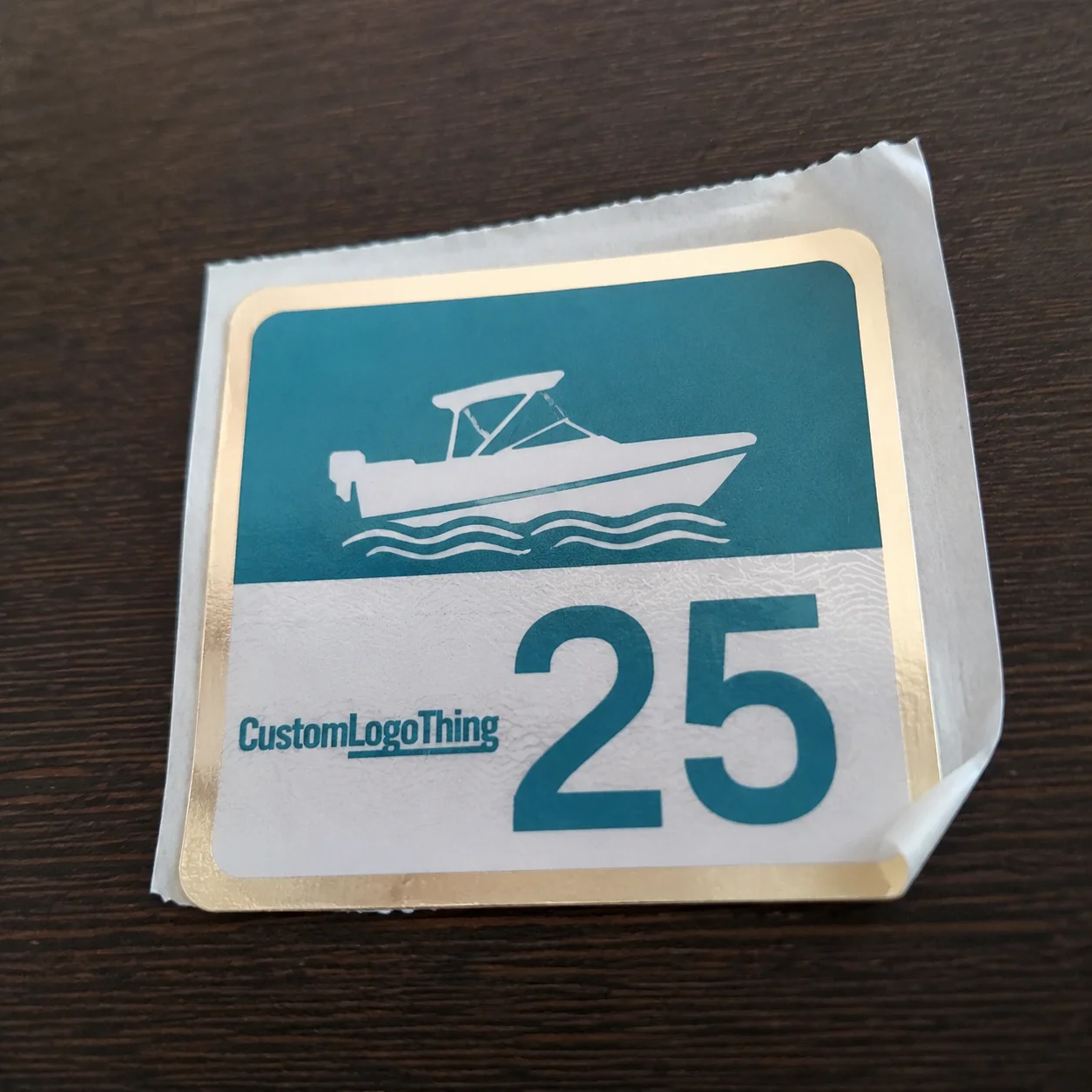
Custom Boat Registration stickers do more than identify a vessel. They have to stay readable in bright sun, salt spray, dock grime, and repeated washdowns, all while fitting the exact placement rules that govern the boat. That mix of visibility, durability, and compliance is what separates a good marine decal from a generic outdoor sticker that happens to be printed on vinyl.
A registration decal can carry numbers, letters, validation marks, or other required identifiers, depending on the local authority. The surface may be gelcoat, painted aluminum, fiberglass, or another approved marine finish, and each one behaves a little differently. A sticker that looks perfect in a proof can still fail early if the adhesive is too aggressive for the substrate or too weak for constant moisture and heat cycles.
That is why the buying decision should start with the actual boat, not the artwork file. Readability matters, but so does edge stability, adhesive chemistry, and the way the laminate or topcoat handles direct UV. The cleanest layout in the world cannot rescue a material stack that was chosen for office labels instead of marine use.
For buyers who manage broader branded materials, the same discipline shows up in packaging, labels, and vessel identification. A marina, rental operator, or marine retailer often needs its printed materials to feel consistent across the line, which is where Custom Labels & Tags and Custom Packaging Products can support a larger brand system.
Good marine decals are built around the surface, the weather, and the rules first. The design comes after those three are solved.
How production timing and proofing work
The production process for custom boat registration stickers is usually simple on paper and more exacting in practice. It begins with artwork review, where the supplier checks size, placement, character spacing, and any compliance details. From there the job moves into material selection, proofing, print, cutting, finishing, and packing. Each step sounds routine, but a small issue in any one of them can show up later as peeling edges, poor readability, or a layout that no longer fits the boat.
The cleanest orders start with specific measurements and clear reference photos. If the vessel has a curved bow, a tight mounting zone, or hardware that limits placement, that should be documented before the proof is built. The same goes for local formatting rules, such as required character height or spacing. It is much easier to adjust the layout on a proof than to remake finished stock after the fact.
Timeline depends on the complexity of the order. A straightforward run may move through production in roughly 12-15 business days after proof approval, while specialty cuts, custom numbering, or premium lamination can add time. Rush orders are possible in some cases, but they compress the queue and often raise the price. That extra cost is usually tied to production scheduling rather than the print itself.
What slows an order down
Most delays come from missing information, not from the press. If the measurements are vague, the registration text is incomplete, or the buyer is still deciding between finishes, the order pauses while those gaps are cleared. Slow proof review does the same thing. A one-day delay on approval can easily become a longer hold if the job loses its place in the production line.
| Production factor | Typical effect on timing | Buyer action that helps |
|---|---|---|
| Artwork review | Can add 1-2 business days if details are missing | Send dimensions, text, and placement photos |
| Material selection | May change print or laminate availability | Confirm marine exposure and finish preference early |
| Proof approval | Stops production until sign-off | Review spacing and compliance the same day |
| Cutting and finishing | Longer for contour shapes or specialty sizes | Keep shapes standard when possible |
Material, durability, and compliance factors to compare
The long-term performance of custom boat registration stickers starts with the material stack. Marine-grade vinyl provides the base film, a pressure-sensitive adhesive keeps the decal anchored to the hull or approved surface, UV-stable inks hold the lettering and color, and a protective laminate helps the sticker resist abrasion from cleaning, docking, and daily handling. If any layer is underspecified, the entire decal tends to fail sooner than expected.
Finish choice affects more than appearance. Gloss usually boosts contrast and gives colors a sharper look in bright light. Matte can cut glare, which is useful on boats that sit in strong sun or on water where reflected light already works against visibility. The right finish depends on the hull color, placement angle, and how far away the registration needs to be read. A shiny decal may look attractive in a proof and still be harder to read on the water than a flatter finish with better contrast.
Compliance should drive the layout before aesthetics do. If local rules require a specific height, spacing, or character style, the design has to respect those rules from the start. Thin script fonts, busy outlines, and low-contrast color pairs can make the registration harder to read at distance, even if they look polished on a monitor. For marine identification, legibility is the real design brief.
Environmental exposure is another factor buyers underestimate. Saltwater, repeated wet-dry cycles, heat, and cleaning chemicals can break down lower-grade materials quickly. A sticker meant for a season of use is a different product from one expected to hold up through years of outdoor exposure. That is why material specs matter so much: they determine whether the decal survives the work it is supposed to do.
Useful reference points for protective thinking come from organizations like the ISTA, which focus on how materials perform under real handling and transport stress. For buyers who also care about responsible sourcing across other printed items, the FSC framework can matter in related packaging and collateral decisions. The goal is the same in both cases: match the material to the conditions it will actually face.
In practical terms, that means asking a few direct questions before ordering. What kind of vinyl is being used? Is the laminate rated for extended UV exposure? Will the adhesive bond cleanly to the target surface? If the answers sound vague, the quote is probably built on assumptions rather than testing or production experience.
Custom boat registration stickers pricing and quote factors
Pricing for custom boat registration stickers usually comes down to size, quantity, material grade, finish, cutting style, and whether the artwork needs numbering or personalization. Small runs cost more per piece because setup is spread across fewer units. Larger runs bring the unit price down, but only if the specification stays consistent and the artwork does not need repeated changes.
The cheapest quote is not always the best value. A low number on paper can hide a lighter adhesive, a thinner film, no laminate, or a material that is fine for general outdoor use but weak in a marine setting. Those differences are not obvious on delivery, but they show up later in fading, corner lift, or full edge failure. Replacing stickers every season costs more than paying for a better spec once.
Setups, proof revisions, and rush handling also affect the final price. If the buyer changes dimensions after the proof is built, or if the registration text is still in flux, the job may need extra time on the front end. That is where clear measurements and a locked spec save real money. In this category, the quote is only as reliable as the information it was built from.
| Quote factor | Lower-cost choice | Longer-life choice |
|---|---|---|
| Material | Standard outdoor vinyl | Marine-grade vinyl |
| Finish | No laminate or light coating | UV-stable protective laminate |
| Quantity | Single vessel or very small run | Fleet or bulk order |
| Cut style | Basic rectangle or square | Contour cut or specialty shape |
| Support | Minimal proofing | Detailed compliance review |
Buyers comparing quotes for marine decals often make the same mistake they make in packaging: they compare the headline price without comparing the spec. That works until the first season of use. A better comparison looks at the film, adhesive, laminate, print method, and the amount of proofing included before production starts.
Step-by-step ordering checklist for a clean result
A clean order starts with measurement. Before any design is finalized, measure the placement area and confirm the required registration dimensions. If the surface is curved, textured, oxidized, or interrupted by cleats or seams, that should be noted right away because it affects both the layout and the adhesive choice. A decal that fits a flat proof may not behave the same way on a real hull.
- Measure the space and note any obstructions such as cleats, seams, or rails.
- Confirm the required registration text and any local formatting rules.
- Choose a material system built for marine exposure.
- Prepare artwork with high contrast and readable spacing.
- Request a digital proof and review every number, letter, and gap.
- Approve only after the proof matches the vessel and compliance needs.
- Inspect the shipment on arrival and store extras flat until needed.
- Apply to a clean, dry, fully prepared surface.
Surface preparation is not a minor step. Wax, salt film, and polishing residue can break the bond even on a strong adhesive. A gentle wash with mild soap and water, followed by a completely dry surface, gives the sticker a far better chance of staying put. If the hull has a specialty coating or unusual texture, a small test placement is often worth the time.
For fleets or marine retailers, keeping the typography consistent across vessel markings and printed collateral makes future reorders easier. It also reduces the chance of mismatched spacing or color choices from one boat to the next. That kind of consistency matters more than most people realize until the order grows past a few units.
Protect the proof stage and the rest of the job gets easier. Most expensive mistakes happen before the sticker ever reaches the boat.
Common mistakes that shorten sticker life
The fastest way to shorten the life of custom boat registration stickers is to spec them like indoor labels. Indoor-grade vinyl, weak adhesive, or a thin coating may look acceptable on day one, but sun and moisture expose the weakness quickly. Marine use is punishing because the decal has to handle UV, heat, wet-dry cycling, and abrasion without losing legibility or lifting at the edges.
Poor readability is another avoidable problem. Tiny characters, decorative clutter, and weak contrast can make the registration difficult to read from a dock, shoreline, or patrol distance. That is a practical issue before it becomes a compliance issue. If the design looks stylish but disappears in glare, it has missed its job.
Surface contamination causes more failures than buyers expect. Wax, oxidation, salt residue, and everyday grime all interfere with adhesion. Even a good marine adhesive needs a clean and stable surface. On painted aluminum and some specialty coatings, testing the bond first can be smart because not every finish behaves the same way under pressure-sensitive film.
Skipping local rule checks creates another kind of waste. Registration standards are not identical everywhere, and some authorities care about placement or character size more than buyers assume. If the supplier is guessing, the buyer is taking on avoidable risk. That is where reprints happen.
Maintenance and practical tips
Once installed, the sticker does not need much care, but the care it does need should be consistent. Wash with mild soap, avoid harsh solvents, and inspect the edges periodically so lifting can be caught early. If one corner starts to release, it is better to address it quickly than to let water work underneath the film.
Storing spares flat, cool, and dry helps preserve adhesive performance and keeps the liner from curling. Compression, heat, and sunlight can all affect the way the decal handles later. That matters if a replacement is needed mid-season and the extra piece has been sitting in a glove compartment or console for months.
Lettering size deserves one more look during proofing. Slightly larger text is often easier to read from a distance, as long as it stays within the legal limit. The same design principle shows up in product packaging and retail packaging: clarity wins when the message has to be understood fast. Decorations are secondary when the real task is identification.
For buyers ordering multiple vessels, standardizing font, spacing, and layout can simplify future reorders and reduce errors. That is especially useful for operators managing fleets or seasonal assets, where one clean template can be adapted instead of rebuilt each time. Good systems save time because they remove unnecessary decisions from repeat work.
There is a simple rule that holds up well here: clear measurements, clear proof, and the right material solve most of the problems before they start. Add a small overage if the stickers may need replacement later, because having a spare is better than restarting the job after a bad install or a scratched edge.
FAQ
How long do custom boat registration stickers usually last?
Life span depends on UV exposure, water conditions, and material grade, but marine-rated vinyl with a protective laminate generally lasts much longer than standard decals. Proper surface prep and correct application can extend performance significantly, especially on clean gelcoat or stable painted surfaces.
What information should I provide when ordering custom boat registration stickers?
Send the required registration text, exact dimensions, placement preferences, quantity, and any state-specific formatting rules. If the application area is curved or unusually textured, include a photo so the supplier can recommend the right cut and adhesive.
Are custom boat registration stickers waterproof and sun-resistant?
They should be when made with outdoor-rated vinyl, UV-stable inks, and a protective laminate. Look for materials specified for marine or harsh outdoor use rather than generic label stock, because that is where the difference shows up after repeated exposure.
Can I use the same design for different boats?
Yes, if the dimensions and registration details are updated for each vessel and each design still meets local rules. For fleets, it helps to standardize fonts, contrast, and layout so every boat stays consistent and easy to identify.
What is the best way to apply boat registration stickers?
Clean the area thoroughly, let it dry completely, and apply the decal slowly from one edge to the other to reduce air pockets. Avoid applying in direct heat, on wet surfaces, or over wax and contamination, because those conditions weaken the bond.