Custom Bridesmaid Boxes: How to Choose, Price, and Order
Custom bridesmaid boxes do more than hold a candle, a necklace, or a note card. They set the first impression for a proposal gift, a bridal party thank-you, or a wedding-week package that needs to arrive looking deliberate instead of thrown together. For anyone searching custom bridesmaid boxes how to choose price and order, the best starting point is not the artwork. It is the actual gift set, the delivery method, and the budget range.
The main mistake is treating the box as decoration only. Outer shell, internal fit, print method, and closure all affect how the package looks, how it ships, and how much it costs. A good mockup can still hide a poor fit. A practical spec usually does not.
For bridal gifting, the box has two jobs: present the contents well and protect them long enough to survive packing, handling, and shipping. That means the box should be designed around the contents first, then branded.
A good bridal gift box is built from the contents outward. Reversing that order usually creates wasted space, damaged corners, or a lid that does not close cleanly.
Why Custom Bridesmaid Boxes Set the Tone
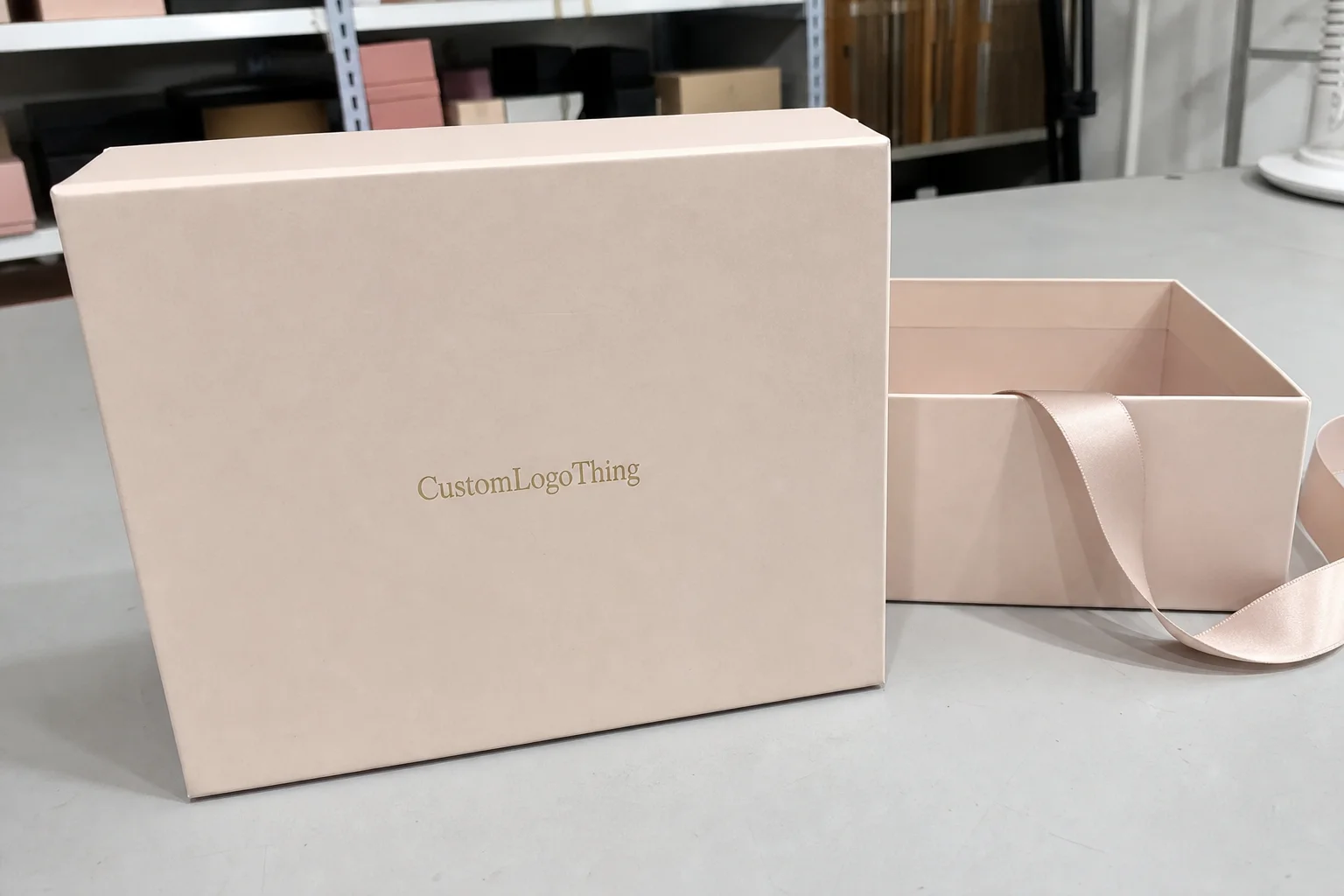
The unboxing matters because bridesmaid gifting is personal. The box is the first tactile part of the gift, so the closure, insert, and exterior finish do a lot of the emotional work before the contents are even seen.
That impression is fragile. A mismatched size, loose tissue, or a crushed lid changes the tone immediately. What was meant to feel intentional starts looking improvised. That is especially risky for proposal boxes, where the recipient notices the package before the jewelry, note, or robe inside.
Function matters just as much as presentation. Small items behave badly in shipping. Rings, candles, mini skincare sets, robes, tumbler cups, and stationery all have different weight, height, and fragility. Without a fit plan, they shift and scuff the box interior.
If the order will ship by courier, the outer pack deserves attention too. A retail-style gift box can still fail in transit if the shipper is weak, the carton is overpacked, or the contents move inside. Transit testing standards from groups such as ISTA are useful because they focus on drop, vibration, and stacking pressure.
The best bridal boxes usually look simple. Clean lines, controlled print, and a fit that does not call attention to itself. A monogram, date, or short message works when the structure supports it.
How the Box Structure, Inserts, and Finish Work
The box style shapes the experience before the artwork ever shows up. A rigid setup box feels substantial and keepsake-friendly, which suits proposal gifts and higher-value bridal sets. A folding carton is lighter and cheaper, which makes sense for hand-delivered sets or lower-cost bundles, but it will not feel as premium. Magnetic closure boxes sit between the two, while sleeve-and-tray styles create a clean reveal with decent protection.
Inserts deserve the same attention. Tissue paper is fine for light, wrapped pieces, but it is not a true fit solution. Paperboard dividers work better when several small items need to stay separated. Molded pulp is a practical choice when protection matters more than a luxe look. Foam is still used for fragile products, though many buyers now prefer paper-based inserts because they read cleaner and less wasteful.
Finish changes the tone quickly. Matte lamination feels quiet and modern. Soft-touch coating adds a velvety surface that reads as premium, but it can show scuffs if handled roughly. Foil stamping is sharp for initials, dates, or a small logo. Spot UV adds contrast without making the design busy. Uncoated board creates a softer, more natural look and works well for minimal branding or earthier wedding palettes.
There is no universal best option. A bold, glossy proposal set does not need the same finish as a muted, paper-forward thank-you package. If the brand style is already simple, too many effects can make it feel overworked. A single foil accent often does more than multiple finishes competing for attention.
Sustainability requests are common, but they need to stay practical. FSC-certified paperboard, soy-based inks, water-based coatings, and molded paper inserts can all support a lower-waste brief. Those choices still need to match the gift weight and shipping route. A recyclable box that crushes in transit creates a worse experience than a slightly stronger structure chosen correctly.
Custom Bridesmaid Boxes Cost, MOQ, and Quote Drivers
Pricing starts with structure. A simple folding carton with one-color branding is a very different job from a rigid box with foil, custom inserts, and a magnetic closure. Buyers often compare quotes that look similar on paper and miss the real reason one is higher: the build is not the same.
Minimum order quantity changes the math too. Setup cost gets spread across the run, so a small order usually costs more per box. That is normal. It is also why a low-quantity rigid box can look expensive next to a larger carton order, even if both have similar print designs.
For 2026 planning, most small and mid-size bridal packaging quotes still separate into three cost buckets: material, finishing, and assembly. Paperboard pricing has been steadier than the sharp swings many buyers saw earlier in the decade, but labor, freight, and specialty finishes still create meaningful differences between suppliers. If the brief is custom bridesmaid boxes how to choose price and order, ask each vendor to show the base box price, insert price, finish charge, and shipping estimate separately.
| Box Style | Best Use | Typical 2026 Unit Cost | Cost Notes |
|---|---|---|---|
| Folding carton | Light gifts, hand delivery, budget-conscious sets | $0.65-$2.10 | Lowest material cost, but less structure and less premium feel |
| Sleeve with tray | Moderate gift sets, clean presentation, simpler branding | $1.35-$3.10 | Good balance of appearance and spend; insert choice changes price fast |
| Rigid setup box | Proposal gifts, keepsakes, higher-end bridal packages | $3.40-$8.50 | Better presentation and durability; wrapping and labor add cost |
| Magnetic closure rigid box | Premium gifting and longer-term keepsake use | $4.75-$10.25 | More hardware and assembly; often chosen for stronger visual impact |
| Digital short-run box | Small bridal parties, variable names, fast personalization | $2.25-$6.50 | Higher unit cost, but useful when names, colors, or messages change by recipient |
Those numbers assume a moderate run, standard board, and straightforward branding. Add foil, soft-touch lamination, a custom insert, personalization, or a rush schedule, and the price moves. Shipping can move it too. If the boxes are packed in master cartons and sent to multiple addresses, freight can become a real part of the landed cost.
Quote requests need specifics. Dimensions, print sides, finish, insert style, quantity, pack method, and destination should all be included in the first message. If the request is vague, the quote will be vague too.
It also helps to separate one-time setup from recurring unit cost. Dieline cleanup, prepress, sample preparation, and tooling may be one-time charges. Production price is different. If those are broken out clearly, it becomes obvious where the money is going.
A practical buyer also asks what triggers the price jump. Usually it is one of four things: a more complex structure, a special finish, a lower quantity, or a custom insert. Sometimes it is all four.
2026 Trends and New Options
Bridal packaging in 2026 is moving toward quieter luxury instead of oversized decoration. We are seeing more muted color palettes, blind debossing, pearlized paper, tone-on-tone foil, and interior message panels that feel personal without covering every surface in print. The strongest designs usually leave breathing room around names, wedding dates, and short proposal copy.
Personalization is also more practical than it used to be. Digital print and hybrid production make it easier to add individual bridesmaid names, role labels, or small QR codes linking to a private video, itinerary, or wedding website. This works best on sleeves, belly bands, cards, or inside-lid panels, where variable content does not disrupt the main box structure.
In recent packaging reviews for bridal and event gift programs, the problems we see most often are not design taste issues. They are fit issues: tumblers too tall for the lid, candles shifting during courier movement, robes compressed into boxes that are too shallow, and foil placed too close to folded edges. A simple physical sample has caught more costly mistakes than any polished rendering.
For buyers comparing custom bridesmaid boxes how to choose price and order, the most useful 2026 upgrade is often not the most expensive finish. It is a better insert, a clearer pack-out plan, or a printed inner card that makes the gift feel complete. If budget is tight, keep the box structure simple and spend on one detail the recipient will notice immediately.
Process and Timeline From Artwork to Delivery
The process should start with the gift set, not the graphic file. Measure every item. Note the tallest point. Check whether anything is fragile, liquid, breakable, or awkwardly shaped. Once that is known, the box size and insert plan can be built around reality instead of a guess.
After the contents are defined, the supplier can create or adapt the dieline. That technical file maps the box structure and catches many issues early. If the artwork bleeds into a fold, if the logo sits too close to an edge, or if the insert blocks the lid from closing, the problem should show up here, not after production starts. For a deeper planning framework, use this custom box packaging design guide before approving artwork.
Proofing is where schedules are won or lost. A proper proof should confirm size, print placement, finishes, color notes, and assembly details. Missing logo files, unclear color values, and late text changes are common reasons orders slip.
Special finishes take longer. Foil, spot UV, wrapped rigid structures, and custom inserts all add steps. If the gift set is part of a fixed-date event, the timeline needs room for proof review, production, packing, and shipping. If a sample or physical proof is possible, it is usually worth doing before the full run.
For 2026 orders, a realistic standard timeline is often 2-4 weeks after proof approval for simpler cartons and 4-7 weeks for rigid boxes with inserts or specialty finishing. Rush options may exist, but they usually reduce sampling time or increase freight cost. For event-driven gifting, build the schedule backward from the date the boxes must be packed, not the wedding date itself.
For jobs that travel in the same production cycle as other packaging, keeping the spec family consistent can reduce friction. Reusing a finish, board type, or insert logic across related products makes procurement cleaner and usually shortens the approval loop.
Spec Choices That Affect Protection and Presentation
Size is where many projects go wrong. A box that is too large creates empty space and forces filler into the design. A box that is too tight makes assembly difficult and raises the chance of crushed corners or lids that bow. The right size fits the actual contents with enough clearance for packing.
The same is true for structure. A lightweight carton is fine for a hand-delivered set that will be opened quickly. A rigid box is better when the contents are meant to be kept, stored, or shipped farther. That distinction matters because the user experience changes with the use case.
Brand placement needs restraint. A lid-only mark can feel elegant and calm. Wraparound print gives more room for pattern or message, but it can look crowded fast. Inside-panel messaging works well for a short note if the outside is kept minimal.
There are also unglamorous checks that protect the budget. Will the finish scuff if the box is taped or packed tightly? Is there enough flat space for a label? Will the closure stay shut if the carton is stacked? Does the insert actually keep the contents in place, or does it just look good in a mockup?
Useful spec checklist:
- Final dimensions based on the real gift set
- Insert or divider plan for each item
- Closure style and opening direction
- Print sides, finish, and any foil or UV accents
- Personalization plan for names, roles, or QR-linked messages
- Shipping method and outer carton count
If those points are fixed before approval, the order usually runs cleaner. If they are still floating, the quote and the production schedule both tend to wobble.
Common Ordering Mistakes That Waste Budget
The first mistake is choosing the box before confirming the gifts. Once the box is picked too early, the insert has to be adjusted later, the dieline changes, and the proofing cycle gets longer.
Artwork mistakes are another common drag on the budget. Low-resolution logos, missing bleed, too many color changes, and unclear file formats all slow down prepress. A design that looks clean on a screen can fall apart in production if the files are not press-ready.
Quantity errors are expensive in a different way. Ordering exactly the number of recipients leaves no buffer for damage, a packing mistake, or a late addition. Ordering too few also raises the unit price because setup costs get spread across fewer boxes.
Shipping catches people too. A quote can look reasonable until the boxes are packed into master cartons and sent to the final address. If the destination, carton count, and shipping method are not confirmed in advance, the landed cost can rise fast.
Another easy way to waste money is changing the spec halfway through the job. A different finish, another insert style, or a revised print setup creates visual inconsistency and extra production work.
A final mistake is over-personalizing the wrong component. Printing every recipient name directly on a rigid lid can raise cost and complicate replacement boxes. A personalized card, belly band, sleeve, or inside label often delivers the same emotional effect with less production risk.
Next Steps for a Clean, On-Budget Order
Start with measurement. Measure the actual items and note which piece is tallest, heaviest, or most fragile. Decide whether the box needs an insert, a divider, or just wrapping support.
Then gather the basics before asking for pricing: quantity, target delivery date, box style, finish preference, personalization needs, shipping destination, and branding files. With those in hand, the quote is more useful and the comparison between vendors is cleaner.
If the timeline allows it, request a sample or proof before full production. A physical check can catch fit problems, color surprises, or closure issues that a screen proof might miss.
Custom bridesmaid boxes are easiest to get right when fit, finish, quantity, and timing are treated as one decision. Separate them, and the project gets messy. Keep them together, and the order stays controlled. For a simple brief, summarize the project as custom bridesmaid boxes how to choose price and order, then attach measurements, quantities, and delivery requirements so the supplier can quote the real job instead of guessing.
How many custom bridesmaid boxes should I order for a small wedding party?
Order for every planned recipient, then add a small buffer for damage, packing mistakes, or a late addition. For most small wedding parties, 10-15% extra is a safer planning range than ordering the exact headcount. If the minimum order quantity is low, check how the unit price changes once you add extras so the total still makes sense.
What size is best for custom bridesmaid boxes with mixed gifts?
Size the box around the tallest or most fragile item first, then use inserts or filler to stabilize the smaller pieces. If the set includes several components, ask for a dieline or sample fit check before production so the layout does not waste space.
What affects the price of custom bridesmaid boxes the most?
The biggest drivers are dimensions, board thickness, print coverage, finish level, insert style, personalization, and quantity. Rush timing, split shipping, and artwork revisions can also raise cost even when the box itself stays simple.
How long does it usually take to produce custom bridesmaid boxes?
Lead time depends on proof approval, materials, finishes, and whether inserts or specialty closures are included. In 2026, plan on 2-4 weeks after approval for simpler cartons and 4-7 weeks for rigid or magnetic boxes with inserts. If the event date is fixed, leave room for revisions, production, packing, and shipping so the boxes are not assembled under pressure.
Can custom bridesmaid boxes be used for both gifting and shipping?
Yes, but the structure has to match the use case. A box that looks polished on a table may need more protection for courier handling, so confirm closure strength, outer carton packing, and whether the insert keeps contents from shifting in transit.
What is the simplest way to brief a supplier?
Use the phrase custom bridesmaid boxes how to choose price and order as the project goal, then list the gift items, dimensions, quantity, preferred style, finish, delivery date, and shipping destination. A clear brief helps the supplier recommend a box that fits the contents and the budget.


