A custom burlap pouch works when the packaging needs a tactile, rustic, or handmade look without giving up basic function. It is commonly used for gift sets, favors, small retail items, specialty foods, sample kits, and products that benefit from a natural presentation.
The main tradeoff is that burlap is visually strong but technically limited. The weave, lining, closure, and print method determine whether the pouch feels like dependable packaging or just decorative fabric. That matters if the pouch has to protect the product, travel in transit, or sit on a shelf beside more rigid formats.
The best buying process is simple: define the product first, then spec the pouch around it. Clear dimensions, use case, and artwork usually produce a better quote and fewer revisions.
What a Custom Burlap Pouch Is and When It Makes Sense
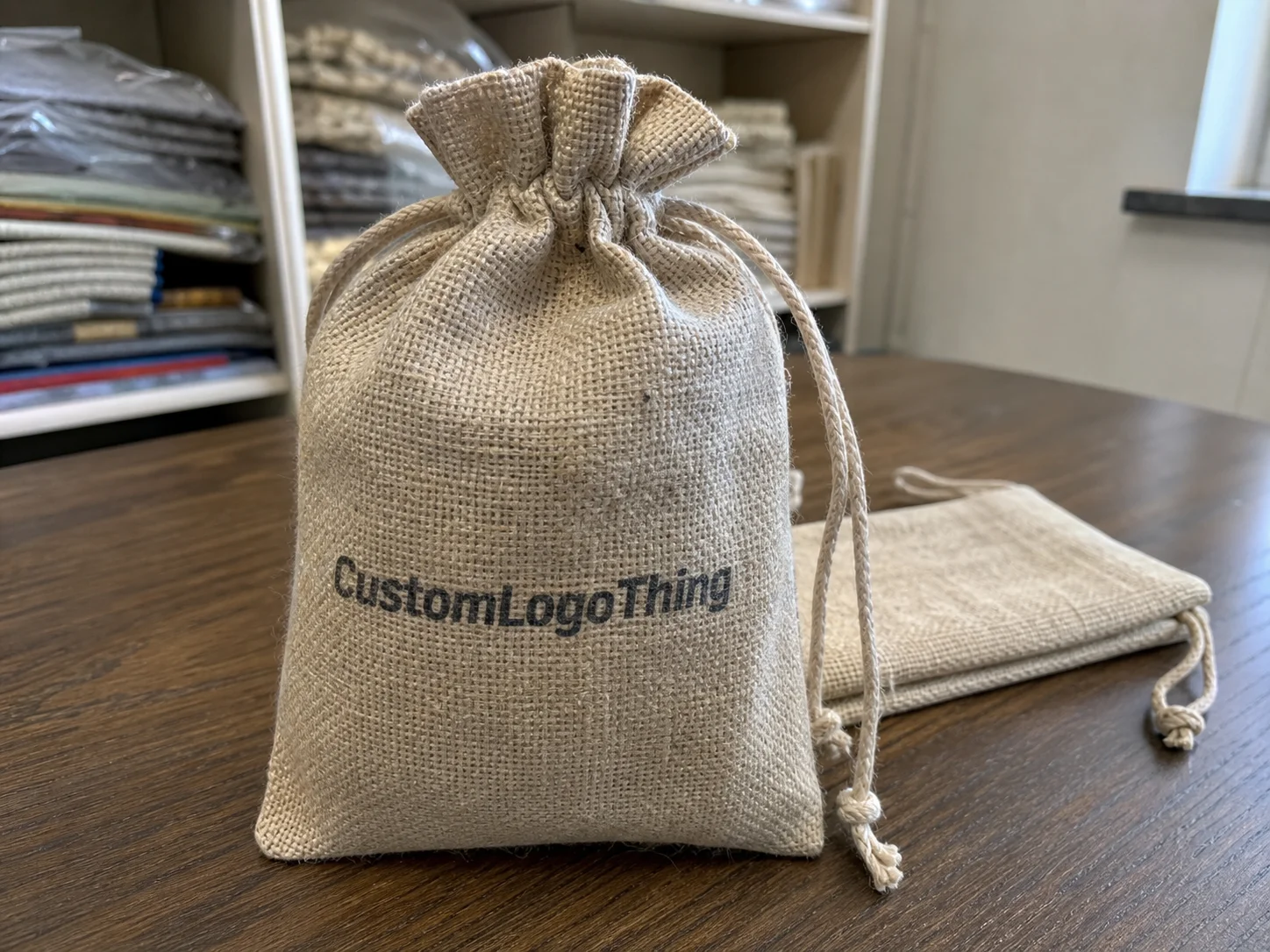
In packaging, burlap usually means a jute-based woven material or a burlap-look fabric that copies the same rough texture. Some pouches use true jute. Others use synthetic or blended fabric because it frays less, prints more consistently, or feels cleaner in hand. Lined versions are common when the buyer wants a smoother interior or better product protection.
A custom burlap pouch makes sense when presentation matters as much as containment. It is a practical fit for artisan soap, tea, ornaments, dried goods, wedding favors, and small gifts that should feel warm rather than glossy. The material does much of the branding on its own.
It is not ideal for every product. Burlap is better for presentation and light containment than for airtight protection. If the item is oily, moisture-sensitive, powdery, or likely to be handled repeatedly, the construction may need a liner, tighter weave, or more secure closure.
A pouch can look artisanal and still perform poorly if the seam stress, closure, or opening size is wrong. Branding only helps when the construction supports the product.
That is why burlap often sits between loose gift wrapping and rigid containers. It can be part of a polished packaging system alongside labels, inserts, or Custom Packaging Products, but only if the product handling requirements are clear.
How the Material, Closure, and Print Choices Work Together
A pouch is a system. The fabric body sets texture, the seam construction sets strength, the opening controls loading, and the closure determines how easy the pouch is to use. Print sits on top of all that, and the weave can either support the artwork or obscure it.
Drawstrings are the most common closure because they are simple and intuitive. Ribbon ties feel more gift-oriented. Cord locks improve repeat opening and closing. Flap closures look finished, but they usually add labor and can increase minimum order quantity.
Printing on burlap takes restraint. Fine detail, small type, and soft gradients tend to disappear into the texture. Bold logos, short taglines, and strong line art usually read better because they sit on top of the weave instead of fighting it. If the artwork is complex, a smoother fabric face or printed liner panel may be a better solution.
A useful rule: if the design already feels busy on a screen, it will usually look busier on burlap. Simplifying artwork is not a compromise; it is often the correct packaging decision for this material.
| Construction | Typical Use | Approx. Unit Cost | Notes |
|---|---|---|---|
| Unlined burlap pouch with drawstring | Favors, samples, light gifts | $0.35-$0.75 at 5,000+ | Best for simple branding and low handling risk |
| Lined pouch with printed logo | Retail accessories, premium gifting | $0.75-$1.45 at 1,000-3,000 | Cleaner inside finish and better perceived quality |
| Reinforced pouch with specialty closure | Higher-end presentation, repeated use | $1.20-$2.40 at 1,000-2,000 | More labor, tighter quality control needed |
These are directional ranges, not firm quotes. Size, fabric weight, print coverage, and closure hardware can move the price quickly. Still, the pattern is consistent: material choice and decoration method need to be planned together.
If the pouch is part of a broader launch, think in systems. One item may use a pouch for presentation, labels for instructions, and a more rigid format for related products in the same line.
Key Specs That Control Fit, Durability, and Shelf Appeal
Fit starts with real measurements. Define width, height, gusset depth if there is one, and the usable opening size after seams and closures are counted. A pouch that looks large enough on paper can still feel tight once the product, label, insert, or sleeve goes inside.
Fabric weight and weave density matter as much as size. A looser weave feels more rustic, but it also tends to fray more, print less cleanly, and vary more from piece to piece. A tighter weave usually improves hand-feel, durability, and logo readability, though it reduces some of the raw texture people expect from burlap.
Color consistency is another detail buyers often underestimate. Natural burlap varies more than coated stock or dyed fabric, so lots can look slightly different under retail lighting. If the pouch will sit beside other branded packaging, decide whether that variation is acceptable.
Seam placement affects perceived quality. Straight seams, balanced corners, and trimmed edges make the pouch feel deliberate. Uneven stitching, loose threads, or a lopsided opening can make a good logo look cheap.
Answer these questions before quoting:
- Will the product be inserted by hand or by machine?
- Does the pouch need dust control or moisture resistance?
- Will it contact food directly, or only hold a wrapped food item?
- Will it be reused after purchase?
If shipping is part of the use case, test for it. The ISTA test library is a useful reference when the package has to survive compression, vibration, or drops during transit.
For food-adjacent projects, treat burlap as an outer presentation layer unless the construction has been reviewed for direct contact. A liner, wrapped product, or barrier sleeve is often the safer path.
Custom Burlap Pouch Pricing: MOQ, Unit Cost, and Setup
Pricing usually comes down to five inputs: size, fabric weight, lining or coating, print complexity, and closure style. Add custom hardware, embroidery, or multi-part construction and the cost rises again. A simple pouch with one-color printing prices very differently from a lined pouch with reinforced seams and a ribbon tie.
MOQ matters because setup and labor are spread across fewer or more pieces. A 300-unit order usually costs more per piece than a 5,000-unit order, even when the pouch design looks similar. That is normal production math, not a penalty.
Sample charges also deserve attention. A physical sample may cost $35-$120 depending on whether the factory is using standard materials or building a special mockup. Artwork setup can add another layer if the supplier has to redraw a logo, separate colors, or build a print template from scratch.
Shipping can affect landed cost more than expected. Burlap pouches are light, but they are bulky. Ask how cartons are sized, how many units fit per case, and whether the packout is optimized for handling efficiency.
Typical ranges for a basic one-color custom burlap pouch order:
| Order Quantity | Estimated Unit Cost | Setup / Sample Impact | Best Fit |
|---|---|---|---|
| 300-500 units | $1.40-$2.80 | Higher sample and setup impact | Small launches, test runs |
| 1,000-3,000 units | $0.75-$1.65 | Balanced cost structure | Seasonal retail, gifting programs |
| 5,000+ units | $0.35-$0.95 | Setup spread across more pieces | Repeat programs, larger retail orders |
More broadly, packaging cost follows specification. For general education and standards context, the Institute of Packaging Professionals is a useful reference for teams comparing materials, decoration methods, and retail execution.
Production Steps and Typical Turnaround for Custom Orders
The production path is usually straightforward if the brief is complete. It starts with product dimensions, target quantity, material choice, artwork, and the exact use case. From there, the supplier quotes the job, confirms the construction, builds a proof, and often makes a sample before full production begins.
Turnaround risk shows up when the buyer gives partial information. An unclear measurement, a logo in the wrong file format, or a vague request for a rustic look can add days of back-and-forth. If the pouch needs to fit a specific item, send the actual product or a dimensioned reference.
Sample sign-off protects the final order. A filled sample is more useful than an empty pouch because it shows seam stress, closure behavior, volume, and how the pouch sits once the product is inside. That matters for retail packaging, where the loaded shape affects the first impression.
Typical lead times vary by material availability and print method. A simple custom burlap pouch with stock fabric and clear artwork often moves in about 12-15 business days after proof approval. More complex builds with lining, embroidery, specialty closures, or multiple revisions can take longer.
If the order is recurring, decide whether to place one larger run or split the quantity into multiple drops. Split runs can reduce storage needs, but they may raise per-unit cost and introduce variation between lots.
A good production file should also include acceptable tolerance. Small dimensional variation is normal in sewn packaging, especially with natural fibers. If the product fit is tight, state the tolerance range early.
Common Mistakes That Lead to Loose Fits or Weak Branding
One of the most common mistakes is approving the pouch from a photo alone. Photos hide scale problems. A bag that looks elegant on a screen may be too shallow, too narrow, or too floppy once the item is inserted. If the product has an unusual shape, a physical sample is safer.
Another problem is overdesigning the print. Tiny logos, crowded legal copy, thin serif fonts, and low-contrast artwork often disappear into the burlap texture. That is not a printing failure; it is a material mismatch. Simple typography and bold marks usually perform better.
Skipping the filled sample is risky because an empty pouch rarely shows the full story. A bag can look fine when empty and still sag, twist, or strain when loaded. The closure may also behave differently once the product is inside.
End use should drive the spec. A pouch for a gift table has different needs from one that ships through distribution, holds food, or sits in a boutique display. Saving a little on unit cost can create bigger problems in appearance, returns, or customer dissatisfaction.
Thread quality and trimming are quiet failure points. Loose ends, uneven hems, and weak knotting at the drawstring channel are easy to miss in a proof image and obvious on the sales floor.
The pouch is part of the product experience, not just the container. If the brand already invests in labels, inserts, or custom printed boxes, the burlap piece should match that standard.
Expert Tips for Better Proofing, Sampling, and Order Planning
Keep the artwork stronger than you think it needs to be. On a textured surface, thick lines and large type hold up better than delicate decoration. If the logo has too many parts, simplify it for the pouch and reserve the detailed version for smoother packaging surfaces.
Send the real packed dimensions, not only the product’s catalog size. A candle in a box, a jar with a lid, or a folded accessory may need more room than the bare item suggests. That extra space affects loading, closure function, and the final silhouette of the pouch.
Ask for a physical sample if the pouch will be used for gifting, retail display, or food-adjacent presentation. Screen proofs cannot fully show hand-feel, stiffness, or how the closure behaves under load. If a sample is not possible, request a photo proof with dimensions marked clearly.
Decide what matters most before the order starts. If appearance is the priority, lean toward lining, print quality, and neat finishing. If speed is the priority, keep the design simple. If protection matters most, adjust construction around the product instead of forcing the product into a generic pouch size.
Send one clean brief instead of a scattered email chain. A compact request with measurements, quantity, artwork, and intended use usually gets a better response than a long thread that leaves the supplier to infer critical details.
For repeat orders, keep the approved sample on file and note every exception from the original proof. Natural materials can drift slightly between lots, but a tight record of dimensions, closure type, and print placement makes the next run easier to match.
Next Steps to Order the Right Pouch Spec
Before requesting a quote, gather four things: product dimensions, target quantity, artwork files, and intended use. If the pouch needs lining, a specific closure, or food-related handling, include that too. Those details let the supplier quote a real production option instead of guessing.
Ask for more than one version if possible. A second size, a heavier fabric, or an alternate closure can reveal a better balance of fit and cost. That comparison is often more useful than a single yes-or-no proposal, especially for branded packaging with budget pressure.
Then confirm the milestones: quote, proof, sample, approval, production, inspection, and ship date. Once those checkpoints are clear, the order has a much better chance of moving without surprise revisions or delayed sign-off. If the pouch is part of a broader packaging system, coordinate it with labels, inserts, and other Custom Packaging Products so the presentation reads as one package.
A well-specified custom burlap pouch is usually cheaper in the long run than a vague one. It cuts revisions, avoids fit problems, and gives the final product a more credible finish.
What size custom burlap pouch should I choose for my product?
Measure the item in its final packed form, including inserts, sleeves, or closures. Leave room for seam allowance and easy loading so the pouch does not strain at the opening. If the item has an odd shape, ask for a sample or fit reference before approving the run.
Can a custom burlap pouch be printed with a logo?
Yes. Simple artwork usually prints more cleanly on burlap than fine detail or gradients. Bold shapes, strong contrast, and limited text sizes tend to read best on the weave, and a proof should always show the final logo placement and scale before production begins.
What drives custom burlap pouch pricing the most?
Size, fabric weight, closure style, and decoration method are usually the biggest cost drivers. Lower quantities increase unit cost because setup and production time are spread across fewer pieces. Lining, specialty finishing, and shipping can change the landed cost more than buyers expect.
How long does custom burlap pouch production usually take?
Simple orders with clear specs and stock materials usually move faster than highly customized builds. Proof approval and sample sign-off are the main checkpoints that affect the schedule. Lead time also depends on factory load, artwork readiness, and whether the order needs special finishing.
What should I send when requesting a quote for a custom burlap pouch?
Send product measurements, target quantity, artwork files, and the intended use of the pouch. Include any requirements for lining, closure type, print colors, or food-related handling. The clearer the brief, the faster the quote and the fewer revisions you will need before approval.

