Custom Burlap Tote Bags: Bulk Ordering Guide for Buyers
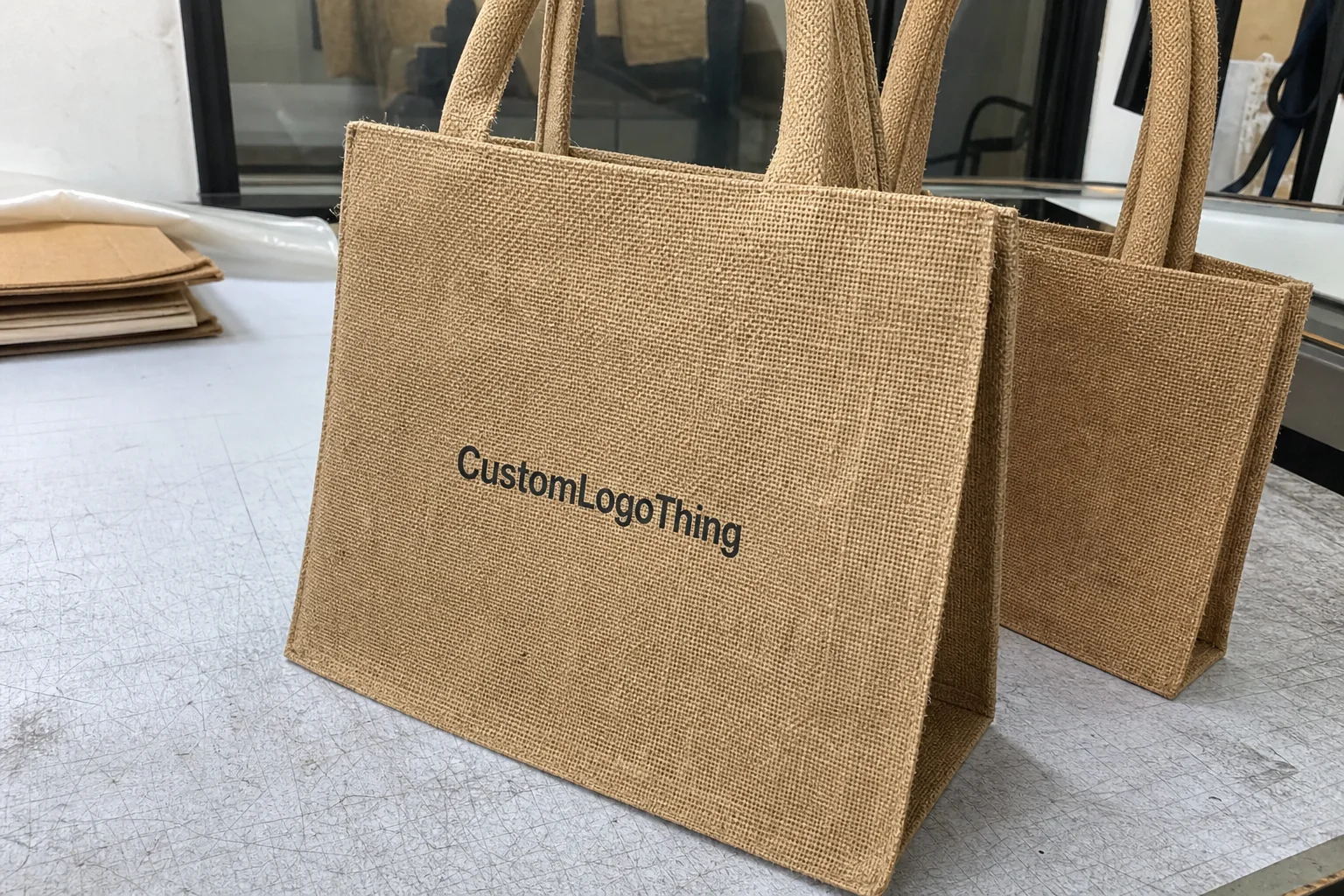
Custom burlap tote bags are often chosen when a brand wants a natural, rustic look without moving into a high-cost format. The fabric feels rougher than cotton or nonwoven options, and that texture can make the bag read as handmade, agricultural, or artisanal depending on the artwork and packaging context.
The main buyer question is not whether the bag looks appealing in a mockup. It is whether the material, print method, size, and construction match the real use case. A tote for retail inserts has different needs from one carrying bottles, catalogs, or a boxed gift set. When those needs are matched correctly, burlap can be an efficient presentation format rather than just a style choice.
There are limits to keep in mind early. Burlap is not ideal for fine typography, soft gradients, or heavy repeated carrying unless the bag is reinforced. It works best when the spec is simple and the contents are moderate. Buyers comparing it with other formats should judge it on fit, lead time, and cost rather than on appearance alone.
A tote specification should read like a build sheet, not a mood board.
If you are comparing this format with other options, the broader Custom Packaging Products range is useful for judging where a tote adds value and where a pouch or box is the cleaner fit.
Material, Weave, and Handle Choices That Change Durability
“Burlap” is often used as a general label, but actual construction varies. Buyers will see true jute burlap, jute-cotton blends, and lined versions that keep the rustic exterior while improving comfort and reducing fiber shed. Pure jute usually feels stiffer and more textured; blends can soften the bag slightly and improve handfeel.
Weave density is one of the main durability variables. A looser weave gives a more natural look, but it can fray more easily and show gaps. A tighter weave holds shape better, hides contents more effectively, and usually lasts longer under repeated handling. If the bag will be reused multiple times, a tighter weave is often worth the added cost.
Handle choice affects the build as much as the fabric does. Flat webbing handles are usually the safest for load-bearing use because they distribute weight well and are easier to reinforce. Rope handles can look more finished, but they need strong anchoring. Stitched burlap handles keep the visual style consistent, though they are rarely the strongest option unless backed with reinforcement.
For heavier contents, ask about gussets, interior lining, bottom boards, and stitch count. A bag carrying brochures and samples has a very different stress pattern than one carrying a bottle or boxed set. These upgrades often cost less than replacing damaged bags or dealing with returns after the first shipment.
Ask for actual fabric details instead of a generic style name. If a supplier can provide GSM or ounce weight, handle length, seam allowance, and reinforcement details, it is easier to get repeatable results. If the answer is only “standard burlap tote,” expect more variation from one run to the next.
For teams building a larger product packaging system, the tote should be planned alongside inserts, tissue, and custom printed boxes. The bag does not need to do everything; it just needs to do its job cleanly.
Artwork Limits, Print Methods, and Logo Placement on Burlap
Burlap is a difficult surface for detailed artwork. The fibers are irregular, the weave absorbs ink unevenly, and small lettering can disappear faster than expected once the print crosses the texture. Thin rules, soft gradients, and low-contrast logos often look better in a mockup than on the finished bag.
Simple artwork tends to perform best. A one-color mark, a bold icon, or a restrained two-color layout usually prints cleaner than a design packed with fine detail. In packaging work, restraint often carries more authority than decoration, especially when the bag already brings its own texture and visual character.
Screen printing is usually the most practical method for custom burlap tote bags because it handles simple artwork well and scales efficiently for larger runs. Heat transfer can work for more detailed graphics, but the rough surface still limits consistency. Embroidery adds a premium feel for minimal marks, while woven labels are useful when the brand wants a crisp identity panel without direct printing.
Placement matters as much as the method. Keep artwork clear of seams, gussets, and handle attachment points. A design that sits too close to an edge may warp after sewing, which is a common reason a clean proof looks awkward once the bag is assembled. If the graphic needs to read from a distance, keep letterforms large and give the logo enough negative space.
Dark ink on natural burlap usually reads better than pale tones, and solid contrast almost always beats subtle color shifts. The material already brings enough texture, so the artwork does not need to fight for attention.
For buyers who want a practical reference point on handling and transit, ISTA is a useful standard-setting resource. Its focus on transit and handling is a reminder that printed packaging should be judged in real use, not just in a flat render.
Production Process and Lead Time: What Happens After Approval
Once the spec is approved, production usually follows a familiar sequence: confirm measurements, finalize artwork, prepare a sample or proof, cut materials, sew the bags, inspect the finished pieces, pack cartons, and ship. Delays usually come from slow approvals or late changes rather than from sewing itself.
Sample timing is separate from bulk timing. A straightforward prototype can often be produced in 5 to 10 business days, while a more complex sample with lining, reinforcement, or custom labels may take longer. Bulk production often runs 12 to 25 business days after proof approval. If the order includes multiple decoration locations, a more detailed build, or a packed kit format, that timeline expands.
Late revisions are expensive because they interrupt setup and force the line to recheck cutting, placement, or print alignment. A changed logo file or adjusted size can add days even if the change seems small on paper. Buyers who treat proofing as a formality usually pay for it in lead time.
It helps to separate three clocks. The first is artwork approval, which can move in hours or sit for days. The second is sample turnaround, which tells you whether the bag behaves as expected in hand. The third is production plus freight, which is the real delivery window. Confusing those stages is one of the fastest ways to make a schedule look unrealistic.
Quality control should happen before cartons are sealed. Ask how stitch quality is checked, how print alignment is measured, and whether carton-level inspection is used before shipment. If the bags are being shipped with inserts or paired products, carton performance matters almost as much as the tote itself.
If sustainability claims matter to your team, ask for documentation rather than assuming the material story is complete. FSC paperwork may apply to related paper components, and broader packaging claims should match the materials actually used.
Cost, MOQ, and Quote Variables That Change Unit Price
Pricing for custom burlap tote bags usually comes down to six variables: quantity, fabric weight, lining, handle type, print colors, and packing format. Each one moves cost differently. A smaller order with a more complex build can cost more per unit than a larger order with a simpler spec, even if the two bags look similar in a photo.
MOQ matters because setup cost has to be spread somewhere. If a factory is cutting, printing, and sewing 200 custom bags, the labor and setup burden per piece is much higher than on 5,000 bags. That is why early quotes often feel high, then soften once the line is running efficiently.
Buyers should ask for pricing that separates product cost, decoration cost, sampling, freight, and any plate or tooling charge. If everything is bundled into one number, it is hard to see where the money is going or how the quote will change if the order size changes. Clear pricing is easier to compare and makes optional costs easier to spot.
Here is a practical pricing frame. These ranges are typical rather than fixed, and they move with bag size, print coverage, labor market conditions, and packing requirements, but they give a realistic starting point.
| Build Type | Typical MOQ | Approx. Unit Price at 500 | Approx. Unit Price at 5,000 | Best Use |
|---|---|---|---|---|
| Basic unlined burlap tote, one-color print | 100-300 pcs | $1.80-$3.20 | $0.85-$1.35 | Events, light retail giveaways, simple branded packaging |
| Medium-weight tote with gusset and reinforced handles | 300-500 pcs | $2.60-$4.50 | $1.20-$2.10 | Gift sets, retail inserts, repeat reuse |
| Lined tote with higher stitch count and larger print area | 500-1,000 pcs | $3.80-$6.50 | $1.90-$3.40 | Premium retail packaging, hospitality, heavier contents |
| Decorated tote with embroidery or woven label | 500+ pcs | $4.50-$8.00 | $2.50-$4.75 | High-visibility package branding, upscale merch, stronger perceived value |
Packaging format is another common surprise. Flat packing, individual polybags, barcode labels, carton inserts, and special kitting instructions all add labor. If the tote is part of a bundled gift set, the bag may be only one line item in the full packaging budget.
Compare total landed cost rather than unit price alone. Include freight, sampling, rework risk, and any extras needed to make the order ready for sale or distribution. A low headline number can be misleading if it excludes the pieces that make the order usable.
For buyers comparing formats, the custom packaging product range helps show where a tote adds value and where a box or pouch is the better spend.
Common Ordering Mistakes That Weaken the Finished Bag
The first mistake is choosing size from the artwork mockup instead of the actual contents. A tote that looks balanced on screen may be too shallow for a boxed product or too tall to feel substantial in hand. Measure the product first, then size the bag around it.
The second mistake is approving print color without checking contrast in normal light. Burlap is visually busy. Pale gray, soft pastels, and fine-line marks can disappear once the ink sits on the weave. A proof that looks clean in a digital file does not guarantee a readable finished bag in the real world.
The third mistake is under-specifying the construction. Missing handle length, seam detail, stitch count, gusset depth, or print placement creates back-and-forth that burns days and introduces avoidable variation. A good spec sheet gives the factory a stable target and reduces the chance of corrections later.
Skipping the sample is another costly shortcut. That matters even more in retail packaging, hospitality, and event programs where the bag is part of the brand impression. A sample shows the texture, the smell, the handle feel, and the way the imprint sits on the fabric.
Overestimating load strength is also common. Burlap is not magic. A well-constructed tote can handle a reasonable retail load, but bottles, books, and dense items put stress on seams faster than many buyers realize. If the bag is going to be reused often or carry weight repeatedly, reinforcement is worth asking for before production starts.
If the supplier cannot explain how the bag is made, how it is printed, and how it was checked, the quote is not ready yet. Clear answers up front usually prevent the small misreads that turn into expensive rework later.
Next Steps Before You Request Samples or Place the Order
Start with the use case. A retail insert, a wedding favor, a trade show giveaway, and a boutique gift bag do not need the same dimensions or handle strength. Once the use case is clear, the rest of the spec becomes easier to define and easier to defend when the quote comes back.
Then gather the non-negotiables in one brief: dimensions, quantity, artwork format, color count, target budget, and delivery deadline. If the bag has to work with other items, include those measurements too. The cleaner the brief, the fewer revisions you will need before production starts.
Request a sample that matches the intended build as closely as possible. The goal is to check texture, print readability, seam strength, and carry comfort under normal lighting and with the actual contents inside. If the sample does not match the intended final setup, it is not a meaningful approval tool.
If sustainability claims matter to your team, ask for documentation rather than assuming the material story is complete. The tote may be only one part of the chain, and the details around the rest of the pack often matter just as much.
For a buyer who wants a rustic finish, a reusable format, and a brand story that feels direct rather than overdesigned, custom burlap tote bags can be a strong fit. They work best when the spec is simple, the artwork is bold, and the sample proves the bag can carry the job without compromise.
What makes custom burlap tote bags different from cotton totes?
Burlap has a rougher, more textured surface that gives the bag a rustic feel. Cotton usually prints with cleaner detail, while burlap works better with bold, simple graphics. For farm stores, artisanal food brands, and gift programs, burlap often feels more distinctive.
Are custom burlap tote bags durable enough for repeated use?
Yes, if the weave is tight enough and the seams, handles, and gussets are reinforced. Durability depends on what the bag carries; light retail items are easy, while heavy bottles or books need stronger construction. Lined or reinforced versions usually last longer than unlined bags.
What is the best printing method for custom burlap tote bags?
Screen printing is usually the most practical choice for bold logos and limited colors. Heat transfer can work for more detailed art, but the surface texture still limits fine detail. Embroidery or woven labels can look premium when the design is simple and the budget supports it.
How do I estimate pricing before requesting a quote?
Start with quantity, bag size, print colors, handle style, and whether you need lining or reinforcement. Expect a higher unit price on smaller runs because setup costs are spread across fewer pieces. Freight and sample costs can change the total materially, so ask for them upfront.
What should I check in a sample of custom burlap tote bags?
Check stitch strength, handle comfort, logo clarity, and whether the size fits the actual contents. Look at the burlap texture under normal lighting because contrast can change a lot outside a render. Confirm that the sample matches the intended print placement and finishing details before approving bulk production.


