Custom cake boxes do more than contain a dessert. They protect tall frosting work, keep a cake centered on its board, and shape the customer’s first impression before the lid even comes off. A good box preserves the value of the cake inside. A weak one can undo hours of decoration in a single handoff.
For a bakery buyer, the decision is rarely about packaging alone. It is about fit, handling, shelf space, brand presentation, and how much damage the shop can tolerate before the box stops being economical. A carton that looks polished on a sample table can still fail if the corners bow, the lid presses on a topper, or the base flexes in delivery. That is why the spec matters as much as the artwork.
The useful way to think about custom cake boxes is simple: they are a structural product with a branding surface, not a branding surface that happens to hold a cake. Once that order is clear, the rest of the buying process becomes easier to judge.
What custom cake boxes actually solve for bakeries
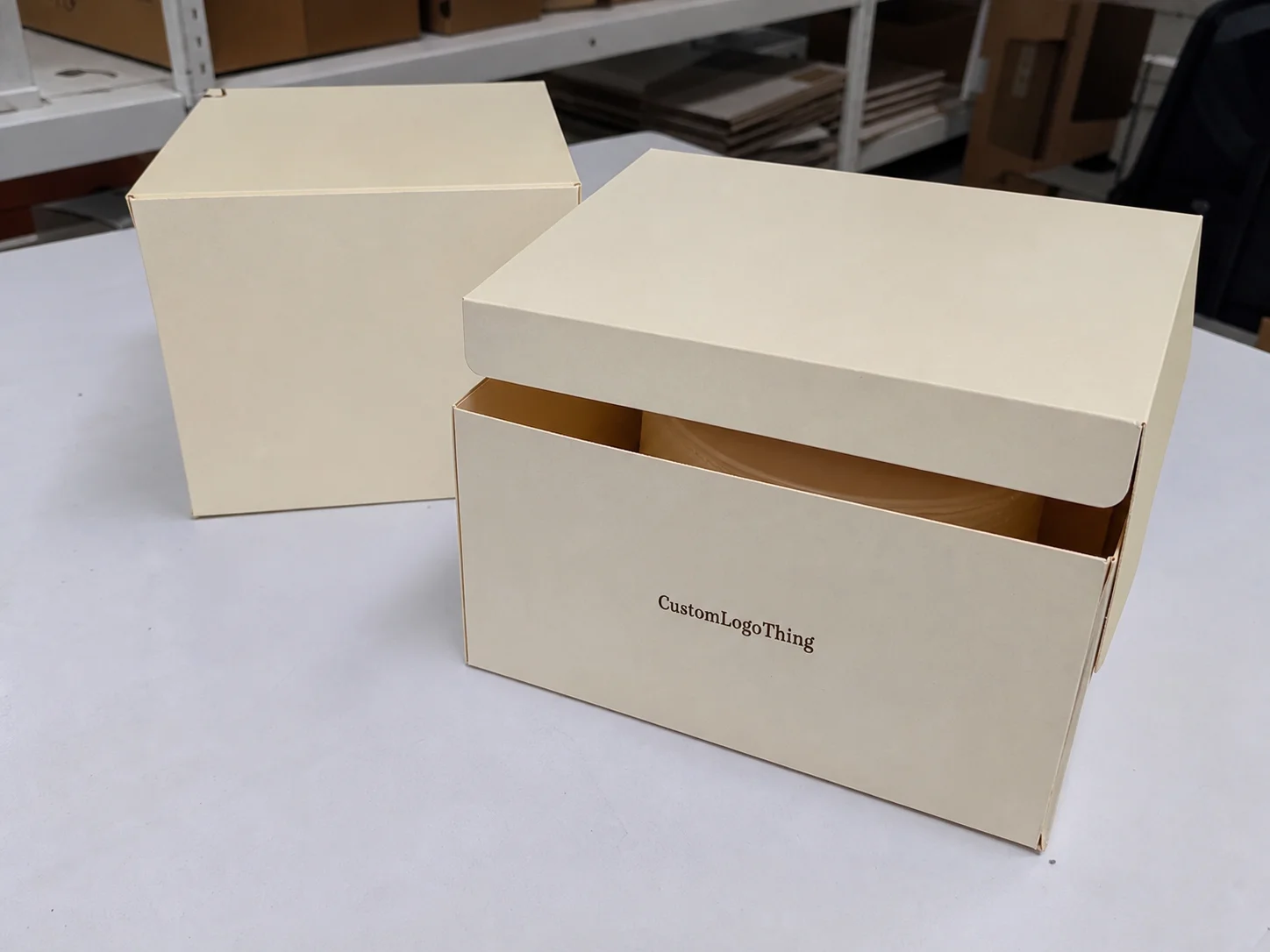
The main job is protection, but the useful list is longer. The box has to hold the cake upright, keep the board from sliding, and leave enough clearance so buttercream borders or piped edges do not touch the lid. A box that is too short can crush decoration. One that is too wide can let the cake drift during a turn or brake. Both problems are common, and both are expensive once a cake is remade.
That is especially true for layered cakes, tall celebration cakes, and specialty orders with toppers, flowers, or fragile accents. A 10-inch cake is not automatically a 10-inch box order. Once the cake board, frosting, and decorative height are counted, the internal dimensions usually need to grow. Buyers who size from the pan alone tend to under-spec the carton.
Presentation is the second layer of value. Bakery customers rarely separate the dessert from its packaging. If the carton arrives crushed, stained, or loosely assembled, the perceived quality drops before the first slice is served. That effect is stronger for premium orders, where the box is part of the product story. Clean print, square closure, and accurate sizing communicate control. Cheap-looking packaging communicates the opposite.
There is also the less visible cost of damage. A stronger carton can reduce refunds, remakes, and staff time lost to repairs. It may also reduce toppers being crushed, frosting being smeared, or chilled cakes taking on condensation marks during the walk from fridge to car. Packaging is easy to underprice because its failures show up later, but the math is usually straightforward once returns and remakes are counted.
For bakeries with several packaging formats, the box spec should sit inside a broader system rather than as a one-off purchase. Matching bakery cartons with other Custom Packaging Products often makes replenishment easier and keeps the brand consistent across product lines.
A cheaper box is not cheaper if it creates one remake for every few hundred orders. Packaging should protect the cake first and carry the brand second.
How the box design keeps cakes stable in transit
Fit is the first structural rule. Internal dimensions need to account for the cake board, frosting clearance, topper height, and the room staff need to load and remove the cake without scraping the sides. The box should be measured against the finished cake, not the pan size. That sounds obvious until a decorated order arrives and the lid sits directly on the border piping.
The closure matters almost as much as the footprint. Tuck-top cartons are common because they assemble quickly, but heavier cakes often need stronger corners, a base tray, or a more rigid board construction to reduce flex. If the box is used for local delivery, the structure should tolerate vibration, slight braking, and short periods of stacking in a car or insulated bag. An attractive carton that caves in under light pressure is still a failure.
Board stiffness is a real performance variable. In bakery packaging, common paperboard choices often sit around 18-24 pt for lighter cartons, while heavier formats may move into reinforced paperboard or E-flute corrugated when the cake is large, tall, or likely to travel. If the material is too soft, corners round off, lids sag, and the box loses its shape after a few uses in storage. If the board is too rigid for the style, assembly can become awkward and slow.
Windows, vents, and closures should be used for a reason, not because they look familiar. A window helps customers preview decoration and reduces unnecessary opening at the counter. It can also expose the cake to dust, humidity, or temperature shift if the seal is sloppy. Fully enclosed cartons are usually safer for glossy finishes, powdered decoration, and cakes that move from cold storage into warmer air. For buttercream cakes that need to be seen at pickup, a window works only if the box still controls movement.
For suppliers that want to validate transport assumptions, industry references help. The Paperboard Packaging Council at packaging.org offers useful structural context, and ISTA publishes distribution testing standards that are relevant for cartons that leave the counter and enter the vehicle. Those references are not decorative; they help buyers ask better questions about compression, vibration, and handling.
Choosing the right materials, print, and finish
Material choice affects cost, appearance, and the way the box behaves in a busy bakery. Most custom cake boxes are built from paperboard, often SBS, kraft, or a similar food-safe stock with an inner coating or liner. The right choice depends on cake weight, storage habits, and whether the carton needs to be shipped flat or stored pre-assembled. For a light counter-order box, a simpler folding carton may be enough. For a tall wedding cake, the material needs more backbone.
Print should support the structure, not fight it. A single-color logo on white or kraft board can look sharper than a crowded full-coverage design, especially if the bakery wants lower setup cost and easier repeat orders. Simple layouts also age better. They are easier to refresh seasonally and less likely to show registration problems if a future reprint uses a slightly different press condition. For many shops, that matters more than a complex design that only looks impressive in a mockup.
Finish changes both feel and durability. Matte finishes are quieter and often more forgiving of scuffs. Gloss looks brighter on display, though fingerprints and handling marks can be more visible. Soft-touch coatings feel premium, but they cost more and may not be worth it for every line. Spot UV can highlight a logo or pattern, yet it should be used carefully on packaging that staff handle with flour-dusted or slightly damp hands. Decorative effects are useful only if they survive actual use.
Coatings and food-safety details need a practical reading. Grease-resistant coating is useful for rich fillings, buttercream residue, or chilled cakes that may release moisture when they come out of refrigeration. Water-based inks are common, but direct contact with food should still be avoided unless the supplier has clearly documented the food-safe construction. In other words, the inside and outside of the box are not interchangeable.
For bakeries that sell through both retail and delivery channels, print and structure have to satisfy both environments. The box should look polished on the shelf, fold quickly in production, and resist scuffing in transit. That is where product packaging and retail packaging overlap. The best spec is usually the one that reduces handling time without making the carton look stripped down.
Practical buyers also look at assembly. If the box takes too long to form, the labor cost can erase savings from a cheaper board. If the lock tabs are weak, staff will tape cartons that were supposed to close on their own. If the print sits too close to a crease, the design will look off once the box is folded. Those are the sorts of issues that rarely show up in a sales sample and show up immediately on the line.
Custom cake box cost, pricing, and MOQ basics
Pricing moves with more variables than many buyers expect. Size, board thickness, print coverage, finish complexity, insert requirements, and quantity all change the unit cost. A small folding carton with one-color print can be economical. A large premium box with a window, coated surface, and custom insert sits in a different bracket entirely. Size alone can shift material usage enough to matter, especially when the box footprint widens by even a small amount.
MOQ, or minimum order quantity, is just as important as the unit price. Smaller runs usually cost more per box because setup, proofing, and waste are spread across fewer units. Standard sizes can reduce that burden if the bakery is testing a seasonal product or a new retail line. Full customization usually asks for higher quantities to make the run efficient. That is normal. The question is whether the order is supporting a core menu item or a short-term promotion.
Hidden costs are common in packaging quotes. Dieline setup, file correction, sample production, special finishes, and shipping cartons can all appear separately if the buyer does not ask early. Oversized cartons or rigid-style builds may also carry extra freight charges because they occupy more space. A proper quote should show whether prepress adjustments, proofs, and sample rounds are included. If those items are vague, the final invoice usually grows in ways nobody planned for.
Typical wholesale pricing ranges, excluding freight and unusual tooling, often look something like this:
| Box style | Typical use | Approx. unit price | Notes |
|---|---|---|---|
| Folding carton, single-color print | Simple cakes, counter pickup, fast reorders | $0.22-$0.45 | Good for volume, lower setup, clean branding |
| Printed carton with window and coating | Decorated cakes, retail display, branded packaging | $0.48-$0.95 | Better presentation, slightly higher material and finishing cost |
| Heavier board with insert or tray | Tall cakes, delivery orders, fragile toppers | $0.78-$1.50 | More stable in transit, usually chosen for premium orders |
| Rigid luxury style box | Wedding cakes, premium gifting, high-end bakery lines | $2.00-$4.50 | Higher perceived value, more labor, more shipping space |
A useful budgeting rule is to lock the structure first, then tune the print and finish. Buyers who start with graphics and work backward often end up with a beautiful carton that is wrong in the one dimension that matters: the cake does not fit correctly. For that reason, many bakeries treat Custom Packaging Products as a system of matched specs rather than a set of unrelated boxes.
Production process and timeline: from dieline to delivery
The production path is usually predictable. It starts with sizing and dieline selection, then moves through artwork setup, proof approval, material sourcing, printing, converting, finishing, and packing. If the box needs a window patch, insert, or specialty coating, another step gets added. Every stage depends on the one before it, so late changes to size or copy tend to affect the whole schedule.
Most delays come from the same few causes: artwork that is not press-ready, dimensions that are still shifting, or instructions that are too vague about folding, shipping, and storage. If the logo sits too close to a crease, the design may break when the box folds. If the barcode is missing, someone has to stop and fix the file. If the bakery has not confirmed master carton counts, the packing method may be wrong and need to be rebuilt. Prepress corrections are inconvenient, but they are far easier to absorb than a run that is already on the press.
Lead time varies by quantity and complexity. A straightforward custom carton often takes about 12-15 business days after proof approval. More complex printing, rigid board, or specialty finishing can stretch that to several weeks. If samples are required first, add the sample cycle and any revision time on top. For holiday peaks or wedding-season inventory, a buffer of at least one extra production window is sensible. A packaging schedule that looks fine on paper can feel very tight once freight time is added.
Planning backward helps more than optimism does. If the bakery knows when demand will spike, the box should be approved well before that period starts. That gives time to review samples, test fit, and train staff on assembly. It also leaves room for the unexpected: a print correction, a change in topper height, or a size adjustment after the first sample. Packaging rarely fails all at once. It usually fails in one small area that was not checked early enough.
Common mistakes that make bakery packaging fail
Undersizing is the most obvious problem, but it is not the only one. Even a small mismatch can crush piped borders, scrape edible decorations, or force staff to tilt the cake while loading. That tilt is where many accidents begin. The cake was level on the counter, then it needed a diagonal entry into a narrow box, and the front edge took the hit.
Another mistake is choosing packaging for appearance alone. A premium-looking carton can still be weak if the board flexes or the corners do not hold. Printed mockups hide this better than they should. Once the box is assembled with a real cake inside, weak closures and thin bases become obvious. The structure has to be tested under weight, not admired in isolation.
Moisture and temperature changes deserve more attention than they usually get. Refrigerated cakes can create condensation inside the carton if they are moved through warm air and opened more than once. Buttercream can rub against the lid and lose its finish. Dark print may show fingerprints, scuffs, or moisture spots more clearly than expected. If the bakery sells chilled cakes or rich fillings, the coating and board selection should be part of the initial spec.
Workflow mistakes are just as costly. Some buyers never check whether the carton stacks cleanly on the shelf, folds fast enough for the line, or fits the pickup process at the register. A box that is awkward to assemble slows down the team. A box that stores poorly creates clutter. A box that cannot be closed cleanly with one motion increases the chance of a handling error. Those are small operational problems, but they add up fast in a busy shop.
Packaging consistency is the final trap. If the brand wants the box to reinforce the same standard every time, the production file has to hold that line. The safest approach is to test fit, handoff, and presentation before the first large run. That is cheaper than fixing a packaging problem after customers have already seen it.
What to finalize before you request samples or order
Before asking for quotes, the bakery should confirm the actual cake dimensions, the board size, the finished height, and any topper or floral clearance. That is the baseline. If those numbers are loose, the spec will drift and the sample will not mean much. A flat-topped six-inch cake and a six-inch cake with a tall decoration are not the same packaging job.
A short internal checklist keeps the order grounded:
- Measure the cake board and the finished cake height, not just the pan.
- Confirm whether toppers, flowers, candles, or hand-tied ribbons need extra headroom.
- Decide whether the box needs a window, liner, insert, or grease-resistant coating.
- Check how many boxes fit on current shelves or in storage bins.
- Define whether the carton is for pickup, local delivery, retail display, or mixed use.
Sampling should be treated as a functional test, not a formality. Staff should load an actual cake, close the lid, carry it a short distance, and inspect the result. Does the box stay square? Does the lid press into the decoration? Does the cake board slide on the base? Does the print align properly once the box is folded? Those questions matter more than how the carton looks as a flat sheet.
Food-contact details and sustainability claims also need verification. If the bakery wants FSC-certified board, the supplier should be able to show chain-of-custody documentation. If recycled content matters, the percentage should be stated clearly and in writing. If the box will touch sensitive surfaces, the liner and coating should be checked for suitability rather than assumed. A well-specified order of custom cake boxes is the point where product protection, packaging quality, and shop workflow all agree with each other.
What size custom cake boxes should I use for layered bakery cakes?
Measure the cake board first, then add space for frosting, decorations, and safe hand clearance. The box should allow the lid to close without touching the top detail, and the cake should not shift inside the base.
Are custom cake boxes better than standard bakery boxes for delivery?
Usually yes for tall, fragile, or premium cakes. Custom sizing reduces movement and cosmetic damage. Standard boxes can work for simple items, but they often leave too much empty space for decorated cakes.
How does pricing change for custom cake packaging?
Price rises with larger dimensions, thicker board, windows, special coatings, inserts, and more complex print coverage. Higher order quantities usually lower the unit cost because setup and waste are spread across more cartons.
How long does it take to produce custom cake boxes?
A straightforward run can take about 12-15 business days after proof approval. Complex builds, rigid styles, or special finishing take longer, and samples add extra time before full production starts.
What should I check before approving custom cake box samples?
Check fit, lid clearance, print accuracy, closure strength, and how the box behaves with a real cake inside. Also confirm storage, stacking, and whether the carton stays clean and presentable after handling.
For bakeries that want packaging to do more than hold a product, the sample stage is where the decision becomes real. If the box protects the cake, supports the brand, and keeps the handoff moving, the spec is doing its job.

