A custom clear makeup bag looks straightforward until you examine what actually makes it work. Clear film exposes seam quality, zipper alignment, corner shape, print registration, and even the way the bag sits once it is filled. There is no visual distraction to hide weak construction, which is exactly why these bags are useful for buyers who care about presentation.
That visibility also makes them efficient for packaging decisions. Travel sets, retail gift bundles, promotional kits, and event giveaways all benefit from a pouch that shows the contents while still feeling intentional. If the bag clouds over, sags at the base, or carries a zipper that twists under pressure, the whole package loses credibility fast.
The custom part goes far beyond logo placement. Size, film thickness, zipper color, seam style, trim, insert cards, and packing format all change the final result. A well-specified custom clear makeup bag can make an ordinary product set feel organized and premium without adding much bulk or weight.
Why a Custom Clear Makeup Bag Reveals Quality Fast
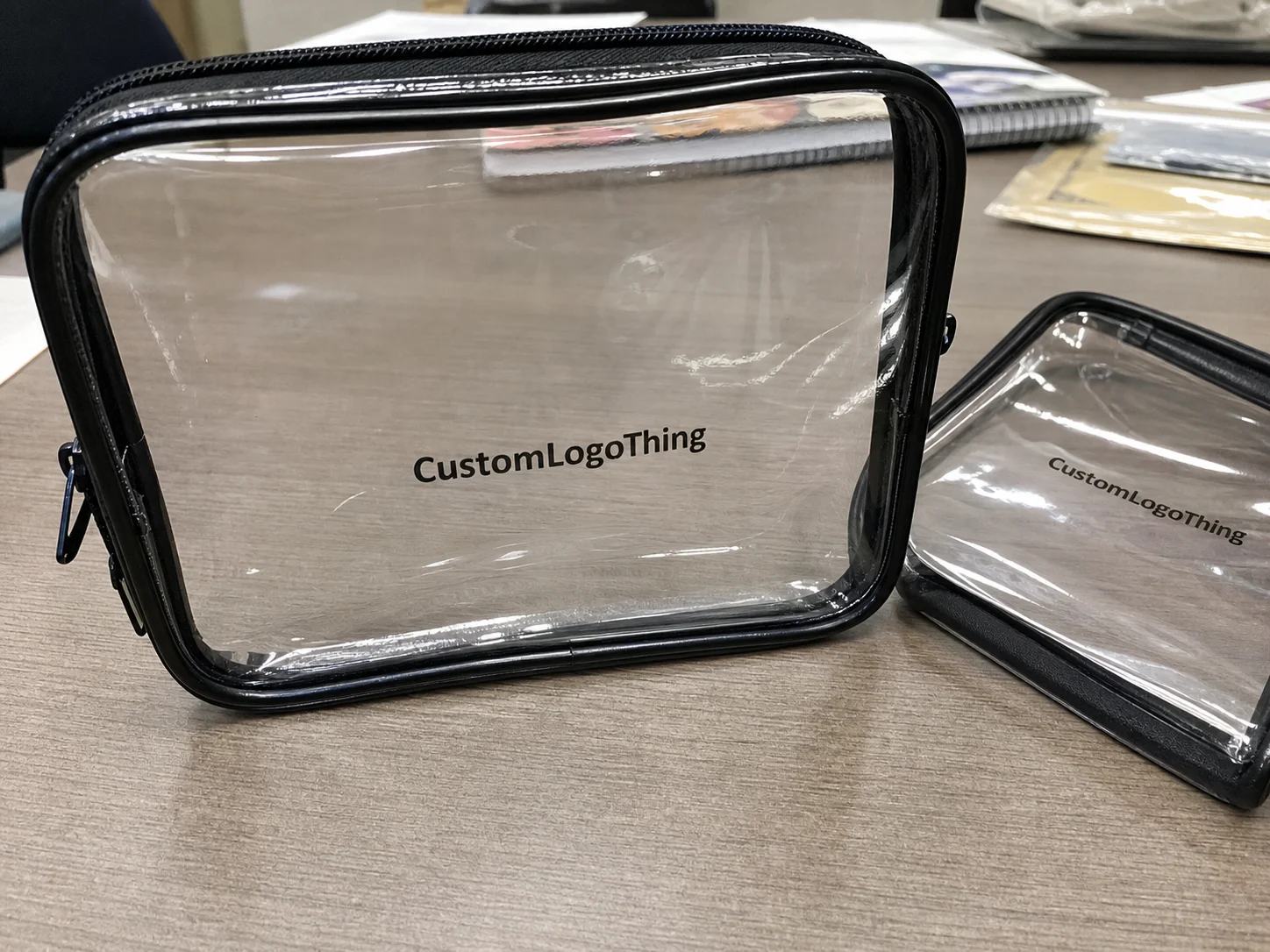
Transparent packaging is unforgiving. On an opaque pouch, a small weld shift or slight print misalignment can disappear into the design. On a clear bag, every flaw sits in plain view. If the zipper tape drifts off center, if the panel turns hazy, or if the corners crease unevenly, the buyer sees it before the bag is even filled.
That makes the category demanding, but not difficult if the build is controlled. A clean custom clear makeup bag sends a quiet signal of order and care. The contents look more deliberate. The package looks more finished. Even modest products can feel more elevated if the pouch is crisp, clear, and proportioned correctly.
Most buyers use these bags in familiar but slightly different ways:
- Travel kits for cosmetics and TSA-friendly toiletries.
- Retail gift sets where the bag is part of the shelf presentation.
- Influencer bundles that need a lightweight branded layer.
- Event giveaways that have to look polished before anything goes inside.
The value often hides in details people ignore on first pass. Clarity affects how premium the contents look. Zipper quality affects how often the pouch feels annoying to open. Shape affects whether the bag stands up or collapses into the box. A buyer can often tell within seconds whether the production team understood the assignment.
One useful rule: if the bag will be displayed empty, even briefly, the decoration and construction need to carry the design on their own. A custom clear makeup bag cannot depend on the contents to do all the visual work. The bag has to look composed before it is filled.
Materials, Closures, and Build Details That Matter
Material choice sets the tone. PVC is still common because it is clear, heat-sealable, and usually the most economical option. TPU tends to cost more, but it can feel softer and flex more cleanly. EVA sits in the middle for some projects, especially if the buyer wants a slightly more structured look without the harsher feel of basic vinyl. Recycled blends are being requested more often, though their clarity and surface consistency depend heavily on the supplier mix.
For a custom clear makeup bag, the right material depends less on theory and more on the use case. If the pouch will carry compacts, bottles, brushes, and heavier items, it needs enough body to hold shape without bowing outward. If it is mainly for promotional inserts or light travel accessories, a lighter build may be enough. If odor sensitivity matters, ask directly. Some films carry a stronger smell right off the line, and that can matter in beauty packaging.
Thickness is usually where first-time buyers underestimate the difference between sample and finished goods. A thin film may look acceptable in a photo, then feel flimsy in hand or wrinkle badly once packed. A thicker film improves shape retention and scratch resistance, but it also adds stiffness and cost. For many small cosmetic pouches, a practical range often sits around 0.3 mm to 0.5 mm, although the right number depends on bag size, load weight, and whether the bag needs to stand upright.
Closures matter just as much as the film. Standard zippers are familiar, but not all zippers behave the same. A cheap slider can snag, split, or leave the top edge crooked, and that problem is easy to spot on transparent material. Better zipper hardware gives the bag a cleaner opening action and a more controlled finish. If spill resistance matters, the top edge, seam consistency, and zipper sealing all need to be specified carefully.
Shape changes function more than many buyers expect. A flat pouch is efficient and simple. A gusseted bottom creates usable volume and helps the bag stand with more stability, which matters for retail display or for holding bottles upright. A hang loop, colored zipper tape, or border trim can add character without covering the transparency that makes the format useful in the first place.
| Material | Typical Look | Feel | Best Use | Tradeoff |
|---|---|---|---|---|
| PVC | Very clear, familiar | Medium firmness | General retail and travel | Can look less premium if the grade is low |
| TPU | Clear to soft-gloss | More flexible | Higher-end cosmetic sets | Usually higher cost |
| EVA | Clean, slightly softer visual | Lightly structured | Promotional and travel kits | Not always as crisp as PVC |
| Recycled-film blend | Varies by source | Varies by thickness | Sustainability-led branding | Clarity and consistency can vary |
Decoration choices should respect the transparency of the bag. Screen printing works well for a simple one-color mark. Heat transfer can carry more detail, but thicker coverage may block the clean look buyers want. Woven labels, edge binding, and restrained color accents often do more for brand recognition than a crowded print treatment. For a clear pouch, less visual noise usually reads as more expensive.
Buyers comparing materials or transportation claims often want outside references rather than supplier language alone. General packaging context is available through the Packaging Education Forum, transit test guidance through ISTA, and paper sourcing standards through FSC if the order includes hang tags or insert cards. Those references do not replace a spec sheet, but they help separate marketing claims from practical requirements.
Production Process and Timeline: From Spec to Shipment
The fastest orders start with a complete brief. A supplier should not have to guess the dimensions, material target, print method, or packaging format. The workflow is usually simple: brief, spec review, proof or sample, revision, production, inspection, packing, and shipment. Every unclear detail adds another round of questions, and each round slows the order.
For a custom clear makeup bag, proofing can move quickly if the art file is clean and the structure is already defined. A vector logo, finished dimensions, and an early decision on zipper color keep the design cycle short. If the artwork needs cleanup or the size is still being debated, the timeline expands. That is not a production problem. It is a specification problem.
Typical lead time often lands around 12 to 20 business days after proof approval for a standard run, though the range depends on quantity, material availability, decoration complexity, and packing requirements. Smaller orders can move faster through the line but cost more per unit because setup is spread across fewer pieces. Larger orders usually take more time to produce, yet they often price better once the line is running efficiently. Rush service is possible in some cases, but the fee reflects overtime, priority scheduling, and tighter packing windows.
Delay usually starts in the same places:
- Missing final dimensions or a vague target size.
- Artwork that is not print-ready and needs rebuilding.
- Late changes to zipper color, trim, or insert card format.
- Unclear shipping destination or freight method.
- Approval loops with too many internal reviewers.
A tighter approval chain shortens the whole job. One person with final sign-off is usually better than five people offering revisions at different times. For retail launches and event deadlines, that matters more than chasing a slightly lower price.
For a custom clear makeup bag tied to a visible release, request a pre-production sample if the schedule allows it. A digital proof can confirm layout, but it cannot fully show how the film behaves, how the zipper sits, or whether the bag feels balanced in hand. That matters even more if the design includes trim, a special closure, or a nonstandard gusset.
Cost, Pricing, MOQ, and What Drives Unit Cost
Unit cost comes down to a few levers: material grade, bag size, zipper style, decoration coverage, packaging format, and quantity. A simple clear pouch with one-color printing can price very differently from a larger gusseted bag with color-matched trim, retail insert cards, and individual polybagging. Buyers sometimes compare only the bottom-line quote and miss the work hidden inside it.
MOQ, or minimum order quantity, exists because setup time must be paid somewhere. The line still needs to be prepared, the art still has to be checked, tools may need to be set, and inspection still takes time whether the order is 500 pieces or 5,000. Smaller runs almost always carry a higher per-unit cost. That is not a penalty. It is production math.
For many cosmetic pouch projects, a basic MOQ may start around 500 to 1,000 pieces, while more complex builds can require 2,000 pieces or more. The exact number depends on whether the bag is flat or gusseted, whether the decoration is printed or applied as a label, and whether special packaging is included. A simple custom clear makeup bag can usually support a lower MOQ than a fully retail-ready version.
It helps to break the quote into parts:
- Sampling: a pilot sample, pre-production sample, or layout proof.
- Setup: artwork prep, machine setup, or tooling if needed.
- Decoration: print, label application, or trim work.
- Packaging: bulk pack, polybag, hang card, or retail insert.
- Freight: air, sea, courier, or mixed shipping.
- Rush fees: only if the schedule is compressed.
For simple builds, buyers often see pricing somewhere around $0.18 to $0.28 per unit at 5,000 pieces, then higher numbers as print coverage, zipper upgrades, and custom packaging are added. At lower quantities, the price per unit can rise sharply because fixed setup cost is distributed across fewer bags. That is normal and should be expected before quote comparisons begin.
Compare quotes by structure, not only by price. One supplier may exclude insert cards, use thinner film, or pack in bulk instead of retail-ready units. Another may include more of the work up front and still end up being the better overall value. With branded packaging, the real question is whether the quote buys the presentation, consistency, and timing the project needs.
How to Specify Size, Function, and Branding
Start with the use case. A bag for a hotel amenity kit is not the same as a bag for a premium cosmetics launch. One may need to fit travel-size bottles and a card insert. The other may need to show a tight color story through the clear body. The right custom clear makeup bag is the one that matches the contents and the display context, not just the logo.
Dimensions should come from the actual items the bag has to hold. Measure the tallest bottle, longest brush, and widest compact, then add enough clearance for loading. If the zipper closes over a crowded fill, the bag looks strained and wears faster. If the gusset is too shallow, the pouch stops functioning as a container and starts acting like a flat sleeve. A little extra room helps, but too much makes the bag look underfilled.
Logo decisions are easier on transparent material than on opaque packaging, but they still need discipline. High-contrast, simple artwork usually reads best. A single-color mark near the center or in a lower corner often performs better than a busy multi-color composition competing with the contents behind it. If the brand mark has fine detail, test it on a clear panel before releasing the order. What looks balanced on screen can turn noisy once printed on film.
Before quoting, confirm these details:
- Finished dimensions and gusset depth.
- Film type and target thickness.
- Zipper color, slider style, and trim color.
- Decoration method and artwork file format.
- Insert card, hang tag, or retail sleeve needs.
- Bulk packing or individual retail packing.
- Shipping destination and target in-hand date.
If the bag is part of a wider launch, align it with the rest of the product packaging. That may mean repeating one accent color, echoing the same typography, or carrying through a tone used in custom printed boxes. Consistency usually matters more than loudness. A clear bag with one strong brand element often looks more polished than a pouch covered in graphics.
From a buyer's perspective, the smartest brief answers questions before they are asked. That shortens quoting, sharpens the proof, and reduces the odds of midstream changes. It also helps the factory catch structural issues early, which is where schedule protection really starts.
Common Mistakes That Create Delays or Rework
The most common mistake is treating the bag as generic too early. Once the project is framed that way, the real requirements tend to get fuzzy, and the order is built around assumptions instead of a use case. A pouch that looks fine in a catalog may not fit the contents, the display, or the shipping carton you intended.
Another problem is approving artwork that looks clean on screen but loses balance on transparent material. Clear film changes how contrast reads. Thin letters can disappear behind the contents. A centered logo can feel too small once the bag is filled. That is why a print proof, and ideally a sample, is worth the time for a custom clear makeup bag.
Compliance and retail details can also create surprises. Some buyers need odor limits, label wording, carton marks, or export-ready packing. Others need the pouch to fit into a larger set that has its own regulatory or merchandising requirements. If those points are not discussed early, the quote may be technically correct and commercially useless.
Another delay source is internal indecision. Asking for pricing before the budget, quantity, and launch date are aligned can trigger multiple quote rounds and repeated revisions. A concise brief with a target range is usually better than a vague ask that must be rebuilt three times. The faster the decision path, the less expensive the approval process becomes.
Most delays are not dramatic failures. They come from small gaps: a missing measurement, a disputed zipper color, or a buyer who wants to compare three directions after the quote is already underway. A clean process keeps the custom clear makeup bag moving toward production instead of circling in revisions.
Next Steps for a Faster Quote and Smoother Approval
If the goal is a faster quote, build a one-page spec sheet before contacting a supplier. Include the bag size, quantity, destination, closure style, decoration method, packaging format, and the exact product the pouch must hold. Add a simple reference image if needed. That is enough for most suppliers to start with confidence.
Where possible, ask for two versions. A lean build and a more premium build make it easier to compare presentation value against unit cost without restarting the discovery process. For example, compare a basic PVC pouch with one-color print against a thicker film version with a better zipper and insert card. That gives you a real buying decision instead of a stack of disconnected line items.
A strong brief saves time twice: once in quoting, and again in production. The clearer the spec, the less the factory has to guess.
Before release, appoint one internal approver and one final artwork owner. That keeps revisions tight and prevents the schedule from drifting because several people are commenting on the same proof at different times. If the bag supports a launch or event, that one decision can protect the delivery window more effectively than a rush fee.
For teams comparing branded packaging options, the pouch should sit within the broader package system rather than be treated as a last-minute extra. It should coordinate with labels, cartons, and custom printed boxes, and it should earn its place by being useful, clear, and well made. That is the standard a buyer should expect from any custom clear makeup bag.
When the spec is tight, the approval path is short, and the build is realistic, the result is predictable: cleaner proofs, fewer surprises, and a smoother move into production. That is usually the difference between an order that drags and a custom clear makeup bag that reaches shipment without avoidable friction.
What material is best for a custom clear makeup bag?
PVC is common when clarity and cost matter most, while TPU and EVA are often chosen when a softer hand, better flexibility, or a different feel is preferred. The right material depends on how the bag will be used, how premium it needs to feel, and whether the brand wants a firmer retail look or a more flexible travel pouch.
How long does production usually take for a custom clear makeup bag?
Lead time usually depends on proof approval, material availability, decoration complexity, and order size rather than the bag shape alone. A complete spec sheet and fast artwork approval can shorten the process, while missing measurements or late changes are the most common causes of delay.
What MOQ should I expect for clear cosmetic bag orders?
MOQ varies by construction and decoration method, but custom runs usually require enough volume to cover setup and production efficiency. Smaller quantities can be produced, but the unit cost is often higher because the same setup time is spread across fewer bags.
Can I add a logo without making the bag look cloudy?
Yes, but the best result usually comes from simple, high-contrast artwork that works with transparency instead of fighting it. Logo placement, ink coverage, and print method matter; a clean one-color mark often reads better than heavy coverage on clear film.
What should I prepare before asking for a quote?
Have the target size, quantity, destination, artwork files, and any special requirements ready before reaching out. Include notes on zipper color, packaging format, and the products the bag must hold so the quote reflects the real build.


