Buyer Fit Snapshot
| Best fit | Custom Compostable Poly Mailers projects where brand print, material claims, artwork control, MOQ, and repeat-order consistency need to be specified before quoting. |
|---|---|
| Quote inputs | Share finished size, material target, print colors, finish, packing count, annual reorder estimate, ship-to region, and any compliance wording. |
| Proofing check | Approve dieline scale, logo placement, barcode or warning zones, color tolerance, closure strength, and carton packing before bulk production. |
| Main risk | Vague material claims, crowded artwork, missing packing details, or unclear freight terms can make a low unit price expensive after revisions. |
Fast answer: Custom Compostable Poly Mailers: Material, Print, Proofing, and Reorder Risk should be specified like a repeatable production item. The safest quote records material, print method, finish, artwork proof, packing count, and reorder notes in one written spec.
Production checks before approval
Compare the actual filled-product size with the drawing, then confirm tolerance on folds, seals, hang holes, label areas, and retail display edges. Reserve space for logos, QR codes, warning copy, and material claims before decorative graphics fill the panel.
Quote comparison points
Review material grade, print process, finish, sampling route, tooling charges, carton quantity, and freight assumptions side by side. A quote is only useful when the supplier can repeat the same color, closure quality, and packing count on the next order.
The first time I watched a brand owner unpack custom Compostable Poly Mailers in my Shenzhen facility in Bao’an District, he said, “So these disappear in my backyard, right?” That question cost him a full reprint and a very awkward freight bill from Yantian Port. I still remember staring at the sample stack and thinking: here we go again. Custom compostable poly mailers sound simple, but the material, certification, storage, and print setup all matter if you want packaging that actually works. One wrong assumption can turn a $0.19 unit into a $1.90 mistake after sampling, air freight, and a second production run.
I’ve spent enough years on factory floors in Shenzhen, Dongguan, and Ningbo to know one thing: most packaging mistakes happen before the first carton ships. Brands fall in love with the sustainability story, then ignore the boring details like film thickness, seal quality, and what the composting standard actually says. That’s how you end up with custom compostable poly mailers that look nice on a sample table and misbehave in transit. Honestly, I think that gap between “looks great” and “functions great” is where a lot of packaging budgets go to die. A supplier quote that looks 12% lower can easily become 20% higher once you add plates, freight, and rework.
Custom Compostable Poly Mailers: What They Are and Why Brands Switch
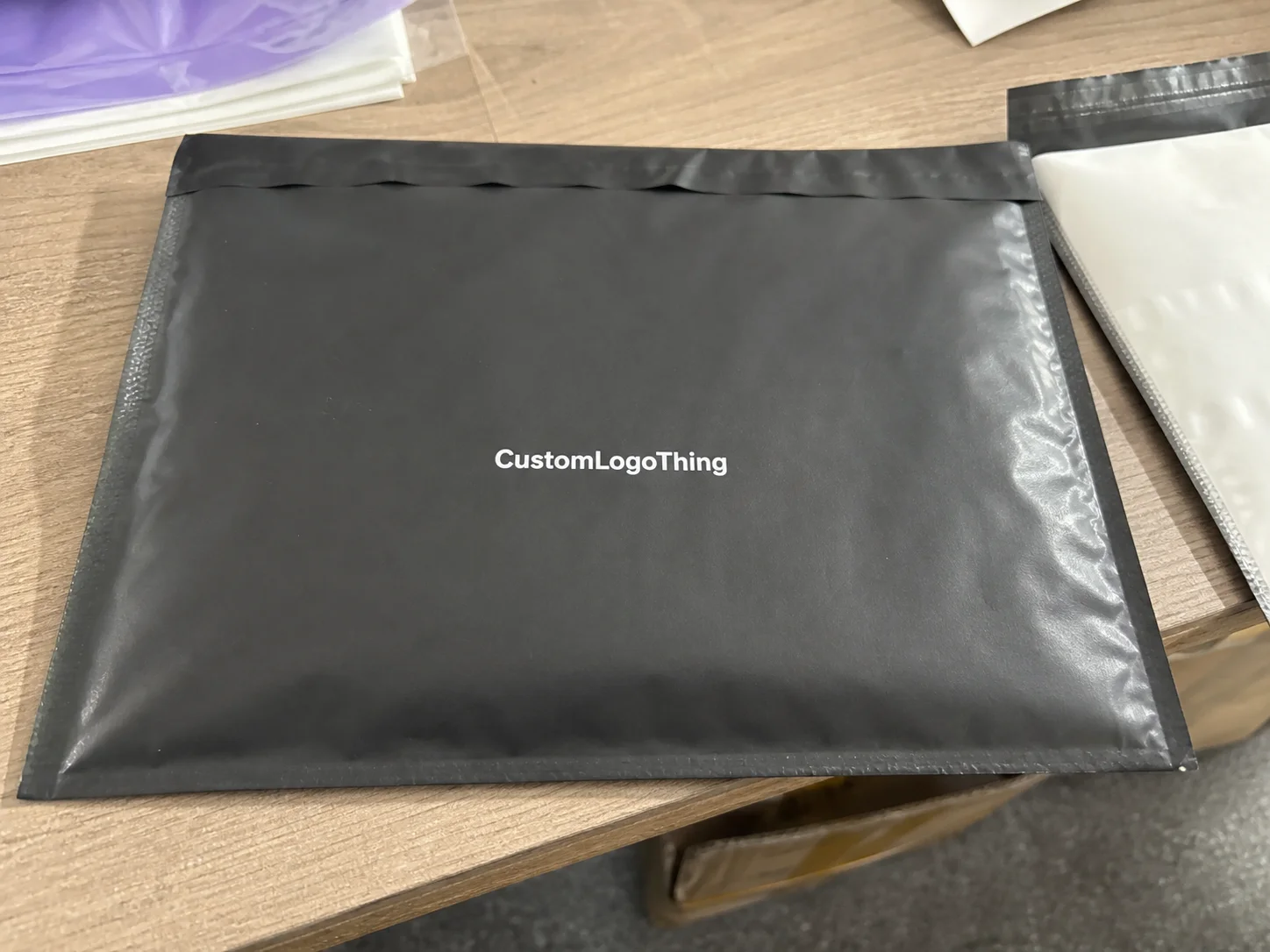
Custom compostable poly mailers are flexible shipping mailers made from compostable materials and printed with your logo, brand colors, or product messaging. Think of them as the lighter, lower-clutter cousin of rigid Custom Packaging Products for apparel, beauty, accessories, and direct-to-consumer orders. They’re built to ship soft goods without turning your warehouse into a cardboard museum, and they usually ship in case packs of 100 or 250 pieces depending on size and material thickness.
Here’s the plain-English version. A compostable mailer is designed to break down under specific composting conditions, not vanish like magic the second it touches soil in Austin or Miami. That’s the part people get wrong. A conventional poly mailer is usually polyethylene. A recyclable mailer might be made from a recyclable resin, depending on local collection systems. A biodegradable mailer is a fuzzier claim unless you know the exact standard behind it. Custom compostable poly mailers should come with a real certification trail, not a cheerful marketing phrase and a shrug. If a supplier can’t name the certification body in less than 30 seconds, I keep my wallet closed.
Why do brands switch? Branding is one reason. Shipping costs are another. The customer experience matters too. I remember a beauty client in Los Angeles who was spending $0.42 per unit on oversized rigid mailers for serum pouches. We moved her into custom compostable poly mailers at $0.19 per unit on 10,000 pieces, and she shaved about 18% off outbound packaging weight. That mattered more than the glossy sustainability deck she was using in investor meetings. Investors love decks. Warehouses love numbers. The same client also cut inbound storage by 2 pallet positions per 10,000 units, which saved roughly $160 a month in dock fees in Vernon, California.
Custom compostable poly mailers fit best for products that are soft, flat, and don’t need a hard shell. That usually means apparel, socks, swimwear, scarves, cosmetic accessories, lightweight home goods, and some DTC kits. If you’re shipping ceramic mugs or anything with corners sharp enough to punish thin film, slow down. You may need extra thickness, inner padding, or a different packaging approach altogether. In practice, many brands start with a 10 x 13 inch mailer for tees and a 14 x 19 inch mailer for hoodies, then adjust after a 200-piece pilot run.
They’re also a good fit for brands building stronger branded packaging without jumping straight into expensive custom printed boxes. A well-printed mailer can do a lot of work for your package branding. Clean logo placement. One bold message. Maybe a QR code or reorder reminder. Simple beats messy nine times out of ten, and that is not me being poetic; that is me looking at hundreds of production proofs from suppliers in Guangzhou and Foshan. A one-color print on a matte compostable film often costs $0.02 to $0.04 less per piece than a four-color full bleed layout, and it usually reads better under warehouse lighting.
“Compostable” is not a lifestyle. It’s a material claim with conditions attached. If a supplier can’t explain those conditions in 30 seconds, I keep walking.
One more reality check: custom compostable poly mailers are still packaging. They need proper storage, reasonable humidity, and a shipping plan that matches the product. Leave pallets in a hot, damp warehouse for six months in Guangzhou or Houston, and the film may not behave the way you expect. I’ve seen it happen. The adhesive gets weird, the surface starts looking less crisp, and suddenly everyone is pretending it’s “just a minor variance.” No. It’s not minor when your reprint bill is $800 and the launch date is four days away.
How Custom Compostable Poly Mailers Work
The structure behind custom compostable poly mailers is usually a compostable film with a sealant layer and a closure system, often a peel-and-seal adhesive strip. Some versions are home-compostable in certain conditions, but many are certified for industrial composting only. That difference matters a lot more than most sales reps admit on the first call. A 25-micron film can feel fine in hand and still fail a rough transit test if the sealant layer is weak or the adhesive strip is too narrow.
Material composition varies. I’ve seen mailers built with PLA blends, PBAT-based structures, starch blends, and other compostable formulations depending on the supplier and the target standard. The exact recipe affects tear strength, temperature tolerance, clarity, and print performance. If you’re buying custom compostable poly mailers, ask for the substrate spec sheet, not just a pretty mockup. Pretty mockups are cheap. Spec sheets are where the truth hides. A decent spec sheet will list basis weight, tensile strength, elongation, and recommended storage temperature, often around 15℃ to 25℃ with humidity below 60%.
Printing on compostable film is not the same as printing on standard polyethylene. Ink adhesion, drying time, and surface treatment all matter. On one run for a fashion client in Ho Chi Minh City, the supplier tried to push a heavy ink coverage layout with low curing time. The result looked fine in photos and rubbed off in transit after 300 units. We fixed it by reducing the flood coat, changing the print sequence, and testing a 2-color version instead of four. Custom compostable poly mailers are more forgiving when the design respects the material. Ignore that, and the film will politely humiliate you later. A simple two-pass flexographic setup often performs better than a dense full-bleed design, especially on matte compostable film.
Transit performance usually comes down to three things: puncture resistance, moisture resistance, and seal integrity. A good mailer should survive normal parcel handling, conveyor friction, and the occasional ugly warehouse toss. But “good” depends on product weight and edge shape. For lightweight apparel, 2.5 to 3.5 mil equivalent performance is common, though you should always confirm the actual material spec because suppliers love loose comparisons. If your product weighs 280 grams or less, a 3.0 mil equivalent can be enough; if you’re pushing 700 grams with zippers or hardware, request a thicker film and a stronger adhesive strip.
Industrial composting and home composting are not cousins. They are different systems with different temperature ranges, oxygen conditions, and timelines. Industrial composting facilities operate under controlled heat and moisture, and many compostable materials need that environment to break down properly. If your supplier says custom compostable poly mailers are “compostable,” ask whether they mean industrial, home, or both. Then ask for the certification. The paper trail matters, and so does the lab report date; I prefer reports issued within the last 24 months.
For packaging standards, I usually tell clients to look at the bigger ecosystem. The EPA’s composting guidance is useful for understanding how composting systems operate, while ISTA matters if you care about shipping performance under real transit conditions. Compostability and transit durability are separate tests. You need both if you want to sleep at night. I also like to compare compostability claims against the local waste infrastructure in places like California and British Columbia, because a claim that sounds clean in a slide deck can fail in the bin stream.
There’s also shelf life to consider. Some compostable films are more sensitive to heat and humidity than conventional plastic. That means storage strategy becomes part of product packaging planning, not an afterthought. I’ve seen pallets warp under warehouse skylights in Dongguan because nobody thought the sun would matter. It matters. Of course it matters. Packaging loves to punish optimism. For many suppliers, the practical storage window is 6 to 12 months if kept in a dry room at 18℃ to 25℃, but that only holds if the cartons stay sealed and off the floor.
Key Factors That Affect Quality, Cost, and Pricing
If you want realistic pricing for custom compostable poly mailers, stop asking for “cheap” and start asking for the variables. Size, thickness, print colors, and bag style usually drive the biggest swings. A 10 x 13 inch mailer with one-color print is a different animal from a 14 x 19 inch mailer with full coverage artwork and a gusset. Different materials. Different setup. Different price. A 100 mm gusset can add roughly $0.01 to $0.03 per unit, depending on film structure and order quantity.
For smaller orders, setup costs can make the first run look expensive. I’ve quoted projects where the factory price was only $0.14 per unit, but the real first-order landed cost came closer to $0.27 because of plates, sampling, freight, and a small art adjustment fee. That’s not a trick. That’s packaging math. Custom compostable poly mailers are no different from other custom packaging in that regard. One client in Portland saved $300 on unit pricing and lost $620 in proof changes because the logo file was RGB instead of Pantone-matched vector art.
Quantity changes everything. At 5,000 pieces, you may see a price like $0.18 to $0.32 per bag depending on size and print complexity. At 20,000 pieces, that can drop to $0.11 to $0.22 per bag if the artwork is straightforward and the supplier already has the material in stock. I’ve seen a 35% price difference between two quotes that looked almost identical until we noticed one included a custom film structure and the other used a standard compostable stock. That’s the sort of detail that looks tiny on paper and very expensive on a spreadsheet. For a 5,000-piece run, a common market reference is around $0.15 per unit for 5000 pieces on a simple 2-color layout, but only if the size is standard and the supplier is already running that film in batches.
Here’s a simple comparison table based on the kind of quotes I see in real negotiations for custom compostable poly mailers. These are practical ranges, not fairy dust.
| Order Size | Typical Unit Price | Common Setup Costs | Best For |
|---|---|---|---|
| 5,000 pieces | $0.15 - $0.32 | $120 - $350 | Testing a new brand or SKU |
| 10,000 pieces | $0.11 - $0.25 | $120 - $300 | Steady monthly shipping |
| 20,000 pieces | $0.09 - $0.22 | $100 - $250 | Higher-volume DTC fulfillment |
Don’t ignore hidden costs. Artwork cleanup can run $25 to $150 if your file is a mess. Sample runs may cost $40 to $120 depending on material and courier method. Rush production can add 10% to 25%. And if you’re importing, freight and duties can change the whole equation. I’ve had clients obsess over a $0.02 unit price difference and then lose $900 on shipping because nobody checked carton dimensions. That kind of penny-pinching is expensive, which is rich in the worst possible way. If the carton is 60 x 45 x 35 cm instead of 50 x 40 x 30 cm, the cubic weight can jump fast enough to erase the savings.
Freight deserves its own paragraph because it loves to ambush budgets. A quote of $0.16 per unit from the factory means very little if ocean freight, last-mile delivery, and customs fees push your landed cost to $0.24. Always compare total landed cost, not just factory pricing. Custom compostable poly mailers are a procurement item, yes, but they are also a logistics decision. And logistics, in my experience, is where cheerful assumptions go to get tackled. If your supplier is in Shenzhen and your warehouse is in New Jersey, ask for sea freight, rail, and air options before you approve production.
If you’re comparing mailers with other packaging, think about the full branding stack. A polished mailer might be enough for apparel, while premium accessories might still need insert cards, tissue, or Custom Poly Mailers in a different material family. The right choice depends on product weight, unboxing expectations, and your packaging design goals. There is no prize for overpacking a T-shirt. A $0.06 tissue insert should not force a $0.18 larger mailer unless the dimensions truly demand it.
Step-by-Step Process and Timeline for Ordering
Ordering custom compostable poly mailers usually follows a predictable path, but buyers still manage to complicate it. First, you choose size. Then you confirm material and thickness. Then you send artwork. Then the supplier builds a proof. Then you approve a sample. Then production starts. That sounds orderly until someone changes the logo file three times and asks why shipping isn’t done yet. I’ve lived that email chain. It’s not pretty. A standard order with a stable file can move from inquiry to proof in 2 to 4 business days if the supplier is organized in Shenzhen or Ningbo.
I like to tell clients to think in stages. Stage one is fit. Stage two is appearance. Stage three is performance. If any one of those fails, the whole order becomes a headache. A DTC skincare brand I worked with in Chicago wanted to jump straight into mass production without a physical sample. I pushed back. Good thing. The adhesive strip was too strong for their folding line, and the mailer snagged at scale. We caught it on a 200-piece test instead of a 20,000-piece disaster. That was a very good day for my blood pressure. The sample cost them $68 plus $24 in courier fees; the prevented reprint would have exceeded $2,100.
Here’s a realistic timeline for custom compostable poly mailers if the artwork is ready and the supplier is organized:
- Inquiry and quote: 1 to 3 business days.
- Artwork check and file cleanup: 1 to 4 business days.
- Digital proof approval: 1 to 2 business days.
- Sample production: 5 to 10 business days.
- Sample shipping: 3 to 7 business days, depending on courier.
- Mass production: 10 to 18 business days after approval.
- Freight and delivery: 5 to 35 days depending on method.
That means a realistic project from first quote to delivery can take 3 to 8 weeks, and sometimes longer if you’re doing fully custom sizing or unusual print coverage. Stock sizes move faster. A fully custom size with special adhesive and multilingual markings takes longer because every variable adds a step. Custom compostable poly mailers are not instant, despite what some sales decks imply. The sales decks are always in a hurry; the factory is not. In practice, you should expect typically 12-15 business days from proof approval for production alone on a standard order from Guangdong, then add transit time.
Before you request quotes, have these details ready:
- Finished product dimensions, not vague guesses.
- Target quantity for the first order and reorder plan.
- Desired print colors and logo placement.
- Preferred delivery country and ZIP code for freight estimates.
- Any certification requirements, such as FSC or specific compostability standards.
- Whether you want stock sizing or a custom dimension.
If you need material or print samples before committing, ask early. Good suppliers will show real production photos, not just studio renders. I also recommend keeping the quote request clear and boring. Boring requests get better answers. “Need 10,000 pieces, 12 x 16 inches, 2-color logo, industrial compostable only, delivery to Ohio” is a useful quote request. “We want something eco and cool” is not. I wish that were a joke, but I’ve received versions of that sentence more than once. If you can add the ship-to city, like Columbus or Dallas, you’ll get a more accurate DDP estimate within 24 hours.
For sustainability documentation, some brands also want reference points from organizations like FSC if any paper components are involved in outer packaging or inserts. That doesn’t replace compostability testing, but it does help round out the broader eco-friendly packaging story. The brand story should be true before it is pretty. If your mailer kit includes an insert card, a paper tear strip, or a hangtag, ask for a paper spec such as 350gsm C1S artboard so the whole system stays consistent.
How to Choose the Right Custom Compostable Poly Mailers
Choosing the right custom compostable poly mailers starts with the product, not the packaging catalog. Measure the product in its folded or bagged state. Add enough room for easy insertion, but not so much room that the item slides around like it’s on vacation. Apparel usually needs less structural protection than boxed beauty items, but even lightweight pieces can suffer if the mailer is too loose. A folded sweatshirt that measures 11 x 9 x 2 inches may need a 14 x 19 inch mailer to allow for a clean seal and a return label panel.
Size mistakes are one of the easiest ways to waste money. Too small, and the product won’t fit or the seam gets stressed. Too large, and your postage can creep up because dimensional weight punishes sloppy sizing. I once watched a retailer spend an extra $0.31 per shipment because every mailer was 2 inches too long. Multiply that by 12,000 shipments, and suddenly “small” becomes very loud. That kind of oversizing can cost $3,720 in postage before you even count the added carton space in a Brooklyn warehouse or a Dallas 3PL.
Design choices matter too. Matte finishes usually look cleaner and hide scuffs better than glossy ones. Single-color print is cheaper and often looks more premium than people expect, especially on muted compostable film. Full-color artwork can work beautifully, but only if the print file is strong and the supplier has good registration control. For custom compostable poly mailers, restraint usually beats overdesign. I know, I know—every brand wants the packaging to “pop.” Sometimes “pop” just means “hard to read and expensive.”
If your brand is building stronger retail packaging or product packaging recognition, think about logo placement as part of a bigger package branding system. A centered logo, a short brand message, and a clean return address line can do more than a cluttered collage of claims. Brands love to list every sustainability virtue they can think of. Customers mostly want clarity and decent tape. A 60 mm logo mark centered 40 mm from the top seal can look cleaner than a full-bleed layout, especially on a 2-color compostable film.
Thickness matters most when the contents have sharp edges, zippers, hardware, or bulk. I usually tell buyers to request a sample run or at least physical test packs if the item is heavier than a basic tee. A slightly thicker compostable film may cost more, but it can save you money on damage claims and replacement shipments. That tradeoff is easy to justify when the product costs $38 and the mailer costs $0.22. I’ve seen a 0.5 mil upgrade pay for itself in under 2,000 shipments because the return rate dropped by 1.4%.
Verification is non-negotiable. Ask for certification documents, material specs, and test reports. If the supplier claims compostability, ask which standard they meet and which lab tested it. Also ask whether the mailer is suitable for industrial composting only. A decent supplier should answer quickly and without drama. If they start speaking in circles, that’s your answer. I’ve sat through enough of those conversations to know that “we can check later” usually means “we hope you forget.” Request the certificate number, the issue date, and the exact resin family in writing.
For brands that care about eco-friendly packaging and a lower carbon footprint, I suggest testing with your real product before committing to the full order. Put three units in the mailer, seal it, shake it, drop it, store it for a week, then ship a few across the country. Real use beats sample-room optimism every time. Packaging is not theoretical. The carrier gets the final vote. If your route runs from Los Angeles to Atlanta, include that in the test, because heat and handling in July can tell you more than a glossy mockup ever will.
And yes, custom compostable mailers can absolutely be part of a broader brand system that includes labels, inserts, and even custom printed boxes for premium lines. But don’t force one packaging format to do every job. Sometimes the smartest move is a simple mailer for one SKU and a box for another. Basic, but effective. Funny how that works. If you need a premium insert, a 350gsm C1S artboard card can complement the mailer without bloating the shipping profile.
Common Mistakes That Waste Money and Cause Delays
The most expensive mistake with custom compostable poly mailers is choosing the wrong size. It sounds boring. It is boring. It also wrecks margins. Too-small packaging creates rework, damaged closures, and angry warehouse staff. Too-large packaging increases shipping cost and makes the brand look sloppy. I’ve seen a $0.12 mailer turn into a $0.43 problem because the box count and storage footprint doubled for no good reason. One extra inch in width can change the carton packout from 250 units per carton to 200, which is the sort of thing that quietly inflates freight.
Another mistake is ignoring storage conditions. Compostable materials can be more sensitive to heat and humidity than standard poly. I’ve walked factory floors in Dongguan where finished mailers sat too close to a sunlit loading bay, and the adhesive got lazy. Not great. If you’re ordering custom compostable poly mailers, ask about recommended storage ranges and shelf life. Then follow them. Wild concept, I know. In most cases, I recommend a cool, dry room between 18℃ and 25℃ and away from direct sunlight and concrete floors.
Skipping sample approval is a classic way to create self-inflicted pain. People think they’re saving a week. Then the first production batch arrives with print alignment drift, weak seals, or a logo that looks 10% too blue under warehouse lighting. A sample costs less than a reprint. Every single time. I don’t care how confident the sales rep sounds. Confidence is lovely; a signed sample is better. One 100-piece sample lot from a factory in Fujian can save you from a $1,500 rush correction later.
There’s also the certification trap. Some buyers assume every compostable claim means the same thing. It doesn’t. Ask for documentation. Ask for test methods. Ask whether the claim relates to industrial composting, home composting, or both. If you’re using custom compostable poly mailers in a sustainability-focused launch, vague claims can backfire fast. Customers are more skeptical now, and honestly, they should be. A certification from a recognized lab in Europe or North America is more useful than a generic “eco-friendly” line on a PDF.
Ordering the wrong quantity causes its own flavor of pain. Order too little, and you pay rush fees or air freight on a second run. Order too much, and you sit on inventory that may be sensitive to age or storage conditions. I’ve seen a company overbuy by 30% because they wanted “safety stock,” then spend eight months stacking pallets beside their custom packaging products like a small warehouse museum. Safe? Maybe. Efficient? Not even close. The more specific your reorder plan, the less likely you are to end up with dead stock valued at $4,000 sitting in a humid room in Atlanta.
One more mistake: treating freight as an afterthought. A supplier quote that excludes shipping is not a full quote. If you’re importing custom compostable poly mailers, ask for EXW, FOB, or DDP terms in writing and compare them properly. Terms matter. Otherwise, the cheapest quote becomes the most expensive lesson in the room. A quote from Ningbo at $0.13 per unit can lose to a $0.16 quote from Shenzhen if the Shenzhen supplier includes DDP to New York and the Ningbo supplier doesn’t.
Expert Tips for Better Results with Custom Compostable Poly Mailers
If you want better results with custom compostable poly mailers, start with contrast. Dark logo on light film. Clean typography. Enough white space to breathe. Compostable film usually looks best when the artwork is simple and intentional. Overprint can make even a good material look busy, and busy is rarely premium. A two-color design on a 14 x 19 inch matte film can look more expensive than a four-color layout, and it may cost $0.03 less per unit.
Keep the design file clean. Vector logos. Proper bleed. Correct PMS references if the supplier supports them. I’ve lost count of how many delays came from blurry PNG files sent by someone who thought “high resolution” meant 72 dpi in a bigger email attachment. It doesn’t. Send proper art, and your custom compostable poly mailers will thank you by not looking cheap. If your supplier wants a 3 mm bleed and 300 dpi images, give them that on day one instead of discovering it after the proof round.
Ask for real sample photos from production, not just mockups. Better yet, ask the supplier to show you recent runs with the same material and print method. That tells you more than a polished render ever will. If the factory has experience with compostable film and understands ink handling, they’ll be able to show you stable results and explain what changed between test and production. I prefer photos taken beside a ruler or carton stack in the factory in Zhongshan or Qingdao; that tells me the image is from an actual line, not a stock folder.
Negotiate shipping terms before production starts. A lot of buyers focus entirely on the bag price and forget that freight can swing wildly depending on carton size, cube efficiency, and delivery destination. If you know your reorder cadence, ask whether the supplier can help consolidate shipments or quote multiple freight methods. A $400 freight difference can wipe out the savings from a lower unit price. For example, a 20,000-piece order shipped LCL to Savannah can cost more per unit than a smaller DDP air shipment if the cartons are oversized and the cube is poor.
I also suggest keeping custom compostable poly mailers as part of a deliberate packaging system, not an isolated purchase. That means thinking about inserts, labels, outer cartons, and the customer’s first impression as one chain. Your branded packaging should feel like one sentence, not six unrelated ones fighting in a parking lot. That mental image has saved me from making some very bad design decisions. If your insert card is 350gsm C1S artboard and your mailer is matte compostable film, the tactile contrast can feel intentional instead of random.
My practical advice from the factory side? Treat the mailer like a branded surface with a shipping job. That balance is the whole point. If you’re scaling a DTC label or upgrading from plain mailers to something that reflects your story, custom compostable poly mailers can be a smart middle ground between cost control and visible sustainability. Not flashy. Just sensible. Which, in packaging, is usually the smarter flex. I’ve seen brands in New York and Singapore use this approach to keep packaging spend under 3% of COGS while still improving customer perception.
If you’re building a broader sourcing list, keep your supplier brief tight and ask for exact specs, exact costs, and exact lead times. Good vendors answer with numbers. Better vendors explain what can change those numbers. That’s the difference between a decent order and three rounds of email chaos. Ask for the MOQ in writing, the unit cost at 5,000, 10,000, and 20,000 pieces, and the timeline from proof approval to shipment, which is typically 12-15 business days for standard production in Guangdong.
FAQ
Are custom compostable poly mailers actually compostable?
Yes, but only if they meet recognized standards and are disposed of in the correct composting environment. Custom compostable poly mailers should come with certification documents or test reports, not just marketing language. Also, home composting and industrial composting are not the same thing, which seems to surprise people every week. Ask for the exact standard number and the lab name before you place a 10,000-piece order.
How much do custom compostable poly mailers cost per piece?
Pricing depends on size, thickness, print colors, quantity, and freight. For many projects, custom compostable poly mailers land somewhere around $0.15 per unit for 5000 pieces on simple designs, with lower pricing at higher volumes. Setup fees, samples, and shipping can move the first-order total more than people expect, so always compare landed cost. A 2-color 10 x 13 inch mailer may land at $0.17, while a full-coverage 14 x 19 inch version can push closer to $0.30.
What is the typical turnaround time for custom compostable poly mailers?
Sample approval often takes longer than buyers expect, especially if artwork needs cleanup. A standard custom compostable poly mailers order can take about 3 to 8 weeks from first quote to delivery, depending on whether you choose a stock size or a fully custom run. Production alone is typically 12-15 business days from proof approval, and then you still need to account for freight. Air freight is faster. Ocean freight is cheaper. Pick your headache carefully.
What products work best in compostable mailers?
They work well for soft goods like apparel, scarves, socks, light accessories, and some beauty items. Heavier or sharp-edged products may need extra thickness or a different packaging format. I always recommend testing the actual product in custom compostable poly mailers before placing a big order. Paper samples and wishful thinking are not substitutes for a real fit test. If your product weighs over 500 grams or has metal hardware, ask for a thicker film or a reinforced seal.
What should I ask a supplier before ordering custom compostable poly mailers?
Ask for material specs, compostability certifications, print proof examples, Minimum Order Quantity, lead time, and freight cost. A good supplier should tell you whether their custom compostable poly mailers are industrial compostable, home compostable, or both, and they should break out setup fees separately from unit pricing. If they can’t do that, keep shopping. Also ask which city the factory is in, such as Shenzhen, Ningbo, or Dongguan, because shipping time and inland trucking can vary by region.
At Custom Logo Things, the smartest packaging decisions are usually the ones that balance brand, cost, and real-world performance. Custom compostable poly mailers can absolutely do that if you Choose the Right size, ask the right questions, and avoid the usual traps. I’ve seen them work beautifully for lean DTC brands and premium launches alike. I’ve also seen them go sideways when someone treated compostable film like it was invincible. It isn’t. That’s fine. Good packaging doesn’t need magic. It needs planning, a real spec sheet, and a budget that includes freight from the start.