A cooler sticker has a rougher job than most labels. Custom cooler stickers get dragged across truck beds, packed in ice, rinsed with a hose, baked in direct sun, scraped by bottle caps, and applied to plastic surfaces that were never designed with adhesives in mind.
Cute art helps. It does not solve the physics. A cooler decal has to act more like outdoor gear than a notebook sticker. If the material, adhesive, laminate, cut shape, or application process is wrong, the sticker can peel, fade, wrinkle, or look exhausted before the first event photos get posted. Very avoidable. Also surprisingly common.
For branded giveaways, event merch, sponsor badges, brewery promos, fishing tournament gear, retail accessory packs, and field-team coolers, the goal is straightforward: choose a decal build that can handle moisture, cold, sun, scuffs, and human behavior. Human behavior is usually the harshest test.
What Custom Cooler Stickers Actually Need to Survive
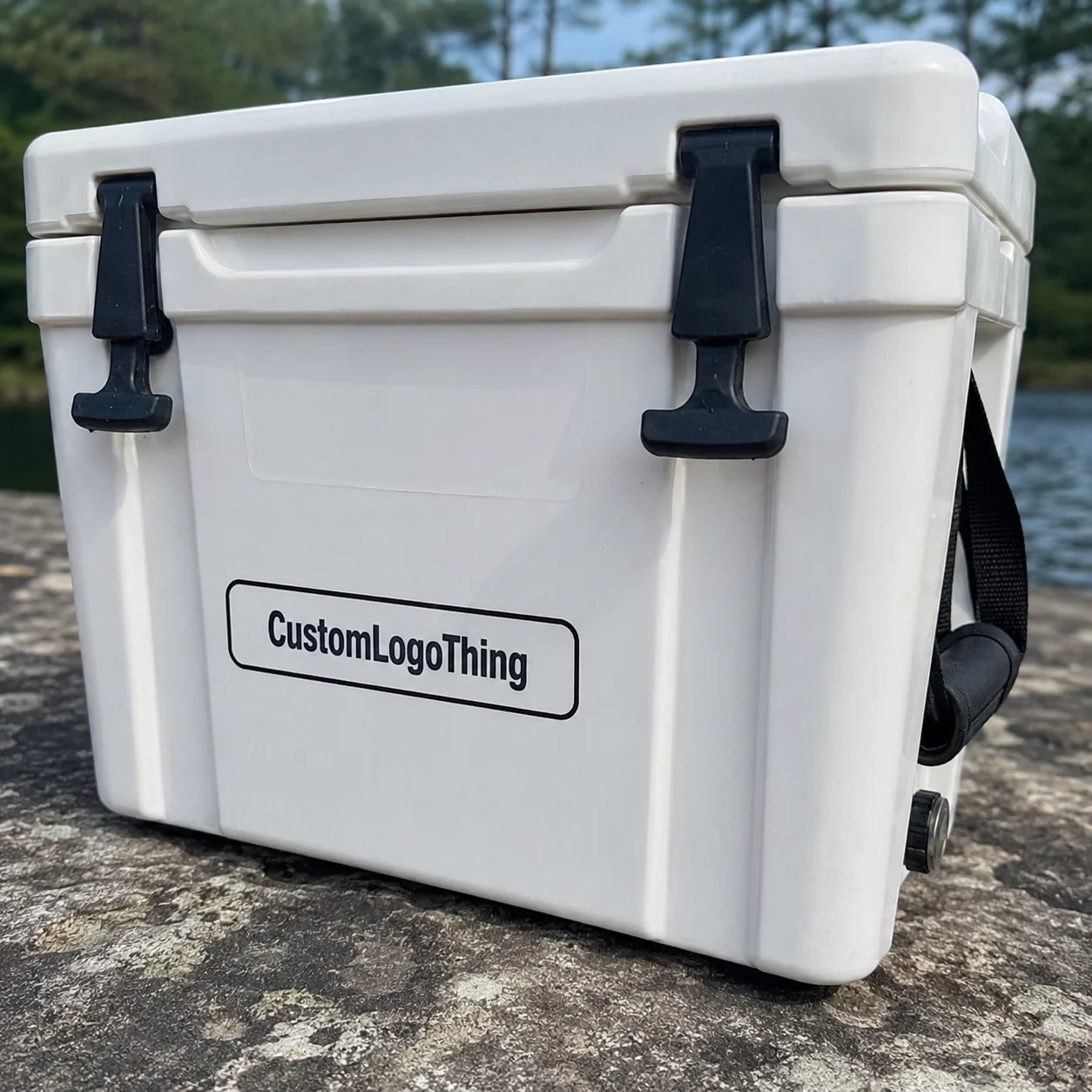
Custom cooler stickers are adhesive decals made for hard-sided coolers, soft coolers, drink tubs, event ice chests, fishing coolers, boat gear, dock boxes, and promotional merchandise. Breweries, outdoor retailers, fishing brands, clubs, sponsors, restaurants, and companies building branded packaging programs often use them when a carton, hang tag, or standard label is not enough.
A paper sticker is built for dry, low-abuse use: packaging inserts, notebooks, shipping folders, product sleeves, maybe a short-term handout. A cooler-ready decal needs a tougher stack. Start with waterproof face stock, outdoor-rated adhesive, UV-resistant print, and a protective laminate. Then add proper surface prep, because even strong adhesive fails when it is asked to bond through dust, condensation, sunscreen, fish oil, salt residue, or molded texture.
The difference is not cosmetic. Paper can absorb water, swell, tear, and lose print quality fast. Vinyl or a similar synthetic film resists moisture and stays dimensionally stable. Permanent outdoor adhesive grips harder than removable indoor adhesive. Laminate protects the ink from abrasion, cleaning, sun exposure, and the occasional person using the cooler lid as a cutting board. No supplier can fully protect against that person.
Common buying scenarios include:
- Branded cooler badges for staff gear, field sales teams, and company retreats.
- Sponsor decals for fishing tournaments, tailgates, golf outings, festivals, and charity events.
- Retail accessory packs sold with outdoor gear, drinkware, apparel, or branded packaging bundles.
- Boat and dock stickers exposed to saltwater, UV, spray, and regular cleaning.
- Promotional ice chest decals for breweries, beverage launches, pop-ups, and local events.
The best decal is not automatically the thickest or glossiest one. Thickness can feel premium, but edge adhesion matters more. Gloss looks sharp and wipes clean. Matte may suit a higher-end outdoor brand or muted packaging system. The right build balances material, adhesive, ink, laminate, shape, size, and application instructions against the surface and the abuse level.
How Cooler Decals Are Printed, Laminated, and Cut
Production is efficient when the artwork is clean. The printer checks resolution, bleed, cut lines, dimensions, and print colors. The design is prepared for the chosen print method, printed onto durable film, laminated for protection, and cut into the final shape. Depending on the order, decals may ship as die-cut singles, kiss-cut sheets, rolls, or retail-ready sets.
White vinyl is the safest default for most cooler stickers. It gives strong color, clean contrast, and reliable opacity. If a logo uses white, yellow, light blue, small type, or fine detail, white vinyl usually prints better than clear film. Clear vinyl can create a painted-on look because the cooler color shows through, but contrast becomes a real constraint. White ink can help. It also adds cost and requires equipment set up for that layer.
Removable vinyl has a place: short-term event promos where cleanup matters more than long-term grip. It is not the default for coolers expected to survive a season of use. Specialty films such as metallic, holographic, chrome, or reflective stock can look impressive on a sample sheet. On a textured cooler, they are not always practical. Some specialty films are stiffer, more expensive, and less forgiving around molded panels or slight curves.
Lamination is the insurance layer buyers should be cautious about skipping. Gloss laminate makes color pop and wipes clean easily. Matte laminate reduces glare and gives a quieter, more premium finish. Textured laminate hides light scuffing but can soften tiny details. If the art has 6-point text, hairline strokes, or a small QR code, texture may hurt readability.
Practical rule: for hard-sided coolers, start with white outdoor vinyl, permanent adhesive, UV-resistant print, and gloss or matte laminate. Change the spec only when the surface, brand look, or use case gives you a specific reason.
Adhesive behavior is where buyers get surprised. Rotomolded coolers often have textured plastic, and texture reduces the contact area between adhesive and surface. Less contact area means less grip. Smooth plastic, powder-coated metal, painted surfaces, and flat panels are usually easier. Adhesion depends on surface energy, cleanliness, temperature, pressure, and cure time. Many pressure-sensitive adhesives keep building strength for 24 to 72 hours after application, assuming the sticker was applied correctly.
Cut style affects both presentation and handling. Die-cut singles look polished for giveaways and retail packs. Kiss-cut sheets are easier to peel, especially at event booths where people may be applying stickers with cold hands and no patience. Contour-cut decals follow the logo shape and look more custom, but extremely detailed cuts can snag or tear. For field application, easy peeling beats clever packaging gymnastics.
Key Specs That Make Outdoor Cooler Labels Last
Durable cooler labels are not mysterious, but the specs must be deliberate. Ask for waterproof film, outdoor-rated permanent adhesive, UV-resistant inks, scratch-resistant laminate, and a service range that fits the expected use. For many applications, suppliers may recommend vinyl film around 3 to 4 mil before laminate, with total finished thickness often landing around 5 to 8 mil depending on the film and laminate. Exact numbers vary by manufacturer. Bargain listings often pretend they do not.
Expected outdoor life varies with use. A basic unlaminated print may look rough quickly under sun and abrasion. A laminated outdoor vinyl decal may last 1 to 3 years in normal promotional use, sometimes longer on sheltered surfaces. Saltwater, daily commercial handling, pressure washing, harsh cleaners, bug spray, sunscreen, and repeated ice-water exposure can shorten that window. Rental coolers, fishing boats, and beverage tubs used every weekend need a more conservative durability plan.
Thickness needs context. Thicker decals can feel better in the hand and may be easier to apply. Too thick, though, and the edge becomes a failure point, especially on curved lids, textured plastic, or small logo shapes with narrow tips. A proud edge catches fingers, towels, straps, bottle caps, and whatever else slides across the cooler. Edge adhesion beats bragging about mil thickness. Every time.
Shape matters more than many buyers expect. Rounded corners usually last longer than sharp corners because they reduce edge lift. A 3-inch round badge or 4-inch rounded rectangle is often easier to apply and more durable than a 9-inch thin script logo with sharp points. Large decals need careful placement, especially over curved surfaces or molded panels. If the cooler has raised ridges, handles, hinges, latches, straps, cup holders, or embossed branding, measure the clean flat area before approving the size.
Artwork should work at cooler distance. Bold logos, high contrast, and simple shapes read well from 6 to 10 feet away. Tiny taglines, thin outlines, delicate gradients, and small QR codes can disappear once the decal is wet, scuffed, or viewed outdoors. A QR code should usually be at least 0.8 to 1 inch square for casual scanning, and larger is better if the surface may curve or glare.
The exposure list is ugly: ice melt, condensation, sunscreen, fish slime, bug spray, saltwater, mud, beer, soda, and cleaning chemicals. Laminate adds cost, often only a few cents per unit in larger runs, but skipping it can create a reprint problem. If the sticker supports a product launch, sponsor activation, or branded packaging campaign, saving pennies on protection is usually fake savings.
For broader durability thinking, packaging buyers can review testing concepts from the International Safe Transit Association. ISTA focuses on transport testing rather than cooler stickers specifically, but the mindset is useful: real products get dropped, rubbed, stacked, shipped, stored, and mishandled. Decal specs should respect that reality.
| Sticker Build | Best Use | Durability Level | Typical Tradeoff |
|---|---|---|---|
| Paper sticker, no laminate | Dry indoor handouts | Low | Cheap, but poor moisture resistance |
| White vinyl, permanent adhesive, gloss laminate | Most hard-sided cooler decals | High | Reliable, but not invisible on colored surfaces |
| Clear vinyl with white ink | Painted-on logo look | Medium to high | Higher cost and contrast must be managed |
| Removable vinyl | Temporary event promos | Medium | Easier removal, weaker long-term grip |
| Specialty metallic or holographic film | Limited merch drops | Varies | Looks loud, may be less practical on rough use |
Pricing, MOQ, and Unit Cost Drivers for Cooler Stickers
Pricing depends on size, material, laminate, quantity, number of designs, cut complexity, finish, packaging style, proofing needs, and shipping destination. A 2-inch round logo on white vinyl is not priced like a 7-inch contour-cut clear decal with white ink, matte laminate, barcode labels, and retail packaging.
For rough planning, small custom runs of laminated vinyl cooler decals may land around $1.20 to $3.50 each for 50 to 100 pieces, depending heavily on size and setup. Mid-size runs around 500 pieces may drop into the $0.35 to $1.10 range for common sizes such as 3-inch circles or 3-by-4-inch rounded rectangles. Larger runs around 2,500 to 5,000 pieces can often fall around $0.12 to $0.45 each for straightforward white vinyl builds. Oversized decals, specialty films, multiple designs, exact color matching, and individual packaging can push those numbers up quickly.
Those ranges are not promises. They are buying reality checks. Setup, proofing, printing, lamination, cutting, waste, packing, and quality checks still exist on small runs. Larger runs usually lower unit cost because setup time spreads across more pieces and production becomes more efficient.
MOQ is practical, not mystical. Some manufacturers can run 25, 50, or 100 pieces for samples, events, or first tests. Better value often starts when buyers consolidate designs, standardize sizes, and avoid five tiny variations that each need separate setup. Very unglamorous. Very effective.
Premium options add cost for real reasons. Clear vinyl may require white ink. Metallic stock costs more than standard white vinyl. Special laminates add material cost and handling. Individual retail bags, header cards, barcode labels, split shipments, and exact pack counts add labor. Sometimes those extras are worth it, especially for retail packaging or branded merch kits. Sometimes they are decoration wearing a fake mustache.
If cooler stickers are part of a larger packaging program, compare them with the other branded pieces. Custom decals can pair well with Custom Labels & Tags, hang tags, wraps, or Custom Packaging Products for launches, retail displays, and event kits. The trick is keeping materials, finishes, and colors consistent enough that the brand looks intentional, not like six vendors designed six items in six different moods.
A useful quote request includes exact dimensions, quantity, material preference, laminate preference, finish, shape, number of artwork versions, application surface, deadline, and shipping location. A vague quote request gets a vague price. Shocking, I know.
Process and Timeline From Artwork to Finished Decals
The ordering process runs better when decisions happen in the right order. Choose the size and shape. Submit artwork. Confirm material and finish. Review the digital proof. Approve or revise. Move into production. Finish cutting, packing, and shipping. Problems usually begin when someone skips the boring parts and emails a tiny screenshot with “make this 5 inches wide.” Please do not do that to your printer.
- Choose the size: measure the flat area on the cooler, not the entire lid.
- Pick the shape: round, square, rounded rectangle, oval, or contour cut.
- Send artwork: vector files such as AI, EPS, or PDF are best for logos.
- Confirm materials: vinyl type, adhesive, laminate, and finish.
- Review proof: check size, spelling, cut line, color expectations, and quantity.
- Approve production: production should start only after the proof is approved.
- Inspect delivery: count pieces, check finish, and test application before full rollout.
Artwork review is not a formality. A proper prepress check looks at resolution, bleed, cut paths, small text, brand colors, color mode, and whether the decal can be cut cleanly. Vector artwork is usually best for logos because it keeps edges sharp at any size. Raster files can work if they are high resolution, often 300 dpi at final print size, but screenshots and social media downloads are usually garbage for print. Beautiful garbage, maybe. Still garbage.
Typical timelines vary by supplier and order complexity. A simple repeat order with approved artwork may print and ship in 5 to 8 business days. A first-time custom order with proofing may take 8 to 12 business days after artwork is ready. Specialty materials, clear vinyl with white ink, strict color matching, multiple designs, retail packs, or split shipments can push production to 12 to 18 business days or more. Rush jobs may be possible, but rush reduces the margin for corrections.
Proof approval is the last cheap moment to catch mistakes. Check spelling, sponsor names, website URLs, QR code scans, cut lines, dimensions, quantities, and color expectations. The proof is not office decor. It is a production control document. If someone approves “Fishng Tournament” because they were busy, the printer is not a wizard with a time machine.
Shipping needs a buffer. Transit delays, weather, receiving docks, internal handoffs, and application time can all eat days. If decals are needed for a product launch, sponsorship activation, brewery event, fishing tournament, or retail drop, order earlier than the optimistic calendar suggests. For event use, build in at least 3 to 5 business days after delivery for inspection and application. More if volunteers are applying them. Volunteers are lovely. They are not always fast.
Common Mistakes That Cause Peeling, Fading, or Reprints
The biggest failure is bad application. Stickers applied to dirty, wet, cold, oily, or heavily textured cooler surfaces will struggle. Adhesive is not magic paste. Clean the surface, dry it fully, and apply firm pressure across the full decal, especially around edges and corners. If the cooler just came out of a cold truck and is covered in condensation, wait.
Application temperature matters. Many pressure-sensitive adhesives prefer moderate conditions, often around 50°F to 90°F for application, though the exact range depends on the adhesive. Applying decals in freezing conditions can prevent the adhesive from flowing into the surface texture. Applying over sunscreen, cooking grease, salt residue, or dust gives the adhesive a contaminated bond. That is not sticker failure. That is surface prep failure wearing a sticker costume.
Artwork mistakes are the next reprint factory. Low-resolution files, missing bleed, thin lines, tiny QR codes, unclear cut paths, and colors that look bright on a screen but print duller on film all cause problems. Screens are backlit. Stickers are ink on material. Brand colors should be supplied as Pantone references, CMYK values, or approved print samples when color matters. Exact color matching on vinyl is possible within reason, but it is not the same as clicking a hex code and hoping.
Choosing materials only by price is another classic. Cheap paper labels, indoor adhesives, and unlaminated prints may work on notebooks or basic shipping inserts. Coolers are not notebooks. Coolers are little plastic abuse machines. For outdoor use, pay for waterproof film and laminate. If budget is tight, reduce size or simplify packaging before cutting the durability layer.
Size mistakes show up fast. Oversized decals on curved lids can wrinkle or lift. Tiny stickers with too much text become unreadable. Sharp corners catch and peel. Complex contour cuts can tear during application. If the sticker must be applied at an event, choose a size people can handle quickly. A 3-inch circle or 3-by-3-inch rounded square is easier than a long thin decal that needs perfect alignment.
Communication mistakes are boring and expensive: vague deadlines, missing shipping addresses, late artwork changes, and proof approvals without real review. A printer can catch a lot. They cannot read minds, despite what every last-minute buyer seems to believe.
Be careful with sustainability claims. Vinyl is durable, but it is not automatically the greenest option. If environmental positioning matters for a product packaging or retail packaging program, ask what materials are available and what claims can be supported. For paper-based packaging components, standards from the Forest Stewardship Council may be relevant. For cooler decals, durability and correct-use claims are usually safer than vague eco language.
Next Steps Before You Order Cooler Decals
Before ordering, take ten minutes to gather the practical details. That small pause can save a full reprint. Decide what cooler surface the decal will go on, then measure the available flat area. Do not guess from a product photo. Cooler lids and side panels often have molded logos, ridges, cup holders, straps, latch areas, and textures that interfere with adhesion.
- Surface: smooth plastic, textured rotomolded plastic, painted metal, soft cooler fabric, or drink tub.
- Size: measured flat area, target decal dimensions, and clearance around latches or handles.
- Use: indoor giveaway, outdoor event, retail sale, boat gear, fishing tournament, or long-term brand badge.
- Finish: gloss for bright color and easy wiping, matte for lower glare and a premium feel.
- Format: individual die-cut pieces, kiss-cut sheets, rolls, bundled sets, or retail packs.
- Deadline: proof approval date, ship date, event date, and any application time needed.
Prepare the right files. Vector logo files are best: AI, EPS, or editable PDF. Send brand color references, desired dimensions, cut shape notes, and required text such as a website, QR code, sponsor name, legal copy, or social handle. If the sticker is part of broader branded packaging, include packaging design references so the finish, color, and style do not fight the rest of the program.
Order a sample or production proof if the surface is unusual, the deadline allows it, or the quantity is large enough that a mistake would hurt. Samples are boring until they save the run. Then suddenly everyone loves samples. A sample can show whether the adhesive likes the cooler texture, whether the finish has too much glare, whether the size feels right, and whether the artwork reads from a distance.
Test placement on one cooler before applying a full batch. Check visibility, edge contact, color contrast, and interference from handles, latches, straps, molded ridges, or curved panels. Apply firm pressure and give the adhesive time to cure before exposing the cooler to ice, water, or rough handling. A full 24 hours is a useful minimum for many applications, though adhesive systems vary.
For a smoother quote, send the supplier the size, quantity, artwork, cooler surface type, finish preference, deadline, and shipping location before ordering custom cooler stickers. That gives them enough detail to recommend the right material instead of guessing, and guessing is a terrible procurement strategy dressed up as speed.
FAQ
Are custom cooler decals waterproof enough for ice and condensation?
Yes, if they are printed on waterproof film such as vinyl or a similar synthetic stock. A protective laminate helps resist scuffs, ice melt, wiping, and light chemical exposure. Paper stickers or unlaminated indoor labels are poor choices for coolers because moisture attacks them quickly.
What is the best material for branded cooler stickers?
Outdoor-rated vinyl with a permanent adhesive is the safest default for most hard-sided coolers. Use clear vinyl when you want the cooler color to show through, but plan for white ink, bold contrast, or simplified artwork. For textured rotomolded coolers, ask about adhesive strength and test a sample before placing a large order.
How much do custom ice chest stickers usually cost?
Cost depends on size, quantity, material, laminate, cut shape, number of designs, and packaging requirements. Small runs have higher unit costs because setup and proofing are spread across fewer stickers. The best quote requests include exact dimensions, quantity, finish, artwork count, deadline, and shipping location.
How long does production take for custom cooler labels?
Simple orders usually move faster once artwork is print-ready and the proof is approved. Many standard jobs fall around 5 to 12 business days after approval, while specialty materials, multiple designs, color matching, retail packaging, or rush shipping can extend the timeline. Build in extra time for proof review, transit, receiving, and application if the stickers are needed for an event.
How do I keep cooler stickers from peeling off?
Clean and dry the surface before applying, especially if the cooler has dust, oil, sunscreen, salt residue, or condensation on it. Apply firm pressure across the full sticker, paying extra attention to edges and corners. Avoid applying decals in very cold conditions, on rough texture, or over molded ridges where the adhesive cannot make full contact.


