Custom cooler tote bags look straightforward until you start comparing actual specs. On paper, most of them seem similar: a soft-sided body, insulation, handles, and a zipper. In practice, the differences show up quickly once the bag is used for lunches, beverages, grocery runs, or event handouts. A tote that feels sturdy in a sample can disappoint if the insulation is too thin, the liner is hard to clean, or the handles are stitched only for light loads.
That is why experienced buyers do not stop at unit price. They look at how long the contents need to stay cool, how often the bag will be reused, whether the print needs to stay visible after handling, and how the construction holds up under real use. The best bags are not the most complicated ones. They are the ones that match the job closely enough to be carried again and again.
There is also a branding side to this category that is easy to underestimate. A reusable insulated tote tends to stay in circulation much longer than a flyer, a paper insert, or a one-time giveaway. If the bag is comfortable to carry and easy to wipe clean, it becomes part of the customer’s routine. That is where the value really lives.
Why cooler totes work so well for promotions and retail
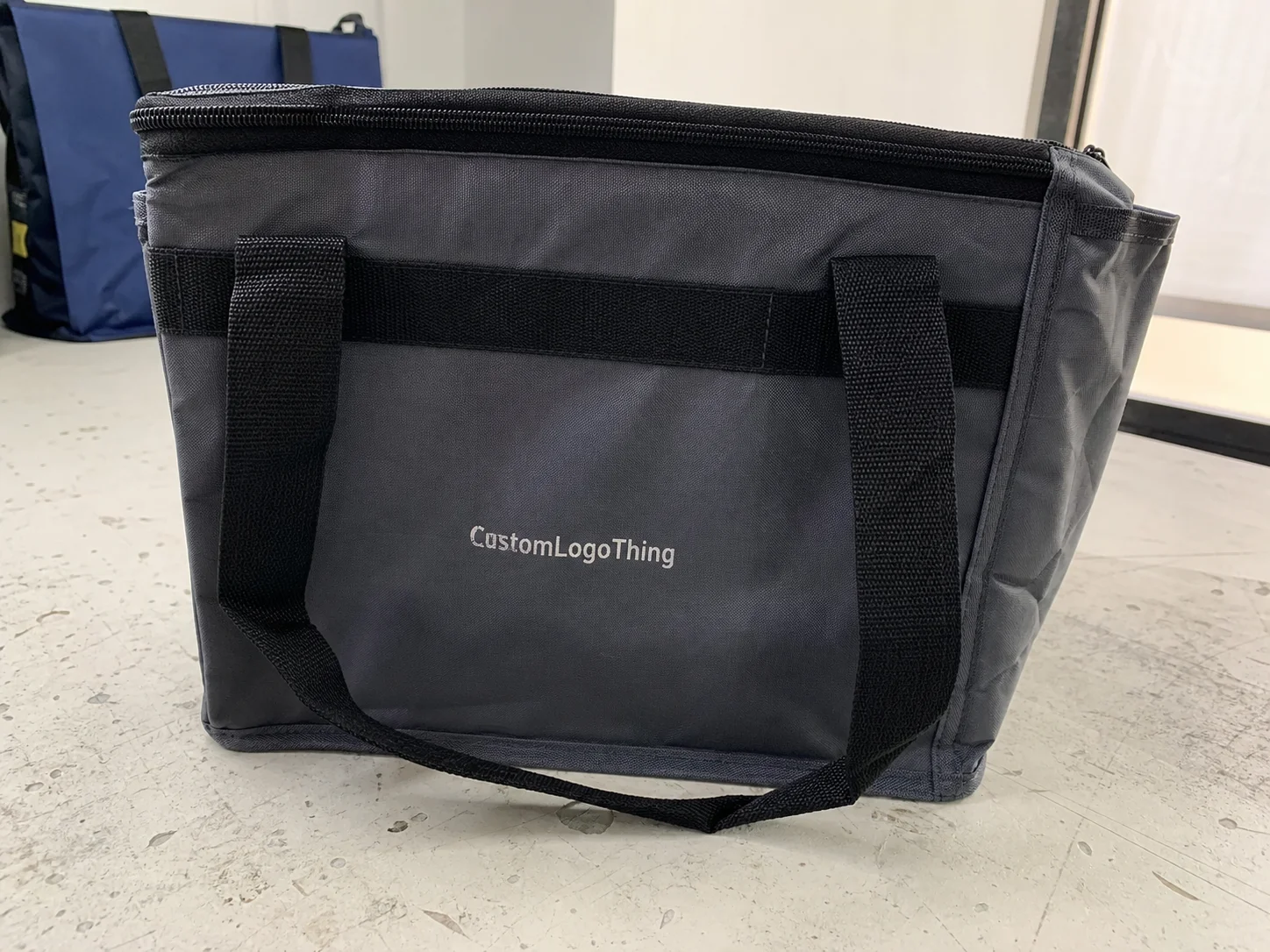
Custom cooler tote bags sit in a useful middle ground. They are lighter and easier to distribute than hard coolers, but they still feel substantial enough to justify a logo and a more polished presentation. That balance makes them a strong fit for trade shows, employee kits, grocery promotions, picnic bundles, beverage carryouts, and seasonal campaigns where the bag itself is part of the gift.
The format is familiar to most people, which helps. A tote shape is easy to carry, easy to store, and easy to hand out in quantity. Add insulation, and the bag becomes more than a carrier. It turns into a practical item that can hold cold drinks, packed lunches, takeout containers, or samples that need a little temperature control on the way home.
They also compare favorably with some other flexible carry items. A basic shopping bag may be cheaper, but it rarely offers the same perceived value. A cooler tote feels more thoughtful because it solves a specific problem. It protects food or beverages and gives the brand a use case people understand immediately.
That said, the category has limits. A standard promo tote is not a substitute for a high-performance cooler. If the contents need to stay cold for many hours in a hot vehicle, the bag will need better insulation, tighter seams, and a closure system that does more than simply cover the top. Buyers who expect ice retention comparable to a hard cooler usually need to step up the construction.
A good cooler tote earns its keep twice: first when it is handed out, then again every time it gets reused.
How insulation, lining, and closure systems affect performance
Performance starts with construction. The outer shell gives the bag structure and print space, while the inner layers slow heat transfer and keep spills from soaking into the body. In between, the foam or thermal layer does most of the insulating work. If any of those parts are underbuilt, the bag may still look good, but it will not hold temperature nearly as well as the sample suggested.
PEVA liners are common because they are light, wipeable, and practical for food and beverage use. Foil-based insulation is often used as a reflective layer and is usually paired with foam. That foam thickness matters more than many buyers expect. A thin build can be adequate for lunch or a short trip. A denser insulated structure is a better choice for beverage packs, grocery outings, or programs where the tote will be used repeatedly.
Closures matter just as much. A weak zipper or loose top opening allows cold air to escape quickly. That is not a marketing issue; it is a physics issue. Zippers are usually the most versatile option because they offer a clean appearance, better retention than an open top, and a familiar user experience. Hook-and-loop closures and roll tops can work in some designs, but they need to be chosen for the right reason, not just because they look different.
Shape changes how the bag performs too. Tall cooler totes are convenient for bottles, cans, and narrow lunch containers. Wider formats are better for groceries, picnic items, or boxed takeout. A gusseted bottom adds stability, which helps the bag sit upright instead of collapsing when loaded. That may seem like a small detail, but it makes a real difference on a table, in a car trunk, or on a trade show floor.
Material finish also affects print quality. Smooth outer shells usually hold logos more cleanly than heavily textured ones. Fine lines, tiny type, and photo-style artwork can get muddy on soft goods with a rough surface, especially if the fabric texture breaks up the imprint. Bold artwork tends to age better and remain legible after the bag has been folded, carried, and cleaned several times.
Useful features are usually the ones that improve daily handling rather than the ones that merely look spec-heavy:
- Reinforced handles for heavier loads and repeated use
- Wipe-clean interiors that tolerate spills and condensation
- Structured bottoms that help the bag stand and keep its shape
- Exterior pockets for utensils, napkins, tickets, or receipts
- Simple branding panels that keep the logo visible
Comfort matters too. If the handles dig into the hand or the opening is awkward to load, the bag gets left behind. The most durable construction in the world will not help a tote that people find inconvenient to carry.
Specs that drive cost, durability, and print quality
Price follows material, labor, and decoration complexity. That part is predictable, even if quotes sometimes arrive wrapped in vague language. A nonwoven shell is usually the most economical starting point. Woven polypropylene and laminated polypropylene tend to cost more, but they generally look sharper and resist wear better. Polyester often sits higher again, especially when the bag is meant to feel more retail-ready than promotional.
Insulation level pushes the price up as well. A light foam layer keeps a bag budget-friendly, but it will not perform like a thicker, denser insulated build. Buyers often underestimate how much that insulation detail affects both function and cost. If the tote is meant for repeated use, a better interior can be worth the upgrade because the bag stays useful longer.
Decoration method is another major variable. One-color screen printing is usually the simplest and least expensive route, particularly for a bold logo or a clean wordmark. Multi-color art increases setup and labor. Full-color graphics, larger imprint areas, and placements across multiple panels all add cost. That does not mean they should be avoided, only that the quote should reflect the actual design instead of treating a complex decoration like a simple one.
Size and structure also matter. A larger tote uses more material. Deep gussets, reinforced bases, multiple compartments, and upgraded closures all require more work. Sewing reinforcement around the handles and stress points adds labor too, and that labor is usually where the bag’s durability improves in a measurable way.
For a quick side-by-side view, these are the common tiers buyers compare:
| Style | Typical build | Best for | Relative cost | Performance notes |
|---|---|---|---|---|
| Budget promo tote | Nonwoven shell, light foam, PEVA liner | Giveaways, lunch kits, light grocery runs | $ | Fine for short trips; modest temperature retention |
| Mid-grade insulated tote | Laminated PP or polyester, thicker insulation, zipper closure | Employee gifts, event bundles, frequent reuse | $$ | Better structure and longer cooling performance |
| Premium retail-style cooler tote | Structured sides, reinforced handles, upgraded trim, denser insulation | Retail resale, VIP kits, premium branded packaging | $$$ | Higher perceived value and stronger durability |
One practical warning: a lower unit price at a very high quantity only helps if the bags are actually useful to the audience. Buying too much of the wrong size is an easy mistake. A tote that is slightly more expensive but gets carried repeatedly will usually deliver a better return than a cheaper bag that sits in storage or gets handed off to someone else immediately.
Customization extras can improve the product, but not every upgrade earns its keep. Bottle sleeves, name windows, extra pockets, contrast piping, molded inserts, and specialty trim can raise the quote quickly. Some of those details support reuse. Others are just visual clutter. The best specs are the ones that make the bag easier to use, easier to clean, or easier to carry.
Pricing, MOQ, and quote basics
Pricing for custom cooler tote bags usually falls into three practical bands. Budget promo versions are the least expensive and work for large giveaways or short-term campaigns. Mid-grade bags cost more, but they usually offer a better balance of insulation, structure, and visual appeal. Premium builds move into a higher tier because the materials, sewing, and decoration are all more demanding.
MOQ, or minimum order quantity, is just as important as the unit price. Smaller orders are helpful for a trial run, a limited event, or a retail test, but the unit cost often rises. Larger orders reduce unit pricing, yet only if the quantity matches the actual campaign need. A quote may look attractive at 10,000 units, but if the real distribution plan calls for 1,500 bags, the savings disappear into overstock.
A useful quote should spell out the basics clearly:
- Bag dimensions and gusset depth
- Outer material and liner type
- Insulation thickness or construction style
- Print method and number of colors
- Imprint area and placement
- Lead time after proof approval
- Packaging, carton count, and shipping costs
Buyers should also watch for add-ons that quietly change the final price. Rush production, special inserts, revised artwork, nonstandard carton packing, split shipments, and unusually placed decoration can all affect the total. A clean comparison usually means asking for more than one option: a budget build, a mid-tier build, and an upgraded build. That makes the tradeoffs visible instead of forcing a guess.
There is also a difference between a low quote and a good value. A bag that gets reused 20 times is doing far more work than a cheap tote that gets tossed after one outing. For campaigns where the bag itself is part of the brand experience, the value is often in the reuse rate, not the lowest purchase price.
Process and lead time from art to delivery
The order process is straightforward, but the schedule can slip if decisions move slowly. It usually starts with the spec: size, material, insulation level, closure, and imprint method. After that comes artwork, then a digital proof. If the order is more detailed or color matching matters, a sample or pre-production approval may be needed before production starts.
Lead time depends on whether the bag is stocked and decorated or fully custom. Stock programs with print decoration usually move faster because the core product is already available. A fully custom size, custom color, custom lining, or extra features will extend the timeline. That is normal and should be expected rather than treated as a delay.
For planning purposes, these are the usual timing buckets buyers work with:
- Stock and print: fastest route
- Decoration on existing styles: moderate timeline
- Fully custom build: longer schedule, especially if sampling is involved
Proof approval can either keep the schedule clean or slow it down significantly. If artwork changes are requested after the proof is issued, the clock usually resets. If the proof is approved quickly and clearly, the order can move forward without friction. That matters when bags are tied to a launch date, a trade show, a seasonal event, or a retail calendar that cannot move.
Shipping should be discussed early as well. A good tote that arrives after the event has no practical value, no matter how well it was built. Carton labeling, pallet configuration, and delivery timing should be confirmed before production begins, not after the bags are already packed.
For teams that want a more formal way to think about packaging performance and shipment risk, resources from the Packaging School and related packaging standards and testing guidance from ISTA can be helpful references. They will not choose the bag for you, but they do help frame the questions that matter.
Step-by-step buying guide for the right tote spec
- Start with the use case. Lunch, beverages, groceries, employee kits, and event giveaways all need different construction choices.
- Pick the right shape and capacity. Tall bags are better for bottles; wider formats handle groceries and mixed loads more easily.
- Match insulation to actual travel time. A short commute does not need the same build as all-day event use.
- Choose a closure that supports performance. Zippers usually offer the best balance of temperature control and presentation.
- Keep the branding simple and visible. Front panels usually print better than busy seams, folds, or edge placements.
- Compare at least two material options. A budget build and an upgraded build usually make the cost difference easier to judge.
- Check the proof carefully. Confirm dimensions, imprint size, colors, handle placement, and zipper location before approval.
- Confirm packing and delivery details. If the bags are going directly to an event or store, timing matters as much as the bag itself.
The best purchases are made with the end use in mind. A tote intended for grocery runs should prioritize stability and easy cleaning. A lunch bag needs a reliable zipper and a liner that does not hold onto odors or spills. A premium gift bag can justify upgraded trim or structure if the presentation is part of the brand story. The spec should follow the job, not the other way around.
If the tote is part of a larger package program, it can help to coordinate it with other Custom Packaging Products so the materials, colors, and presentation feel consistent across the full kit.
Common mistakes that make cooler totes underperform
Most underperforming cooler totes fail for familiar reasons. One of the most common is choosing a bag that looks good but has weak insulation. Another is selecting a size that is too small for the items people actually carry. A tote that barely fits a lunch container or a six-pack looks awkward in use and can give the impression that the brand cut corners.
Zipper quality is another weak point. A poor closure can leak cold air quickly and make the bag feel cheap, even if the print is strong. Handle reinforcement gets overlooked for the same reason. If the bag splits at a stress point after only a few uses, the brand impression takes a hit that a nice logo cannot fix.
Overcomplicated artwork can also backfire. Busy graphics, thin type, and low-contrast colors often lose clarity on textured soft goods. Simple artwork usually prints cleaner and stays legible longer. On cooler totes, readability is part of the product’s usefulness. If people cannot identify the brand at a glance, the bag loses some of its promotional value.
Another frequent miss is forgetting about cleanup. A food-safe liner is only useful if it wipes down easily and does not turn sticky or stained after a few spills. Buyers who only review appearance often overlook that detail until the first test run. By then, the order has already been placed.
The last mistake is assuming that the cheapest build will still perform well enough. Sometimes that is true for a short campaign. Often it is not. The better approach is to choose the level of construction that matches the amount of reuse the program needs. That is usually where the return starts to make sense.
Expert tips for better branding, durability, and ROI
Keep the branding bold and readable. Cooler totes move from place to place, so the logo should be easy to recognize in motion and from a short distance. High contrast usually works better than subtle combinations, especially on textured outer shells. A clean wordmark or simple logo often outperforms crowded artwork because it stays legible after the bag has been folded, loaded, and cleaned a few times.
Prioritize handle strength and the bottom panel if the bag will carry beverages or heavier items. Those areas take the most abuse. If the tote is meant for food and drinks, ask for a liner that wipes clean without much effort. If the program is more retail-oriented, structure and trim may matter more because they help the bag feel like a product rather than a handout.
It helps to measure success beyond distribution numbers. Reuse rate tells you far more than how many bags were handed out. So does how often the logo is seen after the event. A tote that ends up in regular circulation has a very different return profile than one that disappears into a closet.
For sustainability-focused programs, reuse usually matters more than a single material label. If your packaging team is trying to reduce waste, look at whether the bag will actually be used enough to justify its materials. When relevant, simple inserts or tags can be selected with recyclable or certified paper options, but the main environmental question is still whether the product stays useful. Resources from the EPA on sustainable materials can help teams keep that discussion grounded.
My practical rule is simple: buy the bag people will carry, not the bag that only looks good on the quote sheet. That is usually the difference between a useful branded item and a warehouse full of regret.
What are custom cooler tote bags best used for?
They are well suited for lunches, grocery runs, picnic kits, employee gifts, trade show giveaways, beverage transport, and takeout promotions. They work best when you want a lightweight insulated bag that people will use more than once. For long ice retention, a thicker insulated build is usually a better fit than a basic promo version.
How much do custom cooler tote bags usually cost?
Budget promo versions are the least expensive, while mid-grade and premium builds cost more because of better materials, stronger construction, and more involved decoration. Quantity, size, print colors, and insulation level affect pricing the most. Requesting multiple quote options makes the value difference easier to compare.
What affects the turnaround time for custom cooler tote bags?
Lead time depends on whether the bag is stocked, how complex the decoration is, whether sampling is needed, and how quickly proofs are approved. Peak seasons and freight schedules can also add time. Fast artwork approval is one of the easiest ways to keep the order moving.
What materials work best for cooler tote bags?
There is no single best material for every job. Nonwoven and laminated materials are common for promo use, while polyester and more structured constructions tend to feel more premium. If the bag will be reused often, focus on reinforced seams, a reliable liner, and a closure that actually helps retain temperature.
How do I choose the right size for custom cooler tote bags?
Start with the items that will go inside the bag. Lunch containers, cans, bottles, groceries, and event kits all need different dimensions. Check both the exterior measurements and the usable interior space, including gusset depth. If the bag is close to the limit, ask for a sample or compare it against the items it needs to carry.
Custom cooler tote bags are most successful when the build matches the real use. The right combination of insulation, closure, structure, and decoration can turn a simple tote into something people carry often, which is exactly what makes the branding work.

