Buyer Fit Snapshot
| Best fit | Custom Corrugated Mailer Boxes projects where brand print, material claims, artwork control, MOQ, and repeat-order consistency need to be specified before quoting. |
|---|---|
| Quote inputs | Share finished size, material target, print colors, finish, packing count, annual reorder estimate, ship-to region, and any compliance wording. |
| Proofing check | Approve dieline scale, logo placement, barcode or warning zones, color tolerance, closure strength, and carton packing before bulk production. |
| Main risk | Vague material claims, crowded artwork, missing packing details, or unclear freight terms can make a low unit price expensive after revisions. |
Fast answer: Custom Corrugated Mailer Boxes: Design, Costs, and Use should be specified like a repeatable production item. The safest quote records material, print method, finish, artwork proof, packing count, and reorder notes in one written spec.
Production checks before approval
Compare the actual filled-product size with the drawing, then confirm tolerance on folds, seals, hang holes, label areas, and retail display edges. Reserve space for logos, QR codes, warning copy, and material claims before decorative graphics fill the panel.
Quote comparison points
Review material grade, print process, finish, sampling route, tooling charges, carton quantity, and freight assumptions side by side. A quote is only useful when the supplier can repeat the same color, closure quality, and packing count on the next order.
Some of the most reliable e-commerce shipments I’ve seen started in a box that looked almost boring on the outside, yet behaved like a small engineered component once it hit the packing table. That’s the quiet strength of custom corrugated mailer boxes: they carry product, shape the brand experience, and keep their structure through a rough route that may include a parcel hub, a delivery van, and one too many conveyor drops. I remember opening one sample on a warehouse table in Louisville, Kentucky and thinking, “That’s it? That’s the whole trick?” Then I watched it survive a brutal test cycle, and suddenly the boring little box looked a lot smarter than half the flashy packaging I’d seen that year.
In my years on factory floors, from a converting plant outside Chicago, Illinois to a short-run digital shop in southern California, I’ve watched brands underestimate packaging by about two ounces of paperboard and one missing fold line. Then they wonder why the box bulges, the corners crush, or the unboxing moment feels cheap. Good custom corrugated mailer boxes solve more than one problem at once, and that’s why buyers keep coming back to them for product packaging, retail packaging, and branded packaging that has to work as hard as it looks. For reference, a typical short-run prototype in 300-unit quantities can run around $1.10 to $1.60 per box depending on size, while a 5,000-piece production order can drop much lower once the die-cutting and print setup are spread across volume. Honestly, packaging gets treated like an afterthought far too often, usually right up until a damage claim lands in someone’s inbox.
For brands shipping apparel, cosmetics, supplements, samples, gifts, or subscription kits, custom corrugated mailer boxes often hit the sweet spot between strength, presentation, and assembly speed. They also support package branding in a way plain shipping cartons usually do not, which is why so many direct-to-consumer teams treat them as part of the product itself. A 200 x 150 x 60 mm mailer with 1-color black print can be a completely different business decision from a 12 x 9 x 4 inch full-color box with an interior message, even when both leave the same warehouse dock. If you’re comparing options across Custom Packaging Products, these boxes are often the most flexible place to start.
Custom Corrugated Mailer Boxes: What They Are and Why They Matter
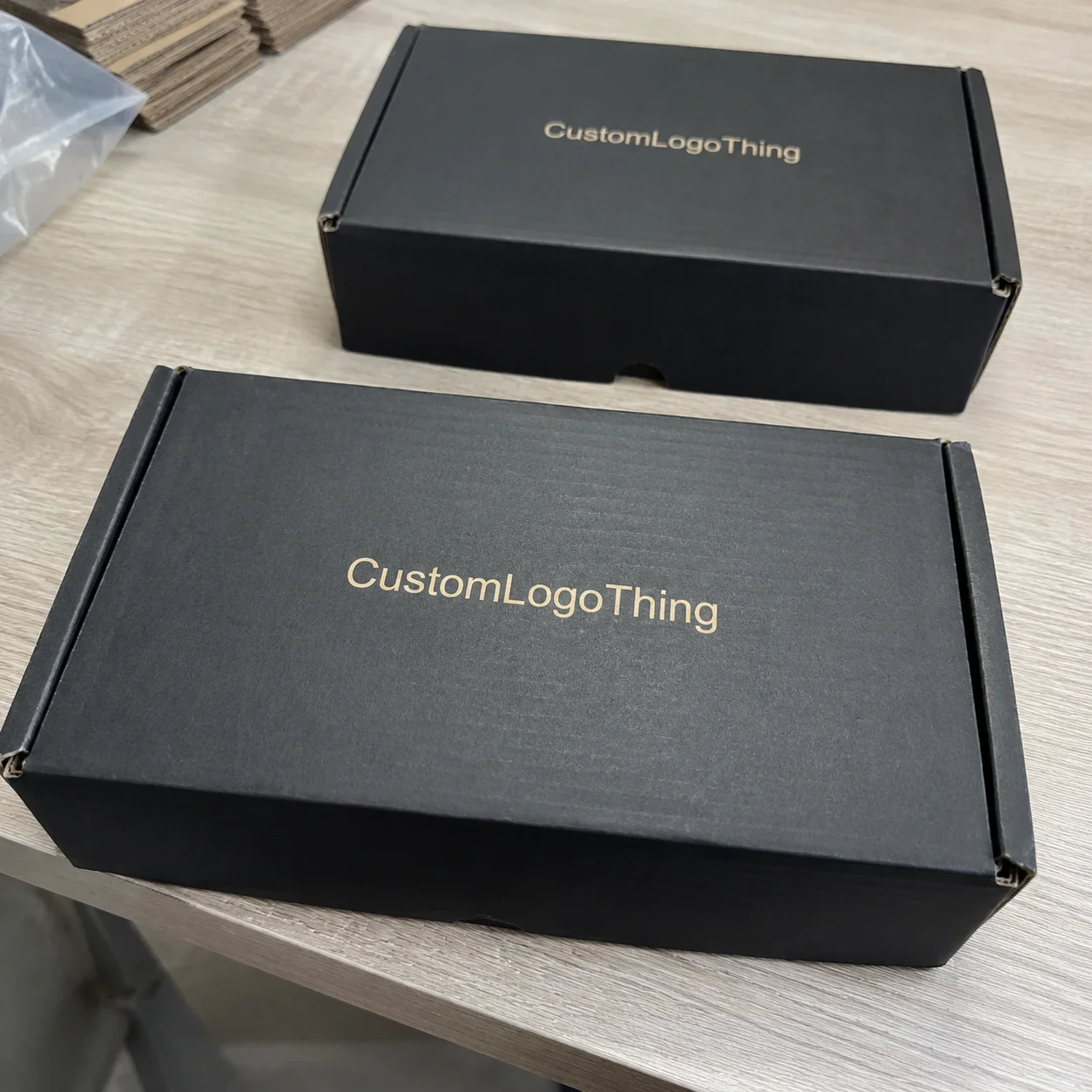
Custom corrugated mailer boxes are one-piece folding boxes made from corrugated board, usually with tuck-in flaps and a self-locking structure that lets the box hold its shape without relying heavily on tape. In plain language, they’re engineered cartons that ship flat, open quickly, and present neatly once assembled. They are not the same as a standard shipper carton, and they are definitely not rigid boxes with wrapped chipboard walls. I’ve had clients mix those up in kickoff meetings, and you can almost hear the structural confusion squeak across the room. A common production spec might use 350gsm C1S artboard laminated to E-flute corrugated board for a cleaner print face, or 32 ECT kraft corrugated board when durability matters more than a premium-coated exterior.
The difference matters. A regular slotted shipping box is designed to move product from point A to point B with basic protection, while custom corrugated mailer boxes are often expected to do that job and also look polished enough to create a strong first impression. Folding cartons, by contrast, are usually made from paperboard and are better suited to lighter retail items. Rigid boxes have a premium feel, but they cost more, take more material, and are often slower to pack. Custom corrugated mailer boxes sit in the middle, which is exactly why so many brands use them. In practical terms, a 1,000-piece run of litho-lam mailers may price much higher than a plain kraft mailer, yet still come in far below a true rigid setup for the same dimensions.
When I visited a subscription box line in New Jersey, the operations manager pointed to a stack of custom corrugated mailer boxes and said, “Those six panels save me three seconds per pack.” That sounds small, but at 8,000 units a week, three seconds is not small at all. Speed matters. So does consistency. A mailer that folds predictably on a packing table is worth real money in labor, especially when the team is trying to hit a launch window with 12,000 orders waiting in the queue. I still think about that visit whenever someone says packaging is “just a box.” It was said with the same confidence as a person claiming a wrench is “just metal.”
These boxes show up everywhere: apparel drops, influencer kits, cosmetics kits, sample shipments, small electronics, candles, supplements, and gift programs. They work well for brands that want a box to open cleanly, fit tightly, and feel intentional rather than improvised. That matters because the opening sequence is part of the customer’s memory. The product may be what they paid for, but the box is what they see first. A branded mailer with a matte aqueous finish and a 1-color interior print can turn a $24 skincare order into a more premium moment without changing the serum itself.
Custom sizing is one of the biggest advantages. If a product shifts inside the carton, you usually need void fill, dividers, or inserts. If the box is sized correctly, the product sits flatter, the presentation improves, and freight can drop because oversized packaging is no longer inflating dimensional weight. I’ve seen teams save more on parcel charges than they expected simply by tightening the inner dimensions by 6 mm and removing one layer of kraft paper padding. A California skincare brand I worked with cut average parcel charges by 8.4% after moving from a 10 x 8 x 4 inch mailer to a 9.5 x 7.5 x 3.5 inch spec. That kind of improvement is common with well-planned custom corrugated mailer boxes.
Material choice matters more than most first-time buyers expect. Board grade, flute profile, print method, and closure style can completely change the box’s behavior. A box can look similar on a computer screen and perform very differently in the field, which is why packaging design should always be tied to actual product weight and shipping conditions, not just a pretty mockup. I’ve seen a gorgeous prototype fall apart the moment somebody stacked three more cartons on top of it. Beauty is not a load-bearing feature, unfortunately. A spec using B-flute at roughly 3 mm thickness will handle stacking differently than an N-flute mailer at about 1.5 mm, even before ink coverage enters the picture.
How Custom Corrugated Mailer Boxes Work in Real Shipping
Corrugated board is built in layers: two linerboards on the outside with a fluted medium in the middle, bonded by adhesive. That structure gives custom corrugated mailer boxes their rigidity and crush resistance. The fluting acts like a series of arches, and arches are excellent at distributing load. When a box is stacked in a warehouse or compressed during transit, those arches help keep the panels from collapsing immediately. On a typical run from a facility in Dallas, Texas to a customer in Atlanta, Georgia, the carton may get handled 6 to 12 times before it reaches the doorstep, so those layers are doing more work than they appear to be doing.
Different flute profiles change how the box behaves. E-flute is thin, print-friendly, and popular when brands want sharper graphics and a sleeker profile. B-flute is a bit thicker, with more cushioning and stack strength, which is useful for items that need extra buffer. N-flute is slimmer still and can be chosen for smaller premium mailers where a lower profile and clean print surface matter more than bulk. There isn’t one “best” flute in every case, only the best match for a specific product, weight, and shipping method. A 14-ounce candle in a B-flute mailer behaves very differently from a 4-ounce lip gloss set in an N-flute box, and the difference is visible in the corners after a few parcel drops. That part drives people a little nuts because they want a one-line answer, and packaging rarely behaves that politely.
Most custom corrugated mailer boxes use a locking tab or tuck design, so they can be assembled without tape in many applications. That helps on a fulfillment line where speed is measured in seconds and any extra tape stroke becomes labor. A good mailer should fold with enough resistance to stay closed, but not so much resistance that the packer has to wrestle it every time. A line in Phoenix, Arizona packing 2,400 units per day can lose real efficiency if every box takes an extra 2 or 3 hand motions to close. Honestly, this is one of the most underrated parts of packaging design: the person building the box matters just as much as the person approving the artwork.
From the customer’s perspective, the opening sequence is part of the product experience. The lid lifts, the front panel opens, and the contents are presented with a sense of order. That’s where custom printed boxes can do a lot of heavy lifting for package branding. A clean interior print, a short message on the flap, or a precise insert can turn a routine delivery into a small ritual. I’ve seen cosmetics brands use a simple 1-color interior message and get better social posts than from a much fancier outer design. A 2-line message inside the flap, printed in Pantone Black C, often does more work than a full rainbow exterior no one remembers.
These boxes do several things well. They offer retail-ready presentation, moderate shipping protection, and efficient fulfillment on packing tables and conveyor lines. They are especially useful when a brand wants custom corrugated mailer boxes to function as both product packaging and a branded reveal. If you also ship softer items in polyethylene, you may compare them with Custom Poly Mailers for lighter, less fragile goods. Poly mailers can cost less than $0.15 per unit at 5,000 pieces for simple stock formats, but they do not provide the same structural presentation or edge protection as a corrugated mailer.
They are not the right answer for every product. Extremely heavy items, long-distance rough handling, or products that need maximum puncture resistance often belong in heavier shipper cartons or double-wall constructions. I once worked with a specialty tool brand in Ohio that tried to move a 14-pound kit into a mailer because the marketing team liked the look. The box survived the sample drop test, but the edges telegraphed stress after two transit cycles. The fix was simple: move the product into a stronger shipping format and keep the mailer for lighter SKUs. Marketing was disappointed, of course. Packaging logic is rude like that.
Key Factors That Shape Custom Corrugated Mailer Boxes
The first question is always board grade and flute selection. If the product weighs 8 ounces, ships domestically, and needs a premium look, a thinner flute may be enough. If it weighs 32 ounces and is moving through multiple distribution centers, I’d want to study crush resistance, edge compression, and panel bulging before approving a lightweight spec. With custom corrugated mailer boxes, matching strength to real shipping conditions is usually smarter than overbuilding the carton “just in case.” Overbuilding sounds safe until the packing team starts grumbling and the freight bill starts muttering back. A 32 ECT board might be fine for one product line, while a 44 ECT or double-wall structure makes more sense for another.
Sizing comes next. Internal fit matters more than outside dimensions, especially when you are designing for inserts, product wrap, tissue, or protective cushions. A box can look perfect on paper and still fail if the item rattles inside by even 10 mm. Snug fit reduces movement, improves presentation, and often lowers the amount of void fill needed. That’s especially helpful in fulfillment centers where packers are handling hundreds of SKUs and don’t have time to build custom nests for every order. One 9 x 6 x 3 inch carton may work for a single candle, while a 9 x 6 x 4 inch version becomes necessary the moment a label card and crinkle paper enter the pack-out.
Print choices can change both the price and the final appearance. One-color flexographic print is cost-effective for simple logos and text. Digital printing works well for shorter runs and variable graphics. Litho-lam gives you a higher-graphic face sheet laminated to corrugated board, which is useful when the visual standard is close to retail packaging and the brand wants sharper images. Each method has tradeoffs. More color coverage, tighter registration, and specialty inks usually raise the cost of custom corrugated mailer boxes. A 4-color exterior with an unprinted interior will usually cost less than a 4-color exterior plus a 1-color inside flap message and matte varnish on both sides.
Finishing options also matter. A matte varnish can reduce glare and make a box feel more understated. A gloss coating can boost color brightness and improve scuff resistance in transit. Aqueous coating is a practical choice when you need reasonable protection without pushing the box into premium-budget territory. I’ve also seen selective embellishment used smartly on launch kits, but only when the print budget could support it and the brand had enough volume to justify the setup. Otherwise, it can become a very expensive way to say “shiny.” In cities like Shenzhen, Guangdong and Dongguan, China, many converting shops can apply these finishes quickly, but the best result still depends on the exact board and ink spec.
Structural styles include roll-end mailers, front-lock mailers, and display-style mailers. Roll-end mailers tend to be stronger around the front opening because of the way the end panels wrap and lock. Front-lock mailers are popular for neat presentation and easy assembly. Display-style mailers can create a retail-ready reveal for small products, especially when paired with inserts. The right choice depends on whether the box is acting more like a shipping carton or more like branded packaging that happens to ship. If the contents are fragile glass bottles, a roll-end style with a die-cut insert often performs better than a purely decorative front-lock design.
Sustainability is part of the conversation too. Recycled content, recyclable construction, and right-sizing all play a role in reducing waste. Most corrugated fiberboard used in packaging can be recycled in standard paper streams if it is kept free of heavy contamination. For teams building a stronger ESG story, the box spec should be documented, including board content and finish, so the claims are accurate and defensible. The U.S. EPA has useful material on paper recycling and waste reduction at epa.gov/recycle, and it is worth checking against your local curbside rules because not every municipality handles coated materials the same way. In the UK, local councils in Birmingham or Manchester may also differ in how they handle coated or laminated fiberboard, so region matters more than slogans do.
When I was in a Midwestern converting plant in Milwaukee, Wisconsin, the sales manager showed me a stack of rejected samples caused by one simple mistake: the client asked for “premium” but never defined what premium meant. Was it heavier board? Better print? A smoother coating? The project stalled for two weeks because nobody had agreed on the spec. That’s why custom corrugated mailer boxes work best when the buyer defines strength, finish, and print expectations early. “Make it nice” is not a spec, no matter how often people say it with a straight face.
| Option | Typical Use | Relative Cost | Key Benefit |
|---|---|---|---|
| E-flute mailer | Apparel, cosmetics, samples | Medium | Cleaner print surface and slimmer profile |
| B-flute mailer | Heavier kits, more fragile items | Medium to higher | Better cushioning and stack strength |
| Roll-end mailer | Premium unboxing, better front-edge durability | Medium | Stronger opening structure |
| Litho-lam mailer | High-graphic branded packaging | Higher | Retail-style visuals on corrugated board |
Custom Corrugated Mailer Boxes Cost and Pricing Basics
Pricing for custom corrugated mailer boxes starts with dimensions. Bigger boxes use more board, and more board means higher material cost. But size also affects freight, warehouse storage, and even case-packing efficiency. A carton that is 15% larger than necessary can cost more than the paperboard difference alone suggests, because it may trigger dimensional shipping charges or reduce pallet density. On a 48 x 40 inch pallet, a tighter footprint can improve pallet count enough to change the economics of an entire month’s shipments.
Board type is the next major driver. Standard kraft or white corrugated board usually costs less than specialty structures or premium face sheets. Print coverage can move the number up quickly, especially if the design uses multiple colors, heavy ink density, or a large interior print area. If you add lamination, spot varnish, or specialty coatings, expect the price to rise again. Custom tooling such as a new die, insert tooling, or unusual structural cuts also adds one-time setup expense. A simple 1-color E-flute mailer might start near $0.28 to $0.45 per unit at 5,000 pieces, while a higher-end litho-lam mailer can move well above that depending on ink, finish, and carton size.
Quantity makes a huge difference. In converting plants, setup time for print, die-cutting, stripping, folding, and gluing is spread across the whole run. That means 500 boxes may look expensive per unit, while 5,000 or 10,000 boxes can come down materially once the press and die are running. I’ve quoted jobs where the unit price dropped by more than 40% just by moving from a prototype lot to a true production quantity. It’s a normal pattern, not a trick. If anything, the math is annoyingly predictable once you’ve seen it a few times. On one run in Plano, Texas, a 5,000-piece order landed at about $0.15 per unit for a very simple unprinted structure, while the same carton in a 500-piece run was several times higher.
Sample costs are often higher on a per-box basis because they are doing a different job. A prototype exists to confirm fit, structure, and artwork, not to be the cheapest possible carton. A structural sample may be unprinted and lower in cost, while a printed sample can include setup fees or short-run press charges. That’s one reason buyers should budget separately for development and production. A $0.18 production unit at 5,000 pieces can easily have a sample that looks expensive by comparison. In some North American plants, a single printed prototype can run $45 to $120 depending on board type and whether a custom die is required.
Hidden costs can surprise new buyers. Inserts, die-cut windows, added coatings, custom artwork revisions, and freight all show up in the final number. Sometimes the box price looks excellent, but the landed cost rises after you add split shipments to a fulfillment center and an extra round of proofing. That is why I always tell clients to compare the total packaging program, not just the carton price. I’ve watched a “cheap” quote turn into a headache with the speed of a bad invoice typo. If the supplier is in Ho Chi Minh City, Vietnam or Dongguan, China, add a realistic ocean or air freight assumption before declaring victory on price.
Here is the simplest way I explain value: the cheapest box is not always the lowest total cost. If a sturdier mailer reduces damage claims by 2%, improves unboxing sentiment, and cuts packing time by 4 seconds per order, it may pay for itself quickly. I’ve seen brands save more by reducing returns than they could ever save by shaving a cent off the printed carton. That’s especially true with custom corrugated mailer boxes, because the box influences shipping performance and customer perception at the same time. A brand with 20,000 monthly orders can feel a 2% damage reduction immediately in both labor and refund volume.
For teams comparing formats, it can help to look at adjacent packaging choices too, including Custom Shipping Boxes. A shipping box may be the right answer if the product is heavier, if you need a stronger outer shipper, or if your fulfillment process depends on a more standard rectangular format. In many US facilities, a shipping carton with a 200 lb burst strength rating will outperform a lighter mailer for dense inventory, even if it gives up some presentation value.
For sourcing and benchmarking, industry references from the International Safe Transit Association can help you think about transit testing in practical terms. I’ve used ISTA-style testing discussions with clients more than once when a pack-out needed to survive parcel handling, warehouse stacking, and a few rough belt transfers before launch.
| Pricing Factor | How It Affects Cost | Buyer Takeaway |
|---|---|---|
| Box size | More board area increases material and freight cost | Measure the product carefully and keep headspace tight |
| Quantity | Higher quantities reduce setup cost per unit | Production runs usually price better than samples |
| Print coverage | More colors and larger coverage raise press cost | Prioritize logo and key brand elements first |
| Finishing | Coatings and embellishments add processing steps | Use them where the customer will notice them most |
| Inserts/tooling | Custom inserts and dies add upfront development cost | Worth it when product movement is a real issue |
What Makes Custom Corrugated Mailer Boxes Work for Brands?
What makes custom corrugated mailer boxes worth considering is not only protection or print quality, but the way those two things combine into one practical format. A brand gets an outer package that looks intentional, a pack-out that can move fast, and a customer reveal that feels designed rather than improvised. That combination is uncommon. Many packaging formats do one job well and the other job poorly. Mailers are popular because they split the difference with unusual discipline.
There is also a financial logic to that balance. A well-sized mailer can reduce fill material, limit damage, and hold down dimensional weight. At the same time, it can carry graphics, a logo, a campaign message, or a seasonal look without requiring a separate sleeve or outer wrap. That means custom corrugated mailer boxes can act as both operating equipment and marketing surface. The box is no longer just a container. It becomes part of the conversion path, the return rate, and the word-of-mouth moment all at once.
That dual role is why brands in apparel, beauty, wellness, and subscription commerce keep coming back to this structure. A box that folds quickly on the line and opens cleanly at the doorstep helps labor, helps brand perception, and helps repeat purchase behavior. The effect is not mystical. It is cumulative. A better packaging experience can reduce complaints, encourage social sharing, and make the product feel more complete. On a small order, that may look minor. On 30,000 monthly shipments, it looks like strategy.
There is a reason custom corrugated mailer boxes continue to show up in procurement meetings even when teams are comparing poly mailers, folding cartons, and rigid presentation boxes. They deliver a middle path that is hard to ignore: practical, branded, and adaptable. In packaging, middle paths are often where the strongest business decisions live.
Step-by-Step Process and Timeline for Ordering
The best projects start with measurements, weight, shipping method, and the desired unboxing experience. Before anybody draws a dieline for custom corrugated mailer boxes, I want the product dimensions in hand, plus real weight and any extras like tissue, instruction cards, or inserts. A package that fits the bare product may fail once the marketing team adds a thank-you card, a charger cable, and a sample sachet. I wish that last part were hypothetical; it is not. A product measured at 8.75 x 5.5 x 2.25 inches can easily need a 9.25 x 6 x 2.75 inch mailer once inserts and finger clearance are accounted for.
Next comes the dieline. This is the structural map of the box, and it should be reviewed before artwork moves too far ahead. If the item needs a tray, insert, or retention feature, that has to be planned into the dieline, not guessed later. A strong packaging design process keeps structure and graphics talking to each other early, which saves revisions and reduces the chance of expensive mistakes. Many plants in Shenzhen, Dongguan, and Jiaxing can produce dielines quickly, but that speed only helps if the buyer has the product spec ready before the first drawing is sent.
After the dieline, proofing usually happens in stages. A digital proof checks artwork placement and copy. A structural sample checks fit and assembly. A printed sample checks color, registration, and finish. Final prepress approval should happen only after someone has physically handled the sample, because the screen never tells the full story. I’ve had clients discover that a lid looked great digitally but opened too stiffly in real life, and that problem would have cost them a lot more if we had waited until full production. For a straightforward project, proof approval to production often takes 12-15 business days, but that can stretch if the artwork needs changes or the finish requires extra setup.
The production flow in a converting facility usually moves through board selection, printing, die-cutting, folding and gluing, bundling, and final quality checks. In a good plant, operators check score lines, glue placement, flap fit, and print consistency as the job runs. If a box has to fold in a specific way for the front lock to hold, that needs to be verified on the floor, not assumed because the CAD drawing looked perfect. CAD drawings are useful, yes. Magical, no. A plant in Suzhou, China or Monterrey, Mexico may turn a clean spec very quickly, but quality control still depends on the press and the person running it.
Timeline depends on the work at each stage. Artwork readiness, sample approval, print method, and plant capacity all affect the schedule. A simple short-run digital order may move faster than a litho-lam project with custom tooling, but even then I would never promise a number without seeing the spec and the proof cycle. For custom corrugated mailer boxes, a realistic planning window is usually driven by approvals and shipping coordination as much as by manufacturing time. A standard production order often lands in about 12-15 business days from proof approval, while air freight can add a few days and ocean freight from Asia can add several weeks.
Shipping and delivery planning can make or break the launch. If your fulfillment center wants palletized cartons by a certain inbound window, you need to account for transit time, receiving appointments, and carton counts per pallet. A box arriving two days late can stall a subscription drop or a retail campaign, even if the production run itself was flawless. That’s why I always tell buyers to treat logistics as part of packaging, not an afterthought. A warehouse in New Jersey may take pallet appointments only between 8:00 a.m. and 2:00 p.m., which sounds like a small detail until your cartons are idling at a dock door.
One client meeting sticks with me because the brand team had a perfect design and the factory had a clean schedule, but nobody had checked the receiving dock rules at the 3PL. The cartons arrived on the wrong pallet height and had to be reworked before intake. Nothing was wrong with the custom corrugated mailer boxes; the mistake was in planning. That kind of avoidable friction is common, and it’s exactly why clear specs matter.
Common Mistakes When Choosing Custom Corrugated Mailer Boxes
Mistake 1: choosing by outside dimensions only. The inside fit is what protects the product, and when you add wrap, inserts, or a printed sleeve, those millimeters disappear fast. If the interior is too loose, the product shifts. If it is too tight, the customer struggles to remove it and the presentation suffers. A 10 x 7 x 3 inch outside size tells you almost nothing unless you also know the inside clearances and board thickness.
Mistake 2: over-specifying strength. More board is not always better. I’ve seen teams choose a stronger structure than they need, only to discover the box became harder to fold, cost more to store, and added no real shipping benefit. With custom corrugated mailer boxes, the goal is enough strength, not maximum strength by default. In one Atlanta, Georgia project, moving from a heavier board to a right-sized E-flute cut carton weight by 11% without increasing damage.
Mistake 3: under-specifying strength. This is the opposite problem, and it usually shows up as crushed corners, bowed panels, or an ugly seam where the front lock fails under load. A lightweight cosmetic kit might not need much, but a dense candle or multi-item bundle may need a thicker flute or better board grade. If the shipment includes glass jars or metal parts, a box tested for 5 to 10 lb loads may be too light for real parcel abuse.
Mistake 4: ignoring print limitations. Highly detailed artwork can look muddy if the flute profile or print process cannot support the detail. Fine typography, hairline rules, and tiny QR codes need the right production method. If the artwork is designed like a poster but the box is being printed on a rough surface, the final result can disappoint. A QR code smaller than 0.5 inch on a corrugated surface can be risky if the press resolution and ink spread are not controlled.
Mistake 5: forgetting fulfillment realities. If the pack line needs tape, but the design assumes a self-locking close, confusion follows. If the box takes ten hand motions to assemble, labor increases. If the carton does not nest efficiently on a table, packers slow down. These are not small issues; they accumulate across thousands of packs. One Ohio fulfillment center measured a 7% throughput dip simply because the closure tab was too stiff for their average packer’s workflow.
Mistake 6: skipping sample testing and shipping tests. A box can look fine on a desk and fail after vibration, compression, or a few corner drops. Testing does not need to be extravagant, but it should be real. I like to see sample boxes packed with actual product, then run through at least a short transit trial before the full job goes to press. Otherwise, you are basically gambling with cardboard, and cardboard is not a forgiving place to make optimistic assumptions.
When brands compare custom corrugated mailer boxes against other packaging types, the temptation is to focus on appearance only. That’s how people end up choosing a visually attractive carton that costs too much to pack or damages product in the field. A good box is a balance of structure, process, and brand presentation. In practice, the best choice usually survives a drop test, fits the warehouse workflow, and keeps the unit cost inside the target range.
Expert Tips for Better Custom Corrugated Mailer Boxes
I always recommend designing for both shelf impact and carton performance, because a mailer often plays two jobs at once. It has to survive shipping, but it also has to tell the brand story when the customer lifts the lid. That means the front panel, inner flap, and even the first layer of the product should be thought through as part of the same packaging design. A well-built 9 x 7 x 2 inch mailer can feel premium in Los Angeles, California or Berlin, Germany if the opening sequence is clear and the print hierarchy is disciplined.
Test with real product weights and actual fulfillment staff, not only CAD drawings. People on the packing table notice things the software never will, like a flap that catches a fingernail, a fold that pops open too fast, or a box that requires too much pressure to close. I’ve watched a team redesign a mailer after two warehouse associates showed they could save 5 seconds per pack just by adjusting a score line. Five seconds sounds tiny until you multiply it by a mountain of orders. At 6,000 packs a week, that is nearly 8.3 labor hours reclaimed.
Use inserts strategically. A well-designed insert can hold an item securely and improve presentation without increasing board thickness everywhere. That’s a smarter use of material than simply making the whole box heavier. For delicate product packaging, I often prefer a targeted insert over a globally stronger carton because it protects the item where the movement actually happens. A 1.5 mm die-cut insert can sometimes outperform a much thicker outer box if the product’s weak point is localized.
Prioritize the print hierarchy. The logo, product name, and opening message should be the first things the customer sees. Secondary copy, legal text, and decoration can support the design, but they should not crowd the primary brand elements. Strong package branding usually looks confident because it is clear, not because it is crowded. A 2-color design with strong hierarchy often outperforms a 5-color layout that feels busy on the first glance.
Think about your shipping channel. Parcel, postal, and warehouse handling each put different stress on a carton. A box that works beautifully in a retail handoff may need a sturdier closure for parcel networks. If you are shipping mixed channels, that should be part of the spec from the beginning. The same custom corrugated mailer boxes may need a different flute or lock style depending on whether they are going to consumers, stores, or a third-party fulfillment center. A box moving through Amazon FBA in Kentucky will face different handling than one handed directly across a boutique counter in Austin, Texas.
Keep a packaging spec sheet for every repeat order. Record dimensions, board grade, flute, finish, print method, insert details, and approved artwork files. That document saves time on reorders and prevents drift over multiple purchasing cycles. I’ve seen companies lose weeks because nobody could remember whether the last approved board was E-flute or B-flute. A one-page spec sheet would have solved it in ten minutes. If the order goes to a converter in Xiamen, China or Ahmedabad, India, that document is the difference between quick repeat production and a long back-and-forth over ambiguous emails.
“The best box isn’t the fanciest one. It’s the one that protects the product, fits the line, and still makes the customer smile when they open it.”
Next Steps to Choose the Right Custom Corrugated Mailer Boxes
Start with the product, not the artwork. Measure the item, weigh it, and decide how much protection and presentation you really need. If the goal is a polished subscription reveal, your priorities may differ from a warehouse replenishment carton. Either way, custom corrugated mailer boxes should be chosen with the product’s actual shipping life in mind. A candle set that weighs 18 ounces and ships in a kraft mailer has very different needs from a 4-ounce sample kit sent by mailer pouch.
Gather a basic spec list before requesting quotes: dimensions, weight, quantity, artwork format, shipping method, and whether inserts are required. If you have those five or six details in hand, suppliers can quote more accurately and recommend a structure that fits the job instead of guessing. I’ve seen quote comparisons become much easier when the buyer sends a clean spec instead of a vague one-liner. A supplier in Shanghai or Toronto can usually turn around an informed estimate within 24 to 48 hours if the measurements are complete.
Ask for a dieline or structural concept, then compare fit, assembly speed, and packaging cost side by side. A box that saves 4 cents but slows packing by 3 seconds may not be the better choice. A box that costs slightly more but cuts damage claims and improves the reveal may be the smarter investment. That’s the real decision point with custom corrugated mailer boxes. If the box assembly takes 12 seconds instead of 15 seconds, the labor savings across 10,000 units can exceed the carton price difference very quickly.
Test one or two sample options with actual products and a short transit trial. The best sample is the one that behaves like the production box while being handled by real people in a real workflow. If you can, include someone from fulfillment in that review. They usually spot issues in the first five minutes that a design team may not catch in five days. I’ve seen teams in Chicago, Illinois and Nashville, Tennessee catch flap interference and insert misalignment before a single production sheet was printed, and that saved both money and embarrassment.
Review pricing with total landed cost in mind. Unit price matters, but so do freight, storage, insert cost, and the customer experience. A box that lowers damage and speeds fulfillment can be worth more than a cheaper carton with hidden friction. That is why the conversation around custom corrugated mailer boxes should include both manufacturing and operations, not just procurement. A quote that looks good on paper but adds $280 in freight and $140 in rework is not a good quote, even if the carton price looks tidy.
Once the final spec is approved, lock it in and protect it. Use the same dimensions, the same board grade, the same finish, and the same print file for future reorders unless there is a real reason to change. Consistency makes the next production run faster to approve and easier to scale as volumes grow. If you’re building a longer-term packaging system, it can also help to pair the mailer spec with broader custom printed boxes standards across your line. That way, the subscription box in California and the retail shipper in New York follow the same structural logic, even if the artwork changes.
For buyers who want to compare different packaging directions, including branded packaging, retail packaging, and outer shipper options, Custom Logo Things can help organize the decision around the product instead of the press sheet. That’s usually where the best outcome starts.
FAQ
What are custom corrugated mailer boxes best used for?
They work especially well for lightweight to moderate-weight products that need protection and a polished presentation. Common uses include apparel, cosmetics, subscription boxes, gifts, supplements, and promotional kits. They are a strong choice when you want easy assembly, branded printing, and a box that opens neatly for the customer. A 9 x 6 x 2 inch mailer can be ideal for a beauty set, while a 12 x 9 x 4 inch version often suits apparel bundles or larger gift kits.
How do custom corrugated mailer boxes differ from regular shipping boxes?
Mailer boxes usually have a self-locking tuck design and a more finished look than standard slotted shipping cartons. They are often chosen for presentation as much as protection, while regular shipping boxes are usually more utilitarian. Mailers are often faster to assemble and better suited to direct-to-consumer branding. A basic RSC shipping carton may cost less, but a mailer can eliminate tape and improve the opening experience immediately.
What affects the price of custom corrugated mailer boxes the most?
The biggest pricing factors are box size, board grade, print coverage, quantity, finishing, and whether special tooling is needed. Short runs cost more per unit because setup work is spread across fewer boxes. Inserts, coatings, and freight can also increase the total project cost. For example, a simple kraft mailer at 5,000 pieces may land near $0.15 to $0.30 per unit, while a full-color, coated version with a die-cut insert can cost substantially more.
What is the best flute for custom corrugated mailer boxes?
E-flute is commonly chosen when you want a cleaner print surface and a slimmer profile. B-flute can offer a bit more cushioning and stack strength for certain products. The right flute depends on product weight, shipping method, and the look you want. A 6-ounce sample kit may work well in E-flute, while a 2-pound candle or multi-item set often benefits from B-flute or a stronger board spec.
How long does it take to produce custom corrugated mailer boxes?
Timeline depends on artwork readiness, sample approval, print method, and production schedule. A project usually moves faster when measurements are final and the dieline is approved early. Build in time for proofs and sample testing so you can catch fit or print issues before mass production. In many cases, production takes 12-15 business days from proof approval, and that does not include freight from overseas plants or extra time for revisions.
If you’re planning your next packaging run, start with fit, choose the board for the trip the box will actually take, and make the print serve the product rather than crowd it. That is the formula I’ve trusted on factory floors for years, and it is still the best way to specify custom corrugated mailer boxes that perform well, look sharp, and support the brand without wasting material or money. And if someone in the meeting says, “Can we just make it a little nicer?”—well, ask them what “nicer” means before the cardboard starts getting expensive.