A square sticker can carry the same logo. Custom diecut stickers often get noticed faster because the outline does part of the work before anyone reads the copy.
That matters more than it sounds. A plain rectangle disappears into packaging noise; a sticker cut around a mascot, bottle, flame, leaf, badge, or product silhouette creates a visual cue the eye can process in a fraction of a second. The ink may be identical. The signal is not. On crowded retail shelves and busy unboxing tables, shape earns attention before color does.
Custom Diecut Stickers Turn Shape Into Shelf Signal
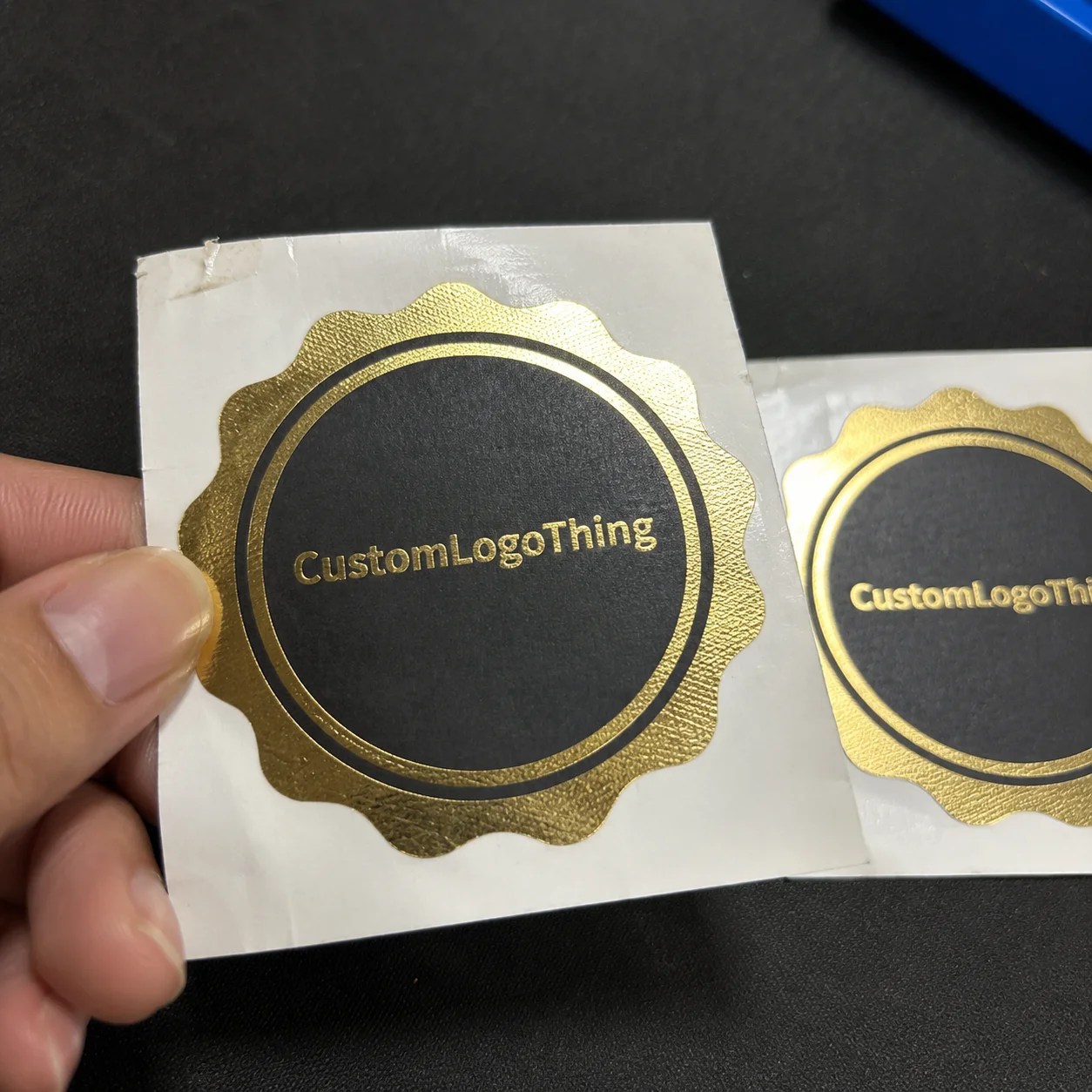
Custom diecut stickers are cut to a specific artwork outline instead of a standard rectangle, circle, square, or oval. The cutter follows the artwork edge, so the final piece feels made for the brand rather than trimmed from a stock template. A coffee label can follow steam lines. A skincare badge can trace a leaf. A tech brand can cut around a logo mark that looks clean on a laptop lid.
The terminology gets fuzzy, so the practical distinction helps. Die-cut usually means the sticker itself is cut to a custom outer shape. Kiss-cut means the sticker layer is cut while the backing stays intact, which makes peeling easier. Contour-cut often refers to digital cutting around a printed outline. Standard shapes are pre-set circles, squares, and ovals, usually faster and cheaper to produce.
From a packaging buyer’s view, the attraction is straightforward: one adhesive piece can make stock packaging feel considered. A sticker can seal a kraft mailer, dress up a jar lid, brand a pouch, label a candle, or turn a plain insert into something worth keeping. That is why stickers show up in subscription boxes, event merch packs, retail promotions, giveaway bundles, and sample kits. They sit right where design meets handling.
The economics are real too. Reworking printed boxes can mean new dielines, structural approvals, longer sampling, and higher minimums. A sticker can change the feel of a bag, box, jar, or tin with far less commitment. For a seasonal drop, test launch, or short-run product, that flexibility protects budget while still improving presentation.
Packaging reality check: a sticker is not only decoration. It can serve as a closure, a label, a brand marker, or the only custom element on an otherwise stock package.
The details decide whether it looks polished or cheap. Material, adhesive, finish, cutline, proofing, quantity, and lead time all affect the outcome. The strongest orders are not built from a screen mockup alone. They are checked against the real package, the real handling conditions, and the actual launch date.
How the Diecut Sticker Process Works From File to Finished Edge
Production usually starts with artwork review. A supplier checks file format, resolution, color setup, size, and whether the shape can be cut cleanly. Vector artwork such as AI, EPS, or press-ready PDF is preferred because the edges stay sharp at different sizes. High-resolution raster files can work, but a logo copied from a website rarely holds up at a polished sticker size.
Then comes the cutline. Think of it as the production roadmap. It tells the cutter where the sticker edge should travel around the design. Many printers ask for the cutline as a separate spot-color vector path, often named something like “CutContour.” If that sounds technical, it is mostly a file setup issue. A good supplier can often add it, though the extra handling may affect proofing time or price.
Bleed and safe zones matter more than many buyers expect. Printing and cutting are never perfectly static, especially on small pieces. A common setup is about 0.0625 to 0.125 inch of bleed beyond the intended edge, with important text, QR codes, and thin outlines kept at least 0.0625 to 0.125 inch inside the cut path. Exact specs depend on the equipment and sticker size, so the vendor’s spec sheet should win over guesswork.
After the cutline is checked, the buyer receives a digital proof. This is the control point. Review the shape, size, spelling, finish, material, quantity, and whether the piece will arrive kiss-cut or individually cut. Proof approval is the point where the file usually moves from review to production. If something is wrong, this is the last inexpensive moment to catch it.
Printing comes next. Digital printing handles short and medium runs well because it supports multiple shapes and full-color artwork without plate costs. Lamination may follow for scuff resistance, moisture resistance, UV protection, or a different surface feel. Then the sheet or roll reaches the cutter, where either a digital cutter or a physical die creates the final edge.
Digital cutting is the flexible option for custom shapes and smaller runs. Physical dies make sense for larger repeat jobs or special constructions, but the tooling cost only pays back when the quantity is high enough. Complex shapes are possible, though there is a trade-off. Tiny interior cuts, needle-like points, and fragile extensions can slow production and make the sticker easier to tear during peeling.
Sticker Materials, Adhesives, and Finishes That Change Performance
Material choice drives most of the real-world behavior. White vinyl is the common durable option for branded packaging, bottles, shipping boxes, laptops, and handled products. It prints with strong opacity, accepts lamination well, and usually resists moisture better than paper. Clear film works when the package surface should show through, though white ink may be needed under key graphics to keep them readable. Paper is often the cost-effective choice for indoor, short-term uses such as inserts, bakery boxes, event handouts, or dry retail tags. Specialty stocks, including metallic, holographic, textured, or kraft-look materials, can add impact for limited campaigns.
Adhesive is the hidden half of the specification. Permanent adhesive is standard for product labels, mailer seals, and general branding. Removable adhesive suits temporary promotions or applications where residue would be a problem. Stronger adhesive may be needed for rough cardboard, textured paperboard, low-energy plastics, or cold-fill environments. The catch is simple: stronger is not always better. On delicate paper packaging, an aggressive adhesive may tear fibers if the customer tries to remove it.
Finish changes both the surface feel and how the sticker performs under handling. Gloss looks bright and saturated, but it can reflect light and show fingerprints. Matte reduces glare and often feels more premium on beauty, wellness, and boutique food packaging. Soft-touch has a velvety feel that can be appealing, although it may show scuffs more readily depending on the film and handling. For outdoor exposure or frequent handling, laminated vinyl is usually the safer choice than uncoated paper.
Surface compatibility deserves more attention than it usually gets. Glass, cardboard, kraft paper, plastic pouches, metal tins, and textured boxes all behave differently. A sticker that performs well on flat paperboard may lift on a waxy mailer. A label that looks perfect on a glass jar can wrinkle on a tight curve if the shape is too stiff or too wide. Condensation adds another variable, especially for beverage, skincare, and refrigerated food packaging.
If sustainability claims matter, ask specific questions instead of accepting vague language. Paper stickers may fit certain fiber-based packaging programs, but adhesives, coatings, release liners, and contamination risks complicate the picture. For paperboard sourcing, the Forest Stewardship Council provides a widely recognized certification framework. For broader materials recovery and waste context, the U.S. Environmental Protection Agency publishes useful data.
| Sticker Spec | Best Fit | Watchouts | Typical Buyer Use |
|---|---|---|---|
| White vinyl with gloss laminate | Durable color, moisture resistance, outdoor or high-handling use | More glare; may feel too shiny for muted branding | Bottle labels, laptop stickers, shipping box branding |
| White vinyl with matte laminate | Premium look with lower glare and better scuff protection | Colors may appear slightly softer than gloss | Beauty packaging, wellness kits, retail packaging accents |
| Clear film | Transparent effects and clean label looks | Needs white ink for opacity on dark surfaces | Glass jars, clear pouches, cosmetic containers |
| Paper sticker | Indoor, dry, short-term applications | Weak around moisture, abrasion, and condensation | Bakery boxes, inserts, dry goods, event handouts |
Cost and Pricing Factors Buyers Should Check Before Ordering
Sticker pricing is not one number hiding behind a logo upload button. It is usually driven by size, quantity, material, print coverage, finish, shape complexity, proofing, packing method, and shipping speed. A 2-inch matte paper sticker ordered in 500 pieces behaves very differently from a 4-inch laminated vinyl sticker ordered in 10,000 pieces with a detailed cut path.
Unit cost usually drops as quantity rises because proofing, file setup, machine setup, handling, and packing get spread across more pieces. As a broad planning range, simple custom diecut stickers may land around $0.20 to $0.60 each at several thousand pieces, while small pilot runs can be much higher per unit. Larger runs can fall below that range, especially for standard materials and efficient shapes. Treat those numbers as planning ranges, not promises. Equipment, sticker size, freight, and finishing all move the quote.
The cheapest sticker is not always the lowest-cost option. If it curls on a jar, smears in fulfillment, peels from a kraft box, or lands after the launch date, the real cost includes repacking labor and brand damage. A two-cent unit savings means little if the material choice forces hundreds of package failures. That is not savings. That is deferred waste.
Cutline complexity can also affect cost. A smooth badge shape cuts quickly and nests efficiently on sheets. A logo with thin spikes, narrow bridges, and tight interior corners can take longer to cut and inspect. More complex outlines can also create more matrix waste, especially on rolls. For hand-applied packaging seals, simple curves often outperform dramatic edges because staff can peel and place them faster.
MOQ policies vary. Some suppliers are built for small runs of 50, 100, or 250 pieces. Others price more efficiently at 1,000, 5,000, or 10,000 units. If the sticker is part of a broader branded packaging order, it may be worth quoting it alongside Custom Labels & Tags or other Custom Packaging Products so freight and production planning can be reviewed together.
To compare quotes fairly, send each supplier the same details: final size, material, finish, quantity, print side, shape notes, packing format, delivery deadline, and shipping address. Hidden costs often show up in rush fees, artwork fixes, split shipments, special packing, inside-wind roll requirements, or changes after proof approval.
Step-by-Step Guide to Ordering Die Cut Stickers Without Rework
Start with the job the sticker has to do. Is it a packaging seal, a giveaway, a warning marker, an event handout, a product label, or a retail display accent? Each use has a different tolerance for adhesive strength, finish, durability, and size. A giveaway sticker can be playful. A product label needs to stay readable and stay put.
- Measure the actual placement area. Do not rely on the mockup alone. A 3-inch sticker can look restrained on a digital box rendering and oversized on a 4-ounce jar lid. Use a ruler, then test with a paper printout at 100% scale.
- Choose the size around the package. Leave clearance near folds, seams, curves, zipper closures, and edges. For curved bottles, a narrower sticker often applies cleaner than a wide one.
- Prepare artwork in vector format when possible. Vector lines keep logos, type, and cut paths sharp. If only raster art exists, send a high-resolution file and ask the printer to confirm edge quality at final size.
- Add or request a cutline. The cutline should follow the design with enough breathing room to avoid awkward trimming. A small white border can hide tiny cutting variation and make the shape look cleaner.
- Select material by environment. Indoor inserts may only need paper. Bottles, jars, ecommerce boxes, and handled products usually justify vinyl with protective laminate.
- Review the proof slowly. Check spelling, dimensions, cut path, color notes, orientation, quantity, and whether the stickers are supplied individually, on sheets, or on rolls.
- Order a sample or pilot run for risky surfaces. Curved, textured, chilled, waxy, or frequently handled surfaces deserve testing before a large run.
- Confirm delivery timing and packing. Ask whether turnaround starts after proof approval and who carries responsibility for final artwork accuracy.
Application labor is easy to overlook. If fulfillment staff will apply 5,000 stickers by hand, backing format matters. Kiss-cut sheets suit small teams. Rolls can be better for label dispensers. Individually cut stickers are useful for giveaways but can slow assembly if every unit must be peeled from a loose backing card.
Color expectations need practical handling too. Screens are backlit; stickers are not. If the sticker must match printed boxes, tissue, sleeves, or retail displays, share the closest Pantone reference or a previous printed sample if one exists. Digital CMYK output can be very good, but exact brand matching may require extra proofing or a different print method.
Common Mistakes That Make Custom-Shaped Stickers Look Cheap
The most common artwork mistake is putting important details too close to the cut edge. Even good equipment has tolerance. If a thin border sits right on the cut path, a tiny shift can make one side look heavier than the other. Safe zones exist for a reason. They keep essential artwork away from the danger line.
Overcomplicated silhouettes are another trap. Hairline points, skinny stems, tiny notches, and narrow extensions may look exciting in a design review, then tear during peeling at 1.5 inches. Small stickers reward simpler shapes. The edge should support the design, not fight the production process.
Designing only on a bright white screen can also mislead the buyer. The real package underneath may be brown kraft, black glass, frosted plastic, glossy foil, or a patterned pouch. A pale sticker on kraft can disappear. A clear sticker on a dark bottle may need white ink under the logo. The best packaging decisions are made against the actual surface, not an isolated artboard.
Material mismatch creates many “why does this look cheap?” moments. Paper stickers on chilled bottles can wrinkle or absorb moisture. Unlaminated stickers on handled products can scuff. Weak adhesive on textured kraft boxes can lift at the corners. A sticker can look perfect in a proof and still fail if the surface and environment were ignored.
Size misjudgment is just as common. A sticker that feels bold in a mockup may vanish on a large mailer. Another may overwhelm a small jar lid and make the product feel less premium. Print a paper dummy. Cut it out. Place it on the package. Photograph it from the same distance a customer would see it on a shelf, table, or doorstep.
Proof-skimming remains the preventable failure point that catches experienced teams too. Most expensive errors are visible before production if someone checks slowly. Read every word. Confirm units. Check orientation. Look at the cut path. Ask whether the proof shows final size or enlarged art. And do not compare quotes on price alone unless material, finish, cut quality, delivery reliability, and packing format are genuinely comparable.
Timeline, Turnaround, and Next Steps Before You Request a Quote
A realistic sticker timeline has three parts: file review and proofing, production after approval, then packing and transit. Many buyers hear “five business days” and assume the clock started when they emailed the logo. Often it starts after proof approval, not at the first pricing request. That distinction can decide whether launch kits ship on time.
For straightforward custom diecut stickers with clean artwork, common production windows may run about 5 to 10 business days after proof approval, plus shipping. More complex orders, specialty materials, laminated finishes, large quantities, or roll-format requirements can take longer. Rush options may exist, but rush work leaves less room for slow proof review, sample testing, or freight surprises.
The usual delays are predictable: missing cutlines, low-resolution logos, unclear sizing, color uncertainty, late approval, last-minute quantity changes, and unanswered questions about use environment. If the sticker must fit around a closure, sit on a curved jar, or seal a textured box, build in time for a sample. Packaging schedules are unforgiving. A delayed sticker can stall the whole packing line, even when every box, insert, and product unit is ready.
- Final artwork: vector file preferred, with linked or outlined fonts handled correctly.
- Desired size: width and height in inches or millimeters, based on the real application area.
- Quantity: quote at two levels, such as 1,000 and 5,000, to see the price break.
- Material preference: paper, white vinyl, clear film, or specialty stock.
- Finish: matte, gloss, soft-touch, or laminate for extra protection.
- Use environment: indoor, outdoor, refrigerated, mailed, handled, or applied to textured packaging.
- Deadline and shipping address: include the date needed in hand, not just the event date.
Measure the application surface, photograph the package, choose two size options, and request pricing for both quantities and materials. If the sticker is part of a broader packaging refresh, compare it with labels, sleeves, inserts, or other package branding options before locking the spec. Custom diecut stickers work best when shape, adhesive, finish, and timeline are decided together instead of treated as separate details.
FAQ
What are custom die cut stickers used for most often?
They are commonly used for product packaging, branded giveaways, mailer seals, bottle and jar accents, event merch, retail promotions, and subscription box inserts. They work especially well when the shape reinforces the logo, mascot, product silhouette, or campaign theme.
Are custom-shaped stickers waterproof?
They can be water-resistant or waterproof depending on the material, ink system, adhesive, and finish. Vinyl with protective lamination is usually a better choice for bottles, outdoor use, condensation, or frequent handling than uncoated paper.
How should I prepare artwork for diecut sticker printing?
Use vector artwork when possible and include a clear cutline, bleed, and safe zone around important text or design details. If you only have raster artwork, provide a high-resolution file and ask the printer to confirm whether the edge quality is suitable for the final size.
Why do custom diecut stickers cost more than standard shapes?
Custom shapes can require extra file setup, cutline checking, slower cutting, more waste control, and closer inspection than basic rectangles or circles. Quantity, size, material, finish, and shape complexity all influence the final unit cost.
How long does it take to produce custom die-cut stickers?
Timing depends on artwork readiness, proof approval speed, order quantity, material availability, finishing, cutting complexity, and shipping method. Buyers should confirm whether the quoted turnaround begins at order placement or after proof approval.


