Custom Etched Glass Stickers give you the frosted-glass look without the permanence, lead time, or cost of true etching. For many buyers, that is the whole appeal. You get privacy, a cleaner interior, and a more finished brand presence on glass surfaces that would otherwise feel plain or overly exposed.
They are especially useful where the requirement is visual control rather than material alteration. Office doors, conference rooms, storefront windows, reception areas, and temporary event spaces all benefit from that kind of flexibility. If the logo changes, the tenant changes, or the layout shifts, the graphic can be updated without replacing the glass itself.
That flexibility also explains why these products show up in so many branded environments. They are practical first, decorative second, and they work best when the design respects that order.
Custom Etched Glass Stickers: What They Are and Where They Work
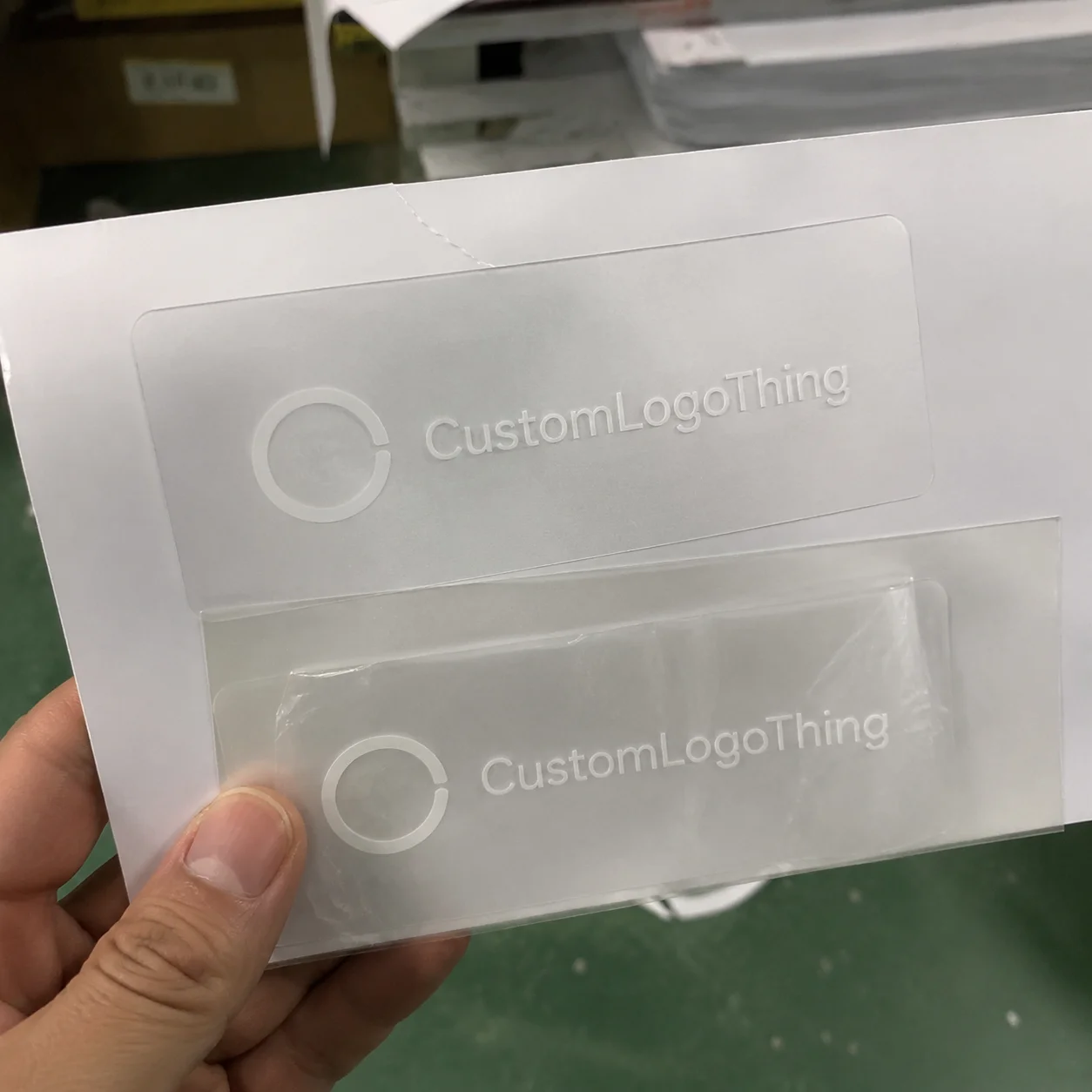
Custom etched glass stickers are adhesive vinyl graphics designed to mimic sandblasted or acid-etched glass. They do not change the glass surface chemically, and they do not cut into the material. Instead, they use frosted, translucent, or matte film to create the same softened, premium appearance people expect from etched glass.
That distinction matters for both cost and maintenance. Real etching is permanent, which is fine for long-term architectural work, but expensive and inconvenient when branding changes. Frosted decals can be removed, replaced, or revised with much less disruption. For leased spaces and retail interiors, that is often the deciding factor.
Common uses include:
- office doors and conference room panels
- storefront windows and entry glass
- reception areas and lobby partitions
- restroom privacy glass
- event backdrops and short-term displays
The performance benefit is straightforward. The film obscures direct sightlines while still allowing daylight through the pane. That keeps spaces open and bright without giving up privacy. In practice, buyers usually choose between three levels of coverage: logo-only graphics, partial privacy bands, or full-panel frosting.
Logo-only decals work best when the goal is subtle branding. Privacy bands are a common choice for meeting rooms and shared office areas. Full-panel frosting provides the most screening and is often used where privacy matters more than decoration. The right option depends less on trend and more on how the space is actually used.
“If you need a premium look with room to revise later, frosted film is usually the practical option. If you need a permanent architectural finish, true etching still has its place.”
It also helps to separate frosted film from opaque vinyl and from actual etched glass. Frosted material softens the view but still transmits light. Opaque vinyl blocks visibility almost completely. Etched glass changes the substrate itself. Buyers sometimes ask for “etched” when they really want privacy, and that mismatch can lead to a design that feels heavier than intended.
How the Print and Cut Process Works
The production process is usually straightforward, which is a good thing. First comes artwork review. Then the material is selected. After that, the graphic is printed, cut, or both, depending on the design. Some jobs are simple plotter-cut frosted shapes. Others use print plus cut for more complex branding or multi-panel layouts. If the piece needs extra protection, lamination may be added before trimming and packing.
The etched effect itself comes from the film choice. Frosted vinyl, translucent film, and matte white materials all create a similar softened appearance, but the level of opacity and contrast can vary. A full-panel frosted graphic offers stronger privacy. A cut logo keeps the design lighter. A mix of both can give you privacy where it matters and openness where it does not.
That decision is often more practical than decorative. A reception window may need just a logo and a thin border. A meeting room may need a taller band to block sightlines. A restroom panel may need near-total coverage. The more clearly the use case is defined before production starts, the fewer surprises there are later.
| Format | Typical Use | Visual Effect | Relative Cost |
|---|---|---|---|
| Logo-only decal | Reception, storefronts, office doors | Light branding, open feel | Low |
| Privacy band | Conference rooms, partitions, corridors | Balanced screening and daylight | Medium |
| Full-panel frosting | Private offices, restrooms, restricted areas | Maximum coverage with light transfer | Medium to high |
| Printed frosted graphic | Retail, events, branded interiors | More detail and stronger visual presence | Higher |
Edge quality is one of the first things people notice on glass. A crisp cut line looks intentional. Ragged edges or poor registration immediately make the installation feel cheap. Adhesive choice also matters. Removable adhesive suits rentals, temporary promotions, and changing graphics. Permanent adhesive is better for long-term commercial installs, especially where cleaning and daily traffic are part of the environment.
Surface compatibility deserves more attention than it usually gets. Smooth glass is the easiest substrate. Textured glass, curved panes, and some coated surfaces can create adhesion problems or optical distortion. In those cases, the material may need to be tested first, or the design may need to be simplified so the final result is still usable.
Cost, Pricing, and MOQ Factors
Pricing for custom etched glass stickers depends on size, quantity, film grade, cut complexity, print method, and whether the order is for indoor or outdoor use. A simple frosted logo on a standard pane is a very different job from a multi-piece privacy layout with tight registration, custom shape cutting, and installation notes.
Small runs always cost more per piece. That is true for glass graphics, labels, and most custom print work. Setup, proofing, and handling have to be absorbed somewhere, and that burden falls heavily on low-volume orders. Once quantity rises, the unit price usually drops because the job becomes easier to repeat.
Reasonable price ranges often look something like this:
- Simple logo decal: roughly $0.18-$0.45 per square inch at scale, depending on finish and setup
- Small batch order: often $20-$60 per piece for limited quantities or custom dimensions
- Larger batch pricing: can fall 20%-40% once the order reaches repeatable production
- Rush surcharge: commonly 15%-35%, depending on lead time and shop capacity
Minimum order quantity varies by supplier. Some will produce a sample or one-off proof panel. Others require five to ten pieces before the numbers make sense. The smaller the order, the more the buyer pays for setup and manual handling rather than raw material.
There are a few common cost traps. Oversized artwork increases waste. Complex die-cut shapes increase finishing time. Specialty removable adhesives can add a little to the bill. If installation is outsourced, that becomes another line item. Buyers also sometimes ask for “premium” without giving dimensions, substrate details, or a use case. That is not a spec, and it usually leads to a slower quote.
The best budget decision is the simplest one that still meets the brief. A temporary event graphic does not need the same durability as a multi-year office install. A lobby window that stays in place for years should not be built with bargain film just to save a few dollars at the start.
For brands already buying related printed materials, it can help to compare the glass project with other touchpoints such as Custom Labels & Tags or broader Custom Packaging Products. The products serve different functions, but the buying logic is similar: match appearance, durability, and unit economics to the actual application.
Process, Timeline, and Turnaround Expectations
Turnaround time typically starts after proof approval, not after the first inquiry. That sounds obvious, but it is where many timelines get distorted. A standard order for custom etched glass stickers often takes 8-15 business days from final approval to delivery, depending on quantity, material availability, cut complexity, and finishing steps. Larger or more intricate jobs can take longer.
The most common delays are artwork revisions and missing measurements. If the file is not vector-ready, the cut path may need cleanup. If the dimensions are incomplete, the proof has to be adjusted before production can begin. Small corrections at that stage can add several days.
Clean files keep the process moving. Vector formats such as AI, EPS, and PDF are ideal because they preserve crisp edges and accurate scaling. Raster artwork can work for simpler graphics, but fine lettering and intricate shapes are more likely to soften or need manual adjustment. For straightforward privacy bands, turnaround is often faster because the production path is simpler.
Rush production can shorten the schedule, but it usually narrows the options. Specialty adhesive choices, extra proof rounds, and certain film types may not be available on an accelerated order. That is normal. Production schedules depend on repeatable steps, and rush work compresses those steps whether anyone likes it or not.
Installation should be scheduled after the confirmed delivery window, not before it. The safest rollout is the one that gives the installer everything they need in advance: dimensions, pane count, hardware locations, and the final proof. Glass graphics are not difficult when the prep is disciplined. They become difficult when the job is treated like a generic decal instead of a measured architectural fit.
Design Choices That Affect Look and Performance
Frosted, clear, white-ink, and tinted effects all behave differently on glass. A frosted film gives the soft etched appearance most buyers expect. Clear film with printed elements can work for decorative pieces, but it does not offer the same level of privacy. White ink helps with opacity and contrast. Tinted graphics introduce color, which may be useful in retail or event settings, but they also change the character of the room.
Line weight matters more than many buyers expect. Thin lettering can disappear once it is placed on reflective glass. Tiny details that looked fine in a proof may become unreadable from a normal viewing distance. If the design needs to read across a room or from the other side of a hallway, it should be built for that distance from the start.
Negative space is just as important. Glass graphics look better when the composition has room to breathe. Crowded layouts tend to feel heavy, especially when the goal is a refined etched look rather than a promotional display. In practice, bold shapes usually perform better than delicate illustration on this material.
Placement affects both function and perception. Centered logos work well in reception spaces. Smaller corner marks feel more restrained. Mid-height privacy bands are common in office interiors because they block sightlines without darkening the room. Full-height decals are better where privacy matters more than openness. If a graphic has to do more than one job, the layout has to reflect that priority.
Exposure also changes the spec. Outdoor installs need UV resistance and moisture tolerance. Indoor work usually cares more about scratch resistance and cleaning compatibility. For storefront glass or street-facing windows, confirm that the adhesive and film can handle temperature swings, sunlight, and regular wiping without edge lift.
Simpler artwork usually looks better on glass. That is especially true when the goal is a premium etched effect instead of loud advertising. A restrained layout feels intentional. Overdesigned art often looks like it is fighting the surface rather than working with it.
Common Mistakes Buyers Make
The first mistake is ordering before measurements are confirmed. Glass width, height, frame margins, handle placement, and seals all need to be documented. A decal that fits the pane but collides with hardware is a bad outcome even if the artwork itself is correct.
The second mistake is designing for a screen instead of for the actual viewing distance. A logo that looks crisp on a laptop can lose clarity once it is scaled to glass. If the purpose is recognition from six feet away, the line work should support that distance.
Another common issue is poor surface prep. Dust, oils, and residue create bubbles, weak adhesion, and edge lift. Clean glass and proper install pressure matter. They are not small details. They are the difference between a professional finish and a graphic that starts failing within days.
Adhesive choice is also easy to get wrong. Temporary promotions need removable film. Long-term installs usually need a stronger adhesive. Buyers sometimes choose the cheapest option and only discover the problem when removal is hard, or worse, when the graphic begins lifting too early.
Lighting changes the result more than most proofs suggest. Bright daylight can make a frosted graphic appear lighter. Dim interiors can make the same design look denser. That is why samples and test panels are useful. Glass is reflective, transparent, and highly sensitive to the environment around it.
Expert Tips for Better Results
Ask for a proof at the final dimensions before approving production. A close estimate is not enough when the work has to align with glass panels, hardware, and sightlines. Exact dimensions catch spacing errors before they turn into waste.
Use vector files whenever possible. AI, EPS, and vector PDF formats preserve sharp edges and clean cut paths. High-resolution raster files can work for basic art, but fine detail softens quickly once the design is enlarged. If the objective is a premium etched appearance, the artwork should be prepared with that standard in mind.
For multi-pane jobs, testing one panel first is a smart safeguard. A single proof panel can reveal whether the opacity feels right, whether the logo is scaled correctly, and whether the adhesive behaves as expected. That is much cheaper than correcting an entire wall of glass after installation.
Keep the composition restrained. The etched effect already gives the graphic a polished architectural feel. Excess detail can fight that aesthetic and make the piece look cluttered. Clear hierarchy usually produces a stronger result than visual density.
Ask for installation guidance or a sample kit if the job is new to your team. Good suppliers should be able to explain cleaning, positioning, tack methods, and curing time clearly. If that conversation feels vague, the install will probably feel vague too.
The same discipline applies to other branded materials, whether you buy product packaging, inserts, or print collateral. Check the spec, confirm the finish, and review the proof carefully. A polished result is usually the product of careful prep, not luck.
Next Steps for Ordering the Right Sticker Set
Start with measurements. Document each glass panel’s width and height, plus frame margins, seals, handles, and any hardware that affects usable space. If the graphic spans multiple panes, note the viewing distance too. A layout that works from a few feet away can look too subtle across a lobby.
Then decide what the decal is supposed to do. Privacy, branding, and decoration are not always the same job. A privacy-first graphic may need broader coverage. A branding-first graphic may need more negative space. If the priority is unclear, the final piece usually ends up compromised in more than one way.
Prepare logo files, quantity, and installation timing before requesting quotes. That gives suppliers enough information to price the job accurately. Compare more than the lowest number. Look at material description, adhesive type, proof quality, and turnaround. A cheaper quote with thin documentation often becomes a correction order later.
Custom etched glass stickers work best when the spec is tight, the artwork is clean, and the material choice matches the glass and the environment. Get the dimensions right, keep the design disciplined, and choose the adhesive for the actual use case. That is how the finished result looks deliberate instead of improvised.
FAQ
Are custom etched glass stickers removable without damaging glass?
Most removable versions come off cleanly when they are installed on smooth, properly cleaned glass. Older graphics can leave some adhesive residue, which usually needs basic cleanup. The adhesive type should be confirmed before ordering because permanent, semi-permanent, and removable films behave very differently.
How do custom etched glass stickers compare with real etched glass?
They create a similar frosted appearance at a lower cost and with much faster turnaround. They are easier to replace when branding changes, which makes them useful for leased spaces, evolving interiors, and temporary installations. Real etched glass is permanent and better suited to architectural work that is not expected to change.
What file type works best for custom etched glass stickers?
Vector files such as AI, EPS, or PDF usually produce the cleanest cut lines. High-resolution raster files can work for simpler artwork, but fine detail may soften. Thicker strokes and simpler shapes are safer when the design needs to read clearly on frosted material.
Can these stickers be used for privacy on office windows?
Yes. Privacy bands and full-panel frosted decals are common for office windows, conference rooms, and shared interiors. The amount of coverage should match the needed balance between privacy and daylight. A proof or sample is useful when visibility requirements are specific.
What should I check before placing an order for custom etched glass stickers?
Confirm exact glass dimensions and note handles, seals, and hardware that affect placement. Decide whether the graphic is for indoor or outdoor use so the film and adhesive match the environment. Review the proof carefully for scale, opacity, and layout before approving production.
Custom etched glass stickers are a practical choice when the goal is a frosted, polished look without committing to permanent etched glass. The best results come from accurate measurements, restrained artwork, and the right adhesive for the job. Get those pieces right, and the final install looks intentional, durable, and suited to the space.


