Custom flat mailers look straightforward on a spec sheet. Then you put them beside boxes, bubble mailers, and plain poly bags and realize the cheapest-looking format is not always the cheapest shipment. For folded apparel, documents, and other low-bulk goods, they can reduce material use, trim shipping weight, and speed packing without making the parcel feel improvised.
That is the real appeal. A slim, branded package can do the job well if the product fits the format and the material, seal, and print decisions are made with actual transit in mind. The buyer’s job is not to pick the prettiest mailer. It is to choose a structure that survives handling, supports the brand, and stays inside budget.
It also helps to treat mailers as part of product packaging, not just transport wrap. The outer layer is often the first physical touchpoint a customer gets from a brand. That is why many teams begin with Custom Packaging Products and then narrow to the format that matches the item, the lane, and the presentation standard they need to keep.
What custom flat mailers are, and when they make sense
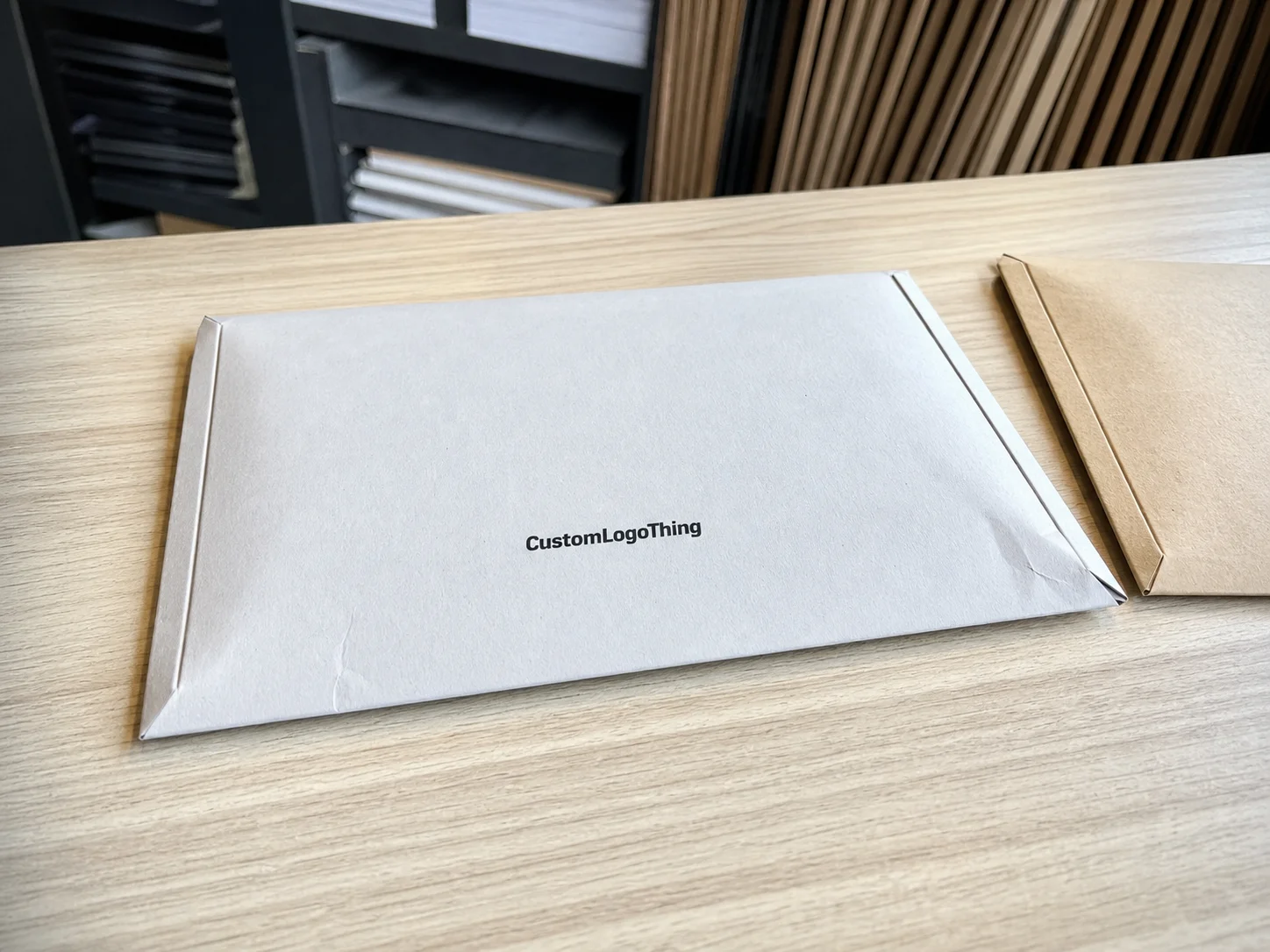
Custom flat mailers are thin, flexible mailing bags built for items that do not need the structure of a box. They are common for folded tees, socks, scarves, print inserts, catalogs, and light accessories. Their job is to keep the package compact and presentable, not to cushion a fragile item the way inserts or molded protection would.
For some SKUs, they are cheaper than boxes in a meaningful way. Less raw material goes into the pack, void fill usually disappears, and carriers may charge less when the parcel stays flatter and lighter. On a low-margin apparel order, that difference can be the line between a package that looks premium and one that simply eats the margin.
The format does have limits. A rigid accessory with sharp edges, a heavy jar, or any item that can punch through a seam belongs in a different structure unless the mailer spec is upgraded. In practice, the right choice comes down to product weight, edge profile, and how rough the shipping path is likely to be.
A mailer should work with the product, not force the product to behave like something it is not. That sounds obvious. It is also the mistake that quietly wastes the most packaging money.
There is a branding angle too. A clean printed mailer can do much of the identity work people associate with custom printed boxes, but with less material, less assembly, and faster packing. For direct-to-consumer apparel, subscription replenishment, and flat collateral shipments, that efficiency matters more than many spec sheets admit.
For teams that want a more technical reference point, package performance standards from the International Safe Transit Association at ista.org are worth reviewing. They help anchor decisions in shipping reality instead of mockup assumptions.
Best-fit uses
- Folded apparel such as tees, socks, swimwear, and basics
- Documents, lookbooks, and flat printed collateral
- Light accessories without sharp or rigid edges
- Retail replenishment packs where speed and low weight matter
Poor-fit uses
- Heavy items with hard corners or sharp protrusions
- Products that need crush protection
- Shipping lanes with frequent rough handling unless the spec is strengthened
How materials, thickness, and seals affect performance
Material choice affects more than durability. It changes puncture resistance, print quality, hand feel, and the first impression when the customer pulls the package from a mailbox or tote. Buyers often ask for “stronger” material without defining what stronger means. That usually leads to one of two bad outcomes: paying for thickness that was never needed, or under-specifying a mailer that tears at the seam.
Material options, translated
Polyethylene film is the common baseline because it is light, flexible, and cost-efficient. It also takes branding well for high-coverage print. Co-extruded film adds stiffness and better puncture resistance, which becomes useful when the item has a corner, zipper, clasp, or other pressure point that can stress the pack during sorting.
Paper-based flat mailers are chosen more for tactile presentation than for abuse resistance. They can support a cleaner retail feel and work well with simple graphics. The tradeoff is practical: paper scuffs, creases, and absorbs moisture faster than plastic film. That matters if the parcel travels through damp climates, multiple hubs, or long routes.
Sustainability claims need to be specific. A recycled content claim is not the same thing as recyclability, and recyclability is not identical across regions. If a supplier speaks broadly about environmental benefits but cannot explain the construction, ask for the exact material stack and any local disposal guidance. The Forest Stewardship Council publishes clear sourcing information at fsc.org.
Thickness is a performance decision
Thickness is usually measured in microns or mils. Treat it as a functional input, not a decorative one. A lighter gauge can be perfectly fine for soft apparel or documents. A heavier gauge makes more sense when the contents can puncture, crease, or pull at the closure while shifting in transit.
As a practical starting point, many light-use mailers sit around 50-70 microns, mid-range specs cluster around 70-90 microns, and more demanding shipping jobs can move above 100 microns. Those figures are not a universal standard. They are a useful benchmark for asking better questions and avoiding vague vendor language. The real test is the packed item, not the sample bag in isolation.
Seals deserve more attention than they get
Most custom flat mailers use an adhesive strip, but adhesive quality varies. A weak closure adds returns, tamper risk, and customer frustration. A good seal closes cleanly, holds through handling, and does not force the customer to peel the package apart like a sealed envelope from another century.
Some shipments need tamper evidence. That can mean a second adhesive line, a tear strip, or a closure that clearly shows if the pack has been opened. If retail presentation or product security matters, seal style should be part of the initial specification, not something added after the proof looks finished.
Cost, pricing, and MOQ: what changes the quote
Pricing is usually where buyers discover that a “simple mailer” does not produce a simple quote. The final number depends on dimensions, material grade, print coverage, number of colors, finish, pack format, and order quantity. Even how the mailers are packed for shipment can shift freight enough to matter on smaller orders.
MOQ, or minimum order quantity, changes the picture quickly. Lower minimums are useful for pilots, but they raise the unit price because setup, plates or prepress work, and production changeover are spread across fewer pieces. That is acceptable for a test run. It is expensive if the design is already locked.
| Spec profile | Typical use | Approx. unit cost at 5,000 pcs | Notes |
|---|---|---|---|
| Lightweight PE, limited print | Soft apparel, documents | $0.16-$0.24 | Lower material cost, best for low-abuse lanes |
| Co-extruded film, full-coverage print | Branded DTC shipments | $0.22-$0.38 | Better puncture resistance, cleaner print presentation |
| Paper-based mailer, specialty finish | Retail packaging, premium presentation | $0.28-$0.55 | Higher finish and material variation, more handling sensitivity |
Those ranges are useful for sanity-checking a quote, not replacing it. Freight, taxes, compliance requirements, and artwork complexity can move the number fast. A quote that lands far below the market band often does so because something important was left vague or omitted.
Print design affects cost more than many buyers expect. Full-bleed graphics, tight registration, gradients, and multiple spot colors all ask more from production control. A one-color logo is easier to run and usually less risky. Dense patterns and fine type are where registration issues start turning into reprints.
Unit price also hides a common trap: landed cost. Sampling, cross-border freight, packaging for shipment, and rush fees can erase the savings from a lower per-piece quote. For a broader comparison of package styles, it can help to review Custom Poly Mailers next to the flat mailer spec. Sometimes the better option is the one that arrives intact and does not cost more in total to land.
Production steps, proofing, and lead time
Production starts with file review and ends with packing, but the time spent in each step is not evenly distributed. Clean artwork moves quickly. Messy artwork stretches lead time in quiet, annoying increments. The factory cannot print a decision that has not been approved.
The usual sequence is file check, dieline fit, proof generation, proof approval, printing, drying or curing, conversion, packing, and shipment. None of those steps is exotic. Each one can still become a bottleneck if the buyer is still revising artwork after the job has already entered the queue.
A realistic lead time for custom flat mailers is often 12-15 business days after proof approval for standard production. Larger quantities, specialty construction, or more complicated print work can extend that. Rush schedules compress timing but also tighten the margin for error. International freight can add another week or more, depending on the lane and season.
Most delays come from the same handful of causes: late artwork approval, missing dieline dimensions, color changes after proofing, and spec changes after the order is already queued. The fix is procedural, not glamorous. Treat proof approval as a stop point, not a suggestion.
Testing matters here too. A mockup can look correct and still fail in transit if the adhesive, film, or print layer reacts badly to abrasion or handling. Buyers who need a practical benchmark should understand the broader packaging language used by groups such as the Packaging Institute at packaging.org. It is a useful frame for thinking about performance, not just appearance.
If the order supports a launch, count backward from the date the goods must be in hand, not the date the invoice can be issued. Build time for proofing, queue position, freight method, and a buffer for the revision someone will always ask for after the deadline is already close.
Step-by-step ordering process from artwork to delivery
Good ordering starts before the design file is opened. First, define the product in its packed state. Measure the item after folding, bagging, tagging, or inserting anything that will travel with it. Confirm weight, edge profile, and the amount of surface area you want the mailer to cover for brand presentation. If the product is borderline for the format, now is the time to say so.
Next, choose the spec. Decide on material type, thickness, closure style, and finish. If the package needs to support a stronger brand presentation, specify whether the look should be matte, gloss, or soft-touch. Those choices affect more than appearance. They also influence scuff visibility, fingerprints, and how the parcel photographs after transit.
- Define the product size, weight, and handling risks.
- Choose material, thickness, and seal type.
- Prepare artwork on the correct dieline with bleed and safe area.
- Review the proof for size, copy, color, and layout.
- Confirm quantity, ship-to address, and packed format.
- Approve production only when the details are final.
Artwork setup is where many avoidable problems begin. Use the correct dieline, keep text inside the safe area, include bleed, and send print-ready files whenever possible. If the supplier asks for vector art or a high-resolution file, send that instead of a screenshot and a note saying the resolution should be fine.
Proof review should be methodical. Check dimensions, logo placement, spelling, color references, and any legal or recycling copy. If a brand color matters, give the supplier a reference system, not a casual description like “close to blue.” Printing is exacting about what it receives and indifferent to what the buyer hoped it would infer.
Logistics matter just as much. Confirm carton counts, packing style, and shipping method. If the order is tied to a launch, work backward from the in-hand date and include freight time, customs if relevant, and a little margin. That habit is unglamorous, but it prevents more misses than design improvisation ever will.
Common mistakes that cause damage, reprints, or delays
The biggest mistake is sizing by mockup instead of by packed product. A mailer that looks fine on screen can become too tight once the item is folded, tagged, or placed with inserts. Once the contents start stressing the seam, failure is only a matter of movement and time.
Under-specifying thickness comes next. Thin material may look clean in a sample photo, but if the contents catch the edge or create pressure points, the bag can split during handling. That risk rises fast with accessories, boxed inserts, and any product that has hard corners or metal parts.
Bad files create a different kind of damage. Low-resolution artwork, missing fonts, color confusion, and ignored dielines all trigger reprints. Reprints waste material and queue time, and they push back every job behind them. The factory does not absorb the cost of a preventable file mistake.
Timing optimism is another pattern that keeps repeating. Approving late, revising after approval, and asking for the original ship date is the fastest route to a missed launch. A vendor may still help, but production time does not bend because the schedule got ambitious.
The common thread is this: packaging is often treated like a last-mile detail instead of a product decision. That is how buyers end up with mismatched brand presentation, weaker transit performance, and a customer experience that looks cheaper than it should have.
- Check the packed product, not just the unpacked one.
- Test corners, seams, and adhesive hold under handling.
- Lock artwork before approval.
- Build a buffer into the schedule, even if it is modest.
Expert tips for cleaner branding and fewer surprises
Keep the design disciplined. One strong brand color, clear typography, and enough contrast to read in a shipment photo usually performs better than a crowded layout with too many competing elements. That is true for retail packaging too. Cleaner graphics tend to survive transit wear better than busy ones.
Choose finish based on handling conditions, not trend language. Matte can hide scuffs more effectively than gloss. Soft-touch feels premium, but it can show abrasion and fingerprints if the route is rough. Gloss can look sharp, yet it also highlights every scratch. Pick the finish that fits the shipping reality.
For larger orders, ask for a sample or pre-production proof. A mockup is cheap insurance when the order is tied to a launch or a high-value SKU. It matters even more if the design uses tight registration, specialty film, or a heavier adhesive system that needs a real test before full production.
Keep some inventory buffer. Running out and rushing a reorder is how buyers pay extra for freight and rush charges while reducing their options on spec. A small buffer is usually less expensive than a stockout. Not elegant, just true.
If your line includes other formats like custom printed boxes, keep the visual system consistent across both. The brand feels more organized when the mailer and the box share the same visual logic, even if the structural formats differ. Consistency does not need to be loud to do its job.
What to check before you request quotes
Before asking for pricing, gather the information that actually changes the quote. The fewer assumptions the supplier has to make, the better the comparison will be. Vague requests produce vague numbers, and vague numbers are useless when you are trying to choose between options.
- Exact product dimensions and packed weight
- Desired quantity and any future forecast
- Printed or plain mailer preference
- Material type, thickness, and finish targets
- Artwork file status and dieline needs
- Deadline, ship-to location, and launch risk
Once you have that list, compare three things together: unit price, MOQ, and turnaround. Do not let the lowest unit price win if the MOQ is too high or the lead time misses the launch date. A low price that arrives late is not a bargain. It is a schedule problem with a nice number attached.
Ask for landed cost if possible. Freight, sampling, taxes, and rush charges can change the final number enough to alter the decision. A quote that looks competitive at the unit level can become the expensive option once it reaches your dock.
The best custom flat mailers are the ones that fit the product, the brand, and the shipping lane at the same time. Start with the item, then the route, then the visual system. Pretty matters, but function is what keeps the package from turning into waste.
Are custom flat mailers strong enough for apparel shipments?
Yes, for most folded apparel and soft goods, provided the thickness and seal match the product weight and any pressure from tags or inserts. They are a poor fit for rigid, sharp, or heavy items unless the spec is upgraded.
What thickness should I choose for custom flat mailers?
Use a lighter gauge for soft, low-risk items and a heavier gauge when the contents can puncture, crease, or stress the seam. If the product is borderline, test with the actual packed item rather than relying on a sample sheet.
How do custom flat mailers affect shipping costs?
They can reduce dimensional weight compared with boxes, which matters on lightweight orders. The savings depend on carrier rules, product thickness, and whether the mailer removes the need for void fill or secondary packaging.
What files do I need for printed flat mailers?
A print-ready vector file or high-resolution artwork placed on the correct dieline is the safest starting point. Brand colors, typography notes, and any required copy should also be provided before proofing starts.
How long does production usually take for custom flat mailers?
Lead time depends on artwork approval, material availability, print complexity, and order size. Clean files and fast proof approval keep the schedule moving. Late revisions do the opposite, which is why custom flat mailers reward buyers who handle the boring details early.

