Why Custom Go Kart Racing Stickers Stand Out on Track
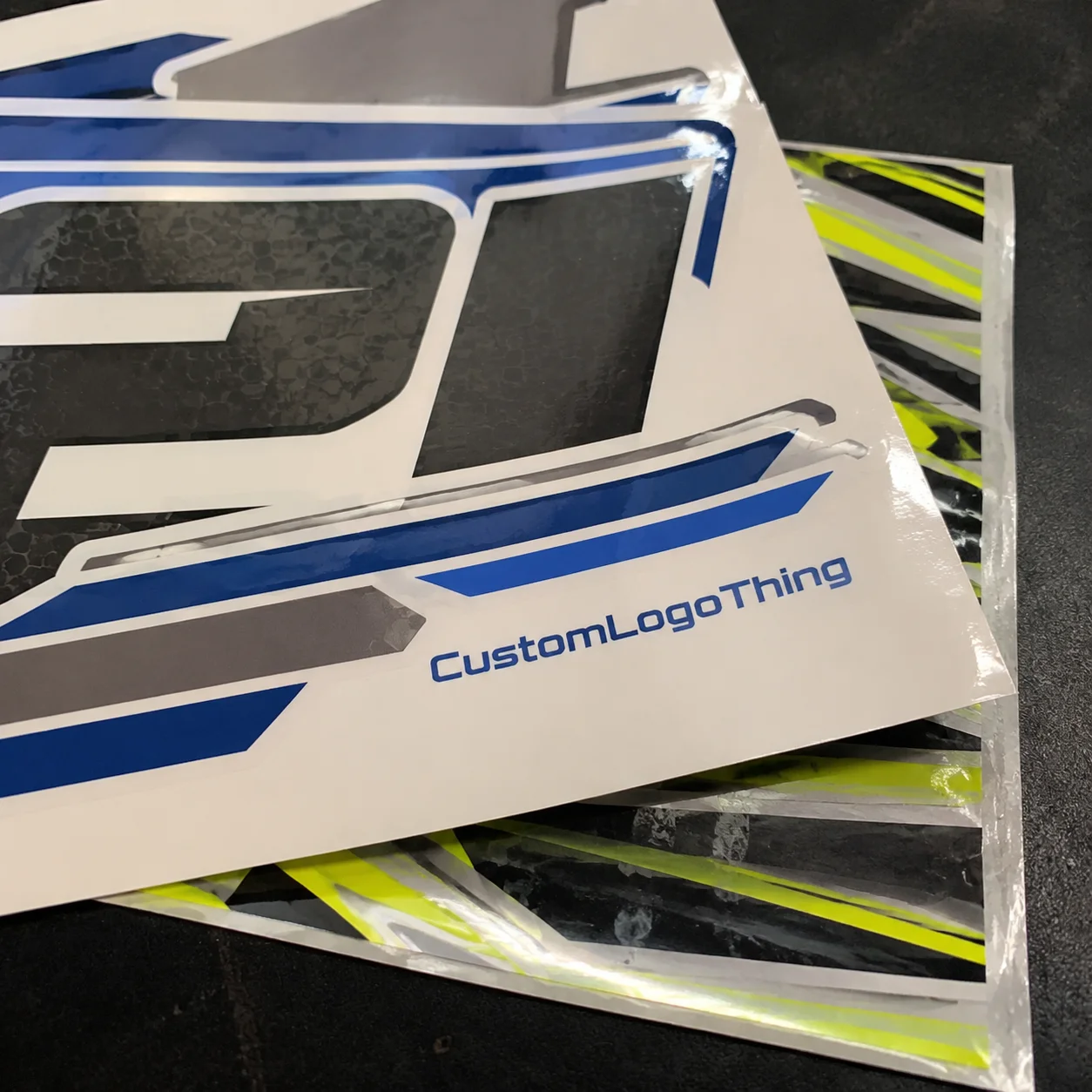
Custom Go Kart Racing stickers do more than dress up a kart. They help a machine read clearly at speed, survive rough handling, and keep its identity intact through a long season of practice laps, transport, and cleaning. Kart bodywork lives a harder life than many buyers expect, so the graphics have to earn their place.
Most track graphics are built around function first. Number panels, driver names, sponsor marks, chassis labels, and small accent pieces do the real work. A tidy decal set makes a kart easier to identify in the paddock and easier for officials, parents, and other racers to read from a distance. That clarity matters when several similar karts are lined up side by side.
The visual impact is often stronger than the size of the artwork suggests. One well-proportioned number set can make a kart look organized, while a crooked or crowded layout can make even a carefully prepared machine appear rushed. That is why good race graphics feel considered rather than busy.
Buyers usually want three things at once: durability, visibility, and easy installation. A parent ordering for a junior driver may care most about decals that hold up through a season of practices. A team may care about repeatable placement across multiple karts. A club racer may simply want a set that applies cleanly and still looks sharp after repeated washdowns. The best results usually come from keeping the design practical rather than chasing every decorative idea.
If you already think in terms of production, the logic will feel familiar. Material choice, adhesive behavior, and finish often matter more than the artwork itself once the stickers start living on a real surface. That is true in racing, and it is true in packaging work more broadly: the graphic only performs well if the substrate and finishing choices support it.
How Racing Sticker Production Works
Production usually starts with artwork preparation. Vector files are the cleanest option because they scale without distortion and keep letterforms, outlines, and logos sharp. Raster files can still be printed, but when they start life as screenshots or compressed images, the edges soften quickly and small text becomes harder to trust.
After artwork review, the job moves through proofing, color checking, print, lamination, cutting, and final inspection. Lamination is not optional for most kart graphics worth keeping. It protects the print layer from abrasion, moisture, fuel mist, and repeated wiping. Without that top layer, even a strong design can look worn after a few weekends.
Adhesive selection deserves attention too. A stronger adhesive helps on textured or curved panels, but too much tack can make repositioning difficult and can leave a mess during removal. On painted surfaces, the goal is secure hold without unnecessary aggression. On helmets or composite panels, a sample test is often the safest call if the material is unfamiliar.
Curved surfaces change the application method. A flat number plate is straightforward. A side pod with a compound bend is not. Thin text, fine rules, and tight registration around a crease line are the first things to suffer once a decal has to wrap around a contour. A better layout keeps critical details away from those trouble spots.
Production quality is usually visible in the boring places: corner cuts, edge finish, and how consistent the registration looks from one piece to the next. Those details do not sound exciting in a quote, but they are what decide whether a set looks clean on day one and still looks respectable after the kart has been cleaned a dozen times.
Proofing before print
Proofing is where expensive mistakes get caught early. A digital mockup confirms spelling, number style, sponsor placement, margins, and overall balance before any material is committed. That step matters because the person approving the design is not always looking for the same thing. A racer may care about legibility, a sponsor may care about logo scale, and a parent may just want the numbers to be easy to read from the stand.
A proper proof also catches fit issues. A layout that looks centered on a laptop can end up too close to a vent, bolt, or molded edge once it is mapped to the kart. Good proofing reduces surprises later, especially when the order needs to fit several panel shapes instead of just one flat surface.
Material, Durability, and Design Factors That Matter
Buyers often start by comparing artwork, but the material stack usually decides how long the decals stay presentable. Thickness, adhesive strength, UV resistance, scratch resistance, and edge-lift resistance all matter once the kart is on the track. A decal set that looks fine in a photo but scuffs quickly is a poor value, even if the print itself is attractive.
Finish changes both appearance and performance. Gloss tends to deepen color and increase contrast, which helps graphics pop under strong sunlight and bright paddock lighting. Matte cuts glare and can make text easier to read on reflective surfaces, though it sometimes softens the punch of the color. There is no universal winner. The right choice depends on the kart body, the lighting conditions, and the look the buyer is after.
Layout matters just as much as material. On a moving kart, numbers should lead, driver or team identification should follow, and sponsor logos should support the design rather than crowd it. Too many competing elements create noise. On a screen, that can look energetic; on track, it often looks cluttered.
Panel size also shapes the design. Front fairings usually work best with bold numbers and minimal copy. Side pods can carry more branding, but only if the text remains readable from a few meters away. Rear bumper areas often need extra contrast because they are seen from awkward angles and in changing light. In practice, small copy disappears quickly.
A useful buyer checklist usually includes the following:
- Material: durable vinyl with a protective laminate for abrasion and weather exposure.
- Adhesive: strong enough for curved bodywork, but not so aggressive that removal becomes difficult.
- Finish: gloss for stronger color pop, matte for lower glare.
- Typography: bold, high-contrast, and readable from a distance.
- Edge quality: clean cutting that reduces early lifting at corners.
There is also a waste consideration that often gets overlooked. A longer-lasting set means fewer reprints, less scrap, and fewer mid-season replacements. The same principle appears in broader packaging work: the best value often comes from a material choice that balances durability with planned replacement, instead of chasing the cheapest option per sheet.
Custom Go Kart Racing Stickers: Cost, Pricing, and Quote Factors
Pricing can vary a lot, and that is usually for predictable reasons. For custom go kart racing stickers, cost is driven by quantity, overall size, color count, finishing, material grade, and whether the shapes are simple rectangles or precision die-cuts. Any job that needs more setup, more handling, or more post-print finishing will usually cost more.
Unit price almost always drops as quantity rises. A single kart set carries the full burden of artwork setup, proofing, and cutting. A team order spreads those same costs across more pieces. That is why small orders feel expensive and larger reorders usually make better sense on a per-piece basis.
Special requests can move the quote quickly. Rush schedules, metallic films, white ink, specialty laminates, and tight contour cutting all add time or complexity. So do designs that need multiple layers or unusually precise registration. Buyers should also check whether trimming, packing, shipping, and any replacement policy are included in the quoted price. A low headline number is not helpful if the real total grows later.
| Order Type | Typical Use | Relative Unit Cost | Common Cost Drivers |
|---|---|---|---|
| Small test run | One kart, mockup, or fit check | Higher | Artwork setup, proofing, short quantity |
| Team order | Several karts with shared branding | Moderate | More total units, consistent artwork, standard finishing |
| Season program | Planned reorders and spare panels | Lower | Repeat artwork, predictable inventory, fewer revisions |
For a practical benchmark, simple laminated decal sets on larger runs may start at relatively low per-piece pricing, while small custom jobs often land much higher because setup is spread across fewer units. Exact figures depend on size, coverage, material, and finishing, so the most useful quote usually shows pricing in tiers: one kart, a small team quantity, and a spare-parts quantity. That makes the break point much easier to see.
It also helps to price the job with a little cushion. Ordering a few extras can save money later if a panel gets scuffed during practice or an install goes wrong. In racing, that kind of overage is not wasteful; it is practical inventory.
Production Steps and Lead Time: From Proof to Track
Lead time is more than print time. It starts with file review and proof approval, then moves through the production queue, printing, curing, lamination, finishing, and shipping. If the artwork needs revision, the schedule shifts before the press even runs. In most cases, artwork approval is the part that slows an order down, not the equipment.
For a straightforward order, turnaround can be fairly quick once the proof is approved. More complex jobs, especially those with multiple sponsor marks or unusual cuts, need more time. Specialty materials can also extend the schedule if they have to be reserved or ordered in ahead of production. For race dates that cannot move, early ordering is usually the safer choice.
Standard production tends to offer the best balance of price and flexibility. Rush service can work when the calendar is tight, but it usually reduces room for revisions and may limit material choices. That tradeoff is familiar in any custom print job: speed compresses options.
“The best print jobs feel uneventful. Clear files arrive, the proof matches the plan, and the decals show up with enough time to inspect them before install day.”
A simple workflow keeps the process predictable:
- Send measurements, logos, number styles, and target quantity.
- Review the proof carefully for spelling, scale, and placement.
- Confirm the production schedule and shipping timing.
- Inspect the finished decals on arrival before applying them.
Common Mistakes Buyers Make With Track Graphics
The most common mistake is still low-resolution artwork. Screenshots, compressed social media images, and old web graphics may look acceptable on a phone, but they fall apart once enlarged for print. Soft edges and fuzzy text are easy to miss in a proof and hard to ignore after installation.
Overdesign comes next. It is tempting to stack colors, slogans, sponsor marks, outlines, and decorative strokes into a small area, but the result is usually noise rather than impact. On a kart that is moving, a cleaner layout almost always reads better. Numbers stay visible, sponsor marks are easier to recognize, and the whole package looks more deliberate.
Surface prep is another place where buyers lose quality before the sticker even goes on. Dust, wax, silicone residue, and oily cleaner film all reduce adhesion. If the panel is not cleaned and fully dried, edges can lift early, especially in spots that get heat, airflow, or frequent handling. That problem is often blamed on the sticker when the real issue was installation prep.
Under-ordering creates a different kind of headache. If a team runs short and needs a reorder later, matching stock, finish, and color can become harder than expected. Even when the artwork file is ready, materials may come from a different lot. Keeping a small reserve of spares is usually the smarter move.
Another error is measuring the wrong surface. A chassis model or body style does not tell you the usable decal area with enough accuracy. Fasteners, molded edges, vents, and compound curves all reduce usable space. Measure the real panel, not the brochure dimension.
Expert Tips for Better Fit, Faster Reorders, and Cleaner Results
Keep a master artwork folder. It sounds simple, but it saves time every time a reorder comes up. Store vector logos, approved number sets, color references, and placement notes in one place so the next round does not start with a search through old emails and scattered files.
Order a few extras. Spare decals cover misapplied pieces, scuffed corners, and routine race damage. That small overage is often cheaper than placing another rush order later, especially when the schedule is already full.
Use a placement map if the graphics need to stay consistent across several karts. Uniform layout helps the team look organized, and it removes guesswork when pieces need to be replaced. Consistency is one of the most useful tools in any branded package, whether the surface is a kart body, a label set, or a shipping box.
If the material or adhesive is new to you, test one panel first. That is especially useful on helmets and highly curved surfaces. A single sample reveals a lot about bond strength, repositioning behavior, and how the edge finish holds up once the piece is pressed into place.
Temperature and surface condition matter more than many buyers expect. Clean the area thoroughly, let it dry completely, and apply the decals in controlled conditions instead of in a damp garage or under direct heat. Better conditions improve initial bond and reduce edge lift later.
For buyers comparing suppliers, the best questions are often the practical ones: what laminate is used, how the corners are cut, whether the quote includes proof revisions, and how the material behaves on curved bodywork. Those details tell you more than a polished sample photo ever will.
Next Steps for Ordering the Right Sticker Set
Before asking for a quote, gather the basics: measurements, vector files, number requirements, finish preference, quantity, and any sponsor or series rules. A tighter brief usually produces a tighter estimate and fewer revisions.
Then decide what the order is really for. One kart for practice? Several karts with shared branding? A season-long graphics package with spare inventory? The answer changes the right mix of price, durability, and turnaround. Treating every sticker order the same usually leads to either overspending or underbuilding the set.
When comparing quotes, use the same spec sheet for each supplier. That makes it easier to spot differences in material, finishing, proofing, and delivery timing. A lower quote may leave out important details. A higher quote may include a better laminate, stronger adhesive, or a more forgiving production window.
Good custom go kart racing stickers are built from a few practical decisions made early: readable design, durable material, and enough time for proofing. When those pieces line up, the result looks cleaner on track and holds up better in real use.
What materials work best for custom go kart racing stickers?
Durable vinyl with a protective laminate is usually the best starting point. Gloss improves color pop, while matte reduces glare on reflective surfaces and under strong track lighting.
How long do custom go kart racing stickers usually last?
Life span depends on track conditions, cleaning habits, installation quality, and material choice. Laminated decals generally last much longer than unlaminated stickers on kart bodywork that sees regular abrasion and washing.
Can I order custom go kart racing stickers in small quantities?
Yes. Small quantities are common for one kart, a prototype fit check, or a new team layout. The unit price is usually higher on small runs because setup costs are spread across fewer pieces.
How fast is the turnaround for racing sticker orders?
Turnaround depends on file readiness, proof approval, production queue, and finishing steps. Rush service may be available, but standard lead time usually gives better value and more room for revisions.
What should I send for the best quote on custom go kart racing stickers?
Send measurements, vector logos, number styles, quantities, finish preferences, and your target delivery date. The more complete the spec, the more accurate the pricing and timeline estimate will be.

