Buyer Fit Snapshot
| Best fit | custom gold foil stamped boxes for luxury brands for packaging buyers comparing material specs, print proof, MOQ, unit cost, freight, and repeat-order risk where brand print, material, artwork control, and repeat-order consistency matter. |
|---|---|
| Quote inputs | Share finished size, material target, print colors, finish, packing count, annual reorder estimate, and delivery region. |
| Proofing check | Approve dieline scale, logo placement, barcode or warning zones, color tolerance, and any recyclable or compostable wording before bulk production. |
| Main risk | Vague material claims, crowded artwork, or missing packing details can create delays even when the unit price looks attractive. |
Fast answer: Custom Gold Foil Stamped Boxes for Luxury Brands should be specified like a repeatable production item. The safest quote includes material, print method, finish, artwork proof, carton packing, and reorder notes in one written spec.
What to confirm before approving the packaging proof
Check the product dimensions against the actual filled item, not only the sales mockup. Ask for tolerance on folds, seals, hang holes, label areas, and retail display edges. If the package carries a logo, QR code, warning copy, or legal claim, reserve that space before decorative graphics fill the panel.
How to compare quotes without losing quality
Compare board or film grade, print process, finish, sampling route, tooling charges, carton quantity, and freight assumptions side by side. A lower quote is only useful if the supplier can repeat the same color, closure quality, and packing count on the next order.
When I first started walking factory floors, one thing always surprised new clients: a roll of foil on the press table looks almost quiet, even plain, but once heat and pressure hit the board, Custom Gold Foil stamped boxes luxury packaging can suddenly command the whole room. I’ve watched that happen on hot stamping lines in Shenzhen, Dongguan, and Guangzhou, and on hand-finishing benches where operators checked each carton under angled LED lights at 45 degrees. The change from “nice box” to “premium presentation” was immediate. That is exactly why Custom Gold Foil Stamped Boxes luxury packaging keeps showing up in cosmetics, jewelry, perfume, confectionery, and high-end gift programs, especially when brands are targeting retail shelves in Hong Kong, Singapore, and Los Angeles.
If you’re trying to build stronger package branding, the box is not just a container; it is often the first tactile proof of your product promise. A 350gsm C1S artboard wrap on rigid chipboard, paired with a clean foil logo and a soft-touch laminate, tells a different story than plain folding carton stock ever could. I’ve seen buyers change their tune in ten seconds flat once they held the sample in their hands. Honestly, that’s usually the moment the “Do we really need this?” conversation dies a dignified death. If the sample feels good at 22°C in a conference room in Shanghai, it usually feels even better in a customer’s hands after a long day of shopping.
Why custom gold foil stamped boxes luxury packaging stands out
In plain language, custom gold foil stamped boxes luxury packaging means a rigid or folding box that has been upgraded with metallic foil artwork, often on premium board, specialty paper, or a wrapped rigid structure with precise die-cutting. The design might be as minimal as a gold monogram on a matte black lid, or as detailed as foil borders, corner flourishes, and interior marks that guide the unboxing experience. I’ve seen brands spend $0.30 more per unit on a 3,000-piece run and gain much higher shelf confidence because the box looks intentional rather than generic. On a 5,000-piece order, that kind of upgrade can be the difference between a product being overlooked and being picked up first.
What makes custom gold foil stamped boxes luxury Packaging Stand Out is not only the shine, but the way the finish behaves under light. Foil stamping gives you a crisp, reflective edge that printed gold ink usually cannot match, because the process transfers a metallic film directly onto the substrate with a heated die. That difference matters in retail packaging, especially under spotlights in department stores or on e-commerce product photography in studios with controlled lighting at 5,600K, where flat metallic ink can look dull or muddy by comparison. I’ve stood in photo rooms in Shanghai and watched a gold-ink carton disappear next to a foil-stamped sample from the same brand. No contest. The foil won.
On the floor, I’ve heard operators describe foil as “quiet in the roll, loud on the box,” and that’s exactly right. A narrow gold line on a perfume carton can read as elegant and expensive; a full-panel foil flood, on the other hand, can feel gaudy if the design team doesn’t control negative space. The best custom gold foil stamped boxes luxury work usually uses foil strategically, not everywhere. I have also seen one art director insist on foil “just because gold is luxury,” and the sample looked like it had lost a fight with a disco ball. We fixed it, thankfully, by shrinking the foil area from 70% coverage to 12% and adding a matte black field around the logo.
Brands choose custom gold foil stamped boxes luxury solutions for a few practical reasons:
- Shelf impact: Gold reflects light and draws the eye in aisles where competing cartons are matte, busy, or visually noisy. On a 1.2-meter shelf in a Seoul or Singapore retailer, that contrast can matter a lot.
- Higher perceived value: Customers often associate foil with premium ingredients, better craftsmanship, and more careful product packaging. A $12 serum in a foil-stamped rigid box feels more like a $48 item than a $12 one.
- Better unboxing: The tactile reveal matters, especially for luxury gift boxes, cosmetic packaging, and branded packaging used for direct-to-consumer orders shipped from warehouses in Shenzhen or Ningbo.
- Photogenic finish: Foil looks strong in close-up social content, product launches, and retail packaging listings where the image is shot at 300 DPI and cropped tight around the logo.
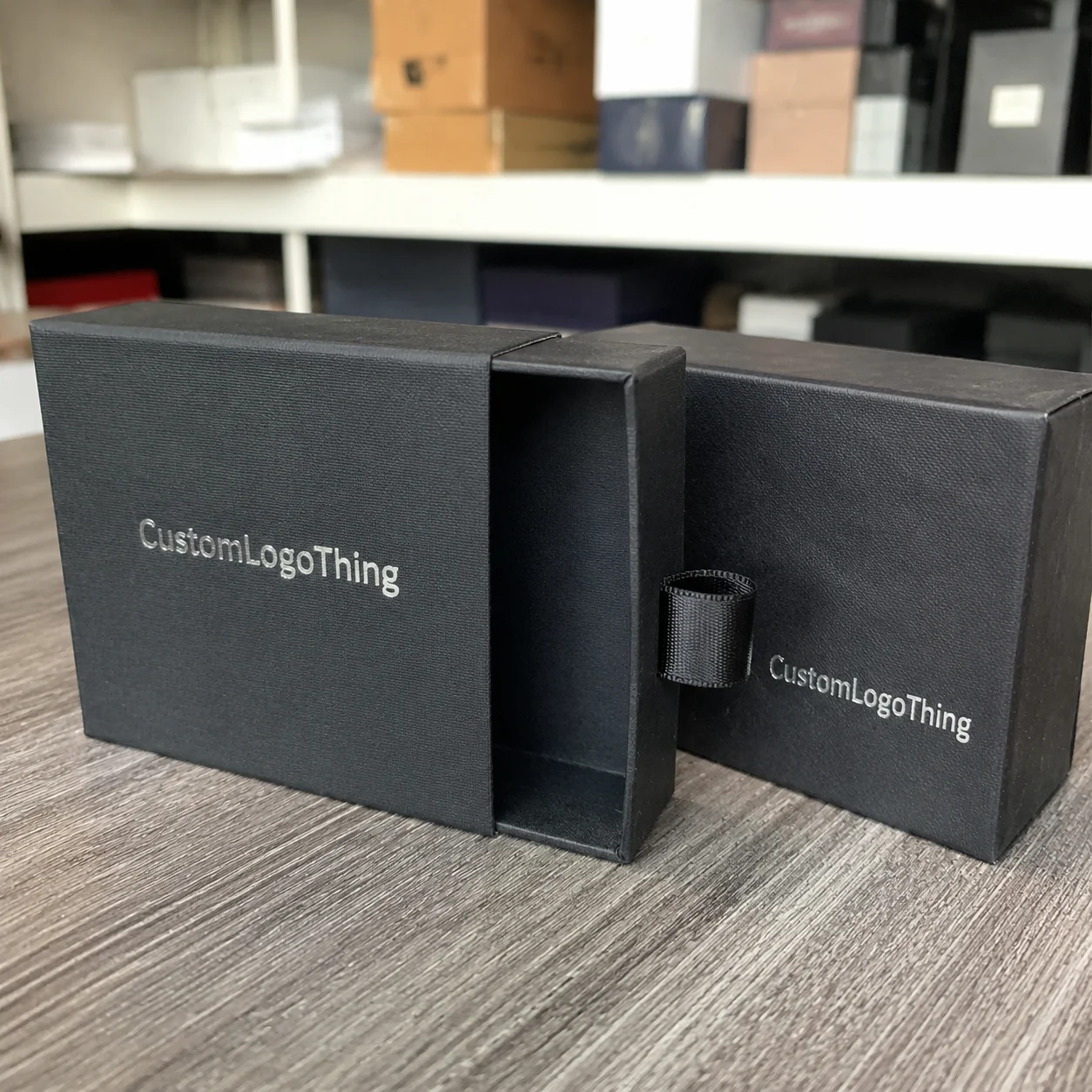
The applications are broad. I’ve specified custom gold foil stamped boxes luxury formats for skincare sets using rigid shoulder-neck structures, jewelry boxes lined with EVA foam cut to 3 mm tolerance, confectionery sleeves wrapped in specialty paper, and corporate presentation boxes with magnetic closures and ribbon pulls. In each case, the foil was not decoration for decoration’s sake; it was part of the package branding system, helping the customer understand the product’s positioning before they handled the contents. One perfume launch I worked on used a 2-piece rigid box with a 1.5 mm board base, 157gsm art paper wrap, and a 22 mm gold foil logo. That small logo did more work than a page of brand copy.
One more practical distinction matters here: foil stamping is not the same as metallic ink, and it is not the same as a gold printed image. Foil stamping uses a heated die and a thin foil film with an adhesive layer; metallic inks rely on pigment or metallic particles suspended in the print ink. The foil process creates a sharper edge, a more reflective surface, and a richer tactile cue, which is why custom gold foil stamped boxes luxury packaging typically feels more upscale in hand. A good foil stamp can hold a 0.3 mm hairline on a clean coated surface if the press is dialed in properly; a printed metallic ink usually can’t match that crispness.
How do custom gold foil stamped boxes luxury projects actually work?
The process behind custom gold foil stamped boxes luxury packaging is straightforward once you break it into stages, but the details matter if you want consistent results. First comes artwork prep, where the foil layer is separated cleanly from print, emboss, deboss, and cut lines. Then the die is created, usually from magnesium for simpler work or brass when the job needs finer detail, longer run life, or sharper relief on more demanding designs. On a 5,000-piece run in Dongguan, I’ve seen brass tooling pay for itself because the die kept its sharp edge through repeated impressions without the micro-wobble that sometimes shows up with softer tooling.
After the die is ready, the press operator sets temperature, dwell time, and pressure according to the board or wrap stock. A hot foil stamping press uses heat to activate the adhesive layer on the foil film, and pressure bonds that foil to the coated paper or wrapped board. The carrier film then lifts away, leaving the metallic impression behind. That part sounds simple, but if you’ve ever stood beside a press during make-ready, you know the operator may run 20 to 50 test impressions before the sweet spot is reached. I remember one late-night run in Shenzhen where the first ten pulls were perfect except for one stupid little corner on the logo. The whole room stared at it like it had offended us personally, and we adjusted the pressure by 0.2 tons to fix it.
Here’s the real-world part many design teams miss: the substrate changes everything. Soft-touch lamination, for example, can feel beautiful in the hand, but it may require more careful heat control than an uncoated wrap. Textured stocks can break the foil image if the grain is too heavy. Rigid chipboard wrapped with 157gsm C2S paper behaves differently from a folding carton made with 400gsm board, and custom gold foil stamped boxes luxury production needs to account for that from the start. I’ve seen the same gold foil spec look bright and clean on one 350gsm board and slightly blotchy on another because the coating chemistry changed by supplier.
When I visited a carton plant in Guangdong, the press crew showed me how a slight change of 5 to 10 degrees on the hot foil head could move the result from “crisp and bright” to “light transfer with pinholes.” That kind of adjustment sounds minor, but in luxury work it can be the difference between an acceptable run and a box that gets rejected at QC. For custom gold foil stamped boxes luxury orders, that margin is often invisible to the customer but very real to the factory. I’ve also seen humidity play a role: on a rainy afternoon in Dongguan at 78% relative humidity, the wrap stock behaved differently than it did the previous morning at 55%.
The sequence usually looks like this:
- Artwork prep: Separate foil, emboss, print, and cut layers.
- Die fabrication: Create magnesium or brass tooling based on approved artwork.
- Foil selection: Choose gold tone, finish, and adhesion profile for the stock.
- Press setup: Calibrate temperature, pressure, and registration guides.
- Stamping: Transfer foil under heat and pressure.
- Inspection: Check coverage, alignment, and surface defects under angled light.
- Finishing: Add embossing, laminating, gluing, or folding as required.
Registration is a bigger deal than many clients realize. Luxury boxes often combine foil with embossing, debossing, spot UV, or edge painting, and the visual alignment between those effects has to be exact. A 1 mm drift on a bold logo can be acceptable on a shipping carton; on custom gold foil stamped boxes luxury packaging, that same drift can make the entire piece feel off-center and less polished. For reference on printing and packaging expectations, the Packaging Machinery Manufacturers Institute and packaging trade resources often emphasize process control for this reason, because repeatability is what keeps premium work premium.
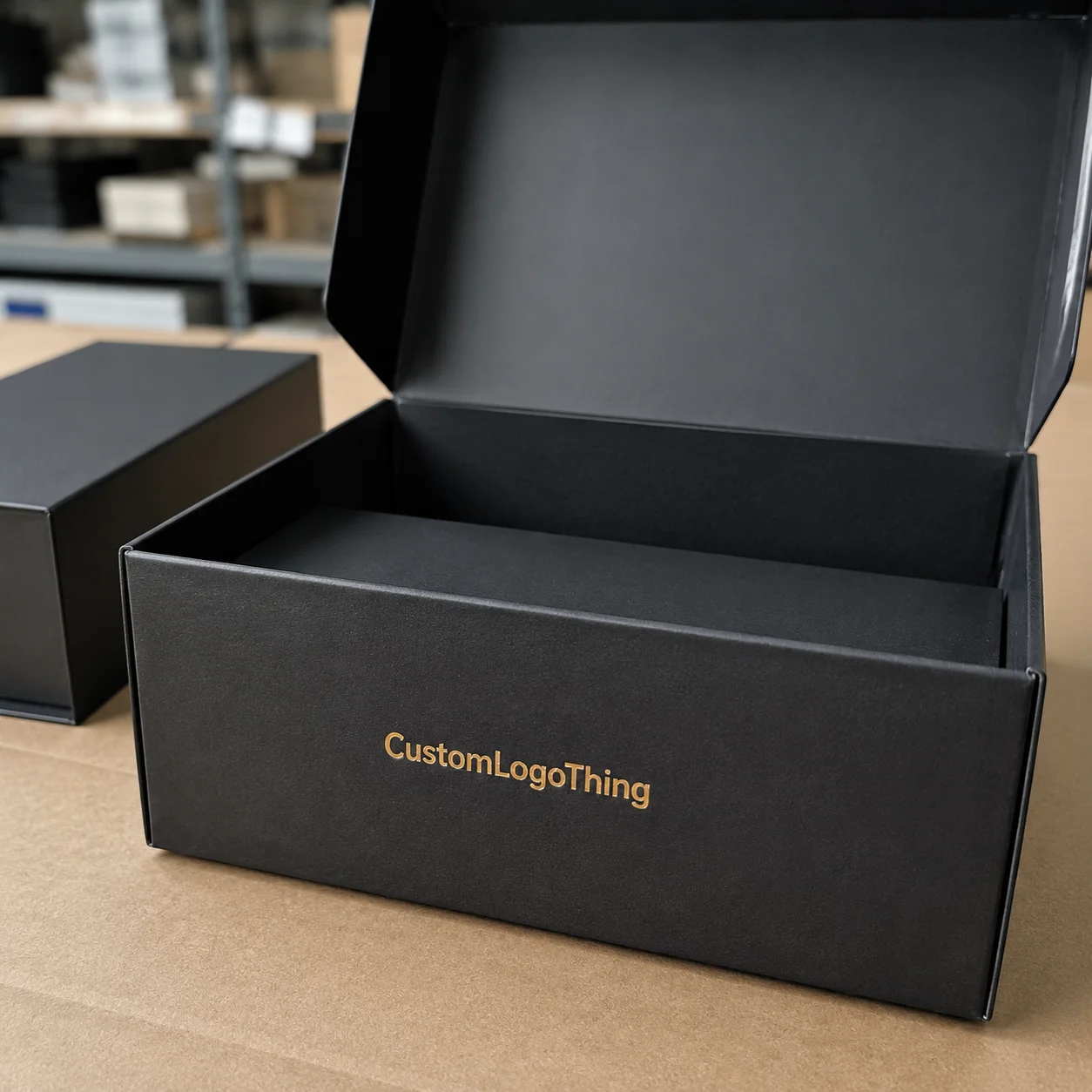
One of the smartest combinations I’ve seen was a matte black rigid box with gold foil, a blind emboss on the brand mark, and a microfiber-lined insert. The foil was small, only on the lid logo and an interior phrase, yet the box felt more luxurious than some fully covered designs because every finish had room to breathe. That is a valuable lesson in custom gold foil stamped boxes luxury packaging: the finish should support the story, not shout over it. In one Singapore beauty launch, the designer used 18 mm of foil on the lid and left the rest of the surface matte. The result looked more expensive than the louder version we tested first.
Key factors that affect cost and pricing
Pricing for custom gold foil stamped boxes luxury packaging is driven by more than just box size. Box style, board thickness, foil coverage area, number of foil colors, die complexity, print quantity, and finishing combinations all show up in the quote. A rigid two-piece box with a small foil logo will usually cost less than a magnetic closure box with foil, embossing, spot UV, custom inserts, and inner printing, even if the exterior dimensions are similar. A 3,000-piece rigid setup box can easily cost $0.95–$2.40 per unit, while a 5,000-piece folding carton with a single foil logo may come in around $0.18–$0.45 per unit depending on the paper and finishing.
Small runs usually cost more per unit because setup labor gets spread across fewer boxes. If a plant spends 2 to 4 hours on die mounting, press calibration, make-ready sheets, and first-article approval, that cost does not disappear just because you only ordered 500 pieces. I’ve had clients ask why 1,000 boxes were not twice the price of 500, and the answer is simple: fixed setup costs dominate the lower quantity. That is especially true with custom gold foil stamped boxes luxury work, where tolerances are tighter and waste control matters more. At 500 pieces, one bad setup sheet can feel expensive very fast.
Material upgrades also matter. Rigid chipboard in 1200gsm or 1400gsm, specialty wraps like coated art paper or textured cotton paper, soft-touch lamination, and custom inserts such as EVA foam or molded pulp can all change the price curve. A luxury perfume box with a paperboard insert may be a few cents cheaper than one with a precision-cut EVA cavity, but the EVA insert can add a stronger product hold and a more upscale presentation. With custom gold foil stamped boxes luxury orders, the material stack is often the place where cost and feel are negotiated side by side. A 350gsm C1S artboard outer wrap over 2.0 mm chipboard, for example, is a common sweet spot when clients want quality without paying for overbuilt construction.
There are also pricing pitfalls that show up late if no one flags them early. Oversized foil areas increase risk and waste. Multiple stamped locations require more handling and registration checks. Very fine type, especially below 5 pt in foil, may need testing and rejection control because the thin strokes can fill in or break apart during transfer. I’ve seen beautiful brand decks become impractical on press because someone designed a hairline monogram for a process that wanted stronger vector weight. That happens more than people think in custom gold foil stamped boxes luxury packaging, especially when the creative team works from a screen and never sees the die on press.
Freight and packing costs deserve a place in the quote, too. Luxury packaging often ships flat, semi-assembled, or in nested components that require careful cartonization. Some orders also need hand-finishing at the plant, such as insert insertion, ribbon attachment, or lid fit checks. If the order is headed for multiple warehouses, international freight can also become a meaningful line item. I’ve seen a client save $1,200 on box production and lose $1,800 by choosing an unnecessarily expensive shipping method because the packing plan was not finalized early enough. That one still makes me wince, especially because the cartons were leaving Ningbo on a tight airfreight deadline to Chicago.
Here’s a practical comparison of common custom gold foil stamped boxes luxury options and how they tend to behave on cost and appearance:
| Box option | Typical unit cost range | Best for | Notes |
|---|---|---|---|
| Folding carton with single gold foil logo | $0.18–$0.45/unit at 5,000 pcs | Skincare, confectionery, apparel tags | Lower material cost, fast production, strong shelf impact |
| Rigid setup box with foil lid branding | $0.95–$2.40/unit at 3,000 pcs | Jewelry, perfume, premium gifts | Higher perceived value, more assembly labor |
| Magnetic closure rigid box with foil, emboss, and insert | $1.85–$4.80/unit at 2,000 pcs | Corporate gifting, premium product launches | More tooling, more finishing steps, strong unboxing experience |
| Custom printed boxes with full wrap foil elements | $1.20–$3.50/unit at 3,000 pcs | High-end retail packaging and branded packaging programs | Design must be balanced carefully to avoid visual overload |
For sustainability-minded projects, I also advise discussing paper sourcing and waste planning. If your box program uses FSC-certified paper, or if you’re trying to align with facility waste reduction goals, you may want to reference guidance from FSC and environmental packaging practices from the U.S. EPA at epa.gov/recycle. Those details won’t make the box automatically premium, but they can help a brand document smarter material choices as part of the packaging design brief. In one project out of Suzhou, switching to FSC-certified wrap stock added about $0.04 per unit on 4,000 pieces, which the brand accepted because the certification mattered in their retail pitch deck.
Step-by-step process and timeline for custom gold foil stamped boxes luxury orders
A good custom gold foil stamped boxes luxury order moves through a clear workflow, and the smoother the handoff between stages, the fewer surprises you get at press. The usual sequence begins with inquiry and quoting, followed by dieline review, artwork approval, prototype or sample approval, production, finishing, packing, and shipment. If any one of those steps is rushed, the entire schedule tends to wobble a little. I’ve watched a three-day delay in artwork approval turn into a six-day delay in shipping because the die shop and foil supplier both had to be rebooked.
For planning purposes, I usually tell clients to prepare box dimensions, product weight, closure style, insert needs, brand colors, finish preferences, and shipping destination before the quote is even requested. If you know the box must hold a 280g glass bottle and travel in export cartons to three warehouses, say so immediately. That is the kind of detail that changes a custom gold foil stamped boxes luxury project from “pretty on paper” to “actually buildable and shippable.” A box for a 42 mm jar in Bangkok does not behave the same as a box for a 180 ml bottle headed to a warehouse in California, and pretending otherwise only wastes time.
Lead times vary, but a realistic starting point for a straightforward luxury box project is often 12 to 15 business days from proof approval to completion for smaller runs, while more complex rigid structures with inserts or multiple finishing layers can take longer. Die fabrication, foil sourcing, paper availability, and proof revisions all influence the schedule. If a client needs a very specific gold tone or a textured wrap paper that has to be imported, the timeline can stretch by a week or more. That is normal, not a failure. On one order from Hong Kong to a client in Dubai, waiting for a specialty champagne-gold foil added 6 business days because the stock had to come from a supplier in Taiwan.
Sampling is where strong projects get protected. You may see a digital mockup first, which is useful for layout and proportion. Then a physical pre-production sample follows, and for high-stakes launches I strongly prefer a press check if the foil placement or finish combination is delicate. On one cosmetics job, the brand team approved a digital proof that looked perfect, but the physical sample exposed a slight shift in the spacing between the foil logo and the top edge of the lid. Catching that before full production saved 2,000 boxes from becoming expensive lessons. Nobody enjoys paying for a mistake they can literally hold in their hands. The sample table in Shenzhen had three versions laid out side by side, and only the real carton told the truth.
Production sequencing matters more than outsiders think. Depending on the construction, foil stamping may happen before folding and gluing, after printing, or as a final embellishment on the wrapped box shell. Some jobs stamp the wrap sheet before it is mounted to board; others stamp the assembled carton. In custom gold foil stamped boxes luxury packaging, the order of operations is chosen to preserve detail, speed, and appearance. There is no single method that fits every project. A 2-piece rigid box with a 157gsm art paper wrap may be stamped flat first, while a folding carton on 350gsm board may go through print, foil, die-cut, and then glue in sequence.
What a typical production timeline looks like
- Day 1–2: Quote confirmation, file review, and dieline alignment.
- Day 3–5: Artwork corrections, die order, and paper or foil material booking.
- Day 6–8: Sample build or pre-production proof if required.
- Day 9–12: Main production run, stamping, printing, and finishing.
- Day 13–15: Inspection, packing, export carton preparation, and dispatch.
That timeline is not fixed, and anyone who promises otherwise without seeing your specs is guessing. If your custom gold foil stamped boxes luxury order includes edge painting, foil inside the lid, and custom inserts, plan for more time. I would rather give a client a conservative estimate and beat it than promise the moon and call later with excuses. A lot of my best supplier relationships were built on that simple rule, especially when I was negotiating with factories in Dongguan and Suzhou that had full production schedules for the next 10 days.
Common mistakes to avoid with luxury foil stamping
The biggest mistake I see with custom gold foil stamped boxes luxury projects is artwork that tries to do too much in too little space. Fine script, tight line spacing, and tiny decorative borders can look elegant on screen but fail on press if the die cannot hold the detail cleanly. Foil wants confident shapes and sensible spacing; otherwise, you risk fill-in, weak transfer, or broken edges that make the print look tired. A logo that reads beautifully at 800 pixels can turn into a mushy mess at 6 mm wide if nobody checks the minimum stroke width.
Stock selection is another trouble spot. Porous or overly textured materials can prevent clean foil adhesion, and a coating that feels premium to the touch may still react poorly under heat. Soft-touch lamination is especially tricky if the chemistry varies from supplier to supplier. I’ve had one project where two apparently identical wraps behaved differently because one batch came with a slightly different topcoat, and the foil tone shifted from bright gold to a duller antique look. That kind of issue can happen in custom gold foil stamped boxes luxury runs, so testing is not optional. I’ve seen this happen between two cartons from the same supplier in Zhejiang, and the only visible difference was the batch code on the outer case.
File preparation mistakes cause their own headaches. If the foil layer is not clearly separated from emboss, print, and cut lines, the production team has to interpret intent, and interpretation is where errors grow. I always want clean vector files, named layers, and a note specifying whether the foil should trap, overlap, or sit flush to adjacent artwork. The cleaner the file, the fewer surprises on the press floor. On one job, a designer sent a flattened PDF with no foil layer at all, and the factory had to redraw the logo from scratch. That added two days and one unnecessary headache.
Another common problem is over-finishing. Some brands pile on matte laminate, gloss UV, multiple foil colors, emboss, ribbon, window patching, and metal corner caps in the belief that more effects automatically mean more luxury. That usually makes the box feel busy instead of premium. The best custom gold foil stamped boxes luxury pieces I’ve seen usually have one dominant idea and one or two supporting details, not six competing ones. A single gold foil crest on a 1.5 mm rigid box can outperform a crowded design every time.
Skipping sample approval is a risk I would never recommend on a high-value launch. Without a real sample, color drift, registration issues, or foil tone differences can sneak into the full run. A gold foil that looked rich on a monitor might feel too yellow in person, or too brassy against a cool gray wrap. In branded packaging, those details matter because customers read them subconsciously long before they read the label. A 20-minute sample review in a factory office in Guangdong can save a $4,000 mistake later.
“We thought the foil would be the easiest part, and it turned out to be the thing that needed the most testing.” I heard that from a beauty brand manager during a press visit in Shenzhen, and she was right. On custom gold foil stamped boxes luxury projects, the finishing work deserves as much attention as the structural design.
Expert tips for a better luxury finish and stronger brand impact
If you want custom gold foil stamped boxes luxury packaging to feel truly premium, use foil with intention. A logo, border, monogram, or product name often does more for brand recall than a foil flood. One of the strongest jewelry projects I’ve seen used a tiny gold foil crest centered on a deep navy lid, and the restraint made the box feel expensive because it didn’t try to impress too hard. That’s the trick, really: confidence beats clutter. On a 2-piece rigid box, a 16 mm crest can carry more authority than a full-panel treatment.
Pair foil with tactile contrast. Embossing gives the customer a raised surface they can feel with the fingertips, while soft-touch lamination adds a velvety look that sets off the reflective metal. Linen textures, matte black wraps, and deep jewel tones like emerald or oxblood can make gold foil feel more dimensional. In custom gold foil stamped boxes luxury work, the best visual effects usually come from contrast rather than accumulation. I’ve watched a matte charcoal wrap with a 0.5 mm blind emboss and a gold foil logo outperform a much busier competitor box on the same shelf in Guangzhou.
Test the foil on the actual board and actual finish before you commit to full production. This is especially true if you are using heavy ink coverage, a specialty coating, or a wrap paper with unusual absorbency. A light gold on coated art paper may behave beautifully, but the same foil on a heavily textured stock can lose brightness or crispness. That’s one of those details that separates experienced packaging design from guesswork. If your board spec is 350gsm C1S artboard over 2.0 mm chipboard, test that exact stack, not “something similar.” Similar is how people end up paying for rework.
Structural details matter just as much as finish choices. A magnetic closure, ribbon lift, custom insert, or hidden interior print can transform the moment of opening. I’ve seen a plain exterior become memorable because the interior lid carried a short message in gold foil, and the insert held the product like a display fixture. That kind of thinking makes custom gold foil stamped boxes luxury packaging feel deliberate from the outside to the last reveal inside. On one project, the inside lid message added only $0.06 per unit, but the client told me it was the first thing customers posted on social media.
Keep your brand system consistent. The foil tone, typography, and logo placement should match your broader package branding across product lines, event kits, and retail packaging. If one collection uses warm gold and another uses a cooler champagne gold, make sure the difference is strategic and not accidental. Consistency is one of the quiet strengths of luxury branding, and customers notice it more than most teams realize. I’ve seen a brand lose cohesion because one supplier in Guangzhou used a yellow-gold foil while another in Shenzhen matched a softer antique gold. Same brand, different mood. Not ideal.
For brands expanding their Custom Packaging Products lineup, it helps to build a family of structures rather than ordering each box as a one-off. That way, your custom gold foil stamped boxes luxury system can scale into seasonal editions, influencer kits, or limited-release sets without reinventing the wheel every time. I’ve seen that approach reduce delays by a full week because dielines, board specs, and closure logic were already established. If your core box uses a 200 mm x 120 mm x 40 mm format, keeping that footprint consistent makes future artwork and insert planning much easier.
Next steps for ordering custom gold foil stamped boxes luxury packaging
Before you request a quote, gather the essentials: product dimensions, target quantity, brand assets, preferred box style, and whether you need inserts or specialty finishes. If you can also provide a sample unit of the product itself, even better, because a 42 mm jar or a 180 ml bottle can change the interior fit in ways that a spec sheet alone might not reveal. That kind of preparation makes custom gold foil stamped boxes luxury pricing more accurate from the first round. I’ve saved clients from a surprise retool just by asking them to mail one product sample to the factory in Dongguan before quoting.
Ask for a quote with clear specs so the numbers reflect real production needs instead of rough assumptions. A box with a single foil logo on a 500-piece run is a very different job from a 5,000-piece order with embossing, soft-touch lamination, and a custom foam insert. The more precise the brief, the fewer surprises later, and that matters in both timing and budget. If the supplier knows you want a $0.15–$0.20 delta between your current carton and the upgraded foil version, they can usually suggest where to spend and where to save.
Always request a sample or proof before approving the full order, especially if the design uses small foil details or multiple finishing layers. If you are combining gold foil with a deep black wrap, a cream interior, and an embossed crest, the physical sample will tell you more than any render ever could. That sample is the safest checkpoint in custom gold foil stamped boxes luxury production. A proof approved at 4 p.m. in Shanghai is still just a promise until the carton comes off the press and gets checked under real light.
Here’s a simple checklist I use with clients:
- Confirm box dimensions and product fit.
- Approve the dieline and artwork layers.
- Decide on foil placement, foil tone, and finish combinations.
- Review a physical sample or pre-production proof.
- Lock the production timeline and shipping details.
- Verify carton counts, packing method, and destination addresses.
If you follow that sequence, the odds of a smooth build go way up. More importantly, the final box will feel like part of the product itself rather than an afterthought. That is the real goal with custom gold foil stamped boxes luxury packaging: it should look intentional, hold up in transit, photograph well, and still feel special when a customer opens it for the first time. I’d rather ship 3,000 boxes that feel expensive than 10,000 boxes that merely look expensive in a PDF.
At Custom Logo Things, that is the standard I would aim for every time. The best custom gold foil stamped boxes luxury work comes from careful design, the right board, disciplined press setup, and honest communication about what the material can and cannot do. Get those pieces aligned early, and your packaging will look premium for the right reasons. It also helps when the supplier is in a manufacturing hub like Shenzhen or Dongguan, where the right finishing line is usually one factory move away instead of three countries away.
FAQ
What makes custom gold foil stamped boxes luxury packaging different from printed gold boxes?
Foil stamping uses heat and pressure to apply a reflective metallic film, which usually gives a sharper and more premium result than printed gold ink. The finish often has better contrast, Stronger Brand Impact, and a more upscale feel in hand and on camera, especially on rigid cartons and premium product packaging. On a matte black box with a 20 mm logo, foil will usually read cleaner than metallic ink every time.
How much do custom gold foil stamped boxes luxury designs usually cost?
Pricing depends on box style, quantity, foil coverage, board choice, and whether embossing, inserts, or specialty wraps are included. For example, a folding carton with a single gold foil logo might run $0.18–$0.45 per unit at 5,000 pieces, while a magnetic rigid box with multiple finishes can land much higher because of assembly and tooling. A realistic rigid setup box quote often starts around $0.95–$2.40 per unit at 3,000 pieces, depending on the factory and finish stack.
How long does it take to produce custom gold foil stamped boxes luxury packaging?
Timelines vary by sample approvals, die making, material availability, and production complexity. Simple orders may move in about 12 to 15 business days after proof approval, while rigid Boxes with Inserts and multiple finishing layers usually need more planning, more setup, and a little more patience. If the foil stock has to come from a supplier in Taiwan or South Korea, add several business days before production starts.
Can gold foil stamping work on textured or soft-touch boxes?
Yes, but the material must be tested first because texture and coating affect foil transfer quality. Some soft-touch or heavily textured surfaces need adjusted heat, pressure, or a different paper wrap to keep the foil crisp and bright, and that testing step is one reason luxury packaging performs better when the factory is involved early. I would never approve a textured wrap for custom gold foil stamped boxes luxury work without a physical press test on the exact substrate.
What information should I provide before ordering custom gold foil stamped boxes luxury packaging?
Share product dimensions, quantity, box style, artwork files, desired foil areas, and any insert or finishing requirements. The more exact the specs, the easier it is to quote accurately, plan the print and foil sequence, and avoid delays during sample approval and full production. If you can include the actual product sample and your target shipping city, such as Los Angeles, London, or Sydney, the quote will be even more accurate.