Custom Golf Shoe Bag: How to Spec It Without Guesswork
A custom golf shoe bag has a straightforward job: hold a pair of shoes, protect the rest of the kit, and look credible on a shelf or in a tournament package. In practice, the spec can go wrong fast if the bag is treated like generic packaging instead of a product with real size, handling, and branding requirements.
The right spec depends on the use case. Retail display, pro shop resale, travel storage, club fitting, and promotional bundles all push the build in different directions. That affects size, material, closure, print area, and even carton pack. If you are comparing options across a broader packaging program, Custom Packaging Products is the place to review the bag alongside the rest of the line before you lock the spec.
Why a Custom Golf Shoe Bag Solves a Real Retail Problem
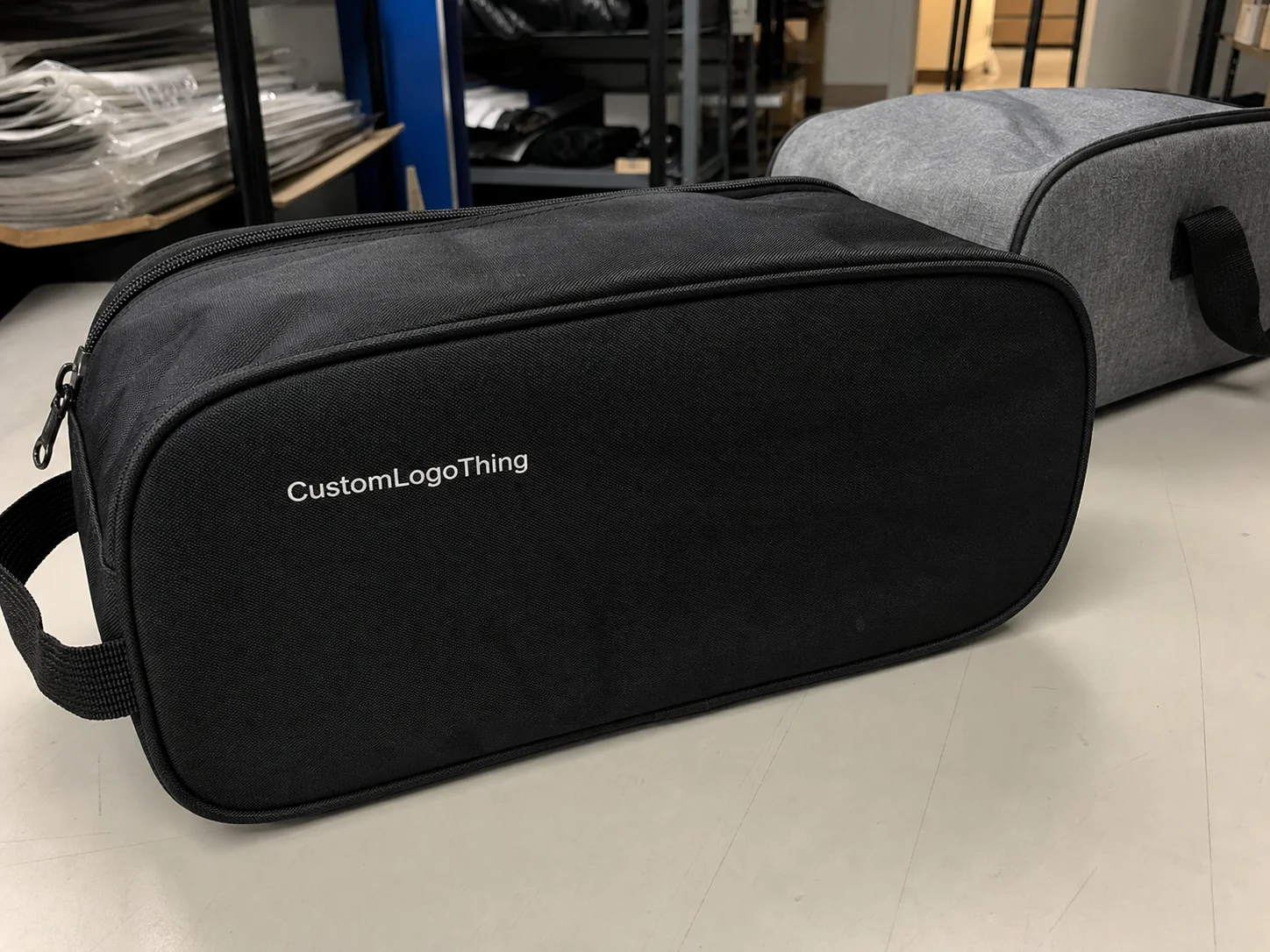
Golf shoes bring in grass, sand, moisture, and odor. A weak sleeve or oversized poly bag does not solve that problem well. A proper shoe bag protects the shoes, keeps dirt off nearby inventory, and gives the customer a usable storage piece after purchase.
For retailers and private-label buyers, the value is not just containment. The bag supports shelf presentation, simplifies shipping, and makes the product feel planned instead of thrown together. Once the logo, closure, material, and structure work together, it becomes part of the product line rather than filler packaging.
Cost still matters. A bag that looks premium but fails in transit is a bad buy. One that is durable but too heavy, too large, or too expensive can damage margin. The useful version is the one that fits the shoes, handles normal abuse, and stays within the price band the buyer can actually sell through.
How It Works: The Parts That Make the Bag Useful
A useful shoe bag is a set of decisions, not one material call. The body panel controls branding and visibility. The gusset controls capacity. The closure affects reusability. Handles, vents, and reinforcement determine how well the bag survives repeated handling.
Start with the journey. Will the bag move from warehouse to shelf, from pro shop to car trunk, or from a tournament desk to a hotel room? A clear body helps identify the product quickly. An opaque body hides scuffs and can feel more premium, but it reduces visibility. A deeper gusset makes loading easier, especially when the shoes are boxed, damp, or packed with accessories.
Print placement matters more than most buyers expect. Logos too close to a seam can distort. Thin side panels reduce the safe artwork area. If the bag will be stacked, hung, or compressed in transit, the branding has to remain readable after folding and handling. That is a function issue, not a design flourish.
- Body panel for visibility, branding, and moisture control
- Gusset for width and shape retention
- Closure for security and reusability
- Handle or carry feature for retail and travel convenience
- Vents or reinforcement for damp shoes and repeated handling
Materials, Thickness, and Features That Change Performance
Material choice should match the use case, not a vague idea of premium feel. The common starting points are LDPE, HDPE, and PP. LDPE is softer and more flexible. HDPE is lighter and stiffer. PP tends to look cleaner and crisper, with good clarity depending on finish and gauge.
Thickness matters just as much as resin type. A 1.5 mil bag and a 3 mil bag behave very differently once shoes are inside. Thicker film handles abrasion from cleats and offers better puncture resistance, but it raises cost and can make the bag feel bulky. Thinner film lowers material cost, but it creases sooner and shows seam stress more quickly.
| Material | Typical Feel | Strength Profile | Best Use Case | Indicative Unit Cost |
|---|---|---|---|---|
| LDPE | Soft, flexible, easy to fold | Good puncture resistance, moderate stiffness | Reusable retail packaging with a softer hand feel | $0.14-$0.24 at 5,000 units |
| HDPE | Light, crisp, more rigid | Strong for its weight, less forgiving at folds | Low-cost product packaging where price matters most | $0.11-$0.19 at 5,000 units |
| PP | Clear, clean-looking, slightly firmer | Good clarity and decent puncture resistance | Branded packaging where shelf appearance matters | $0.18-$0.30 at 5,000 units |
Feature choices change the user experience. A zipper or slider makes the bag more reusable and more premium. A simple seal keeps cost down, but it is less durable. Die-cut handles work well for retail. Soft loop handles are easier to carry if the bag travels often. Clear film helps with product identification. Opaque film gives more room for branding and hides wear better. Vent holes make sense if shoes may go into the bag while still damp.
Test the full pack-out, not just the empty bag. A sample that looks fine on a desk can fail once it meets carton pressure, stacking, or rough freight handling. For shipment stress testing, suppliers often reference ISTA profiles when the package has to survive real transit conditions. If any paper components are part of the system, such as inserts or outer cartons, FSC certification may be relevant for those board-based pieces. It does not apply to the plastic film itself, so the claim has to match the actual structure.
Custom Golf Shoe Bag Process and Timeline: From Spec to Shipment
The cleanest projects start with a spec sheet that leaves little open to interpretation. Before asking for a quote, define dimensions, material, film thickness, closure style, print coverage, and any extras such as vents, handles, or reinforcement. The more complete the brief, the faster the quote and the lower the chance of approving the wrong sample.
Move through approval in order. Artwork setup comes first, then digital proofing. If the bag uses unusual dimensions, a custom finish, or a closure that changes the shape, sample review should follow before final approval. Do not sign off on a layout that only looks correct because the flat art file was cropped conveniently. Measure the actual print area and confirm seam locations against the filled bag.
Timeline usually breaks into four parts: sampling, production, packing, and freight. If the art is ready and the structure is straightforward, production often moves in about 12 to 15 business days after proof approval. Sampling adds time. Seasonal demand adds more. Freight can be the longest step if the bags need to land inside a retail launch window or ship with other packaging components.
Cost, Pricing, and MOQ: What Moves the Quote
Pricing is driven by a small set of variables: size, film gauge, print method, number of colors, closure type, and reinforcement. A larger bag uses more material. More colors increase setup work. A zipper or slider adds hardware and labor. None of that is mysterious, but it adds up faster than most buyers expect.
MOQ matters because setup costs have to be spread across the run. At 500 pieces, the unit price can stay stubbornly high. At 3,000 to 5,000 pieces, the price usually starts to make sense. At 10,000 or more, the unit cost often drops enough to support retail margin. Ask for tiered pricing. One number is not enough to understand the breakpoints.
| Order Size | Typical Unit Price Pressure | What Usually Drives It | Buyer Takeaway |
|---|---|---|---|
| 500-1,000 pieces | Highest | Setup costs and low spread of tooling | Good for pilots, but usually weak on margin |
| 3,000-5,000 pieces | Moderate | Better amortization of setup and print prep | Often the practical middle ground |
| 10,000+ pieces | Lowest | Scale offsets labor and preparation | Best if demand is stable enough to justify it |
Ask for the price structure in writing so you can compare bids on the same basis. Include unit price at 1,000, 3,000, and 5,000 pieces, setup costs for plates or tooling, packing configuration, freight terms, and any sampling or testing charges. The cheapest quote is not always the cheapest order if it hides assumptions in packing, tolerances, or shipping.
Step-by-Step Ordering Checklist for Buyers
The cleanest order starts with a narrow use case. A retail shelf bag does not need the same spec as a tournament giveaway or an internal club storage bag. That decision changes the material, closure, print coverage, and carton pack count. If those details are vague, the quote will be vague too.
- Define the use case: retail packaging, travel storage, or tournament kit.
- Measure the largest shoe size you need to fit, including width, height, and toe clearance.
- Decide whether the bag holds one pair, a boxed pair, or shoes plus accessories.
- Choose material, thickness, and finish based on handling and shelf presentation.
- Prepare artwork in vector format and confirm color targets before proofing.
- Add barcode, SKU, carton, or packing instructions if the bag will move through retail systems.
- Request samples or a pre-production proof before approving the full run.
Two measurements matter more than most buyers expect. First, the largest pair you plan to pack. Second, the clearance needed for damp shoes that are not perfectly compressed. A bag that is too tight may look efficient on paper, but it can wrinkle the artwork and stress the closure. A slightly deeper gusset usually solves that without pushing cost out of range.
Buyers usually regret two things: sizing too tight and approving art from a screenshot.
Artwork should be handled like a production file, not a marketing image. If the bag has a curved side, the logo can distort near the edge. If the item will hang on a peg, the top panel needs enough clean space to stay readable. Keep the print map tied to actual dimensions, not the flat mockup. That is how the packaging stays consistent with the rest of the product line.
Common Mistakes and Expert Tips Before You Approve Artwork
The most common mistake is underestimating the real size of the product. A sample pair on a desk does not tell you much about the final fit once a larger size, a wider last, or a damp insole shows up. The second mistake is poor seam planning. If the closure line sits too close to a stress point, the bag becomes vulnerable during routine handling.
Another problem is vague placement instructions. “Logo centered” is not enough. Centered relative to what? The top edge, the filled bag, or the hanging hole? The more precise the layout, the fewer arguments later. That matters even more if the bag is part of a broader packaging system that includes headers, labels, or shelf-ready cartons.
The best practical check is simple: request a physical sample and test it with real shoes. Put wet shoes in it. Close it with gloves if your staff uses them. Drop it into a shipping carton. Stack it with other inventory. If it still looks and feels acceptable after that, the spec is probably close. If it only looks good flat on a screen, it is not ready.
Claims about recycled content or recyclability need careful wording. The claim has to match the actual film, closure, and local collection reality. A supplier can help, but the label cannot say what the structure does not support. Treat sustainability language like any other specification: precise, verifiable, and tied to the real build.
Next Steps: Turn the Spec Into a Clean Buyer Brief
By the time you request quotes, the goal is not to impress suppliers. The goal is to remove ambiguity. Put the dimensions, quantity, material preference, print file, target delivery date, and packing notes into one RFQ packet. That cuts down on clarifying emails and makes the quote more accurate.
If possible, ask for samples or pre-production proofs and compare them side by side. Feel matters. Seal quality matters. Print clarity matters more than people like to admit when a logo has to sit on a narrow surface. Buyers save money later by being strict here instead of trying to fix problems after the run has started.
Use the final approval to lock the schedule, carton pack, and re-order terms. If the bag will be part of a recurring retail line, keep the spec stable so the next run can move faster. The more the supplier knows about the final application, the less time they spend guessing at details that should have been fixed at the start. For teams building a broader assortment, a custom golf shoe bag is easiest to approve once it is compared with the rest of the product family. Review the full mix on Custom Packaging Products before you commit, then finalize the bag spec with the fit, material, and print details already settled.
FAQ
What size should a golf shoe bag be for standard golf shoes?
Size it to the largest pair you expect to pack, not the average pair. Leave room at the toe and heel so the bag does not strain when the shoes are damp or bulky. If you plan to include socks, a shoehorn, or a boxed pair, add gusset depth instead of forcing the closure to absorb the extra volume.
Do shoe bags for golf need vents or a zipper?
Vents help when shoes are commonly packed after a round and may still hold moisture. A zipper or slider gives a more premium feel and usually performs better for repeated reuse. If the main goal is low-cost retail packaging, a simpler seal may be enough, but the closure still has to survive normal handling.
How much does a custom shoe bag usually cost per unit?
Cost depends on size, film thickness, print coverage, closure type, and order quantity. Smaller runs carry a higher unit price because setup costs are spread across fewer pieces. Ask for pricing at multiple volumes so you can see where the quote starts to settle.
What artwork files work best for a printed shoe bag?
Vector artwork is usually the safest starting point because it stays sharp when resized for a narrow or curved print area. Send exact color targets, placement notes, and any logo clear-space rules so the proof matches the finished bag instead of a generic mockup.
How long is the lead time for a custom shoe bag for golf?
Lead time usually includes proofing, sampling if needed, production, packing, and freight. If the artwork is ready and the spec is straightforward, production may move in about 12 to 15 business days after approval, but seasonal demand or complex printing can stretch the schedule. The fastest jobs usually come from the cleanest brief.


