Custom ink drawstring bags look simple, which is why they are often spec'd too quickly. The wrong material, print method, or size can make a low-cost bag feel disposable before the event is over.
For buyers, the real decision is not just the bag itself. It is whether the bag works as branded packaging that can survive handling, shipping, and reuse. Material, print method, size, and quantity affect value more than the headline unit price. If the bag is part of a broader packaging system, it is worth comparing it with Custom Packaging Products and other forms of product packaging before locking the spec.
Custom ink drawstring bags are commonly used for event giveaways, retail inserts, school kits, fitness promotions, and bundled merchandise. They work best when the handout needs to be easy to carry, easy to recognize, and durable enough to be reused.
Custom ink drawstring bags: what they are and where they work
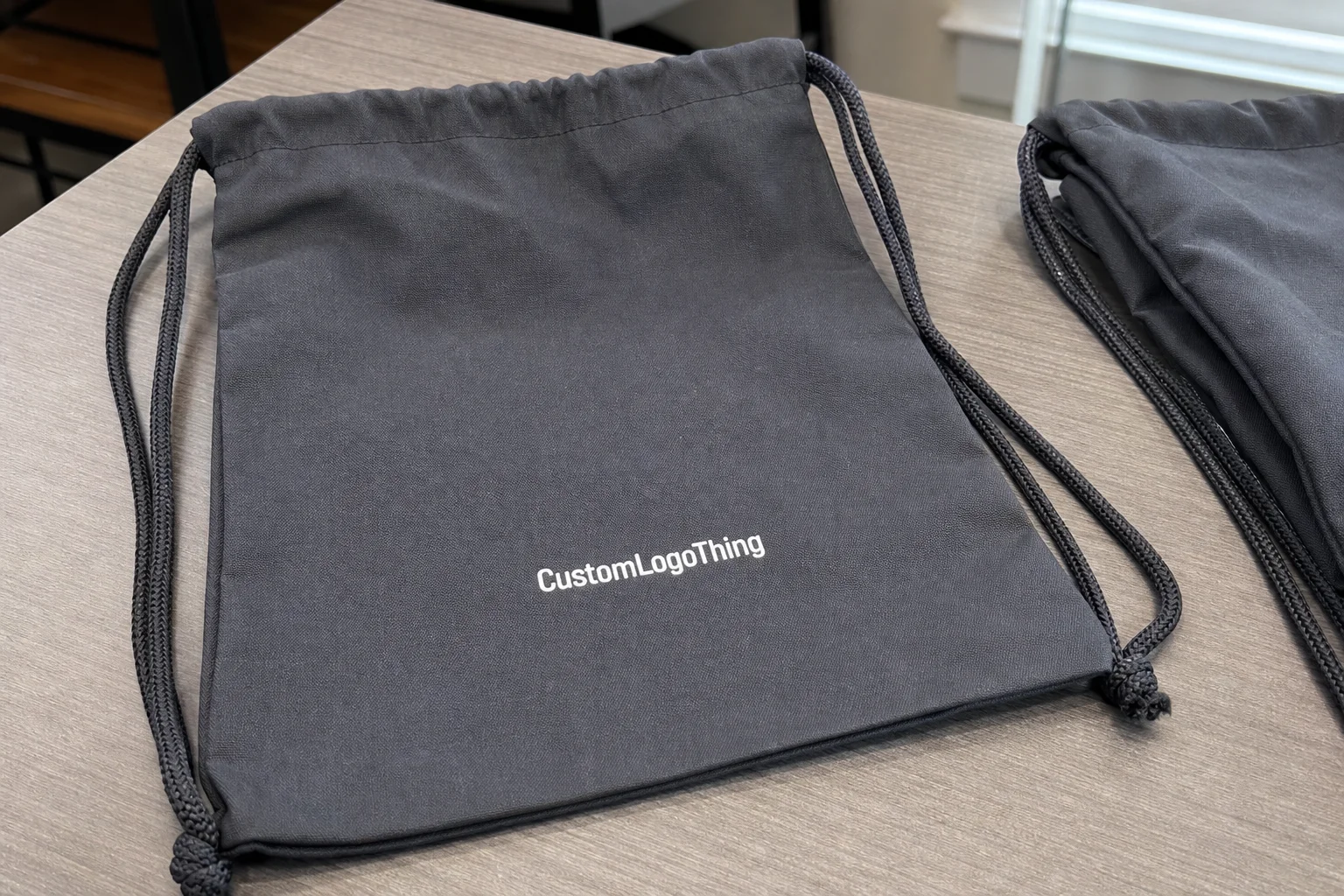
A drawstring bag is a lightweight carrier with a cinch closure, usually made from nonwoven polypropylene, woven plastic, polyester, or another promotional-grade material. It has one open cavity, a pair of cords, and a print area that has to carry most of the branding load.
That simplicity helps keep costs down, but it also leaves little room for weak artwork or a bad material match. If the logo fades quickly, the bag tears early, or the cords fray before the event ends, the order loses value no matter how low the unit price was.
Custom ink drawstring bags are a good fit when the item needs to be carried, shipped, or identified quickly. Common uses include:
- Conference kits and event giveaways
- Retail packaging for bundled merchandise
- School and campus welcome packs
- Fitness, wellness, and sports promotions
- Subscription inserts and limited product drops
“Custom ink” means the decoration is printed directly onto the bag using a method suited to the fabric, quantity, and artwork. That matters because the print is not a side detail. It is the packaging.
The practical test is simple: if the bag still looks decent after a few uses, the order was spec’d well. If it looks worn before the event ends, the material or print choice was too thin.
How the printing process works on drawstring bags
The process starts with artwork intake. A supplier checks the logo, layout, print colors, and bag template. This is where many orders slow down, usually because the artwork was built for a screen or carton, not for a sewn textile with seams, folds, and a limited print zone.
Next comes print method selection. For custom ink drawstring bags, screen printing is common for simple designs and larger runs because it handles bold shapes and limited color counts efficiently. Transfer methods can work for more detailed artwork, but they need the right substrate and careful setup.
Thin strokes, tiny text, and fine halftones are the main risks. Once a logo has to be reduced to fit the available space, the better move is often to simplify the design rather than force every detail through production. Good package branding depends on the artwork matching the material, not fighting it.
Proofing is the next checkpoint. Digital proofs are useful for layout, spacing, and color intent. Physical samples are better for judging feel, ink coverage, and whether registration stays clean once the bag is folded and sewn. If the order is tied to a launch date or premium finish, a sample is usually worth the time.
Production includes printing, curing or drying, folding, inspection, and packing. Ink that is under-cured can scuff. Rushed folding can mark printed areas. Poor carton sizing can crush the bag before it reaches the customer. The final product has to survive transit, not just the press.
A good supplier should be able to explain where quality checks happen and what happens if an issue appears in production. Transit testing standards such as those published by ISTA help keep the conversation grounded in handling rather than assumptions.
Cost and pricing: what actually moves the unit cost
Unit cost on custom ink drawstring bags is driven by a short list of variables: material, bag size, print locations, ink colors, and total quantity. Those are the levers that move pricing in a measurable way.
MOQ matters because setup costs have to be spread across the run. A smaller order can still make sense, but the price per piece will usually be higher because screens, proofing, and press time do not shrink just because the quantity is low.
Typical order patterns often fall into these ranges:
| Bag type | Typical order profile | Relative unit cost | What usually drives the price |
|---|---|---|---|
| Basic nonwoven polypropylene | 1-color front print, mid-to-high quantity | $0.18-$0.35 | Low material cost, simple setup, efficient press time |
| Woven plastic or polyester | 1-2 color print, moderate quantity | $0.30-$0.65 | Better durability, more material weight, more careful decoration |
| Heavier laminated or premium finish | Brand-heavy retail or premium promo use | $0.60-$1.20+ | Upgraded look, higher substrate cost, tighter print control |
Those figures are not fixed quotes. They move with quantity, coverage, freight, and setup. A 5,000-piece run will usually come in at a lower unit cost than a 1,000-piece run because fixed costs are spread wider. A test order is valid, but buyers should expect a premium for it.
Decoration choices also matter. One-color front print is usually more economical than multi-location art or a design that needs several ink passes. Cleaner layouts often look better anyway, which is one reason the cheaper version can also be the stronger one.
Hidden costs are where quotes become misleading. Freight, rush fees, pre-production samples, plate or screen setup, and repacking requests can change the landed cost faster than the bag price itself. A low unit price that excludes those items is not useful for comparison.
For buyers with recycled-content or responsible-sourcing requirements, ask about the material origin and any relevant certification. If paper cartons or inserted components are part of the order, FSC-certified materials may be relevant.
Process and timeline from artwork to delivery
The cleanest orders move through a familiar sequence: quote request, artwork review, digital proof, sample or pre-production approval, printing, curing, inspection, and shipment. Buyers who understand that flow can spot where delays are likely to appear.
Standard production for custom ink drawstring bags often takes longer than expected because proofing and approval are not instant. Simple artwork and a straightforward quantity can move quickly, but the more realistic planning window is usually about 12-15 business days after approval.
Lead time stretches for predictable reasons. Complex artwork adds setup work. Low quantities push the order into less efficient production windows. Dark substrates, specialty inks, and holiday congestion can all slow the line down. Last-minute file changes are the most avoidable source of delay.
Rush production is available in many cases, but the tradeoffs are real. Buyers may pay more, lose material options, or give up the chance to approve a sample. If the deadline matters more than the exact spec, rush can be justified. If the spec matters more than speed, standard timing is the safer choice.
The best planning habit is to work backward from the event date. Leave room for proof revisions, internal approval, and shipping. For launches, booth dates, or retail drops, the hand date should be the starting point.
Material, size, and ink choices that change the result
The most common bag materials in this category are nonwoven polypropylene, woven plastic, polyester, and heavier laminated options. Nonwoven polypropylene is usually the budget-friendly workhorse. Woven plastic and polyester feel sturdier and tend to read as more durable. Laminated versions create a more polished surface and can suit retail-leaning packaging.
Texture changes everything. Smooth surfaces hold sharper detail. Rough, porous, or fuzzy substrates soften edges and can make small type look weak. If the logo is thin or intricate, the substrate has to support it. Otherwise the print method gets blamed for a material problem.
Size affects both usability and print placement. A bag that is too small for the contents looks awkward. A print too close to seams, corners, or the drawstring channel can distort during stitching or handling. Good packaging design respects the construction of the bag.
Ink behavior is not abstract. Opacity matters on dark bag colors. Adhesion matters on slick or lightly textured surfaces. Color contrast matters on every substrate. White ink on black fabric can look sharp, but only if the underlay and curing are handled correctly.
Durability is the other key question. Buyers care about strap strength, tear resistance, and whether the bag can survive reuse rather than a single handoff. For retail packaging or fitness promos, a bag that gets used again is an asset. For a one-time conference insert, the goal may be simpler: keep it together long enough to leave the venue.
If you are comparing options, start with the use case. A lighter nonwoven bag may be right for a high-volume trade show. A heavier woven or laminated version makes more sense for a premium kit. That is the difference between a bag that looks right in a spreadsheet and one that feels right in the hand.
Common mistakes that make a custom bag order look cheap
The fastest way to make custom ink drawstring bags look low-end is to overload the print area. Tiny text, thin rules, multiple badges, and slogans that need a paragraph do not belong on a soft bag with limited space.
Bad contrast is another common failure. A dark logo on a dark bag, or a pale logo on a textured surface, makes the eye work too hard. If the logo cannot be seen from a few feet away, the handout is underperforming before anyone opens it.
Seam placement and closure geometry matter more than many first-time buyers expect. Artwork can warp near edges, tunnels, and drawstring channels. A design that looks centered in a flat mockup may shift once the bag is sewn and packed. That is why a proper template is not optional.
Skipping a proof or sample is another mistake, especially on a first order. The style may seem familiar, but the exact fabric, print area, and stitch lines can still surprise you. A proof catches layout issues. A sample catches real-world issues.
Quantity errors create their own problems. Ordering too few bags raises the unit cost and can leave you without backup stock. Ordering too many creates storage and waste. A more practical plan is to estimate campaign need, add a small buffer, and keep the spec consistent for the next run.
- Keep the artwork simple and legible.
- Match bag color to logo contrast.
- Use the supplier’s template, not a guess.
- Approve a sample if the timeline allows it.
- Order enough for the event plus a small buffer.
Expert tips and next steps before you request a quote
Start with the use case, not the artwork. Decide what the bag needs to carry, how long it should last, where it will be handed out, and whether the receiver is likely to reuse it. Those answers narrow the material choice quickly.
Before requesting pricing, pull together the practical basics: artwork files, target quantity, preferred size, print colors, and delivery date. If you can also define the use case and expected contents, the quote becomes cleaner and the supplier can flag issues earlier.
Ask for a print-area template and a landed-cost quote. The template shows where the artwork can actually live. The landed quote shows the real cost, including freight and setup. That is the number that matters.
Suppliers should be compared on more than price. Check proof quality, response speed, lead-time realism, and whether the quote includes the extras buyers often forget to ask about. If communication is sloppy before payment, it rarely improves afterward.
It also helps to think about package branding as a system, not a single item. If the bag is part of a larger kit, compare it with the other packaging decisions so the components feel connected.
The practical approach is straightforward: lock the bag style, confirm the imprint method, approve the proof quickly, and keep a small reorder buffer for the next run of custom ink drawstring bags.
FAQ
What are custom ink drawstring bags usually made from?
Most are made from nonwoven polypropylene or woven plastic because those materials balance cost, weight, and printability. Heavier laminated versions are better when the bag needs more structure or a more polished look. The right material depends on how the bag will be used, not just how it looks on a sample sheet.
How much do custom ink drawstring bags cost per unit?
Unit cost changes with quantity, material, print colors, and whether the bag needs one or two print locations. Small runs usually cost much more per bag because setup is spread across fewer units. A quote should always include freight and any setup charges so the buyer sees the real landed cost.
What is the normal turnaround time for custom ink drawstring bags?
Standard production often takes longer than buyers expect because proofing, approval, and curing all add time. Simple orders can move faster, but rush work usually limits material choices and raises cost. The safest plan is to work backward from the event date and leave room for proof revisions and shipping delays.
What artwork works best on custom ink drawstring bags?
Clean vector logos, bold text, and simple shapes print more reliably than tiny details or thin lines. High-contrast designs are easier to read on textured or dark bag materials. If the artwork is complex, the print method and bag surface need to be matched carefully or the result will look muddy.
Can I order a low MOQ for custom ink drawstring bags?
Yes, but a low MOQ usually means a higher per-unit price because setup costs are not spread across many bags. Low quantities are best when the buyer needs samples, event test runs, or a limited campaign. If the bags will be reordered often, a slightly larger first order can lower the total cost per campaign.


