Cold milk, frozen dumplings, and a rotisserie chicken do not appreciate a long detour home. That is why custom insulated grocery bags have moved from a nice extra to a practical part of grocery retail, delivery, and food promotion. They help hold temperature for the trip that matters most: the time between checkout and the kitchen counter.
For retailers, meal kits, and local delivery programs, these bags sit in a useful middle ground. They cost far less than hard coolers and perform better than a plain reusable tote. They are not magic, though. A well-made insulated bag can slow heat transfer and reduce condensation problems, but it cannot rescue food that sits in a hot car for hours or gets packed poorly from the start.
Why insulated grocery bags matter more than most buyers expect
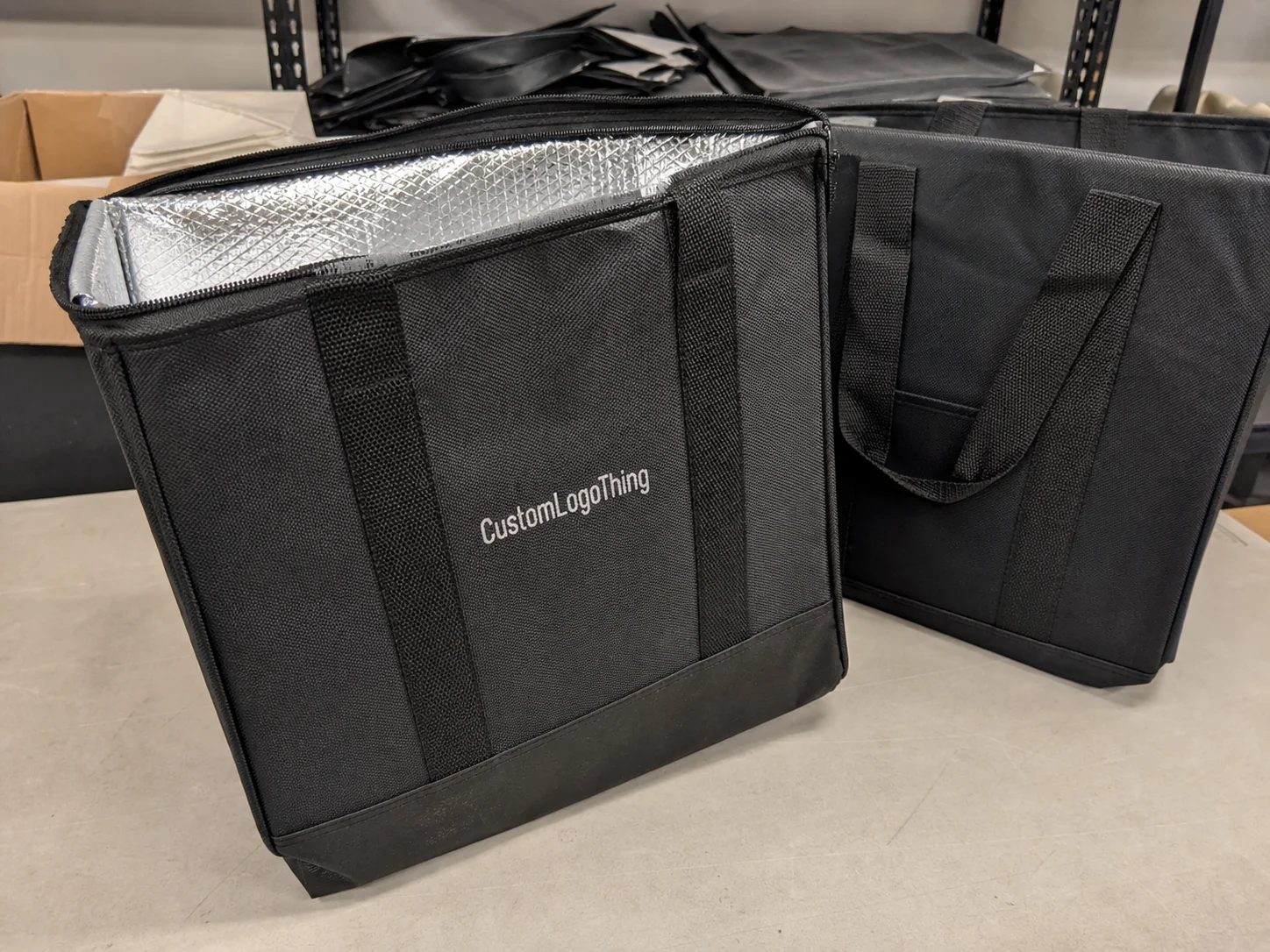
A customer may leave the store with frozen seafood, dairy, and produce, then spend 30 minutes driving home with two additional stops. If the bag does not hold temperature reasonably well, the customer notices quickly. So does anyone answering complaints. Custom insulated grocery bags address three problems at once: temperature retention, visible branding, and fewer post-purchase issues tied to spoiled or softened food.
They also fit several use cases without needing a completely different packaging system each time. Retailers use them as reusable premium bags. Grocery delivery services use them for short routes where chilled items need help staying stable. Meal kit brands use them as extra protection inside larger shipments. Event teams use them as branded packaging that people keep using instead of tossing away after a single use.
That reuse matters. A bag that keeps showing up in a kitchen, car trunk, or office break room gives a brand more impressions than a flyer ever will. It also earns its place through function, which is the part buyers sometimes underestimate. If the bag is genuinely useful, the logo gets repeated exposure without feeling forced.
“Insulated grocery bags are a customer experience tool that happens to carry food.”
That is the simplest honest read. The branding is visible, but the bag has to perform first. Set expectations clearly: these bags help preserve temperature for a shopping trip, delivery window, or commute home. They are not a replacement for refrigerated logistics, chilled packing systems, or insulated freight packaging. If food must stay cold for a long transit, the bag is only one piece of the solution.
How insulation actually works in reusable grocery bags
Custom insulated grocery bags are built in layers, and each layer affects the finished result. The outer shell gives the bag structure and print surface. The insulating layer slows heat transfer. The inner lining handles moisture, wipe-downs, and contact with food packaging. When one layer is weak, the whole bag suffers, even if the mockup still looks polished.
Common outer materials include nonwoven polypropylene, coated polypropylene, and laminated fabrics. Nonwoven polypropylene remains popular because it keeps costs controlled and prints well. Foam-backed structures improve thermal performance, while PEVA or aluminum-style linings usually make the interior easier to clean and help reduce heat gain. The exact result depends on thickness, seam construction, and the closure style more than on any single material alone.
Insulation slows heat movement; it does not stop it. Cold food stays cold longer because the bag delays outside heat from entering. Hot food stays hot longer for the same reason. The benefit drops if the bag is half empty, opened repeatedly, or packed with room-temperature items beside frozen ones. Buyers sometimes expect a perfect result from a bag that was never packed in a way that supports the thermal design.
Closure style affects performance more than many first-time buyers expect. A zipper top usually holds temperature better than an open tote. Hook-and-loop can be easier for quick access, though the seal is typically less tight. Roll-top and flap closures can work well for delivery routes that need containment and a little extra flexibility. Wide gussets improve capacity, but a very open top can give heat more room to enter.
Where insulation usually breaks down is predictable: seams, the opening, thin sidewalls, and overfilled corners that strain the structure. If the top hem looks flimsy or the bottom seams are underspecified, that is not just a cosmetic problem. It usually shows up later as sagging, heat loss, or premature wear. A useful spec balances thermal performance, carry comfort, and storage efficiency rather than trying to maximize only one of them.
Key specs that affect performance, durability, and branding
Size should be the first real decision. A compact insulated tote may be right for lunch programs, a few frozen items, or a small promotional giveaway. A standard reusable grocery bag often lands around 15" x 12" x 10", though the exact proportions vary. Delivery use and family-size shopping usually need larger gussets and stronger handles, especially when the target load is 15-25 lb. If the bag is too small, it becomes frustrating. If it is oversized, it turns into a bulky item that is hard to store, pack, and carry.
Insulation thickness affects both performance and cost. Thin foam-backed bags can work for short grocery runs or light promotional use. Thicker laminated constructions usually perform better for delivery or longer carry times, but they also cost more and take up more storage space. Stitching quality matters just as much as the insulation itself. A decent foam layer will not save a bag with weak seams or poor reinforcement at the handles and corners. Bottom boards can help the bag keep its shape and improve stacking in retail programs where presentation matters.
Printing method should match both the surface and the budget. Screen print is often the most economical choice for simple logos and one or two solid colors. Heat transfer can handle more detail on the right material, though it usually adds cost. Full-color decoration works best when the substrate supports it and the artwork is designed for the surface, not for a computer screen. Fine gradients and tiny text can disappear on textured or flexible materials, so bold contrast usually produces a cleaner retail result.
Small details often determine whether the bag feels premium or merely adequate. Zipper quality is a big one. A weak zipper makes a bag feel worn out long before the body fabric fails. Water resistance matters if condensation is expected or if the bag will be wiped down often. Collapsibility matters when a retailer needs to store dozens of units in a limited back-room space. A wipe-clean interior is especially useful for grocery and delivery work because leaks happen, and lingering odors are difficult to remove once they soak into the lining.
| Bag style | Typical use | Strengths | Tradeoff |
|---|---|---|---|
| Nonwoven insulated tote | Promotions, retail giveaways | Lower cost, easy branding, light weight | Moderate thermal performance |
| Foam-backed PEVA-lined bag | Grocery runs, short delivery | Better insulation, wipe-clean interior | Higher unit cost, more bulk |
| Laminated premium bag with zipper | Retail sales, delivery programs | Stronger presentation, better containment | More expensive, longer lead time |
The tradeoff is always the same: stronger construction usually means more weight, more material, and a higher price. That is a fair exchange if the bag will be used repeatedly. If the goal is a one-time promotion, you may not need a delivery-grade build. Match the spec to the task, not the other way around.
Cost, pricing, and MOQ: what changes your unit cost
Pricing for custom insulated grocery bags depends on a handful of predictable factors: material choice, insulation thickness, size, print complexity, handle construction, closure style, and order volume. Bigger bags use more material. Zippers and reinforced seams increase labor and component cost. Multi-color decoration costs more than a simple one-color logo. None of that is unusual; it is just how the production math works.
MOQ, or minimum order quantity, has a strong effect on unit cost. Lower MOQs usually produce a higher per-piece price because setup costs are spread across fewer bags. Larger runs tend to lower the unit cost because the fixed expenses get diluted. For one event, a smaller run may make sense. For recurring retail packaging or delivery use, ask for pricing at 500, 1,000, 3,000, and 5,000 units so you can see where the major break points are.
For practical budgeting, buyers often see these working ranges under normal customization conditions:
- Promotional basic bags: about $0.90-$2.20 per unit at 1,000-3,000 pieces
- Mid-range retail bags: about $2.20-$4.80 per unit at 1,000-3,000 pieces
- Premium delivery-grade bags: about $4.80-$9.00+ per unit depending on size, lining, and zipper specs
Those numbers are realistic working ranges, not fixed quotes. A smaller run with heavy print coverage can land above them. A simple one-color design on a standard nonwoven insulated tote can come in lower. Freight also matters, as do sample charges, setup fees, carton labeling, and whether individual polybags are included. Buyers sometimes focus on the unit price and then get surprised by the packaging and shipping line items.
Simpler artwork can lower cost and often improves the finished look. A single bold logo usually prints more cleanly than gradients, thin lines, or tightly packed text. On flexible packaging surfaces, clarity often matters more than visual complexity. If customers need to recognize the brand from across an aisle or delivery dock, a strong, uncomplicated design usually performs best.
If the bags are part of a wider packaging system, it can help to coordinate them with other Custom Packaging Products so the retail packaging feels consistent from one touchpoint to the next. That does not mean every item has to match exactly; it means the brand language should feel deliberate instead of accidental.
Process and turnaround: from artwork to delivery
The ordering process works best when buyers provide complete information early. It usually starts with a quote request, followed by size selection, material choice, insulation style, closure type, handle type, and print method. Artwork is reviewed next, then a proof is issued for approval. Depending on the project, a sample or pre-production mockup may be produced before the full run begins. Final shipping happens after production passes inspection and the order is packed for transit.
Simple constructions with standard materials often take about 12-15 business days after proof approval. More complex orders can take longer, especially if the bag requires special lining, multiple decoration passes, or custom components. Peak season demand can stretch those timelines further. That is not unusual; it is just how production scheduling behaves when multiple steps must line up in sequence.
To reduce delays, send the details that production teams actually need:
- Logo files in vector format, ideally AI, EPS, or PDF
- Pantone targets or CMYK values
- Bag dimensions and target quantity
- Print color count
- Closure preference and handle style
- Shipping destination and deadline
Be specific about approval expectations as well. A digital mockup shows layout and color intent. A sample shows construction, feel, and overall quality more honestly. Final bulk production is the real order, and that is what should drive the final sign-off. If performance matters, the sample stage is usually worth the time because it reduces avoidable surprises later.
Rush jobs are possible in some cases, but they usually raise cost and narrow your choices. Material options shrink. Print flexibility drops. Scheduling pressure increases. If a launch date is fixed, the safer strategy is to build in margin early rather than asking the production schedule to do something it was never designed to do.
Common mistakes buyers make with insulated shopping bags
The first mistake is picking the wrong size. Buyers often choose a bag that looks good in the sample stage and then discover it is either too small for real grocery orders or too large to store and distribute efficiently. The second mistake is prioritizing appearance over construction. A nice-looking bag with weak seams or a low-grade zipper tends to create problems after the first few weeks of use.
Another common problem is sending artwork that is too detailed for the print method and surface. Tiny type, delicate lines, and subtle gradients often soften on flexible materials. Low-resolution files make the issue worse. If the bag surface is textured, the logo should be readable first and decorative second. A clever concept does not help if the customer cannot see it clearly from a few feet away.
Buyers also forget that grocery checkout, curbside pickup, delivery, and resale each place different demands on the bag. A light promotional bag may be fine for a short giveaway. A delivery bag needs a stronger closure and more reliable thermal control. A retail resale bag needs cleaner finishing and better long-term durability. Same product family, different engineering priorities.
Care and cleaning questions get skipped far too often. If the bag will see moisture, condensation, or repeated wipe-downs, the interior material becomes a real factor. Some linings are easier to maintain than others. Ask before ordering, because a bag that looks perfect on day one can become unpleasant to use if the liner is hard to clean or holds odors too easily.
Expert tips for buying the right bag the first time
Start with the use case, not the prettiest sample on the table. A grocery tote for retail sale is not the same product as a courier bag or a promotional giveaway. Once the route, carry time, and product type are defined, the specification becomes much easier to narrow down.
Ask for temperature-retention expectations in plain language. Most buyers do not need laboratory data for every order, but they do need a realistic idea of whether the bag is meant for a 20-minute grocery trip or a longer delivery window. If performance matters, request a sample or prototype. That is especially useful for food service, cold-chain-adjacent use, and any program where a failed bag would create more expense than the sample cost.
Keep branding bold and legible. On flexible bag surfaces, small details often soften, distort, or disappear. Larger logos, strong contrast, and simpler layouts usually print better and look more premium once the bag is in use. That is true for custom insulated grocery bags, and it is true for many forms of packaging design where the surface itself is part of the challenge.
Plan for reorders if the bag will be used as part of an ongoing retail packaging or promotion program. A good bag often becomes a repeat item, which means stable specs and consistent print placement matter. The second order should not feel like a brand-new experiment. If the first batch performs well, keeping the same material and construction choices usually protects quality and reduces surprises.
If the bag is doing real work, buy it like it is doing real work. Price matters. So do seams, closures, and print clarity.
The shortest route to a usable spec is usually this sequence: use case, size, insulation level, closure, branding method, then quantity. That order keeps the discussion grounded and reduces the revision cycle that tends to happen when design is chosen before function.
FAQs
How long do custom insulated grocery bags keep food cold?
Retention depends on insulation thickness, closure type, ambient temperature, and how full the bag is. Most bags are meant to support temperature during shopping trips or short delivery windows, not all-day storage. Pre-chilled items and ice packs improve performance significantly.
What is the best material for custom insulated grocery bags?
Foam-backed or insulated PEVA-lined constructions are common when temperature control matters. Nonwoven outer shells are popular for affordability and printability, while reinforced linings improve durability. The best choice depends on whether the priority is cost, appearance, or thermal performance.
What MOQ should I expect for custom insulated grocery bags?
MOQ varies by factory, print method, and construction complexity. Simpler bags often allow lower minimums, while premium laminated or fully custom builds usually require higher quantities. Ask for pricing at several volume levels so you can see where the unit cost drops.
Can I print a full-color logo on insulated shopping bags?
Yes, but the print method has to match the bag surface and budget. Simple logos usually print more cleanly and cost less than photographic or highly detailed artwork. Bold, high-contrast graphics generally give the best retail-ready result.
What should I send when requesting a quote for custom insulated grocery bags?
Send target quantity, bag size, insulation preference, closure style, logo files, print colors, and shipping destination. If you have a target price or deadline, include that too. Clear inputs reduce revisions and usually shorten the quoting process.
Choosing custom insulated grocery bags is mostly about matching the construction to the job. Get the size right. Choose the closure that fits the route. Keep the branding readable. Do not expect a lightweight promo tote to behave like a premium cold carrier, because it will not. The best results usually come from a practical spec, a clear print plan, and an honest view of how the bag will actually be used.

