Custom leather tote bags are judged quickly, and usually on details that do not show up in a product spreadsheet. A buyer notices the grain first, then the handle feel, then the edge finish, and only after that the logo. If those first three touchpoints are strong, the bag reads as premium almost immediately. If one is off, the entire product feels cheaper than the material bill suggests.
That matters because a tote is rarely just a tote. For one brand, it is executive merch. For another, it is a retail accessory. For a third, it is a high-value gift that has to survive shipping, storage, and repeated use without losing shape. The job is to balance appearance, durability, and cost without letting any one of them dominate the brief.
The trick is not to overdesign. A well-chosen leather, clean stitching, and a disciplined logo treatment often do more for perceived value than an extra pocket or a louder brand mark. Practical buyers know this. So do factories. The tension is that the two sides often define “premium” differently, which is where bad quotes and disappointing samples start.
Why custom leather tote bags stand out on the shelf
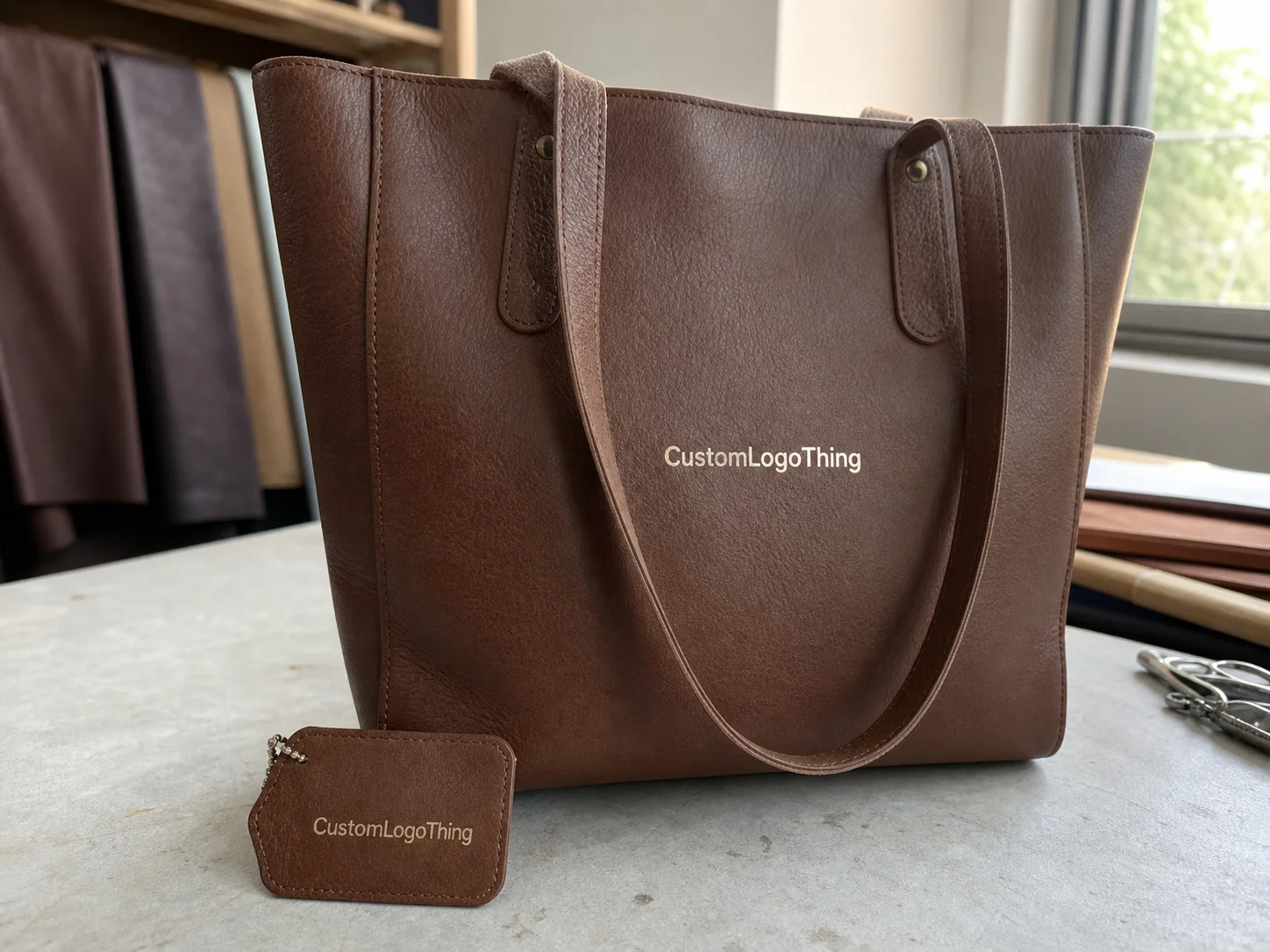
Leather changes the pricing conversation because it changes the expectation. A cotton tote is usually judged as a giveaway. A leather tote is judged like an accessory, which means proportion, stiffness, stitching, and lining all matter before the buyer even checks capacity. That shift is the reason custom leather tote bags can support a higher retail or gifting price, but only if the construction backs up the claim.
Buyers usually want more than a logo on a leather shell. They are choosing a silhouette, a material grade, a handle height, a closure style, and a finish that should match how the tote will be used. A slim market tote, a structured work tote, and a soft travel tote may share a name, but they serve different users and need different specs. A product that looks good in a mockup can still fail in practice if the load path or handle drop is wrong.
There is also the packaging layer. A premium leather tote often arrives in a rigid carton, dust bag, tissue, or printed mailer, and those pieces shape the customer’s first impression as much as the bag itself. Retail packaging and product packaging are not separate from the product story; they are part of it. If the outer presentation is weak, the bag has to work harder to justify its price.
A premium tote succeeds when the material, structure, and logo treatment agree with each other. If one looks expensive and the others do not, the mismatch is obvious.
That is why experienced buyers ask for samples, swatches, and clear stitching references before they discuss quantity. They are not being cautious for its own sake. They are trying to reduce the number of surprises that show up after bulk production starts.
How the bag is built: materials, lining, and hardware
The leather grade sets the ceiling. Full-grain leather keeps the natural surface and usually ages best, with visible character and less corrective finishing. Top-grain leather is slightly more processed, more uniform, and easier to standardize across a production run. Split leather can be a workable lower-cost option, but it normally needs more finishing to feel premium. Bonded leather is the budget end of the category and should be positioned honestly, because it does not wear like higher grades. Leather alternatives can work for specific brand positions, but only if the buyer expects that performance profile from the start.
Thickness matters more than many first-time buyers expect. A tote around 1.2 mm to 1.8 mm usually gives a workable blend of structure and flexibility for daily carry. Heavier leather can feel impressive in hand, but it also adds stiffness and weight. That becomes a problem if the bag is meant for commuting or long wear. A sample that feels luxurious on a table may be tiring once it is loaded.
Construction details separate a decent tote from a reliable one. Reinforced base panels help the bag stand up and resist sagging. Strengthened handle anchors keep the load from pulling at the same point every day. Clean edge paint, consistent stitch spacing, and controlled seam allowance matter more than decorative features that only show up in a spec sheet. A bag with 6 to 8 stitches per inch and tidy edges usually reads as better made than one with loose topstitching and rough trimming, even if both use the same leather.
Hardware deserves the same scrutiny. Zippers, snaps, rivets, D-rings, and feet are not embellishments; they are wear points. A metal zipper with a smooth pull often feels more premium than a noisy coil zipper, but the right choice depends on opening width and how the bag is used. D-rings require proper reinforcement if a detachable strap is part of the design. Bag feet help on structured totes that will sit on counters, office floors, or vehicle seats. Skip the right reinforcement and the hardware becomes a failure point rather than an upgrade.
Lining changes both the interior feel and the way the bag behaves over time. A woven lining or microsuede can make the unboxing experience feel more refined. A wipeable synthetic lining is easier to clean and makes sense for daily-use bags that may carry cosmetics, bottles, or loose accessories. If the brand wants a more controlled presentation, it can pair the tote with an insert, dust bag, or branded sleeve from its broader Custom Packaging Products range so the outside presentation and the product grade stay consistent.
Soft-structured and rigid totes solve different problems. A soft tote is lighter, easier to pack, and more forgiving when full. A structured tote keeps a clean silhouette and photographs better, but it asks for stronger internal support and more precise pattern work. If that choice is left vague, the factory will choose for you, usually based on cost or convenience. That is rarely the same thing as what the brand intended.
| Build choice | Typical effect | Approximate unit impact | Best use case |
|---|---|---|---|
| Top-grain leather, standard lining, embossed logo | Balanced premium look | $28-$45 at 500-1,000 units | Corporate gifting, branded retail runs |
| Full-grain leather, upgraded hardware, stitched pockets | Higher handfeel and durability | $45-$75 at 300-800 units | Executive merch, resale products |
| Bonded or leather-alternative material, simple trim | Lower cost, less natural aging | $16-$30 at 1,000+ units | Budget-conscious campaigns, short-use promotions |
Those numbers are directional, not fixed. Leather source, factory capability, labor market, and country of origin can push them up or down. The pattern, however, is consistent: unit price rises fastest when the tote needs more handwork, more precision cutting, or more custom hardware.
If the program also includes custom printed boxes or FSC-certified inserts, the package level should match the bag level. A premium tote in a weak mailer creates a mixed message. Buyers notice that mismatch even when they cannot describe it in production terms.
For shipping and transit testing, it helps to ask whether the outer pack is being checked against a recognized method such as ISTA. For paperboard cartons and printed packaging, look for responsibly sourced materials through FSC where that aligns with the brand standard.
Cost, MOQ, and unit pricing: what changes the quote
The main cost drivers are simple enough: leather grade, trim complexity, logo method, pocket count, lining, and whether the design requires custom pattern development. The less visible driver is labor. A tote with multiple panels, folded edges, internal pockets, and careful alignment can take much longer to assemble than a plain open-top design, even if the raw material cost is similar.
MOQ usually climbs with complexity. Setup, cutting, sampling, and tooling need to be spread across more units to keep the price stable. On smaller runs, those fixed costs show up fast. That is why a 300-piece order can feel disproportionately expensive compared with a 1,000-piece order, even when the bag spec looks nearly identical on paper.
Order shape matters too. One color is simpler than four. One logo location is easier than two. Stock hardware is easier than custom hardware. A buyer who wants a useful quote should provide the leather finish, color count, hardware finish, closure type, and packaging requirements from the start. Ambiguity forces the supplier to price risk instead of product.
A practical budgeting rule: spend where the customer can see and feel the difference, and simplify where the detail will not survive daily use. Handle comfort, seam quality, lining, and logo execution tend to matter more than decorative zipper pulls or extra compartments. If the bag is meant for retail sale, packaging needs a real budget too, because presentation is part of the value proposition.
One useful comparison method is to request the same tote in two or three material options. A top-grain version, a full-grain version, and a leather-alternative version will usually show the true price spread without rewriting the brief each time. That is a better read than asking for a vague “premium” quote and hoping the answer means the same thing to everyone involved.
Production process and lead time from artwork to shipment
The path for custom leather tote bags usually runs through concept brief, spec confirmation, sampling, revisions, bulk approval, cutting, stitching, finishing, inspection, and packing. That sounds linear. It rarely is. Most schedule slips happen when approvals drift, materials are not confirmed, or artwork changes after sampling begins.
Sampling is the first pressure point. If the logo changes after the first sample, the revision cycle starts again. If the requested leather shade is not in stock, sourcing adds time. If three people need to sign off and they do not review the sample on the same day, the calendar starts to stretch. A clean approval chain often saves more time than asking the factory to accelerate production.
A realistic timing pattern is 7-14 days for the first sample, 10-20 days for revisions if they are needed, and 20-45 days for bulk production after approval. Shipping adds its own variable, depending on route and packing method. A complex tote with custom hardware and presentation packaging usually sits toward the longer end of that range.
Artwork readiness is another hidden delay. An unconfirmed Pantone, an unscaled logo file, or a placement described only in text can stall production at the moment precision matters most. Lock the art before bulk starts and assign one decision-maker to approve it. That is not bureaucracy. It is a guardrail for lead time.
For brands building a wider packaging system, the bag, dust cover, insert, and mailer should be finalized together. Packaging design and package branding work best when they are treated as one system instead of separate tasks. Consistency cuts rework because fewer components need to be revised later.
Step-by-step checklist for a spec that actually works
Start with use case. Retail sale, corporate gifting, employee carry, and event distribution all ask for different choices. A retail tote needs stronger shelf appeal and tighter finish control. An employee tote needs comfort and weight handling. An event tote may need a simpler build because the run is larger and the service life is shorter.
Then define the size, weight target, pocket layout, closure type, and logo placement before asking for prices. Without those details, comparisons are mostly noise. A 16-inch zip-top tote and a 14-inch open-top tote are not the same product, even if they carry the same logo.
A useful sample checklist includes swatches, stitch color, handle drop, zipper action, emboss depth, and packaging fit. Handle drop is one of the most ignored dimensions in the category. Too short, and the tote rides awkwardly under the arm. Too long, and it hangs low and loses shape. That single measurement affects comfort more than many decorative features do.
- Write a one-paragraph use case.
- Lock dimensions, material, and color count.
- Choose the logo method: emboss, deboss, foil, patch, or metal plate.
- Confirm lining, pocket count, and closure.
- Review a physical sample or swatch set before bulk approval.
- Confirm packaging, inserts, and shipper spec together.
Using the same input format across suppliers makes the quote process much easier to compare. Send the same brief to each vendor, then evaluate on the same variables. That is the difference between sourcing and guesswork. Teams that also use a standard packaging reference from the broader Custom Packaging Products catalog can align the tote with other branded items more quickly.
The simplest rule is also the most useful: if a detail affects the hand, the load, or the logo, it belongs in the spec sheet before sampling starts. Everything else can wait.
Common mistakes that turn a premium tote into a costly sample
The biggest mistake is designing for appearance only. A tote can look clean in a rendering and still fail in use if the seams are weak, the handle anchors are underbuilt, or the base collapses when loaded. Leather can hide small flaws, but it does not hide stress. In some cases, it highlights it.
Artwork errors create their own bills. Vague files, unapproved placement, and late-stage edits can trigger extra sampling and rework. If the logo should sit 35 mm from the top edge, say that. If the emboss should stay subtle, say that too. Guessing is expensive once production starts.
Overcomplication is another common trap. Too many pockets, mixed materials, and custom hardware can push the tote beyond the original budget and extend the lead time. Packaging can do the same. A rigid box, dust bag, hang tag, and insert can look impressive together, but if one item is out of proportion or poorly finished, the set stops feeling intentional.
The final presentation matters more than many teams expect. A flimsy tag, a weak dust bag, or an insert that fits poorly can drag the product down visually. Buyers do not separate the bag from the packaging as neatly as factory teams sometimes assume. For premium goods, the package is part of the product.
There is also a sequencing mistake that shows up often: brands ask for a highly decorative sample before the core structure is approved. That usually creates a sample that is expensive to make, difficult to revise, and even harder to reproduce at scale. Validate the shape, load behavior, and closure first. Add the decorative pieces once the base construction is stable.
Expert tips and next steps for a smarter order
The cleanest workflow is straightforward. Define the use case, lock the spec sheet, compare two or three material options, and request quotes with identical inputs. That sequence gives a meaningful read on price and quality. Anything looser produces noisy answers and a longer revision cycle.
If the goal is a bigger perceived-value lift, put budget into handle comfort, stitching, lining, and logo execution. These are the details that get touched, lifted, and seen repeatedly. Decorative extras can help, but they rarely rescue a tote that already feels inconsistent in the hand.
To improve the quote, include target quantity, preferred material, color count, packaging needs, and delivery window from the beginning. A supplier can only price what is defined. Clear inputs reduce the padding that usually appears when a factory has to estimate risk on its own.
For brands building a wider packaging program, align the tote with related items such as custom printed boxes, tissue, dust bags, or mailers so the customer experience feels deliberate rather than assembled piece by piece. That matters most in retail packaging and premium gifting, where presentation carries part of the value.
If the project is moving from research to sourcing, reduce it to one tight brief: dimensions, material, logo method, hardware, lining, packaging, quantity, and ship date. That is the most reliable path to better quotes and fewer revisions for custom leather tote bags.
What should I know before ordering custom leather tote bags?
Confirm the use case first, because a retail tote, event gift, and everyday carry bag need different construction priorities. Lock the size, material, logo method, and interior layout before requesting pricing so the quote reflects the real product.
How do custom leather tote bags usually affect unit cost?
Unit cost rises with thicker leather, custom hardware, more stitching, and extra features such as pockets or upgraded lining. Smaller quantities also push the price up because setup, sampling, and production prep are spread across fewer bags.
How long does production usually take for custom leather tote bags?
Timing depends on sampling, material sourcing, and how quickly approvals happen. A clean spec sheet shortens lead time more reliably than trying to speed up the factory after the sample is already in motion.
What logo methods work best on custom leather tote bags?
Embossing and debossing create a restrained premium look, while foil stamping or metal logos add stronger contrast. The right method depends on the leather type, the look you want, and how much wear the logo needs to survive.
How can I reduce MOQ pressure on custom leather tote bags?
Use stock materials and standard hardware where possible, because custom sourcing usually raises the minimum order. Keep the design simple and consolidate colorways so the run is easier to manufacture efficiently.


