Custom Logo PVC Frosted Ziplock Bag: What It Does Well, Where It Fails, and How to Spec It Properly
A custom logo PVC frosted ziplock bag is a simple package that can still look considered if the spec is right. It softens the product presentation, adds a reusable closure, and hides enough of the contents to keep the display from looking noisy. That makes it useful for small retail items, sample sets, accessories, event kits, and branded inserts that need to feel organized without moving into rigid-box territory.
The appeal is not mysterious. Buyers want a package that looks better than a plain clear sleeve, holds up better than a loose poly bag, and does not add the weight or cost of a box. A frosted ziplock bag sits in that middle space. It will not solve every packaging problem, and it is not a barrier pouch, but it does a good job at presentation, light protection, and repeat opening.
A frosted bag is best treated as a presentation tool first and a protective package second. If the job needs moisture resistance, crush resistance, or long shipping durability, this format is not the whole answer.
What a custom logo PVC frosted ziplock bag actually is
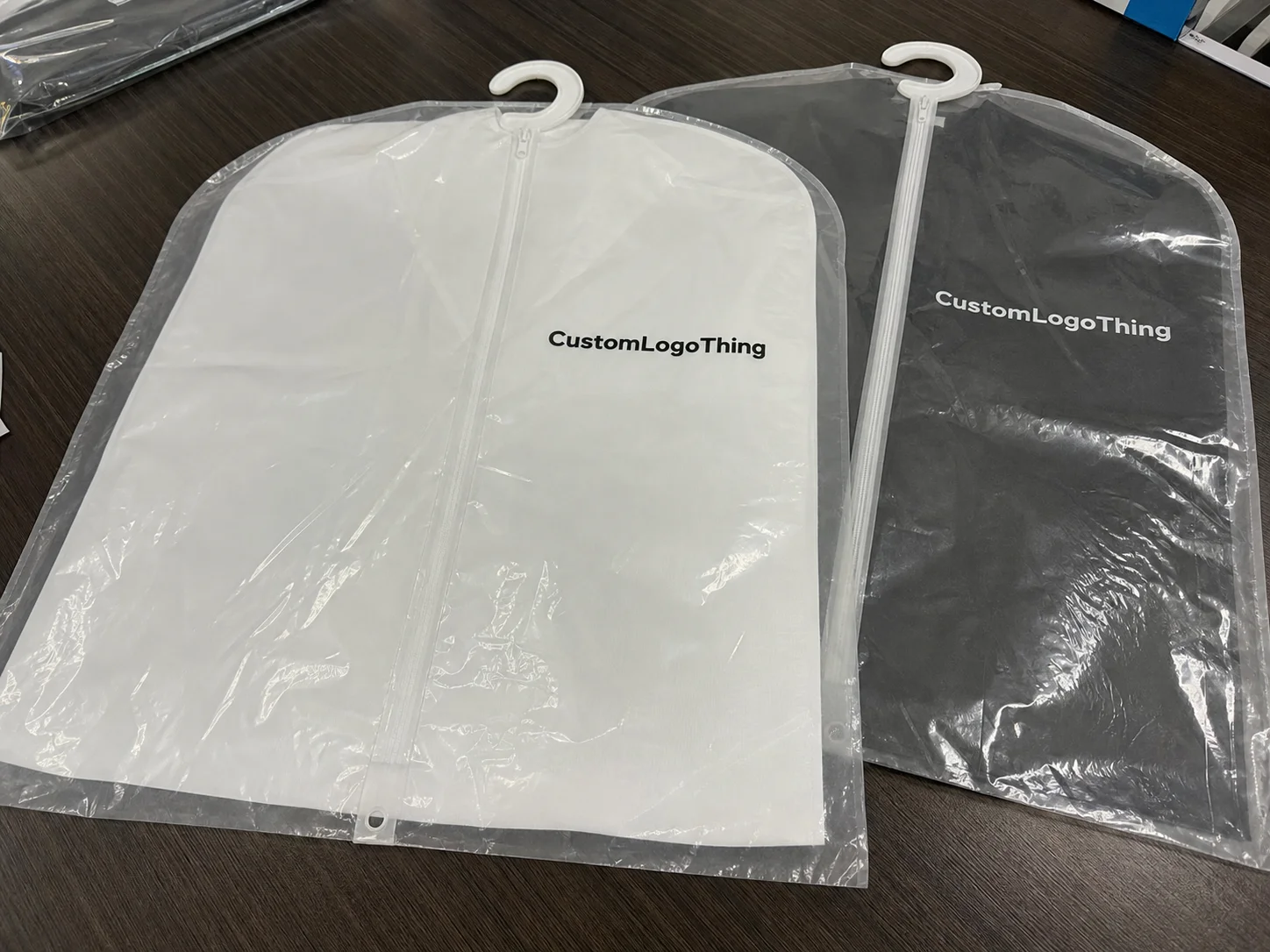
At base, this is a PVC film pouch with a matte or hazy surface and a zipper-style closure. The custom logo is usually printed directly on the bag, though some programs use a printed insert card as part of the branding system. The frosted effect is what changes the look. Instead of the bright, glossy reflection you get from a clear bag, the surface diffuses light and gives the package a calmer visual profile.
That matters more than people expect. Clear packaging can be unforgiving. Every fold, fingerprint, scratch, and odd angle shows up. Frosted PVC reduces that visual noise. It does not make the bag invisible or fancy on its own, but it gives the contents a more deliberate frame. For products with mixed shapes, bright colors, or small parts, that can be the difference between “temporary” and “finished.”
The ziplock closure does practical work too. It gives the buyer a way to open and close the package without tearing it apart. That matters for samples, travel kits, reusable accessories, and anything the customer may store again after purchase. It also helps the package keep a cleaner silhouette after handling, which is one reason this format gets used in retail packaging and event packaging alike.
In practice, these bags show up across beauty samples, apparel accessories, stationery, travel items, hardware kits, promotional packs, and product bundles. The common thread is not industry. It is product size and handling pattern. If the item is small enough to fit comfortably, and the brand wants a neat visual frame without overbuilding the package, frosted PVC is a reasonable option.
The key limitation is obvious once you work with enough of them. PVC frost bags are good at presentation and decent at everyday handling. They are not built to replace a carton, a corrugated mailer, or a high-barrier laminate pouch. If the product needs serious protection, the pouch can sit inside a better outer system, but it should not be expected to do everything on its own.
Why the frosted finish changes the whole package
Frosting changes how the eye reads the bag. A glossy clear pouch reflects light and exposes everything inside. A frosted pouch diffuses that reflection, which makes the package feel softer and less chaotic. That is useful in crowded displays, subscription kits, and branding programs where the product line has many variants and the packaging needs to stay visually consistent.
It also changes perception of quality. Not because matte is automatically premium. That is lazy thinking. The better result comes from control. Frosted film hides minor scuffs and makes the package look less like a disposable wrapper. If the logo is well placed and the proportions are right, the bag can sit in a market category where buyers read it as intentional rather than improvised.
The downside is that frosting reduces visual clarity. If the product itself is the thing selling the package, too much haze can work against you. A vivid accessory, a colorful skincare item, or a branded collectible may need enough visibility to identify the contents instantly. In those cases, the right answer is usually a lighter frost or a partial print layout rather than a heavy opaque look.
That tradeoff is one reason the bag should be chosen with the product, not after the product. A design that looks great on a screen can become clumsy in film if the logo is too small, the contrast is too weak, or the artwork is built around a fully transparent surface. Packaging design is not decoration. It is material-specific problem solving.
If you are building a broader packaging line, the bag should also fit with the rest of the system. A frosted pouch can pair well with printed inserts or cartons, but the typography, color family, and visual weight should stay aligned. Otherwise the package reads as assembled from leftovers. That is usually worse than plain.
Material, thickness, opacity, and print details that matter
Thickness is one of the first numbers to get right. Thin PVC film can be enough for samples, lightweight accessories, and short-run promotional packaging. Heavier film usually makes more sense when the bag will be handled repeatedly, packed in volume, or judged by customers at close range. A thicker bag also tends to stand upright better during filling, which helps the packing line move faster and reduces the chance of creasing near the closure.
Opacity is a separate choice from thickness. Two bags can weigh roughly the same and still look very different. A lighter frost preserves more visibility, which helps when the item inside has a strong color or distinctive shape. A heavier frost blocks more of the contents and pushes the package toward a more subdued, controlled look. Neither is universally better. The right answer depends on what the bag needs to show and what it needs to hide.
Size is where many buyers get sloppy. A bag that is too large looks unfinished. Contents shift around, the headspace becomes distracting, and the package loses its fitted look. A bag that is too tight creates the opposite problem. The zipper gets stressed, the item can wrinkle, and assembly becomes annoying. Good sizing means leaving practical room for insertion, closure, and any insert card without creating dead space.
Print behavior on PVC is different from print behavior on paperboard or coated paper. Bold logos, large text, and clean linework usually hold up well. Very fine typography, tiny legal text, and packed gradients can get muddy, especially once the frosted finish softens contrast. That is not a defect. It is a constraint. Good packaging work respects the surface instead of pretending the surface does not matter.
Most buyers get a better result by simplifying the artwork. Strong shapes, readable type, and a restrained layout usually print cleaner and cost less. If the design depends on delicate detail, ask for a proof on the real substrate before approving production. Screen mockups are useful. They are also optimistic. The bag itself is where reality shows up.
The quick comparison below gives a practical view of what usually changes with thickness and print complexity.
| Option | Best Use | Typical Unit Cost | Visual Result |
|---|---|---|---|
| Light-gauge frosted PVC | Samples, lightweight accessories, event kits | $0.12-$0.22 at 5,000 pieces | Soft presentation, lighter hand feel |
| Mid-gauge frosted PVC | Retail packaging, branded giveaways, repeated handling | $0.18-$0.32 at 5,000 pieces | Cleaner structure and better closure feel |
| Thicker frosted PVC with custom print | Premium product packaging, bundled sets, shelf display | $0.28-$0.55 at 5,000 pieces | More substantial appearance, higher perceived value |
Those ranges move with quantity, dimensions, artwork coverage, and the closure style. They are planning numbers, not promises. A bigger bag, a heavier film, or a more complex print layout will always push the quote upward. That is normal. What matters is whether the final bag actually supports the product and the sales channel.
Pricing, MOQ, and what drives the quote
Most of the quote is determined by a handful of inputs: size, film thickness, print coverage, number of colors, zipper style, and order quantity. The logic is straightforward. Bigger bags consume more material. Heavier film costs more. More print colors mean more setup. Lower quantities spread the fixed cost across fewer units, which raises the unit price.
MOQ matters because setup is not free. The supplier has to prepare the material, align the print, check the zipper placement, and confirm the dimensions. That work happens whether the run is 500 pieces or 50,000 pieces. When the run is small, that setup cost shows up loudly in the unit price. Buyers who want the lowest possible price usually get there by increasing quantity or simplifying the design, not by asking for magic.
There are other cost drivers that get overlooked. Special zipper styles, custom dimensions, extra artwork versions, and tighter color tolerances all add time and risk. A bag with one front logo and a standard closure is a different job from a bag with front-and-back print, precise color matching, and a nonstandard size. The price difference is not arbitrary. It reflects production complexity.
One mistake is treating packaging cost in isolation. A bag that looks inexpensive on paper can become costly if it slows filling, causes rejects, or weakens the product presentation. A few cents saved on the unit can disappear fast if the package looks flimsy, ships badly, or forces a repack. Smart buyers compare packaging cost against the finished set, not just the blank bag.
A useful way to frame the budget is simple:
- Lower cost: smaller size, fewer print colors, standard zipper, higher quantity.
- Mid-range cost: moderate thickness, one-color logo, standard dimensions, normal frost level.
- Higher cost: custom sizing, thicker film, larger print coverage, stricter color control.
If you are comparing this format against cartons, mailers, or other packaging options, the right question is not which one is cheapest in isolation. The better question is which one fits the product, the channel, and the handling cycle. For some lines, a frosted ziplock bag is the right outer presentation. For others, it belongs inside a stronger package.
Production flow and lead time realities
The production path is usually straightforward if the brief is complete. It starts with size confirmation, material selection, artwork review, and closure specification. After that comes proofing, then sample approval if needed, then bulk production, packing, and shipment. The process is not difficult. It only becomes difficult when the buyer is vague.
Lead time stretches in predictable places. Artwork revisions are the biggest culprit. Sample changes are another. If the bag needs special dimensions, a particular frost level, or a print that has to match a separate brand system, the schedule usually gets longer. Busy production calendars can add delay too, especially when the job sits in a queue behind similar pouch work.
Pre-production samples are worth the extra step. They show how the logo sits on the real film, how the zipper feels, and how much the frost changes the appearance of the contents. On a screen, a layout can look balanced. On the actual bag, the logo may sit too high, the type may shrink more than expected, or the product may occupy less visual space than planned. That is normal. It is also the reason sample approval saves money later.
Clear specs speed things up more than vague requests for speed. If the buyer knows the product dimensions, target quantity, print area, and whether an insert card is part of the package, the quoting and sampling process becomes much cleaner. Fast feedback matters too. If approvals sit for days, the schedule slips. That part is boring, but it is real.
If the bag is going into a broader shipping system, basic distribution testing is worth a look. Standards from ISTA shipping test methods help if the package has to survive handling beyond a single shelf display. Not every pouch needs formal testing. Some do. The difference depends on how far the pack travels and what sits around it.
Mistakes that wreck the final result
The first mistake is guessing the size. It happens constantly. A buyer eyeballs the product, adds a little margin, and hopes the sample will work out. Then the bag arrives too loose or too tight. That wastes time and usually leads to a second round of samples. Measure the actual product, then allow for insertion, closure, and any insert card. That is the clean way to do it.
The second mistake is overloading the artwork. Frosted PVC does not reward clutter. Tiny text, thin strokes, and busy backgrounds can blur together once printed. If the brand mark is complicated, simplify it for the bag. A strong logo with clear hierarchy usually looks better than a faithful but unreadable reproduction of a detailed design.
Seal quality is another weak point. A pouch can look fine in photos and still feel cheap the moment the zipper is used. Buyers notice if the closure drags, misaligns, or opens too easily. If the bag will be reopened several times, that detail matters a lot. A clean closure is not a luxury feature. It is part of the product experience.
Skipping sample review is the expensive shortcut. A PDF proof can hide proportion problems and give a false sense of certainty. A physical sample shows the actual frost level, print contrast, zipper behavior, and headroom. That is where most of the avoidable mistakes surface. The sample is less about perfection than about proving the package works in hand.
Another issue is ignoring how the bag interacts with the rest of the packaging line. If there is a paper insert, outer carton, or printed mailer, the bag should fit that system cleanly. Mixed typography, mismatched color temperature, and random spacing make the whole set look cheap. Coherence is not decoration. It is how the package earns trust.
If paper components are part of the line, it is sensible to consider responsible sourcing and make the paper story defensible. A reference like the Forest Stewardship Council is useful when the packaging includes cards or cartons and the brand wants the material choice to be easy to explain.
How to spec the bag without burning time
Start with a short spec sheet. Product dimensions, approximate weight, intended use, print area, order quantity, and whether a sample is required are enough to get most quotes moving. Add a product photo with a ruler if there is any ambiguity about shape. It cuts down back-and-forth and reduces the odds of getting a bag that fits the drawing but not the product.
Ask for finish options if the look is still under debate. Small changes in frost level and film thickness can shift the entire feel of the package. A lighter frost shows more of the contents and feels less muted. A heavier frost pushes harder toward a premium presentation and reduces visual clutter. The right choice depends on the product, not on a generic packaging trend.
Match the bag to the sales channel. Retail shelf packaging needs consistency and clarity. Event kits tend to care more about speed and cost. Subscription packaging often needs to photograph well under mixed light. A frosted ziplock bag can work in all three settings, but it needs different priorities in each one.
One more practical point: do not approve a design without seeing how the actual product sits inside it. A bag can look technically correct and still feel wrong once filled. The top margin may be too wide, the logo may land behind the contents, or the shape may shift in a way that makes the package look awkward. That is why the pack-out check matters. It is the last honest test before production.
For teams building a broader system, it usually makes sense to compare the bag against other custom packaging products before placing an order. The goal is to make the pouch, insert, and any outer box work together. If the pieces are designed in isolation, they rarely improve each other.
Frequently Asked Questions
What sizes work best for a custom logo PVC frosted ziplock bag?
The best size is the one that fits the product with enough room for insertion, sealing, and any insert card, but not so much empty space that the package looks loose. Measure the product first, then add practical clearance. If the product shape is irregular, size to the widest or tallest point rather than the average dimension.
Is a custom logo PVC frosted ziplock bag reusable?
Yes. The ziplock closure is designed for repeated opening and closing. How long it holds up depends on the film thickness, the quality of the closure, and how often the bag is handled. Thicker film usually performs better in retail use and in sample programs where the package gets opened a lot.
What affects the price of a custom logo PVC frosted ziplock bag most?
Quantity, bag size, material thickness, and print complexity have the biggest impact. Special sizes, extra artwork versions, and tighter color matching also raise the price. The fastest way to keep the quote under control is to keep the structure simple and avoid unnecessary variation.
How long does production usually take?
Lead time depends on artwork approval, sample needs, and current production load. Clear specs and fast feedback usually shorten the schedule more than anything else. If a sample round is required, allow extra time before bulk production starts.
What artwork prints best on a frosted PVC bag?
Simple logos, strong shapes, and readable text usually print best. Tiny type, thin strokes, and busy gradients can lose clarity on frosted film. If the brand mark is detailed, test a bolder version before approving the final layout.

