A custom made carton box affects shipping in ways buyers often underestimate. It changes how the product sits, how the carton stacks, how fast the pack line runs, and how much waste ends up in the bin. If the fit is loose, the product shifts. If the board is too light, corners collapse under pressure. If the print is overdone for a box that mostly lives in transit, the cost rises without improving protection.
That is why carton buying is less about choosing a box and more about choosing a spec. Dimensions, flute profile, board grade, closure style, and print method all shape performance. A well-made carton can lower damage, improve pallet density, and reduce filler. A weak one usually shows its problems after the order has already shipped, which is the most expensive time to discover a mistake.
For many teams, the real comparison is not custom versus stock. It is whether the box should support the product quietly or do double duty as a branding surface. Those are different jobs. A shipping carton can be structurally simple and still be the right answer. A consumer-facing carton may need cleaner print, sharper fold lines, and better presentation. The best choice depends on where the box will spend its life.
What a custom made carton box changes in shipping
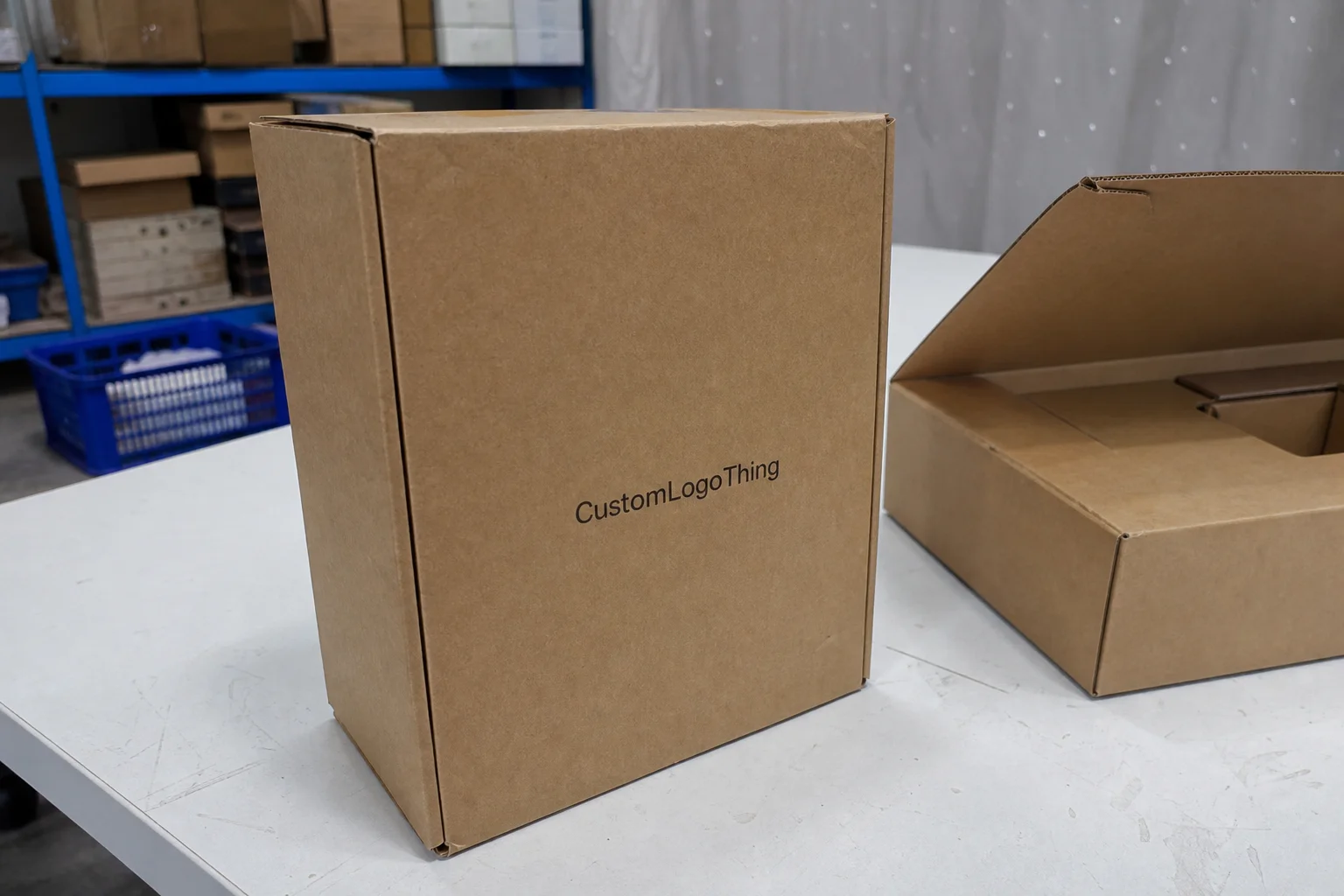
The first thing a custom carton changes is movement. A product that rattles inside a carton has a longer list of ways to fail. Corners bruise. Labels scuff. Seals loosen. Even when the item survives transit, the box often looks tired by the time it reaches the customer. A tighter fit reduces that risk, but only if the carton still closes cleanly and the board can hold its shape under load.
There is also a packing efficiency angle. A stock carton may be close in size, but “close” still leaves air. Air becomes void fill, and void fill becomes labor. At scale, the difference is not dramatic in one carton. It becomes visible across a run of 5,000 or 10,000 units, where even a few seconds saved per pack and a little less filler can change labor cost and cube utilization. Small improvements add up fast when they are repeated thousands of times.
A custom carton is built around three realities: the product, the route, and the handling method. A carton for ecommerce direct-to-consumer shipping does not need the same structure as a palletized export carton. A box going through a temperature swing or a damp warehouse needs more board discipline than a box that moves quickly from packing bench to retail shelf. The route matters because corrugated board loses strength in humidity, and rough handling exposes weak corners faster than most spec sheets suggest.
That is why board choice should be based on risk, not habit. A light apparel item can often run in a thinner flute with simple branding. Glass, bottles, and electronics usually need more crush resistance and better internal control. Overbuilding a carton can be just as wasteful as underbuilding it, because every extra layer adds material cost, weight, and sometimes shipping cost. The strongest carton is not always the smartest carton.
When buyers compare packaging formats, they usually discover that fit beats decoration. A neatly engineered box with modest print often performs better than an attractive box that is dimensionally off. That comparison is not theoretical. A carton that saves 3 mm on the wrong side can create a folding issue, a stacking issue, or a line-speed issue. Packaging tolerances are small, but the consequences are not.
“A carton usually fails for one of three reasons: wrong size, wrong board, or wrong assumptions about the route.”
Process and timeline: from brief to delivered boxes
The production path is predictable, but it only runs smoothly when the brief is complete. If dimensions are vague, the supplier cannot lock the dieline. If the product weight is missing, board selection becomes guesswork. If artwork changes after the structure is approved, revision time stretches immediately. Most delays are not caused by manufacturing itself. They come from incomplete information at the start.
A practical brief should include internal dimensions, product weight, pack count, shipping method, and storage conditions. If the box needs inserts, dividers, or a locking closure, those details belong in the first conversation, not the third revision. Suppliers can work around missing information, but every assumption adds risk. Clear specs tend to move faster than rushed instructions with a long comment thread attached.
- Share the product dimensions, weight, and target pack count.
- Choose the carton style based on handling and presentation.
- Review a dieline or structural drawing before any artwork is finalized.
- Approve a sample that checks fit, folding behavior, and closure strength.
- Confirm the print method, board grade, and quantity before release.
- Move to production only after the written spec matches the sample.
Timelines vary, but a simple repeat order can often move from approval to production in roughly 10 to 15 business days. New tooling, custom die-cut work, multiple print passes, or a second sample will extend that. The longest jobs are usually not the most complex ones; they are the ones with changing requirements. A box that keeps changing size on paper tends to take longer than a heavier box with a stable spec.
Sample type matters more than many buyers expect. A plain structural sample confirms folding and fit. A printed sample checks logo placement, line weight, and color handling. A combined sample answers both, but it also adds time. If speed matters, the first brief should be complete enough to avoid a second round of drawing corrections. That is usually faster than trying to compress a poor brief into a quick approval.
For buyers who need a broader packaging program, it helps to compare carton structures alongside other custom packaging products already in use. That reveals whether the carton should match an existing pack format or stand on its own. Alignment matters because packaging systems become easier to manage when the carton family, insert family, and label system speak the same language.
Board grade, flute, and print choices that affect performance
Board selection is where many buyers either overspend or under-spec. The wrong board may survive a short local route and fail once the shipment crosses a hotter warehouse, a longer lane, or a stack of heavier cartons. The right one depends on product weight, fragility, stacking load, and how much abuse the package will take before the customer opens it. A custom made carton box for cosmetics is not the same as one for bottled goods, and neither should be priced or built the same way.
Corrugated board is usually discussed in terms of single-wall and double-wall construction, plus flute profiles such as E, B, C, or combinations like EB and BC. E flute is thinner and can take very clean print, which makes it useful for retail-facing packaging. B and C flutes give more cushioning and crush resistance. Double-wall board is heavier and costs more, but it often earns that cost on rough transit lanes, heavy loads, or pallets that will be stacked for longer periods.
Print choice should follow the job, not ego. If the box is primarily a shipping container, simple flexographic print may be enough. If it is also part of the unboxing experience, print quality and registration matter more. A coated surface, more color coverage, or a finer graphic treatment can make the package look sharper, but every layer of complexity raises cost and can slow production. Good branding should improve the pack, not distract from it.
How structure usually maps to use
- Mailer style works well for direct-to-consumer orders and branded unboxing.
- Regular slotted cartons are efficient for warehouse handling and palletized freight.
- Tuck-end cartons fit lighter retail packaging and shelf-facing items.
- Double-wall cartons are better for heavier loads, longer routes, or fragile contents.
Testing standards help here. Teams that reference ISTA protocols or similar transit tests are trying to model real handling, not just pass a paper review. That matters because shipping damage is often a distribution problem rather than a design problem. A carton can look perfect on a table and still fail under vibration, top load, or humidity. The test should reflect the lane, not an idealized version of it.
Material sourcing can also narrow the field. FSC-certified paperboard is available in many markets, but it is not universal, and it can affect lead time or supplier choice. If certification matters, ask before sampling begins. The same is true of recycled content targets, water-based inks, or special adhesives. These are not small footnotes. They change availability, cost, and sometimes the exact converting method.
On the branding side, a carton can support the product without becoming a billboard. That distinction matters. A restrained layout with accurate print and stable structure often reads as more premium than an overworked design with too many elements competing for attention. Strong packaging is not the loudest package in the stack. It is the one that arrives intact and looks deliberate.
Cost, pricing, and MOQ drivers buyers should check first
Pricing for a custom made carton box usually comes down to six factors: size, board grade, print complexity, quantity, tooling, and freight. Buyers often focus on the unit price alone, but that number can hide setup charges, sample costs, plate fees, or shipping assumptions. A quote that looks cheap at first glance can become expensive once the full landed cost is assembled.
MOQ matters because fixed setup work has to be recovered somewhere. A die-cut tool, plate setup, and machine adjustment cost nearly the same whether the run is small or large. With low quantities, those fixed costs get spread across fewer cartons, so the unit price rises. Larger runs usually reduce the per-box cost, but they also require storage space and cash tied up in inventory. Lower unit cost is useful only if the warehouse can absorb the order.
| Option | Typical use | Relative unit cost | What drives it |
|---|---|---|---|
| Stock carton | Fast replenishment, standard shipping sizes | Lowest | No custom tooling, standard dimensions, limited print |
| Custom made carton box with one-color print | Ecommerce, light retail packaging, branded transit | Moderate | Custom size, basic artwork, straightforward converting |
| Custom printed boxes with coated finish | Retail presentation, premium unboxing | Higher | Heavier print coverage, tighter registration, finishing work |
| Double-wall or specialty structure | Heavy, fragile, or long-distance shipping | Highest | More board, more weight, more material handling |
For a rough planning range, a simple custom shipper may sit around $0.18 to $0.35 per unit at mid-scale quantities. Small runs can come in higher because setup costs are spread over fewer boxes. Premium board, heavier print coverage, and specialty construction push the number upward. Those figures are not fixed quotes. Board market shifts, freight, and design complexity move them around. They are useful as a reference point, not a promise.
Read every quote line by line. Check whether tooling, samples, design support, print plates, and freight are included. A low base price may still win, but only when the comparison uses the same assumptions. Procurement teams get misled when one vendor quotes ex-factory and another quotes landed cost. The price gap can disappear once the missing pieces are added back in.
If the box is part of a larger packaging program, ask for a version with and without optional finish. That comparison often shows whether a coating or special effect adds meaningful value or just adds cost. In many product packaging systems, a good carton is the one that protects the product, fits the pallet, and keeps the decoration controlled. Everything else is secondary.
Step-by-step: how to order without triggering revisions
Ordering a custom made carton box becomes much easier once the brief is specific. Most revision loops are not caused by bad workmanship. They come from assumptions that were never written down. One team is thinking about internal dimensions. Another is checking external dimensions for pallet planning. Someone else has already imagined a print location that the dieline does not support. The fix is a cleaner handoff.
Start with the dimensions the product actually needs inside the carton. Internal size is the real fit measurement. External size matters for pallet load, carton count, and carrier limits. If the carton includes inserts, dividers, foam, or a locking structure, those dimensions should be listed as well. Add product weight, number of pieces per carton, and whether the carton ships individually or as a master case. The supplier cannot guess those details accurately, and the quote will be weaker if it tries.
- Gather product dimensions, weight, and pack count.
- Pick the carton style based on handling, presentation, and route.
- Request a dieline or structure drawing before artwork is finalized.
- Approve the structure first, then place the print elements.
- Review a sample for fit, closure, and print placement.
- Release production only after the written spec matches the sample.
A useful habit is to ask the supplier to state every assumption in writing. If they assumed a certain flute, a specific board grade, or a particular print method, that should be visible in the quote. It is not bureaucracy. It is risk control. A supplier who documents assumptions is helping you avoid hidden changes later, and that usually saves more time than it costs.
Warehouse handling deserves attention too. Will the box be packed by hand or by machine? Will it sit in humidity near a loading dock? Will it stack under another carton for several days? These details shape the spec as much as the artwork does. One small change in closure style or flute profile can save seconds per pack-out. Across a large run, that becomes real labor money.
Before approval, run a short checklist against the sample:
- Does the product fit without forcing the flaps?
- Do the graphics sit where they were intended?
- Does the carton close square and stay closed?
- Can operators pack it without slowing the line?
- Does it hold when stacked or lightly shaken?
That simple check catches more problems than a long discussion about style. The carton is not being judged for creativity. It is being judged for whether it performs under real conditions.
Common mistakes that raise cost or slow production
The most expensive mistakes are usually ordinary ones. Measuring the wrong side of the carton. Approving artwork before the dieline is fixed. Assuming a standard board is enough because the product itself is light. Each error seems small at the time, then turns into a delay, a reprint, or a field failure later. Packaging projects rarely collapse from one dramatic mistake. They usually drift off course through several small ones.
Overspecifying the print is another trap. Buyers sometimes want full coverage, special coatings, and multiple decorative effects because the box is visible. But a carton that spends most of its life in a warehouse does not benefit much from luxury graphics. If the box is primarily a shipping unit, extra finishing can add cost without improving protection. A restrained design is often easier to print well and easier to repeat across runs.
Warehouse fit gets ignored more often than it should. A carton that does not palletize cleanly creates wasted air. Wasted air becomes freight cost, storage cost, and sometimes instability in the load. A box that is one or two centimeters off can affect the whole pallet pattern. That is why external dimensions matter even when the product fits perfectly inside. The carton has to work for the shelf and the stack.
Humidity is another hidden variable. Corrugated board loses strength as moisture rises. Cartons stored near dock doors, in warm and damp warehouses, or on long sea routes should be specified with that in mind. This is where asking for data matters more than asking for reassurance. Ask what board was assumed, what samples were tested, and what conditions the supplier used when they judged the carton suitable.
Rushed quoting can be just as damaging. When a buyer wants a price before the structure is settled, the number is usually a placeholder. That often leads to a second quote later, and the second one is frequently higher because the spec became more demanding. A clean brief is cheaper than a correction. It also makes the supplier’s answer more useful.
If you are coordinating several packaging formats, compare the carton spec with your other custom packaging products. Sometimes a small change in size or board choice brings the carton family closer together and reduces the number of variations your team has to manage. Fewer SKUs is not a design trend. It is a control strategy.
Expert checks and next steps before you request quotes
Before asking for pricing on a custom made carton box, collect the details that actually move the quote. Exact internal dimensions. Product weight. Quantity target. Artwork files. Shipping destination. Any test or certification requirement. If one of those items is unknown, say so directly. A good supplier can help narrow the choice, but only if the unknowns are visible rather than buried in the brief.
A solid quote request usually includes these points:
- Internal dimensions in millimeters or inches.
- Product weight and whether the load is fragile or compressible.
- Target quantity and whether repeat orders are likely.
- Board preference, if one has already been selected.
- Print details, from one-color branding to fully printed boxes.
- Destination, so freight assumptions are realistic.
- Any testing target, such as ISTA-based transit testing or FSC sourcing.
If you want a meaningful comparison, ask for two or three spec variations. One can optimize for cost. One can optimize for strength. One can optimize for speed. That produces a clearer decision than a single quote that quietly bakes in someone else’s assumptions. Written variations make tradeoffs visible, which is usually what buyers need most.
Ask for sample photos, board notes, and a written confirmation of assumptions before production starts. Those documents protect both sides. They reduce the chance that the quote shifts after approval, and they give your team a concrete record of what was actually agreed. Packaging work gets messy when assumptions live only in memory.
The cleanest approach is simple: treat the carton as part of the system. A box performs well when dimensions, board grade, print method, and shipping route all point in the same direction. A custom made carton box that is designed that way is usually easier to pack, cheaper to ship, and less likely to produce surprises later.
Frequently asked questions
What information do I need to quote a custom made carton box?
Share internal dimensions, product weight, desired quantity, board preference, print needs, and shipping destination. If the carton must fit inserts, dividers, or automated packing lines, include those details too. Mention any test requirements, moisture concerns, or pallet limits early so the quote reflects the real job.
How is the price of a custom made carton box calculated?
Price usually depends on size, material grade, print complexity, order volume, and setup or tooling fees. Higher quantities lower the unit cost because fixed setup costs are spread across more boxes. Shipping and storage can also affect total landed cost, not just the factory quote.
How long does a custom carton box order usually take?
Timeline depends on whether a sample is needed, how many revisions occur, and how complex the print or structure is. Simple repeat jobs are faster than fully custom builds with new tooling or multiple approvals. Fast approvals and complete specs usually shorten turnaround more than any other factor.
Which board type should I choose for a custom carton box?
Choose based on product fragility, stacking load, transit distance, and exposure to humidity or rough handling. Heavier or more fragile items usually need stronger board and a more protective flute profile. If the box is mainly for retail presentation, balance strength with printability and shelf appearance.
Can I get a sample before ordering a full custom made carton box run?
Yes. A sample is the safest way to confirm fit, print alignment, and folding behavior before mass production. Ask whether the sample is structural, printed, or both, because each answers a different risk. Use the sample to verify pack-out speed as well as appearance.

