Custom metallic labels do a specific kind of work. They change how a garment reads at shelf distance, in a product photo, and after the first few washes. That matters because buyers rarely evaluate trim in isolation. They evaluate the whole object: fabric, cut, finish, packaging, and the small visual cues that make a piece feel worth the price.
A metallic label can make a hoodie feel more deliberate, a denim jacket feel more finished, or a tote bag feel less disposable. The effect is not magic. It is contrast, reflection, and placement doing what they do best. A label with a controlled metallic surface can signal quality faster than a larger but flatter woven tag, especially if the rest of the garment is understated.
The practical questions are less glamorous. Will the label hold up? What drives the quote up or down? How do you avoid approving something that looks right on a screen and wrong on the garment? Those are the questions that keep the order on track.
What Custom Metallic Labels Actually Add to Clothing
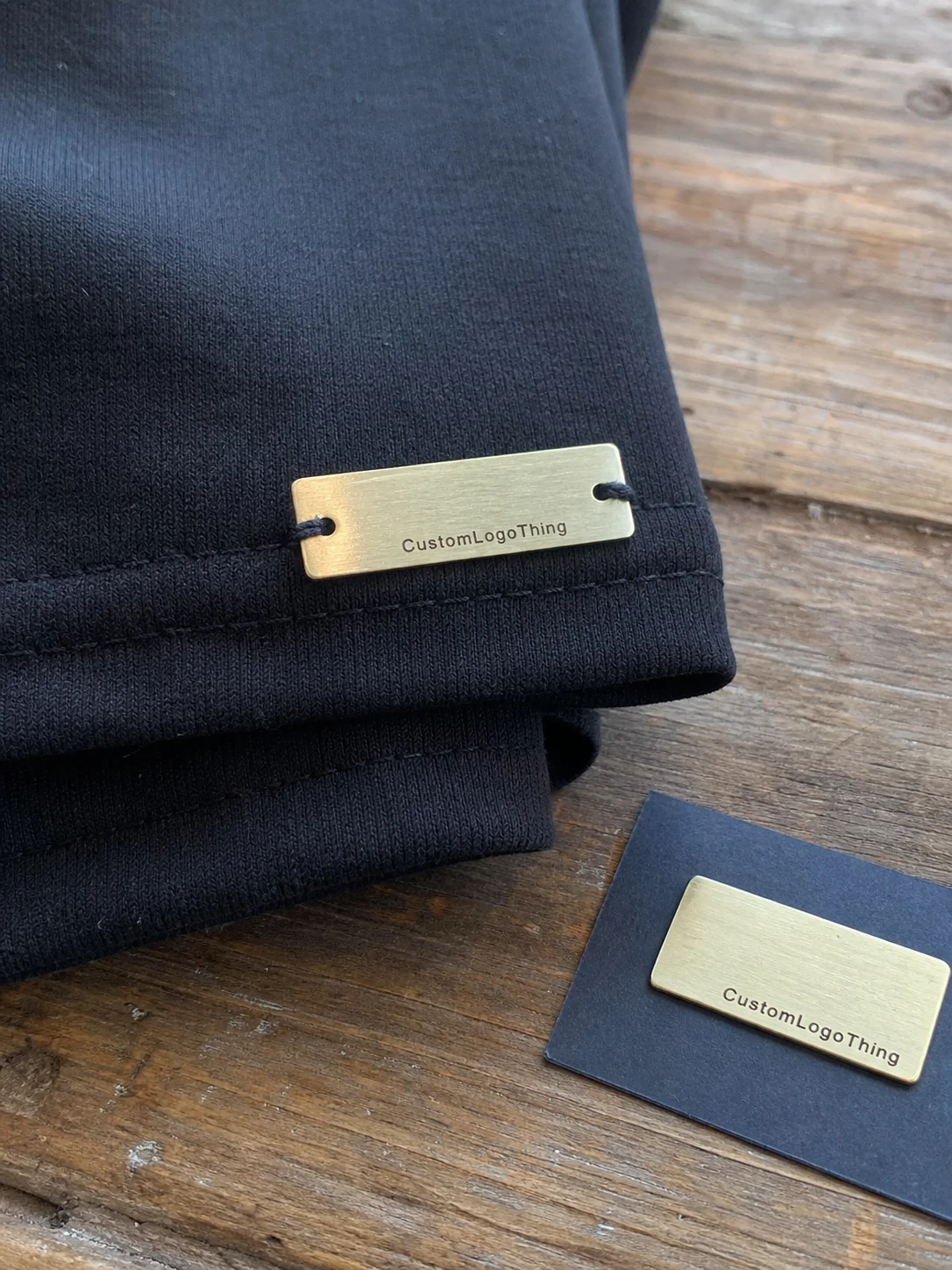
A metallic label is not just decoration. On apparel, it acts like a finish marker. It tells the customer that someone paid attention to detail at a point where many brands stop short. A brushed aluminum tag on denim feels different from a foil-style patch on a cap, and both work because they break the surface in a way plain print cannot.
There are several ways to build the look. Some custom metallic labels use foil stamping over a backing material. Others rely on anodized aluminum, plated surfaces, brushed metal, or hybrid constructions that combine a sew-on base with a reflective face. The choice depends on where the label sits and how much handling it will see. A jacket hem has a different tolerance than a tee collar, and that difference is not trivial.
From a buyer’s point of view, shine is only one variable. The real test is legibility at small size, clarity at a few feet away, and whether the label still feels intentional after wear. Dense copy and thin strokes tend to fail first. A metallic finish amplifies both strengths and weaknesses, which is why these labels usually work best with short words, strong icons, or simple marks.
They also pull their weight beyond the garment. The same visual language often carries into hang tags, tissue, inserts, and custom printed boxes. That is not an abstract branding point. Customers notice when the trim, the packaging, and the product all point in the same direction. If one piece is loud and the rest are quiet, the system looks improvised.
A small metallic detail can outperform a larger logo panel if the label sits in the right place and the finish is controlled. The common mistake is assuming more shine automatically means more value.
For premium basics, denim, outerwear, and accessories, restraint usually works better than decoration for its own sake. The best custom metallic labels tend to feel integrated, not pasted on. If the label steals the entire conversation, the garment usually loses.
How the Production Process Works, from Artwork to Attachment
The process starts with artwork, and that is where many orders are won or lost. A supplier should be checking line weight, font size, shape complexity, and whether the design can survive translation into a metallic finish. If a logo depends on tiny internal cuts or very thin typography, it may need simplification before production starts. Vector files are the standard for a reason: they keep edges clean at final size.
After artwork comes material selection. Buyers typically choose the substrate, the finish, and the visual tone. A bright mirror finish, a brushed satin face, and a dark gunmetal tone all behave differently under light. On fabric, those differences are more pronounced because the garment surface is never static. The texture underneath changes how the label reads.
Fabrication usually includes forming, cutting, edge finishing, and any attachment preparation. If the label needs a fold, stitching holes, a rivet point, or an adhesive backing, that gets built in before inspection. Some pieces are stamped or embossed to create depth. Others are printed or plated to produce a metallic effect without adding much thickness. The choice affects hand-feel, durability, and cost.
Attachment method should be decided early. Sew-on labels are common for denim and outerwear. Heat-applied options can work on stable fabrics if the garment construction supports them. Rivets suit heavier goods and hard-wearing placements. Adhesive-backed pieces can be useful for short-run or promotional applications, but they are rarely the strongest answer for repeated laundering.
Before bulk production, a good supplier checks legibility, color consistency, edge cleanliness, adhesion, and placement tolerance. Buyers who already source Custom Labels & Tags will recognize the rhythm. Metallic finishes usually require a tighter tolerance on surface quality because small defects show up faster. A tiny scratch that might disappear on a matte label can become the first thing a customer sees on a reflective one.
The label should also be checked against the rest of the product. A collar badge that works on a heavyweight jacket may be too rigid for a lightweight top. That same logic applies across Custom Packaging Products: the strongest finish is the one that fits the substrate, not the mockup. Packaging and apparel have different demands, but they fail for the same reason when the material is ignored.
For buyers comparing suppliers, it helps to ask whether the shop follows any test methods or inspection routines, such as adhesion checks, abrasion checks, and transit testing modeled on ISTA guidance. You do not need to turn the order into a lab project. You do need evidence that the label can survive normal handling. If the label is paired with paper-based packaging components, FSC-aligned sourcing can also matter. See ISTA and FSC for the underlying frameworks.
Design Factors That Change the Look and Durability
Size matters more than most first-time buyers expect. A 12 mm badge leaves little room for complexity, so it needs bold forms and enough negative space to stay readable. A 35 mm or 50 mm plate can carry more texture, border detail, or layered effects. That is not a style preference. It is a production constraint.
Contrast is the first design decision worth defending. Reflective surfaces can erase thin strokes, especially under retail lighting or on moving fabric. If the typography is delicate, the finish should probably be calmer. If the finish is high-shine, the artwork should be simpler. That tradeoff is what keeps custom metallic labels readable after application.
Finish choice changes the brand signal too. Mirror-polished metal reads louder and more fashion-forward. Brushed metal feels quieter and more technical. Matte metallic finishes sit between the two and often suit outdoor apparel, workwear, and understated premium basics. The wrong finish can make a thoughtful product look overdesigned.
Material compatibility is where many orders stumble. A metallic label that looks excellent on denim may behave poorly on stretch knits, lightweight tees, or heavily textured fleece. If the garment flexes often, the label can lift at the edges, crease, or feel uncomfortable against the body. That is why sample testing should happen on the actual fabric, not a substitute swatch.
Durability depends on the environment the garment lives in. Abrasion dulls surface detail. Laundering affects adhesives and edge integrity. Repeated folding can leave stress marks on certain finishes. A buyer sourcing labels for a premium hoodie and a work jacket should not assume the same spec will perform equally well.
Placement matters as much as finish. A metallic badge on a front chest panel will be read immediately. A label at the lower hem can be more forgiving because the eye does not land there first. That means the same design can fail in one location and succeed in another. The design itself may be fine; the position is what breaks it.
One practical test is distance. If the mark remains clear at arm’s length without squinting, the design is probably in the right zone. If it only works in a close-up render, it is too dependent on perfect conditions. A label should survive daylight, store lighting, and the moving angle of a person wearing it.
| Label Type | Best For | Typical Feel | Durability Notes |
|---|---|---|---|
| Brushed metal tag | Denim, jackets, bags | Controlled, premium, low-glare | Strong with sewn or riveted attachment |
| Mirror-finish metallic badge | Fashion-forward trims, caps | Bold, reflective, high-contrast | Can show scuffs faster if exposed |
| Foil-stamped label | Lightweight branding, short runs | Decorative, lighter weight | Depends heavily on coating and wash exposure |
| Hybrid sew-on metal effect | Capsule collections, mixed fabrics | Balanced, versatile | Often the safest compromise for apparel |
Pricing, MOQ, and Unit Cost: What Changes the Quote for Custom Metallic Labels
Quantity usually moves the price more than anything else. Setup and tooling get spread over more units as the order grows, so a 5,000-piece run can look very different from a 500-piece test order. For custom metallic labels, a realistic range is often around $0.18 to $0.35 per unit on larger runs, with more complex builds moving higher. Small runs can climb to $0.45 to $1.20 or more, depending on structure and finish.
Finish complexity is the second major driver. A simple single-tone brushed label costs less than a multi-layer piece with embossing, plated contrast, or custom edge treatment. Reflective surfaces also raise the chance of rejects during inspection, which means more labor gets folded into the quote. Specificity costs money. That is usually fair, because specificity is what makes the piece look expensive.
Tooling and setup fees can surprise buyers who only compare unit pricing. Custom dies, debossing tools, unique attachment points, and unusual shapes often carry an upfront charge even when the per-piece rate looks reasonable. That is standard practice. The better question is whether the fee matches the design and the intended volume.
MOQ pressure matters too. Lower minimums are useful for testing a concept or covering a small seasonal drop, but they tend to narrow finish options and push up landed cost. A supplier may quote one minimum for a simple construction and a higher minimum for a more elaborate label. That difference usually reflects actual production complexity rather than arbitrary policy.
Proofs, samples, and freight change the real cost more than some quotes suggest. A buyer may approve an attractive unit rate and then find that sample revisions, carton charges, and shipping add a second layer of expense. If the labels are part of a broader branded packaging or product packaging program, calculate the total landed cost together. The trim budget does not live by itself.
Here is a practical comparison of common buying options for custom metallic labels:
| Option | Approx. MOQ | Indicative Unit Cost | Pros | Tradeoffs |
|---|---|---|---|---|
| Simple brushed sew-on label | 300 to 1,000 pcs | $0.22 to $0.55 | Clean look, strong versatility | Less visual impact than mirror finishes |
| Mirror-finish badge with custom shape | 500 to 2,000 pcs | $0.35 to $0.90 | High shelf appeal, strong brand signal | Higher reject risk, more visible scuffs |
| Foil-stamped hybrid label | 1,000 to 5,000 pcs | $0.18 to $0.40 | Good for tighter budgets | Less durable in harsher wear conditions |
| Premium plated or embossed metal piece | 1,000+ pcs | $0.55 to $1.20+ | Strong premium positioning | Tooling, inspection, and lead time are heavier |
For brands building a line around custom metallic labels, the better approach is to price the whole program, not just the label. Compare it against garment cost, photography needs, and the rest of the packaging system. A modest trim upgrade can make sense if it lifts perceived value at retail. A random upgrade does not.
Process Timeline and Lead Time: What to Expect
The timeline usually runs through six steps: quote, artwork review, proofing, sample confirmation, production, and shipment. If each step moves cleanly, a standard order often lands in 12 to 18 business days after proof approval. That is a practical range, not a guarantee. Seasonal congestion, material shortages, or a late design change can extend it quickly.
Artwork review is often the first bottleneck. If the supplier has to redraw a logo, simplify linework, or ask for missing dimensions, the schedule slows before any factory work begins. The fix is straightforward: send a vector file, exact measurements, and placement notes in the first round. That removes unnecessary back-and-forth and reduces the odds of a rushed correction later.
Sampling is where many buyers decide whether the order is worth pushing forward. A digital proof is useful, but a physical sample is the only reliable way to judge finish tone, edge feel, and actual attachment behavior. For premium apparel, that extra step is usually worth the time. A sample can add 5 to 10 business days, sometimes more if the design is intricate.
Production time depends on the finish and the tooling. A simple label with stable specs can move quickly once approved. A layered metallic piece with custom cutting or plating will be slower because each stage has more opportunities for variation. If the label also needs to coordinate with seasonal retail packaging, the schedule gets tighter because the garment, insert, and outer carton often need to land together.
Shipping and customs are the final variables. Domestic transit can be straightforward. Imported goods can be delayed by holidays, port congestion, or paperwork errors. If the order is tied to a launch date, build buffer into the schedule. A two-day freight estimate means little if the approval process slips by a week.
Rush work exists, but it usually compresses factory time, not decision-making. It cannot fix unclear art, missing specs, or a change request that arrives after production has started.
Common Ordering Mistakes That Cause Reprints
The most common mistake is designing for a screen instead of the garment. On a monitor, thin type and delicate borders look elegant. On a 20 mm label, they can disappear. The fix is simple: mock the design at actual size before approval. If the art fails at one-to-one scale, it will fail in production.
Ignoring fabric behavior causes a second wave of problems. A rigid label on structured denim can work well. Put the same construction on a soft, stretch-heavy knit and the result may buckle, lift, or feel awkward against the body. A supplier should flag that risk, but buyers should ask directly too.
Finish selection is another source of avoidable reprints. Strong shine looks excellent in a catalog proof, then wipes out fine text once the piece is physically made. If the art includes a small mark or tight letter spacing, a lower-glare finish is usually safer. It is less dramatic, but it survives closer inspection more reliably.
Skipping wear testing is expensive. Buyers often approve a sample visually and then discover edge wear, fading, or adhesion failures later. A few home-launder cycles and abrasion checks on the actual garment are far cheaper than replacing inventory. The same discipline used for custom printed boxes and other packaging components should apply here too.
Placement errors create another layer of waste. If the label location is not specified clearly, the factory can only guess. That leads to off-center placement, inconsistent sizing across garments, or a badge that visually fights the seam lines. A placement drawing avoids most of that.
Too many approvals can blur accountability as well. If one person chooses the finish, another changes the shape, and a third signs off on the sample, nobody owns the final result. Keep the decision path short. That sounds basic because it is basic, and it saves rework.
Expert Ordering Tips and Next Steps Before You Request Samples
Start with a one-page spec sheet. Include size, shape, finish, attachment method, garment type, placement, quantity, and target ship date. That single document does more to control custom metallic labels than a long email thread ever will. It also makes supplier quotes more comparable, which is useful if you are trying to separate a real value from a polished quote.
If you are undecided between two looks, ask for both. A brighter finish and a muted finish side by side will usually make the right choice obvious. Buyers often think they want the flashier option until they see it against the actual fabric. Then the quieter piece wins because it sits with the garment instead of competing with it.
Request a physical sample or a highly realistic mockup before bulk production, especially for premium or high-visibility garments. If the label will sit on a front chest, waistband, or outer hem, the eye goes to it quickly. A small mismatch in scale or tone is easier to spot there than on a tucked-away seam label.
Confirm care instructions before approval. The attachment method should match the wash cycle and use case. If the item will be washed often, sewn construction tends to be safer than light adhesive. If the item is more fashion-led and lower wear, heat application may be acceptable on the right fabric. The garment decides, not the brochure.
It helps to think of the label as part of the full system, not as an isolated component. The shape should make sense beside the hang tag. The finish should not clash with the box. The brand should feel consistent across the garment, the insert, and the outer packaging. That is where package branding becomes visible to the customer in a measurable way.
Before placing the order, compare quote, sample, timeline, and garment fit in one checklist. If those four things align, custom metallic labels can add perceived value, support the collection story, and stay credible after wear, handling, and shipment. If they do not align, the shine stays on the surface and stops there.
How durable are custom metallic labels on clothing?
Durability depends on the base material, finish, and attachment method. Sewn or mechanically fastened labels usually last better than light adhesive options, especially on denim, outerwear, or anything that gets frequent abrasion. The safest move is to test the label on the actual garment fabric before approving a full run.
Are metallic clothing labels better sewn on or heat applied?
Sewn labels are usually stronger for denim, outerwear, and high-wear placement. Heat-applied labels can work well on stable fabrics when the garment construction supports them, but they are more sensitive to wash conditions and stretch. The right answer depends on placement, use case, and the final laundering method.
What affects the price of custom metallic labels the most?
Quantity has the largest effect on unit cost because setup gets spread across more pieces. Finish complexity, custom tooling, and attachment type also move the price up or down. Sampling, revisions, and freight can change the landed cost more than the quote suggests, so it is smart to price the full job rather than only the per-piece number.
How long does it take to get metallic label samples made?
A digital proof usually comes first, then a physical sample if you request one. Simple designs move faster than layered or highly reflective finishes, and revisions can add several days. In many cases, the final timeline depends more on approvals than on the factory run itself.
What file should I send for custom metallic labels?
Vector artwork is best because it preserves clean edges at small sizes. Include exact dimensions, font outlines, finish references, and placement notes, plus garment details if possible. The clearer the file package, the easier it is for the supplier to check fit and quote accurately.

