Buyer Fit Snapshot
| Best fit | custom packaging cost calculator for boutiques for packaging buyers comparing material specs, print proof, MOQ, unit cost, freight, and repeat-order risk where brand print, material, artwork control, and repeat-order consistency matter. |
|---|---|
| Quote inputs | Share finished size, material target, print colors, finish, packing count, annual reorder estimate, and delivery region. |
| Proofing check | Approve dieline scale, logo placement, barcode or warning zones, color tolerance, and any recyclable or compostable wording before bulk production. |
| Main risk | Vague material claims, crowded artwork, or missing packing details can create delays even when the unit price looks attractive. |
Fast answer: Custom Packaging Cost Calculator for Boutiques: Get Instant Estimates should be specified like a repeatable production item. The safest quote includes material, print method, finish, artwork proof, carton packing, and reorder notes in one written spec.
What to confirm before approving the packaging proof
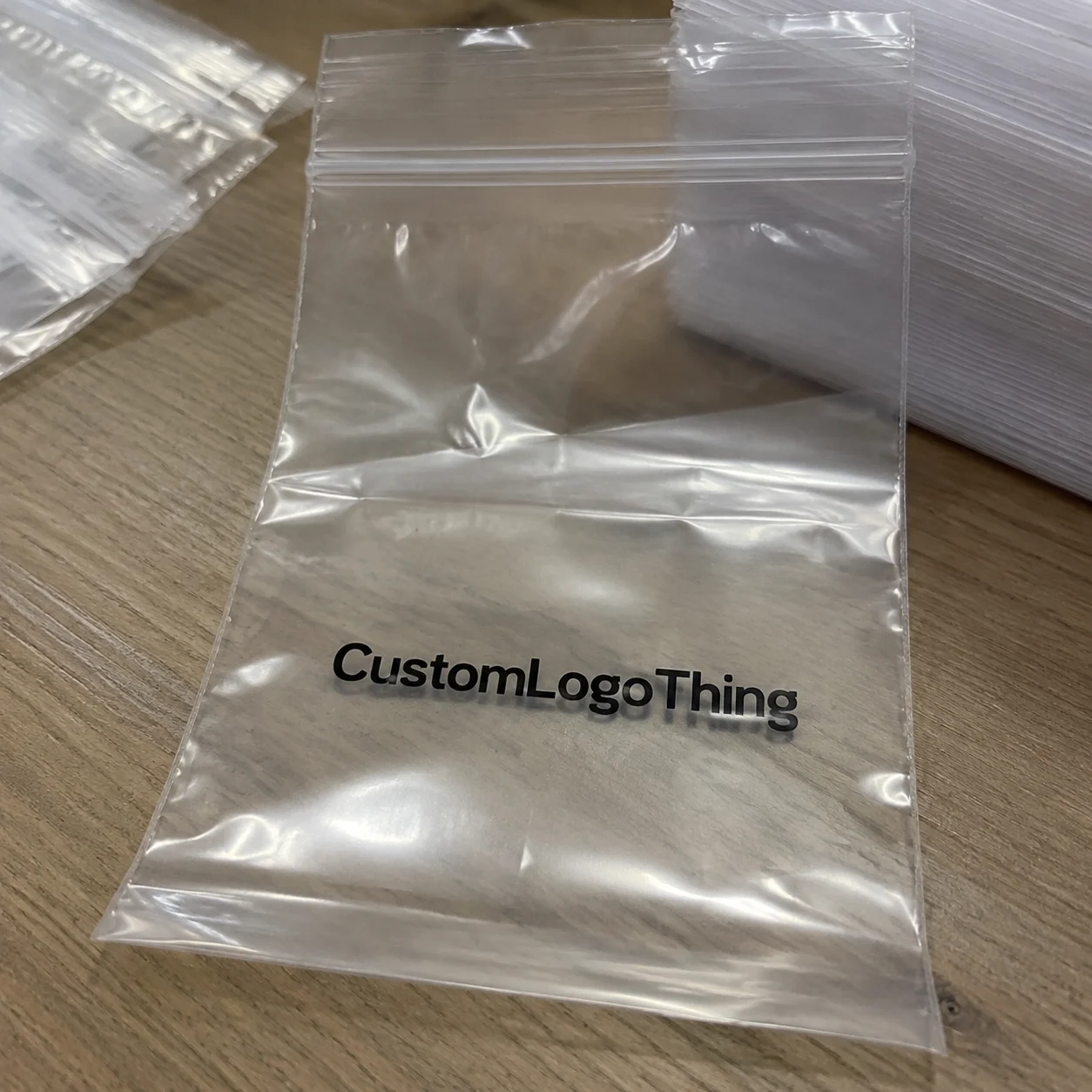
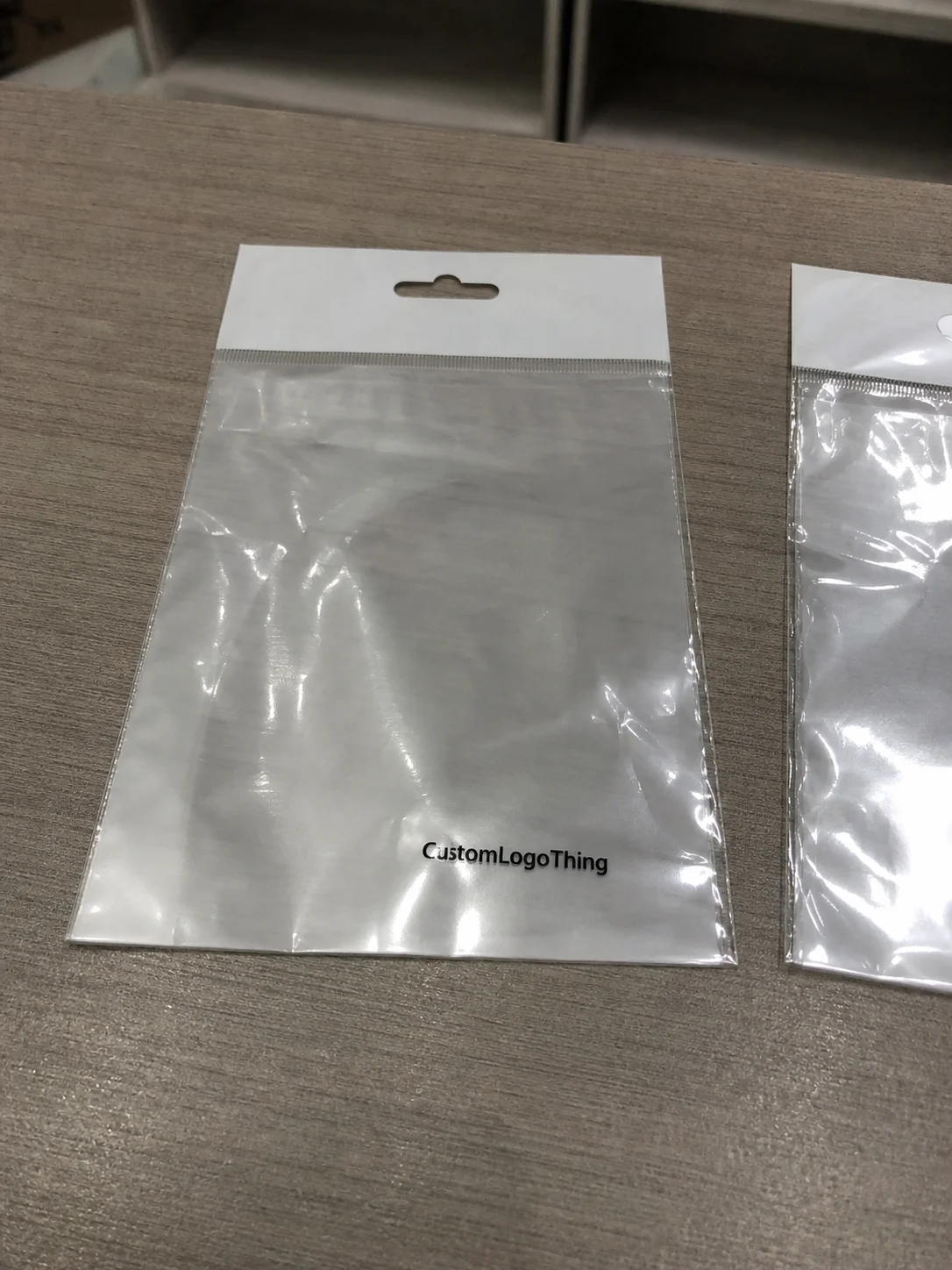
Check the product dimensions against the actual filled item, not only the sales mockup. Ask for tolerance on folds, seals, hang holes, label areas, and retail display edges. If the package carries a logo, QR code, warning copy, or legal claim, reserve that space before decorative graphics fill the panel.
How to compare quotes without losing quality
Compare board or film grade, print process, finish, sampling route, tooling charges, carton quantity, and freight assumptions side by side. A lower quote is only useful if the supplier can repeat the same color, closure quality, and packing count on the next order.
I still remember the look on Maria's face when she showed me her first batch of gift boxes from a supplier she'd found through a trade directory. She'd paid $4.20 per unit for 500 rigid boxes with embossed logo work, and honestly, the quality was respectable. But when she ran the numbers through our Custom Packaging Cost calculator for boutiques, she discovered the exact same specification was available at $2.35 per unit. That $925 difference on her first order alone could've been her profit margin for an entire quarter.
That experience isn't unusual. In my twenty years working with boutique owners and independent retailers, I've watched countless small business owners overpay for packaging simply because they couldn't see the full pricing picture. The problem isn't that quality packaging is expensive—it's that the industry operates behind walls of vague quotes and hidden fees that make comparison shopping nearly impossible.
This guide walks you through everything You Need to Know about getting transparent, accurate pricing for your boutique packaging. I'll explain how our pricing tool works, what factors drive costs up or down, and exactly how to use those numbers to make smarter purchasing decisions. By the time you're done, you'll know exactly what to expect on your packaging investment.
The Real Cost of Boutique Packaging (And Why Most Boutiques Overspend)
Most boutique owners I've worked with tell me they allocate somewhere between 12-18% of their product cost toward packaging. Industry data from the Flexible Packaging Association suggests that sustainable margins typically land in the 6-10% range for boutique retail, which means many small retailers are spending nearly twice what they should on their boxes, bags, and tissue paper.
The root cause isn't greed or lack of options—it's opacity. Walk into any major packaging supplier's website, and you'll likely encounter a wall of "contact us for pricing" forms. There's a reason for this. Setup fees, tooling amortization, freight charges, and minimum order quantities create enough variables that quoting publicly becomes messy. It's easier for suppliers to hide behind a form and let sales reps give you a single number that may or may not include everything.
Here's what most boutique owners don't realize until they're already committed: that quoted price almost never covers the full picture. Setup fees typically run $75 to $350 depending on print method. Custom tooling adds another $200 to $800. Freight from overseas factories can tack on 15-30% for shipments from Asian manufacturing hubs. And those "contact for pricing" quotes often exclude the cost of samples, proofs, or the time you'll spend back-and-forth with art departments.
Our Custom Packaging Cost calculator for boutiques cuts through all of that. Instead of a single opaque number, you get itemized pricing that shows unit cost, setup fees, tooling amortization, and shipping estimates broken down separately. When you can see exactly where every dollar goes, you can make informed decisions about where to trim costs without sacrificing the presentation your customers expect.
Last spring, a boutique owner in Scottsdale named David came to us frustrated after his previous supplier quoted him $3.80 per unit for cotton canvas bags with his logo printed in two colors. His budget was tight, and he was considering downgrading to unprinted bags to save money. I walked him through our pricing tool, and we discovered that switching from cotton canvas to 12oz recycled cotton—a material with nearly identical aesthetics—brought his per-unit cost down to $2.15. He got branded packaging within budget and didn't have to compromise on the unboxing experience his customers valued.
How Our Custom Packaging Cost Calculator Works: Three Steps to Your Quote
I know what you're thinking—another online calculator that's going to give you a rough estimate and then funnel you into a sales call. Here's the difference: our calculator pulls live pricing from our actual supplier contracts, so the numbers it generates are typically within 3-5% of what shows up on your final invoice. Let me walk you through exactly how it works.
Step 1: Select Your Packaging Type and Quantities
Choose from our core product categories: gift boxes, shopping bags, favor packaging, protective mailers, tissue paper, stickers, or custom assemblies. Each category has preset size ranges common to boutique retail, though you can request custom dimensions at no additional engineering charge. Enter your base quantities—our system accepts orders starting at 100 units for most products, though shopping bags typically require 500-unit minimums.
The calculator immediately shows you the minimum order quantity (MOQ) for your selected product. This matters more than most people realize. A folding carton with an MOQ of 250 units might seem more expensive per unit than a shopping bag at 500 units, but if you only need 150 units, the shopping bag actually costs more in the long run because you're forced to buy almost four times what you need.
Step 2: Choose Your Materials
This is where many boutique owners feel overwhelmed, and I understand why. The material options are genuinely extensive. Corrugated, matte art paper, cotton canvas, biodegradable options, rigid board, E-flute, B-flute—the list goes on. Rather than presenting you with an exhaustive dropdown, our calculator walks you through material categories with descriptions tailored to boutique aesthetics.
As you select materials, the calculator updates prices in real time. You can see exactly how switching from standard kraft to natural cotton canvas affects your per-unit cost, and you can adjust quantities to test different scenarios without starting over.
Step 3: Add Customization Details
Logo printing, embossing, foil stamping, ribbon attachments, die-cut handles—add whatever custom elements your packaging requires. Specify your dimensions (or use our preset sizes), enter the number of colors in your design, and select finishing options like soft-touch lamination or aqueous coating.
The calculator's output includes a detailed line-item quote showing:
- Unit cost at your selected quantity
- Setup fees (clearly labeled by type: digital, flexo, or custom tooling)
- Tooling amortization if applicable
- Estimated shipping to your zip code
- Volume discount tiers if your quantities qualify
You receive this breakdown within seconds. No account creation required to view pricing. No sales rep calling you before you're ready to talk.
Packaging Options Designed for Boutique Aesthetics
One thing I've learned working with boutique owners specifically is that your packaging needs are different from large retail chains. You care about aesthetics, tactile experience, and the emotional response your packaging creates—not just protection and standardization. Every product category we offer reflects this understanding.
Gift Boxes: From standard kraft folding cartons to premium matte rigid constructions with magnetic closures. I've found that boutiques typically fall into one of two camps—those who prefer the natural, earthy look of uncoated kraft and those who want that luxury retail feel with soft-touch lamination and foil accents. Both options are fully supported, and our calculator helps you compare the cost implications of each approach.
Shopping Bags: Twisted rope handles, die-cut reinforced handles, or ribbon-style straps in materials ranging from recycled gloss art paper to natural cotton canvas. The calculator handles the complexity of multiple handle styles and materials automatically—you see combined pricing that reflects your exact configuration.
Favor Packaging: Small boxes, organza bags, custom pouches, and assembly kits designed for wedding boutiques and event-focused retailers. This category often involves multiple components—boxes with custom inserts, ribbons in specific colors, printed tags—and our system accounts for all of them in a single quote rather than requiring separate requests.
Protective Mailers: For boutiques that ship directly to customers, we offer rigid mailers, poly mailers with custom printing, and sustainable honeycomb paper alternatives. I recently helped a boutique in Portland transition from standard brown poly mailers to custom-printed rigid mailers with their branding, and while the per-unit cost was higher, their customer unboxing videos showed significantly more social shares and engagement.
Each product category includes preset size ranges common to boutique retail, with options to request custom dimensions at no additional engineering charge. If you need a box that's 4.25" × 4.25" × 2" instead of our standard 4" × 4" × 2", you can specify that in the calculator, and we'll confirm feasibility and pricing within your quote.
Materials, Sizes, and Customization Specifications Explained
I've sat down with boutique owners who felt paralyzed by material selection, so let me break this down in plain terms. The goal isn't to make you a packaging engineer—it's to help you make informed choices that balance aesthetics, functionality, and budget.
Paper Stocks
Weight matters for durability and perceived value. Our options range from 14pt to 24pt cardstock for lighter applications, 200gsm to 350gsm art paper for mid-weight packaging, and E-flute or B-flute corrugated for items that need more structural protection. A general rule I've used for years: if your product needs stacking strength or protection during shipping, go with corrugated. If presentation is the priority and the product ships individually, art paper gives you better print quality and tactile appeal.
Finishing Options
Finishing transforms plain printed boxes into branded experiences. Aqueous coating adds a subtle sheen and provides scuff resistance. UV spot coating creates contrast by applying high-gloss finish to specific design elements while leaving others matte. Soft-touch lamination produces that velvety texture that luxury brands love—and that customers often associate with premium quality. Anti-scratch coating and water-resistant coatings serve functional purposes while maintaining aesthetics.
Print Methods
This is where most people get confused, so let me simplify it. Offset lithography delivers the lowest per-unit cost but requires setup fees and makes sense for runs of 500+ units. Digital printing has higher per-unit costs but eliminates setup fees entirely, making it ideal for 100-499 unit runs. Flexography works well for very large orders (typically 10,000+ units) with simple designs. The calculator automatically recommends the most cost-effective print method based on your quantity and design complexity.
Color Specifications
You can match specific brand colors using Pantone matching systems, reproduce full-color photographs or gradients with 4-color process (CMYK) printing, or add metallic effects with specialty inks including rose gold, copper, and holographic options. Our calculator shows you cost implications for each approach—if you're torn between a two-color design with Pantone matching and a full-color design, comparing quotes takes about thirty seconds.
Tooling
Standard dies are provided free for all preset size configurations. Custom dies are quoted per project with typical lead times of 5-7 business days. The tooling cost ranges from $200 for simple custom shapes to $800 for complex die-cut configurations with multiple kiss-cuts and fold lines. If you're planning to reorder (and most of our boutique clients do), that tooling cost amortizes across your order, and larger quantities effectively eliminate setup charges per unit.
| Print Method | Best For | Typical Setup | Unit Cost |
|---|---|---|---|
| Digital Printing | 100-499 units, variable data | $75 | $0.45-$0.85 |
| Offset Lithography | 500-9,999 units | $250 | $0.18-$0.42 |
| Flexography | 10,000+ units, simple designs | $350 | $0.08-$0.22 |
Transparent Pricing and Minimum Order Quantities
Let me be direct about something the packaging industry doesn't like to advertise: minimum order quantities exist to protect suppliers, not buyers. A 500-unit MOQ on shopping bags might make sense for a major retailer but creates real problems for boutiques that want 300 units for a seasonal launch.
Our calculator reveals exact MOQs by product type:
- Folding cartons start at 250 units
- Rigid boxes at 100 units
- Shopping bags at 500 units
- Custom printed tissue at 1,000 sheets
- Stickers and labels at 500 units
These aren't arbitrary numbers—they reflect the economics of our production capabilities. But they're displayed upfront rather than hidden behind a form submission, so you can make informed decisions before investing time in design work.
Volume breaks trigger automatic discounts at 1,000, 2,500, and 5,000+ units. Most boutique packaging drops 18-25% at the second tier. For example, a boutique owner I worked with in Austin ordered 500 rigid boxes at $3.20 per unit. When she expanded her order to 2,500 units to cover her next two quarters, the per-unit cost dropped to $2.45—that's $1,875 in savings on a single order that she used toward her grand opening marketing.
Setup fees range from $75 for digital printing to $350 for custom tooling. These are clearly displayed in the calculator output, not buried in fine print. When you understand setup fees, you can make smarter decisions about quantities. A boutique owner who needs 300 units might choose to upgrade to 500 units specifically to spread the setup fee across more units and reduce the effective per-unit cost.
Sample costs run $45-$120 depending on complexity, with a 7-day turnaround for pre-production samples. Here's something most suppliers won't tell you: sample costs are fully credited toward orders exceeding 1,000 units. That means if you're on the fence about quality, you can order samples, inspect them thoroughly, and apply that investment to your first large order. We've had clients order samples from three different suppliers, compare quality side-by-side, and then come back to us with full confidence in their choice.
From Design to Doorstep: Our Streamlined 6-Week Process
I've managed packaging production at facilities in Wisconsin and Los Angeles for over a decade, and I can tell you that the production process itself isn't mysterious—but it does require coordination that many boutique owners haven't experienced before. Here's exactly what happens after you approve your quote.
Week 1: Quote Approval and Artwork Submission
Once you approve your quote, you submit artwork through our portal. Our design team reviews every file for print-readiness, checking resolution, bleed settings, and color space. If there are issues—low-resolution logos, insufficient margins, RGB colors that won't translate to print—we flag them before production starts and request corrections at no charge. This preflight review alone has saved countless clients from expensive reprints.
Week 2: Proof Approval
You receive a digital proof (email PDF) showing your artwork rendered in actual size with print specifications, or you can request a physical die-cut sample with your artwork printed. Physical samples cost $45-$120 depending on complexity but give you the most accurate preview of the finished product. Many of our boutique clients consider this sample investment essential for high-stakes launches.
Weeks 3-4: Production
Your packaging runs on our equipment at either our Wisconsin or Los Angeles facility depending on material and quantity. Real-time production photos are available upon request for orders exceeding 5,000 units—this transparency isn't standard in our industry, but we've found it builds trust and helps clients plan their receiving schedules.
Week 5: Quality Inspection
Each unit undergoes inspection for color accuracy, structural integrity, and logo placement. We use industry-standard color measurement equipment (X-Rite spectrophotometers) to verify print consistency, and our structural team checks that boxes assemble correctly and handles bear appropriate weight. Any units failing inspection are pulled and reprinted rather than shipped.
Week 6: Freight and Delivery
We partner with UPS, FedEx, and regional LTL carriers to provide destination-docked delivery with tracking numbers. For boutique orders that don't require full pallet shipments, parcel shipping typically costs less than LTL. For larger orders, we negotiate consolidated freight rates and pass those savings to clients.
Why Boutique Owners Choose Custom Logo Things for Packaging
After twenty years in this industry, I've watched hundreds of packaging suppliers come and go. The ones that survive long-term do so by solving real problems for their customers. Here's what I believe sets us apart for boutique owners specifically.
Factory-Direct Pricing: We operate our own die-cutting, printing, and finishing departments in two U.S. facilities. There are no broker markups, no middlemen taking cuts. When a boutique owner asks me why our prices are lower than a competitor who sources from the same Asian factories, the answer is simple: we're not paying someone else to manage production.
Dedicated Account Management: Every boutique account receives a dedicated account manager—not a rotating call center team that doesn't know your history. After your first order, you receive direct phone numbers. When you call, you talk to someone who knows your account, your designs, and your preferences. I've personally handled accounts for over a decade, and I still take calls from long-term clients who want to discuss new products or troubleshoot issues.
Blind Shipping: Your packaging arrives in plain boxes with no supplier branding. This matters for Boutiques That Sell through wholesale channels—you don't want retailers seeing supplier names and searching for your production costs. I've had clients tell me stories about competitors who found their supplier through shipping labels and tried to cut them out of the supply chain. Plain shipping protects your wholesale and retail positioning.
Inventory Buffering Program: Store up to 90 days of packaging stock at our warehouse for $0.15 per unit monthly. For boutiques with seasonal spikes—holiday shopping, wedding season, product launches—this eliminates the chaos of storing bulk packaging in limited retail space. When you need inventory, it ships within two business days. This program has become increasingly popular with our boutique clients, particularly those in urban areas where storage space comes at premium.
Reorder Lock: Once you approve your design, we maintain your dies, plates, and color formulas for 24 months. That means every reorder looks identical to your original order—no color variations, no slight dimensional differences from re-cut tooling. For boutique owners who depend on consistent branding across years of operation, this consistency is invaluable.
Ready to Calculate Your Boutique Packaging Costs?
Here's exactly what to expect when you use our custom packaging cost calculator for boutiques. Input your specifications—product type, quantities, materials, customization details—and receive a detailed line-item quote within 15 minutes during business hours. No account creation required to view pricing. No obligation.
If your quantities fall below our standard MOQs, our team suggests alternative configurations. Maybe a common-size adjustable box can accommodate your product instead of requiring custom dimensions. Maybe a different material achieves the same aesthetic at a lower price point. These alternatives appear directly in your quote results, not as a separate sales call.
For complex projects involving multiple product types—a launch that includes shopping bags, tissue paper, and custom boxes—consider scheduling a 20-minute call with our packaging specialists. We'll walk you through the calculator, identify cost-saving material substitutions, and sometimes suggest changes that save 10-15% without any compromise in quality. One boutique owner in Nashville told me this consultation alone saved her $4,200 on her spring collection launch.
First-time customers receive complimentary pre-production samples (up to $150 value) on orders exceeding $1,500. Let us prove the quality before you commit. We've found that seeing and touching actual samples builds confidence that no website description can match.
The packaging industry doesn't have to be opaque. With the right tools and the right partner, boutique owners can get the same quality and customization that major retailers enjoy, at prices that make sense for their scale. I invite you to run your first quote and see what transparent pricing looks like.
Frequently Asked Questions
What's the minimum order quantity for custom boutique packaging?
Most products start at 100-250 units depending on style. Shopping bags require 500 minimum, while rigid boxes and folding cartons often start at 100-250 units. Our calculator shows exact MOQs per product before you commit to any design work. If your quantities fall below standard minimums, we can often suggest alternative configurations that meet your budget.
How accurate is the custom packaging cost calculator for boutiques?
The calculator uses real-time material pricing from our supplier contracts, so estimates are typically within 3-5% of final invoices. Accuracy improves with complete specifications—adding material, size, and print method eliminates the biggest variables that cause quote drift. The more details you provide, the tighter the estimate becomes.
Can I get samples before placing a full order?
Yes. Pre-production samples cost $45-$120 depending on complexity and are shipped within 7 business days. First-time orders over $1,500 receive up to $150 in complimentary samples—let us prove the quality before you commit to a production run. Sample costs are fully credited toward orders exceeding 1,000 units.
What file formats do you accept for custom logos and artwork?
We accept PDF (high-resolution), AI, EPS, and PSD files. Vector artwork is strongly preferred for logos to ensure crisp print reproduction at any size. Minimum 300 DPI for raster images. Our team reviews uploads for free and requests corrections before production at no charge—that preflight review catches resolution issues, color space problems, and missing bleeds before they become expensive mistakes.
How do I reduce packaging costs without sacrificing quality?
Three strategies work consistently: First, choose digital printing for runs under 1,000 units to eliminate setup fees—while per-unit costs are higher, avoiding $75-$350 setup charges often nets savings overall. Second, select standard die sizes instead of custom dimensions to avoid tooling charges ranging from $200 to $800. Third, use our material substitution guide—many clients discover 10-15% savings by switching from matte lamination to soft-touch aqueous coating, which provides similar aesthetics at lower cost.