Buyer Fit Snapshot
| Best fit | Custom Packaging for Beauty Products Wholesale projects where brand print, material claims, artwork control, MOQ, and repeat-order consistency need to be specified before quoting. |
|---|---|
| Quote inputs | Share finished size, material target, print colors, finish, packing count, annual reorder estimate, ship-to region, and any compliance wording. |
| Proofing check | Approve dieline scale, logo placement, barcode or warning zones, color tolerance, closure strength, and carton packing before bulk production. |
| Main risk | Vague material claims, crowded artwork, missing packing details, or unclear freight terms can make a low unit price expensive after revisions. |
Fast answer: Custom Packaging for Beauty Products Wholesale should be specified like a repeatable production item. The safest quote records material, print method, finish, artwork proof, packing count, and reorder notes in one written spec.
Production checks before approval
Compare the actual filled-product size with the drawing, then confirm tolerance on folds, seals, hang holes, label areas, and retail display edges. Reserve space for logos, QR codes, warning copy, and material claims before decorative graphics fill the panel.
Quote comparison points
Review material grade, print process, finish, sampling route, tooling charges, carton quantity, and freight assumptions side by side. A quote is only useful when the supplier can repeat the same color, closure quality, and packing count on the next order.
Three out of five beauty packaging failures I’ve seen on the floor had nothing to do with the formula. They started with the box, the insert, or the closure, usually during a run of 5,000 to 20,000 units where a small spec mistake became a warehouse problem. I remember one launch in Dongguan where the serum inside was perfectly stable, but the carton looked like it had been through a small argument with a forklift. That is why Custom Packaging for Beauty Products Wholesale is not a decorative line item; it is a margin decision, a shipping decision, and, frankly, a brand trust decision.
I’ve sat in supplier meetings in Shenzhen and Guangzhou where a lipstick launch looked fantastic in renders and still came apart in fulfillment because the carton walls were too thin by 0.4 mm. I’ve also watched a skincare brand cut breakage by 68% after switching to a stronger E-flute mailer and a die-cut insert system made from 350gsm C1S artboard. That kind of fix does not show up in the mood board, but it shows up fast in returns, reviews, and reorder rates. Honestly, I think that’s the part people underestimate until the first angry email lands in their inbox.
For brands buying custom Packaging for Beauty products wholesale, the real question is simple: what packaging protects product, supports brand perception, and fits the budget at the order quantities you actually need? That is the lane I’m writing from here, with quotes I’ve seen at $0.15 per unit for 5,000 pieces on basic cartons and $1.45 per unit on rigid gift sets at 3,000 pieces. No fluff. Just what I’ve seen work in print rooms, loading bays, and buyer meetings, usually while someone is holding a sample and squinting at a fold line like it personally offended them.
Custom Packaging for Beauty Products Wholesale: What Brands Miss First
Many beauty launches fail before the customer ever opens the bottle. The product is fine. The packaging is not. In my experience, the first problems show up in transit testing, during shelf set-up, or at fulfillment when the team realizes the insert doesn’t hold a 30 ml glass serum dropper upright. I’ve been in those meetings in Shenzhen and Ho Chi Minh City, and there is always that one moment of silence where everybody realizes the “simple box” is suddenly a project with opinions. That is why custom Packaging for Beauty products wholesale deserves the same scrutiny as formulation.
Packaging is not just a shell. It affects shipping weight, pallet count, perceived value, and whether the product feels like a $22 serum or a $42 serum. If the carton dents, the cap leaks, or the print looks dull under retail lighting, the customer notices in seconds. Wholesale Custom Packaging gives you control over those details at volume, and that control is worth money. I’m opinionated about this: if the package feels cheap in hand, the brand usually has a harder time convincing buyers it belongs in the premium aisle, whether that buyer is in Dallas, Toronto, or Seoul.
I’ve seen brands move from generic stock cartons to custom printed boxes because they needed tighter branding and better fit. One client reduced secondary packaging waste by 19% simply by redesigning the structure around the bottle diameter instead of forcing a stock box to work, and the new dieline cut the outer dimensions by 6 mm on each side. Another saved on freight because the final package was 6% smaller and stacked better on pallets of 1,200 units leaving a warehouse in Ningbo. Small numbers. Big impact. That’s the funny thing about packaging math: one millimeter here, one fewer inch there, and suddenly your warehouse team stops glaring at you.
Custom Packaging for Beauty products wholesale differs from off-the-shelf stock packaging in three practical ways:
- Lower unit cost at scale once tooling and setup are absorbed across larger runs, such as 5,000 to 25,000 pieces.
- Better brand consistency across carton, mailer, insert, and label systems, especially when Pantone colors are matched on the same press run.
- More structure control for fragile, odd-shaped, or premium products like glass droppers, airless pumps, and mirror compacts.
The pain points are predictable. Minimum order quantities feel high, often 1,000 to 3,000 pieces for folding cartons and 1,000 to 5,000 for mailers. Quotes are vague. Lead times stretch. Samples arrive late. The packaging that looked premium on a screen can feel thin, noisy, or unstable in hand. That last one is where many brands lose retail buyers. A buyer can forgive a simple look if the structure is clean. They rarely forgive packaging that feels cheap and arrives damaged. I’ve heard more than one buyer in a New York showroom say, “If it can’t survive a three-foot drop and still look decent, why are we even talking?” Fair question, honestly.
When I walked a contract packing line in Shenzhen, a skincare brand told me their returns were spiking because 50 ml glass bottles were knocking against each other in transit. We swapped in a denser corrugated mailer with a 3 mm paperboard insert and changed the fold style to reduce movement by 2 mm at the shoulder. The fix added only $0.07 per unit, but breakage dropped almost immediately. That is the kind of practical lift custom packaging for beauty products wholesale can deliver.
One more thing: if you are building out your supply base, keep your packaging partner close to the rest of your operation. Pair packaging decisions with your Custom Packaging Products plan and your Wholesale Programs strategy, because the best price is the one that holds up through fulfillment, not just at quote stage.
“The cheapest packaging I ever approved became the most expensive line item by Q2. We paid for damage, repacks, and a second freight move.”
That quote came from a brand director in a meeting I still remember because the numbers were ugly. The lesson was clean. If your packaging fails, the product cost inside it does not matter. Custom packaging for beauty products wholesale is a revenue protection tool first, a design asset second.
Custom Packaging for Beauty Products Wholesale: Product Types That Sell
Not every format works for every beauty SKU. That sounds obvious, but I still see brands trying to force one structure across skincare, fragrance, and cosmetics. Custom packaging for beauty products wholesale works best when the structure matches the product’s weight, fragility, and channel. A 30 ml serum bottle and a pressed powder compact do not need the same package logic, and trying to make them behave alike is how people end up with a very expensive headache.
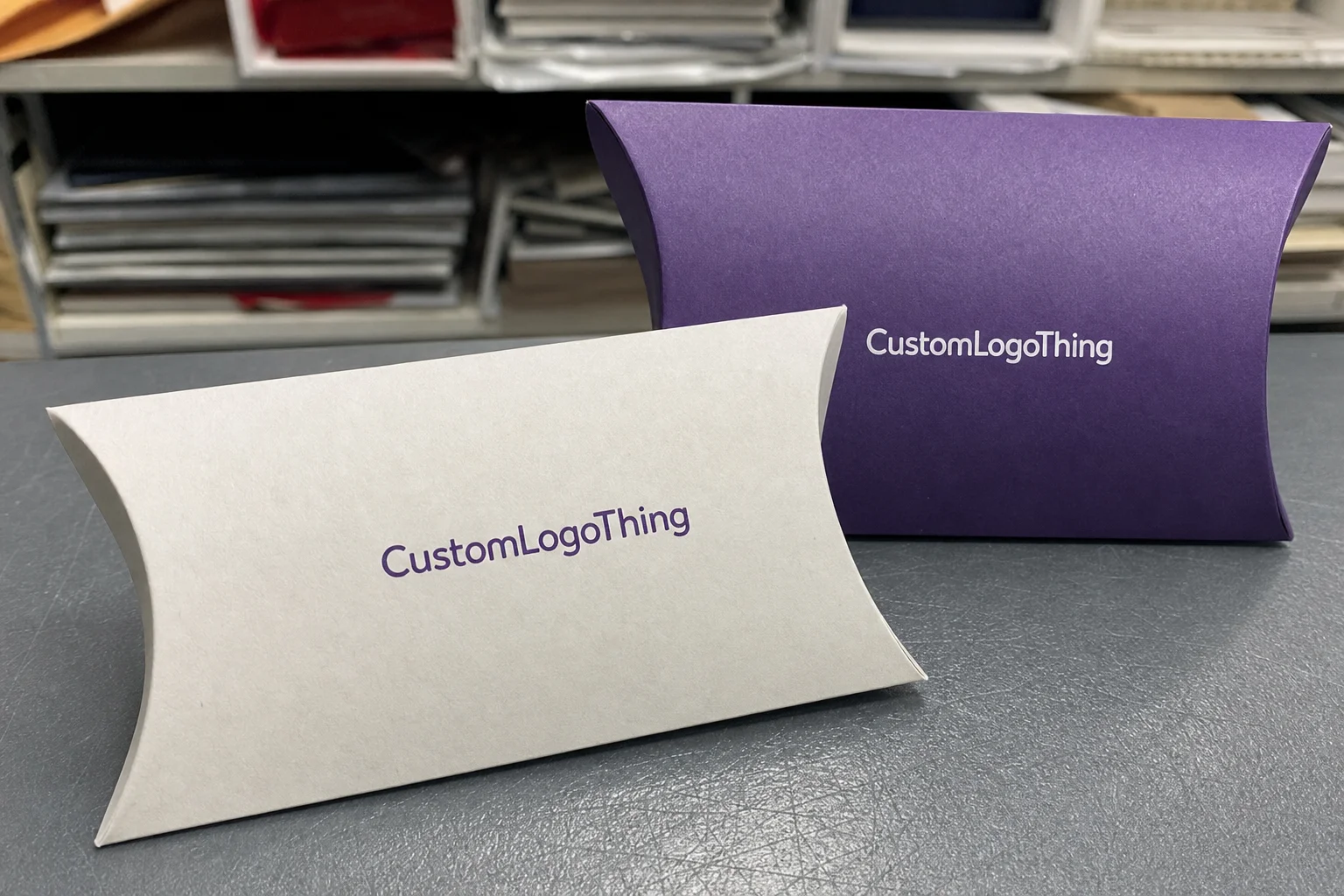
Here’s how I break it down in real buyer conversations. Folding cartons are the workhorse, usually printed on 300gsm to 350gsm paperboard for mid-range beauty items. Rigid boxes are the premium cue, often built with 1200gsm grayboard wrapped in printed art paper or specialty paper. Corrugated mailers are the shipping protector, commonly made from E-flute or B-flute board. Sample kits are the discovery engine. If the brand is selling through retail, the package has to win in three seconds on shelf. If it is DTC, the packaging has to survive a courier network and still look intentional when the customer opens it at home. I’ve had clients tell me the unboxing matters more than the ad click, and while I wouldn’t say that every time, I absolutely understand why they think that.
Common beauty packaging formats include:
- Folding cartons for serums, creams, lip products, and single-item cosmetics, often quoted at $0.15 to $0.42 per unit depending on finish and volume.
- Rigid boxes for gift sets, premium skincare, and holiday bundles, with common costs from $1.20 to $3.80 per unit.
- Mailer boxes for direct-to-consumer shipping and influencer sends, frequently produced in Shenzhen or Dongguan for 1,000 to 5,000 units.
- Compacts for powders, blush, and high-touch cosmetics, usually paired with trays, pans, or protective sleeves.
- Jars, bottles, tubes, and sachets for the product itself, often paired with printed secondary packaging and inserts cut to the exact closure height.
- Sample kits for subscriptions, launch kits, and trial-size offers, where low weight and compact nesting can save $0.03 to $0.10 per mailer.
For skincare, I look first at leak resistance and insert support. Droppers, pumps, and airless bottles need packaging that keeps movement down. For cosmetics, the presentation matters more than people admit. A compact needs good geometry, a stable tray, and a finish that makes the line feel intentional. For fragrance, I care about bottle stabilization and closure protection, because sharp edges and glass are a poor combination in transit. I’ve seen a perfume ship in a lovely box with a terrible insert, and it was like watching a tuxedo on a bad-fitting hanger.
Material choice also changes the business case. Paperboard is usually the cost-efficient option for product packaging and retail cartons, especially at 350gsm C1S artboard or 400gsm C2S board. Rigid stock signals premium positioning and typically uses 1.5 mm to 2.5 mm grayboard. Corrugated packaging wins on shipping strength, with E-flute often chosen for cosmetics and B-flute selected when extra crush resistance is needed. Specialty coatings help with scuff resistance and moisture control, which matters more than many buyers expect. When a carton sits near a sink, in a bathroom, or in a humid warehouse in Miami or Singapore, coating choice is not cosmetic. It is functional.
There are branding features that directly affect shelf appeal. Foil stamping catches light. Embossing adds texture. Debossing feels restrained and expensive. Spot UV highlights logos and product names. Soft-touch lamination creates that low-gloss feel buyers associate with premium branded packaging. Matte and gloss finishes serve different brand personalities, and custom die-cuts can make a package memorable without adding too much cost if the structure is planned correctly. On a run of 10,000 cartons, a spot UV upgrade might add $0.04 to $0.08 per unit, which is often easier to justify than a full redesign.
I once watched a haircare brand debate whether to use one finish across the line or vary it by SKU. They chose a single matte base with selective foil on the hero product. Smart move. The line looked unified on the shelf, but the hero item still pulled attention. That is packaging design doing commercial work, not just decoration.
One warning: beauty packaging must also accommodate closures and applicators. If your tube uses a twist cap, your box must allow for cap height. If your bottle uses a pump, your insert must hold the neck securely. If your product uses a dropper, test it with the actual closure, not a placeholder. I’ve seen brands approve packaging against a sample bottle only to discover the final pump added 11 mm and broke the insert fit. That mistake is expensive and avoidable, and I say that with the kind of frustration that comes from having seen the same avoidable problem more than once.
When buyers choose custom packaging for beauty products wholesale, they should ask how the packaging behaves at every stage: filling, boxing, freight, retail display, and end-user opening. The package is not static. It moves through a chain, and every handoff changes the risk profile.
Custom Packaging for Beauty Products Wholesale: Specifications Buyers Need Before Ordering
If the quote is vague, the package will be vague. I say that to clients all the time. The strongest custom packaging for beauty products wholesale projects start with exact specs, not inspiration images. The more precise the brief, the less back-and-forth, and the fewer surprises in production. I wish I could say that every buyer arrives with tidy dimensions and a finished dieline, but let’s be real: half the time I’m still asking whether the cap height is included.
The core specs are straightforward: dimensions, substrate, thickness, print method, finish, structure, and quantity. But each one changes the quote. A folding carton at 350gsm C1S artboard is not the same as one at 400gsm. A rigid box wrapped in printed paper is a different cost base from a paperboard tuck-end carton. Even a 2 mm change in width can alter how well the bottle fits, how the pack stacks, and how freight volume behaves. On a 12,000-unit order shipped from Guangzhou to Los Angeles, that difference can affect pallet count by a full pallet or more.
Exact dimensions matter because beauty packaging is often tight. A lipstick carton that is 1.5 mm too loose can rattle. A cream jar that is 2 mm too tight can crush the cap during insertion. The tolerances are not theoretical. On a finishing line in Dongguan, small differences are the difference between smooth pack-out and a pile of rejects.
Artwork readiness matters just as much. For custom packaging for beauty products wholesale, printers usually want CMYK or Pantone information, a vector logo, bleed built out correctly, and safe zones respected. If your files are low-resolution, expect delays. If your brand color depends on a precise tone, request a press reference or approved swatch. Color variation is normal across substrates, but good planning reduces the spread. For a prestige skincare carton, I often ask for a physical drawdown or a signed sample before production starts.
At minimum, buyers should prepare:
- Product dimensions with closure height, including pump, cap, or dropper.
- Target quantity and reorder expectations, such as 5,000 pieces now and 10,000 later.
- Artwork files in editable or print-ready format.
- Preferred finish, such as matte, gloss, foil, emboss, or soft-touch.
- Label and compliance requirements, including barcode placement.
- Packaging channel, meaning retail, e-commerce, or hybrid.
Compliance is where many beauty brands get careless. Ingredient labels, barcode placement, recycling symbols, and country-specific claims all affect the final layout. If you are selling into multiple markets, the package may need more panel space than you first assumed. I’ve seen a sunscreen brand lose a whole design round because the warning text was too long for the back panel in a 45 mm-wide carton. That was not a design issue. It was a planning issue, and the poor designer was stuck nudging text boxes around like a person trying to fit a winter coat into a carry-on bag.
Sustainability specs also matter in wholesale buying. FSC-certified paper, recycled content, soy-based inks, and plastic-reduction options are all common requests now. You can verify forest management claims through the Forest Stewardship Council at fsc.org. If your brand is making recyclability claims, align them with actual substrate selection. Beauty buyers are quick to spot greenwashing, and they are even quicker to call it out.
Testing saves money. I’ve seen brands skip prototypes to save a few hundred dollars, then pay thousands for a reprint after discovering the bottle neck sat too high in the carton. A good sample cycle may include structural mockups, digital proofs, and, for larger runs, a press check. That sequence is slower than guessing, but cheaper than correcting 10,000 units of the wrong fit. In one Guangzhou project, a prototype run took 9 business days and prevented a 14,000-piece error.
Packaging standards also deserve attention. For shipping performance, the International Safe Transit Association offers useful guidance on test methods and distribution simulation at ista.org. If a beauty brand sells through DTC, ISTA-style thinking helps spot weak points before the courier does.
In short, the better your specs, the cleaner your custom packaging for beauty products wholesale quote will be. And the better your quote, the more useful the comparison becomes.
Pricing, MOQs, and What Changes the Unit Cost
Pricing is where buyers get nervous, and for good reason. Packaging quotes can vary widely, even when the boxes look similar on paper. For custom packaging for beauty products wholesale, the price is usually built from material, printing, finishing, tooling, setup, and shipping. If one of those moves, the unit cost moves.
I like to explain it this way: you are not buying a box. You are buying a production sequence. More colors mean more plates or longer print runs. More finishing steps mean more handling. Custom inserts mean extra tooling or die-cut labor. Structural engineering, especially for unusual bottles or set boxes, adds development time. All of that shows up in the final number. Sometimes people hear that and look disappointed, as if the box should have come with a magical discount for being adorable. I wish.
Minimum order quantities exist because factories need efficiency. A line set up for 1,000 units is not priced the same as one set up for 20,000. The setup time, machine calibration, and waste allowance are spread across fewer units in a low-MOQ run. That is why simpler cartons often carry lower minimums than rigid boxes or custom molded components. In many factories around Guangzhou and Wenzhou, the difference between a 3,000-piece and 10,000-piece run can change the unit cost by 20% to 35%.
For a practical benchmark, here is how unit pricing often behaves in the market for custom packaging for beauty products wholesale:
| Packaging Type | Typical MOQ | Indicative Unit Price | Best Fit |
|---|---|---|---|
| Folding carton, 1-color print | 1,000-3,000 pcs | $0.16-$0.32/unit | Entry skincare, lip products, sample retail packs |
| Folding carton, full-color with matte finish | 3,000-5,000 pcs | $0.24-$0.48/unit | Core retail SKUs, DTC products |
| Rigid gift box with insert | 1,000-3,000 pcs | $1.20-$3.80/unit | Premium sets, fragrance, holiday bundles |
| Mailer box with custom print | 1,000-5,000 pcs | $0.72-$1.65/unit | Subscription boxes, influencer kits, DTC shipping |
| Special finish carton with foil and embossing | 3,000-10,000 pcs | $0.38-$0.90/unit | Hero products, prestige skincare, launch campaigns |
Those numbers are directional, not universal. Freight, paper market swings, and order timing can change them. They are useful for budget planning. If a supplier offers a rigid box at a folding-carton price, I would ask what is missing from the quote. Something usually is, and that little mystery can turn into a very not-funny invoice later.
Here is the comparison that matters more than unit price: total landed cost versus total failure cost. A slightly more expensive package may reduce returns, eliminate repacking labor, and lower shipping damage. That is why experienced buyers do not chase the cheapest line item alone. They look at the whole system.
For example, I worked with a small serum brand that moved from a thin carton and loose filler to a fitted mailer and custom insert. Their package cost went up by about $0.21 per order on 8,000 monthly shipments. Returns related to damage fell enough that the net margin improved. That is real economics, not marketing language. Custom packaging for beauty products wholesale can absolutely pay for itself when the structure solves a distribution problem.
Some buyers also try to shave cost by reducing finishes. That can be smart. Fewer colors, simpler die lines, and standard paperboard keep pricing down. But there is a limit. A box that feels generic can weaken brand perception. In beauty, perceived value affects conversion. The goal is not the lowest spend. The goal is the best cost-to-brand ratio.
When comparing suppliers, ask for separate line items for tooling, sample, freight, and packaging assembly if relevant. A transparent quote is easier to benchmark than one bundled number. Honest suppliers should be able to explain why one structure costs 18% more than another, not hide behind broad terms. If they start talking like every detail is “custom” but somehow nothing is itemized, I get suspicious very quickly.
Production Process and Timeline for Wholesale Orders
Good packaging projects move in stages. Bad ones move in circles. I’ve seen both. The smoothest custom packaging for beauty products wholesale orders usually follow a clear sequence: discovery, quoting, artwork review, sample approval, production, quality control, and shipping. If you skip a step, you usually pay for it later.
The fastest way to get a useful quote is to provide product dimensions, packaging style, quantity, artwork files, and your target delivery date. If you have a bottle height but not cap height, the structural fit may be wrong. If you know the style but not the finish, the quote will be too broad to use. Clear inputs produce clear numbers.
Lead times depend on a few variables: custom tooling, print method, finishing, production queue, and shipping mode. A simple folding carton can move faster than a rigid box with foil and an insert. International freight can add weeks, while air freight can trim time but raise cost. There is no magic here; only planning. For a 10,000-piece carton order produced in Shenzhen, the timeline is often faster than the same order routed through multiple intermediaries in different time zones.
A realistic timeline for custom packaging for beauty products wholesale often looks like this:
- 1-3 business days for initial quote development once specs are complete.
- 3-7 business days for artwork review and structural confirmation.
- 7-14 business days for sample or prototype production, depending on complexity.
- 12-25 business days for full production on many carton and mailer orders after approval, with simpler cartons often landing at 12-15 business days from proof approval.
- Shipping time based on destination, mode, and seasonal congestion.
Those ranges vary by facility and season. A late approval can stretch the schedule more than the press run itself. I’ve seen a cosmetic launch delayed because the brand changed the Pantone reference after the sample was approved. That single decision added a week. Another brand asked for a structure change at the final proof stage. It cost them another revision cycle and extra freight to make launch. Everyone in the room had that special expression that says, “We could have avoided this if someone had just answered the email on Tuesday.”
Sample production deserves special attention. People underestimate how valuable a physical sample is. A prototype may take longer than expected, but it reveals insertion issues, closure issues, and handling problems before the main run. If the box opens too easily, slides too much, or crushes in the corner, the prototype is your warning system. Use it. On a recent project in Dongguan, a sample revealed that a 15 ml bottle needed an extra 1.5 mm of internal clearance, which saved 20,000 cartons from being reworked.
One of my most memorable factory-floor moments came from a DTC beauty brand that insisted their mailer would be fine because the artwork looked beautiful. The sample told a different story. The flap crushed under moderate pressure and the inner tray shifted during a simple drop test. We fixed the board grade, re-cut the insert, and saved the company from a bad launch batch. That is the kind of practical value people pay for in custom packaging for beauty products wholesale.
Here is the planning rule I give every brand: work backward from your launch date and build in buffer. Add time for approvals, freight delays, reproofing, and the ordinary messiness of packaging development. If your launch is tied to a retailer reset or seasonal spike, start earlier than feels necessary. That advice has saved more than one account from an expensive panic order.
Why Choose Us for Custom Packaging for Beauty Products Wholesale
If you are buying custom packaging for beauty products wholesale, you do not need theatrics. You need clean specs, reliable production, and a partner who tells you the truth when the timeline or budget is tight. That is the standard I would expect as a buyer, and it is the standard Custom Logo Things should be judged against.
Beauty packaging is not one category. Skincare, cosmetics, haircare, fragrance, and sample programs each behave differently. A serum carton needs stability. A powder compact needs careful presentation. A fragrance box needs premium structure and protection. A sample kit needs low-cost efficiency without looking disposable. Category experience matters because the constraints are different, and the mistakes are different too. A supplier in Guangzhou who understands a 50 ml bottle carton may not automatically understand a luxury fragrance presentation set, and that gap shows up in the sample.
I like suppliers who talk about quality in measurable terms. That means dimensional checks, print consistency checks, material verification, and transit-ready packing before shipment. If a vendor cannot explain what happens when the carton width shifts by 1 mm, I become cautious. If they can talk through defect rates, proofing, and packaging tolerances, I pay attention. That kind of conversation saves everybody time, which is rare and beautiful (like finding a pen That Actually Works in the first drawer).
There is also a practical side to supplier choice. Emerging brands often need lower-risk formats, simpler finishes, and a smart first order size. Larger brands may need tighter color matching, repeat-order consistency, and stronger process control across multiple SKUs. A good partner adapts to both. That flexibility matters when a brand starts with 2,000 units and later scales to 20,000, or when a holiday launch in October turns into a replenishment order in January.
Packaging vendors should also communicate clearly about what affects price. If foil stamping increases setup by $0.09 per unit, say so. If a custom insert adds a die cost and one extra production day, say that too. Buyers do not mind complexity as much as they mind surprises. Transparency is not a bonus. It is part of service.
The cheapest quote is often the most expensive route if it causes rework, delays, or customer complaints. A dependable supplier may not win on the first number, but they usually win on the full project cost. That is particularly true in custom packaging for beauty products wholesale, where brand perception and logistics are tightly linked.
If you are comparing suppliers, ask for proof of category work, not just capacity. Ask for samples of similar materials. Ask about MOQ flexibility. Ask how they handle color matching and reorders. Those answers reveal more than any polished sales deck ever will.
Next Steps to Order Custom Packaging for Beauty Products Wholesale
The best next move is simple: define the package before you start chasing price. For custom packaging for beauty products wholesale, you will get a far better quote if you know the format, the dimensions, the quantity, and the finish level you want. A clear brief saves time for everyone, and it saves you from the kind of awkward back-and-forth that makes a Friday afternoon feel twice as long.
Start with these actions:
- Measure the product, including cap or pump height.
- Choose the packaging type: carton, rigid box, mailer, insert, or sample kit.
- Decide your target order quantity and reorder expectation.
- Gather logo files, brand colors, and label text.
- Set a realistic budget per unit and overall.
- Pick your launch deadline and work backward from it.
When you request a quote, send product specs, style preference, target budget, and timeline together. That helps the packaging team recommend the right material and structure instead of guessing. If you can, request three inputs: one sample option, one production estimate, and one lower-cost alternative. That comparison makes decisions faster and more rational.
I also recommend looking at options through three filters: brand fit, shipping performance, and unit economics. A package that looks beautiful but crushes in transit is a bad package. A package that survives shipping but weakens shelf appeal can also be a bad package. The right choice balances both.
In one client meeting, we narrowed a skincare launch from four structures to two by comparing landed cost, freight dimensions, and presentation. The winning option was not the fanciest. It was the one that protected the product, fit the budget, and held the brand look across retail and DTC channels. That is the logic I trust in custom packaging for beauty products wholesale.
If you are ready to move, contact the packaging team with your product dimensions and order quantity, then ask for a custom quote for custom packaging for beauty products wholesale. The sooner the numbers are real, the sooner you can decide whether to simplify, upgrade, or scale.
FAQs
What is the MOQ for custom packaging for beauty products wholesale?
MOQ depends on the structure, print complexity, and material. Simple folding cartons may start around 1,000 to 3,000 pieces, while rigid boxes and custom inserts often need higher minimums. For custom packaging for beauty products wholesale, I always advise matching MOQ to realistic sell-through rather than hopeful demand, especially if your first run is 5,000 pieces or less.
How much does custom packaging for beauty products wholesale cost?
Cost depends on size, paper or board grade, finish, print colors, inserts, and order volume. Simpler cartons can be priced near $0.16 to $0.48 per unit at common runs, while rigid premium packaging can move into the $1.20 to $3.80 range. For example, a 350gsm C1S artboard carton might land at $0.15 per unit for 5,000 pieces, while a foil-stamped rigid box in Dongguan can run closer to $1.65 per unit. The exact price for custom packaging for beauty products wholesale changes with freight and setup, so request a full landed-cost quote.
How long does wholesale custom beauty packaging take to produce?
Timeline varies by sample approval, artwork readiness, tooling needs, and shipping mode. A straightforward carton project may move from proof approval to production in 12-15 business days, while more complex packaging can take 20-25 business days or longer. Fast approvals usually shorten the schedule more than any other factor in custom packaging for beauty products wholesale.
Which packaging material is best for beauty products?
Paperboard works well for retail cartons and cost control, rigid stock suits premium gift sets, and corrugated packaging is best for shipping protection. A common starting point is 350gsm C1S artboard for cartons, 1200gsm grayboard for rigid boxes, and E-flute corrugated board for mailers. The best material for custom packaging for beauty products wholesale depends on product weight, moisture exposure, and sales channel.
Can I order custom packaging for beauty products wholesale with my logo and colors?
Yes. Most Wholesale Custom Packaging can be printed with your logo, brand colors, and finishes such as foil stamping or embossing. For the most accurate result in custom packaging for beauty products wholesale, provide print-ready artwork, color references, and approved dimensions, plus a sample if your closure height or bottle diameter is unusual.