Custom packaging mailers look straightforward until the first shipping problem turns them into a margin problem. A bag that fits well, seals properly, and prints cleanly can lower damage, reduce void fill, and make the pack-out faster. A bag that misses on any one of those points can cost more than it saved.
That is why experienced buyers tend to talk about mailers in practical terms rather than branding language. The outer print matters, but the real value sits in the structure: film gauge, seal strength, size tolerance, and how the package behaves under real handling. For apparel, flat accessories, subscription kits, and lightweight retail items, custom packaging mailers can be one of the most efficient formats available if the spec matches the product.
The buying mistake is treating mailers as a generic category. They are not. A mailer for socks is not the same as a mailer for a boxed cosmetic kit, and neither behaves like a rigid carton. Once the product shifts, the economics shift with it.
What Custom Packaging Mailers Change in Shipping
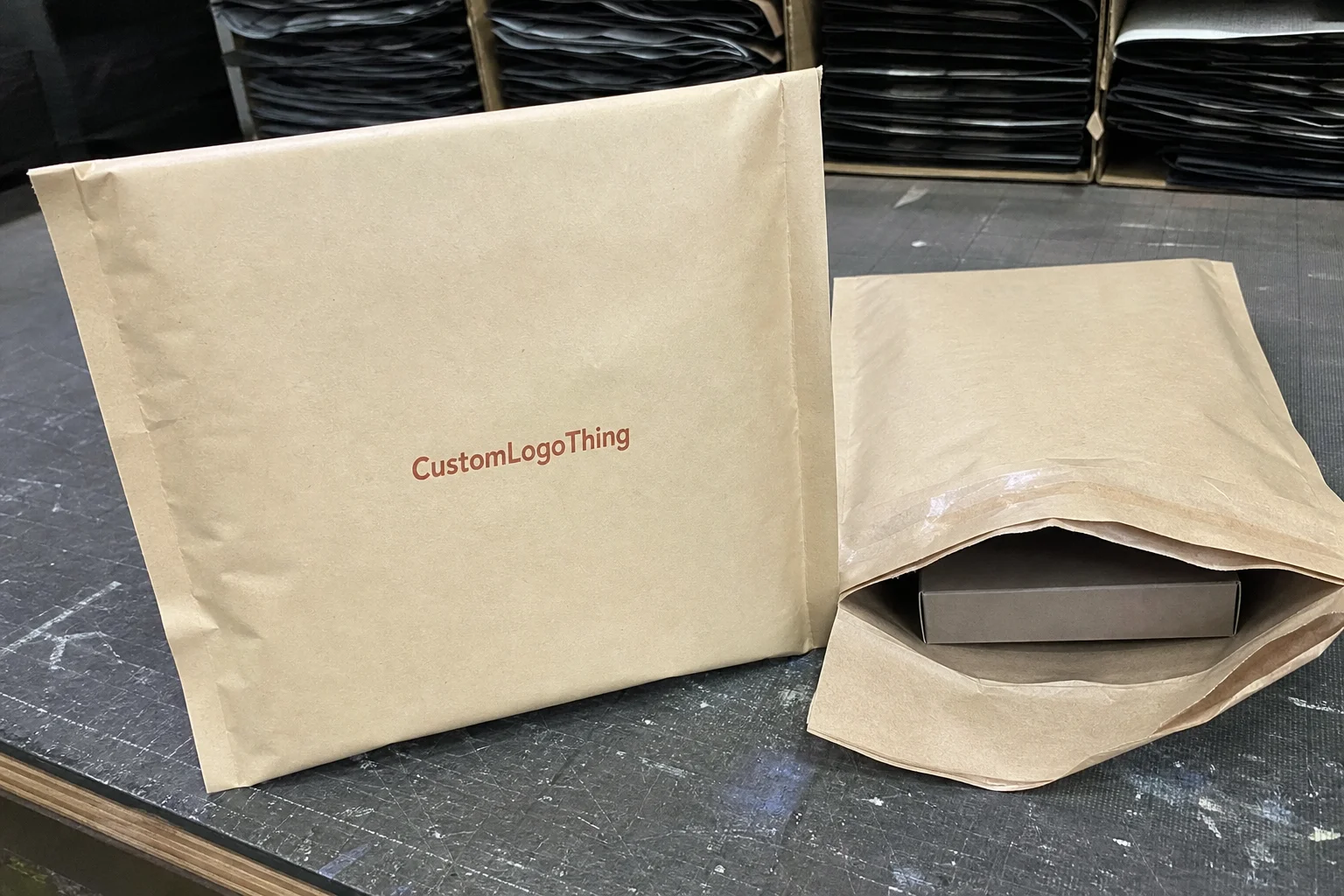
The biggest difference is not cosmetic. It is control. A custom mailer is sized for a specific product or shipping flow, so the packer is not fighting the package and the product is not free to move around inside it. That matters more than buyers often expect. Most transit damage comes from movement, compression, puncture, or a seal that fails after a rough sort, not from the package looking plain.
For lightweight goods, custom packaging mailers can reduce the volume of material used per shipment. Less material usually means lower weight, smaller cubic footprint, and fewer void-fill steps. In high-volume fulfillment, even a small reduction in package size compounds quickly. A half-inch on each side looks trivial on a sample table. Over thousands of orders, it is freight, labor, and storage.
Mailers are especially strong for products that are flat, soft, or already protected by their own retail packaging. Apparel is the obvious example. So are scarves, socks, printed inserts, small beauty items, and accessory kits that do not need rigid wall protection. The category becomes less attractive once the product has corners, weight concentration, or brittle components. A box may cost more at the unit level, but if it cuts breakage, the box is cheaper in the only way that matters.
From a branding angle, mailers sit in a useful middle ground. They are visible enough to carry identity, but not so complex that every shipper needs a new workflow. Good print, consistent opacity, and a clean closure can make a parcel feel considered rather than disposable. That impression is not fluff. For recurring orders, the package is part of the product memory.
If you are comparing packaging formats, it helps to separate the material family from the marketing label. Custom Packaging Products covers a broad field, but flexible mailers tend to win when the item is light, consistent in size, and packed in volume. If the current brief is specifically about poly-based shipping, compare the job against Custom Poly Mailers and check whether the protection level, print field, and seal type are aligned with the item rather than the mood board.
A mailer should stop movement, not decorate it. If the product rattles, the spec is already wrong.
How Structure Protects Product and Brand
Buyers often focus on print because print is visible. The protection, however, comes from the less photogenic parts: film structure, thickness, seal integrity, and fit. Those variables determine whether the mailer survives normal carrier handling or splits at a corner after a compression hit. A thin film can be fine for a soft tee. It is much less fine for a hard edge pressing against the seam.
Thickness is usually described in mils, and a thicker film generally adds puncture resistance and durability. That does not mean “thicker is always better.” Add thickness without checking fit, and you can create a bag that is harder to pack, heavier to ship, and no more effective because the product still shifts inside it. The goal is not maximum material. The goal is a spec that protects the item with the least waste.
Closure style does a lot of heavy lifting. Adhesive strips are fast and simple. Heat seals are stronger and can improve tamper resistance. Zippers and resealable closures support returns and reuse, but they change cost and pack speed. If the order is one-way and volume is high, a simple closure usually makes more sense. If the item is likely to be repacked or returned, the closure deserves more attention.
Brand perception rides on more than the logo. Matte film hides handling marks better than glossy film. White underprint can make art readable on dark backgrounds. Full-bleed graphics look sharp only if the art respects seam zones and does not crowd the usable area. If the print gets cut by a fold or swallowed by a seal, the package still ships, but the brand loses precision.
There is a quieter operational benefit too. A mailer that is easy to recognize, easy to seal, and easy to stack reduces friction in the warehouse. Fewer packing decisions means fewer errors. In practice, that can matter more than a slightly lower material price. Labor is often the real expense hiding behind packaging decisions.
Testing should be tied to actual transit conditions, not idealized ones. The International Safe Transit Association is useful here because it keeps the conversation grounded in handling, vibration, compression, and drop performance. If your item is going through a carrier network with rough sorts or long dwell times, test the sample for the route it will actually take. A clean desk test is not a shipping test.
One practical rule: if a cheaper spec needs extra tape, extra filler, or manual correction at pack-out, it is not cheaper. It is only cheaper on the quote.
Cost, MOQ, and Quote Drivers
The quote is shaped by a small set of variables, and most of them are predictable. Material type, gauge, dimensions, print coverage, finish, closure style, and any recycled-content requirement all move the price. Add white ink, matte treatment, or special adhesive and the quote shifts again. That is normal. The mistake is expecting a premium result from a base-spec request.
MOQ exists because setup cost has to be absorbed somewhere. For printed mailers, the art prep, plate or print setup, color matching, and production calibration do not disappear just because the order is small. Lower quantities tend to carry higher unit cost because the setup burden is spread across fewer pieces. That is why buyers often get a much better unit price once volume becomes stable enough to justify a production run.
Do not price only the bag. Price the full shipment. Freight, storage, damage rate, pack speed, and reorder timing all belong in the cost picture. A cheaper mailer can become expensive if it increases returns or slows the line. On the other hand, a slightly better film can reduce tears and save far more than the added material cost. Packaging decisions get cleaner when they are treated as operating decisions rather than decoration decisions.
| Option | Typical Cost Signal | Best Fit | Tradeoff |
|---|---|---|---|
| Stock mailer with label | Lowest upfront spend | Testing, launches, small runs | More labor, less brand control |
| Custom printed poly mailer | Moderate unit cost | Apparel, subscription orders, repeat SKUs | Higher MOQ and setup planning |
| Coex film mailer with premium print | Higher unit cost | Better puncture resistance and cleaner branding | More expensive, though often easier to run |
| Recycled-content custom mailer | Usually a premium | Sustainability-led packaging programs | Availability and print consistency can vary |
When requesting a quote, send the actual dimensions, product weight, artwork coverage, print method, destination, and sample approval requirements. If the supplier has to guess, the quote will probably be incomplete. If they can price cleanly from the brief, the final order is less likely to drift later.
For standard production runs, buyers often see rough pricing in the range of $0.18 to $0.45 per unit for custom packaging mailers, depending on size, thickness, print complexity, and volume. Smaller runs and specialty finishes can push that higher quickly. These numbers are directional, not universal. The spec still controls the spend.
That is also why two quotes that look close on paper may not be comparable. One may include a stronger film, better print alignment, or a more practical closure. Another may simply be thinner and less durable. The unit price tells only part of the story.
Production Process, Timeline, and Lead Time
The production sequence is usually simple: requirements intake, structure selection, artwork review, proofing, sample approval, production, inspection, packing, and freight. The work becomes messy when the inputs are sloppy. Low-resolution logos, color changes after proof approval, or last-minute seal adjustments are the usual sources of delay. A packaging schedule rarely breaks because the machinery is mysterious. It breaks because the brief changed after the machine had already been booked.
Artwork is one of the biggest hidden delays. If the art file is not print-ready, the team has to clean it up before anything can move forward. Color accuracy can also become a problem if brand standards are vague or the chosen film behaves differently from what was expected. Darker substrates, recycled content, and matte finishes can all alter appearance. That is another reason a physical sample matters.
A sample does more than verify color. It shows whether the fit is right, whether the closure feels intuitive, whether the bag tears where it should or where it should not, and whether the print lands within the usable area. Screen proofs are useful, but they are not the same as handling the real package. You can see a layout on a monitor. You cannot feel a seal on a monitor.
Lead time depends on complexity and order size. Straightforward custom packaging mailers with standard materials may move through production in a few weeks after proof approval. More specialized structures, custom ink requirements, or recycled-content sourcing can extend that timeline. Freight adds its own layer, especially if the order has to cross long distances or clear seasonal congestion. Buyers who need reliability usually plan reorders before inventory gets tight, not after.
That reorder discipline matters more than it gets credit for. If a fast-moving SKU runs out before the next shipment is in motion, the team ends up paying for air freight, rush scheduling, or a temporary substitute. None of those options are elegant. None of them are cheap.
If sustainability is part of the brief, verify claims carefully. Recycled content, recyclability, and certification are not interchangeable terms. For fiber-based components, the FSC chain-of-custody model is a useful benchmark because it emphasizes sourcing traceability rather than loose marketing language. The point is not to collect labels. The point is to know what is actually being bought.
Choosing the Right Film, Seal, and Print Spec
Film selection does more for performance than most first-time buyers expect. LDPE is flexible and forgiving. HDPE feels crisper and stiffer. Coextruded films combine layers to improve toughness, printability, and puncture resistance. If the package needs a better barrier or extra durability, multi-layer construction is often where the answer sits. Recycled-content films can work well too, but they should be tested for seal reliability and surface consistency before a full order is approved.
The seal should match how the package is handled. Adhesive strips are efficient for high-speed packing. Heat seals offer stronger closure and better tamper resistance. Zipper-style or resealable closures make more sense if the package is likely to be opened and reused. Each choice affects labor, cost, and customer experience. There is no universal winner. There is only the closure that fits the use case.
Print spec deserves the same discipline. Spot colors are often cleaner for simple branding and can be easier to manage on repeat runs. Full-color print gives more flexibility, but it can become crowded if the art tries to do too much across a small surface. White underprint helps logos show on darker film. Gloss can make color pop, while matte hides handling better and feels less slippery at the pack station. These choices alter cost and lead time, and they also alter how premium the package feels in hand.
Artwork placement is not a final-step detail. Seam zones, fold lines, barcode placement, and bleed all need to be considered before approval. A design that looks polished on a flat proof can fail once it wraps around the actual bag. That problem is common enough that it should be treated as a normal production risk, not an exception.
Operational testing closes the loop. Run the sample through the same packing process the team will use on the line. If the seal takes too long, the closure is wrong. If the bag is too loose, the size is wrong. If the finish scuffs easily, the film choice is wrong. Product packaging works best when it respects the way the warehouse operates, not when it expects the warehouse to slow down for packaging aesthetics.
For many brands, custom packaging mailers are the right middle ground between plain logistics and expensive overbuilding. Boxes still make sense for fragile, dense, or awkward items. But for flat, soft, or lightweight goods, a well-specified mailer often gives a better result with less material and less labor.
Common Ordering Mistakes That Blow Up Budget
The first mistake is under-specifying thickness just to chase a lower quote. A torn mailer is not a bargain. It is a replacement shipment plus customer service time plus, sometimes, a damaged brand impression that never gets repaired. If the product has edges or weight concentration, a thinner film has to be justified by testing, not optimism.
The second mistake is ordering a bag that is too large. Oversizing makes packing easier on day one and shipping more expensive on every day after that. It also creates movement, which is the enemy of protection. If the item slides inside the bag, the package is wasting film and increasing risk at the same time.
The third mistake is ignoring the artwork limits. Bleed, seam placement, logo clearance, and barcode readability all matter. A strong design can lose credibility very quickly if the barcode lands in a crease or the brand name gets cut by the seal area. Good print design is not just attractive. It is readable, aligned, and built for the real package shape.
The fourth mistake is skipping warehouse input. The people handling the product every day can tell you whether the closure is awkward, whether the tear strip is too aggressive, or whether the mailer slows the line. That feedback is practical, and it usually catches issues that the initial spec review misses. If the package creates friction at pack-out, the unit savings disappear fast.
Here is a short checklist that catches a surprising number of expensive errors:
- Confirm the packed dimensions, not just the item dimensions.
- Test the chosen closure with the actual packing team.
- Review artwork at full scale and on the real substrate.
- Ask for the exact film structure and gauge, not a generic material label.
- Compare landed cost, not just unit price.
The most useful buying rule is also the least glamorous: the best spec is the one that protects the item, supports the brand, and keeps fulfillment moving. Anything else is packaging that gets in the way of the business it was supposed to serve.
Expert Checks Before You Approve the Order
Run a real pack-out with the exact product, sealing method, and pack speed the operation will actually use. That is the cleanest way to expose weak points. If the bag seals too slowly, the line will show it. If the fit is too loose, the shipment will show it. If the film scuffs too easily, the customer will show it, usually in the form of a complaint or a return.
Check the artwork one more time for color tolerance, logo placement, barcode readability, and any copy that could disappear in print. This is the stage where small mistakes become expensive. A legal line too close to the edge, a logo too near the seam, or a barcode that prints poorly can all create preventable failures. Proofs are checkpoints, not ceremonial approvals.
Reconcile the quote against the full operating picture. Unit price matters, but so do freight, storage, damage rate, labor, and reorder timing. A slightly better mailer can save money if it improves pack speed or reduces returns. A cheaper mailer that creates one additional point of failure is not cheaper. It is deferred expense with a nicer invoice.
For brands that care about presentation and process in equal measure, custom packaging mailers are one of the cleanest places to gain efficiency without making the shipment feel bare. They can support recognition, cut waste, and simplify fulfillment at the same time. The catch is simple: the spec has to reflect the real item, the real line, and the real route.
Approve custom packaging mailers only after fit, print, closure, and timeline all line up with how the product ships. That is where the value is. Not in generic branding language, and not in a quote that looks low only because it leaves out the hard parts.
What are custom packaging mailers best used for?
They are best for lightweight, flat, or soft products that do not need rigid box protection. Common examples include apparel, accessories, subscription kits, and retail items shipped in volume. They are most effective when pack speed, brand presentation, and shipping efficiency all matter.
Are custom packaging mailers cheaper than boxes?
Often yes on material and shipping, but only when the product fits the mailer properly. Boxes can be better for fragile or bulky items, while mailers usually win on lower cube weight and faster fulfillment. The right comparison is landed cost, not just unit price.
How do I choose the right size and thickness?
Start with the packed product dimensions, not the raw item size. Choose enough thickness to resist puncture, stretch, and seal failure during normal handling. A sample run is the safest way to confirm the fit before committing to a full order.
What drives custom packaging mailers pricing the most?
Material choice, film thickness, print coverage, closure type, and order quantity usually drive pricing the hardest. Special finishes, recycled-content requirements, and lower MOQs can raise the unit cost quickly. Two similar quotes can differ a lot once structure and print details are fully included.
How long does a custom packaging mailers order usually take?
Lead time depends on proof approval, material availability, print complexity, and freight distance. Standard production runs can move in a few weeks after approval, while specialty materials or custom print requirements may take longer. Build in reorder time so a fast-moving SKU does not force a rush order.


