A shipment can shape perception before the product is even seen. With custom paper mailers, the package arrives looking deliberate instead of improvised, which matters if you are replacing a poly bag, reducing return-counter friction, or trying to make the first touchpoint feel more considered in ecommerce and retail packaging. The tradeoff is straightforward: paper is not a universal solution, and the right build depends on product weight, moisture exposure, and how the pack line actually operates.
There is also a practical reason buyers keep revisiting this format. Paper mailers sit in a narrow middle ground: lighter and less bulky than a box, more finished than a plain mailer bag, and usually easier to print on than a complex rigid carton. That combination is useful, but only if the mailer fits the product and the process around it.
Custom paper mailers: what they are and why buyers notice them
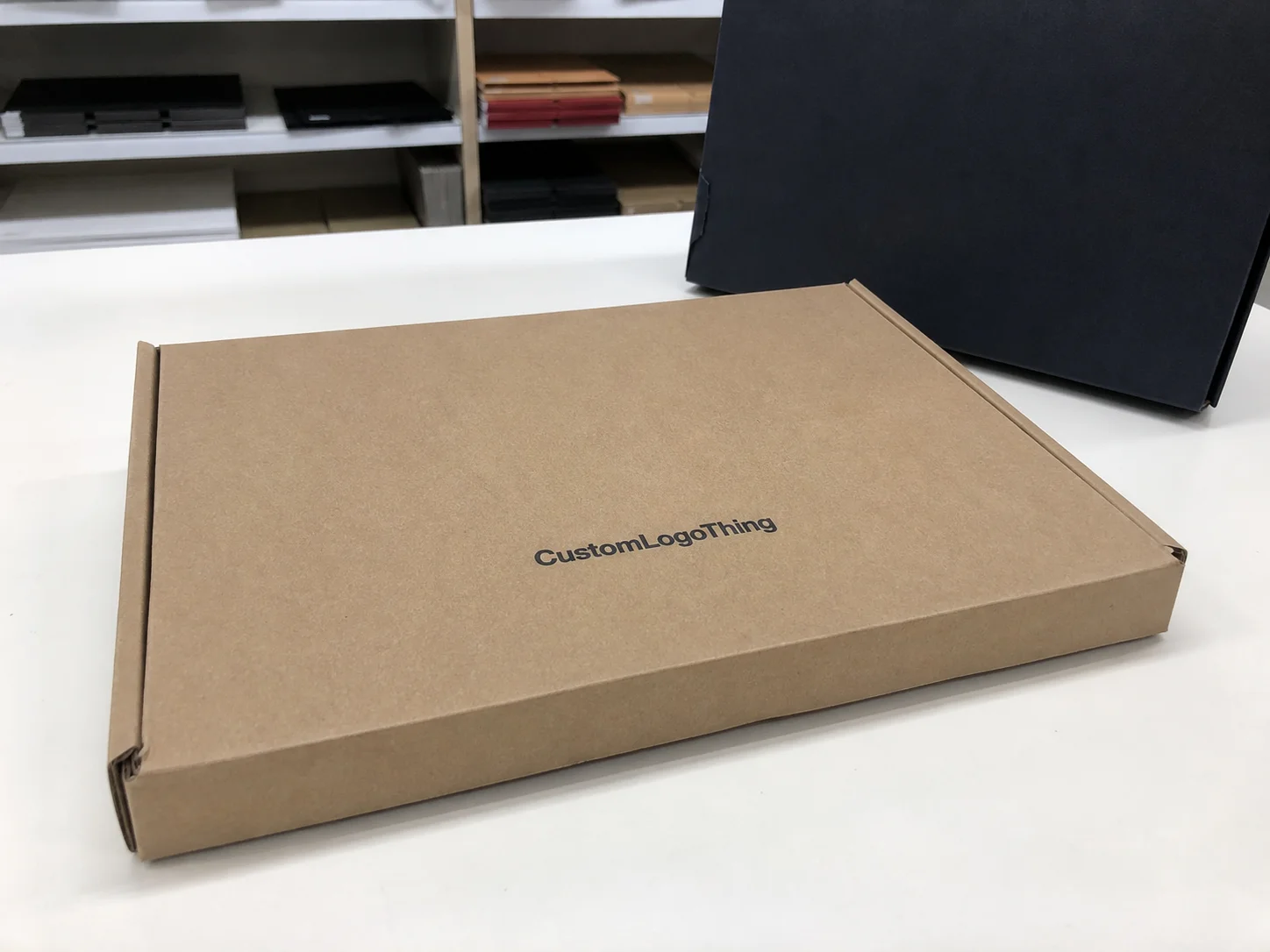
At a basic level, paper mailers are paper-based shipping envelopes or bags for flat or compressible goods. Most are made from kraft, bleached kraft, or coated paper stocks, then converted with folded seams, adhesive closures, and sometimes a barrier layer for added moisture resistance. The products that usually fit best are lightweight apparel, documents, folded soft goods, and small retail items that do not need the structural protection of a carton.
Buyers notice them for three reasons. First, the mailbox experience tends to look cleaner than a loose poly bag, especially when the print registers well and the surface finish is consistent. Second, the format supports branded packaging without forcing a full box program. Third, for the right use case, the material story can support plastic reduction goals, which is why many teams compare paper-based options with other packaging formats before standardizing on one construction.
That does not make paper the default winner. If the shipment includes sharp edges, dense contents, or unreliable moisture control, paper can become the weak point rather than the visual upgrade. In practice, the decision usually comes down to three questions: does the product fit, does the branding justify the setup, and can the operation pack these units at the speed it needs?
Those questions sound simple because they are simple. The difficulty is that each one has a different failure mode. A mailer can be attractive and still too small. It can be technically recyclable and still underperform in transit. It can save material and still slow the warehouse. That tension is normal.
How paper mailers work in shipping and fulfillment
Construction drives performance more than many buyers expect. A good mailer is not just a folded sheet with glue on it. It is a layered system: outer stock for print and abrasion resistance, seams that hold under tension, a closure that survives handling, and, in some cases, an inner coating or barrier film that slows moisture ingress. Small differences in those components change how the mailer handles transit and how it feels in the hand.
On the fulfillment line, the workflow is simple but unforgiving. The packer opens the mailer, loads the product, closes the adhesive strip, applies the shipping label, and stacks the finished unit for carrier pickup. If the mailer is too large, the contents shift and crease. If it is too tight, seam stress rises and the pack line slows. Dimensional fit matters more than many buyers assume, especially for folded garments, flat catalog items, and products packed with tissue or inserts.
Paper mailers also behave differently depending on whether a team hand-packs every order or uses semi-automated stations. A design that is easy to open, fill, and seal by hand can still be awkward at scale if the closure strip is narrow or the opening tears unevenly. That is why a physical sample is more useful than a polished render. A render shows appearance. A sample shows drag, stiffness, and whether the closure lands where the packer expects it to land.
For transit testing, many buyers lean on standards-based methods instead of guesswork. If a product is sensitive to shock, compression, or stacking, a supplier that understands ISTA test procedures can help model the real handling path rather than relying on a generic durability claim. That does not eliminate risk, but it gives the buyer a better basis for decision-making.
Design matters too. Print coverage, panel placement, and finish determine whether the mailer reads as polished product packaging or just another shipping sleeve. If the logo crosses a fold line, if the label eats into the artwork, or if the ink density looks uneven on the chosen stock, the package feels less intentional. Buyers often notice this after the first production run, which is usually too late.
Key specs that determine performance and fit
Start with stock weight and paper grade. Heavier kraft usually gives more stiffness and better resistance to folding damage, but it can raise cost and make the mailer less forgiving at the seams. Lighter stock may pack faster and cost less, yet it can feel flimsy if the product is dense or angular. For many apparel programs, buyers review thickness, tear behavior, and caliper together rather than chasing one “best” number.
Closure choice matters just as much. A peel-and-seal strip is common because it speeds packing, but buyers should ask how the adhesive behaves in hot warehouses, cold trailers, and long transit cycles. If the seal performs well at room temperature but weakens in storage, the failure may show up after distribution, not in the sample stage. Tamper evidence is another practical question. Some brands want an opening that makes tampering obvious, while others care more about return handling and resealing.
Print specs deserve early decisions. You should know the color count, whether the artwork needs PMS matching, how much of the surface will be covered, and where the shipping label will land. If the label blocks the logo or the fold line cuts through key art, the result looks unplanned. Packaging design and structural design need to be reviewed together, not handed off in sequence and hoped for later.
There are also durability details that are easy to skip and expensive to ignore:
- Burst resistance under load.
- Scuffing during conveyor contact and carton stacking.
- Edge crush where the mailer bends or folds repeatedly.
- Behavior after repeated handling at the return desk.
Sustainability claims need careful wording. Recyclability depends on the exact build, including coatings, inks, adhesives, and local recovery rules. A paper mailer may be recyclable in one municipal system and rejected in another. If fiber sourcing matters, ask whether the substrate or board is certified by FSC and whether the supplier can document chain of custody. If recycled content is claimed, request the percentage and the method used to verify it.
One more specification is often overlooked: storage behavior. Paper products can curl, absorb ambient moisture, or lose crispness if they sit in a damp warehouse corner for too long. That rarely makes the mailer unusable, but it can affect sealing, stacking, and print appearance. If your facility sees seasonal humidity swings, account for that in the spec rather than assuming indoor storage solves it.
Custom paper mailers cost: what changes the unit price
Pricing is driven by a small set of variables, but the mix matters. Size, stock weight, print complexity, coating, closure type, and order volume usually explain most of the difference between one quote and another. A plain kraft mailer for a moderate run can price very differently from a full-coverage branded version with a specialty finish and a custom closure strip.
MOQ has a direct impact on unit cost because setup, press time, waste allocation, and conversion labor are spread across fewer pieces. Lower quantities can still make sense for pilots or seasonal programs, but the premium is real. Buyers sometimes compare a 1,000-piece quote against a 10,000-piece quote without adjusting for setup or freight, then wonder why the landed cost feels off.
Before approving a quote, check whether it includes plates, proofs, tooling, freight, cartons, and any special packaging configuration. A supplier can appear cheaper on paper and still be more expensive once the product reaches your warehouse. For procurement teams, the better metric is landed cost per shipped unit, not just factory price.
The pricing bands below are directional. They are useful for planning, not for signing a purchase order without checking the assumptions behind them.
| Mailer type | Typical run | Approx. unit price | Typical lead time | Best fit |
|---|---|---|---|---|
| Plain kraft paper mailer | 5,000 units | $0.18-$0.28 | 10-15 business days | Basic shipping, low print needs |
| 1-color branded paper mailer | 5,000 units | $0.24-$0.36 | 12-18 business days | Light branding with controlled cost |
| Full-print premium mailer | 5,000 units | $0.32-$0.55 | 15-22 business days | Stronger brand presence and retail impact |
| Coated or barrier-enhanced mailer | 5,000 units | $0.40-$0.68 | 18-25 business days | Higher moisture exposure or tougher handling |
Those ranges move with freight lane, artwork coverage, carton configuration, and the exact structure. A coastal shipment can land differently than a regional one. A full-bleed design can add cost where a one-color logo would not. Even the decision to ship flat versus nested can affect freight efficiency.
One comparison matters especially if the mailer is part of a wider packaging system. If your program also includes Custom Poly Mailers, the paper option should be measured against that baseline, not against a theoretical ideal. If the broader stack includes inserts, labels, or shipper boxes from Custom Packaging Products, the mailer should fit the system instead of fighting it.
“A mailer that saves two seconds at pack-out can matter more than a prettier finish that slows the line.” That is the kind of tradeoff worth modeling before the order is locked.
Process and timeline: from brief to delivery
The production path is predictable if the brief is clean. It usually starts with product dimensions, weight, artwork, and closure preference. From there, the supplier confirms the dieline, prepares prepress, creates a proof, and, if needed, runs a sample or press check before production. After that comes conversion, packing, and shipment.
Most delays happen for ordinary reasons. Artwork is not print-ready. The dimensions change after the quote. The approval email sits too long. Or the buyer approves a visual proof without checking where the folds and seals land on the final structure. None of those are dramatic failures, but they extend lead times.
For standard runs, many buyers should expect roughly 12-18 business days from proof approval to dispatch, with more time if the design is complex or the supplier is backlogged. Rush orders can shorten the schedule, but they often narrow the available stock choices or finish options. If the program involves a new SKU or a rollout across multiple channels, build a buffer instead of relying on the best-case schedule.
Ask for timing at each step, not just the final promise. A useful quote should separate sample timing, prepress review, production, and freight transit. That gives your team a realistic view of where the calendar will move, which is especially helpful if the mailer needs to align with a broader product packaging launch. It also makes slippage easier to diagnose if one stage stalls.
If the rollout includes apparel, accessories, and direct-to-consumer fulfillment, stagger the launch rather than forcing every SKU to convert on the same day. That avoids line congestion and gives you room to correct dieline or label placement issues before volume ramps.
Quality control belongs in the schedule too. Ask whether the supplier checks seal integrity, dimensional tolerance, ink adhesion, and carton count before shipment. Those checks are not cosmetic. They reduce the chance that the first production lot becomes a learning exercise at your expense.
Common mistakes when ordering paper mailers
The first mistake is choosing by appearance alone. A mailer can look premium in a proof and still fail in transit if the stock is too light, the closure is weak, or the dimensions are off by a few millimeters. Buyers sometimes focus on the front panel and ignore the seam structure, which is where the failure usually shows up.
The second mistake is ignoring the weight-to-strength match. A folded knit top is one thing. A denser item with zippers, hardware, or a stiff insert is another. If the product is too heavy for the paper grade, split seams, bent corners, and return issues become more likely.
Third, artwork is often approved too early. Once the dieline is locked, logos near folds or closure areas can look awkward or disappear entirely when the mailer is assembled. That is avoidable if packaging design and structural design are reviewed together.
Fourth, operations get left out of the decision. A polished mailer can still slow the warehouse if it is hard to open, hard to stock, or awkward to seal. From a buyer’s point of view, the best format is the one that supports pack-out speed, not just the one that photographs well.
Finally, many teams under-order. Then the second run becomes a rush run, and the extra freight plus expedited production wipes out the savings from the first quote. Better forecasting is not as visible as a design refresh, but it protects margin. It also reduces the pressure to accept a substitute stock when availability tightens.
There is one more failure mode worth naming: not testing the return journey. Outbound performance can look fine while the return path exposes weak seals, torn edges, or confusing closure behavior. If the category has a high return rate, that testing deserves the same attention as the initial ship test.
Expert tips for a cleaner order and better results
Start with samples if the product is new. A physical sample tells you more than a spec sheet ever will about fold behavior, seal strength, label placement, and the way the package feels in hand. If the sample is stiff in the wrong places or too soft at the corners, you can fix that before the order goes live.
Use one control SKU first. That limits risk and gives you a clean read on how the mailer performs in transit and at the packing table. Once you know the outcome, expand to adjacent SKUs with similar dimensions. That is a better path than forcing a full rollout across every product line at once.
Request a digital mockup or press proof that shows the final label position, logo visibility, and seam interaction. If the supplier can show how the mailer stacks, even better. These are small details, but they shape whether the package reads as thoughtful packaging or an afterthought.
Keep must-haves separate from nice-to-haves. If you need a certain closure, a specific ink match, or a minimum recycled-content target, write that down first. Then decide what can flex if pricing moves. Buyers who do this usually get sharper quotes and fewer revision loops.
- Test the seal under warm and cool conditions.
- Check for scuffing after labeling and cartoning.
- Confirm the return path, not just the outbound trip.
- Compare the mailer against your current packaging design, not just a sample photo.
One useful rule: if the mailer cannot survive a small-scale internal test, it probably will not improve once volume increases. That applies to paper formats, poly alternatives, and higher-end retail packaging alike. The sample stage is cheaper than discovering a fault in the first live shipment.
Next steps for buyers comparing paper mailers
Build a one-page spec sheet before requesting pricing. Include product dimensions, target weight, closure preference, print coverage, monthly volume, and the delivery window you actually need. That keeps the conversation grounded and reduces quote revisions.
Then request at least two comparable quotes with the same assumptions. If one supplier is pricing a coated mailer and another is quoting plain kraft, the numbers are not truly comparable. The same is true if one quote includes freight and another does not. Clean comparison requires identical inputs.
Test one or two samples against the actual product and the real packing process. Look at how the mailer seals, how it stacks, whether the label lands cleanly, and what happens when the package is handled more than once. If you are still unsure whether a paper format is the right fit, compare it directly with Custom Poly Mailers and other options from Custom Packaging Products.
That process usually narrows the field quickly. The best choice is rarely the fanciest one. It is the one that fits the product, supports the brand, and keeps the warehouse moving. For most buyers, custom paper mailers make sense only after those three boxes are checked together, not one at a time.
FAQs
Are custom paper mailers strong enough for apparel and soft goods?
Yes, if the stock, seams, and closure are matched to the product weight and how the parcel moves through transit. They work best for lightweight, flat, or compressible items, and they become a weaker choice once the contents get bulky, sharp-edged, or moisture-sensitive.
What affects the price of custom paper mailers the most?
Size, paper thickness, print coverage, finish, closure type, and order volume usually drive most of the price difference. Freight, tooling, and proofing can also move the landed cost materially, so buyers should compare full quotes instead of only checking the base unit price.
How long does it take to produce custom paper mailers?
Lead time depends on artwork readiness, proof approval, order size, and finishing complexity. Simple runs move faster; new designs or specialty constructions usually need more time for prepress, sampling, and production.
Can custom paper mailers be recycled?
Often yes, but the exact answer depends on coatings, adhesives, inks, and local recycling rules. A paper-based mailer is not automatically recyclable in every system, so buyers should verify the construction rather than assume a generic answer.
What should I send when requesting a quote for custom paper mailers?
Send product dimensions, target weight, print area needs, closure preference, estimated volume, and your delivery date. If you are still deciding between formats, comparing custom paper mailers against other options early saves time and usually produces a cleaner quote the first round.

